featured

NEW FEDERAL THEATRE: ANNUAL NTOZAKE SHANGE READINGS SERIES

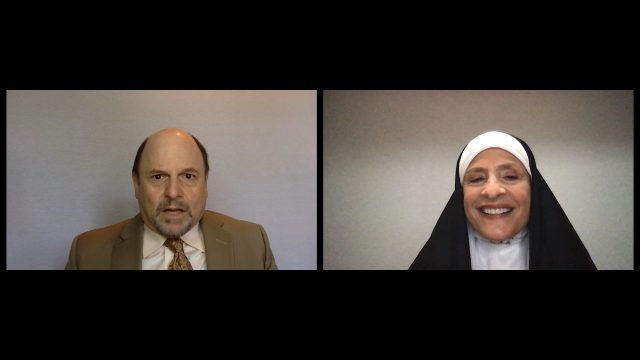
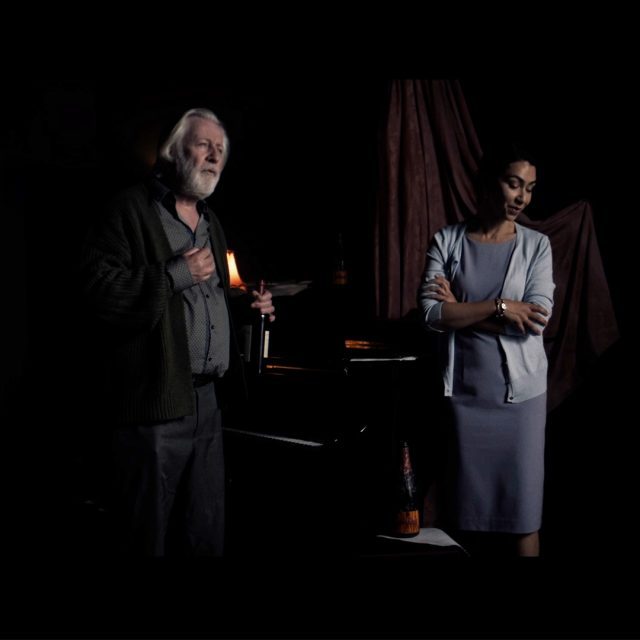
Who: Joyce Sylvester, Tucker Smallwood, Count Stovall, Paris Crayton III, Elain Graham, more
What: Annual reading series
Where: New Federal Theatre Zoom
When: June 8, 15, and 22, free with RSVP, 7:00
Why: On June 30, New Federal Theatre founder Woodie King Jr. will be retiring after an illustrious and influential fifty-year career. He started the company in 1970 with a “mission to integrate artists of color and women into the mainstream of American theater by training artists for the profession, and by presenting plays by writers of color and women to integrated, multicultural audiences — plays which evoke the truth through beautiful and artistic re-creations of ourselves.” One of the last programs he will oversee is the annual Ntozake Shange Readings Series, honoring the late playwright and poet whose Obie-winning for colored girls who have considered suicide/when the rainbow is enuf was staged at NFT in 1976 before transferring to the Public.

The series will be held on three successive Monday nights at 7:00 over Zoom. On June 8, Joyce Sylvester and Tucker Smallwood will read Mustapha Matura’s A Small World, directed by Seret Scott, about two Jamaicans who meet after twenty years apart; on June 15, Count Stovall, Paris Crayton III, and Elain Graham perform S. Shephard-Massat’s A Soft Escape, directed by John Scutchins, about childhood friends who are now old and facing the end of their lives; and on June 22, NFT will present Larry Muhammad’s Jimmy’s Last Night at Mikell’s, directed by A. Dean Irby, about James Baldwin, Maya Angelou, and Miles Davis together at a jazz club, with the cast to be announced. All three shows will take place one time only over Zoom; admission is free with RSVP.

VIRTUAL MUSEUM MILE FESTIVAL 2021

Who: Metropolitan Museum of Art, Neue Galerie New York, Solomon R. Guggenheim Museum, the Jewish Museum, Museum of the City of New York, El Museo del Barrio, the Africa Center, and the Cooper Hewitt, Smithsonian Design Museum
What: Virtual arts festival
Where: Online (a few in-person events)
When: Tuesday, June 8, free, 9:00 am – 9:00 pm
Why: For more than forty years, on the second Tuesday of June, art lovers packed the cultural institutions on Fifth Ave., from the Met to El Museo del Barrio, filling the streets and lining up to experience special programs inside and outside for a few hours. With Covid-19 regulations still in place for theaters and museums, the 2021 Museum Mile Festival will be hybrid, with a few events happening in person but most accessible by streaming from home, over Facebook, Instagram, and Twitter. Everything is free, although some events require advance RSVP, but another bonus is that the festival lasts twelve hours, from nine in the morning to nine at night. Below are some of the highlights from each participating museum.

The Africa Center
“‘Home Is . . .” Series #2: Home Is Where Music Is,’” with Sampa the Great, Wunmi, Jupiter & Okwess, Daniel Dzidzonu, Georges Collinet, Eme Awa, noon
Discussion with Jessica B. Harris, curator of “African/American: Making the Nation’s Table,” and Pierre Thiam, executive chef and co-owner of Teranga, 5:00
Virtual contribution to the Legacy Quilt; child-friendly animation workshop led by artist Ezra Wube

Museum of the City of New York
“Photographing City Life: Live Session with Photographer Janette Beckman,” 4:40
“Curators from the Couch: Stettheimer Dollhouse Up Close,” with Sarah Henry and Simon Doonan, 5:30
“Your Hometown: A Virtual Conversation with Playwright Lynn Nottage,” 6:00
“When the Garden Was Eden: Remembering the 1970s New York Knicks,” with Bill Bradley, Willis Reed, Walt Frazier, Earl Monroe, Bill Murray, and Harvey Araton, 7:00

The Jewish Museum
Lawrence Weiner talks about his career and All the Stars in the Sky Have the Same Face, on the facade of the museum; Rachel Weisz recites Louise Bourgeois’s own words on audio guide for “Louise Bourgeois, Freud’s Daughter”; Edmund de Waal and Adam Gopnik discuss de Waal’s latest book, Letters to Camondo; videos of poet Douglas Ridloff responding to the Jewish Museum collection in ASL; panel discussion about public art and equity in museums; family-friendly performances by Aaron Nigel Smith and Joanie Leeds; an interview with Rachel Feinstein about the exhibition “Rachel Feinstein: Maiden, Mother, Crone”; discussion with artists Rachel Feinstein and Lisa Yuskavage, filmmaker Tamara Jenkins, and curator Kelly Taxter about storytelling, gender, and identity-based art making; family-friendly performance by the Paper Bag Players at Home

Cooper Hewitt, Smithsonian Design Museum
“Design at Home: Design a Repeating Pattern”; “Rebellion in Design: Developing a Blueprint for the Future,” with Virgil Abloh, James Wines, and Oana Stănescu; virtual tour of “Contemporary Muslim Fashions”; “Studio Series: Quilting,” with William Daniels, 4:00 (RSVP required)

Solomon R. Guggenheim Museum
“Summer Solstice” live virtual tour of works featuring the sun and light; an audio guide for “Off the Record” exhibition; “Spotlight” video series with Guggenheim Abu Dhabi collection artists; prerecorded conversation with curator Vivien Greene and scholar Maile Arvin as part of the Artwork Anthology series, about Gauguin’s In the Vanilla Grove, Man and Horse

Metropolitan Museum of Art
Drop-in Drawing — “How to Draw The Met Using Perspective Drawing”; Storytime with the Met — You Can’t Take a Balloon into the Metropolitan Museum; Silent Gallery Tour — the Temple of Dendur in the Sackler Wing; Silent Gallery Tour — the Roof Garden Commission: Alex Da Corte, As Long as the Sun Lasts; MetTeens — “Little-Known Met”; #MetKids — “How Do You Dance in Armor?”; #MetKids — “How Did They Get All This Art into the Museum?”; Artist Interview — The Facade Commission: Carol Bove, The séances aren’t helping; “Conserving Degas,” with conservator Glenn Peterson

El Museo del Barrio
Virtual tour of “Estamos Bien — La Trienial 20/21” led by the curators; recorded interviews with participating artist Candida Alvarez; in-person outdoor performance by NYC-based Afro-Caribbean group San Simón at Central Park’s Harlem Meer at 6:00

Neue Galerie New York
Prerecorded lectures, virtual tours, and concerts

THEATRE FOR A NEW AUDIENCE’S ANNUAL SPRING GALA

Who: Harry Lennix, Arin Arbus, Anne Bogart, Bill Camp, Will Eno, Simon Godwin, Kathryn Hunter, Taibi Magar, John Douglas Thompson, Awoye Timpo, more
What: Theatre for a New Audience annual spring gala
Where: TFANA online
When: Monday, June 7, free with RSVP, VIP reception 6:30, streaming program 7:30
Why: Theatre for a New Audience was founded by Jeffrey Horowitz in 1979, but it was the company’s 2013 move to its new home in Fort Greene, the Polonsky Shakespeare Center, that rocketed it to a new level. On June 7, TFANA’s annual spring gala will be held live online, celebrating Shakespeare’s birthday; the Bard turned 457 in April. “We are celebrating Shakespeare’s birthday 457 years on because Shakespeare is, of course, never over,” Horowitz said in a statement. “A production of Hamlet ends, but the play doesn’t. Shakespeare’s work keeps getting reinvented. Last year, like so many other plans, our annual spring gala was canceled due to the pandemic. For a while, it was a question: Should we postpone again? But gathering as a TFANA community, even remotely, seemed more important than ever this year — to take stock of what we’ve been through, lost, and accomplished, and to look ahead to the future.”

Among the participants will be such actors, writers, and directors as Arin Arbus, Anne Bogart, Bill Camp, Will Eno, Simon Godwin, Kathryn Hunter, Taibi Magar, John Douglas Thompson, and Awoye Timpo; New York City public teacher Marie Maignan will receive the Samuel H. Scripps Award for Extraordinary Artistic Achievement from US representative Jahana Hayes (D-CT), and Amanda Riegel and the Thompson Family Foundation will be presented with the Life in Art Award. The evening will be emceed by actor and TFANA board member Harry Lennix; the VIP preshow begins at 6:30, followed at 7:30 by the gala. There is also a silent auction that features such items as golf and wine vacations, opera and theater tickets, jewelry, art, pet portraits, and more.

UNDINE

Paula Beer stars as the mysterious title character in Christian Petzold’s award-winning Undine (photo by Christian Schulz)

UNDINE (Christian Petzold, 2019)
IFC Center, 323 Sixth Ave.
Film at Lincoln Center,
Opens June 4
www.ifccenter.com
www.filmlinc.org

Master German writer-director Christian Petzold (Phoenix, Barbara) gives a unique contemporary twist to a classic European fairy tale in Undine, which opens June 4 at IFC Center and Lincoln Center as well as online. The less you know about the original myth the better, but let’s just say it involves a water nymph, romance, betrayal, and death.

Paula Beer was named Best Actress at the Berlin International Film Festival and at the European Film Awards for her powerful performance as Undine Wibeau, a historian who gives architectural tours of expansive, heavily detailed models of the past, present, and future of Berlin for the Senate Administration for Urban Development. Early on, when her boyfriend, Johannes (Jacob Matschenz), tells her that he is in love with another woman, Nora (Julia Franz Richter), Undine sternly says, “If you leave me, I’ll have to kill you.” There is no reason to doubt her.

Distressed by the situation, she is standing uneasily in a café, looking at an aquarium filled with colorful fish and a small statue of a diver when Christoph (Franz Rogowski), who just attended one of her talks, hesitantly approaches her and offers praise for the lecture. An accident shatters the glass of the aquarium and Undine and Christoph are knocked to the ground, drenched in water. As the fish squirm for life on the floor, Undine and Christoph instantly fall in love. “I’m usually under water,” Christoph, an industrial diver, says to her. German romanticism and French Impressionism mix with magical realism and a revenge thriller as Christoph and Undine run around together, reveling in their love until another accident results in serious trouble.

Undine (Paula Beer) is an architectural historian who is drawn to water in myth-based drama

Among the distinguished writers and composers who have told their own versions of the story of Undine are Friedrich de la Motte Fouqué, Oscar Wilde, E. T. A. Hoffman, Edgar Allan Poe, Sergei Prokofiev, Hans Christian Andersen, Seamus Heaney, Claude Debussy, and DC Comics. Audrey Hepburn won a Tony for her performance as the title character in Jean Giraudoux’s Ondine on Broadway in 1954. In 2010, Neil Jordan’s Ondine, coincidentally also released on June 4, starred Colin Farrell as a fisherman who catches a woman known as Ondine (Alicja Bachleda) who has a special connection with water.

Water is central to Petzold’s film, from the aquarium to Christoph’s job to Johannes’s pool. Berlin itself was built on a swamp, adding relevance to Undine’s architectural lectures, in which she explains that the name of the city means “dry place in the marsh.” When she is searching for Johannes, she goes into the men’s bathroom and one of the faucets is dripping, the noise echoing down an empty hallway. When Johannes wants to go away with Undine, he tries to lure her by mentioning he’s booked the room they like “overlooking the pond.” Much of the film takes place underwater, with the actors in and out of their scuba gear, beautifully filmed by cameraman Sascha Mieke. (Unfortunately, the giant catfish is animated.) Hans Fromm is the aboveground cinematographer, lushly capturing the streets of Berlin as well as the forest surrounding the lake where Christoph works with Monika (Maryam Zaree) and Jochen (Rafael Stachowiak).

Beer and Rogowski have an intense chemistry that drives the film; they starred together in Petzold’s previous film, Transit, which deals with political refugees, stolen identity, and forbidden love, and are both magnetic here again, whether aboveground or below. The soundtrack’s theme features pianist Vikingur Ólafsson’s gorgeous, haunting rendition of Bach’s Concerto in D Minor, BWV 974 – 2. Adagio. “Everything is there in Johann Sebastian’s music: architectural perfection and profound emotion,” Ólafsson has said, which relates directly to Petzold’s film itself.

NYC PLAYERS: THE VESSEL

The Statue of Liberty and the Freedom Tower stand tall in background of New York City Players’ The Vessel (photo by twi-ny/mdr)

THE VESSEL
Skyport Marina
2430 FDR Dr. at Twenty-Third St.
June 1-3, $40 (sold out)
Return engagement Wednesday, September 22, $40, 6:00
www.nycplayers.org

“What a symphony for the senses!” one of thirteen performers declares in New York City Players’ The Vessel. The new work, part of the troupe’s Incoming Theater Division (ITD) and LMCC’s residency program, is itself a symphony for the senses. It takes place aboard the Harbor Lights boat, which departs from the Skyport Marina on East Twenty-Third St. and anchors in front of the Statue of Liberty and Ellis Island, with Lower Manhattan and the Freedom Tower visible in the background. The audience is seated in white folding chairs on the upper outdoor deck, where the actors march in, one by one, to stand on two small portable platforms, delivering short eulogies written by current and former members of ITD and then leaving, replaced by the next actor. The monologues are true stories of people the writers have lost, delivered in director and company founder Richard Maxwell’s trademark plainly spoken, carefully modulated yet moving style.

The forty-five-minute play was conceived by Jasmine Pisapia and Katiana Rangel in collaboration with writers and actors Rossana Appleton, Brandon Davis, Jim Fletcher, Linda Mancini, Brian Mendes, Enoch Ntunga, Michael Odom, Yasmin Sanchez, Bréhima Sangaré, Gillian Walsh, Lakpa Bhutia, Nicholas Elliott, Charles Reina, and Bjorn Lee Varella. Ntunga remembers his little brother, Siméon. Walsh says farewell to her cousin Billy. Odom promises his late mother that they will meet again. Pisapia recalls her grandmother Jeannette. Mendes, who played Uncle Jerry in Maxwell’s Isolde, shares stories about his deceased Uncle Jerry, who turns out to be a famous musician.

Occasionally, the previous performer remains on one of the platforms as the next character tells their tale, becoming a silent witness onstage and another audience member. The actors are a diverse cast of ethnicities and genders, sizes and abilities; the parade of different looks and accents takes on a potent meaning with the Statue of Liberty behind them, a symbol of hope for immigrants for nearly 150 years (while also evoking the current border crises), as well as the Freedom Tower, a skyscraper built on the site where more than three thousand people from around the world were murdered on 9/11. It’s also impossible not to think about all those lost to Covid-19 over the past fifteen months.

The Vessel takes place on board Harbor Lights party boat (photo by twi-ny/mdr)

However, Maxwell (The Evening, Samara) never lets the show get overly sentimental or treacly; you might get teary, but there are plenty of laughs and smiles, as this exploration of death is a celebration of life. Birds fly around the ship. The setting sun casts a glow. Noisy party boats pass by. Horns blow and bells ring. Construction can be seen in the distance. The wind whips gently against your face. (Although you are supposed to wear masks, about half of the audience didn’t, whether sipping a drink from the bar or not.) Perhaps most importantly, you are sitting right next to other people, enjoying live performance again; there is no social distancing in this communal outdoor space.

The loveliest moment of the performance occurred during Rangel’s tale about her friend Bob Feldman. As the actor talked about memories and listed things they had shared together — Little Pie coffee, the saxophone, Cuban food, sadness, hugs — the boat began rocking precariously. Pausing to maintain his balance — it frequently looked like he’d fall over as the actor next to him watched closely, amused, perhaps considering reaching out to help him stay up — he somehow managed to sway and waver without losing any of the words, the brief hesitations palpable as the audience rooted for him to finish without surrendering to gravity. “Bob said a few times that during those nights he felt completely alive again,” the eulogy concludes. For three hours on board a boat in New York Harbor, the feeling was mutual.

SISTERS WITH TRANSISTORS

Daphne Oram is one of the women pioneers of electronic music featured in Sisters with Transistors

SISTERS WITH TRANSISTORS (Lisa Rovner, 2020)
Metrograph Digital
June 3-9
metrograph.com
sisterswithtransistors.com

“This is the story of women who hear music in their heads, of radical sounds where there was once silence, of dreams enabled by technology,” Laurie Anderson says at the beginning of Lisa Rovner’s revelatory Sisters with Transistors, which is back by popular demand for a return engagement on Metrograph Digital. In the film, available June 3-9, Rovner highlights electronic musicians Clara Rockmore, Delia Derbyshire, Daphne Oram, Éliane Radigue, Maryanne Amacher, Bebe Barron, Suzanne Ciani, Pauline Oliveros, Laurie Spiegel, and Wendy Carlos, trailblazers who deserve more recognition for their ingenuity and their influence on the music of today while blasting through gender stereotypes of the mid-twentieth century and beyond. “Technology is a tremendous liberator,” Spiegel notes. “It blows up power structures.”

In her feature-length debut, writer, director, and coproducer Rovner (Constellations) uses archival footage of Rockmore playing the Theremin with a string quartet in 1934, Derbyshire and Oram explaining how they constructed their unique arrangement of tape reels and computers at the BBC Radiophonic Workshop in the 1950s and ’60s, Ciani twisting nobs on a wire-laden setup at the Bonino Gallery in New York City in 1974 (and later performing on The David Letterman Show), Radigue talking about how she employed the sounds of airplanes to develop her electronic compositions, Carlos developing her own software and adjusting the synthesizer in her West Side studio, and Barron and her husband using circuit boards to create scores for avant-garde films as well as Forbidden Planet and the Doctor Who theme.

Revolutionary, antiwar, and queer composer Oliveros searches for inner peace through music. Amacher utilizes complex science to make new sounds. Amacher is shown collaborating with Thurston Moore of Sonic Youth. “She wanted to develop an extremely rigorous approach to listening, to activating sites, to thinking outside of the composition as it’s known,” composer Nadia Botello says about Amacher. “She didn’t want to push around dead white men’s notes.”

Rovner speaks with several of the artists in addition to such musicians as Rhys Chatham, Kim Gordon, Morton Subotnick, Holly Herndon, Charles Amirkhanian, Jean-Michel Jarre, and others who sing the praises of these pioneers. The Metrograph website takes a deep dive into the history of these women with a Q&A with Rovner; the essay “Sounding Out Electronic Music’s Female Pioneers” by Margaret Barton-Fumo; an interview with Anderson; a “Sound of Liberation” panel with Rovner, Spiegel, Ciani, Arushi Jain, Moor Mother, Gavilán Rayna Russom, and Madame Gandhi, moderated by Geeta Dayal; and a conversation about women in tech with Emmy Parker, LaFrae Sci, Suzi Analogue, Stephi Duckula, and moderator Alissa DeRubeis. In the end, it is the women composers themselves who best sum it all up.

“Technology is a natural extension of man; man has always played with tools. Man has always developed tools,” Carlos says in an old interview. “The machine doesn’t write the music; you tell the machine what to do. The machine is an extension of you.” And Spiegel, shown feeding pigeons on Staple St. in 2018, elucidates, “We were, in a way, trying to make a bit of a revolution, but I don’t think we would have put it in such grandiose terms. We were trying to put music back in touch with itself.”

A THOUSAND WAYS (PART TWO): AN ENCOUNTER

The second part of 600 Highwaymen’s A Thousand Ways takes place in person at the Public, for two people at a time (photo by Everything Time Studio)

Public Theater
425 Lafayette St.
Part Two: June 8 – August 15, $15
Part One available through July 18, $15
publictheater.org
www.600highwaymen.org

In January, as part of the Public Theater’s annual multidisciplinary Under the Radar festival, the Obie-winning 600 Highwaymen company presented A Thousand Ways (Part One): A Phone Call, a free hourlong telephone conversation between you and another person, randomly put together and facilitated by an electronic voice that asks both general and intimate questions, from where you are sitting to what smells you are missing, structured around a dangerous and lonely fictional situation that is a metaphor for sheltering in place, even though the work began several years ago. It’s a great way to get connected to a stranger while looking inwardly at yourself. In my case, I spoke with a theater-loving woman from the Midwest, and we got along extremely well, making for an engaging and moving discussion.

From June 8 to August 15, the Public will be hosting the next section of the work, A Thousand Ways (Part Two): An Encounter, in which you and a stranger — not the same one — meet in person, sitting across a table, separated from one another by a clear glass panel. There will be no touching and no sharing of objects, following all Covid-19 guidelines. The Public has also brought back the phone call, with slots available through July 18. While you don’t have to experience part one in order to understand part two, it is highly encouraged. Conceived and written by Abigail Browde and Michael Silverstone, who formed 600 Highwaymen in 2009, A Thousand Ways continues their ongoing mission of “aiming at a radical approach to making live art by creating intimacy amongst strangers and illuminating the inherent poignancy of people coming together.” The duo’s previous works include Employee of the Year, Empire City, The Fever, and Theater of the Mind with David Byrne. Tickets for each part of A Thousand Ways are $15; a grand finale is planned in which groups will be able to gather across the globe.

“In this introspective year, it’s been an absolute honor to know that in over twenty-five cities and twelve countries around the world — and now in four languages — strangers are coming together night after night, across phone lines and through glass planes, to imagine one another and, in the process, create a kind of community with and for one another,” Browde and Silverstone said in a statement. And it all starts with a phone call and two people who have never met, evoking how we are all emerging in our own ways from the pandemic lockdown.