featured

FIAF’s BASTILLE DAY 2022

BASTILLE DAY
French Institute Alliance Française (FIAF)
Madison Ave. between Fifty-Ninth & Sixty-Third Sts.
Sunday, July 10, free – $75, noon – 5:00 pm
fiaf.org

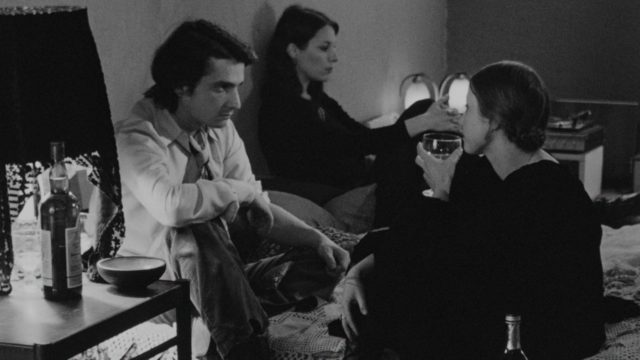
On July 14, 1789, a Parisian mob stormed the Bastille prison, a symbolic victory that kicked off the French Revolution and the establishment of the Declaration of the Rights of Man and of the Citizen. Ever since, July 14 has been a national holiday celebrating liberté, égalité, and fraternité. In New York City, the Bastille Day festivities are set for Sunday, July 10, on Madison Ave. between Fifty-Ninth & Sixty-Third Sts., where the French Institute Alliance Française hosts its annual daylong party of food and drink, music and dance, and other special activities. The celebration features free live music by Paul Beaubrun, street dance by Cal Hunt, a dance party with DJ Orson, and an excerpt from the French musical Notre Dame de Paris on the main stage at Fifty-Ninth St. from noon to 5:00; a Summer in the South of France Tasting in Tinker Auditorium from 12:30 to 5:00 ($35), with wines from Maison Antech, Château Maris, and Château Haut-Blanville, nonalcoholic wines from Le Petit Béret, gazpacho from Karine & Jeff, and cheese selections from cheese2u.com; a sneak preview screening of Matthieu Rozé’s Azuro starring Valérie Donzelli in Florence Gould Hall at 5:30 ($17); and the elegant Champagne & Musette Party at 1:30 ($65-$75) in Le Skyroom, with live music by Chloé Perrier & the French Heart Jazz Band, Champagnes from Billecart Salmon, Delamotte, and Henriot, macarons from Thierry Atlan, and hors d’oeuvres from Miss Madeleine.

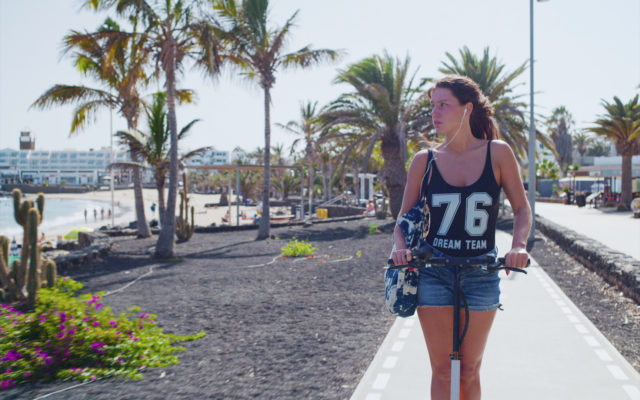
A sneak preview of Matthieu Rozé’s Azuro is part of FIAF Bastille Day festivities

The French Garden between Sixtieth & Sixty-First consists of booths from Thermomix, Thierry Atlan, Stephane Koerwyn, Angelina Paris, Bichon, OCabanon, Oliviers & Co, Opinel, Payot, Silpat, and Tissage Moutet, while Market Booths between Sixtieth & Sixty-Third include Brasserie Cognac, Maman Bakery, Mille-feuille Bakery Cafe, Hanami Designs, Barachou, Miss Madeleine, and dozens more. The FIAF Language Center Booth between Fifty-Ninth & Sixtieth will present special activities for children and a trivia contest for adults from 1:00 to 4:00. And this year’s prize drawing can win you skincare baskets, a wellness collection, a FIAF Premier Membership, a two-night stay at Sofitel New York, or a Dream Getaway for Two to France’s Occitanie region.

NEW AGORA: JULY — ART, MUSIC, YOGA, AND MORE AT SOCRATES SCULPTURE PARK

The art in Socrates Sculpture Park will be activated with special programs on July 9 (photo by twi-ny/mdr)

Who: Woomin Kim, Greg Hammontree, Douglas Paulson and Nicole Brancato, Rudy Walker Ensemble, Cooper-Moore, Ununu, Elliott Sharp, Duology, more
What: Jazz Foundation of America presentation for Second Saturdays
Where: Socrates Sculpture Park, 32-01 Vernon Blvd. at Broadway, Long Island City
When: Saturday, July 9, free, 9:30 am – 8:00 pm
Why: Socrates Sculpture Park and the Jazz Foundation of America have teamed up for a special day of live music, workshops, and more on July 9, activating the historic park and its current art installations. There will be yoga at 9:30 and 11:00 in the morning; from 10:00 to 2:00, the Hellgate Farm Stand will be open, and the Astoria Food Pantry will distribute free clothes, books, and essential items and collect nonperishables and clean clothing; at 11:00, Field Guide: Wildlife Among Us — Finding Shelter will take preregistered participants on a tour of the park, focusing on where animals and insects make their home; and at noon, artist Woomin Kim, whose “Shijang Project” quilts are at Susan Inglett Gallery in Chelsea until July 29, will lead a collage workshop with Noguchi Museum educators. In addition, Greg Hammontree’s ambient soundworld Trumpet Echoes will ring out all day in the Grove of Trees, where you can walk through the adaptive sonic space.

The afternoon will include live thirty-to-forty-five-minute concerts, featuring part I of .soundfullness by Douglas Paulson and pianist Nicole Brancato at the front gate BBQ area at 2:00, the Rudy Walker Ensemble at the Cobblestone Stage at 3:00, pianist Cooper-Moore inside Hélio Oiticica’s Subterranean Tropicália Projects PN15 at 4:00, improv trio Ununu at the North Gate Stage and part II of .soundfullness at the front gate BBQ area at 5:00, the legendary Elliott Sharp playing “Monkulations” on acoustic guitar in Oiticica’s installation at 6:00, and Michael Marcus’s Duology at the Main Stage at 7:00.

As you enter the park, you encounter the Broadway Billboard The Marooned Picturesque Series (Socrates) by New York City native Joiri Minaya, which was selected by the Socrateens. On view through August 14, Oiticica’s Subterranean Tropicália Projects PN15 is an immersive circular environment of an unrealized work by the late Brazilian artist and activist Oiticica, who was honored with a terrific exhibition at the Whitney in 2017, “To Organize Delirium.” Originally conceived for Central Park, the piece is now centered at Socrates, where visitors can follow narrow, winding paths to surprise places; facing the front of the park is a small platform and screen behind mesh, where live performances and screenings are held. Sharp and Cooper-Moore will play inside on July 9; on August 14, the closing reception is highlighted by “We are one only heart, one only earth, one only soul,” an invitation to the public by Brazilian Yanomami shaman Davi Kopenawa to learn about the violence the Yanomami people are facing at the hands of the Brazilian government.

In the Grove of Trees, where you can hear Trumpet Echoes, you will find Maren Hassinger’s Two Bushes, a new pair of sculptures made of iron wire hiding in plain sight among the natural elements of the park, harkening back to Hassinger’s Three Bushes, which were part of the 1988 group exhibition “Sculptors Working” at Socrates. The New York–based artist has also installed “Steel Bodies” throughout the park, consisting of ten steel sculptures inspired by different types of vessels throughout history; some of them resemble open cages, which you can walk into, offering a unique perspective on your relationship to the people and nature around you, while their placement, and the shadows they create, interacts dramatically with the surrounding trees, skyscape, and outdoor studio of Socrates cofounder Mark di Suvero. [To see all the artwork in the park, go here.]

KENZO DIGITAL’S AIR AT THE SUMMIT

Kenzo Digital’s Air offers a new perspective on making connections in the city (photo by twi-ny/mdr)

AIR
SUMMIT One Vanderbilt
45 East Forty-Second St. at Vanderbilt Pl.
Admission: $39-$73
summitov.com
kenzodigital.com
online slideshow

“I wanted New Yorkers to come and watch their home come back to life, to reengage with their friends and family they hadn’t seen for a long time and create ritual and ceremony around human connection, which is actually the antithesis of New York, which is a highly transactional city where people are just trying to survive,” Kenzo Digital said on a private walkthrough of his multipart permanent installation, Air, near the top of the SUMMIT One Vanderbilt skyscraper. “So I want to have a place where people can forget about that aspect of their survival identity in New York and connect through a primal curiosity on a basic, authentic level.”

Kenzo, a graffiti artist, DJ, and film and video director who has worked with Kanye West and Beyoncé, had lofty goals when designing Air; he didn’t want the project to just be an Instagram-friendly tourist attraction but to generate other, more meaningful conversations, especially among New Yorkers.

“In a nutshell, what I wanted to do was essentially create an experience of physical space that was capable of having a deep emotional and psychological relationship with a human being over the course of their entire life. The idea is you walk into this space and it will feel different every time,” he explained. “I wanted to create something that specifically challenges and defies language, both the written word and the image. It’s impossible to describe what this is, even though you can break it down by its components and you’d be correct, but it’s impossible to describe the effect of the experience and the emotional impact. Everyone is wrong and right in different ways, and it will be a different wrong and right every time you come.”

Air consists of several floors of fantastical views of New York City and dramatic reflections, reaching high into the sky and way down below, of the humans occupying the space on the ninety-first floor and above. “We built the entire thing during the pandemic. It was like making art in a science fiction film. It was . . . fucking crazy,” Kenzo notes. Glass windows and mirrors are arranged in geometric patterns that result in awe-inspiring repeated imagery that forces visitors to try to find their body in the space as well as their position in the city and the world. Kenzo, whose previous installations include Social Galaxy, which featured chambers where visitors were barraged by their social media history, and the immersive haunted house Nocturnal Awakening, considers the work to be “the story of your relationship to time, your relationship to New York City, your relationship to weather, and also your relationship to yourself.

“It’s about the relationship between the natural world and the physical world,” he points out. “If there is an approaching storm from New Jersey, you will see the city as an organism react to that storm — cars, traffic, people move differently, with rain on the street, fewer people, umbrellas pop up. You can see the city as an expression of nature. People always talk about the life force of New York; Air is an organ within that life force, the heart of it that contains its spirit. This is expressing the infinite power of chaos that is the collision of uncontrollable variables: nature, time, the world, your emotions, your place in all of this.”

Visitors first take an elevator that recalls one of Yayoi Kusama’s Infinity rooms, with lights flashing on and off and mirrors that reflect the passengers into an endless oblivion. You get out at “Transcendence,” a large rectangular space with tall windows that offer stunning views of the city on three sides and glass floors that reflect the inside and the outside. It will take you a while to orient yourself, especially as you look down at what appear to be multiple levels of people either upright or upside down as buildings, blue sky, and clouds merge with the interior space.

“There are so many avenues, it almost looks like they’re delivering you to the front doorstep of One Vanderbilt,” says Kenzo, who speaks quickly and excitedly, like a child with a new toy. “And because it’s positioned so symmetrically, you can almost see the city like an organized system of neighborhoods; you understand it spatially, you understand the grid, and that grid is magnified and deconstructed within the grid of reflection that exists in here.” The gridlike structure recalls the multimedia installations of the father of digital art, Nam June Paik, who arranged television sets into wholly new, living environments; Kenzo is the late Nam June’s great-nephew and the creative director of his great-uncle’s estate.

Much of the eye contact in Air is made via the reflections, so you can connect with individuals who are not in your immediate physical space, if you can find them. It’s a far cry from being on the subway, for example, where many straphangers go out of their way to avoid eye contact with anyone.

When I mention to Kenzo that it’s hard to tell who is actually on the mezzanine and what are reflections, he replies slyly, “They are asking themselves the same question about you.”

In the mezzanine, you can look down and see how the next batch of people initially react to the area. Kenzo explains, “The idea behind Transcendence II is this concept of folding time in the sense of that when you’re up here, you’re essentially watching people exposed to the concept for the first time, and so the idea of connective language through primal curiosity is in effect because you see people, just where you were a few minutes ago, processing the information at a base level for the first time. So as we were just down there, observing that there’s a physical mezzanine up here and making eye contact, everyone up here has already established equilibrium and has the foundation of knowledge and information, and everyone down there is still figuring out what’s going on.” Kenzo envisions Air as encompassing human development: “crawl, walk, run, fly.”

Kenzo Digital stands next to the Empire State Building in his permanent installation at Summit One (photo by twi-ny/mdr)

The idea for Air emerged from Kenzo’s subconscious.

“This is all based on a recurring dream I’ve had for twenty-five years; it’s a strangely, deeply personal thing,” Kenzo reveals. “In the dreams there’s a fictitious skyscraper, residential; so I’ve had these dreams that took place in the top two floors, the penthouse of the skyscraper, which is circular in shape, which is why I have the two circles on the east and west side as a nod to that dream. So it’s the ability to project my dream and then put it inside of other people’s mind and then for that to be a shared dream. And oftentimes I find people dream about it after the experience.”

Affinity is a room of silver balls, reminiscent of Andy Warhol’s helium Silver Clouds, that visitors can run through, kicking the balls in the air and against mirrors and windows, each ball reflecting themselves, those around them, the view, and other balls as dozens of orbs seem to multiply into thousands in a fun deluge. “It’s constantly engaging with the city; it’s always an inside-outside experience,” Kenzo says. In another room, the inside-outside connection involves a projection of sky and clouds on the wall and the floor as scanned images of your face are added to a large screen.

Levitation puts you in a space where you are seemingly floating above the skyline, standing on a transparent floor facing a window so clear that it makes you feel like it’s not there, that you are on a ledge, midtown Manhattan right below you. Cameras are set up to take a picture and/or video of you in the space that you can pick up at the exit. As wondrous as it is to look at, it also makes you feel the interdependence between nature, technology, and humanity as well as the impermanence of life. “It’s the story of your relationship to time, your relationship to New York City, your relationship to weather, and also your relationship to yourself,” Kenzo explains. You can further those relationships by taking the outside glass elevator, Ascent.

Levitation offers a chance to seemingly float above New York City (photo courtesy Summit One)

Kenzo honors Japanese artist Kusama with her 2019 work Clouds, a collection of amorphous stainless-steel and wax floor sculptures that also reflect visitors and the sky; it is the first of a rotating series of exhibitions Kenzo will curate by other artists in the space.

Kenzo sees Air as an ever-changing, always-evolving experience that changes from day to day, hour to hour, depending on the crowd and the weather, and he wants it to be more than just a photo opportunity that’s over when you leave.

“There’s a part of you that stays in here,” he says thoughtfully.

BroadwayCon 2022

Who: Anthony Rapp, LaChanze, Andrew Barth Feldman, Carolee Carmello, Ben Cameron, Erin Quill, Fredi Walker-Browne, Julie White, Telly Leung, Ilana Levine, Jacqueline B. Arnold, Jennifer Ashley Tepper, Vanessa Williams, Judy Kuhn, Lesli Margherita, Nik Walker, Ryann Redmond, Thayne Jasperson, Hillary Clinton, more
What: BroadwayCon 2022
Where: Manhattan Center, 311 West Thirty-Fourth St., and the New Yorker Hotel, 481 Eighth Ave.
When: July 8-10, day passes $80, general pass $200, gold pass $425, platinum pass $1,250
Why: BroadwayCon is back with an in-person edition taking place July 8-10 at the Manhattan Center and the New Yorker Hotel, right by Madison Square Garden and Penn Station and just a few blocks south of the Theater District. This year’s edition includes panel discussions, interviews, live performances, podcasts, a cosplay contest, workshops, photo and autograph sessions, singalongs, meetups, and celebrations of and inside looks at such shows as A Strange Loop, Six the Musical, Chicago, POTUS, Dear Evan Hansen, Beetlejuice, Thoughts of a Colored Man, Kimberly Akimbo, SpongeBob SquarePants, Harry Potter and the Cursed Child, The Kite Runner, Assassins, and Hamilton.

Among those participating at the three-day festival are Anthony Rapp, LaChanze, Carolee Carmello, Ben Cameron, Erin Quill, Julie White, Telly Leung, Vanessa Williams, Judy Kuhn, Lesli Margherita, and Hillary Clinton, talking about such topics as racial and gender diversity, disability, understudies, anxiety, body positivity, and Stephen Sondheim.

Below are select highlights for each day:

Friday, July 8
Ensemble screening, with Telly Leung, 10:00 am, followed by a talkback at 11:20, Crystal Ballroom, the New Yorker Hotel

BroadwayCon 2022 Opening Ceremony, with Ben Cameron, Manhattan Center Grand Ballroom, 12:40

Here’s to the Ladies: Hillary Rodham Clinton Live at BroadwayCon, with LaChanze, Julie White, and Vanessa Williams, moderated by Hillary Clinton, Manhattan Center Grand Ballroom, 1:00

Making a Living and Having a Life in Theatre Production, with Jameson Croasdale, Mary Kathryn “MK” Blazek, Rebecca Zuber, Lauren Parrish, and Gary Levinson, moderated by Naomi Siegel, Sutton Place Suite, the New Yorker Hotel, 2:20

Lights, Overture, Stage Fright! Breaking Down Performance Anxiety, with Kira Sparks, Sutton Place Suite, the New Yorker Hotel, 3:40

POTUS is one of several Broadway shows that will be featured at BroadwayCon (photo by Paul Kolnick)

Saturday, July 9
Black Lives Matter on Broadway, with T. Oliver Reid, Britton Smith, Emilio Sosa, Michael Dinwiddie, and Lillias White, moderated by Linda Armstrong, New Yorker Hotel Grand Ballroom, 10:00

Broadway Livestreaming: Expanding the Reach of Live Theatre, with Timothy Allen McDonald, Sean Cercone, Luke Naphat, Tralen Doler, Nathan Gehan, and Jen Sandler, moderated by Joshua Turchin, Gramercy Park Suite, the New Yorker Hotel, 11:20

Getting the Show Back on the Road: The Pandemic and Its Impact on Touring Broadway, with Jacob Persily, Sutton Place Suite, the New Yorker Hotel, 2:20

Paul Gemignani and Sondheim’s Musical Legacy, with Margaret Hall and Meg Masseron, Crystal Ballroom, the New Yorker Hotel, 3:40

BroadwayCon Cabaret, with special secret guest, hosted by Ben Cameron, Manhattan Center Grand Ballroom, 5:00

Sunday, July 10
Cheers to Understudies: The Broadway Cast Live!, with Amber Ardolino, Mallory Maedke, Tally Sessions, and Lauren Boyd, hosted by Ben Cameron, New Yorker Hotel Grand Ballroom, 10:00

Body Liberation on Broadway, with Amara Janae Brady, Shantez M. Tolbut, and Evan Ruggiero, moderated by Stephanie Lexis, Gramercy Park Suite, the New Yorker Hotel, 10:00

Directors on Debuts, with Zhailon Levingston and Tina Satter, moderated by Zeynep Akça, Crystal Ballroom, the New Yorker Hotel, 1:00

Tell Me More! Tell Me More!, special guests TBA, Manhattan Center Grand Ballroom, 2:20

Broadway Anecdotes II: Golden Age Gossip, with Kenneth Kantor, Joshua Ellis, and Mimi Quillin, moderated by Ken Bloom, Gramercy Park Suite, the New Yorker Hotel, 5:00

MEET MISS BAKER: CHAINS

Charley (Jeremy Beck) and Lily Wilson (Laakan McHardy) face a turning point in Chains

CHAINS
The Mint Theater at Theatre Row
410 West 42nd St. between Ninth & Tenth Aves.
Tuesday – Sunday through July 17, $35-$80
minttheater.org
www.bfany.org

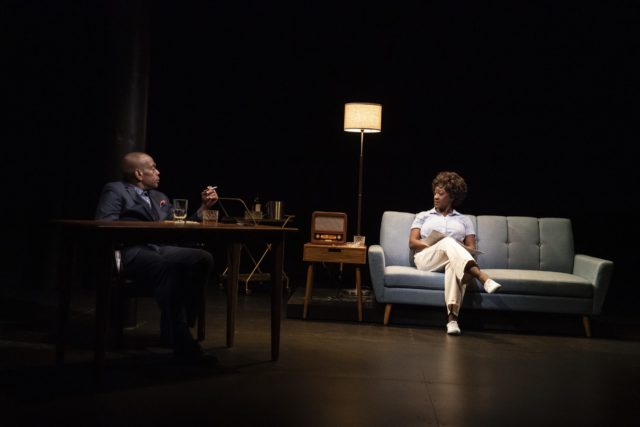
As live theater slowly emerged from the long pandemic lockdown, I waited with bated breath for the return of the Mint, one of New York City’s genuine treasures. For the last two years, the Mint, founded in 1992 to resurrect lost or forgotten plays, has been streaming recordings of such relatively recent successes as Conflict, Katie Roche, and Women without Men. Artistic director Jonathan Bank and the troupe are now back with its first live presentation since 2019, an exquisitely rendered adaptation of Elizabeth Baker’s 1909 working-class drama, Chains.

The second part of the Mint’s “Meet Miss Baker” series, which began with The Price of Thomas Scott, Chains was originally scheduled for the spring of 2020; the production finally opened on June 23, and the events of the past two years make it feel excitingly fresh and timely, as if it were written yesterday.

During the lockdown, many New Yorkers were overcome with wanderlust, heading to less-dense areas of America, sometimes for good. As the coronavirus crisis declined — it is still with us, of course, one example of which are the vaccine checks and masks required to enter Theatre Row, where Chains continues through July 17 — people across the country began reexamining their lives and careers, suddenly leaving their jobs, even without other prospects, what has become known as the Great Resignation. According to a Pew Research survey released this past March, “Low pay, a lack of opportunities for advancement, and feeling disrespected at work are the top reasons why Americans quit their jobs last year.” Also cited was a better balance between work and family responsibilities.

All of those aspects are at play in Chains, which is elegantly directed by Jenn Thompson with a cunning wit — she also helmed Conflict and Men without Women — and impeccably performed by a nine-person cast, most of whom portray characters who are chained down in one way or another, whether they realize it or not, primarily by capitalism and social convention.

When Fred Tennant (Peterson Townsend), a kind lodger renting a room from Charley Wilson (Jeremy Beck) and his devoted wife, Lily (Laakan McHardy), announces that he is emigrating from England and starting a new life in Australia, friends and neighbors are mostly shocked and stunned. Tennant is single and on a career path to become head clerk at his firm.

“I’m sick of the whole show. I can’t stand it any longer,” Tennant tells Charley, who, a moment later, asks, “Do you mean you are just going out because you want a change?” Tennant replies, “That’s about it. I’ve had enough of grind.” Charley points out, “Well, perhaps you’ll get grind somewhere else.” Tennant responds calmly, “It’ll be a change of grind then. That’s something.”

Elizabeth Baker’s Chains is gorgeously revived by the Mint (photo by Todd Cerveris)

The Wilsons’ big, boisterous neighbor, Morton Leslie (Brian Owen), comes bounding over the fence of Charley’s small backyard vegetable garden and chimes in, believing Tennant’s a fool for giving up his cushy gig. “He’s going to throw it away!” he proclaims. “And then I suppose he’ll be out of work over there, and we shall be hearing of the unemployment in the Colonies! It’s just this sort of thing that makes a man a Conservative. It’s what I call getting off the ladder and deliberately kicking it down.” Ironically, Leslie has a problem with the garden ladder as he tries to get home.

Lily’s twenty-two-year-old brother, Percy Massey (Avery Whitted), is in love with Sybil Frost (Claire Saunders) and wants to marry her, while Lily’s sister, Maggie (Olivia Gilliatt), is being courted by wealthy but dull-as-a-doornail widower Walter Foster (Ned Noyes). When Charley’s coworker, Thomas Fenwick (Christopher Gerson), shares some unfortunate news with him, Charley starts thinking that maybe it’s time for him to give up the daily monotony, the awful commute, the nonstop grind and head to Australia for better opportunities, then send for Lily after he’s settled. The men’s discussion is eerily contemporary, centering on “low pay, a lack of opportunities for advancement, and feeling disrespected at work,” exactly what the Pew study exposed workers complaining about more than a century later.

Charley asks his wife, “Don’t you ever get sick of it? It’s jolly hard work sometimes.” But Lily seems content with being a homemaker, following the predictable lower-middle-class suburban lifestyle, as if there was nothing else to consider.

Learning of Charley’s wanderlust, Lily’s parents (Anthony Cochrane and Amelia White), who are just fine with the status quo, are surprised and disappointed. Mrs. Massey offers, “Suppose we all stopped work when we didn’t like it? A pretty muddle the world would be in. Charley is forgetting there is such a thing as duty. . . . We’ve got to do our duty, and the more cheerfully we can do it, the better for ourselves and everybody else.” Mr. Massey argues, “Father was a plumber, and if it was good enough for him, it was good enough for me.”

The only one who recognizes what Charley is going through is Maggie, a free spirit who appreciates that there is more than the never-ending cycle of school, work, marriage, kids, retirement. She tells Charley, “I can never understand why a man gets married. He’s got so many chances to see the world and do things — and then he goes and marries and settles down and is a family man before he’s twenty-four.” Charley replies, “It’s a habit.” Maggie adds, “If I were a man I wouldn’t stay in England another week. I wouldn’t be a quill-driver all my life.”

Puffing away on his pipe, Charley has a major decision to make that affects more than just him, a choice that many in the audience can relate to.

Wealthy but dull Walter (Ned Noyes) woos Maggie (Olivia Gilliatt) in Chains (photo by Todd Cerveris)

Chains switches between two locations: the Wilsons’ sitting room in Hammersmith, with a fireplace on the right, the kitchen table at the center, and a parlor in the back, and the Massey living room, with a comfy couch, a cozy nook, and a piano. Both sets are gorgeously designed by John McDermott; one of the Mint’s trademarks is its consistently beautiful stage design and its magical change of sets, which is usually done during intermission but here is saved for the beginning of the second act so everyone can experience its wonder. The Edwardian costumes are by David Toser, with lighting by Paul Miller and sound by M. Florian Staab. To further Charley’s sense of captivity, there are repeated images of small chains on the Wilsons’ wallpaper.

Beck, who starred in two of the Mint’s best recent productions, Conflict and Hindle Wakes, is sublime as Charley, bringing a Daniel Craig–like quality to the role of a man who abruptly decides that he needs more out of life, unsatisfied with his current circumstances and unhappy that it’s precisely what’s expected of him. When he looks at Tennant’s map of Australia, we are examining it with him, as if searching for our own possibilities of seeking something new.

The rest of the cast is superb, led by McHardy (The Wolves, Mac Beth) in her off-Broadway debut as the gentle, doe-eyed Lily and Gilliatt (Pushkin, Mother of the Maid) as her far more adventurous sister. Owen (Dog Man: The Musical, Baskerville: A Sherlock Holmes Mystery) nearly shakes the house as Leslie, towering over everyone else.

Thompson’s (The Gravedigger’s Lullaby, Abundance) direction is richly harmonic, allowing former stenographer Baker’s words to sing. It’s a song many of us have listened to, and many more are terrified of or reject outright. At one point, Fenwick says to Charley, “What can I do? Stay, of course — what else is there?”

What else is there? As Baker (Edith, Partnership), in her first play, reveals, there’s a whole world out there to be explored, onstage and off. And as we now know, sometimes it takes a pandemic for people to break out of the chains of their self-imposed bondage.

SNOW IN MIDSUMMER

Classic Stage Company’s Snow in Midsummer bites off more than it can chew (photo by Julieta Cervantes)

SNOW IN MIDSUMMER
Classic Stage Company, Lynn F. Angelson Theater
136 East 13th St. between Third & Fourth Aves.
Tuesday – Sunday through July 9, $70
www.classicstage.org

As an aficionado of Asian ghost stories — I’ve seen more than my fair share of horror flicks from Japan, China, South Korea, Taiwan, Vietnam, and the Philippines — I was looking forward to Classic Stage Company’s Snow in Midsummer, Frances Ya-Chu Cowhig’s adaptation of Guan Hanqing’s thirteenth-century Yuan dynasty drama The Injustice to Dou Yi That Moved Heaven and Earth. The play was originally presented by the Royal Shakespeare Company in 2017 as part of its Chinese Translations Project; CSC’s version, directed by Zi Alikhan, can’t find its way out of Cowhig’s overstuffed, undercooked narrative. While the central ghost story, involving grave injustice, works well, every aspect of the rest of the tale is overwhelmed by myriad social justice elements that just keep coming from every direction.

Three years earlier, in the remote factory town of New Harmony in Jiangsu Province, Dou Yi (Dorcas Leung) was executed for a crime she claims she did not commit. “If we still live on a planet that hates injustice, / Snow will fall from the clouds and shield my remains. / May that snow be the last water that falls on New Harmony until / Justice is brought to Dou Yi,” she proclaims, awaiting her death. “Officers — / Do you see the white flag flapping overhead? / If I am innocent, / Not a drop of hot blood will spill onto the green earth or / Stain my clothes, no matter how many bullets pierce this flesh / My blood will fly towards the Blue Sky and / Stain the white flag flying above. . . . I promise you — / It is the hottest time of the year, / But soon snow will tumble down like cotton / And New Harmony will experience the wrath of a drought for three years. / They say Heaven has no sympathy for the human heart — / The Blue Sky will answer my prayers. / Mother! / Wait until snow falls in June and drought lasts three years. / Only then will my innocent soul be — ”

In the present, a drought is threatening the very existence of the town. Tianyun (Teresa Avia Lim), a single mother who grew up in a nearby village, has returned to the area and purchased the factory previously owned by Master Zhang (Kenneth Lee), who Dou Yi was accused of murdering. Tianyun rose from teenage migrant to assembly line employee to operating the largest synthetic flower company in the country. As Master Zhang’s son, Handsome Zhang (John Yi), prepares to propose in public to Rocket Wu (Tommy Bo), his true love, Tianyun’s six-year-old daughter, Fei-Fei (Fin Moulding), warns, “Don’t propose during Ghost Month! It’s an invitation for spirits to visit!” Nurse Wong (Wai Ching Ho), who runs the local bar, replies, “Wasn’t the Cultural Revolution supposed to wipe out rural superstition?”

Things are set in motion when the ghost of Dou Yi appears to Fei-Fei and they declare in unison, “Heart of Sorrow, Tears of Suffering. How will you redeem my three-year rotting bones? / No rain and not an inch of grass has grown. Injustice killed this girl of youth and spring. No one on earth has avenged me. / Earth — why have you only mourned but not fought for me?” As Tianyun and Fei-Fei attempt to find out what really happened to Master Zhang, they are continually thwarted by citizens of a town who have a lot to hide, from Mother Cai (Wai Ching Ho), Nurse Wong, Doctor Lu (Kenneth Lee), and Judge Wu (Lee) to a trio of factory workers (Paul Juhn, Julian Leong, and Alex Vinh), the local police, and Handsome himself.

There are several creepy, eerie moments involving Dou Yi as she seeks her revenge, but they get lost amid a sea of social justice tropes immersed in overdramatized and overacted melodrama. Instead of focusing on the misogyny and abuse that led to the execution of Dou Yi and its extensive cover-up, Cowhig and Alikhan throw in police and government corruption, homophobia, illegal organ harvesting, income inequality, class and gender differences, deforestation, the death penalty, generational trauma, climate change, and other issues. This kitchen-sink approach drowns a play that otherwise has a solid core. The spare sets by dots are effective in their simplicity, and Jeanette Yew’s lighting maintains an otherworldly quality. Leung (Miss Saigon, Hamilton) and Lim (Junk, The Alchemist) stand out among the uneven cast, who are dressed in Johanna Pan’s unflattering costumes.

Perhaps Snow in Midsummer would have been more successful if it had been significantly cut down from its outstretched two-and-a-half-hour length (with intermission) and did not try to tackle most of the world’s current problems all at once; I could see it working well in a kind of modern-day Kwaidan omnibus, concentrating on Dou Yi’s tragic but, unfortunately, universal story.

ENOUGH. AN EVENING TO SUPPORT GUN SAFETY

Who: Dionne Warwick, Ira Kaplan, Macy Gray, John Cameron Mitchell, Amanda Palmer, Tash Neal, Gracie Lawrence, Loudon Wainwright III, Dar Williams, Paul Shaffer, Dida Pelled, Resistance Revival Chorus, DJ Logic, musical director Eli Brueggemann, more
What: Benefit concert for Every Town for Gun Safety and Moms Demand Action
Where: City Winery NYC, 25 Eleventh Ave. at Fifteenth St.
When: Wednesday, July 6, $50-$500, 8:00
Why: The battle over gun laws has hit epic proportions as the Supreme Court gets involved, there are more mass shootings at schools, and Republican congress members feature the use of guns in their holiday cards and campaign ads. On July 6, City Winery is hosting “Enough. An evening to support gun safety,” a benefit concert for Every Town for Gun Safety and Moms Demand Action. Among those performing to raise funds and encourage participation in the fight for stricter gun control laws are Dionne Warwick, Ira Kaplan, Macy Gray, John Cameron Mitchell, Amanda Palmer, Loudon Wainwright III, Dar Williams, Paul Shaffer, Dida Pelled, Resistance Revival Chorus, DJ Logic, and musical director Eli Brueggemann.

“We feel a responsibility to use our facility as a community-gathering space expressing our concern for the plague of guns in our country and importance of safety measures required given the Second Amendment,” City Winery CEO and founder Michael Dorf said in a statement. “Everytown.org and Moms Demand Action are doing remarkable work in this domain and we are bringing as much of a spotlight to their important work as possible with this event.”

Every Town for Gun Safety proudly proclaims, “We’re the largest gun violence prevention organization in America — and we’re winning. Gun violence touches every town in America. For too long, life-saving laws have been thwarted by the gun lobby and by leaders who refuse to take common-sense steps that will save lives. But something is changing. Nearly 10 million mayors, moms, teachers, survivors, gun owners, students, and everyday Americans have come together to make their own communities safer.”

Moms Demand Action, which was formed in 2012 in response to the Newtown shooting, “is a grassroots movement of Americans fighting for public safety measures that can protect people from gun violence. We pass stronger gun laws and work to close the loopholes that jeopardize the safety of our families. We also work in our own communities and with business leaders to encourage a culture of responsible gun ownership. We know that gun violence is preventable, and we’re committed to doing what it takes to keep families safe.”

Tickets for the event range from $50 to $500; a special bottle of Enough Benefit Cabernet Sauvignon will be available, promising, “The nose opens with fresh herbal notes of sage and eucalyptus, followed by black currant jam, hints of fresh blueberries, star anise, and cloves. On the palate, the wine is soft and smooth with lots of blackberries and dried cherries. Hints of vanilla, cinnamon, and allspice dance around the palate with a medium body and fine-grained texture. The finish cleans out quickly, leaving you ready for another sip.”

And, as Gray points out in the above video, “All I want for Christmas is a whole bunch of stuff / But anything that you can buy me won’t be enough / Because everything I’m hoping for is intangible / Like free health care and gun control.”

The bipartisan bill Congress passed on June 24 is far from enough; we need to keep fighting until the scourge of guns terrorizing America is over.