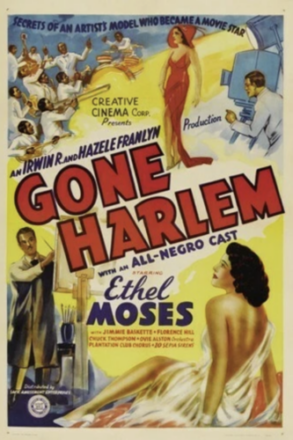
Walking tour of Harlem is part of special exhibition programming at Poster House
POSTER HOUSE WALKING TOUR WITH HISTORIAN JOHN T. REDDICK
Poster House
119 West Twenty-Third St. (tour starting point given upon ticket purchase)
Saturday, July 18, $25, 11:00 am to 1:00 pm
Exhibition runs through September 6 posterhouse.org
In September 2024, longtime Harlem resident, preservationist, and Yale University School of Architecture graduate John T. Reddick gave me a tour of the exhibit “Illustrating Tin Pan Alley: From Ragtime to Jazz” at the Society of Illustrators, consisting of his remarkable collection of sheet music art from the Tin Pan Alley era, focusing on Black composers, musicians, and performers. He told me that while doing his research, “It was just shocking; as I bought sheet music or got to see the names, I realized they all lived in Harlem during the same time period.”
Reddick is now collaborating with Poster House on a walking tour of Harlem in conjunction with the institution’s “Act Black: Posters from Black American Stage & Screen,” comprising promotional posters for musical revues, theatrical presentations, and movies featuring Black performers from the 1870s to the 1940s (including from Cabin in the Sky,Zouzou, and Imitation of Life). The one-hour tour will visit Strivers’ Row, the Schomburg Center, and Harlem Hospital’s WPA murals, among other locations that played a role in the Harlem Renaissance.
Reddick, who is a member of the Board of Directors of the Tin Pan Alley American Popular Music Project, is an engaging storyteller and a font of knowledge, so this should be a special adventure; tickets are $25, and the starting point will be given upon purchase.
[Mark Rifkin is a Brooklyn-born, Manhattan-based writer; you can follow him on Substack here.]
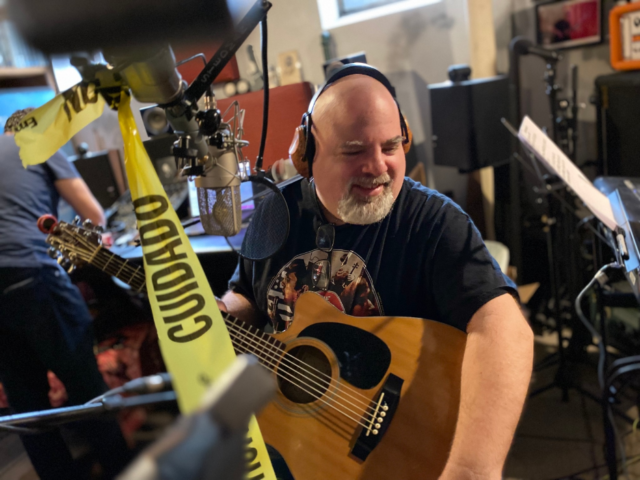
Jim Allen will be celebrating old and new music at special Brooklyn show on July 12 (photo by Therese Ragghianti)
JIM ALLEN ALBUM RELEASE AND 30TH ANNIVERSARY CELEBRATION
Young Ethel’s
506 Fifth Ave., Park Slope
Sunday, July 12, 3:00 youngethels.com jimallen.bandcamp.com
On his new record, Maybe Things Will Be Alright, singer-songwriter and music journalist extraordinaire Jim Allen delves into darkness, with such words as fear,scared,frightened,panic, and sorrow jumping out across a dozen wide-ranging tracks. But as he declares in the opening title tune, “Maybe I won’t crack up / Maybe I won’t break down / Maybe the worst is passed / and all of our dreams won’t drown / Maybe hope has got a way to hang on through the night / Who knows, maybe things will be alright.” With its bright, jangly guitar hook and lovely harmonies from dB’s cofounder Peter Holsapple, the song offers an optimistic mantra amid the world’s despair.
At last month’s twenty-fifth anniversary gala for This Week in New York, Allen reminded me that in April 2001, I was at the Ear Inn on Spring St. with him and drummer supreme Steve Goulding, mulling over my future after I had been laid off from the entertainment database company where we all were working. I described to them a plan to write about my experiences in New York City, and thus, twi-ny was born.
I’ll be returning the favor of party attendance on July 12 when you can find me at Young Ethel’s in Park Slope for an exciting doubleheader as Allen celebrates the release of Maybe Things Will Be Alright along with the thirtieth anniversary of his debut record, 1996’s Weeper’s Stomp. He’ll be playing both albums in their entirety, joined by Paul Foglino (5 Chinese Brothers), Matt Applebaum (Allen’s the Ramblin’ Kind), and Goulding (Mekons, the Rumour) on the former and guest singer Katie Curley and Applebaum on the latter. Foglino will open the afternoon with a solo set.
On the new album, anchored by the masterful Goulding, Allen explores multiple styles, from power pop, folk rock, and blues to alt country, prog rock, and even a murder ballad, resulting in a record that beautifully transcends genres. A rollicking piano, propulsive drumming, and a searing six-string solo drive “Panic Button” (“I’ve been under a doctor’s orders / Not to turn off my bedroom light”). “Let My People Go to Sleep” is a jaunty delight (“Karloff as the creature / Shock horror double feature / Only the monster in the mirror scares me / He’s locked in there forever / Unless I pull this lever / You wouldn’t want to be the one who dares me”). “In a Cave,” hoisted by a British Invasion–style organ and backing vocals by Bongos cofounder Richard Barone, needs to be the theme song for the next BritBox secret-agent series.
“Downpour Blue” (“One two downpour blue / Three feet deep in the morning dew / Four five I’m still alive / Six feet under is a dead man’s jive / There are seven ways to heaven through a poor man’s doorway”) recalls the swampy grit of the first song on Allen’s debut, “Inchworm Blues.” “Underground” begins with a nod to Supertramp. Nick Cave would be proud of the sizzling “They Get Up” (“Hard Hat Hank slips out from underneath a girder / Doing such a dizzy dance you might forget that he’d been murdered / The Lady of the Dunes lumbers madly through the sand / With a hammer in her skull and a dagger in her hand / They’d gone rotten and forgotten in their fatal plight / But they get up and walk around at night”). The twinkling “Where I Am,” with flourishes of Steve Earle as a medieval troubadour, boasts contributions by United States of America lead vocalist Dorothy Moskowitz and Lothar & the Hand People keyboardist Paul Conly. Also on the record are C. P. Roth, Rembert Block, Lizzie Edwards, Erica Smith, and Byron Isaacs.
The album concludes with the infectious “It’s Hard,” in which Allen assures us, “And it’s hard, yeah, it’s hard / I might be slightly past what you’d consider my prime / And the incline won’t diminish / Before the story’s finished / In fact it’s a perpetual climb.” The song hearkens back to the jazzy noir “Bottom Rung” from Weeper’s Stomp, in which Allen sings, “You know it really doesn’t matter / whose foot is on the ladder / when you’re living on the bottom rung.”
The story is far from finished for the Bronx born-and-raised Allen, who is perhaps just hitting his prime. In addition to making music, he writes liner notes for many reissues, posts regularly for “Rock and Roll Globe,” and pens the Bandcamp column “Prog Is a State of Mind.”
Perhaps it’s time for Allen to reconsider the title of his new album and lose that “maybe.”
[Mark Rifkin is a Brooklyn-born, Manhattan-based writer; you can follow him on Substack here.]
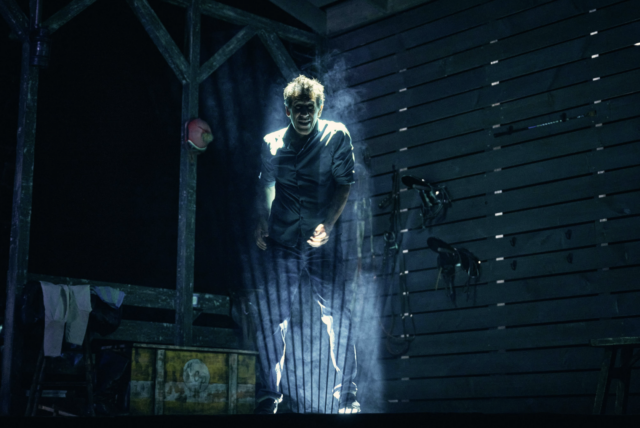
Robert Montano shares his compelling story of working as a teenager at Belmont in Small(photo by Valerie Terranova)
SMALL
The Pershing Square Signature Center
The Alice Griffin Jewel Box Theatre
480 West 42nd St. between Tenth & Eleventh Aves.
Tuesday – Saturday through July 25, $49-$119 smalltheplay.com
In the one-man 1963 Twilight Zone episode “The Last Night of a Jockey,” Mickey Rooney stars as Michael Grady, a failed jockey who, given one final chance, declares, “I wanna be big!”
In classic Rod Serling style, be careful what you wish for.
In the Drama Desk–nominated one-man show Small, Robert Montano expertly relates his real-life teenage desire to become a jockey, but, as a growing adolescent, he prays to remain small.
The fourteen-year-old Montano, known as Bobby, is only four-foot-six, the smallest kid in his class in Hempstead, Long Island. He is tired of being pushed around and dreams of something better. One day he goes to the racetrack with his mother, Gloria, a God-fearing Puerto Rican woman who sells jewelry at Fortunoffs and likes to gamble a bit, much to the consternation of her husband, Salvatore, an Italian American art professor who is prone to the drink. A client of Gloria’s, Roberto A. Pineda, is racing at Belmont Park, and she takes her son with her to place a little bet and to meet the jockey. Bobby is instantly smitten with Pineda and the Sport of Kings and begs his parents and Pineda to let him work there.
They agree, organizing his schedule around school. At the track, he meets a bigoted trainer, a bloated owner, an attractive stable hand, and other characters as he learns the ropes and pays his dues. He wants to get on a horse and race, but by the time that becomes a possibility, he has grown several inches and put on a few pounds, so his struggle to maintain the weight qualifications become a fierce battle, especially as he finds out about dangerous ways to do so.
“I was ready to put a coffee table on my head, bind my feet, whatever I had to do to stay small,” he says.
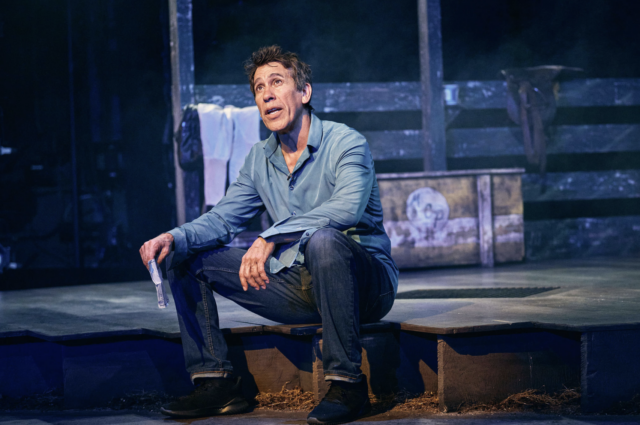
Robert Montano’s Small is back for a well-deserved encore run (photo by Valerie Terranova)
Written by Montano and directed by Jessi D. Hill (Surely Goodness and Mercy,Vanishing Point) and previously presented by Penguin Rep at 59E59 in 2023, Small unfolds like an exciting horse race all its own. Upon first seeing Christopher and Justin Swader’s set, a wooden stable with real props of the trade (by Buffy Cardoza), I was reminded of visiting the paddock before a race — I’ve been to Belmont numerous times, including several times for the Belmont Stakes, the third leg of the Triple Crown. The training scenes mirror the cadence of the horses parading in the paddock before they enter the starting gate. And when Bobby does begin getting on the horses, the pace quickens like a race, as Bobby jockeys for position, speeds up, slows down, and seizes the moment to forge ahead. As much as he wants to win, he also learns there are prices to pay and choices you can’t take back.
Montano gives a tour-de-force performance, seamlessly embodying more than a dozen wide-ranging characters as he gets the opportunity to live out his dream. Montano is an engaging performer, generous and brave, not shying away from his faults as he commands our attention with his charming demeanor. It’s dynamic storytelling even for those audience members who know the outcome. Jamie Roderick’s lighting and Brian Ronan’s sound enhance the action, whether Bobby is at the track, home with his parents, trying to make the weight — he refers to the scale, depicted as a bright white light on the floor, as “the monster” — or partying at a disco, where he discovers there may be something very different in his future.
Right outside the theater is a large board with information about Montano’s career, including archival photographs and his actual jockey uniform; if you want to be surprised by his life story, don’t check it out until after the play, when you can enjoy it with a newfound perspective.
With most tickets only $49–$69, Small is one of the best bets around. Or, as Serling said in the closing narration for “The Last Night of a Jockey”: “You can make a parimutuel bet on this, win, place, or show, in or out — of the Twilight Zone.”
I can assure you that this one is a big winner.
[Mark Rifkin is a Brooklyn-born, Manhattan-based writer and editor; you can follow him on Substack here.]
“I’m ready to roll the end credits / Ready for the curtain call,” Jesse Hartman sings on a remastered version of “End Credits,” one of seven tracks on Laptop’s new EP from Hurricane Cove. The original was released in 1997 and appeared on the 2001 album, Opening Credits, but Hartman decided to revisit it after Doublespeak, consisting of Erasure’s Vince Clarke, Blancmange’s Neil Arthur, and producer and musician Benge, teamed up for a surprise cover that came out in May.
In addition to five versions of that track — “Remaster,” “Tower of Babel,” “Director’s Cut,” “The Sweet & Lowdown,” and “The Rise and Fall of a Phone Call” — the EP includes covers of Blancmange’s “Living on the Ceiling” and Erasure’s “Love to Hate You” as a kind of thank-you.
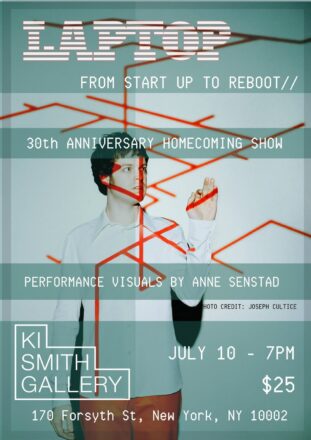
The curtain is not quite ready to close on Laptop and Hartman, who will be performing a rare live show on July 10 at Ki Smith Gallery on the Lower East Side, a thirtieth anniversary homecoming that will feature songs from their heyday, 1997–2003, accompanied by visuals from multidisciplinary artist Anne Senstad.
In addition, for the first time in more than twenty-three years, Laptop will be releasing a record of new material, On This Planet, in September, featuring such tracks as “Confused,” “Xanadu,” and “Squirrel-a-Bug.” It’s a very different kind of album from Laptop, with more pop elements, but they still capture the state of the world, and the band itself, starting with the opening track, in which Hartman explains, “It’s getting weirder and weirder / on this planet.”
Yes it is.
[Mark Rifkin is a Brooklyn-born, Manhattan-based writer; you can follow him on Substack here.]
Hirokazu Koreeda’s Sheep in the Box closes the 2026 Japan Cuts festival
JAPAN CUTS: FESTIVAL OF NEW JAPANESE FILM
Japan Society
333 East 47th St. at First Ave.
July 8–19, $16-$20 www.japansociety.org
“The world is full of strange things,” a narrator says in one of the films that make up this year’s “Japan Cuts: Festival of New Japanese Film,” running July 8–19 at Japan Society. As always, the nineteenth edition of the hotly anticipated series is chock full of strange things, as well as things of beauty — and often both at the same time.
Japanese films may come in all genres, but the best of the best tend to veer off track into their own indefinable categories, and the 2026 iteration is no different, with more than its share of exciting, unusual, frightening, romantic, bloodthirsty, chilling, touching, and gorgeous works. There are twenty-seven programs divided into five sections: “Feature Slate,” “Next Generation,” “Classics,” “Documentaries,” and “New Directions in Japanese Cinema.”
The festival opens July 8 with Yoji Yamada’s ninety-first full-length film, Tokyo Taxi, followed by a reception with Twisty BonBon. The centerpiece selection is Kei Ishikawa’s A Pale View of Hills, followed by a Q&A and reception with star Suzu Hirose, winner of the Cut Above award. The closing-night film is Hirokazu Koreeda’s Sheep in the Box, followed by a Q&A and reception with the director.
Below is a look at some of the other highlights, with more strangeness to come.
SHUFFLE (『シャッフル』) (Gakuryu Ishii, 1981) THE MASTER OF SHIATSU (『指圧王者』; SHIATSU OJA) (Gakuryu Ishii as Sogo Ishii, 1989)
Saturday, July 11, 5:30 japansociety.org
One of the myriad reasons to check out Japan Cuts is for double features such as this wild one, the world premieres of 4K restorations of Gakuryu Ishii’s 1981 thirty-seven-minute Shuffle and 1989 thirteen-minute The Master of Shiatsu.
The Master of Shiatsu begins with a close-up of a woman’s left hand stroking a man’s right hand in what appears to be an elegant bar. Bright lights glow from the contact, a crazy laugh is heard, and the opening credits roll, the title in a wacky design reminiscent of 1970s wuxia films. Ishii then cuts to a feather floating into a candle and a woman (Anna Hole) getting a deep, erotic massage from an older man (Tokujiro Namikoshi, the real-life Father of Shiatsu). Wonderfully cheesy special effects take them both to another dimension, leading to a very strange but optimistic finale.
Inspired by Katsuhiro Otomo’s manga Run, the mostly black-and-white Shuffle begins with a close-up of a young punk, Hiroshi Kobayashi (Yosuke Nakajima), cutting off his hair when a small earthquake hits, knocking down some of the bullets next to a handgun. He peers out his window at two men in suits surveilling the area, then heads outside, where he is spotted by one of the detectives (Tatsuya Mori). What ensues is one of the wildest foot chases you’ve ever seen, a brilliantly filmed frenetic pursuit, set to Hikashu’s propulsive score, in which neither man is willing to give up. The action cuts away a few times to reveal a back story involving a femme fatale, Naomi (Shigeru Muroi), and a gangster, Kimura (Genjirō Arato), but keeps returning to the seemingly endless hunt, with Kobayashi hallucinating, in color, moments from his past.
Both films create fantastical realities with characters immersed in activities that release endorphins and dopamine that the audience tunes in to, The Master of Shiatsu slowly paced and intimate, Shuffle a marathon sprint Ishii called “a portrait of my generation.” I dare you to not think about these films the next time you get a massage or go running, for whatever reason.
Four sisters come together after their father’s death in another masterpiece from Hirokazu Koreeda
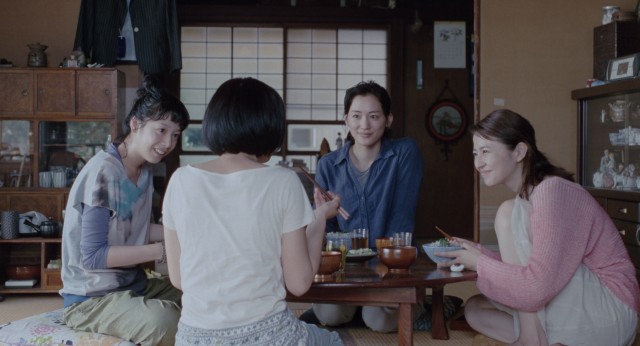
In such films as Still Walking,Nobody Knows, and Like Father, Like Son, Japanese writer-director-editor Hirokazu Koreeda has crafted beautifully told tales of parents and children, of estrangement and divorce, of death and ritual and the unbreakable bonds between siblings. In yet another minimalist masterpiece, Our Little Sister, he focuses on the women of the happily dysfunctional Kōda family in the scenic city of Kamakura. Sachi (Haruka Ayase), Yoshino (Masami Nagasawa), and Chika (Kaho) live together in a large house, where they go about their days with the normal trials and tribulations of twentysomething women. Sachi, the oldest, is a nurse who acts as a surrogate mother to her younger sisters, since their real mother plays almost no role in their lives. Yoshino, the middle sister, works in a bank and likes to stay out late drinking and partying. And Chika, the baby of the trio, is sweet and goofy, but not as goofy as her mountain-climbing boyfriend. When their long-estranged father dies, they decide to attend the funeral, where they meet their dad’s thirteen-year-old daughter from his second of three marriages, Suzu Asano (Suzu Hirose), a solid, smart girl who seems a bit lost now that both of her parents are dead. So the three older sisters invite her to move in with them in Kamakura and extend their family. The four immediately grow close as they live their daily lives, going to work or school, eating together, interacting with the opposite sex, and honoring their deceased ancestors. Suzu also regales them with tales of their father, some of which surprise them. Not a whole lot happens except a series of heartfelt, realistic scenes that audiences of all kinds can relate to.
Freely adapted from Akimi Yoshida’s josei manga Umimachi Diary,Our Little Sister simmers with the beauty and energy of real life, as Koreeda offers viewers a fly-on-the-wall look at four exquisite women living day by day. Koreeda once again blends documentary techniques with the intimate style of Yasujirō Ozu to fully develop his delightful characters, from the four sisters to their great-aunt to a student smitten with Suzu to local diner owner Sachiko Ninomiya (Jun Fubuki), who serves as a kind of tenderhearted matriarchal figure to the community. Yoko Kanno’s sweet music and Mikiya Takimoto’s lovely cinematography make it all a visual and aural pleasure, along with a fabulous cast that acts with an infectious naturalism. No one makes family dramas like Koreeda, who skillfully avoids treacly plot twists in favor of simplicity, making it all seem easy. If you’ve never seen a Koreeda film, Our Little Sister is a great place to start, and if you have experienced any of his previous work, this one is another gentle, graceful, and immensely engaging tour de force from one of the world’s most talented and original filmmakers. His latest, Sheep in the Box, closes “Japan Cuts” on July 19.
Kura (Kei Nakafuji) and Kishida (Kai Fujita) are reunited high school friends in Gingerboy
GINGERBOY (『ジンジャーボーイ』; JINJABOI; SEPARATED) (Miki Tanaka, 2024) NAOMI OUT OF SYNC (『空回りする直美』; KARAMAWARI SURU NAOMI) (Fuku Nakazato, 2025)
Tuesday, July 14, 9:00 japansociety.org
The North American premiere of Miki Tanaka’s forty-eight-minute Gingerboy and the international premiere of Fuku Nakazato’s forty-four-minute Naomi Out of Sync make for a strangely compelling double feature. Part of “Next Generation,” in which one filmmaker will take home a three-thousand-dollar stipend, the movies both explore offbeat relationships, obsession, and physiological and neurodevelopmental conditions.
Winner of a joint third prize La Cinéf Selection award at Cannes, Gingerboy reunites high school friends Kishida (Kai Fujita) and Kura (Kei Nakafuji), whose lives have gone in opposite directions. The former is a regional banker who has been transferred to Tokyo, while the latter is an aspiring ne’er-do-well filmmaker. Kishida puts on a suit for work and has a girlfriend back home; he is quiet and unassuming, serious about his career. “I’m not nice,” he admits to a coworker. “It’s just a hassle to say no.” Kura is unpredictable and unkempt, wasting away the days and partying at night with booze and women. At first Kishida goes out with Kura, but he soon makes some discoveries about his roommate that complicate their friendship, even as Kura grows more dependent on him. Nakazato creates unique characters in knotty situations in a tense narrative that builds to a moving conclusion that provides no easy answers.
Naomi (Kono Adachi) and Shingo (Masafumi Shinohara) try the best they can in Naomi Out of Sync
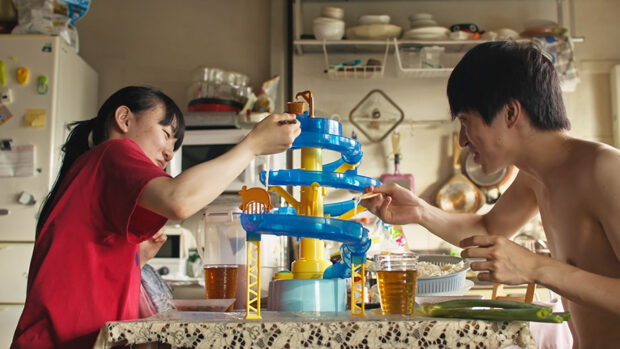
In Naomi Out of Sync, Kono Adachi is delightful in the title role, an eighteen-year-old part-time employee caring for her her older brother, Shingo (Masafumi Shinohara), who has debilitating Tourette’s, while her father (Wataru Ohshige) is away. Naomi works at a supermarket but has trouble focusing on her job; when she gets disciplined, it looks like she’s not taking it seriously, but that’s just the way she approaches life. “What goes on in her head? And she always smiles when I scold her. What is she grinning about?” her boss asks another manager. When Shingo sells her clothes so he can buy a plastic toy, instead of getting mad, Naomi slurps down noodles she and Shingo slide through the toy. Naomi’s main responsibility is to make sure Shingo takes his medication, but when that goes awry, serious problems arise. But as her T-shirt says: “Fully honest: Believe in yourself.”
Winner of the Grand Prize at the PIA Film Festival, Naomi Out of Sync is an affecting drama about a dysfunctional family in which the two kids are trying to do the best they can, not unlike Kishida and Kura in Gingerboy. Kono is mesmerizing as Naomi; even when Naomi makes questionable decisions, you can’t help but be charmed by her, rooting her on as she stands by her choices. And oh, that surprise ending, one that is deeper than you might first imagine.
[Mark Rifkin is a Brooklyn-born, Manhattan-based writer; you can follow him on Substack here.]
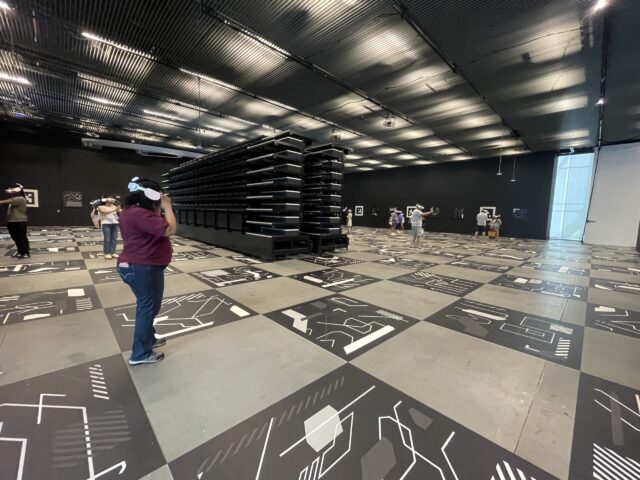
The Black Mirror Experience takes place on a special grid at the Shed (photo by twi-ny/mdr)
THE BLACK MIRROR EXPERIENCE
The Shed
545 West 30th St. at Eleventh Ave.
Tuesday – Sunday through September 6, $56.35-$79.35 (approx. 10% discount for groups of four to six; priority access for VIP) theshed.org nyc.theblackmirrorexperience.com
The Black Mirror Experience is an ultracool interactive, immersive, participatory, multimedia, AI-generated, virtual reality presentation at the Shed that puts you inside an episode of the hit streaming series.
Inspired by The Twilight Zone,Black Mirror is an Emmy-winning British anthology show created in 2011 by Charlie Brooker; there have been thirty-two episodes across seven seasons in addition to two specials, with a dedicated focus on how advancements in technology impact the future of humanity.
In The Black Mirror Experience, which earned a Special Mention at the 2026 Cannes Film Festival and is concurrently taking place in Montreal and Madrid as well as New York City, groups of up to six people at a time, wearing VR headsets, enter the mysterious world of Phaethon Labs. Each person has their biometrics scanned in order to create their own LifeAgent, a lifelike avatar, and then is thrust into an original story by Brooker that introduces the LifeAgent Integration Pathway, leading from a store, a life goals selection, and general orientation to a neural mapping facility, the LifeAgent Customization Centre, a testing playground, and final delivery. Its motto: “Do less. Live more.”
“At Phaethon, we believe in reversing time’s decline, because your LifeAgent exists to give you back what time has taken: space, clarity, energy, and self. Which is why our origin story imagines these ancient ages in reverse,” Phaethon Labs founder Dakota “Cody” Winters explains.
Phaethon is named after the Greek demigod who searched for his father, Helios, and traveled too close to the sun, an apt metaphor for the dangers of AI. A chart details Phaethon’s brief history from the Genesis Iron Age in 2025, the Breakthrough Age of Heroes in 2027, and the Revelation Bronze Age in 2028 to the Evolution Silver Age in 2029 and the Revolution Underway Golden Age in 2030 and beyond. Various items are on display, including a PhaethonVault, which stores thoughts and memories; PhaethonSync neural implants for communicating with your LifeAgent; and an Emotional Intelligence Filter.
“I wasn’t trying to create a new kind of AI. I was just trying to understand how my own brain worked,” Winters states.
The journey into the AI world is a VR marvel. I had two companions in my group; we boarded a shuttle that moved us into various fantastical realms, where we competed in a game show, formed a band, danced, painted, and spoke with Sigmund Freud. Through it all, we were accompanied by our LifeAgent, which gets pretty creepy, for reasons I won’t divulge here. Just when you think the credits are going to roll — without ever having kicked into overdrive — a spectacular twist sends you deep into a darkly threatening society from which escape will not come easily. It’s absolutely thrilling as you battle strange creatures, claustrophobic rooms, and yourself, desperately attempting to survive against ever-mounting odds.
Depending on your answers to several questions, some of the details of your adventure will be different from those of your friends, just like in real life. At one point, I was luxuriating in a gorgeous mountain mansion, a tiger by my side, while my wife was advising a small cult in Bhutan.
The narrative reaches its epic conclusion after about fifty minutes; when you return your headset, you get to see others in the midst of the odyssey, which is in itself a fun revelation.
“Is that we looked like?” I asked a member of the staff.
“Yup,” she responded with a smile.
I’m not a video-game player, but I had a blast. I am a big fan of Black Mirror, but you don’t have to know anything about it to get caught up in these proceedings. (However, you should watch the show, which casts a sharp reflection on who we are and where we are going; I suggest starting with “The National Anthem,” “San Junipero,” and “USS Callister.”)
On the way out, you are given a link to a video that re-creates your actions not the way you saw them but how the technology has re-created it.
Like most of us, I have severe suspicions about the future of AI, but when it is used for such astonishing, harmless exhilaration as The Black Mirror Experience, count me in as one of the converted.
[Mark Rifkin is a Brooklyn-born, Manhattan-based writer; you can follow him on Substack here.]
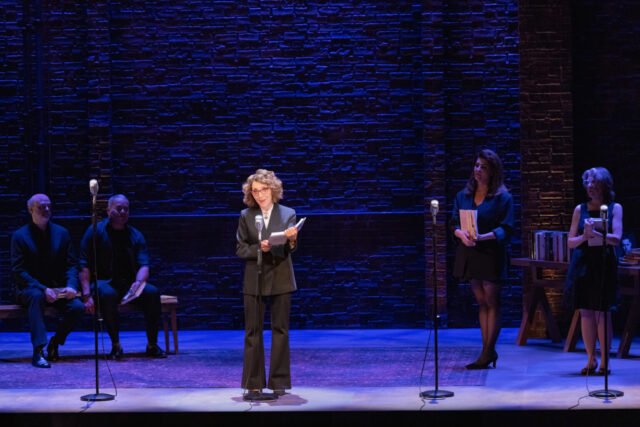
Andrea Martin was one of many celebrity guests reading about other celebrities in Celebrity Autobiography (photo by Evan Zimmerman)
CELEBRITY AUTOBIOGRAPHY
Shubert Theatre
225 West Forty-Fourth St. between Broadway & Eighth Ave
Closed June 21, $49-$329 celebrityautobiography.com
The trouble was obvious from the start. Eugene Pack’s Celebrity Autobiography made its Broadway debut at the Shubert on May 18; when I saw it on June 1, the audience was so sparse that they roped off the mezzanine and moved everyone down to the orchestra; still, there were plenty of empty seats. Scheduled to run through August 16, the show closed early, after the June 21 performance.
Which is a shame, because it was a lot of fun, with great rotating casts and a ton of laughs. But perhaps its eyes were bigger than its stomach.
Since 1998, Celebrity Autobiography has been a hit in cities around the world, packing them in at clubs from New York and Los Angeles to London and Sydney. For its Broadway run, it announced an enticing list of stars who would participate in the show’s novel structure, which is neither drama nor comedy and nearer to stand-up. A row of celebrities stand at mics, reading excerpts from the memoirs of other celebrities, with their tongues either firmly placed in their cheeks or attacking the often mind-boggling prose with virtuoso gusto.
Perhaps in our celebrity-obsessed, social-media-dependent culture, it was too much, too mean-spirited. Certainly, the top ticket price of $329 was exorbitant wishful thinking, but it was well worth the $49 for the cheap seats.
I caught a lovely group of actors having an infectiously fabulous time onstage, even when the histrionics did get excessive. Ralph Macchio kicked things off with David Hasselhoff’s Don’t Hassel the Hoff, allowing time for the audience to burst out in gleeful guffaws. Robert Sean Leonard cast sly glances about as he read from Ryan Seacrest and Geraldo Rivera. Mario Cantone couldn’t contain himself as he did wicked impressions while sharing passages from Carol Channing’s Just Lucky I Guess and Kathleen Turner’s Send Yourself Roses. Pamela Adlon took on Arnold Schwarzenegger and Oprah. Gina Gershon channeled Celine Dion and Cher. Nia Vardalos brought down the house with her interpretation of Khloe Kardashian.
The most hilarious mashup was the back and forth between Macchio/Justin Bieber and Andrea Martin/Kylie Jenner discussing Leonardo da Vinci’s Mona Lisa. The sports section was highlighted by Pack reading from Tiger Woods’s How I Play Golf, which sounded more like a sex manual. Dayle Reyfel, who developed the show with Pack in the late 1990s and directed the Broadway edition with him, brings us Dolly Parton’s thoughts.
Adding in the poetry of Matthew McConaughey and Suzanne Somers didn’t fit and in the latter case was particularly cruel. A segment dedicated to Debbie Reynolds, Eddie Fisher, Elizabeth Taylor, and Richard Burton was a dishy delight but couldn’t possibly appeal to younger audiences.
Was that enough to kill off the Broadway run? Not in my opinion, as most of the ninety minutes were filled with a plethora of humor, helping us forget about the horrors occurring outside in the real world, far beyond star culture.
Among the others who got to appear in the show before its shuttering were Brooke Adams, Lewis Black, Matthew Broderick, Danny Burstein, Katie Couric, Christopher Jackson, Eric McCormack, Ray Romano, Phil Rosenthal, Daphne Rubin-Vega, Tony Shalhoub, Keenan Thompson, and Rita Wilson; those waiting in the wings included Jason Alexander, Christie Brinkley, Bob Costas, Griffin Dunne, Susan Lucci, Billy Porter, and Tiler Peck.
In 2009, Celebrity Autobiography won a Drama Desk Award for Unique Theatrical Experience; it is still a unique theatrical experience, though maybe not unique enough for 2026 audiences.
[Mark Rifkin is a Brooklyn-born, Manhattan-based writer; you can follow him on Substack here.]