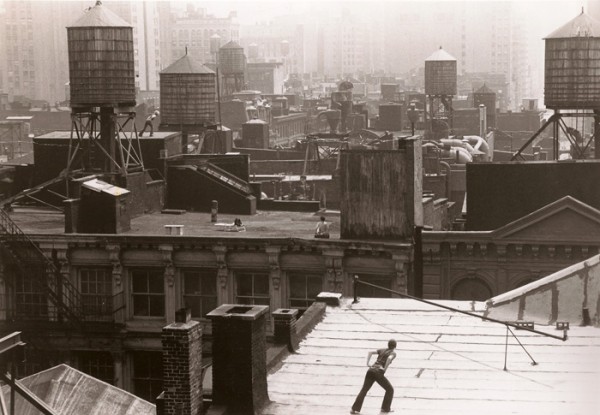
Trisha Brown Dance Company, “Roof Piece,” 1971 (photo by Babette Mangolte)
The High Line
Enter at 13th St. & Gansevoort
June 9-10, 7:00 pm
June 11, 5:00 & 7:00 pm
Admission: free
www.thehighline.org
www.trishabrowncompany.org
twi-ny slideshow
The Trisha Brown Dance Company has had quite a fortieth anniversary year, performing old and new works all over the world, including special shows at the Whitney and MoMA. They are concluding the celebration with a re-creation of their seminal 1971 dance “Roof Piece,” which will take place June 9-11 on rooftops surrounding the south end of the High Line. Unseen on outdoor rooftops since 1973, the piece, which is part of the High Line Art program, will feature the dancers — Neal Beasley, Elena Demyanenko, Dai Jian, Leah Morrison, Tamara Riewe, Nicholas Strafaccia, Laurel Tentindo, Samuel von Wentz, and Lee Serle — reacting to one another’s movement with improvisation. Admission is free and no RSVP is required, but be prepared for long lines to witness this wholly unique and exciting experience. The High Line is also likely to be crowded now that section two just opened, extending the former abandoned railway, which has been turned into a beautiful park, all the way to Thirtieth St. And keep a look-out for the various art projects along the High Line, including Kim Beck’s “Space Available,” which can also be found on surrounding rooftops; Julianne Swartz’s “Digital Empathy” sound pieces; Sarah Sze’s “Still Life with Landscape (Model for a Habitat)”; Stephen Vitiello’s “A Bell for Every Minute” installation; Spencer Finch’s “The River That Flows Both Ways,” about the Hudson; and official High Line photographer Joel Sternfeld’s “A Railroad Artifact, 30th St., May 2000.”
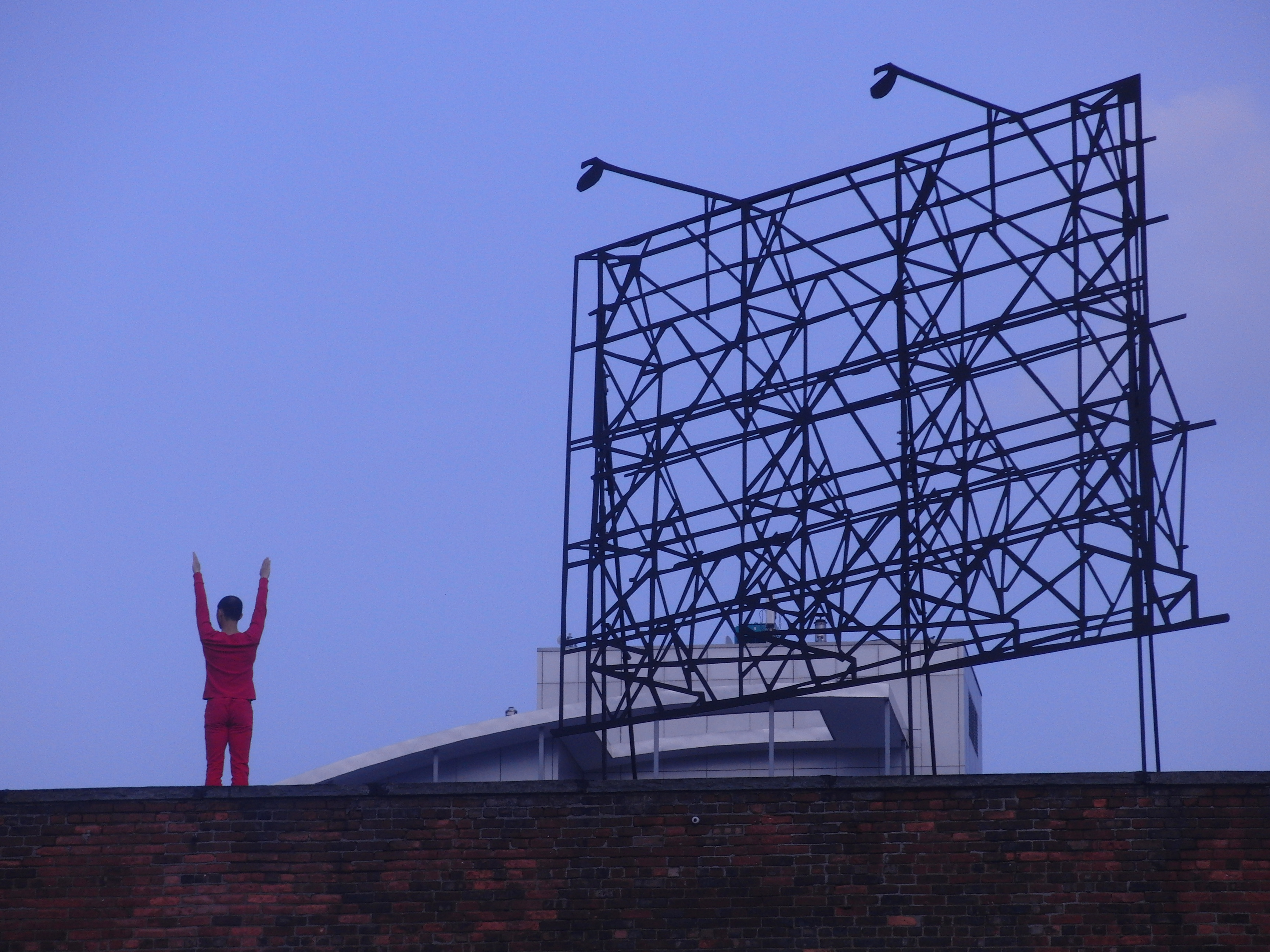
Trisha Brown Dance Company triumphantly re-creates seminal “Roof Piece” along the High Line to conclude fortieth anniversary (photo by twi-ny/mdr)
Update: On a beautiful early Friday evening on the High Line, Trisha Brown re-created her thrilling “Roof Piece” as hundreds of visitors lined the southern end of the High Line. Nine dancers wearing bold red outfits were spaced around the elevated park, two on the High Line itself, seven others scattered on surrounding rooftops, one dancer nearly within arm’s reach, another far off in the distance, barely visible. Improvised within a set dance vocabulary, the work begins as one dancer improvises the first move, which is then repeated as it travels from dancer to dancer in a specific order that recalls a visual game of telephone (and is then reversed), only without any mangling of the words. Although they’re all performing the same slow movements, they each come off in different manners, one dancer seen against the blue sky, another against a white brick wall, a third against the Jersey skyline, a fourth in a rectangular doorway that resembles a framed work of art. In an odd way, they recall Antony Gormley’s life-size, rooftop statues (“Event Horizon”) that filled Madison Square Park and the Flatiron District last year. There is no single place to be able to see all the dancers at once, so make your way around the area to catch each one. The thirty-minute performance, which concludes TBDC’s fortieth anniversary year, will be repeated Saturday at 5:00 and 7:00, with Sunday as a rain date in case one of the shows is canceled because of bad weather.
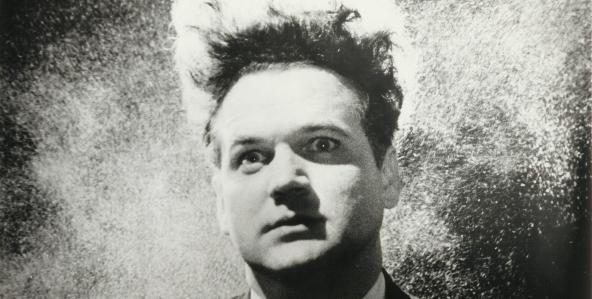
 David Lynch’s debut feature is about faith, fidelity, and fatherhood. Jack Nance stars as Henry Spencer, a lonely, scared man who suddenly has to raise his newborn child himself after his girlfriend, Mary X (Charlotte Stewart), leaves. Oh, it’s also about fear, fascination, and futility, the most bizarre film ever made by a major director. The avant-garde narrative seems to come from another dimension, with mutants, decapitation, a lady in a radiator, and a pencil-making machine. Everything about the movie, shot in creepy black and white, is strange, from the sound to the special effects to the bizarre score to the greatest hairstyles this side of BARTON FINK. It’s nearly a one-man show, with Lynch serving as writer, director, composer, producer, art director, production designer, editor, and special effects guru. ERASERHEAD is an amazing, unforgettable journey through the diseased mind of a madman. You haven’t truly lived until you’ve seen it at least once.
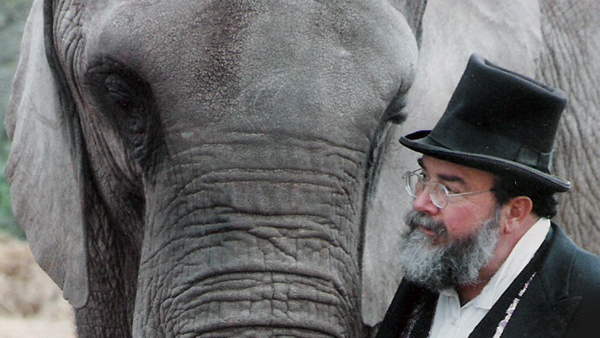
 One Lucky Elephant follows the heartwarming — and heartbreaking — story of a very different kind of relationship, one that audiences will find hard to forget. In 1984, when she was two years old, Flora the elephant was orphaned when poachers killed her family in Zimbabwe. She was shipped off to America, where she was soon purchased by Ivor David Balding, who quickly made her the centerpiece of his Circus Flora. In May 2000, filmmakers Lisa Leeman and Cristina Colissimo were invited to document Flora’s farewell performance, as she was ready to retire from something she had seemingly loved doing for so many years. Balding and Flora are shown to be like doting father and precocious daughter; as he talks about what is next for Flora, she playfully harasses him. But what’s next for Flora turns out to be the focus of the the film, as Balding’s sincere attempts to return Flora to the African wild, or even to a zoo or sanctuary, are met with rising challenges, often exacerbated by her unwillingness to be apart from him. “It’s hard to think that maybe I’d made a mistake to take this elephant’s life and merge it with mine,” he says at one point. Leeman ended up spending ten years following what she calls “a father-daughter interspecies story,” as Balding meets with such experts as Ron Magill of the Miami Metrozoo, Willie Theison of the Pittsburgh Zoo, and Carol Buckley of the Elephant Sanctuary in his never-ending quest to do right by Flora, whose long-term relationships with people have complicated the situation. But as much as the film is about this unique pair of individuals, it also deals with such issues as natural habitat, safe animal environments, and humanity’s responsibility to the animal kingdom. You might never look at a zoo — and certainly an elephant — in the same way again. One Lucky Elephant opens tonight at Film Forum for a two-week run, with director Leeman and cowriter, producer, and cinematographer Colissimo on hand at the 6:30 screenings on June 8, 10 & 11 to discuss the film; on June 8 they will be joined by Dr. Iain Douglas-Hamilton of Save the Elephants and and Joshua Ginsberg of the Wildlife Conservation Society.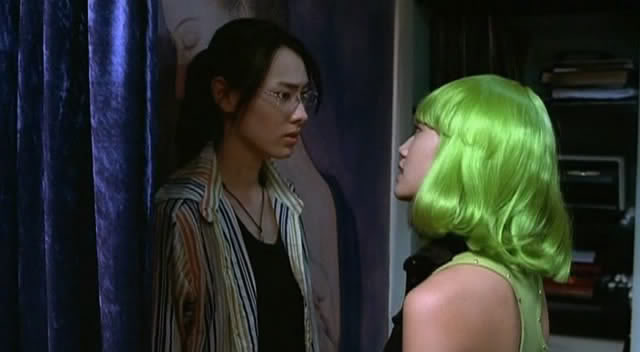
 Winner of the Teddy Award for best queer feature film at the 2007 Berlinale, Zero Chou’s Spider Lilies is an involving melodrama that starts out silly and quirky but quickly turns to far more serious topics. Rainie Yang is delightful as eighteen-year-old Jade, a kawaii innocent who tries to make money as a sexy web-cam girl but never goes too far, sometimes because her granny walks into her room and looks into the camera at rather inappropriate moments. When one of her loyal followers — an internet cop participating in a sting to entrap online sex sites but who harbors a hidden affection for Jade — suggests she get a tattoo, Jade goes to a local parlor run by Takeko (Isabella Leong), a slightly older young woman whom Jade had a puppy-dog crush on when she was nine. But Takeko, a serious person with a wild tattoo running up and down her left arm, doesn’t seem to remember Jade, at least not at first. When Jade asks for the same spider lily tattoo, Takeko refuses, claiming that they “are the flowers that grow along the path to hell.” Indeed, Takeko seems to live in a private hell all her own, filled with haunting childhood memories centered around an earthquake that killed her father and left her brother, Ching (Shen Jian-hung), with severe mental problems that require special care. She is also a surrogate older sister for Ah-Dong (Shih Yuan-chieh), a wannabe-rebel who finds strength and confidence from Takeko’s tattoos but uses them to bully unsuspecting students. Although the story, written by Singing Chen, goes off on too many tangents, Chou brings everything together as the characters approach a bittersweet finale. Leong and Yang make a fascinating potential couple; Chou, the only openly lesbian filmmaker in Taiwan, prepared them for their roles by having them watch episodes of The L Word. Spider Lilies continues Chou’s use of one of the colors of the gay pride rainbow flag in each of her films; in this case, she features green, seen in the flashy wig that Jade wears. Spider Lilies will be shown at the New York Public Library for the Performing Arts on June 9 at 6:30 as part of the series “Breaking the Waves: The Films of Zero Chou” and will be introduced by the director. The series continues on June 16 with 2004’s Splendid Float, June 23 with 2008’s Drifting Flowers, and June 30 with 2001’s Corners. Keep watching twi-ny for select reviews of these rarely shown but important and evocative works.