Yearly Archives: 2011

FRANCIS ALŸS: A STORY OF DECEPTION

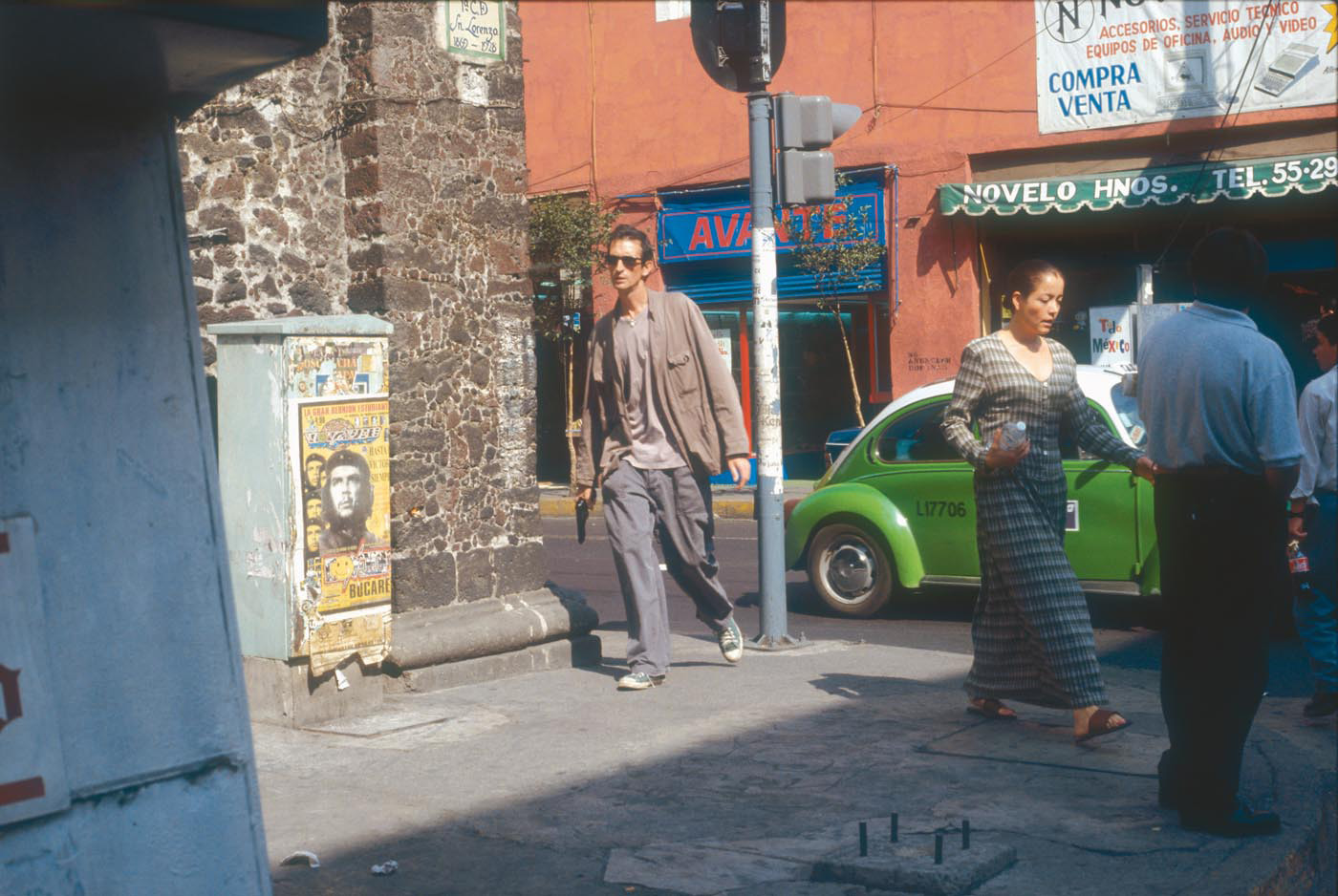
Francis Alÿs, “Re-enactments,” video (color, sound), 2001 (© 2011 Francis Alÿs)

MoMA PS1, 22-25 Jackson Ave. at 46th Ave.
Thursday – Monday through September 12, suggested admission $10 (free with MoMA admission tickets within thirty days)
718-784-2084
www.ps1.org
Museum of Modern Art, West 54th St. between Fifth & Sixth Aves.
Daily through August 1, $20 (free Fridays 6:00 – 9:00)
212-708-9400
www.moma.org

Nine years ago, Belgian-born Mexico City multidisciplinary artist Francis Alÿs led a procession from MoMA’s Midtown home to its temporary headquarters in Queens, kicking off the institution’s renovation and expansion. Now Alÿs is back, with a dual exhibition at the Museum of Modern Art’s two locations, on West 54th St. in Manhattan and at PS1 in Long Island City, once again directly linking the two buildings. “Francis Alÿs: A Story of Deception,” which continues at MoMA through August 1 and PS1 through September 12, consists of video, installation, sculpture, painting, drawing, photography, and performance from the innovative Alÿs, who is best known for staging conceptual events that confront sociopolitical and economic conditions around the world. As serious and confrontational as much of his work is, tackling such subjects as homelessness, modernization, capitalism, war, climate change, immigration, poverty, crime, governmental authority, and individual and personal freedom, however, Alÿs’s performances are also often just plain fun to watch. “The poetic qualities of Alÿs’s projects reside in their fantastical absurdity, their transience or incompletion, their imaginative imagery, and most of all in their enigmatic openness to interpretation,” Mark Godfrey explains in his essay in the excellent exhibition catalog. At MoMA, “Re-enactments” is a two-channel video in which Alÿs purchases a 9mm Beretta and walks through the streets of Mexico City — for quite a while — until the police arrest him; one monitor captures the action live, while the other shows it being re-enacted, blurring the line between fact and fiction and questioning the very nature of documentary. In “Paradox of Praxis 1 (Sometimes Doing Something Leads to Nothing),” Alÿs pushes a large block of ice around Mexico City until it melts, emphasizing a similar type of futility evident in “When Faith Moves Mountains,” which involves five hundred mostly student volunteers with shovels displacing ten centimeters of a sand dune. Alÿs’s theme of “Maximum effort, minimum result” can also be seen in “Rehearsal I (El Ensayo),” as a red VW Beetle heads up a steep dirt road outside of Tijuana, moving forward while a brass band on the soundtrack plays, but every time the band pauses or stops, the driver takes his foot off the gas, sending it back down the hill. Every forward step of progress is followed by two steps back.
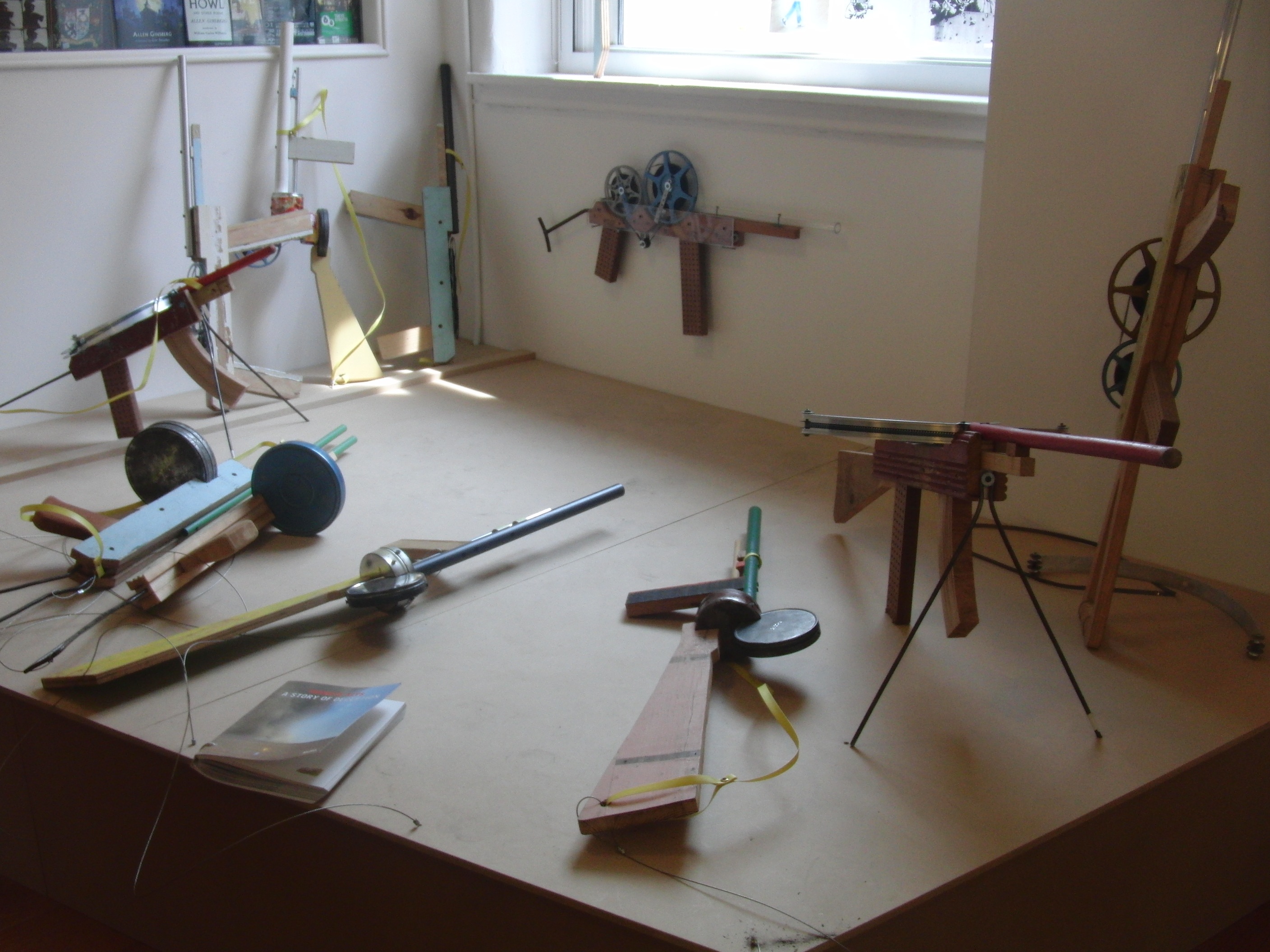
Francis Alÿs, “Camguns,” wood, metal, plastic, film reels, and film, 2005-6 (photo by twi-ny/mdr)

The works at PS1 have similar themes but different endings that comment on the limits of success. In the sensational “Guards,” one of the longest videos in the exhibition at thirty minutes, sixty-four Coldstream Guards, in their Beefeater-like uniforms, traverse the streets of London on their own, joining up with other guards when they see them, marching in step until they are finally all together, in formation, heading to a bridge, where it all devolves into chaos. In “Duett,” a tuba is broken down into two parts, each given to a man who goes off in different directions in Venice, then wander through the city until they find each other, put the instrument back together, and one plays a single note for as long as he can hold his breath while the other claps for as long as he can hold his, a sort of competition between performer and audience, action and reaction. Scattered throughout PS1 are nine monitors that comprise “Choques,” a depiction of a man falling over a dog, seen from nine different angles but still impossible to figure out exactly what happened. As at MoMA, the video projects are accompanied by detailed notes, sketches, and explanations about their derivation and execution. Both museums also feature numerous small-scale oil paintings, including the continually reworked and rather charming palimpsests “La Temps du sommeil,” that further Alÿs’s exploration of change and action. In many ways, “Francis Alÿs: A Story of Deception” can be best summarized by the series of camguns in the PS1 café, a group of wooden rifles that incorporate found film reels instead of bullet chambers, evoking the artist’s confrontational nature, attacking subjects through film but in this case allowing visitors to pick up the “weapons,” making them active participants. Collaborating with Olivier Debroise, Rafael Ortega, Julien Devaux, Artangel, and Cuauhtémoc Medina, Alÿs provides an engaging, at times incomprehensible, but most often exhilarating challenge to the audience, the status quo, and contemporary reality itself through his thought-provoking, provocative works.
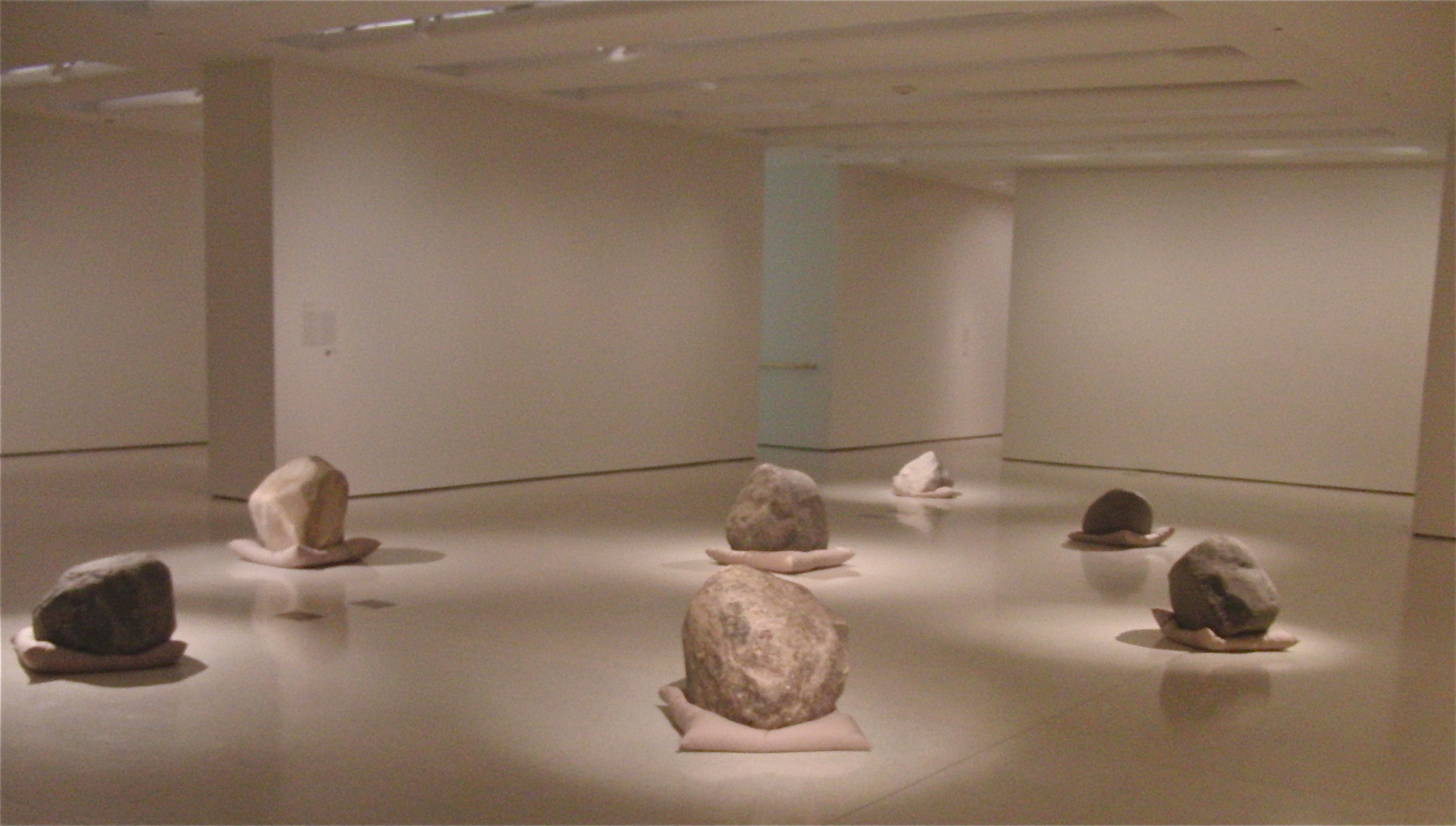

ART OF ENCOUNTER: GALLERY READINGS

Lee Ufan, “Relatum (formerly Language),” cushions, stones, and light, 1971 (photo by twi-ny/mdr)

Solomon R. Guggenheim Museum
1071 Fifth Ave. at 89th St.
Tuesday, July 26, $10, 6:30
212-423-3587
www.guggenheim.org

“Infinity begins with the self but is only manifested fully when connected with something beyond the self,” Lee Ufan wrote in 1993. “I do not want to fix or represent the self as self, but to recognize the existence of the self in relationship with otherness and perceive the world in a place where such a relationship exists.” One of the many pleasures of the Guggenheim’s current dazzling retrospective, “Lee Ufan: Marking Infinity,” is the inclusion of many quotes from the Korean visual artist and theoretician, who has written extensively about his work specifically as well as the making, or “not-making,” of art in general. Scattered throughout the exhibit and translated on the audioguide, the quotes lend thought-provoking, illuminating insight into Lee’s creative process. On Tuesday, July 26, a group of artists and thinkers will gather among Lee’s Mono-ha (“School of Things”) “living structures” and paintings and read selections from his writings, including Laurie Anderson, Jonah Bokaer, Young-ha Kim, Larissa MacFarquhar, Andrew Solomon, and John Yau, followed by a reception. “Expression achieves externality that is simultaneously passive and active. I hope to cut into the controlled everyday reality of industrial society, breathing fresh air into it and stimulating an awareness of infinity that transcends the human, to awaken a world that is always open,” Lee wrote in 1970. This special program is being held in conjunction with the Korea Society exhibition “The Writings of Lee Ufan,” which continues through August 15; the Guggenheim show runs through September 28.

SUMMERGARDEN: NEW MUSIC FOR NEW YORK

Pianist Geri Allen will lead Timeline in a jazz show July 31 in MoMA’s sculpture garden

Museum of Modern Art
The Abby Aldrich Rockefeller Sculpture Garden
West 54th St. between Fifth & Sixth Aves.
Sunday, July 24 & 31, free, gates open at 7:00, concert begins at 8:00
www.moma.org
sculpture garden slideshow

The final two concerts in MoMA’s free annual Summergarden series take place July 24 & 31 in the Abby Aldrich Rockefeller Sculpture Garden, where you can hear classical music and jazz amid some of the finest sculptures from the Museum of Modern Art’s collection. On July 24, “Juilliard Concert II: New Music for String Quartet” will feature violinists David Fulmer and Rebekah Durham, violist Jennifer Chang, and cellist Avery Waite from the New Juilliard Ensemble performing the Western Hemisphere premiere of Jiří Kadeřábek’s “Barefoot Boy!” and the New York premieres of Judith Lang Zaimont’s “The Fugue” for string quartet, Carson Cooman’s “Four Aphoristic Inventions,” “Tombeau-Aria,” and “Estampie” for two violins, and Louis Andriessen’s “Facing Death.” On July 31, “Jazz Concert II: Geri Allen and Timeline” will combine music and movement with pianist Geri Allen, saxophonist JD Allen, bassist Kenny Davis, drummer Kassa Overall, and tap-dancer Maurice Chestnut in the premiere of Allen’s “Flower of May,” which honors Bill Cosby and his wife, Camille. Free admission is first come, first served, with gates opening at 7:00 and the concert starting at 8:00. Although the MoMA galleries are closed, you can enjoy the wonderful sculptures in the garden, including Auguste Rodin’s “St. John the Baptist Preaching,” Elie Nadelman’s “Man in the Open Air,” Gaston Lachaise’s “Floating Figure,” Tom Otterness’s “Head,” Henry Moore’s “Family Group,” Renee Sintenis’s “Daphne,” Henri Matisse’s “Back” series, and one of the most colorful works to ever grace the sculpture garden, Katharina Fritsch’s “Figurengruppe (Group of Figures).”

PRINCE OF THE CITY: REMEMBERING SIDNEY LUMET

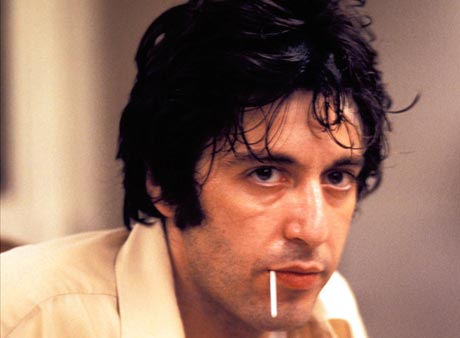
Al Pacino gives a fiery performance as a would-be bank robber in Sidney Lumet's DOG DAY AFTERNOON

DOG DAY AFTERNOON (Sidney Lumet, 1975) and SERPICO (Sidney Lumet, 1973)
Film Society of Lincoln Center, Walter Reade Theater
165 West 65th St. at Amsterdam Ave.
Serpico: Saturday, July 23, 9:00
Dog Day Afternoon: Saturday, July 23, 6:30, and Monday, July 25, 1:00
Series continues through July 19-25
212-875-5601
www.filmlinc.com

The Film Society of Lincoln Center’s tribute to the late Sidney Lumet continues tonight with two of the Philadelphia-born New Yorker’s greatest works, a pair of tense, powerful fact-based dramas starring Bronx native Al Pacino that helped define the 1970s, both onscreen and off. First up, at 6:30, is one of the most bizarre bank robberies gone wrong you’ll ever see, Dog Day Afternoon. Pacino stars as Sonny, a confused young man desperate to get money to pay for his boyfriend’s (Chris Sarandon) sex-change operation. But things don’t go quite as planned, and soon Sonny is leading the gathered crowd in chants of “Attica! Attica!” while his partner, Sal (John Cazale), wants a plane to take them to Wyoming and Det. Moretti (Charles Durning) is trying to get them to surrender without hurting anyone, primarily themselves. Dog Day Afternoon is a blistering, funny, biting commentary on mid-’70s New York as well as a fascinating character study of a deeply conflicted man. Following at 9:00 is another gritty, realistic drama, Serpico, with Pacino giving an unforgettable performance as an undercover cop single-handedly trying to end the rampant corruption that has spread like a disease throughout the NYPD. When his fellow officers and supposed friends turn their back on him, he is left on his own, vulnerable but still committed, risking both his career and his life to do what he thinks is right. Pacino is explosive in both films, playing two very different protagonists on different sides of the law yet similar in so many ways. “Prince of the City: Remembering Sidney Lumet” features three other Lumet films today, 1978’s The Wiz (10:30 am), 1968’s The Sea Gull (1:15), and 1988’s Running on Empty (4:00), while tomorrow’s schedule includes 1962’s Long Day’s Journey into Night (12:30), 1990’s Q&A (4:00), and 1981’s Prince of the City (7:15), the latter two followed by Q&As with cast members and real characters depicted in the films.

PIG OUT!

3rd Ward
195 Morgan Ave.
Saturday, July 23, free with RSVP, 2:00 – 9:00
www.3rdward.com

Brooklyn art collective 3rd Ward considers itself “an incubator for innovation and possibility” where anyone and everyone is invited “to work, play, learn, grow, and, ultimately, transform.” On July 23, the public is also invited to eat to their heart’s content at 3rd Ward’s fourth annual Pig Out! From 2:00 to 9:00, attendees will be lining up for barbecue from the Lower East Side’s Brindle Room (and you thought all those artistic types were either vegetarian or vegan), local produce from Plovgh, and live music by Union Street Preservation Society, Northern Bells, Alana & the Rough Gems, and DJs the Gorges Boys. There will also be workshops and demonstrations, including “Alginate Casting,” “Chocolate Sculpture,” “The Bicycle Doctor Is In,” and “Ingredient Challenge.”

TWI-NY TALK: JOE SIMON

Joe Simon shows off his colorful autobiography in his New York City apartment (photo by twi-ny/mdr)

JOE SIMON: MY LIFE IN COMICS (Titan, June 2011, $24.95)
www.titanbooks.com

The potential summer blockbuster Captain America opens in theaters today, but that would not have been possible without Joe Simon. Back in 1941, Simon, a native New Yorker born and raised in Rochester, teamed up with Jacob Kurtzberg, better known as Jack Kirby, and created the red, white, and blue superhero. The villain for the cover of the first issue? They came up with just the right one. “Adolf Hitler would be the perfect foil for our next new character, what with his hair and that stupid-looking moustache and his goose-stepping. He was like a cartoon anyway,” Simon writes in his entertaining, intimate, and refreshingly honest memoir, My Life in Comics (Titan, June 2011, $24.95). “We knew what was happening in Europe, and we were outraged by the Nazis — totally outraged. We thought it was a good time for a patriotic hero. . . . And that’s how Captain America was created.”

Today the ninety-seven-year-old Simon spends most of his time in his cluttered apartment just west of the Theater District, surrounded by classic drawings, sketches, and comic book covers. His works line the walls, a veritable history of the industry in black and white and color. One of the many highlights is a grand depiction of the Last Supper populated with his characters, a painting he completed with his daughter Gail. Sitting in his large, comfortable recliner in the middle of the living room, Simon is thrilled to tell tales of his days serving in the Coast Guard with Jack Dempsey, meeting Damon Runyon and Max Baer while a journalist, riding horses in Forest Park, and mentoring such comic book legends as Stan Lee. As we talk, he pulls out stunning works accumulated from throughout his fascinating career. He pauses to congratulate one of his granddaughters for passing an important college test; seven of his eight grandkids were scheduled to fly to Hollywood to walk the red carpet at the star-studded Captain America premiere. Among the other characters Simon had a hand in either creating or developing were the Fiery Mask, the Fly, the Blue Bolt, Sandman, the Newsboy Legion, Manhunter, and the Boy Commandos. An engaging character himself with a sharp memory and a wicked sense of humor, Simon discussed his book and life with twi-ny shortly before the release of the Captain America movie.

twi-ny: What was the experience like going through your past to put together My Life in Comics? Were there any particular parts of your life that were more difficult to talk about than others?

Joe Simon: This was the first time I revealed some of the more intimate details of my life, talking about my wife Harriet and my family, and some of the challenges we’ve faced. It wasn’t really difficult, but it was something I’d never really talked about before.

I feel very lucky because I have my memory. There are things that happened to me ninety years ago — such as the time I met a Civil War veteran — which I remember clearly. I’ve had a lot of exciting things happen to me over the course of ninety-seven years, and it was wonderful to be able to get them down on paper, for everyone to experience.

twi-ny: In the book, you note that you and many of your earliest colleagues come from immigrant Jewish families working in the clothing business in New York City. Do you think that might have had some impact on your eventual career path, creating superheroes and villains dressed in fairy-tale costumes?

JS: That’s a good question. Since tailoring involves creativity, I suppose my parents influenced me in that way, and I’d never really realized it. They also influenced me with their attempts at true romance writing, as badly as they turned out, and with the sense that you stick to it, no matter what you’re trying to accomplish. So in both of those ways they helped me throughout my career. (And of course, thanks to my father, when I came to New York City, I was the best-dressed guy in the comic book business.)

twi-ny: The Captain America movie comes out on July 22. What was your involvement with the picture? What are your thoughts about the film, and about superhero movies in general as they continually get transferred from comic books to the big screen?

JS: Stephen Broussard at Marvel Studios has been keeping me up-to-date, and he arranged for them to film an interview with me. I’ve been liking everything I’ve seen, and am very excited to see how it turns out.

I haven’t seen all of the superhero movies, especially in recent years, but I understand that the Marvel films have been very good. I’ve always thought that Captain America would make a terrific movie and could never understand why all of the earlier attempts sucked so badly. This time, though, they’re sticking to the story that Jack Kirby and I created, so I think they’ll get it right. That’s always the best way to do it — stick with what works.

[Joe Simon: My Life in Comics is available through Amazon and in bookstores everywhere.]

SUMMER NIGHT AT THE FRICK COLLECTION

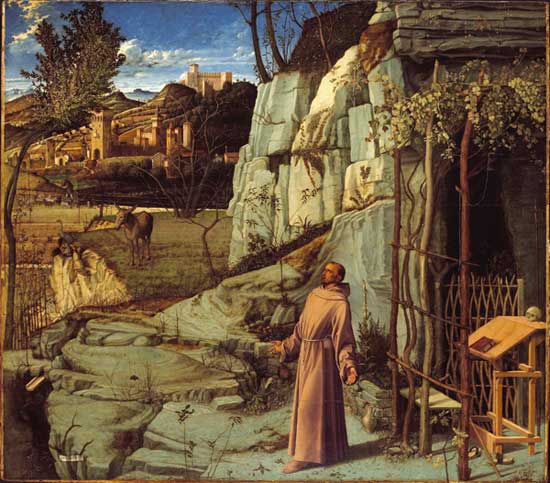
Giovanni Bellini, “St. Francis in the Desert,” oil on poplar panel, ca. 1475-78

The Frick Collection
1 East 70th St. at Fifth Ave.
Friday, July 22, free, 6:00 – 9:00 (children over ten welcome)
212-288-0700
www.frick.org

Every Sunday morning from 11:00 to 1:00, admission to the Frick Collection is pay-what-you-wish instead of the normal $18 to experience one of the city’s genuine treasures. But this Friday, the Frick is extending its hours, as the “Summer Night” program will open its doors for free from 6:00 to 9:00 for a special after-hours viewing of “In a New Light: Bellini’s ‘St. Francis in the Desert,’” which has recently undergone infrared reflectography, leading to new insight into the meaning behind the masterpiece, as well as “Turkish Taste at the Court of Marie-Antoinette.” The evening will also include the class “Summer Sketch: Bellini and Botany,” taught by Liz Insogna in the Garden Court; the gallery talks “Introduction to the Frick” at 6:15, 7:15, and 8:15 in the West Gallery and “Rooms of the Frick” at 6:45, 7:45, and 8:45 in the Dining Room; the curatorial presentations “Marie-Antoinette’s Turkish Dreams” by Charlotte Vignon at 6:30 and 7:00 and “Bellini Multimedia: Screening” by Denise Allen at 7:30; and five-minute live performances of “Danse Arabe” by Andreas Heise and Kristen Stevens in the Music Room at 8:15, 8:25, 8:35, and 8:45. Although there are no reservations or tickets needed, there are likely to be long lines for everything, so get there early.