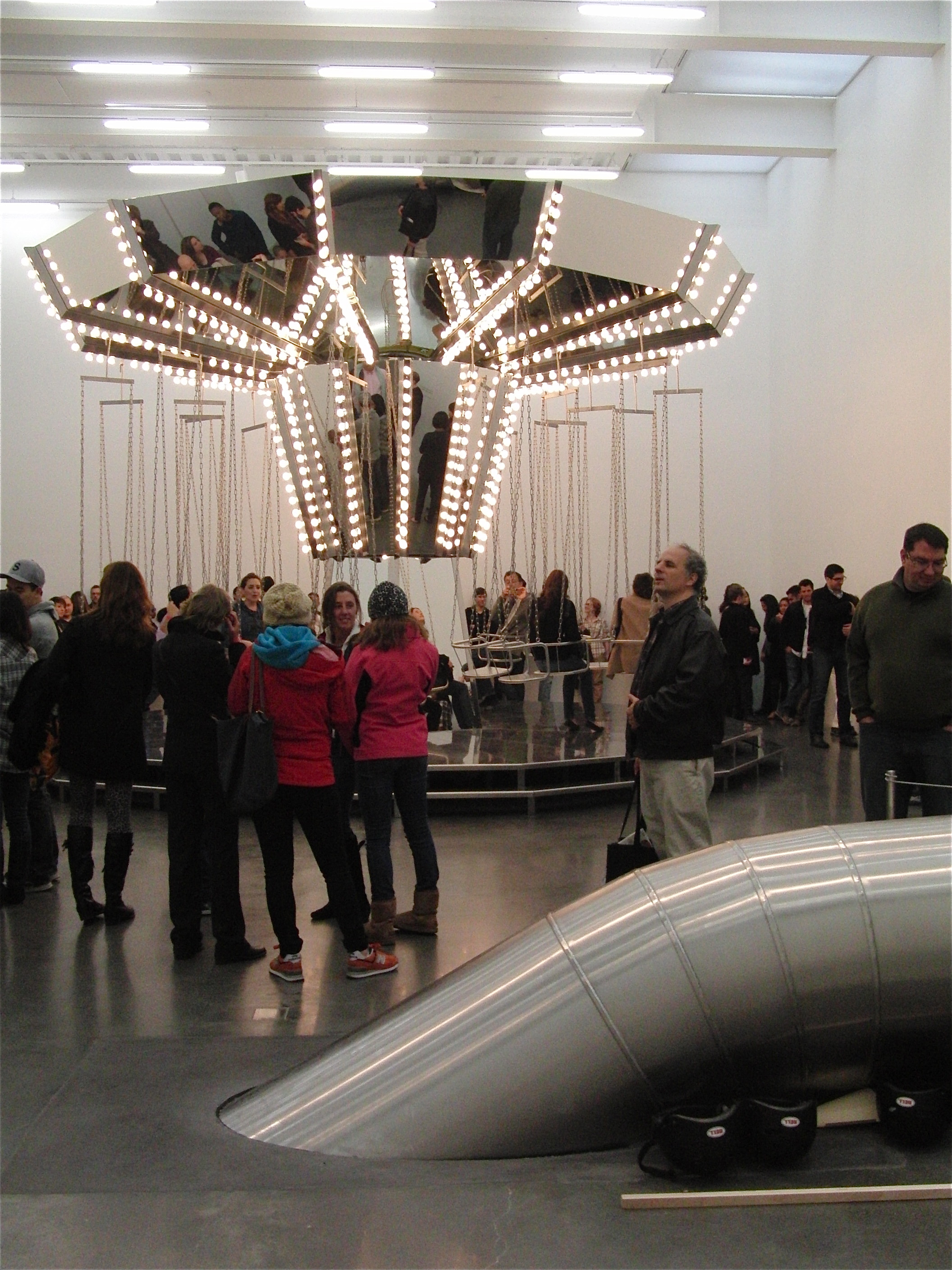
The line for the slide can wrap completely around the carousel at New Museum’s Carsten Höller retrospective (photo by twi-ny/mdr)
New Museum of Contemporary Art
235 Bowery at Prince St.
Wednesday – Sunday through January 15, $12-$16 (free Thursdays 7:00 – 9:00 pm)
212-219-1222
www.newmuseum.org
experience slideshow
Just because Carsten Höller’s first-ever New York City retrospective, “Experience,” includes the optional “Upside-Down Goggles,” an optical device that flips everything you see, doesn’t mean the German artist is trying to turn the art world upside down. A former scientist who was born in Brussels and lives and works in Stockholm, Höller has transformed the New Museum into a laboratory / amusement park, complete with merry-go-round, slide, aviary, and wave pool, each with a sly twist. Examining doubt and duality, disorientation and displacement, confusion and confrontation, and, perhaps most critically, perception and participation, Höller has created a mind-bending interactive, experimental journey that requires viewer involvement in order to be successful. If you’re just interested in looking at weird things, then this show might not be quite what you expect. “Höller has provided stimulus to erotic encounters and to hallucinatory or intoxicating experiments,” Lynne Cooke writes in “Amanita Blue,” her essay in the exhibition catalog. “Bliss, ecstasy, and transport are equally subject to his curiosity and appreciation, and, ultimately, come to seem less altruistic than necessary.” Gary Carrion-Murayari puts it even more succinctly in his catalog contribution, “Entertainment”: “Carsten Höller creates works that can provide joy or terror in equal measure,” while in “Panic” Massimiliano Gioni explains, “Carsten Höller’s work brings on attacks of the heebie-jeebies and moments of panic.” But don’t worry; there’s really no need to be frightened of Höller. “Experience” turns out to be a helluva lot of fun.
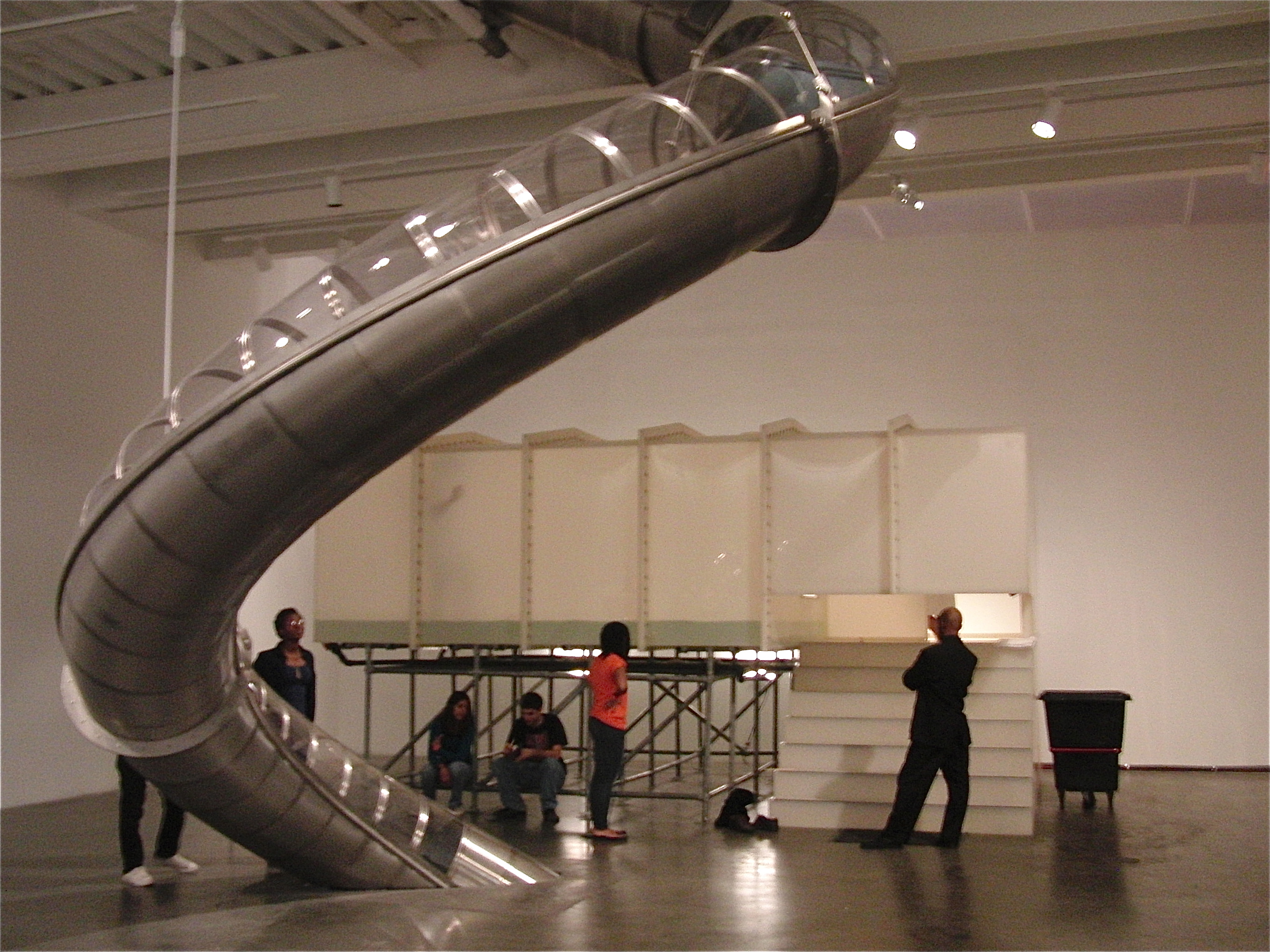
Slide zooms past “Psycho Tank” at interactive exhibit at New Museum (photo by twi-ny/mdr)
The survey begins just past the lobby with “Giant Triple Mushrooms,” a series of colorful large-scale fungi that reference both Alice in Wonderland as well as psychedelic shrooms, especially since some of them have already had bites taken out of them, hinting toward an oncoming acid trip. You’ll want to continue your journey on the fourth floor, where you might have to wait as long as an hour and a half to go through “Untitled (Slide),” a stainless-steel pneumatic tube that will send you twisting down to the second floor. While waiting on line, take an excruciatingly slow spin on “Mirror Carousel,” a horseless merry-go-round with swings as seats, Höller toying with your expectations since swings usually rise up high and carousels generally move significantly faster. You can also pick up one of the three phones on the wall and make a long-distance call, which will be reused as an answering-machine message as part of “What Is Love, Art, Money?,” and listen to the live birds flitting around in cages dangling from above in “Singing Canaries Mobile.” Stop off in the Shaft Project Space on the stairs between the third and fourth floors for a cup of water and a gelatin capsule from “Pill Clock” as you make your way to “Giant Psycho Tank,” a calming, meditative sensory deprivation tank in which you float on a few inches of heavily salted water and let the slight current carry you away. If you didn’t bring a bathing suit, you’ll have to go in naked, and if you’re extremely shy, you should know that your privacy is not completely guaranteed, despite the presence of a security guard monitoring the proceedings. When we sat down on the bench in the back of the pool, we could clearly see two guys outside staring in at us, and later, while we were floating so beautifully, the woman on line after us started talking to us from the doorway, not seeming to mind that we were in nothing but our birthday suit. “Psycho Tank” was originally meant for more people at one time, but the Board of Health said no; in other countries, as many as six can join in together, so just shed your American Puritan inhibitions and let it all hang out. Also be on the lookout for the two-monitor video “One Minute of Doubt,” the funhouse-mirror-like “Infrared Room,” videos in each elevator, “Aquarium” (in which you lie down and place your head inside a viewing tank), and other works that make “Experience” as entertaining and involving an experience as you want it to be.
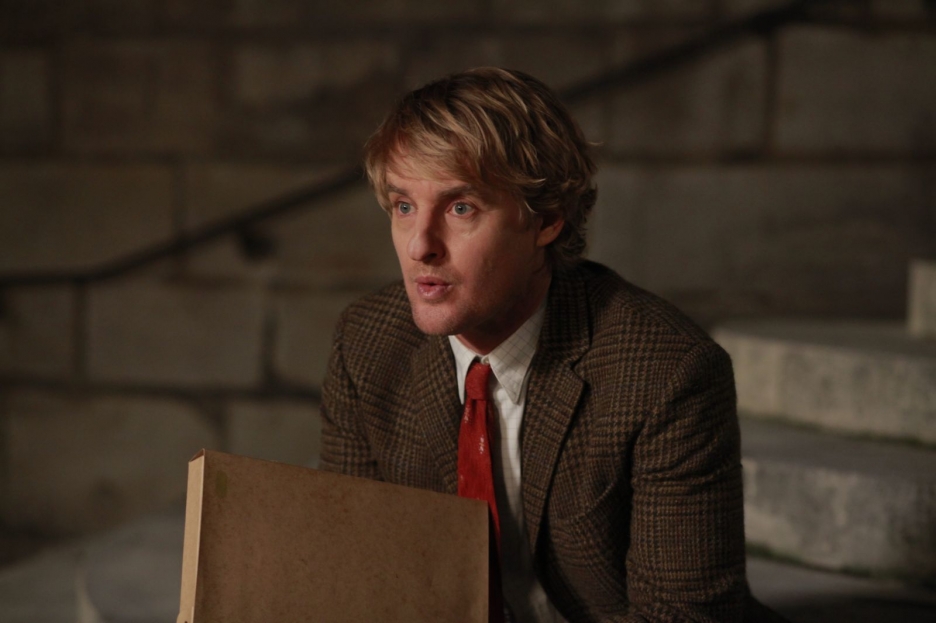
 In 1979, Woody Allen and master cinematographer Gordon Willis made love to New York City architecture in gorgeous black and white in the stunning opening section of Manhattan set to George Gershwin’s “Rhapsody in Blue.” Allen’s latest, Midnight in Paris, begins with Allen and cinematographer Darius Khondji getting intimate with the City of Light in lush color, scanning familiar Parisian landmarks to Cole Porter’s “Let’s Do It, Let’s Fall in Love.” In this beautifully shot love letter to Paris, Owen Wilson stars as Gil Pender, a Hollywood hack screenwriter working on his first novel, about a nostalgia dealer. He and his fiancée, Inez (Rachel McAdams), are vacationing in Paris with her parents, the wealthy, ultraconservative John (Kurt Fuller) and Helen (Mimi Kennedy), who think their daughter can do much better. Gil and Inez bump into their friends Carol (Nina Arianda) and Paul (Michael Sheen), the latter a pedantic know-it-all who begins many an observation with “If I’m not mistaken” and whom Gil can’t stand. Gil is hoping Paris will get his creative juices flowing, and that’s exactly what happens late one evening when he is walking the streets alone at midnight and is invited into an old-fashioned car and taken to what appears to be a throwback party — until he meets F. Scott and Zelda Fitzgerald (Tom Hiddleston and Alison Pill), Cole Porter (Yves Heck), Ernest Hemingway (Corey Stoll), and fashion designer and Picasso muse Adriana (Marion Cotillard). Suddenly he feels more at ease in the swinging ’20s than the 2010s, heading out each night to the same spot, hoping to hang out more with the Fitzgeralds, Hemingway, Gertrude Stein (Kathy Bates), Picasso (Marcial Di Fonzo), and, most importantly, Adriana. Nostalgia for the past and the promise of the future collide as Gil searches deep inside himself, trying to discover just what it is that he wants and needs out of life. Combining elements of such previous films as The Purple Rose of Cairo, Alice, Everything You Ever Wanted to Know About Sex*, and Everyone Says I Love You with a rather standard Twilight Zone-esque setup and a nod to his mid-’60s Lost Generation joke — in which he hangs out with Hemingway, the Fitzgeralds, Picasso, and Stein talking about art and literature, with a series of punch lines involving Allen getting punched in the mouth — Midnight in Paris is a charming, if at times overwrought and just plain silly, romantic fantasy that evokes Allen’s own fondness for nostalgia and the past. As more and more famous artists keep showing up, it gets more than a tad ridiculous, although it is also kinda fun. Midnight in Paris, which opened the 2011 Cannes Film Festival, follows four Allen films set in London (Match Point, Scoop, Cassandra’s Dream, and You Will Meet a Tall Dark Stranger), one in Barcelona (Vicky Christina Barcelona), and only one in New York (Whatever Works) as Allen continues to travel the world after experiencing a dwindling audience and scandal back home. Wilson is excellent as the nostalgic writer, playing him with an edgy uncomfortablilty that makes him endearing, and Cotillard is sexy and alluring as the quintessential artistic muse. And in an inspired bit of casting, French first lady Carla Bruni plays a tour guide who butts heads with the smarmy Paul when discussing Rodin’s “The Thinker.”

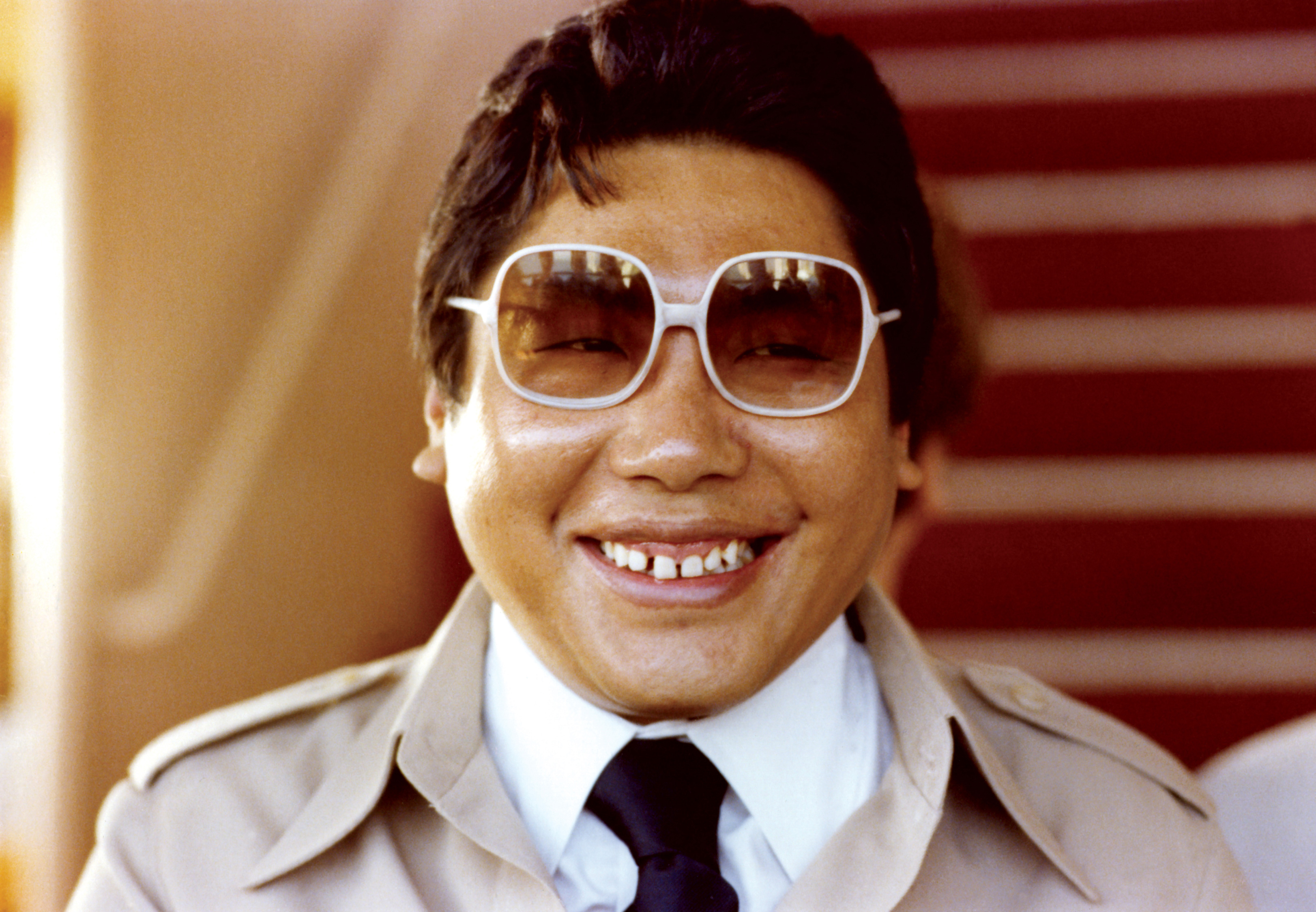
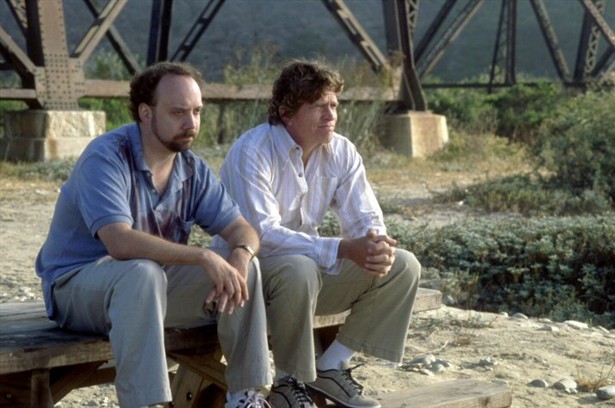
 Celebrating the release of Alexander Payne’s The Descendants, the Museum of the Moving Image’s “The Films of Alexander Payne” series concludes November 25 with Sideways, the eclectic director’s fourth film, following the underseen Citizen Ruth, the excellent Election, and the overrated About Schmidt. Sideways is fabulously entertaining from start to finish, a smart, inventive, very funny dark comedy about friendship and love set in California wine country. Paul Giamatti stars as Miles, a schlumpy wine connoisseur who is having trouble getting over his divorce and the failure of his massive novel to get published. His best friend, Jack (Thomas Haden Church), is getting married, so the two head off on a road trip, with Miles looking forward to sampling fine wine, and Jack anticipating sampling fine women. While Jack finds what he is looking for in Stephanie (Sandra Oh, who was married to Payne at the time), Miles seems hell-bent on not allowing himself to enjoy life, even as a beautiful woman with a deep appreciation of the grape (the excellent Virginia Madsen in what should have been a career-redefining performance) shows an interest in him. You definitely do not have to be a wine drinker to fall in love with this marvelous movie, one of the best of 2004; it was nominated for Best Director, Best Picture, Best Supporting Actress (Madsen), and Best Supporting Actor (Haden Church), and screenwriters Jim Taylor and Payne won for Best Adapted Screenplay.