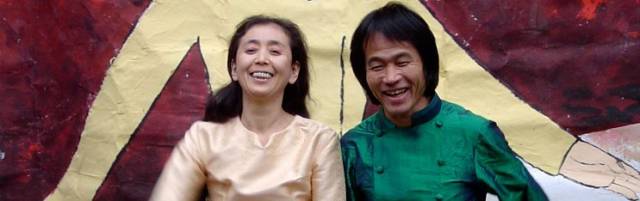
Eiko & Koma will be in New York City this month presenting three very different projects
Tuesday, March 8, Art Work: An Evening with Eiko Otake, the New School, Wollman Hall, 65 West 11th St., free, 6:00
Tuesday, March 15, and Wednesday, March 16, Delicious Movement Workshop, Baryshnikov Arts Center, 450 West 37th St., $65 with preregistration, 7:00
March 29 – April 9, Baryshnikov Arts Center, free with advance RSVP, Tuesday – Friday 6:00 – 10:00 pm, Saturday 3:00 – 9:00 pm
www.eikoandkoma.org
Shortly after meeting as students in Japan in 1971 at the Tatsumi Hijikata dance studio, Eiko Otake and Takashi Koma Otake formed a partnership that is now in its fifth decade. Based in New York City since 1976, Eiko & Koma have presented experimental modern dance and installation indoors and outdoors all over the world, including such highly praised works as White Dance (1976), Grain (1983), Memory (1989), River (1995), The Caravan Project (1999), and Hunger (2008). Having studied with such innovative choreographers as Kazuo Ohno, Lucas Hoving, and Anna Halprin, their own pieces, for which they generally design all elements, including sets, sound scores, and costumes, have earned them NEA, Guggenheim, and MacArthur Foundation Fellowships, two Bessies, and other prestigious awards.
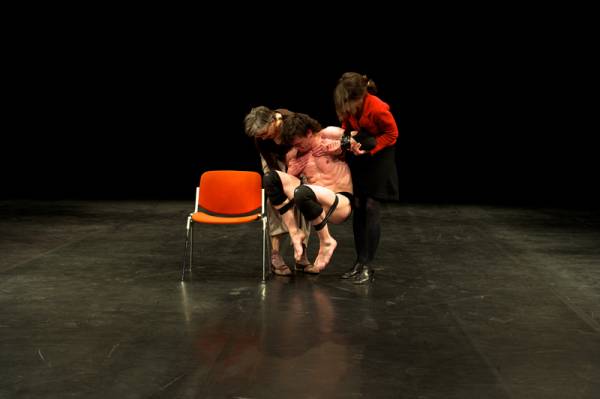
On March 8, Eiko & Koma will give a free illustrated lecture at the New School on their Retrospective Project (2009-12), in which they are looking back over the course of their storied career. On March 15-16, they’ll be holding two Delicious Movement Workshops at the Baryshnikov Arts Center, inviting participants to “move/dance to actively forget the clutter of our lives so to fully ‘taste’ body and mind.” And from March 29 through April 9 they will present the two-week performance piece Naked at BAC, a movement/visual art installation that explores time, desire, and nakedness that was created during a three-month residency at the Park Avenue Armory and first presented at the Walker Art Center last year. Part of Carnegie Hall’s JapanNYC Festival, Naked is free with advance tickets that allow the audience to come and go as they please during specific time periods, watching Eiko & Koma in an organic environment that will be accompanied by a video retrospective. As they prepare for their New York blitz, Eiko discussed the audience-performer dynamic, nakedness, and more in our latest twi-ny talk.
twi-ny: You will be giving an Art Work talk at the New School on March 8, focusing on the Retrospective Project. What has the experience been like looking back at your long career while you’re still creating fascinating works for the future?
Eiko: We can remember what we were thinking of, about and how. We are sometimes surprised to find so much of what we do now has started long ago. We did not become wiser or better with age. That is a sort of myth. Instead we see more continuity in what we have done and what we are doing now.
twi-ny: That will be followed March 15-16 with your Delicious Movement Workshop at BAC, targeted not at professional dancers but everyone and anyone. What would you tell someone who knows very little, if anything, about dance about the program? Essentially, why should a dance novice not be scared of taking part in the workshop?
Eiko: Of course they should not be scared, because we have developed a way to make the workshop very inclusive and tasty. It is not so much about dance. it is more about moving in a way that is not too difficult and find a pleasure in it.
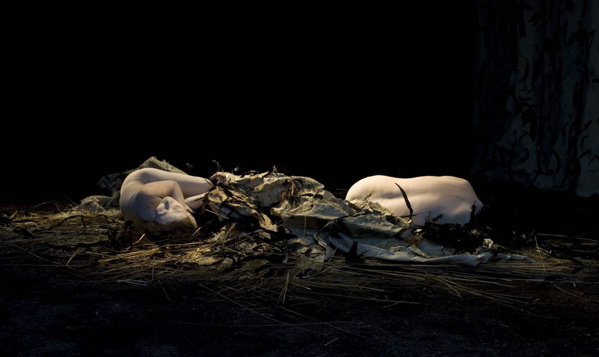
Eiko & Koma will perform NAKED at the Baryshnikov Arts Center (photo by Anna Lee Campbell)
twi-ny: Your living installation, Naked, will be presented March 29 – April 9 at BAC, where audiences will come and go as they please. You previously performed the piece at the Walker Art Center. How did the unusual staging affect the performer-audience dynamic?
Eiko: We were very close to people, which created the sense of intimacy. There was no beginning or end but purely entries and exits of people, which audience decided themselves. So there was more of an individual act of seeing and feeling on their own accord.
twi-ny: How did the audience react to the piece, which was not staged like a regular dance performance?
Eiko: Unlike a theater event, people in the museum did not know who we are or what we do. So there was a lot of surprise in seeing human naked bodies moving in a gallery. Some people, of course, did not get into it but surprisingly many people stayed longer than we or they expected. Many people also came back to see it again or bring friends. Some people cried. Some people said it was hard for them to leave us since we did not end anything but we just went on.
twi-ny: What was it like performing to an ever-changing, moving audience, with you and Koma on view as maybe more of a spectacle?
Eiko: I did not feel it was a spectacle. We really enjoyed performing for just a few people since we feel their emotions. It was a special experience for both sides. But when there was no one in the room, it was hard to continue with the same intensity. At the same time we could not stop or rest since at any time people might come in.
twi-ny: You’ve appeared naked in previous productions, but this one you even title Naked. What is it that draws you to the nakedness you reveal in your work?
Eiko: Nakedness is a bottom line . . . nothing to lose, nothing to protect us, where we become both more human and more like any other creatures.
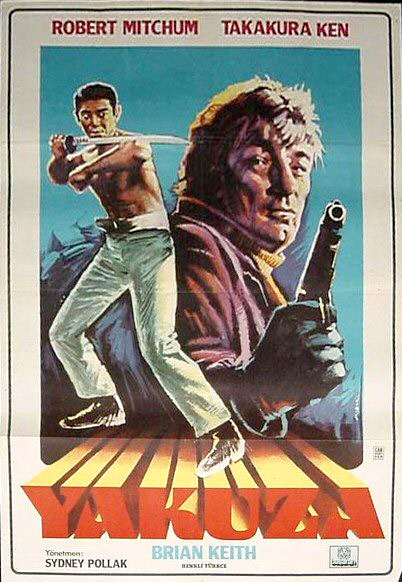
 One of Hollywood’s first forays into the Japanese underworld has quite a pedigree — directed by Sydney Pollack (coming off his success with The Way We Were) and written by Robert Towne (who had just scribed Chinatown and Shampoo) and Paul Schrader (his first writing credit, to be followed by Taxi Driver). The great Robert Mitchum stars as Harry Kilmer, a WWII vet who returns to Japan thirty years later to help his friend George Tanner (Brian Family Affair Keith), whose daughter has been kidnapped. Kilmer thinks he can just walk in and walk out, but things quickly get complicated, and he ends up having to take care of some unfinished business involving the great Keiko Kishi (The Twilight Samurai). Kilmer and his trigger-happy young cohort, Dusty (Richard Logan’s Run Jordan), hole up at Oliver’s (Herb “Murray the Cop” Edelman), where they are joined by Tanaka (Ken Takakura) in their battle against Toshiro Tono (Eiji Hiroshima Mon Amour Okada) and Goro (James Flower Drum Song Shigeta) while searching for a man with a spider tattoo on his head. There are lots of shootouts and sword fights, discussions of honor and betrayal, and, in the grand Yakuza tradition, the ritual cutting off of the pinkie. The Yakuza kicks off the Globus Film Series “Hardest Men in Town: Yakuza Chronicles of Sin, Sex & Violence” on March 9 and will be followed by a Q&A with Schrader.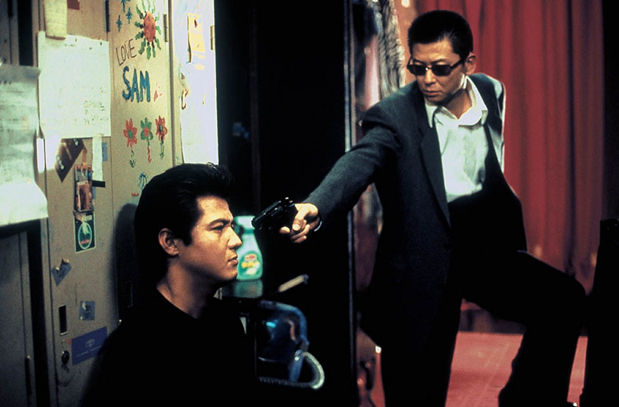
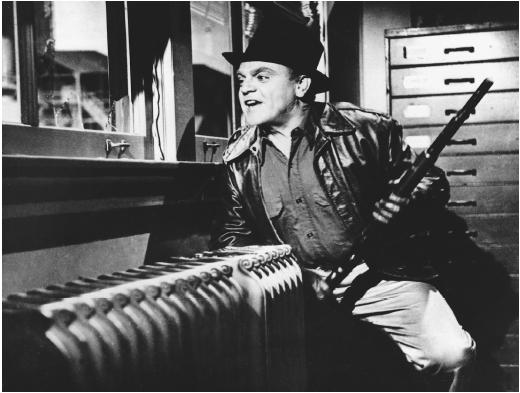
 Raoul Walsh’s film noir classic White Heat might have been nominated for a mere single Oscar, losing for Best Motion Picture Story (losing to The Stratton Story), but it quickly came to be considered one of the greatest gangster pictures ever made. The 1949 film stars James Cagney as Cody Jarrett, a devout criminal married to the beautiful moll Verna (Viriginia Mayo) but still deeply (and unhealthily) attached to his mother (Margaret Wycherly). While doing time for a train robbery gone wrong, Jarrett finds out that his gang has been taken over by his former flunkie Big Ed Somers (Steve Cochran), who also seems to have taken over Verna as well. Jarrett decides he must break out of jail, setting the stage for an unforgettable climax. Walsh (High Sierra, They Died with Their Boots On) doesn’t concentrate just on the action, of which there is plenty, instead focusing on Jarrett’s troubled psyche as he blindly seeks revenge. White Heat will be showing March 7 as part of the Academy’s monthly Mondays with Oscar series, even though Oscar was not very kind to it; the nominees for Best Picture that year were All the King’s Men, Battleground, The Heiress, A Letter to Three Wives, and Twelve O’Clock High, while the Best Actor nominees were winner Broderick Crawford (All the King’s Men), Kirk Douglas (Champion), Gregory Peck (Twelve O’Clock High), Richard Todd (The Hasty Heart), and John Wayne (Sands of Iwo Jima). The screening will be introduced by screenwriter Richard LaGravenese (The Fisher King, The Horse Whisperer).