BXL Café is one of several eateries offering prix-fixe specials during Belgian Restaurant Week
Multiple locations
Through March 30
www.belgianrestaurantweeknyc.com
The handful of Belgian eateries in Manhattan have banded together for the first annual Belgian Restaurant Week, serving specially priced meals through March 30. B. Cafe (566 Amsterdam Ave.) will be offering a $20 prix-fixe menu consisting of boulets Liegeoise with sauce chasseur (Liege meatballs and Hunter’s Sauce) and Belgian frites, a side salad and applesauce, and a Palm or Stella Artois beer. BXL Café (125 West 43rd St.) and BXL East (210 East 51st St.) have a $15 prix-fixe lunch, $13 brunch, and $5 een kleintje met stoofvleessaus (bowl of fries with beef stew sauce). Le Pain Quotidien (several locations) is serving a $15.95 dine-in-only prix-fixe menu with a choice of tartines, open-faced sandwiches with either chicken curry salad and a side of harissa-cranberry chutney or ricotta with Mission figs, black pepper, and organic Acacia honey, along with a Belgian waffle with chocolate sauce and either a medium organic Belgian hot chocolate or a pot of organic coffee. At Markt (676 Sixth Ave.) you’ll find a $20 prix-fixe menu of a pot of mussels and a Belgian draft beer. Every day is a different special at Petite Abeille (not valid at the Hudson St. location); we’ll be there for the five-dollar late-night burger on Saturday. Rouge Tomato (10 East 60th St.) is giving away a free Belgian draft beer and two specialty toasts for customers who mention the offer and order an appetizer and entrée. And Wafels & Dinges is promising “free surprise goodies” with every waffle when you mention this deal.

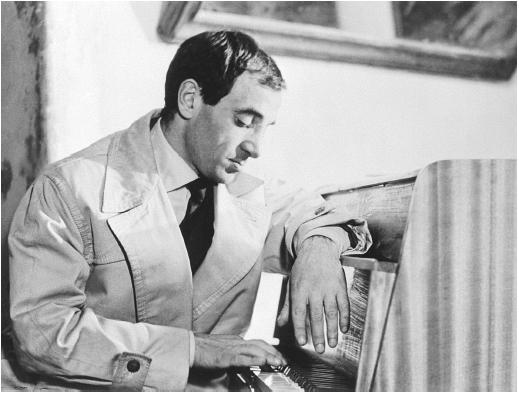
 François Truffaut shot out of the blocks in 1959 with the classic 400 Blows, and he followed it up with Shoot the Piano Player, a magnificent noir about a virtuoso saloon piano player and his always-in-trouble brother. French crooner Charles Aznavour is super-cool as the secretive, shy pianist with a hidden past who gets caught up in his crooked brother’s dangerous predicament, against his better judgment. Comedy mixes with pathos, dance-hall jollies lead to murder and kidnapping, and lost love holds a curse in a dark, haunting film you will never forget. Two years later, Truffaut made Jules and Jim, a triangle classic about two best friends, played by Oskar Werner (Jules) and Henri Serre (Jim), World War I, and the woman they both love, the free-spirited Catherine (the marvelous Jeanne Moreau), one of the most charming, entertaining films you will ever see. Shoot the Piano Player and Jules and Jim kick off the Film Society of Lincoln Center’s Janus Classics series on March 24, followed by Milos Forman’s Loves of a Blonde (1963) and The Firemen’s Ball (1967) on March 25, Jean Renoir’s The Golden Coach (1952) and The Rules of the Game (1939) on March 28, Ingmar Bergman’s The Seventh Seal (1957) and Cries and Whispers (1972) on March 29, and more.
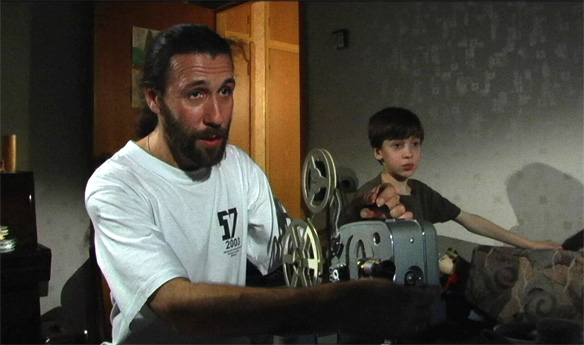
 Over the last fifty years, the former Soviet Union has experienced monumental social, cultural, economic, and political change, from the Cold War through Glasnost and Perestroika and its ultimate downfall as a world power. Making her feature-length directing debut, Robin Hessman gets up close and personal with five men and women who lived through those tumultuous years and share their fascinating experiences: Borya and Lyuba Meyerson, married history teachers who live with their son, Mark, in the apartment where Borya grew up; Ruslan Stupin, Borya’s childhood friend who was a punk rock star and is now passing on his counterculture values to his son, Nikita, who is worried about fitting in at school; Olga Durikova, a single mother also living in her childhoold apartment; and Andrei Yevgrafov, who has firmly embraced capitalism, owning a series of fancy men’s dress shirt stores. Combining archival footage and home movies with contemporary interviews, Hessman talks to the five protagonists about their early days as members of such Communist youth groups as the Octoberists, the Pioneers, and the Komsomol as well as how their lives changed as the Soviet leadership moved from Leonid Brezhnev to Mikhail Gorbachev and Boris Yeltsin. They speak open and honestly about the Soviet Union in ways rarely seen in the West, resulting in an intimate portrait of a momentous time of upheaval that is often misunderstood and has never before been so personalized on-screen.