
Ana Bollocks (r.) shows her stuff for the Queens of Pain, who open Gotham Girls Roller Derby season Saturday night against the Bronx Gridlock
Gotham Girls Roller Derby
City College of New York / Nat Holman Gymnasium
138th St. & Convent Ave.
Opening night: Saturday, March 26, $19.99 – $35, 6:30
888-830-2253
www.gothamgirlsrollerderby.com
Get ready for a slobber-knocker of a good time this Saturday night as the Gotham Girls Roller Derby season gets under way at CCNY’s Nat Holman Gymnasium, with two-time defending champion the Bronx Gridlock battling it out with 2010 runner-up the Queens of Pain. That will be followed on April 16 when the Brooklyn Bombshells take on the Manhattan Mayhem at LIU’s Schwartz Athletic Center. Since its inaugural 2004 season, the nonprofit, all-female GGRD has been doing it their own way, with such players as Bitch Cassidy, Evilicious, Miss American Thighs, Sexy Slaydie, Tip-Her Gore, Angela Slamsbury, and Anais Ninja skating around the track, blocking, pivoting, and jamming toward victory. The league also features the All-Stars, the Wall St. Traitors, and the all-rookie Meatpacking District, who skate against other teams in the Women’s Flat Track Derby Association. A member of the All-Stars and the Queens of Pain, blocker and pivoter Ana Bollocks recently discussed the fast-growing sport with twi-ny.
twi-ny: What would people coming to their first GGRD match be most surprised about regarding the makeup of the audience?
Ana Bollocks: I think people assume that we have either a hipster audience or a goon audience, and it’s not the case — it’s a good cross-section of regular folks of all ages, including a decent contingent of parents with kids. Our audience is loud — REALLY loud — and enthusiastic but generally positive and well-behaved. I grew up playing soccer and I heard more referee-baiting and shit-talking from roughly two dozen parents on the sidelines than I do from a thousand people at a derby game. It’s a pretty great atmosphere.

Ana Bollocks seeks the crown in upcoming GGRD season (photo by Matthew Pozorski)
twi-ny: How did you first get involved in roller derby? You’re regarded as one of the leading blockers on the circuit, paving the way for the jammer to score points. What are the different skills needed for each position?
Ana Bollocks: Well, I started in early 2005, when GGRD was just starting its first full season and we were one of about a dozen leagues in existence. So all I had to do was make my attendance numbers for three months and I was in. Nowadays there’s something like 700 leagues and 28,000 skaters worldwide, so it’s a lot more competitive. We had about a hundred people try out in November and we ultimately accepted eleven new skaters into Gotham, many of whom had skated in other leagues before moving here.
I don’t know that the different positions require different skills so much as jammers need those skills dialed up to eleven. Whatever position you play, you need stability, sprint speed, endurance, and speed control. For me, jamming is fun at practice, but I’m a better blocker than jammer so I’d rather be blocking when it counts.
twi-ny: You’ve been described as a “bad ass” with the “heart of a champion.” When you’re not racing around the track, you work in data management and developing accuracy systems and standards as a woman named Kristin Carney. Do you bring those qualities to your everyday life?
Ana Bollocks: Hmmm, “heart of a champion?” I don’t know if my bosses think of me as a one-legged puppy who can make it on her own, but I *do* have a review coming up. . . . I’ll let you know! Seriously, the one thing that I think applies to both work and derby is have a plan and keep it simple. If you make things too convoluted, everything goes to hell.
twi-ny: Films such as Kansas City Bomber and Whip It have depicted roller derby to be a vicious, no-holds-barred sport filled with extreme characters and aggressive violence. Is there any truth in any of that?
Ana Bollocks: Well, there’s controlled violence on the track, obviously. Body-checking is legal (and fun!). But you can’t, say, clothesline or punch opposing skaters or anything. Derby blocking is mostly parallel to hockey blocking in terms of what’s legal and illegal. You can hit an opposing skater hard, but you can’t grab her, hit her in the head, etc. But nobody watched Slap Shot for its meticulous depiction of clean hockey play, right? Over-the-top fouling is a superior dramatic device. But it an actual game it’ll just get you sent to the penalty box.
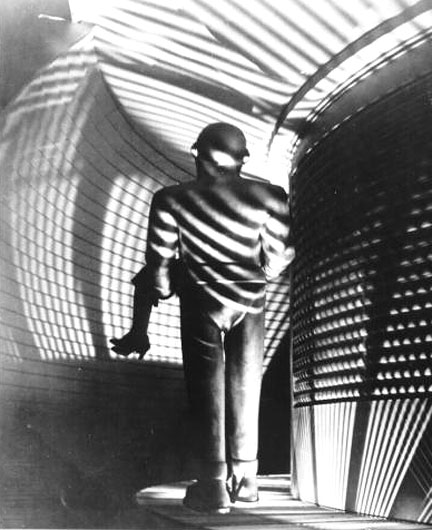
 This cold-war-era classic stars Michael Rennie as an alien who lands on earth with a very important message: No peace, no planet. He brings along with him one of the great robots in cinema history, Gort (Lock Martin), and later utters to Patricia Neal one of the ten best lines ever: “Klaatu borada nikto.” This science-fiction fave works on a number of different and fascinating levels; during a 1998 UC Berkeley interview, director Robert Wise even noted, “Some people read a religious connotation into the thing, the resurrection and all. If you want to put a beard on Rennie and all, he could be a Christ figure.” The Day the Earth Stood Still is screening Saturday and Sunday afternoon as the conclusion to the Museum of the Moving Image’s “Fantastic Voyages” series. Be sure to also check out the museum’s inaugural exhibits following its major remodeling, including “Real Virtuality,” Chiho Aoshima’s “City Glow,” Martha Colburn’s “Dolls vs. Dictators,” and the always engaging “Behind the Screen.”
 Don’t be fooled by the eye-popping trailers and hip ad campaign for the new action fantasy Sucker Punch; Zack Snyder’s second film as writer-director (after 2007’s 300) is a stupefyingly incomprehensible disaster. In a dark, doomed world, Babydoll (Emily Browning) is framed by her stepfather for the murder of her little sister so he can get their recently deceased mother’s money. Babydoll is sent to an asylum for the criminally insane, where she is scheduled to undergo a lobotomy. But just as the orbitoclast is about to be pounded into her brain, she mentally transports herself to another world, where she is the new girl at a club where hot babes are forced to take care of the needs of wealthy, degrading men. Determined to escape, Babydoll joins up with Sweet Pea (Abbie Cornish), Rocket (Jena Malone), Blondie (Vanessa Hudgens), and Amber (Jamie Chung) as they seek a series of items that will lead to their freedom from the evil Blue Jones (Oscar Isaac) and the conflicted Madam Vera Gorski (Carla Gugino). In order to obtain the map, fire, knife, and key, Babydoll performs a mesmerizing dance — which is never actually shown — that sends her and her four Charlie’s Angels wanna-bes into video-game-like scenarios where they are led by the Wise Man (Scott Glenn) as they battle giant samurai, zombie soldiers, and fire-breathing dragons in absurd, overly stylistic sequences that are remarkably lifeless and unexciting. Sucker Punch doesn’t even qualify as a so-bad-it’s-good camp movie; it’s just plain bad, and it’s PG-13 to boot. Snyder (Watchmen, Legend of the Guardians: The Owls of Ga’Hoole) aspires to the labyrinthine tales of Julio Cortázar and Jorge Luis Borges filtered through Quentin Tarantino and Robert Rodriguez but instead winds up with an overwrought, jaw-dropping mess. Even the soundtrack — including cover songs inexplicably performed by the cast — is head-scratchingly awful. And Jon Hamm, just what were you thinking?
 Legendary French star Catherine Deneuve radiates a colorful glow throughout her latest film, Potiche (Trophy Wife), her smile lighting up the screen as it has throughout her long career, which now comprises more than one hundred movies over more than fifty years. Reunited with writer-director François Ozon (2002’s 8 Women) and Gérard Depardieu (they first appeared together in Claude Berri’s Je Vous Aime in 1980 and most recently in André Téchiné’s Les Temps Qui Changent in 2004), Deneuve was nominated for a César for her role as Suzanne Pujol, a trophy housewife who primarily serves as arm candy for her husband, Robert (Fabrice Luchini), who runs Suzanne’s family’s umbrella factory like a tyrant and is a little too close to his secretary, Nadège (César nominee Karin Viard). When Robert is taken hostage during a nasty strike at the plant, Suzanne is forced into action, deciding to run the business with the help of her counterculture son, Laurent (Jérémie Rénier), and her conservative daughter, Joëlle (Judith Godrèche). At first clashing with the mayor, Maurice Babin (Depardieu), Suzanne is soon considering rekindling her long-ago affair with the rather rotund Maurice as she realizes there’s so much more to life than being a wealthy appendage. Loosely adapted from a Theatre de Boulevard comedy by Pierre Barillet and Jean-Pierre Grédy, Potiche is a charming throwback to 1970s female-empowerment movies, depicting long-held-back women suddenly grabbing the reins and embracing their personal and professional freedom, getting out from under the thumb of repressive societal conventions. Ozon infuses the film with numerous references to Deneuve’s history, evoking such seminal works as The Young Girls of Rochefort, Belle de Jour, and, of course, The Umbrellas of Cherbourg, and the costumes — particularly Deneuve’s fabulous fashion sense, which often dominates the scene — are a hoot, earning costume designer Pascaline Chavanne a much-deserved César nomination, but things get haywire in the final section, getting too silly and going too far over the top when politics come into play. Still, Potiche ably represents its genre, having fun with itself, which rubs off on the audience, who will have plenty of fun as well.
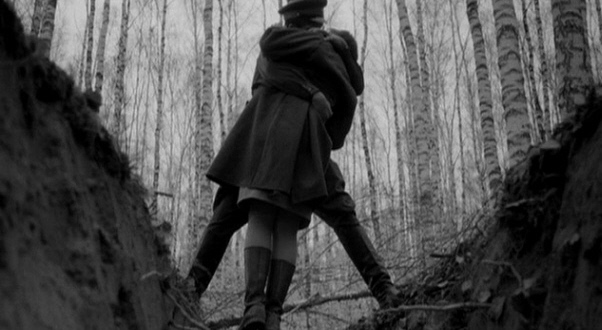
 Ivan’s Childhood (aka My Name Is Ivan) is a magnificent work about a fearless young boy (Nikolai Burlyayev) who spies for the Russians during World War II. But for all of his outward toughness—battling fearlessly with the other soldiers to prove his military value, dirt seemingly entrenched on his face—he is still a young boy who dreams of another, safer life, wrapped in his mother’s arms. Based on a short story by Vladimir Bogomolov, this award-winning masterpiece, which marked Andrei Tarkovsky’s feature-film debut, is filled with unforgettable images that will stay with you long after the film is over. Ivan’s Childhood is screening March 25 at the Rubin Museum in conjunction with the Brainwave series of talks and will be introduced by NYU assistant professor Michael Kunichika. Michael Powell and Emeric Pressburger’s The Red Shoes follows on April 8, introduced by Benjamin Millepied, and Luis Buñuel’s The Discreet Charm of the Bourgeoisie on April 15, introduced by Kurt Andersen.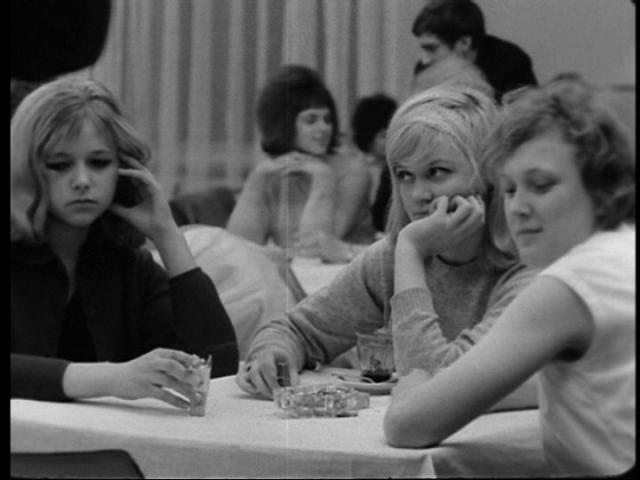
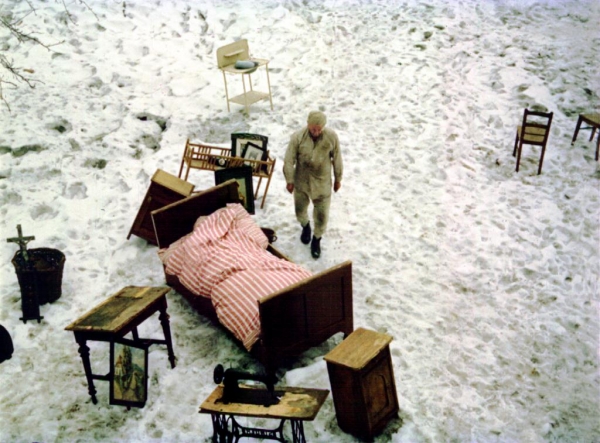
 Miloš Forman’s final Czechoslovakian film is an absurdist comedy about a local firemen’s ball and lottery, featuring a group of grumpy old clueless men who struggle through selecting contestants for the beauty contest so the winner can give the eighty-six-year-old former chairman a present before he dies of cancer and all the lottery gifts are stolen. This fun film has a charming element of silent slapstick that will have audiences laughing out loud. Loves of a Blonde and The Firemen’s Ball are screening March 25 as part of the Film Society of Lincoln Center’s Janus Classics series, followed by Jean Renoir’s The Golden Coach (1952) and The Rules of the Game (1939) on March 28, Ingmar Bergman’s The Seventh Seal (1957) and Cries and Whispers (1972) on March 29, and more.