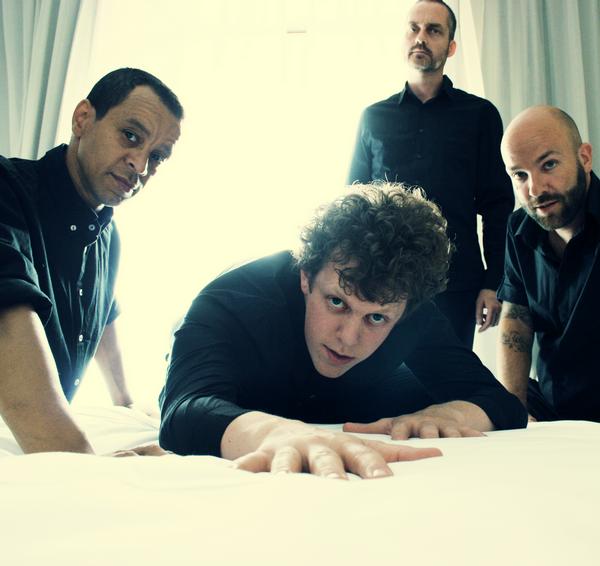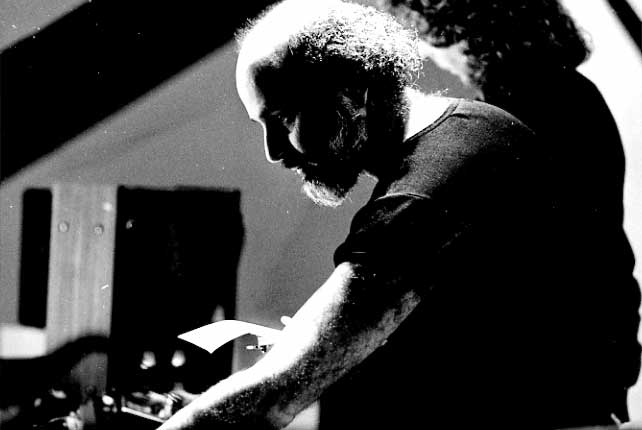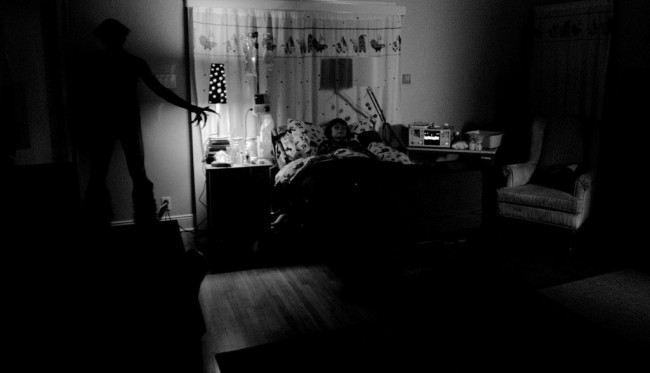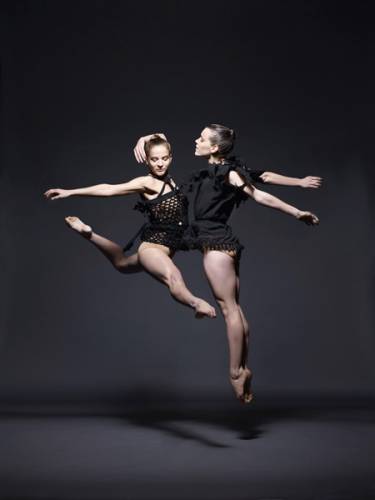
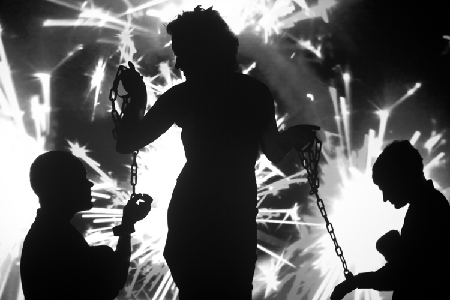
Natalie Mackessy and Tara Lorenzen interpret the mad music of Nick Cave in Stephen Petronio’s UNDERLAND (photo by Sara Silver)
Joyce Theater
175 Eighth Ave. at 19th St.
April 5-10, $10-$69
212-242-0800
www.joyce.org
www.stephenpetronio.com
Originally commissioned for the Sydney Dance Company in 2003, Stephen Petronio’s Underland is at last making its New York premiere this week at the Joyce, running April 5-10. The hour-long piece is set to songs by Australian musician Nick Cave, who has been telling epic tales of exquisitely choreographed sex, violence, and madness since the 1970s, first with his band the Birthday Party, then with the Bad Seeds and its raucous spinoff, Grinderman. Among the songs Petronio chose for Underland are such Cave classics as “Stagger Lee,” “Wild World,” “The Mercy Seat,” “The Weeping Song,” and his cover of Bob Dylan’s “Death Is Not the End,” not your usual fare for contemporary dance with their graphic depictions of murder and execution. “He said, ‘Well, bartender, it’s plain to see / I’m that bad motherf$%ker called Stagger Lee’ / Mr. Stagger Lee / Barkeep said, ‘Yeah, I’ve heard your name down the way / And I kick motherf$%king asses like you every day’ / Mr. Stagger Lee / Well, those were the last words that the barkeep said / ’Cause Stag put four holes in his motherf%$king head,” Cave sings in his version of the old Stagger Lee tale, from his spectacular 1996 album, Murder Ballads. No, Petronio does not do a literal interpretation with props, instead letting his powerfully muscled company display his own unique visual language, melding with Cave’s rather colorful words and intense music. Underland features projected images by lighting designer Ken Tabachnick and video artist Mike Daly, costumes by Tara Subkoff/Imitation of Christ, and soundscape by Paul Healy and is performed by Julian De Leon, Gino Grenek, Barrington Hinds, Tara Lorenzen, Natalie Mackessy, Emily Stone, Shila Tirabassi, Joshua Tuason, and Amanda Wells, with guest dancers Davalois Fearon and Reed Luplau.
Update: “This is the way art can be made,” Stephen Petronio said in a Dance Chat following the April 6 performance of Underland at the Joyce. The New York City–based choreographer was explaining the freedom — both creative and financial — he was given by the Sydney Dance Company when they commissioned the piece back in 2003. As soon as Sydney’s exclusive option ran out, Petronio snapped it back up for his own company, who was itching to perform the evening-length work, and their enthusiasm is evident in their energetic performance. Underland begins with Reed Luplau, who was brought over from Sydney, climbing down a rope ladder, making his way into the dark, demonic world of Nick Cave, his movement doubled on a three-screen video projection. Petronio then introduces the audience to Cave’s morbid sense of humor and deep voice with Julian De Leon and Shila Tirahassi dancing to a recording of Cave reading the “Mah Sanctum” section from his 1989 novel, And the Ass Saw the Angel, followed by seven Cave songs linked together by his producer, Tony Cohen, using the music’s original source material. Petronio does not literally depict the scenes of sex and violence in Cave’s lyrics, instead concentrating on the overall feel, creating an evocative, powerful mood built around vertical movement. Tara Subkoff’s costumes go from torn black tops to bright-red tutus to military fatigues as the dancers journey through such Cave ditties as “Wild World,” “The Carny,” and “The Weeping Song,” including beautiful solos by Gino Grenek, Amanda Wells, and Tirahassi and a playfully erotic quartet (Grenek, Tirahassi, Joshua Tuason, and Wells) coming to the front of the stage for “The Ship Song.” Underland — which has been pared down from eighteen dancers in Sydney to eleven here in New York, resulting in a fabulous fury of comings and goings — ends appropriately with the full company performing to “The Mercy Seat,” about an execution, and Cave’s interpretation of Bob Dylan’s “Death Is Not the End,” but instead of getting lost in the darkness, Petronio celebrates the light as an enchanting whiteness takes over. Underland is a fast-paced, illuminating night of music and dance that takes audiences into places they might not usually venture but will be glad they did.

 Julie Delpy’s delightful debut, 2 Days in Paris, is a true DIY indie, with Delpy serving as writer, director, editor, star, composer, soundtrack performer, and one of the producers. Delpy plays Marion, a flitty Frenchwoman who decides to bring her boyfriend of two years, Jack (a heavily tattooed Adam Goldberg), to spend two days with in her hometown in Paris as a stopover on their way from Venice to their apartment in New York City. But spending forty-eight hours with Marion’s family (Delpy’s real-life parents, Albert Delpy and Marie Pillet, and sister, Alexia Landeau) and bumping into a seemingly endless stream of Marion’s former boyfriends while not understanding a word anyone is saying might be a bit much for Jack, an interior designer whose own insides are rife with stomach problems and migraines. 2 Days in Paris is Delpy’s Annie Hall, an engaging film filled with slapstick humor, inventive characters, and underlying truths about love and life. It is screening April 5 at 12:30 and 7:00 at Florence Gould Hall as part of the French Institute Alliance Française’s CinémaTuesdays: Paris Today series, with Tonie Marshall’s five-minute 1994 short, Before . . But After (Avant . . . Mais Après), starring Mathieu Kassovitz and Quentin Ogier.

 Based on the Russian novel Yama (The Pit) by Aleksandr Kuprin, protofeminist director Kenji Mizoguchi’s Sisters of the Gion offers a poignant look at the changing desires of women in twentieth-century Japan. In the Gion District, geisha have become one-man prostitutes, taking up with one wealthy patron at a time. When Furusawa (Benkei Shiganoya) loses his business, the bankrupt man turns away from his wife and instead goes to Umekichi (Yōko Umemura), who takes him in, believing that it is her responsibility. Her younger sister, Omocha (Isuzu Yamada), is furious, arguing that geisha, and women in general, should be more than just the playthings of men. She wants her sister instead to find a rich patron who can take care of her in style. Omocha is a manipulative woman, willing to lie to get what she thinks she and Umekichi deserve, but she is not doing it for evil reasons as much as she wants to change the plight of the geisha and give more power to women. But Umekichi cannot break free of the old-fashioned ways as Omocha plays games with successful businessman Jurakudo (Fumio Okura) and his assistant, Kimura (Taizō Fukami), devising a plot that threatens to tear everything apart. Mizoguchi fills Sisters of the Gion with long shots of narrow passageways as characters try to escape from their situations but are unable to. Made in 1936, just before a war that would change Japan’s views on houses of ill repute, the film is virtually timeless for most of its too-brief sixty-nine minutes, until one man decides to take actions into his own hands and suddenly cars and the nearby city shift the overall perspective. In the end, it’s about more than just money, although it’s definitely about that, but it’s also about respect, about common decency, and about humanity, as seen from all sides. Sisters of the Gion is screening April 4 with Yasujiro Ozu’s 1933 silent crime drama, Dragnet Girl, starring Kinuyo Tanaka, as part of Film Forum’s “5 Japanese Divas” series, featuring four weeks of films starring Yamada, Tanaka, Machiko Kyo, Setsuko Hara, and Hideko Takamine, who play strong, determined women in such classic works as Ozu’s Early Summer (1951) and Tokyo Story (1953), Hiroshi Teshigahara’s The Face of Another (1966), Mikio Naruse’s Okaasan (1952) and Flowing (1956), Akira Kurosawa’s The Idiot (1951) and Throne of Blood (1957), Keisuke Kinoshita’s Carmen Comes Home (1951) and Twenty-Four Eyes (1954), and Mizoguchi’s Ugetsu (1953), Sansho the Bailiff (1954), and Street of Shame (1956), among others.