
Bellevue’s Finest will be playing a Friday-night residency at Arlene’s Grocery this month
Arlene’s Grocery
95 Stanton St. between Orchard & Ludlow Sts.
Friday, April 8, 22, 29, $10, 9:00
212-358-1633
www.myspace.com/bellevuesfinestnyc
www.arlenesgrocery.net
Mixing ’70s-era Bowie glam rock and Ian Dury punk with the 1980s postpunk of PIL and the more recent electronic sounds of Hot Chip and Passion Pit, New York City band Bellevue’s Finest is an idealistic sextet that knows what it wants. “I don’t wannabe wanna be a wannabe,” vocalist Frans Mernick sings on the ridiculously catchy chorus of “Wannabe,” the opening song from their November 2010 eponymous EP, the follow-up to October 2008’s five-track 10010. (Both albums can be downloaded for free here.) The electro-pop band, which includes Adam J. Sontag and David Haken on synthesizers, David Fell on guitar, David Glickstein on bass, and Orlando Trevino on drums, adds a psychedelic touch to “Echo on My Mind” and begins “Homies on My Block” with a “Psycho Killer” riff that eventually leads to a surprise doo-wop ending. On the new EP’s closing track, “In My Dreams (ur texting me),” Mernick sings, “When I got home / frequently checked my phone / hoping for a LOL or OMG / But FML / vibration never felt / The pockets in my jeans are lifeless / hope she’ll BRB.” The new EP features a more mature sound than 10010, though the earlier EP is a heckuva lot of fun, with such crazy rave-ups as “Hey! Take These Pills,” “Hipsters,” and “Unpredictable You,” while Mernick channels Johnny Lydon on “Nakedbounce” and “So Eloquent.” Bellevue’s Finest will be playing a three-week Friday-night residency at Arlene’s Grocery this month, taking the stage at 9:00 on April 8, 22, and 29, so you have no excuse to miss them.

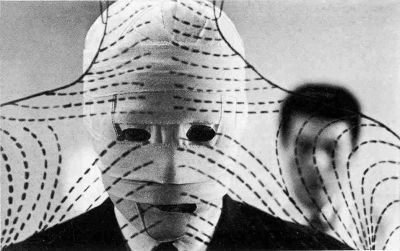
 Kôbô Abe and director Hiroshi Teshigahara collaborated on five films together, including the marvelously existential Woman of the Dunes in 1964 and The Face of Another two years later. In The Face of Another, Tatsuya Nakadai (The Human Condition, Kill!) stars as Okuyama, a man whose face has virtually disintegrated in a laboratory accident. He spends the first part of the film with his head wrapped in bandages, a la the Invisible Man, as he talks about identity, self-worth, and monsters with his wife (Machiko Kyo), who seems to be growing more and more disinterested in him. Then Okuyama visits a psychiatrist (Mikijirô Hira) who is able to create a new face for him, one that would allow him to go out in public and just become part of the madding crowd again. But his doctor begins to wonder, as does Okuyama, whether the mask has actually taken control of his life, making him as helpless as he was before. Abe’s remarkable novel is one long letter from Okuyama to his wife, filled with utterly brilliant, spectacularly detailed examinations of what defines a person and his or her value in society. Abe wrote the film’s screenplay, which tinkers with the time line and creates more situations in which Okuyama interacts with people; although that makes sense cinematically, much of Okuyama’s interior narrative, the building turmoil inside him, gets lost. Teshigahara once again uses black and white, incorporating odd cuts, zooms, and freeze frames, amid some truly groovy sets, particularly the doctor’s trippy office, and Tōru Takemitsu’s score is ominously groovy as well. As a counterpart to Okuyama, the film also follows a young woman (Miki Irie) with one side of her face severely scarred; she covers it with her hair and is not afraid to be seen in public, while Okuyama must hide behind a mask. But as Abe points out in both the book and the film, everyone hides behind a mask of one kind or another. The Face of Another is screening April 7 as part of Film Forum’s “5 Japanese Divas” series, featuring four weeks of films starring Kyo, Isuzu Yamada, Kimuyo Tanaka, Setsuko Hara, and Hideko Takamine, who play strong, determined women in such classic works as Yasujiro Ozu’s Early Summer (1951) and Tokyo Story (1953), Hiroshi Teshigahara’s The Face of Another (1966), Mikio Naruse’s Okaasan (1952) and Flowing (1956), Akira Kurosawa’s The Idiot (1951) and Throne of Blood (1957), Keisuke Kinoshita’s Carmen Comes Home (1951) and Twenty-Four Eyes (1954), and Kenji Mizoguchi’s Ugetsu (1953), Sansho the Bailiff (1954), and Street of Shame (1956), among others.
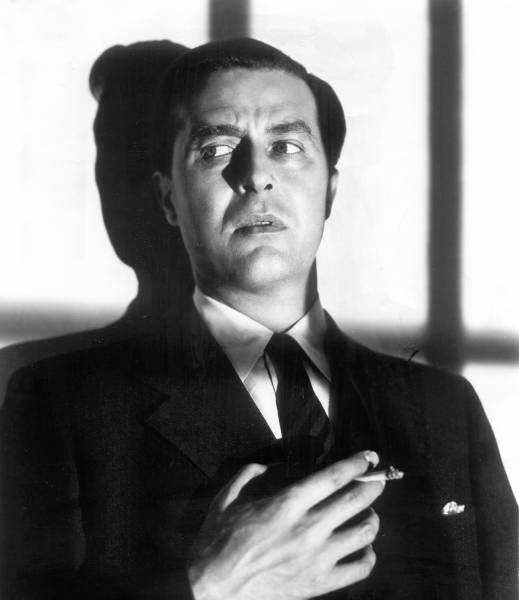
 Based on the 1943 novel by Graham Greene, Fritz Lang’s Ministry of Fear is a classic Hitchcockian noir about an innocent man caught up in a dangerous web of mystery and intrigue. Ray Milland stars as Stephen Neale, a man who, as the film opens, is being released from an asylum after serving time related to the death of his wife. His freedom doesn’t last long, as he stops at a local fair and visits the fortune-teller, who accidentally helps him win a guess-the-weight cake that some very bad people want to get their hands in. Out on the run, his only friends are Willi (Carl Esmond) and Carla (Marjorie Reynolds), foreign siblings who run the charity organization the Mothers of Free Nations, the sponsor of the fair. Throw in a séance, the Blitz, an old blind man, an alcoholic private investigator, a book called The Psychology of Nazism, a disbelieving Scotland Yard detective, and wonderfully shadowy camerawork and the result is a tense, exciting spy tale filled with plenty of twists and surprises. Ministry of Fear is screening as part of 92YTribeca’s Closely Watched Films series, hosted by Elliott Kalan and featuring special guest speaker Jackson Publick.