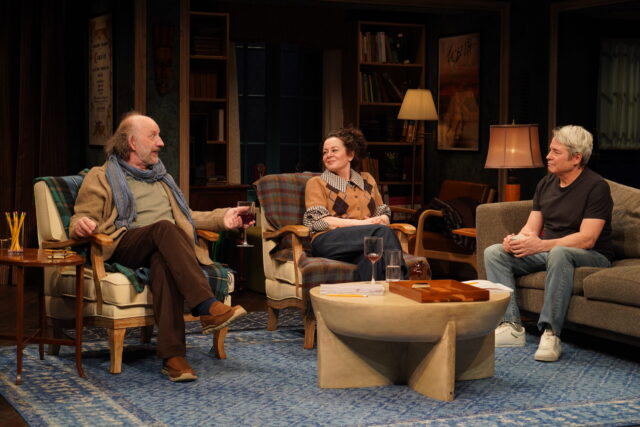
Director Leigh Carver (Max Baker), playwright Ruth Davenport (Geraldine Hughes), and actor Jay Conway (Matthew Broderick) meet for the first time in David Ireland’s Ulster American (photo by Carol Rosegg)
ULSTER AMERICAN
Irish Repertory Theatre, Francis J. Greenburger Mainstage
132 West Twenty-Second St. between Sixth & Seventh Aves.
Wednesday – Sunday through May 24, $55-$125
irishrep.org
Among the topics raised in the US premiere of David Ireland’s Ulster American are the n word, rape, murder, the Troubles, car crashes, religion, Brexit, alcoholism, and self-identity.
Oh, did I mention that it’s a comedy — and a hilarious one at that?
The eighty-minute play takes place in real time on a Sunday night in the cozy living room of British theater director Leigh Carver’s (Max Baker) London home, decorated by set designer supreme Charlie Corcoran, with two armchairs, a couch, several small tables, a writing desk, a window in a rear nook, theater posters for The Mousetrap, Camelot, London Assurance, Macbeth, and the National Theatre, and several bookcases filled with tomes about Noël Coward, Samuel Beckett, and other theater legends.
Leigh is meeting with Jay Conway (Matthew Broderick), an Oscar-winning American actor who is starring in a new work Leigh is directing, by Irish playwright Ruth Davenport (Geraldine Hughes). Rehearsals are set to begin the next day, and Leigh wants the three of them to get to know each other more first. Jay is on the couch, in the middle of a conversation with Leigh, telling him, “Is there homophobia in Hollywood? Of course. And misogyny? How can we deny it? It’s reflected in so much of our output. Narrative upon narrative centered around the abuse of women, the violent abuse of women. And racism? Only a fool could pretend otherwise.”
Leigh is surprised when Jay asks, “You ever use the n word?” After discussing James Baldwin, power dynamics, and the Bechdel test — a measure, proposed by cartoonist Alison Bechdel, that judges a fictional work based on whether it includes scenes in which at least two women talk about something other than men — Jay adds, “Why should I, a man, dictate to Bechdel, a woman, what should or should not be part of her fucking theory? This is me, learning from my mistakes, learning to shut the fuck up. . . . And that’s what I’m saying, this is where we’re at. Guys like me and you taking a back seat. Allowing the Ruth Davenports of the world to have their say. Fucking white heteronormative, privileged fucking uh . . . cis . . . motherfuckers like you and I who have to stand aside now. We have a moral responsibility to . . . I mean not me. Obviously. I’m Irish Catholic, so I can’t . . . I’m not part of that – the equation of – . . . I have an intersectional exemption.”
Jay speaks in a calm manner but with an undercurrent of excitement as he attempts to show off what he believes to be his supreme knowledge of society and his allyship with women and people of color. Leigh gets bored quickly but jumps in every once in a while to agree with Jay or correct a mistake, but nothing is going to stop Jay from making his points. He’s clearly a superstar who is used to being coddled and listened to.
Leigh is then shocked when Jay determinedly asks, “Do you think there are any circumstances where it’s morally acceptable to rape someone?” The audience is shocked as well as Jay describes a situation, inspired by a movie plot, when it might actually benefit a certain kind of woman; he names the person he would rape, then forces Leigh to choose his victim. The director squirms in his chair as they debate the validity of the question, but Jay is not about to give up until Leigh finally gives him a name, trapped by his need to suck up to Jay, since a lot is riding on this play.
A few minutes later, Ruth arrives, and things get really bizarre. She apologizes for being late, explaining that her mother had just gotten into an accident and is in the hospital. Her mother was driving Ruth to the airport and they were arguing about a friend of Ruth’s who was killed in the Troubles. Ruth tells the men, “I just lost it with her and — I don’t know what came over me, I just said, ‘Mummy — why do you always have to be such a cold-souled, blackhearted thoughtless fucking bitch?’” That was followed by the crash.
Initially, the three of them heap praise on one another. Ruth gushes that she’s Jay’s biggest fan and feels like she already knows him. Jay thanks her for writing him the role of a lifetime, saying, “Your script. Your fucking script, Ruth. Is the single best script I’ve read for ten fucking years.” Leigh believes that, given the quality of the script and the beloved star, they are critic-proof. “Hey, fuck the critics, I don’t give a fuck about the critics,” Jay declares. “They’re fucking animals, Leigh. They’re animals, Ruth. And we should do with them what we do with animals. Kill them and eat them. And the good ones keep as pets.”
But when Ruth says that, although she is from Northern Ireland, she considers herself British and that the protagonist of her play is the same, both Jay and Leigh are infuriated, and the real fireworks begin.
Jay: Are you British because Britain used to own Ireland? So they used to own you, like a slave, so you’re British?
Leigh: Exactly!
Ruth: They never owned me. I was never a slave!
Jay: It’s confusing because to me you sound Irish.
The confusion only increases as the battle lines are drawn.

History and identity collide in superb dark comedy at Irish Rep (photo by Carol Rosegg)
Ulster American debuted at the 2018 Edinburgh Fringe and had a highly touted 2023 London revival starring Woody Harrelson, Louisa Harland, and Andy Serkis. Director Ciarán O’Reilly’s (The Weir, The Emperor Jones) adaptation is a sizzling slow build, balancing humor with pathos and bravado until all hell breaks loose. Leigh, Ruth, and Jay dig deep into their personal sense of identity while also judging the others’. “You don’t get to decide who’s British and who isn’t,” Ruth says to Leigh, who replies, “Well, we sort of do. That’s the point.” A bewildered Jay chimes in, “This is more complicated than I thought.”
The argument relates to what is happening in the United States right now, as liberals and conservatives, both in the government and private citizens, feud over the status of legal and illegal immigrants.
The three characters also all bring up the subject of history, as if that will provide the answers they are seeking. “History is so important to this. For this play, I feel like I need to know the history of Ireland like I know my own ball sack,” Jay says. But even history is subjective these days.
Tony winner and New York City native Broderick (Shining City, Evening at the Talk House) is brilliant as Jay; his singsong delivery and stiff posture imbue the Hollywood icon with a sense of invulnerability, but in this case he is on his own, not surrounded by a sycophantic entourage he is probably used to. He glories in stating his opinions and flaunting his progressive ideals, but they are essentially only lip service, with curses casually thrown in not for emphasis but just because.
The Belfast-born Hughes (Molly Sweeney, Jerusalem) is a powder keg as Ruth, who is beyond thrilled to be working with Leigh and Jay until she starts learning more about them and some of their views; she’s not about to just sit back and let them run all over her, instead going toe-to-toe.
And Baker (Continuity, The Low Road), who hails from Baton Rouge, Louisiana, is completely convincing as the British Leigh, who has to walk the fine line between Jay and Ruth but is more conniving than he likes to admit, unable to remain neutral even as he attempts to befriend and care about each of them.
Ireland (What The Animals Say, Most Favoured) and O’Reilly (The Weir, The Emperor Jones) know what of they speak; both are from the north of Ireland, but the former is from Belfast and Ballybeen in Northern Ireland, while the latter is from Cavan, in the Republic of Ireland. In one of his previous, plays, the darkest of dark comedies Cyprus Avenue, Ireland also examines the issue when the protagonist insists, after calling another character the n word, “The last thing I am is Irish. I am anything but Irish. I am British. I am exclusively and non-negotiably British. I am not nor never have been nor never will be Irish.”
Ireland and O’Reilly take that to the next level in Ulster American, along with a sensational cast, critics be damned.
[Mark Rifkin is a Brooklyn-born, Manhattan-based writer; you can follow him on Substack here.]

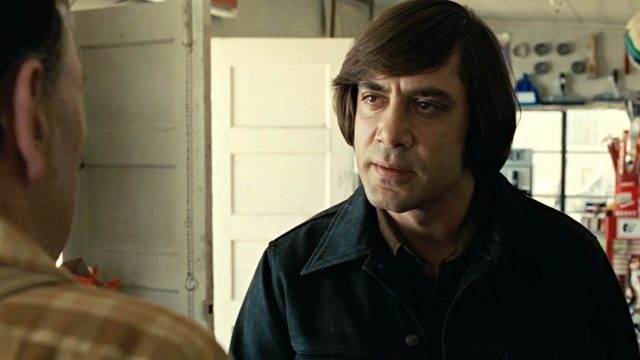
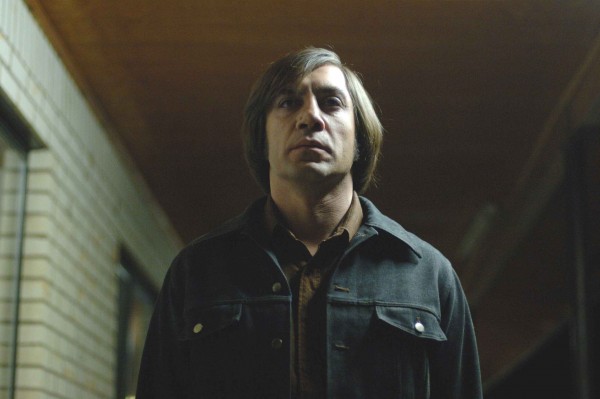
 For more than thirty years, Joel and Ethan Coen have been capturing the American zeitgeist like no one else, penetrating deep into the psyche of the country as well as the history of cinema. MoMA is honoring the pair in their Modern Matinees series, screening fifteen of their films at 1:30 through December 29. Based on the novel by Cormac McCarthy, the Coen brothers’ No Country for Old Men is a gripping thriller dominated by the mesmerizing performance of Javier Bardem as Anton Chigurh, a psychopathic killer who believes in chance. When Llewelyn Moss (an outstanding Josh Brolin) accidentally stumbles upon the site of a drug deal gone terribly wrong, he walks away with a satchel of cash and the dream of making a better life for him and his wife (Kelly MacDonald). He also knows that there will be a lot of people looking for him — and the two million bucks he has absconded with. On his trail are the Mexican dealers who were ripped off, bounty hunter Carson Wells (Woody Harrelson), and the cool, calm Chigurh, who leaves a bloody path of violence in his wake. Meanwhile, Sheriff Bell (Tommy Lee Jones) philosophizes on the sorry state of the modern world as he follows the proceedings with an almost Zen-like precision. Though it struggles to reach its conclusion, No Country for Old Men is an intense noir Western, an epic meditation on chance in which the flip of a coin can be the difference between life and a horrible death. No Country for Old Men is screening at MoMA on November 29; the series features the below films as well as Fargo, Intolerable Cruelty, Blood Simple, Raising Arizona, Miller’s Crossing, Barton Fink, and The Hudsucker Proxy.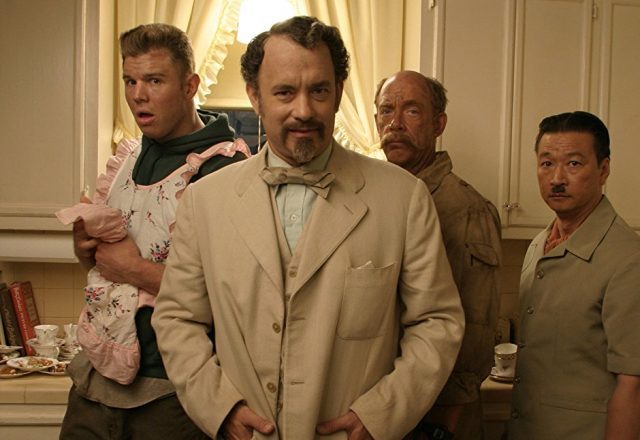
 By far the worst film the Coen brothers have ever made, this remake of the classic 1955 Alexander Mackendrick caper comedy is a travesty from start to finish, an absolute embarrassment to all involved, including Tom Hanks, Irma P. Hall, Marlon Wayans, J. K. Simmons, Tzi Ma, Ryan Hurst, and Diane Delano. Did anyone actually watch this film before they released it? We barely smiled once and never laughed at this ridiculous story of a group of losers using a woman’s root cellar as home base to rob a riverboat casino. Besides not being the slightest bit funny, the movie is also racist, as every black actor in the film is playing a stereotype. We get the Coens, but we don’t get this. Was it meant to be ironic? Cynical? Slapstick? All we know is that it’s just plain awful. The Ladykillers is screening at MoMA November 24.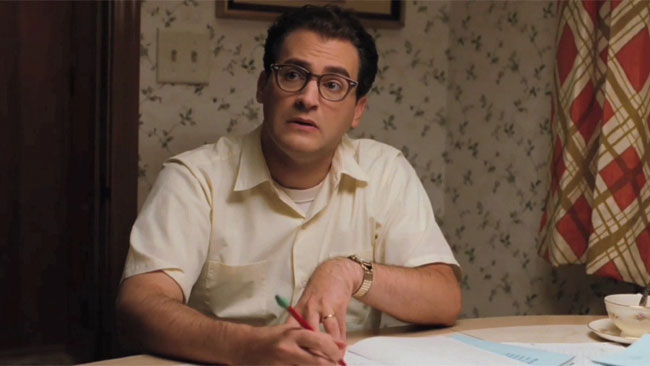
 The Coens take their unique brand of dry, black comedy to a whole new level with A Serious Man. Poor Larry Gopnik (a remarkably even-keeled Michael Stuhlbarg) just keeps getting dumped on: His wife, Judith (Sari Lennick), wants to leave him for, of all people, touchy-feely Sy Ableman (Fred Melamed); his brother, Arthur (Richard Kind), keeps hogging the bathroom so he can drain his cyst; his son, Danny (Aaron Wolf), won’t stop complaining that F-Troop isn’t coming in clearly and is constantly on the run from the school drug dealer (Jon Kaminsky Jr.); his daughter, Sarah (Jessica McManus), wants to get a nose job; one of his students (David Kang) has bribed him for a passing grade; his possible tenure appears to be in jeopardy; and he gets no help at all from a series of funnier and funnier rabbis. But Larry keeps on keepin’ on in the Jewish suburbs of Minnesota in 1967, trying to make a go of it as his woes pile higher and higher. Joel and Ethan Coen have crafted one of their best tales yet, nailing the look and feel of the era, from Hebrew school to Bar Mitzvah practice, from office jobs to parking lots, from the Columbia Record Club to transistor radios, from television antennas to the naked neighbor next door. The Coens get so many things right, you won’t mind the handful of mistakes in the film, and because it’s the Coens, who’s to say at least some of those errors weren’t intentional? A Serious Man is a seriously great film, made by a pair of seriously great filmmakers. And while you don’t have to be Jewish and from Minnesota to fall in love with it, it sure can’t hurt.

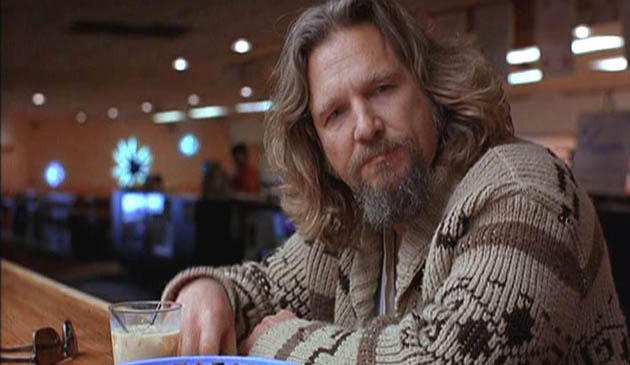
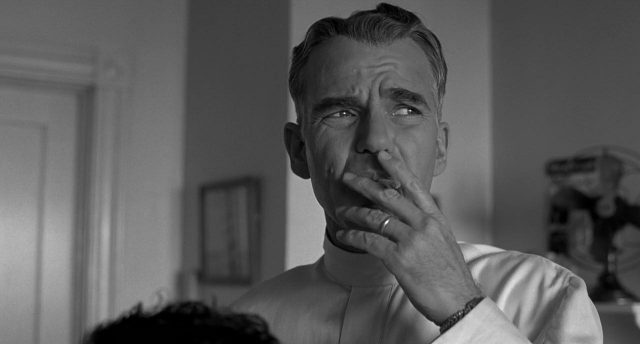
 The first half of this Coen brothers movie is stupendous. Shot in color by Roger Deakins and processed in magnificent black and white to get a richer palette, the film tells the story of Ed Crane, Billy Bob Thornton’s best role yet, a barber with almost nothing to say — ever. When he does talk, he talks slow, slower than he walks. Even his voice-over narration is delivered in a slow monotone. For about forty-five minutes, the pace is fabulous, but then it begins wearing down as the plot goes all over the place. It feels like the Coens had a bunch of different film ideas and decided to throw them all into the last hour of this movie, which seems to go on and on and on and on, with at least four places where you’ll think it’s over. The laughs go away, and a creepy, unfriendly moodiness pervades. At least you can still keep track of the awesome wigs that many of the male characters wear, and for the Californians out there it might be fun guessing the shooting locations, because much of the film was not shot on studio sets. Locations include Musso and Frank’s, a Presbyterian church on Wilshire Blvd., an empty Bank of America branch in Los Angeles, an abandoned furniture store in Glendale, Bungalow Heaven and Castle Green in Pasadena, and the streets of Orange in Orange County. The rather remarkable cast also includes Frances McDormand, Michael Badalucco, Richard Jenkins, Scarlett Johansson, Jon Polito, Tony Shalhoub, and James Gandolfini. The Man Who Wasn’t There is screening December 27 at MoMA.