The life and legacy of Lou Reed will be celebrated on July 30 with free all-day festival at Lincoln Center
LINCOLN CENTER OUT OF DOORS
Damrosch Park Bandshell, Josie Robertson Plaza, Hearst Plaza,
Alice Tully Hall lobby, Elinor Bunin Munroe Film Center Amphitheater
Saturday, July 30, free, 10:15 am – 12 midnight
www.lcoutofdoors.org
www.loureed.com
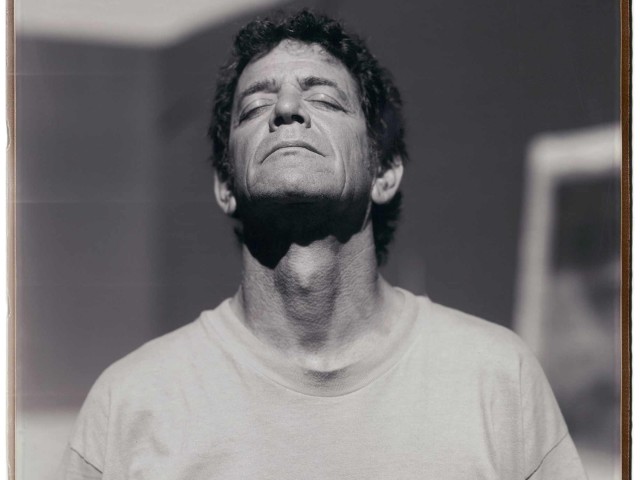
I think I took Lou Reed for granted. I’d see him regularly, either performing onstage, wandering through downtown art galleries, seeing shows at BAM, or grabbing a cab with his wife, Laurie Anderson. He was just one of those icons you thought would always be around, but it was not to be. On October 27, 2013, he succumbed to liver disease at the age of seventy-one. Less than three weeks later, on November 14, Lincoln Center hosted a low-key tribute to the Godfather of Punk at the Paul Milstein Pool & Terrace, three hours of his recorded music, with no speeches and no live performances. On July 30, Lincoln Center Out of Doors will be putting on a much bigger and broader festival in honor of Reed’s influential life and career with “The Bells: A Daylong Celebration of Lou Reed,” curated by Anderson and Hal Willner. The party gets under way at 10:15 on Josie Robertson Plaza with a tai chi lesson with Master Ren GuangYi; Reed recorded six original songs with Sarth Calhoun for the master’s Power and Serenity instructional DVD. From 11:00 to 4:00, the immersive sound installation “Lou Reed DRONES,” consisting of six guitars and amps emitting feedback, will continue in the Alice Tully Hall lobby. At 11:30 in the Damrosch Park Bandshell, the house band of Don Fleming, Sal Maida, Kenny Margolis, Lee Ranaldo, Steve Shelley, and Matt Sweeney will be joined by vocalists Joan as Police Woman, David Johansen, Lenny Kaye, Jesse Malin, Kembra Pfahler, Felice Rosser, Harper Simon, Jon Spencer, Bush Tetras, JG Thirlwell, and the Willie Mae Rock Camp for Girls for some rock & roll. From 12 noon to 7:00, the Elinor Bunin Munroe Film Center Amphitheater will present Reed’s 2010 documentary, Red Shirley (12 noon & 3:00), about his one-hundred-year-old cousin; A Night with Lou Reed (1:30 & 5:30), a video document of his 1983 Bottom Line stand; and the American Masters program Lou Reed: Rock and Roll Heart (4:00). At 2:00 in Hearst Plaza, Master Ren GuangYi will give a tai chi chuan and weapons demonstration, along with an eagle claw weapons demonstration by Masters Emmanuel Sam and Paul Lee. At 3:00, “Pass Thru Fire: Lyrics of Lou Reed” features Elizabeth Ashley, Steve Buscemi, Anne Carson, Kim Cattrall, Willem Dafoe, A. M. Homes, Natasha Lyonne, Julian Schnabel, Fisher Stevens, and Anne Waldman reading Reed’s words. At 7:00, Anderson, Anohni, Emily Haines, Garland Jeffreys, David Johansen, Mark Kozelek, Bill Laswell, John Cameron Mitchell, Maxim Moston, Jenni Muldaur, Jane Scarpantoni, Victoria Williams, Jim White, John Zorn, and others will gather at the bandshell for live performances of “Lou Reed’s Love Songs,” showing off his gentler side. The celebration, named after his 1979 album The Bells, concludes with a 10:30 screening (with headphones) of Julian Schnabel’s film Lou Reed’s Berlin, a concert film of Reed’s performance of the 1973 album at St. Ann’s Warehouse in 2006. It should be quite a day and night; try not to take it for granted.
LOU REED’S BERLIN (Julian Schnabel, 2007)
Damrosch Park Bandshell
Saturday, July 30, free, 10:30
www.loureed.com/inmemoriam
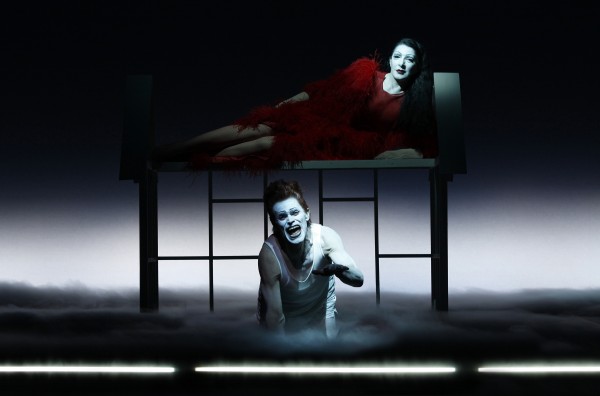
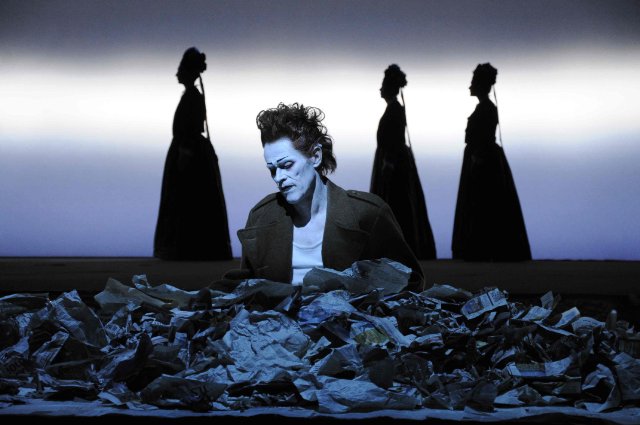
 In December 2006, Lou Reed resurrected his 1973 masterwork, Berlin, a deeply dark and personal song cycle that was a critical and commercial flop upon its initial release but has grown in stature over the years. (As Reed sings on the album’s closer, “Sad Song”: “Just goes to show how wrong you can be.”) The superbly staged adaptation, directed by Academy Award nominee Julian Schnabel (Basquiat, The Diving Bell and the Butterfly), took place at Brooklyn’s intimate St. Ann’s Warehouse, featuring Rob Wasserman and longtime Reed sideman Fernando Saunders on bass, Tony “Thunder” Smith on drums, Rupert Christie on keyboards, and guitarist extraordinaire Steve Hunter, reunited with Lou for the first time in three decades. The band is joined onstage by backup singers Sharon Jones and Antony, the Brooklyn Youth Chorus, and a seven-piece orchestra (including cello, viola, flute, trumpet, clarinet, and flugel). Amid dreamlike video montages shot by Schnabel’s daughter, Lola, depicting Emmanuelle Seigner as the main character in Berlin, as well as experimental imagery by Alejandro Garmendia, Reed tells the impossibly bleak story of Caroline, a young mother whose life crashes and burns in a dangerously divided and debauched Germany. “It was very nice / It was paradise,” Reed sings on the opening title track, but it’s all downhill from there. “It was very nice / It was paradise” might also now serve as a kind of epitaph for one of the most important poets of the last fifty years. Berlin is being shown at Damrosch Park Bandshell at 10:30 on July 30, with headphones available.

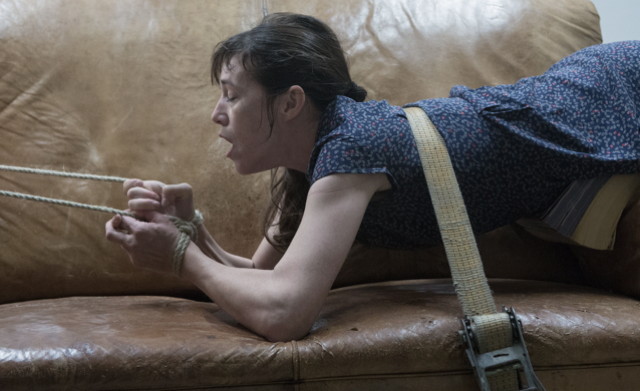
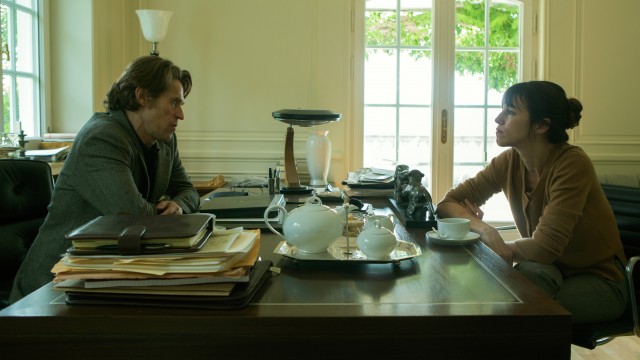
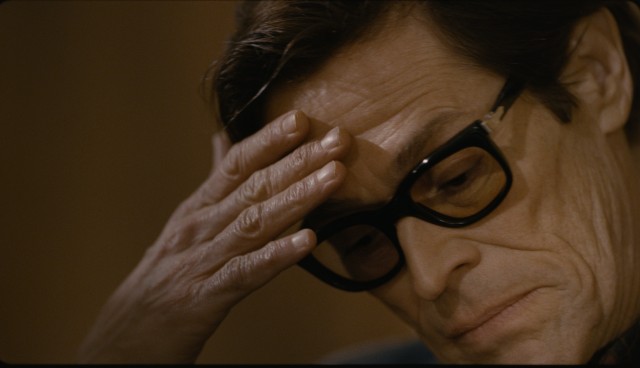
 Director Abel Ferrara packs a whole lot into controversial Italian writer and filmmaker Pier Paolo Pasolini’s last day on earth in the multinational coproduction Pasolini. Unfortunately, it all ends up a rather confusing jumble, with Ferrara (Bad Lieutenant, The Addiction) and screenwriter Maurizio Braucci (Gomorrah, Black Souls) squeezing too much into too little. Willem Dafoe stars as Pasolini on November 2, 1975, as the director is interviewed by a journalist, reads the newspaper on the couch, sits down at his typewriter to work on his novel Petrolio, edits what would be his final film (Salò, or the 120 Days of Sodom), and goes cruising to pick up a young stud. Ferrara adds enactments of scenes from the never-realized Porno-Teo-Kolossal, with Pasolini’s real-life lover, Ninetto Davoli, playing the fictional character Epifanio. (Davoli was supposed to play the younger Nunzio in the hallucinatory tale, about a search for faith and the messiah. Davoli is played by Riccardo Scamarcio in Ferrara’s film.) Ferrara never really delves into the internal makeup of Pasolini (The Gospel According to Matthew, Teorema), an openly gay outspoken social and political activist, poet, Marxist, Christian, and documentarian, instead using brief episodes that only touch the surface, as if Dafoe is playing a character based on Pasolini rather than the complex man who was indeed Pasolini. But Ferrara does get very specific about Pasolini’s mysterious, brutal death. Pasolini is screening October 2, 3, and 12 at the 52nd New York Film Festival.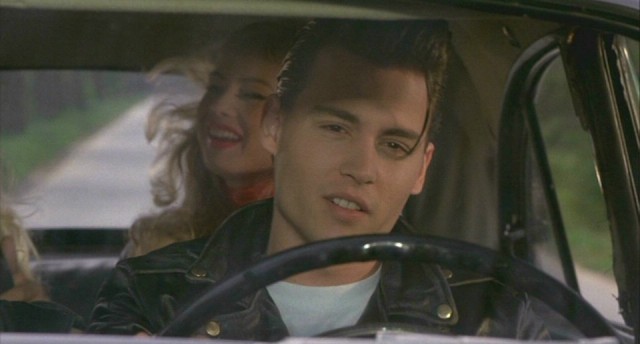
 It’s the drapes versus the squares as Grease and Rebel without a Cause meet West Side Story and Jailhouse Rock in one of trash king John Waters’s most accessible films, the romantic musical comedy Cry-Baby. Waters snatched 21 Jump Street heartthrob Johnny Depp right off the covers of teen magazines for his first starring role in a feature film, with Depp playing high school heartthrob and leather-jacketed bad boy Wade “Cry-Baby” Walker, leader of the rough-and-tough drapes, who also include his pregnant sister, Pepper (Ricki Lake), the trampy Wanda Woodward (porn star Traci Lords), Mona “Hatchet-Face” Malnorowski (Kim McGuire), and Milton Hackett (Darren E. Burrows). Lenora Frigid (Kim Webb) is desperate to go out with Cry-Baby, who earned his nickname because of the solitary tear that can trickle from one of his eyes, but he has his sights set on square queen Allison Vernon-Williams (Amy Locane), whose grandmother (Polly Bergen) runs a charm school and is disgusted by the juvenile delinquents. She much prefers Allison stay true to nerd king Baldwin (Stephen Mailer) than hang out with the dregs of society. But Allison and Cry-Baby’s love just might be meant to be. Writer-director Waters wonderfully evokes 1950s teen flicks with fast cars, the pangs of first love, and a delicious soundtrack of old and new tunes as Cry-Baby and Baldwin fight it out onstage in song instead of with knives or other weapons. (James Intveld sings Depp’s part, while Rachel Sweet does Allison’s.) Waters has also assembled a cast of parents to end all casts of parents: Troy Donahue and Mink Stole are Mr. and Mrs. Malnorowski, Joe Dallesandro and Joey Heatherton are Mr. and Mrs. Hackett, David Nelson and Patricia Hearst are Mr. and Mrs. Woodward, and Iggy Pop and Susan Tyrell are Mr. and Mrs. Rickettes. The story doesn’t always hold together, but Depp easily gets things back on track with his damn fine looks — er, charismatic performance. And yes, that prison guard is indeed Willem Dafoe. Cry-Baby, which was turned into a Broadway musical that earned four Tony nominations but had a very short run at the Marquis Theatre, is screening September 13 at 3:00 and September 14 at 8:00 as part of the spectacularly titled Film Society of Lincoln Center series “Fifty Years of John Waters: How Much Can You Take?” The series runs through September 14 and features all of Baltimore’s favorite son’s shorts and full-length works in addition to “Movies I’m Jealous I Didn’t Make,” eight films that Waters says are “extreme, astoundingly perverse, darkly funny, and, most importantly, supremely surprising films that turn me green with envy.