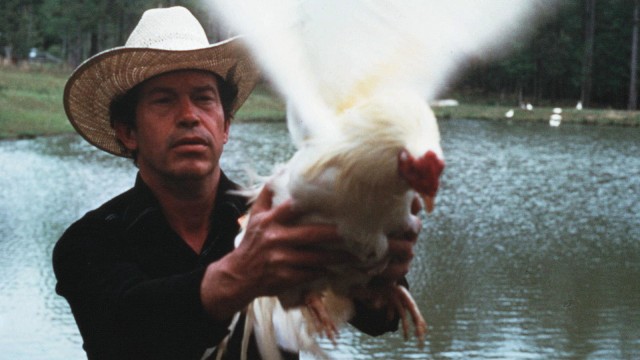
Warren Oates tries to get his life back on track in Monte Hellman’s COCKFIGHTER
COCKFIGHTER (Monte Hellman, 1974)
Film Society of Lincoln Center, Elinor Bunin Munroe Film Center
Francesca Beale Theater, 144 West 65th St. at Amsterdam Ave.
Sunday, July 3, 9:00, and Wednesday, July 6, 5:15
Festival runs through July 7
212-875-5601
www.filmlinc.org
 Director Monte Hellman and star Warren Oates enter “the mystic realm of the great cock” in the 1974 cult film Cockfighter. Alternately known as Born to Kill and Gamblin’ Man, the film is set in the world of cockfighting, where Frank Mansfield (Oates) is trying to capture the Cockfighter of the Year award following a devastating loss that cost him his money, car, trailer, girlfriend, and voice — he took a vow of silence until he wins the coveted medal. Mansfield communicates with others via his own made-up sign language and by writing on a small pad; in addition, he delivers brief internal monologues in occasional voiceovers. He teams up with moneyman Omar Baradansky (Richard B. Shull) as he attempts to regain his footing in the illegal cockfighting world, taking on such challengers as Junior (Steve Railsback), Tom (Ed Begley Jr.), and archnemesis Jack Burke (Harry Dean Stanton); his drive for success is also fueled by his desire to finally marry his much-put-upon fiancée, Mary Elizabeth (Patricia Pearcy). The cast also includes Laurie Bird as Mansfield’s old girlfriend, Troy Donahue as his brother, Millie Perkins as his sister-in-law, Warren Finnerty as Sanders, Allman Brothers guitarist Dickey Betts as a masked robber, and Charles Willeford, who wrote the screenplay based on his novel, as Ed Middleton.
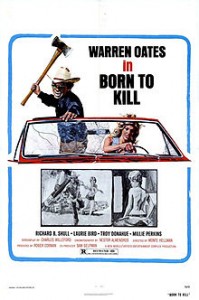
Shot in a mere four weeks, Cockfighter is not a very easy movie to watch. The cockfighting scenes are real, filmed in a documentary style by master cinematographer Néstor Almendros, who had previously worked with Eric Rohmer and François Truffaut and would go on to lens such films as Days of Heaven, Kramer vs. Kramer, Sophie’s Choice, and The Blue Lagoon. However, Almendros was hampered by a less-than-stellar staff and a low budget courtesy of producer Roger Corman, who wanted more blood and sex and did not allow Hellman (Two-Lane Blacktop, The Shooting) to rewrite the script the way he wanted to. Corman even had coeditor Lewis Teague (Cujo, The Jewel of the Nile) film some additional scenes to increase the lurid factor. (Hellman, who was inspired by A Place in the Sun and Shoot the Piano Player, has noted that the versions that are not called Cockfighter are not his director’s cut.) Even the music, by jazz singer-songwriter Michael Franks, feels out of place. But the film ultimately works because of Oates’s scorching performance as Frank, another in a long line of luckless, lovable losers that would fill his resume (Bring Me the Head of Alfredo Garcia, Race with the Devil, The Wild Bunch). Oates ambles from scene to scene with an infectious relish; you can’t wait to see what Frank will do next, and how Oates will play it. Hellman also doesn’t glorify the “sport” of cockfighting but instead presents it as pretty much what it is, a vile and despicable business populated by low-grade chumps. Cockfighter is screening July 3 and 6 in the Film Society of Lincoln Center series “Warren Oates: Hired Hand,” in a poor print that is emblematic of all the problems associated with the making of the movie. “I don’t care if they release it or not,” Oates said about Cockfighter. “It ain’t bitterness but just an insight.” The series is being held in conjunction with the release of the restored version of Leslie Stevens’s little-seen 1960 thriller, Private Property, starring Oates, Corey Allen, and Kate Manx. The tribute to Oates, who died in 1982 at the age of fifty-three, continues through July 7 with such other Oates films as Dillinger, 92 in the Shade, The Hired Hand, The Brink’s Job, and the inimitable Stripes.
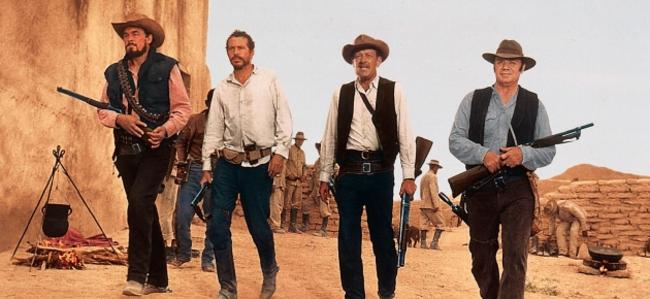
 Sam Peckinpah cemented his reputation for graphic violence and eclectic storytelling with the genre-redefining 1969 Western The Wild Bunch. When a robbery goes seriously wrong, Pike Bishop (William Holden), Dutch Engstrom (Ernest Borgnine), Freddie Sykes (Edmond O’Brien), Angel (Jaime Sánchez), and brothers Lyle (Warren Oates) and Tector Gorth (Ben Johnson) set out to get even, planning an even bigger score by going after a U.S. Army weapons shipment on a railroad protected by detective Pat Harrigan (Albert Dekker) and his hired gun, Deke Thornton (Robert Ryan), who is given nothing but “egg-suckin’, chicken-stealing gutter trash” to work with, including the hapless Coffer (Strother Martin) and T.C. (L. Q. Jones). The aging Pike, who sees this as his last score, is worried about being in cahoots with the unpredictable General Mapache (Emilio Fernández), a local warlord battling Pancho Villa’s freedom forces. But at the center of the film is the cat-and-mouse game between Pike and Thornton, the latter determined to capture his former partner, who left him to rot in jail years earlier. It all comes to a head in Agua Verde, which might translate to “Green Water” but will soon be bathed in red blood in one of the most violent shoot-outs ever depicted on celluloid.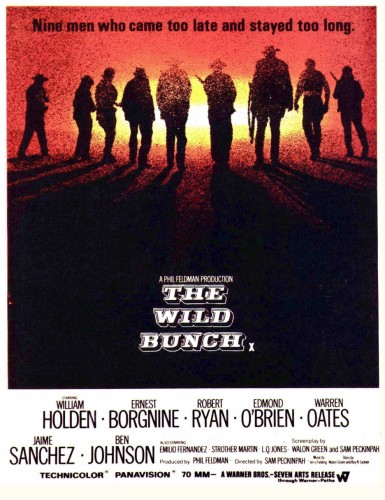
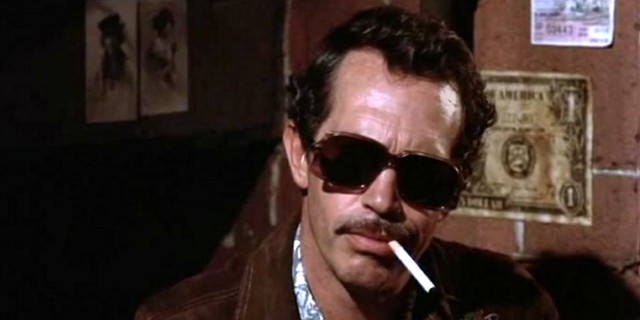
 Predictably, one of my freshman-year film classes featured weekly screenings of such all-time classics as Citizen Kane, The Godfather, and The Searchers. But when the professor assigned topics for our two papers that semester, he chose a pair of works he considered underrated, overlooked masterpieces. One was Nicholas Ray’s Bigger Than Life, in which James Mason plays a teacher overcome by a prescription drug addiction. The other was Sam Peckinpah’s Mexican cult favorite, the awesomely titled Bring Me the Head of Alfredo Garcia, which Williamsburg’s Nitehawk Cinema is presenting September 10 as part of its ongoing “One Nite Only” and “The Deuce” series. Befitting this crazy film, the evening promises prizes and surprises, a beer-infused after-party, and music by DJ Bones. Following his bitter experience with MGM over Pat Garrett and Billy the Kid, California native Peckinpah headed south to shoot a very strange tequila Western about an American loser making one last stab for love and wealth. Longtime sideman Warren Oates, who had previously appeared in Peckinpah’s Ride the High Country, Major Dundee, and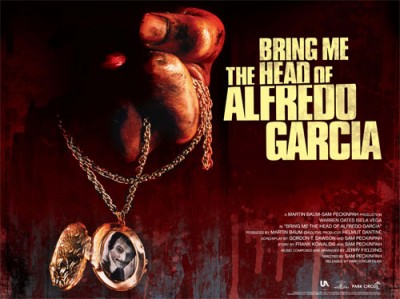
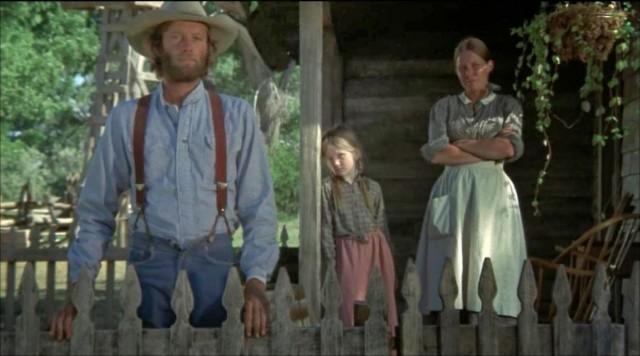
 After many years away from the homestead, Harry Collings (first-time-director Peter Fonda) returns to his farm, only to find that his wife (Verna Bloom) has kept herself rather busy once she assumed he was not coming back, in The Hired Hand, a so-called hippie Western written by Scottish novelist Alan Sharp, who also wrote Ulzana’s Raid and Night Moves. Warren Oates is his usual fine self as Harry’s dedicated sidekick, Arch Harris, as they do battle with the likes of the evil McVey (Severn Darden). The quiet, beautiful Fonda is like a Zen cowboy, trusting in karma to right the world’s wrongs, but that doesn’t always work out. Fonda considers the film, photographed by a young Vilmos Szigmond (McCabe & Mrs. Miller, The Deer Hunter), to be a Greek tragedy within a Western; indeed, it’s a little gem that that goes way beyond the trappings of the genre, laying the groundwork for such later anti-Westerns as Clint Eastwood’s Unforgiven. The film is being shown November 14 as part of the Rubin Museum Cabaret Cinema series “My Formative Years,” curated by artist Francesco Clemente in conjunction with his current solo show, “Inspired by India,” and will be introduced by playwright Neil LaBute. Clemente says about the film, “I’m in favor of psychedelia in all manifestations and to find psychedelia in a Western is always nice when it happens, but it never happens.” The film series continues with Alejandro Jodorowsky’s The Holy Mountain on November 21 and Pier Paolo Pasolini’s Salò, or the 120 Days of Sodom on November 28 (introduced by choreographer Karole Armitage), before concluding with Gianfranco Rosi’s Sacro GRA on December 5.