
Life goes on after a bizarre shooting event in Martín Rejtman’s absurdist TWO SHOTS FIRED
TWO SHOTS FIRED (DOS DISPAROS) (Martín Rejtman, 2014)
Film Society of Lincoln Center
Monday, September 29, Walter Reade Theater, 8:45 pm
Tuesday, September 30, Francesca Beale Theater, 3:00 pm
Festival runs September 26 – October 12
212-875-5050
www.filmlinc.com
 Award-winning Argentine writer-director Martín Rejtman is back with his first film in eight years (and only his fourth feature in his nearly thirty-year career), the absurdist black comedy Two Shots Fired. The calmly paced story begins as sixteen-year-old Mariano (Rafael Federman), after a night of dancing, goes about his daily chores, swimming laps in his family’s backyard pool (as the dog runs alongside him) and mowing the lawn. He shows no emotion when he accidently runs over the mower’s electric cord; instead he simply goes into the house for tools to fix it. There he also finds a box with a gun, so he goes into his room, puts the gun against his head, and pulls the trigger, like it’s a perfectly normal thing to do. He then places the barrel against his stomach and shoots himself a second time. The first shot merely grazes his temple, while the second shot seems to have left a bullet lodged in his body. Mariano evenhandedly claims that he is not depressed and was not trying to kill himself, and his friends and family essentially act as if nothing has happened, going on with their simple, ordinary lives. The only ones who appear to be even the slightest bit concerned are his mother (Susana Pampin), who secretly hides all the scissors and kitchen knives, and the dog, who runs away.
When Mariano attempts to go anywhere with his brother (Benjamín Coelho) that involves passing through a metal detector, the system beeps at him; when his brother tries to explain that it must be because there is a bullet in him, Mariano doesn’t care, opting not to enter, instead waiting outside without complaining, explaining, or making a scene. When he practices with his woodwind quartet, his recorder releases a second note every time he plays, presumably the result of the lodged bullet, but he continues on, like it’s no big deal. And when his cell phone incessantly goes off, he doesn’t get mad or embarrassed; he simply tries to find a place to put it where it won’t disturb him or anyone else. He, and everyone around him, including a potential girlfriend (Manuela Martelli) and his music teacher (Laura Paredes), just keep on keeping on, going about their business, virtually emotionless. They’re not trying to forget what happened; instead, it’s like it is just another part of daily existence in this Buenos Aires suburb. A minimalist, Rejtman (Rapado, The Magic Gloves) first focuses his camera on a place, then doesn’t move it as characters walk in and some kind of “action,” however critical or monotonous, takes place; then the people leave the frame as the camera lingers, like Ozu on Valium. What happens is just as important, or unimportant, as what doesn’t happen. Every scene is treated the same, a meditation on the mundanity of life (with perhaps more than a passing reference to how Argentina has dealt with los desaparecidos and its long-running volatile political climate). And just like life, parts of the film are boring, parts are wildly funny, parts are unpredictable, and parts are, well, just parts of life. Two Shots Fired is having its U.S. premiere September 29 and 30 at the 52nd New York Film Festival, which opens September 26 with David Fincher’s Gone Girl and concludes October 11 with Alejandro G. Iñárritu’s Birdman, or The Unexpected Virtue of Ignorance.
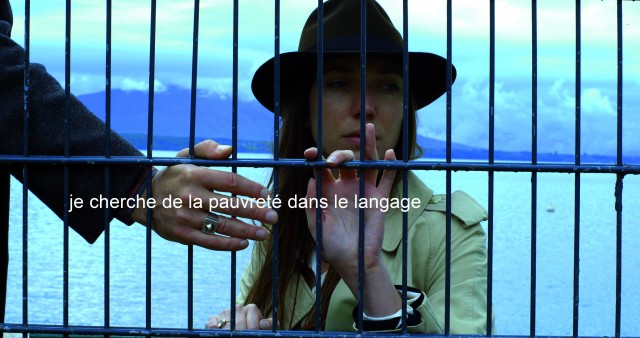
 After the New York Film Festival advance press screening of Jean-Luc Godard’s 3D Goodbye to Language, a colleague turned to me and said, “If this was Godard’s first film, he would never have had a career.” While I don’t know whether that might be true, I do know that Goodbye to Language is the 3D flick Godard was born to make, a 3D movie that couldn’t have come from anyone else. What’s it about? I have no idea. Well, that’s not exactly right. It’s about everything, and it’s about nothing. It’s about the art of filmmaking. It’s about the authority of the state and freedom. It’s about extramarital affairs. It’s about seventy minutes long. It’s about communication in the digital age. (Surprise! Godard does not appear to be a fan of the cell phone and Yahoo!) And it’s about a cute dog (which happens to be his own mutt, Miéville, named after his longtime partner, Anne-Marie Miéville). In the purposefully abstruse press notes, Godard, now eighty-three, describes it thusly: “the idea is simple / a married woman and a single man meet / they love, they argue, fists fly / a dog strays between town and country / the seasons pass / the man and woman meet again / the dog finds itself between them / the other is in one / the one is in the other / and they are three / the former husband shatters everything / a second film begins / the same as the first / and yet not / from the human race we pass to metaphor / this ends in barking / and a baby’s cries.” Yes, it’s all as simple as that. Or maybe not.
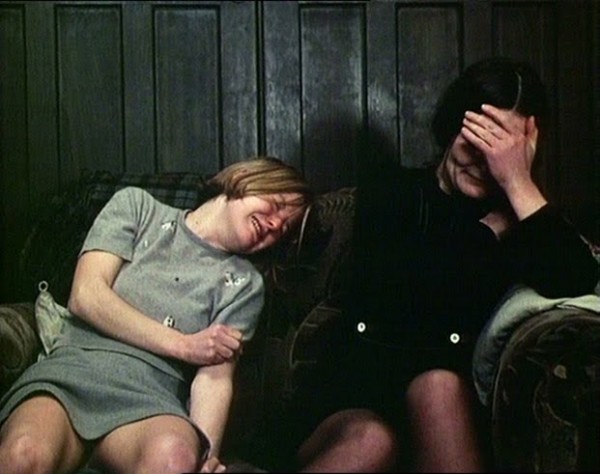
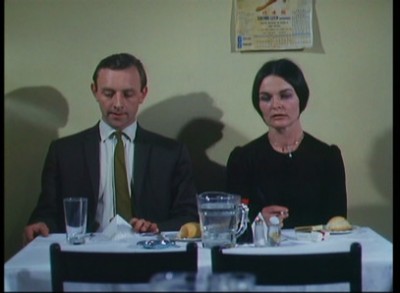
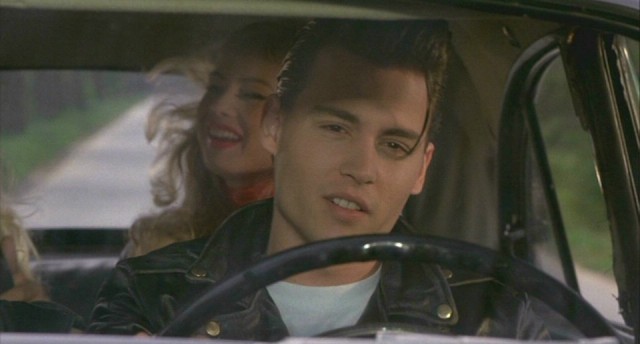
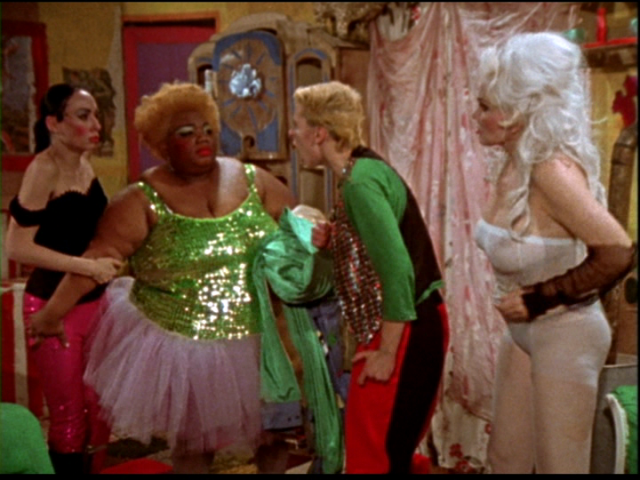
 It’s the drapes versus the squares as Grease and Rebel without a Cause meet West Side Story and Jailhouse Rock in one of trash king John Waters’s most accessible films, the romantic musical comedy Cry-Baby. Waters snatched 21 Jump Street heartthrob Johnny Depp right off the covers of teen magazines for his first starring role in a feature film, with Depp playing high school heartthrob and leather-jacketed bad boy Wade “Cry-Baby” Walker, leader of the rough-and-tough drapes, who also include his pregnant sister, Pepper (Ricki Lake), the trampy Wanda Woodward (porn star Traci Lords), Mona “Hatchet-Face” Malnorowski (Kim McGuire), and Milton Hackett (Darren E. Burrows). Lenora Frigid (Kim Webb) is desperate to go out with Cry-Baby, who earned his nickname because of the solitary tear that can trickle from one of his eyes, but he has his sights set on square queen Allison Vernon-Williams (Amy Locane), whose grandmother (Polly Bergen) runs a charm school and is disgusted by the juvenile delinquents. She much prefers Allison stay true to nerd king Baldwin (Stephen Mailer) than hang out with the dregs of society. But Allison and Cry-Baby’s love just might be meant to be. Writer-director Waters wonderfully evokes 1950s teen flicks with fast cars, the pangs of first love, and a delicious soundtrack of old and new tunes as Cry-Baby and Baldwin fight it out onstage in song instead of with knives or other weapons. (James Intveld sings Depp’s part, while Rachel Sweet does Allison’s.) Waters has also assembled a cast of parents to end all casts of parents: Troy Donahue and Mink Stole are Mr. and Mrs. Malnorowski, Joe Dallesandro and Joey Heatherton are Mr. and Mrs. Hackett, David Nelson and Patricia Hearst are Mr. and Mrs. Woodward, and Iggy Pop and Susan Tyrell are Mr. and Mrs. Rickettes. The story doesn’t always hold together, but Depp easily gets things back on track with his damn fine looks — er, charismatic performance. And yes, that prison guard is indeed Willem Dafoe. Cry-Baby, which was turned into a Broadway musical that earned four Tony nominations but had a very short run at the Marquis Theatre, is screening September 13 at 3:00 and September 14 at 8:00 as part of the spectacularly titled Film Society of Lincoln Center series “Fifty Years of John Waters: How Much Can You Take?” The series runs through September 14 and features all of Baltimore’s favorite son’s shorts and full-length works in addition to “Movies I’m Jealous I Didn’t Make,” eight films that Waters says are “extreme, astoundingly perverse, darkly funny, and, most importantly, supremely surprising films that turn me green with envy.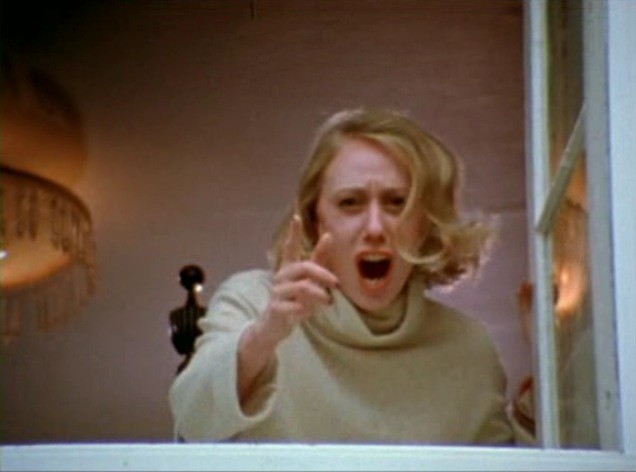
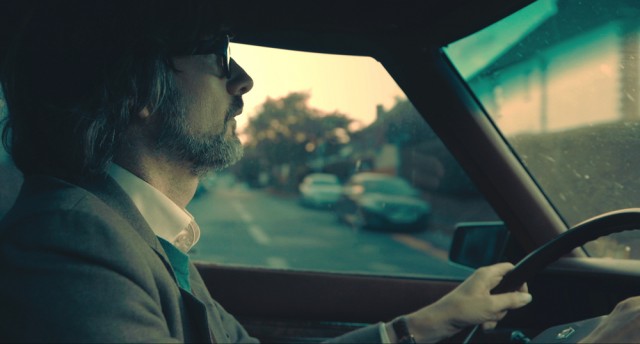
 Florian Habicht’s Pulp: A Film About Life, Death & Supermarkets is a brilliant inside look at the long-lasting relationship between a band and its hometown. In December 2012, British alternative band Pulp returned to the place of its birth, the rugged, working-class city of Sheffield in the north of England, for what was being billed as its last-ever concert on dry land. Pulp frontman Jarvis Cocker hooked up with Habicht (Love Story, Woodenhead), conceiving a project in which the time and place, along with the fans, would be just as important as the band and its music, if not more so. In the nonchronological film, Habicht cuts between archival footage of Pulp, clips from the final concert, interviews on the street with old and young fans, and brief chats with Pulp tour manager Liam Rippon and the other band members: guitarist Mark Webber, keyboardist Candida Doyle, bassist Steve Mackey, and drummer Nick Banks, who are pretty much taking it all in stride. But at the center of it all is the soft-spoken, enigmatic Cocker, who founded Pulp back in 1978 when he was fifteen years old.