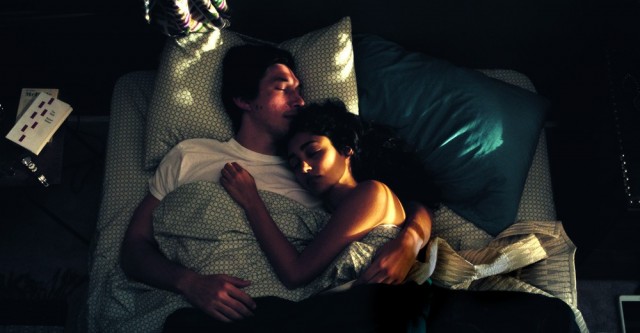
Adam Driver and Golshifteh Farahani star as a happy New Jersey couple in Jim Jarmusch’s PATERSON
PATERSON (Jim Jarmusch, 2016)
Film Society of Lincoln Center
West 65th St. between Eighth Ave. & Broadway
Sunday, October 2, Alice Tully Hall, $25, 9:00
Monday, October 3, Alice Tully Hall, 6:00
Sunday, October 16, Francesca Beale Theater, $15, 9:30
Festival runs September 30 – October 16
212-875-5050
www.filmlinc.org
 Jim Jarmusch’s Paterson is a beautifully poetic, deceptively simple wonder about the beauty, poetry, and wonderful simplicity of life, an ode to the little things that make every day special and unique. Adam Driver stars as Paterson, a New Jersey Transit bus driver and poet who lives in Paterson with his girlfriend, Laura (Golshifteh Farahani), who spends much of her time decorating their small, quaint house, painting black and white circles and lines on curtains, couches, dishes, walls, and even her clothing, continually creating works of art out of nearly everything she comes into contact with. The film takes place over an ordinary week for the sweet-natured couple, who are very much in love, each allowing the other the freedom to explore who they are and offering their complete support. Every morning, Paterson wakes up around 6:12, as the sunlight streaks over their sleeping bodies. He checks his Casio wristwatch to confirm the time — he doesn’t use an alarm clock, nor does he own a cell phone or a computer — then snuggles closer with Laura for a few extra minutes. He eats Cheerios out of a bowl painted by Laura with circles that match the shape of the cereal. He studies a matchbook, which becomes the starting point for his next poem. Lunchbox in hand, he walks to the Market St. garage and gets on board the 23 bus. He writes a few lines of poetry, listens to fellow bus driver Donny’s (Rizwan Manji) daily complaints, then heads out on his route through his hometown, picking up pieces of some very funny passenger conversations. For lunch he sits on a bench overlooking the Paterson Great Falls and composes more mostly non-rhyming lines in his “Secret Notebook,” which he will not show anyone but Laura. At quitting time, he walks home, checks the mail, fixes the tilted mailbox, sees what new art Laura has created, and takes their English bulldog, Marvin (Nellie, who won the Palm Dog at Cannes and passed away two weeks after shooting concluded), for a walk after dark, stopping for a beer and chatting with bar owner Doc (Barry Shabaka Henley). He then goes back home, ready to do it all over again the next day. But Paterson is no bored working-class suburbanite living out a dreary routine; he finds something new and special in every moment, from his job to his relationship to his nightly trips to the bar. Every day is different from the one before, Jarmusch celebrating those variations that make life such a joy.
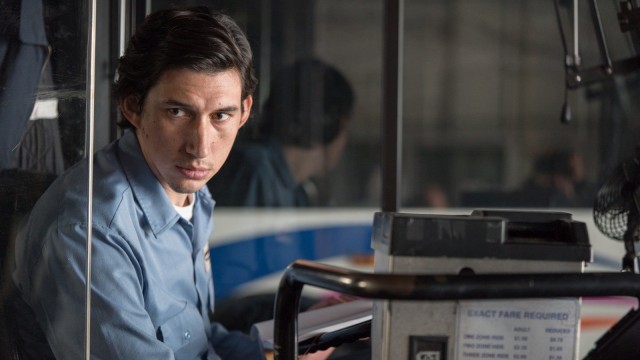
Adam Driver plays a poetic New Jersey Transit bus driver named Paterson in PATERSON
Set to a subtle electronic score by Sqürl, Jarmusch and Carter Logan’s band, Paterson is a gorgeous film, lovingly photographed by Frederick Elmes, who captured a very different kind of town in David Lynch’s Blue Velvet, and edited to the sweet rhythm of a basic existence by Affonso Gonçalves. Paterson’s poems were written by award-winning poet Ron Padgett, who, like Jarmusch, studied with Kenneth Koch; the works, which unfold day by day, include the previously published “Love Poem” (a tribute to Ohio Blue Tip Matches and love), “Glow,” “Pumpkin,” and “Poem” as well as three written specifically for the film, “Another One,” “The Run,” and “The Line.” The words appear on the screen in a font based on Driver’s handwriting as he narrates them in voiceover. (Among the other poets referenced in the film are Frank O’Hara, Wallace Stevens, Petrarch, and Emily Dickinson.) The film is also very much about duality and pairs, which Jarmusch has said in interviews was not always intentional. Adam Driver, who served in the Marines, plays a driver and former Marine named Paterson who lives and works in Paterson. He is constantly seeing twins, from two brothers named Sam and Dave (Trevor and Troy Parham) to two young girls on his bus to two older men on a bench. While Paterson and Laura seem meant to be together, their happiness infectious, he looks on every night as Everett (William Jackson Harper) desperately pleads with Marie (Chasten Harmon) to take him back. At the bar, Paterson often speaks to Doc about the pictures on the wall of fame, photos about such native sons as Uncle Floyd and his brother, Jimmy Vivino, as well as local superstar Lou Costello, part of one of the most popular comedy duos ever with Bud Abbott, who was born in Asbury Park (and thus does not qualify for the wall). Paterson’s favorite poet is lifelong New Jersey-ite William Carlos Williams, who Laura playfully refers to as Carlos Williams Carlos. (In making the film, Jarmusch was inspired by one of Williams’s most popular phrases, “No ideas but in things.”) And when Paterson’s not encountering twins, he’s bumping into random poets (Sterling Jerins, Method Man, Masatoshi Nagase) during his walks. Paterson is a poetic marvel all its own, a dazzling film about love and harmony, about finding creativity in every aspect of life, led by marvelous performances by Driver and Farahani and written and directed by a master of cinematic restraint.
Paterson is screening October 2, 3, and 16 at the New York Film Festival; Jarmusch and Driver will participate in a Q&A following the U.S. premiere October 2 at 9:00 at Alice Tully Hall. Jarmusch is also presenting Gimme Danger, his new documentary about Iggy Pop, at this year’s festival, including a Q&A with him and the Stooge after the October 1 show. In addition, Jarmusch will be in conversation with NYFF director Kent Jones for an “On Cinema” discussion on October 4 at 8:30 at the Walter Reade Theater ($15). A true treasure, Paterson opens theatrically in the U.S. on December 28.
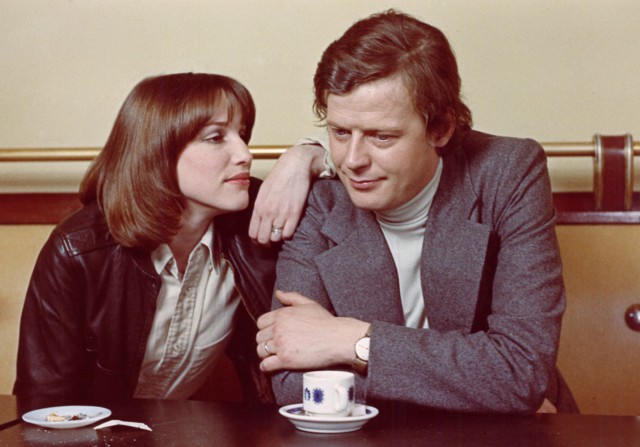
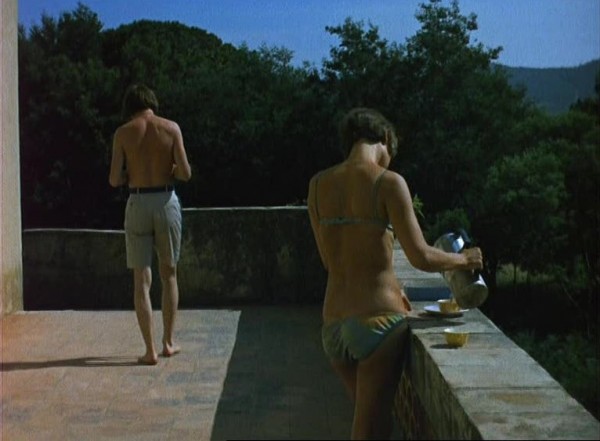
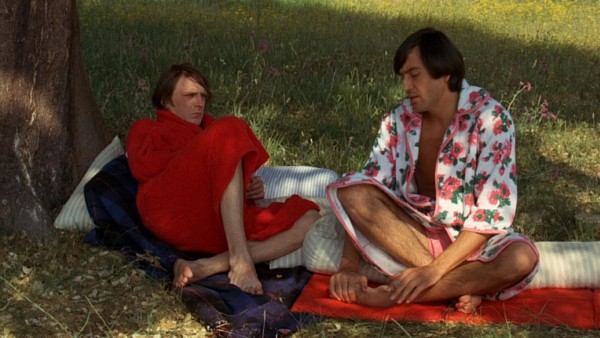
 The Film Society of Lincoln Center’s “Eric Rohmer’s Six Moral Tales” concludes with the last work in the series, the 1972 drama Love in the Afternoon, which serves not only as the chronological end but the thematic finale as well. Bernard Verley stars as Frédéric Carrelet, a nearly perfect 1970s French bourgeois character. In his mid-thirties, a partner in a two-lawyer firm, he is about to have his second child with his wife, Hélène, played by his real spouse at the time, Françoise Verley, in her only feature film. While Frédéric seems at ease with his steady suburban life, he daydreams about other women, albeit with no intention of taking action. At lunch he goes to a café, watches all the passersby outside, and thinks (in voice-over narration), “If there’s one thing I’m incapable of now, it’s trying to seduce a girl. I have no idea what to say.” However, he adds, “The prospect of quiet happiness stretching indefinitely before me depresses me.” But he also admits about women, “I feel their seductive power without giving in to it.” But when an old friend from his past, the sexy and freewheeling Chloé (Zouzou), unexpectedly arrives in his office one day and starts an unpredictable yet exciting flirtation with him, Frédéric is forced to look deep inside himself and make some choices about his life that are harder than he anticipated.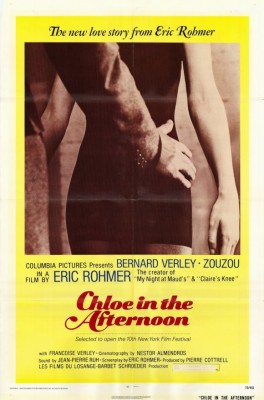
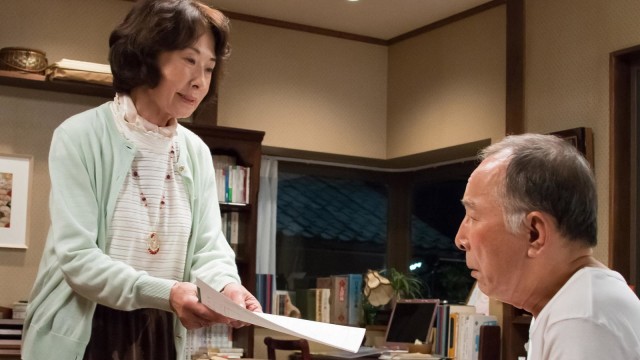
 For her birthday this year, Tomiko Hirata (Kazuko Yoshiyuki) wants something simple from her stubborn, not-very-thoughtful husband of fifty years, Shuzo (Isao Hashizume): a divorce. That shocking wish sends the entire Hirata clan into a frenzy in Yoji Yamada’s charmingly bittersweet What a Wonderful Family! The retired Shuzo doesn’t know what he’ll do without Tomiko, but he is not the kind of man to share his feelings; instead, he prefers to go to a local watering hole and flirt with the cute bartender, play golf, or take the dog, Toto, to the park. Their daughter, Shigeko (Tomoko Nakajima), is mad at her husband, Taizo Kanai (Shozo Hayashiya), for stretching the truth about one of his hobbies. Eldest son Konosuke (Masahiko Nishimura) tends not to get involved, even as his wife, Fumie (Yui Natsukawa), essentially runs the household and their children, Kenichi (Takanosuke Nakamura) and Nobusuke (Ayumu Maruyama), just run around. And youngest son Shota (Satoshi Tsumabuki) has a promising future that just might include his new girlfriend, Noriko Mamiya (Yu Aoi), although all of the divorce talk suddenly has him thinking twice.