Tag Archives: walter reade theater

2026 NEW YORK JEWISH FILM FESTIVAL: NOTHINGNESS, EVERYTHING, AND MATZOH BALLS TOO

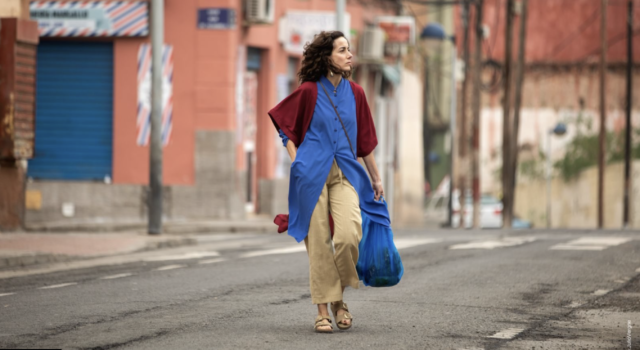
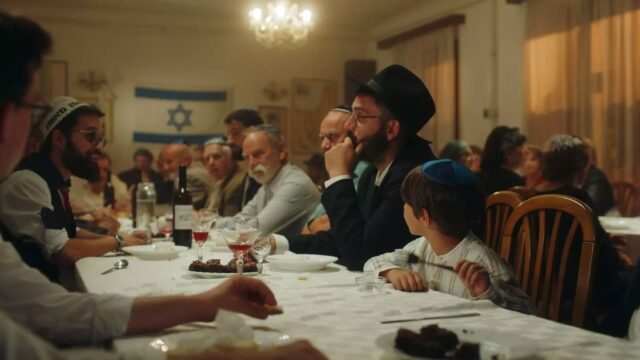
Anat Maltz’s Real Estate screens January 21 at the New York Jewish Film Festival

THIRTY-FIFTH ANNUAL NEW YORK JEWISH FILM FESTIVAL
Walter Reade Theater, Film at Lincoln Center
165 West 65th St. between Broadway & Amsterdam Aves.
January 14-28
www.filmlinc.org
thejewishmuseum.org

The New York Jewish Film Festival is now celebrating its thirty-fifth year of bringing narrative features, documentaries, and shorts dealing with Judaism, Israel, and the Jewish diaspora, from romantic comedies and poignant dramas to hard-hitting looks at the state of the world amid ever-growing antisemitism. As I’ve noted before, it sometimes feels like a political statement just to attend the festival.

A joint production of the Jewish Museum and Film at Lincoln Center, the 2026 edition runs January 14-28, consisting of twenty-nine works from the United States, France, Germany, Spain, Belgium, Argentina, the Netherlands, Switzerland, Poland, Canada, Denmark, Uganda, and Israel, including many New York premieres. The festival opens with Ken Scott’s Once Upon My Mother, about a Moroccan family in Paris with a matriarch determined to ensure her son lives a happy life, based on an autobiographical novel by Roland Perez, who will participate in Q&As following both screenings. The centerpiece selection is Guillaume Ribot’s All I Had Was Nothingness, which follows director Claude Lanzmann during his twelve years making Shoah. NYJFF26 concludes with actor Matthew Shear’s writing and directing debut, Fantasy Life, in which a schlubby but endearing schlemiel/schlimazel/shmegege/shmendrik becomes a manny for an actress, her rock musician husband, and their three young daughters, starring Amanda Peet, Judd Hirsch, Andrea Martin, Bob Balaban, Alessandro Nivola, Jessica Harper, and Zosia Mamet.

Among the other highlights are Abby Ginzberg’s Labors of Love: The Life and Legacy of Henrietta Szold, about the founder of Hadassah; Marisa Fox’s My Underground Mother, who finds out that her mother was a spy and freedom fighter against the Nazis; Anat Maltz’s Real Estate, which takes place over the course of one day as a young couple about to have a baby are forced out of their Tel Aviv apartment; and a restoration of Aleksander Marten’s 1936 I Have Sinned, the first Yiddish sound film made in Poland. And this year’s winner for best title is Emily Lobsenz’s A Bit of Everything and Matzoh Balls Too.

Below are several films to watch out for; most screenings throughout the festival will be followed by a discussion with directors, producers, subjects, cast members, or experts.

All I Had Was Nothingness follows Claude Lanzmann as he makes Shoah

ALL I HAD WAS NOTHINGNESS (Guillaume Ribot, 2025)
Walter Reade Theater
Thursday, January 22, 2:30 & 7:45
www.filmlinc.org
mk2films.com

In 1985, Claude Lanzmann’s extraordinary nine-and-a-half-hour epic, Shoah, changed the discussion surrounding the Holocaust, as Lanzmann, a French Jew, traveled around the world interviewing survivors, witnesses, collaborators, and perpetrators. In honor of the fortieth anniversary of Lanzmann’s award-winning magnum opus, French director and photographer Guillaume Ribot, who is not Jewish, has made All I Had Was Nothingness, a remarkable documentary, produced by Claude’s widow, Dominique Lanzmann, that follows Lanzmann on his journey, filled with self-doubt, doors slammed in his face, and a lack of funds that constantly threaten the project. Ribot and editor Svetlana Vaynblat went through two hundred hours of unused footage to put the film together, with Ribot adding narration taken directly from Lanzmann’s writings, primarily from his 2009 memoir, The Patagonian Hare. Even though we know that Shoah gets released to widespread acclaim — and is followed by such other Holocaust films as Sobibor, 14 October 1943, 4 p.m., The Last of the Unjust, and Shoah: Four Sisters before Lanzmann died in 2018 at the age of ninety-two — the story plays out like a gripping, intimate thriller.

“Making Shoah was a long and difficult battle,” Lanzmann (voiced by Ribot) says early on. “I wanted to film, but all I had was nothingness. The subject of Shoah is death itself. Death and its radicality. On some evenings it felt like senseless suffering, and I was ready to give up. But during those twelve years of work, I always forced myself to stare relentlessly into the black sun of the Shoah.”

Among the people Lanzmann meets are Abraham Bomba, who survived Treblinka, where he was forced to cut the hair of women who were gassed to death; Simon Srebnik, a Chelmno survivor whose father was killed in the Łódź Ghetto and whose mother was murdered in a gas van in the concentration camp; SS commander Gustav Laabs; convicted Treblinka exterminator Franz Suchomel; locals who lived next to concentration camps and claim to have not known what was going on inside; Treblinka train engineer Henryk Gawkowski; Heinz Schubert from the Einsatzgruppen; Treblinka survivor Richard Glazar; Einsatzgruppe Obersturmführer Karl Kretschmer; and Yitzhak “Antek” Zuckerman, deputy commander of the Warsaw Ghetto Uprising. “Daily, we tackled a new prey,” Lanzmann notes as he attempts to “deceive the deceivers.”

Along the way, Lanzmann obtains a fake passport under the name Claude-Marie Sorel, quarrels with his cameraman William Lubtchansky (whose father was gassed in Auschwitz), wonders what the overall message of the film will be, uses a special hidden camera, and is unable to raise a single dollar from potential American investors. He also smokes a lot of cigarettes.

Ribot, whose previous films include Le Cahier de Susi, inspired by the discovery of a notebook by an eleven-year-old girl who was murdered in Auschwitz, and Treblinka, je suis le dernier Juif, about camp survivor Chil Rajchman, turns the focus on Lanzmann and the lengths documentarians will go to tell their stories. All I Had Was Nothingness is a valuable addition to films about the Holocaust, but it is much more than that in its search for the truth, which can be so easily hidden, while providing a behind-the-scenes look at the making of a masterpiece.

“I could have been one of the victims. I knew nothing of it, truly,” Lanzmann says about his knowledge of the Holocaust prior to doing his research for the film. “My knowledge was nil. Nothing but a statistic, an abstract figure.” Through such necessary films as Shoah and, now, All I Had Was Nothingness, the world knows.

Lanzmann often lingers on his own eyes and the eyes of his subjects, penetrating shots that are emotionally and psychologically powerful. “My journey has led me to capture eyes that have seen horror. The eyes that saw, I saw them too,” he says. And now we can seem them as well, bearing witness.

(All I Had Was Nothingness is screening January 22 at 2:30 and 7:45, with Vaynblat on hand for Q&As.)

Actor, writer, director, activist, and family man Charles Grodin is subject of fascinating documentary

CHARLES GRODIN: REBEL WITH A CAUSE (James L. Freedman, 2025)
Walter Reade Theater
Sunday, January 25, 6:15, and Monday, January 26, 1:00
www.filmlinc.org
charlesgrodinfilm.com

James L. Freedman’s Charles Grodin: Rebel with a Cause reveals that the man best known to the general public for the Beethoven movies and his oddball, awkward, but hilarious talk-show appearances was in fact a deeply beloved, respected, and humble husband, father, and grandfather, a hugely successful actor, director, and writer on the big screen, the small screen, and the stage, and a fierce fighter of injustice.

“Robert Kennedy once said, ‘Each time a man stands up for an ideal, or strikes out against injustice, he sends forth a tiny ripple of hope,’” writer, director, producer, and narrator Freedman says at the beginning of the documentary. “Charles Sidney Grodin, inspiring, cajoling, and annoying people every step of the way, unleashed a tidal wave of hope.”

Grodin was born in Pittsburgh in 1935 to Orthodox Jewish parents; his maternal grandfather was a talmudic scholar from Belarus, and he was estranged from his difficult father. He was impeached as fifth-grade class president and thrown out of Hebrew school. Deciding to become an actor after seeing George Stevens’s 1951 classic A Place in the Sun, Grodin left college and moved to New York City, where he worked as a cabdriver and a nightwatchman while studying acting with Uta Hagen and Lee Strasberg. By the late 1950s, he was appearing on episodic television, including numerous Westerns, made his Broadway debut in 1962, and starred in the long-forgotten Sex and the College Girl in 1964; his big breaks came in 1968, when he played Dr. Hill in Roman Polanski’s Rosemary’s Baby and directed Lovers and Other Strangers on the Great White Way. In archival interviews, he talks about turning down the role of Benjamin Braddock in The Graduate, battling Polanski on set, being fired three times from Candid Camera, directing the controversial television special Simon & Garfunkel: Songs of America, and the failure of his first marriage.

Then, in the 1970s, he made it big with such films as Catch-22, The Heartbreak Kid, and Heaven Can Wait and the Broadway hit Same Time, Next Year. Among those singing his praises as a performer and friend are Robert De Niro (Midnight Run), Marlo Thomas (Thieves), Martin Short (Clifford), Ellen Burstyn (Same Time, Next Year), Lewis Black (Madoff), Jon Lovitz (Last Resort), Carol Burnett (Fresno), Alan Arkin (Catch-22), Art Garfunkel, and director Martin Brest (Midnight Run).

“He was a phenomenal actor. There is no actor better than him,” says Elaine May, who directed Grodin in The Heartbreak Kid. Marc Maron calls him a “cranky comedic genius.” Steve Martin (The Lonely Guy) points out, “None of us could do what he did.” Richard Kind (Clifford) explains, “Chuck was the most caring, loving narcissist.” Television executive Henry Schlieff and producer Julian Schlossberg discuss their positions on Grodin’s ever-changing top-ten-friends list. Grodin’s second wife, Elissa, a journalist he met when she was doing a story on him, notes, “He was unbelievably annoying, and I adored him.” Freedman also speaks with Grodin’s son, Nick, and daughter, Marion.

The documentary takes a fascinating shift when it turns its attention to Grodin’s extensive work for unjustly imprisoned people serving long sentences because of the Felony Murder Rule and the Rockefeller Drug Laws. He helped free Elaine Bartlett, June Benson Lambert, Randy Credico, and Jan Warren, all of whom participate in the film. “He rescued me,” Warren states. Elissa Grodin says, “He was always defending underdogs.” He brought his activism to The Charles Grodin Show, which ran on CNBC from 1995 to 1998; he was hired by Roger Ailes, who later founded Fox News.

Freedman and editor Frank Laughlin interweave new interviews with home movies, news reports, and lots of film clips of Grodin — who died in 2021 at the age of eighty-six — in films and on talk shows (Jon Stewart declares him “the best talk show guest ever . . . ever!”). It’s a joyful celebration of an extraordinary human being, a supremely talented and endlessly inventive individual whose impact on everyone he met was profound.

De Niro sums it all up when he says, “Chuck was a very special person.”

(Charles Grodin: Rebel with a Cause is screening January 25 at 6:15 and January 26 at 1:00, both followed by Q&As with Freedman.)
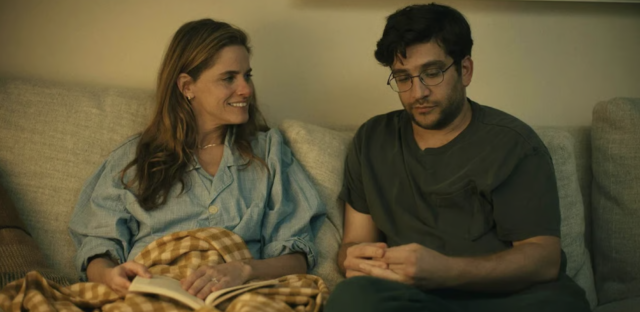
Amanda Peet and Matthew Shear star in Shear’s Fantasy Life, the closing night selection of NYJFF26

FANTASY LIFE (Matthew Shear, 2025)
Walter Reade Theater
Wednesday, January 28, 1:15 & 7:15
www.filmlinc.org

After losing his job, Sam (Matthew Shear) becomes a manny for actor Dianne (Amanda Peet), rock bassist David (Alessandro Nivola), and their three young girls (Riley Vinson, Romy Fay, Callie Santoro), and a touching hilarity ensues as Sam contemplates his future, not always making the best choices. Judd Hirsch and Andrea Martin play David’s parents, Bob Balaban and Jessica Harper are Dianne’s father and mother, and Holland Taylor makes a cameo as a therapist. Peet is in top form, building a gentle and tender chemistry with Shear, in his debut as a writer-director. Fantasy Life closes the festival on January 28 at 1:15 and 7:15, preceded by Jack Feldstein’s six-minute Animated New Yorkers: Joel and followed by a Q&A with Shear and Peet.

[Mark Rifkin is a Brooklyn-born, Manhattan-based writer and editor; you can follow him on Substack here.]
ROBERT SIODMAK: “CORRUPTER OF THE GERMAN FAMILY”

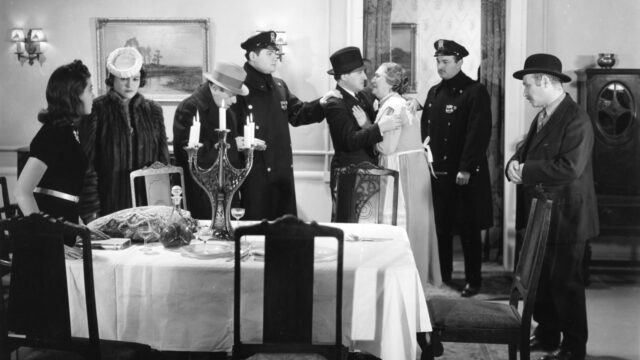
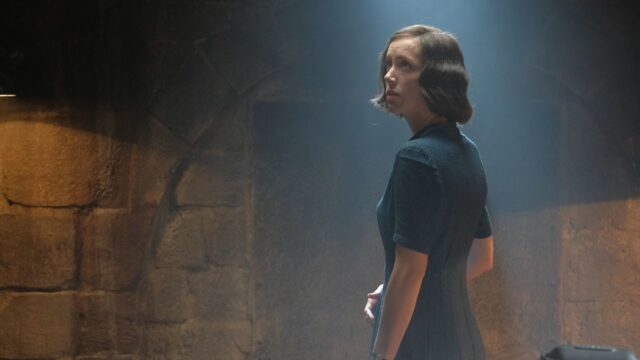
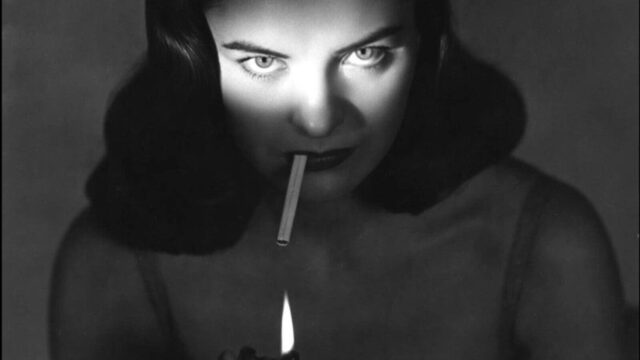
Phantom Lady is one of seventeen films in Robert Siodmak retrospective at Lincoln Center

ROBERT SIODMAK: DARK VISIONARY
Film at Lincoln Center, Walter Reade Theater
144 West Sixty-Fifth St. at Amsterdam Ave.
December 11-19, All-Access Pass $119
www.filmlinc.org

In his 2010 essay “Dark Mirrors” for the Museum of the Moving Image, David Cairns wrote, “If film noir had not somehow coalesced from a miasma of influences floating in the atmosphere of ’40s America — postwar disillusion and anxiety, French poetic realism, German Expressionism, the gangster movie, and pulp fiction traditions — perhaps only Fritz Lang or Robert Siodmak could have invented it. Lang, because his work always carried a dark worldview, filtering sociopolitical tensions and focusing them into intense, ecstatic, tortured images. Siodmak, because his movies already followed two normally divergent paths — social realism and expressionist nightmare — which converge to make noir.”

While the Austrian-born German-American Lang is well known for such classics as Metropolis, M, You Only Live Once, Ministry of Fear, The Big Heat, and Dr. Mabuse, the Gambler, made in Germany and Hollywood, Siodmak, who was born in Dresden and worked in Germany, Paris, and California, is far less well known despite making some all-time favorites in multiple genres and being denounced by Josef Goebbels as “a corrupter of the German family.”

Film at Lincoln Center is honoring the director with the seventeen-film retrospective “Robert Siodmak: Dark Visionary,” including new 4K restorations of 1943’s Son of Dracula, 1944’s Phantom Lady, 1945’s The Suspect, and 1946’s The Killers. The works range from 1930’s People on Sunday, codirected by Edgar G. Ullmer, through 1952’s The Crimson Pirate, and feature such stars as Ava Gardner, Lon Chaney Jr., Maria Montez, Charles Laughton, Olivia de Havilland, George Sanders, Dorothy McGuire, Burt Lancaster, Barbara Stanwyck, Victor Mature, Yvonne De Carlo, Lloyd Bridges, and Ella Raines.

THE KILLERS

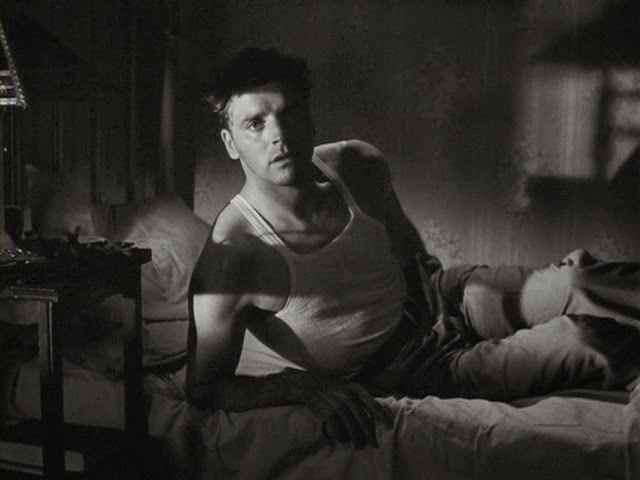
Burt Lancaster makes a killer film debut in classic 1946 noir from Robert Siodmak

THE KILLERS (Robert Siodmak, 1946)
Thursday, December 12, 6:30
Friday, December 13, 8:30
www.filmlinc.org

In 1950, Edmond O’Brien starred as auditor Frank Bigelow in Rudolph Maté’s classic noir D.O.A., a story told in flashback as Bigelow tries to figure out why someone has poisoned him. Four years earlier, O’Brien dealt with another kind of fatalism in Robert Siodmak’s The Killers, playing insurance agent Jim Reardon, who is investigating why a gas station attendant was brutally gunned down in his bed in suburban Brentwood, New Jersey. The film opens with cold-hearted contract killers Al (Charles McGraw) and Max (William Conrad) arriving in town, looking for the Swede (Burt Lancaster), aka Pete Lund and Ole Andreson. They waltz into Henry’s Diner, giving orders and exchanging mean-spirited dialogue with no fears or worries. When Nick Adams (Phil Brown) warns the Swede that the men are coming to kill him, the former boxer knows there’s nothing he can do about it anymore; he’s tired of running, and he’s ready to meet his end. It’s a shocking way to begin a movie; up to that point, it’s a faithful version of Ernest Hemingway’s short story, but the rest is the splendid invention of writers Richard Brooks, Anthony Veiller, and John Huston and producer Mark Hellinger. Reardon soon finds himself meeting with a series of gangsters as they relate, through flashbacks, a plot to rob a payroll, perpetrated by a motley crew that includes “Dum Dum” Clarke (Jack Lambert), “Blinky” Franklin (Jeff Corey), the Swede, and mastermind Big Jim Colfax (Albert Dekker), along with Big Jim’s gun moll, femme fatale extraordinaire Kitty Collins (Ava Gardner). Reardon’s boss (Donald MacBride) wants him to forget about it, since it’s essentially about a meager $2,500 insurance claim, but Reardon is determined to find out what happened to a quarter million in cash, with the help of the Swede’s childhood friend, Lt. Sam Lubinsky (Sam Levene).

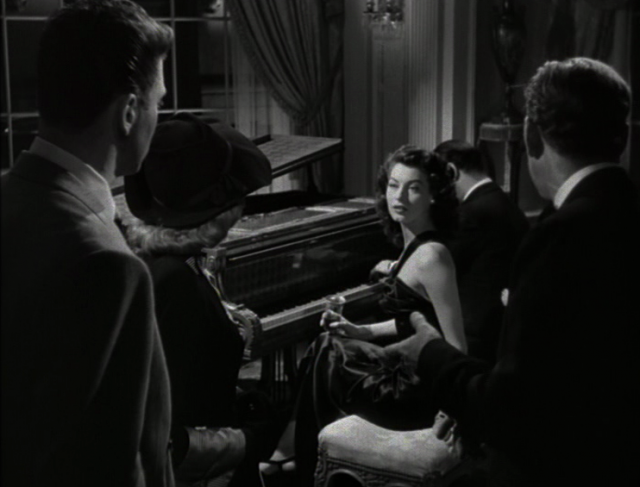
Ava Gardner turns more than a few heads in THE KILLERS

Ava Gardner turns more than a few heads in The Killers

The Killers is an intense, passionate heist flick, structured like Citizen Kane, starting with a death and then putting everything together via interviews and flashbacks. Lancaster and Gardner are magnetic, he in his screen debut, she in the film that made her a star. Siodmak (The Dark Mirror, The Spiral Staircase) masterfully navigates the noir tropes, from Miklós Rózsa’s jazzy score, which jumps out from the opening credits, and Woody Bredell’s oft-angled black-and-white cinematography that maintains an ominous, shadowy sensibility throughout to deft characterizations and surprising plot twists. As it makes its way through the seven deadly sins, The Killers lives up to its fab billing as a “Raw! Rugged! Ruthless drama of a man who gambled — his luck — his love — his life for the treachery of a girl’s lips.” Nominated for four Oscars, for Best Director, Best Film Editing (Arthur Hilton), Best Music, and Best Adapted Screenplay, The Killers, which was also made into a 1958 student short by Andrei Tarkovsky and a 1964 crime drama by Don Siegel starring Lee Marvin, Angie Dickinson, John Cassavetes, Norman Fell, and Ronald Reagan, is screening December 12 and 13 in a new 4K restoration in the Film at Lincoln Center series “Robert Siodmak: Dark Visionary.” Be on the lookout for such other gems and surprises as Inquest, The Burning Secret, Cobra Woman, The Spiral Staircase, and Criss Cross.

[Mark Rifkin is a Brooklyn-born, Manhattan-based writer and editor; you can follow him on Substack here.]
NYJFF33: LOOKING FOR CHLOÉ

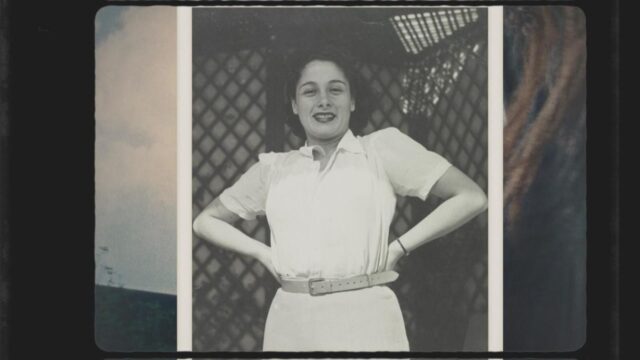
Isabelle Cottenceau immerses viewers into the life and career of designer Gaby Aghion in Looking for Chloé

LOOKING FOR CHLOÉ (GABY, THE WOMAN BEHIND MAISON CHLOÉ) (Isabelle Cottenceau, 2023)
Walter Reade Theater, Film at Lincoln Center
165 West 65th St. between Broadway & Amsterdam Aves.
Saturday, January 20, 7:00
www.filmlinc.org
thejewishmuseum.org

“Gaby was not a typical fashion designer who simply made clothes. She was someone who really wanted, in a way, to revolutionize society,” Chloé archive director Géraldine-Julie Sommier says about Jewish Egyptian designer Gaby Aghion in Isabelle Cottenceau’s Looking for Chloé. “There’s a quote I love: ‘She wanted to create an attitude through her clothes.’”

Screening January 20 at 7:00 at the Walter Reade Theater as part of the thirty-third annual New York Jewish Film Festival — copresented by Film at Lincoln Center and the Jewish Museum — the documentary tells the little-known story of the underrecognized Chloé founder, born Gabrielle Hanoka in Alexandria, Egypt, in 1921. In 1940 she married communist intellectual Raymond Aghion, they moved to Paris five years later, then she started Chloé in 1952, unhappy with the state of women’s clothing.

Aghion was not really a hands-on designer, not making any sketches or drawings, but she knew what she liked; she surrounded herself with talented individuals as she developed the brand, changing the industry with luxury prêt-à-porter. Among the designers she hired were Gérard Pipart, Phoebe Philo, Stella McCartney, and, most famously and successfully, Karl Lagerfeld, who helped put the fashion house on the map. “They understood each other. And it was Karl Lagerfeld who crystallized Chloé’s identity,” researcher Camille Kovalevsky says. However, Aghion points out, “We created Karl. It is not Karl that created Chloé.”

Cottenceau combines archival footage, family photographs, and old news reports with new interviews in the film, which features spoken text by Israeli-Dutch singer-songwriter and composer Keren Ann taken from a rare interview Aghion did in 2012.

“People have never understood how a fashion house called Chloé, a house that had no past, no name, could become so inventive,” Keren Ann narrates as Aghion. “We just opened the door to inventors. I love invention; I love people who stand up and take action.”

Longtime Chloé model Pat Cleveland explains, “Chloé is the essence of freedom, an air of elegance, but freedom at the same time . . . like a vacation for your body.”

Cottenceau (Sous les pavés, la jupe; Éloge de la laideur) paints a wide-ranging portrait by talking with Aghion’s economist son, Philippe, who shares touching remembrances with stark honesty; former creative director Clare Waight Keller; painter and photographer Peter Knapp; fashion exhibition curator Judith Clark; machinist Bayram Kaya; seamstresses Anita Briey and Virginia Da Silva Santos; celebrities atelier assistant manager Nicolas Imberty; personal friend Anita Saada; and FIT Museum curator Dr. Valerie Steele, who will participate in a postscreening discussion with producer Sophie Jeaneau.

Together they emphasize Aghion’s dedication to the freedom of movement, offering women literal and figurative liberation, helping them break out of boredom and social convention. She didn’t take herself too seriously, preferring to have fun and joke around as she remained in the background, her company making clothing that was adventurous, imbued with a spirit of fluidity, simplicity, and optimism for a new open-minded generation.

“She got into fashion with a determination to democratize it,” Aghion’s granddaughter, brand sustainability and development consultant Mikhaela Aghion, says. But Philippe admits her clothing was not inexpensive.

The film is being screened in conjunction with the excellent Jewish Museum exhibition “Mood of the moment: Gaby Aghion and the house of Chloé,” which continues through February 18 and consists of photographs, sketches, personal and professional documents, nearly 150 garments, and other paraphernalia celebrating the life and career of an extraordinary woman, who passed away in 2014 at the age of ninety-three but whose legacy lives on.

[Mark Rifkin is a Brooklyn-born, Manhattan-based writer and editor; you can follow him on Substack here.]
NEW YORK JEWISH FILM FESTIVAL 2024

Adam Breier’s All About the Levkoviches is part of 2024 NYJFF

THIRTY-THIRD ANNUAL NEW YORK JEWISH FILM FESTIVAL
Walter Reade Theater, Film at Lincoln Center
165 West 65th St. between Broadway & Amsterdam Aves.
January 10-24, $14-$17
212-875-5050
www.filmlinc.org
thejewishmuseum.org

With the scourge that is antisemitism on the rise yet again, this time spurred by Hamas’s October 7 terrorist attack on Israel and the IDF’s military response, it feels like a political statement just to attend the thirty-third annual New York Jewish Film Festival, taking place January 10–24 at the Walter Reade Theater at Lincoln Center. The 2024 iteration consists of more than two dozen features, documentaries, and shorts from Hungary, Poland, Germany, the Czech Republic, France, Italy, Austria, the UK, Israel, Ukraine, and America, exploring such topics as antisemitism, family estrangement, Nazi-looted art, the 1976 trial of Pierre Goldman, Klezmer music, survival in the desert, excommunicated philosopher Baruch Spinoza, and the Shabbos goy.

The opening night selection is the New York premiere of James Hawes’s One Life, in which Sir Anthony Hopkins portrays Sir Nicholas Winton, an unassuming British stockbroker who was a quiet WWII hero; producer Joanna Laurie will participate in a postscreening discussion. The centerpiece film is the New York premiere of Michal Vinik’s Valeria Is Getting Married, about two Ukrainian sisters who come to Israel and get involved in contemporary arranged marriages. The festival closes with Ron Frank’s documentary Remembering Gene Wilder, a celebration of the beloved stage and screen star, with reminiscences from Mel Brooks, Alan Alda, Carol Kane, Harry Connick Jr., Rain Pryor, and others; the New York premiere will be introduced by executive producer Julie Nimoy and followed by a talk with Frank, writer Glenn Kirschbaum, and Peter Ostrum, who played Charlie Bucket in Willy Wonka and the Chocolate Factory, his only film role.

Below are five films to watch out for; most screenings throughout the festival will be followed by a discussion with directors, producers, subjects, cast members, or experts.

The 1939 Yiddish melodrama Mothers of Today will be shown at NYJFF in a 35mm restoration

MOTHERS OF TODAY (Henry Lynn, 1939)
Thursday, January 11, 2:30
Sunday, January 14, 12:00
www.filmlinc.org

Yiddish radio star Esther Field, the “Yiddishe Mama,” made her only film appearance in Henry Lynn’s 1939 shund film, Mothers of Today, being shown in a 35mm restoration at the festival, followed by a discussion with National Center for Jewish Film codirectors Lisa Rivo and Sharon Rivo. It’s a working-class immigration melodrama about a widow trying to hold on to Jewish tradition as her children begin straying from the religion in America. The film was shot in the Bronx and features Jewish songs and prayers, including the Kiddush, “Got Fun Avrohom,” and Kol Nidrei.

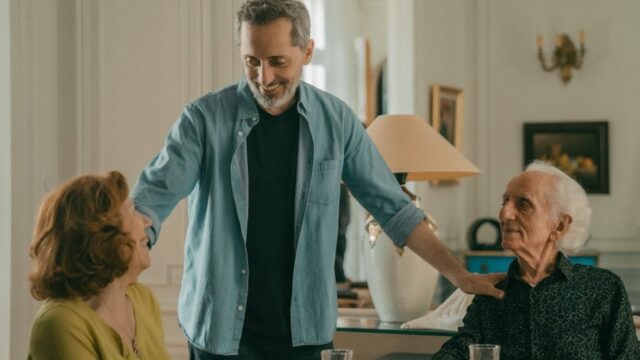
Gad Elmaleh’s autobiographical comedy Stay with Us deals with religious conversion

STAY WITH US (Gad Elmaleh, 2022)
Thursday, January 11, 5:30
Wednesday, January 24, 4:00
www.filmlinc.org

A minor controversy erupted when it was reported in 2022 that Moroccan-Canadian-French Jewish comedian and actor Gad Elmaleh had converted to Christianity. It wasn’t true, but Elmaleh had studied Christianity extensively, resulting in his autobiographical comedy Stay with Us, in which he plays a Jewish man named Gad who announces to his family, played by his actual mother, father, and sister, that he is converting to Catholicism. Just wait till you see his parents’ reaction when his mother finds a statue of the Virgin Mary in his suitcase. “Get your fingers off it!” his father declares.

The Books He Didn’t Burn goes inside Adolf Hitler’s private library

THE BOOKS HE DIDN’T BURN (Claus Bredenbrock & Jascha Hannover, 2023)
Monday, January 15, 1:00
www.filmlinc.org

Jeremy Irons narrates Claus Bredenbrock and Jascha Hannover’s The Books He Didn’t Burn, which asks the question “Can literature provide a handbook for mass murder?” as American historian Timothy Ryback examines Adolf Hitler’s book collection, which totaled sixteen thousand at the time of his suicide. “Our whole notion, going back to the ancient Greeks, that art, beauty, literature ennobles the human spirit . . . Hitler’s library turns this whole thing on its head,” Ryback says in the film. Hannover will participate in a discussion after the screening.

Isabelle Cottenceau immerses viewers into the life and career of designer Gaby Aghion in Looking for Chloé

LOOKING FOR CHLOÉ (Isabelle Cottenceau, 2023)
Saturday, January 20, 7:00
www.filmlinc.org

The Jewish Museum is currently hosting the wide-ranging exhibition “Mood of the Moment: Gaby Aghion and the House of Chloé,” about the Jewish Egyptian entrepreneur who founded the French fashion house Chloé. In Looking for Chloé, Isabelle Cottenceau follows the life and career of Gaby Aghion, who was born Gabrielle Hanoka in Egypt in 1921; launched Chloé in 1952; hired Karl Lagerfeld, Stella McCartney, and Phoebe Philo; and had such clients as Brigitte Bardot, Jackie Kennedy, and Maria Callas. Aghion was married to her husband, gallery owner and fellow political activist and intellectual Raymond Aghion, for nearly seventy years and was a leader in the development of prêt-à-porter. Producer Sophie Jeaneau and Museum at FIT director Dr. Valerie Steele will be on hand for a postscreening discussion.

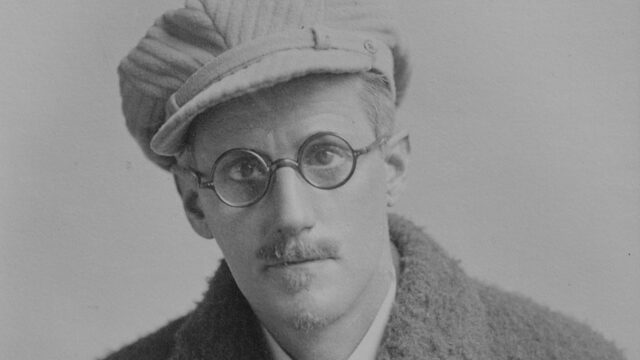
Adam Low digs deep into James Joyce’s 1922 novel, Ulysses, in 2022 doc

JAMES JOYCE’S ULYSSES (Adam Low, 2022)
Sunday, January 21, 1:00
www.filmlinc.org

In honor of the centennial of the publication of James Joyce’s Ulysses, documentarian Adam Low goes behind-the-scenes of the writing, publication, and legacy of the notoriously difficult 1922 novel, set during one June day in Dublin in 1904. In the film, British journalist and novelist Howard Jacobson declares that the book is “the greatest Jewish novel of the twentieth century — the first one with a Jew at its very center,” Leopold Bloom. Low also speaks with Salman Rushdie, Colm Tóibín, Anne Enright, Eimear McBride, Paul Muldoon, John McCourt, Nuala O’Connor, Vivienne Igoe, and others as he details the heroic efforts by such people as Margaret Anderson, Jane Heap, Sylvia Beach, Harriet Shaw Weaver, and Nora Barnacle, who played such important roles in its ultimate success. Low and producer Martin Rosenbaum will be on hand for a postscreening talk.

[Mark Rifkin is a Brooklyn-born, Manhattan-based writer and editor; you can follow him on Substack here.]
NEW YORK JEWISH FILM FESTIVAL 2023

Cecilia Suárez stars in NYJFF closing night selection, Violeta Salama’s Alegría

THIRTY-SECOND ANNUAL NEW YORK JEWISH FILM FESTIVAL
Walter Reade Theater, Film at Lincoln Center
165 West 65th St. between Broadway & Amsterdam Aves.
January 12-23, $15 in person, $10 virtual (bundle $15)
212-875-5050
www.filmlinc.org
thejewishmuseum.org

The thirty-second annual New York Jewish Film Festival comes along at a time with rising anti-Semitism in America and around the world, disarray in the Israeli government amid the controversial return of a former leader, and continuing battles in the Middle East over human rights and land possession. Why should this year be different from any other year?

Running January 12-23 at Film at Lincoln Center, the series comprises twenty-one feature-length narrative films and documentaries and a program of six shorts by women that explore the past, present, and future of Judaism and the diaspora. The festival kicks off with the New York premiere of Fred Cavayé’s Farewell, Mr. Haffmann, in which Daniel Auteuil plays the title character, a jeweler in Nazi-occupied Paris trying to preserve his family. The opening-night selection is Ofir Raul Graizer’s America, about an Israeli swimming coach (Michael Moshonov) who returns to Tel Aviv after living in Chicago, a reunion that doesn’t go quite as planned; the screening will be followed by a Q&A with writer, director, and editor Graizer.

Hannah Saidiner’s My Parent, Neal is part of special shorts program at NYJFF

The centerpiece film is Delphine Coulin and Muriel Coulin’s Charlotte Salomon: Life and the Maiden, a documentary about the German-Jewish artist who was murdered at Auschwitz at the age of twenty-six but left behind a remarkable legacy; the film includes the voices of Vicky Krieps, Mathieu Amalric, and Hanna Schygulla, and both screenings on January 18 will be followed by a Q&A with the directors. The festival closes with Violeta Salama’s Alegría, about a single mother (Cecilia Suárez) wrestling with her own faith and the patriarchy as she ventures from Mexico to her hometown in the autonomous North African city of Melilla for her niece’s Orthodox wedding. Salama will discuss her debut feature after both screenings on January 22.

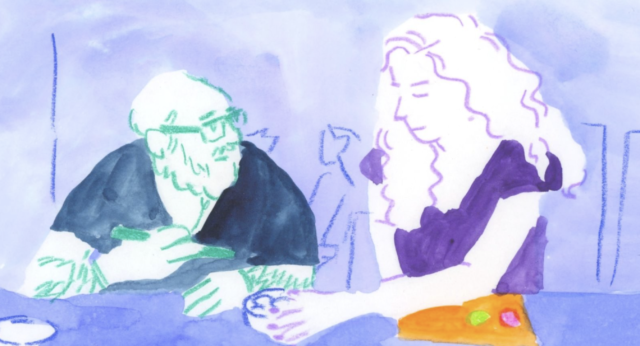
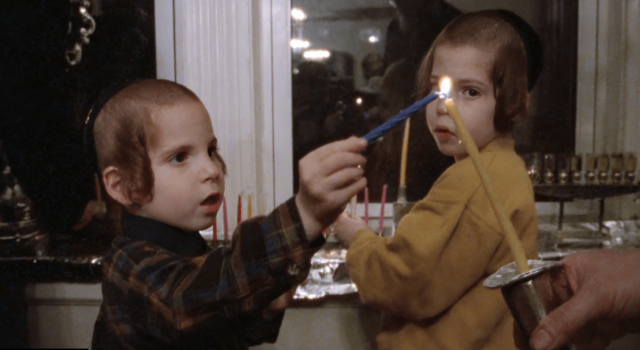
A Life Apart: Hasidism in America returns to the New York Jewish Film Festival in a twenty-fifth anniversary 4K restoration

Among the other highlights are Sylvie Ohayon’s Haute Couture, starring Nathalie Baye as a Dior seamstress in Paris; the New York premiere of Tomer Heymann’s I Am Not, a documentary about boarding school student Oren Levy, who shuns human contact, which will be followed by a hybrid Q&A with Heymann and several of the film’s subjects; the New York premiere of octogenarian Ralph Arlyck’s I Like It Here, a personal film about aging; Jake Paltrow’s June Zero, a fictionalized retelling of the 1961 trial of Adolf Eichmann from three different perspectives; and a pair of revivals, Joseph Green and Leon Trystand’s 1939 Yiddish film A Letter to Mother, and the world premiere of the twenty-fifth anniversary 4K restoration of Oren Rudavsky and Menachem Daum’s A Life Apart: Hasidism in America, a seminal documentary narrated by Sarah Jessica Parker and Leonard Nimoy and with a score by Yale Strom, followed by a panel discussion with Daum, Rudavsky, Ayala Fader, Marcus Allison, Pearl Gluck, and Rabbi Mayer Schiller.

(Keep watching this space for full and capsule reviews throughout the festival.)

Farewell, Mr. Haffmann offers a unique perspective on the Nazi occupation of Paris

FAREWELL, MR. HAFFMANN (Fred Cavayé, 2021)
Walter Reade Theater
Monday, January 16, 8:30
www.filmlinc.org

Fred Cavayé’s stunning Farewell, Mr. Haffmann offers several unique twists on the Holocaust drama, resulting in a breathtaking microcosm of so much of what happened, particularly during the Nazi occupation of France. The film is adapted from a play by Jean-Philippe Daguerre, with nearly all the action taking place in Joseph Haffmann’s jewelry shop, where Haffmann lives with his wife and three children. After getting his family out in May 1941, Haffmann finds himself trapped in Paris, cutting a deal with his assistant (Gilles Lellouche) and his wife (Sara Giraudeau) that grows ever-more dangerous as Nazi leaders start coming to the shop to buy jewelry for their wives and mistresses. Daniel Auteuil (Jean de Florette, Girl on the Bridge) is riveting as Haffmann, who experiences anti-Semitism and war from a fascinating perspective, both psychologically and physically.

Two men are at odds over religion and love in Ady Walter’s Shttl

SHTTL (Ady Walter, 2022)
Walter Reade Theater
Monday, January 16, 5:30, and Tuesday, January 17, 1:00
www.filmlinc.org

On the eve of Operation Barbarossa, the German invasion of the Soviet Union in June 1941, a small Yiddish-speaking village on the Polish border teeters on the edge as the citizens debate war, collaboration, religion, women’s roles in society, and true love. In the tense, gripping Shttl, Ady Walter pulls off quite an impressive directorial debut, shooting the 110-minute film in one continuous take, shifting between black-and-white and color as the narrative unfolds: Mendele (Moshe Lobel) joins the military, promising to come back for Yuna (Anisia Stasevich), but while he is gone she is wooed/harassed by the mean-spirited Folie (Antoine Millet), whose father (Saul Rubinek) is the community’s spiritual leader. The strange spelling of the title is an homage to Georges Perec’s 1969 novel, La Disparition (A Void), which never uses the fifth letter of the alphabet, its loss a symbol of profound absence. (Both of French novelist Perec’s parents were killed during the Holocaust, his father on the field of battle, his mother in Auschwitz.) The village, or shtetl, was built for the film and is being turned into a Jewish-Ukrainian museum. The screening on January 16 will be followed by a Q&A with Walter, New Yiddish Rep veteran Lobel, award-winning German-born Canadian actor Rubinek, and producer Jean-Charles Lévy.

Barren is a chilling look at faith and ritual

BARREN (Mordechai Vardi, 2022)
January 23-28, virtual only
www.filmlinc.org/films/barren

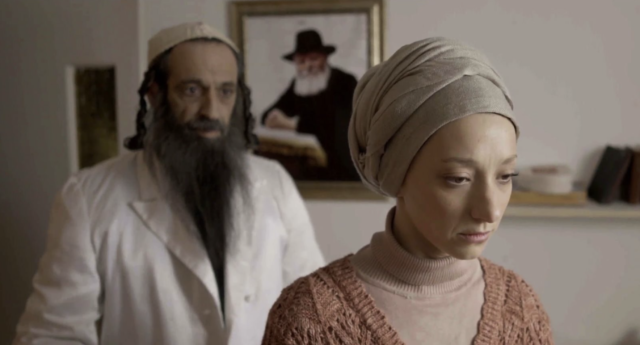
An intense melding of Unorthodox and Shtisel, Mordechai Vardi’s Barren is a heart-wrenching drama about an Orthodox couple, Naftali (Yoav Rotman) and Feigi (Mili Eshet), desperate to have a child. They live with his mother, a matchmaker (Ilanit Ben-Yaakov), and his father, a Torah scribe (Nevo Kimchi), both of whom were secular before becoming Orthodox. When Naftali goes on a pilgrimage to Uman for Rosh Hashanah to pray for fertility, his father invites over a mysterious man who has nowhere to spend the holiday. Rabbi Eliyahu (Gil Frank) claims to be able to heal by blowing the shofar; he offers to do so for Feigi, but their encounter turns terribly wrong, leading every member of the family to reconsider their faith and their personal responsibilities.

Eshet (Take the “A” Train, Beyond the Mountains and Hills) is haunting as Feigi, her eyes filled with yearning for what she imagined her life would be like. Based on actual events, the film focuses on the unjust treatment of women in Orthodox society, their rights determined by men, including local tribunals made up of supposedly wise scholars following religious doctrine, who decide what women should and should not do and whether they should remain married or get divorced. It’s a harrowing tale anchored by a powerful lead performance. The film will be available virtually January 23-28.

NYFF60 MAIN SLATE: ALL THAT BREATHES

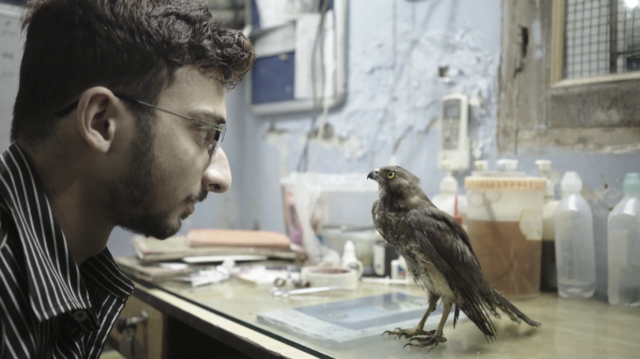
All That Breathes explores the fate of black kites in India as representative of so much more

ALL THAT BREATHES (Shaunak Sen, 2022)
New York Film Festival, Film at Lincoln Center
Tuesday, October 11, Walter Reade Theater, 6:30
Wednesday, October 12, Howard Gilman Theater, 9:00
www.filmlinc.org
www.allthatbreathes.com

Shaunak Sen’s All That Breathes opens with a long shot of rats scurrying about a filthy New Delhi area, then follows a man carrying four boxes with holes in them into a dingy, crowded basement garage. One starts to rock and falls awkwardly to the floor. The man walks over and takes out an injured bird. As Mohammad Saud, Nadeem Shehzad, and Salik Rehman examine the injured creature, they speak of a possible nuclear war between India and Pakistan.

“What’ll happen to the birds if there’s a nuclear war?” Rehman asks. “We’ll all die. Where will they go?”

A moment later, a young boy searches for a bullet, an announcement from the street advises, “We don’t want any harm to any public property,” and a black kite, a bird of prey that migrates to New Delhi every year, grips a small branch and then accusingly stares directly into the camera. Later street announcements declare, “This is a fight for empathy and unity! The Constitution has to be saved!” regarding the treatment of Islamic citizens.

For several decades, Indian Muslim brothers Saud and Shehzad have been rescuing and healing kites that have fallen from the sky, victim to pollution and the cotton threads of kites that slice their wings. “When we got our first kite . . . I’d stay up at night staring at it,” Shehzad says in voiceover as a lone kite soars in the air, the moon at its left. “It looked like a furious reptile from another planet. It’s said that feeding kites earns ‘sawab’ [religious credit]. When they eat the meat you offer, they eat away your difficulties. And their hunger is insatiable.”

When the brothers were teenage bodybuilders, they encountered their first injured kite. A bird hospital refused to help because the species is not vegetarian, so they used their own knowledge of flesh, muscles, and tendons to repair it. They’ve been rescuing and repairing hurt birds in their highly unsanitary quarters ever since.

Amid the social unrest and their legitimate fears of being turned into refugees because of their religion, Saud and Shehzad continue to fix the birds, as if fixing themselves as they worry about losing their freedom. Over one dinner they discuss with their families what they might do if the government kicks them out of the country. Meanwhile, the brothers are desperate to get a grant to keep their Wildlife Rescue operating.

“I’ve devoted my entire life to this. But this doesn’t feel enough to me,” Shehzad explains. “Things are getting from bad to worse here. Birds are plummeting from the sky. Delhi is a gaping wound. And we’re a tiny Band-Aid on it.”

Cinematographer Ben Bernhard focuses in on nature, from an icy river to an owl to dozens and dozens of kites filling the sky, set to a gentle yet ominous score by Roger Goula. Director and producer Sen (Cities of Sleep) is not just making a film about kites in India; he is accusing the world as a whole of misusing resources in ways that threaten the existence of such living creatures as kites and damage the planet’s ecological system.

“Man is the loneliest animal,” Saud says.

Winner of the Grand Jury Prize for Best Documentary (World Cinema) at Sundance and the L’OEil d’or for Best Documentary at Cannes, All That Breathes is screening at the New York Film Festival on October 11 and 12, with Sen on hand for Q&As after both shows. The film opens theatrically October 21 at Film Forum, with Sen participating in Q&As following the 7:00 shows on October 21 and 22.

NYFF60 SPOTLIGHT: BONES AND ALL

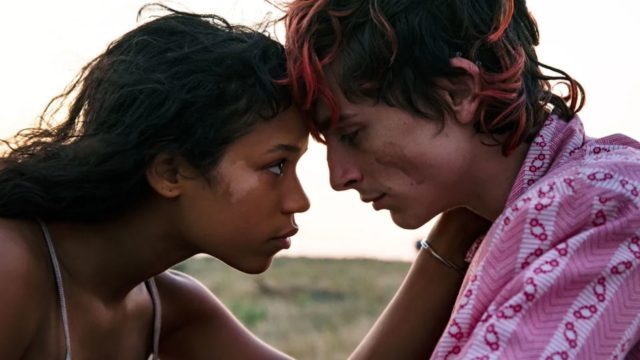
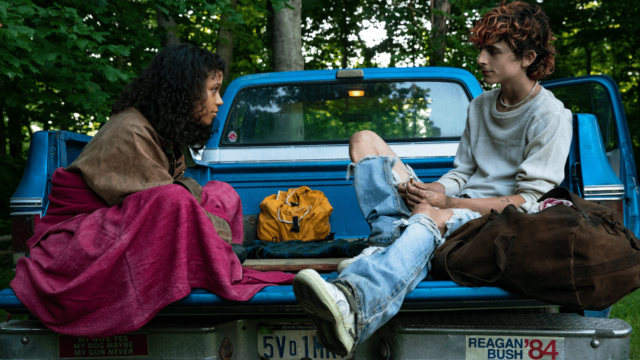
Maren (Taylor Russell) and Lee (Timothée Chalamet) try to find love among so much blood in Bones and All

BONES AND ALL (Luca Guadagnino, 2022)
New York Film Festival, Film at Lincoln Center
Thursday, October 6, Alice Tully Hall, 9:00
Saturday, October 8, Alice Tully Hall, 2:45
Tuesday, October 11, Alamo Drafthouse Staten Island, 6:00
Sunday, October 16, Walter Reade Theater, 5:45
www.filmlinc.org

Luca Guadagnino won the Silver Lion for Best Director at the Venice Film Festival for his horror/road movie/romance Bones and All, a Spotlight selection of NYFF60. The Italian director evokes Bonnie and Clyde and Dirty Mary, Crazy Larry in the tale of two young people who were born with a taste for human flesh. But they’re not vampires; they don’t come out only at night, and they don’t just suck out their victims’ blood but go for a much heartier meal.

At a sleepover with a few girls from her new high school, Maren Yearly (Taylor Russell) desperately wants to fit in, but things go astray when she starts munching on one of the girls’ fingers. Her father (André Holland), who has been shuttling her to small towns for years because of her needs, takes off, believing that he cannot protect her anymore, but he leaves behind a cassette tape in which he details her life; she listens to parts of the tape every day as her full story emerges.

On the run, she meets up with fellow cannibal and extremely creepy Sully (Mark Rylance), who is happy to have a companion and wants to become her mentor. But she eventually is back out on the road, hungry and desperate, not wanting to kill, when she meets up with cannibal drifter, Lee (Timothée Chalamet), who provides her with companionship, food, and love as they try to stay alive and not get caught.

Maren (Taylor Russell) and Lee (Timothée Chalamet) take a rare break in new horror romance

Russell (Lost in Space, Waves), who won the Marcello Mastroianni Award for emerging actor at Venice, is captivating as Maren, who just wants to have a normal life. Her eyes are filled with both fear and wonder at the world that awaits her. Chalamet (Call Me by Your Name, Dune) is compelling as the raggedy would-be hero with puppy-dog eyes. Oscar and Tony winner Rylance (Bridge of Spies, Wolf Hall) nearly steals the movie as Sully, until a misbegotten late scene, while Tony and Emmy nominee Michael Stuhlbarg (A Serious Man, Dopesick) is nearly unrecognizable as the wickedly devilish Jake. The film also features Oscar nominee Chloë Sevigny (Boys Don’t Cry, Big Love) as Maren’s mother, Anna Cobb as Kayla, Lee’s sister, Jessica Harper (Suspiria, My Favorite Year) as Maren’s grandmother, and filmmaker David Gordon Green (George Washington, Pineapple Express) as Brad, Jake’s friend.

Adapted by David Kajganich from Camille DeAngelis’s 2015 novel, Bones and All is riddled with plot holes and inconsistencies, asking the audience to suspend disbelief all too often, and its final scenes become clichéd and melodramatic, but it’s worth seeing for Russell’s performance alone, as well as the developing relationship between Maren and Lee, which is like a 1980s version of Bonnie Parker (Faye Dunaway) and Clyde Barrow (Warren Beatty) or Mary (Susan George) and Larry (Peter Fonda), although bloodier in its own way. The soundtrack is a blast, with a score composed by Trent Reznor and Atticus Ross and such songs as Leonard Cohen’s “You Want It Darker.” Guadagnino, Russell, and Sevigny will be at Alice Tully Hall on October 6 for a Q&A following the 9:00 screening.