YUKIO MISHIMA CENTENNIAL SERIES: EMERGENCES
Japan Society
333 East 47th St. at First Ave.
September 11 – December 6
japansociety.org
“Only art makes human beauty endure,” Yukio Mishima wrote in his 1959 novel Kyoko’s House.
In his short life — Mishima died by suicide in 1970 at the age of forty-five — the Japanese author and political activist penned approximately three dozen novels, four dozen plays, five dozen story and essay collections, ten literary adaptations, and a libretto, a ballet, and a film.
Japan Society is celebrating the hundredth year of his birth — he was born Kimitake Hiraoka in Tokyo in January 1925 — with “Yukio Mishima Centennial Series: Emergences,” comprising six events through December 6. The festival begins September 11–20 with Kinkakuji, SITI company cofounder Leon Ingulsrud and Korean American actor Major Curda’s theatrical adaptation of Mishima’s intense 1956 psychological novel The Temple of the Golden Pavilion, based on the true story of extreme postwar actions taken by a young Buddhist monk. Creator and director Ingulsrud cowrote the script with Curda, who stars in the play. The stage design is by Japanese visual artist Chiharu Shiota, whose international installations, featuring red and black yarn structures, include “In the Light,” “My House Is Your House,” and “Memory of Lines.” Her latest, “Two Home Countries,” runs September 12 through January 11 in the Japan Society gallery, consisting of immersive, site-specific works created in commemoration of the eightieth anniversary of the end of WWII.
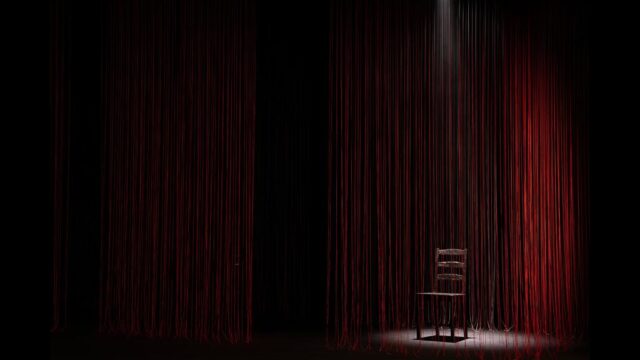
There are unlikely to be many empty seats at Japan Society for Kinkakuji and other Mishima events (photo © Ayako Moriyama)
There will be eleven performances of Kinkakuji, with a gallery-opening reception following the September 11 show, a separate gallery talk on September 12, a lecture preceding the September 16 show, and an artist Q&A on September 17. Each ticket comes with free same-day admission to “Two Home Countries.”
On September 27, Japan Society, as part of the John and Miyoko Davey Classics series, will screen Kon Ichikawa’s 1958 film, Conflagration, based on The Temple of the Golden Pavilion and starring Raizo Ichikawa, Tatsuya Nakadai, and Ganjiro Nakamura.
In conjunction with L’Alliance New York’s Crossing the Line Festival, Japan Society will present Le Tambour de Soie (The Silk Drum) on October 24 and 25, Yoshi Oida and Kaori Ito’s adaptation of Mishima’s 1957 Noh play Aya no Tsuzumi, a dance-theater piece about love and aging featuring downtown legend Paul Lazar and choreographer Ito, with music by Makoto Yabuki. The second show will be followed by an artist Q&A. On November 6, Japanese novelist and cultural ambassador Keiichiro Hirano (Nisshoku, Dawn) and Tufts University Mishima scholar Dr. Susan J. Napier will sit down for a conversation discussing Mishima’s life and legacy.
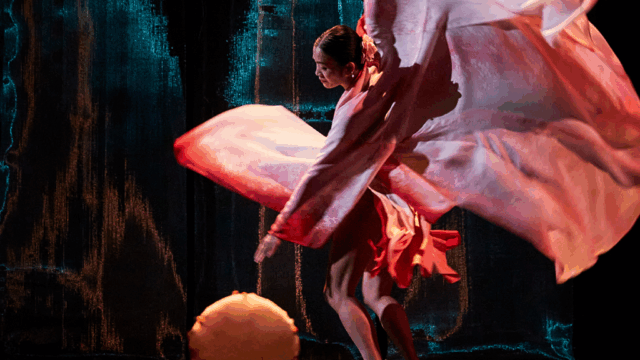
Le Tambour de Soie (The Silk Drum) will be performed October 24 and 25 at Japan Society (photo © courtesy of the Maison de la Culture d’Amiens)
On November 15 and 16, the Tokyo-based company CHAiroiPLIN brings The Seven Bridges (Hashi-zukushi) to Japan Society, a visually arresting adaptation for all ages of Mishima’s short story about four women seeking wishes during a full moon. The series concludes December 4–6 with the US debut of Hosho Noh School and Mishima’s Muse – Noh Theater, three unique programs of noh and kyogen theater comprising performances of works that inspired Mishima: Shishi (Lion Dance), Busu (Poison), Aoi no Ue (Lady Aoi), Kantan, and Yoroboshi. The December 4 performance will be followed by a ticketed soirée, and there will be an artist Q&A after the December 5 show with Kazufusa Hosho, the twentieth grand master of Hosho Noh School, which dates back to the early fifteenth century. In addition, members of Hosho Noh School lead a workshop on December 6.
“This series revitalizes Mishima’s contributions to the world of the arts through a slate of brand new commissions and premieres adapting his writings, as well as a historic US debut for a revered noh company,” Japan Society artistic director Yoko Shioya said in a statement. “This series recognizes not only Mishima’s critical legacy but the ongoing current influence of this essential postwar author on artists today.”
That legacy can be summed up in this line from his 1963 novel Gogo no Eikō (The Sailor Who Fell from Grace with the Sea): “Of course, living is merely the chaos of existence, but more than that it’s a crazy mixed-up business of dismantling existence instant by instant to the point where the original chaos is restored.”
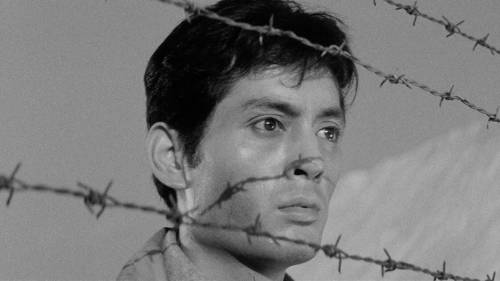
 Some stories are just too big to be told in one film, let alone two, so from April 19 to May 16, Film Forum is showing well-known and under-the-radar official and unofficial trilogies, including three-packs from Francis Ford Coppola, Sergio Leone, Lucas Belvaux, Andrzej Wajda, Jean Cocteau, Ingmar Bergman, Nicolas Winding Refn, and Satyajit Ray, among others. (Note: There is separate admission to each film.) Masako Kobayashi’s ten-hour epic, The Human Condition, based on a popular novel by Jumpei Gomikawa, is one of the most stunning achievements ever captured on film. Shot over the course of three years, the film follows one man’s harrowing struggle to never give up his humanity as he is dragged deeper and deeper into the morass of WWII. Tatsuya Nakadai is remarkable as Kaji, a man who believes in common decency, personal discipline, and, above all else, that humanity will always triumph. In the first part, No Greater Love, the steadfastly practical Kaji is hesitant to marry his sweetheart, Michiko (Michiyo Aratama), for fear that he will be called to serve in the Japanese army and might not come back to her alive. But when his detailed plan to treat workers fairly is accepted by the government, he is made labor supervisor of a mine in far-off Southern Manchuria, where hundreds of Chinese prisoners are brought in as well — and regularly starved, beaten, and, on occasion, brutally killed in cold blood. Kaji’s methods, which have close ties to communism, leading many to refer to him as a “Red,” anger both sides — the Japanese want to treat the workers like animals, and the Chinese prisoners don’t trust that he has their welfare in mind. A series of escape attempts threatens the stability of the labor camp and comes between Kaji and Michiko, whose undying love is echoed in the yearning, unfulfilled desire between a Korean prisoner and a Japanese prostitute. Broken promises, lies, and betrayal reach a tense conclusion that sets the stage for the second part of Kobayashi’s masterpiece.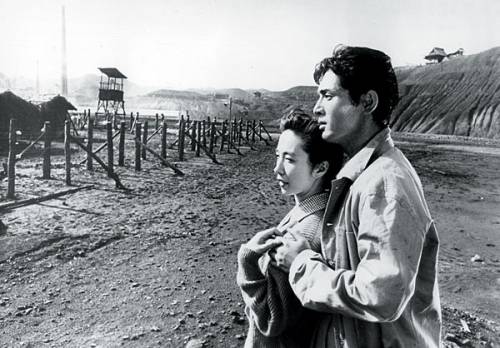
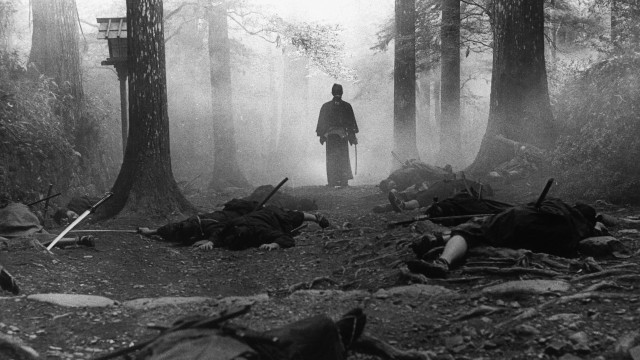
 Japan Society’s Monthly Classics series continues February 5 with the story of one of the screen’s most brutal antiheroes, a samurai you can’t help but root for despite his coldhearted brutality, a heartless killer called “a man from hell.” Based on Kaizan Nakazato’s forty-one-volume serial novel Dai-bosatsu Tōge, Kihachi Okamoto’s The Sword of Doom, aka The Great Bodhisattva Pass, begins in 1860 with Ryunosuke Tsukue (Tatsuya Nakadai) slaying an elderly Buddhist pilgrim (Ko Nishimura) apparently for no reason as the man visits a far-off mountain grave. Shortly before Ryunosuke is to battle Bunnojo Utsuki (Ichiro Nakaya) in a competition using unsharpened wooden swords, the man’s wife, Ohama (Michiyo Aratama), comes to him, begging for Ryunosuke to lose the match on purpose to save her family’s future. A master swordsman with an unorthodox style, Ryunosuke takes advantage of the situation in more ways than one. As emotionless as he is fearless, Ryunosuke is soon ambushed on a forest road, but killing, to him, comes natural, whether facing one man or dozens — or even hundreds. The only person he shows even the slightest respect for is Toranosuke Shimada (Toshirō Mifune), the instructor at a sword-fighting school. “We have rules concerning strangers,” Toranosuke tells him, but Ryunosuke plays by no rules. “The sword is the soul. Study the soul to know the sword. Evil mind, evil sword,” Toranosuke adds, words that torment Ryunosuke, who tries to start a family in spite of his hard, detached demeanor. But regardless of circumstance, Ryunosuke continues on his bloody path, culminating in an unforgettable battle that is one of the finest of the jidaigeki genre.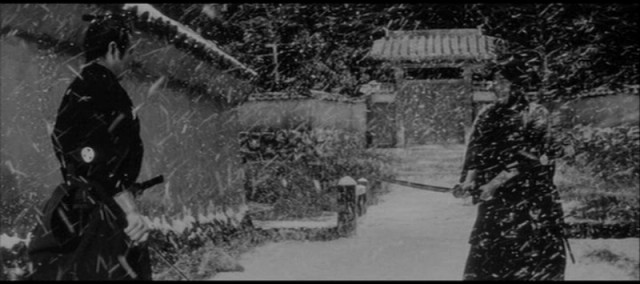
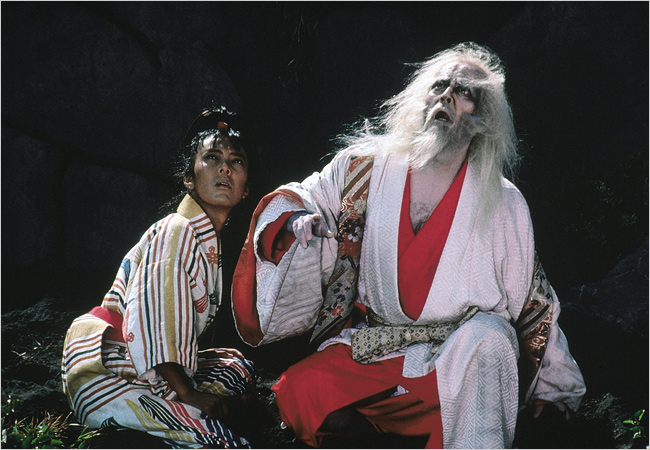
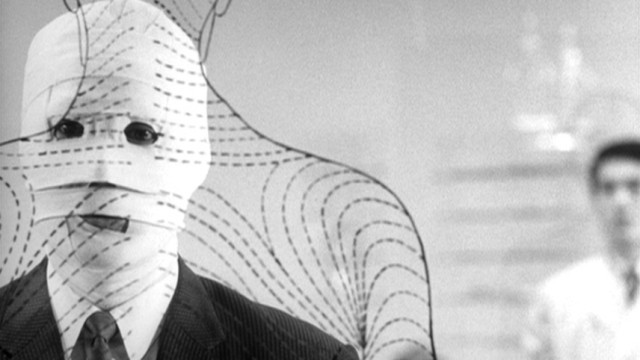
 Kôbô Abe and director Hiroshi Teshigahara collaborated on five films together, including the marvelously existential Woman of the Dunes in 1964 and The Face of Another two years later. In the latter, Tatsuya Nakadai (The Human Condition, Kill!) stars as Okuyama, a man whose face has virtually disintegrated in a laboratory accident. He spends the first part of the film with his head wrapped in bandages, a la the Invisible Man, as he talks about identity, self-worth, and monsters with his wife (Machiko Kyo), who seems to be growing more and more disinterested in him. Then Okuyama visits a psychiatrist (Mikijirô Hira) who is able to create a new face for him, one that would allow him to go out in public and just become part of the madding crowd again. But his doctor begins to wonder, as does Okuyama, whether the mask has actually taken control of his life, making him as helpless as he was before. Abe’s remarkable novel is one long letter from Okuyama to his wife, filled with utterly brilliant, spectacularly detailed examinations of what defines a person and his or her value in society. Abe wrote the film’s screenplay, which tinkers with the time line and creates more situations in which Okuyama interacts with people; although that makes sense cinematically, much of Okuyama’s interior narrative, the building turmoil inside him, gets lost. Teshigahara once again uses black and white, incorporating odd cuts, zooms, and freeze frames, amid some truly groovy sets, particularly the doctor’s trippy office, and Tōru Takemitsu’s score is ominously groovy as well. As a counterpart to Okuyama, the film also follows a young woman (Miki Irie) with one side of her face severely scarred; she covers it with her hair and is not afraid to be seen in public, while Okuyama must hide behind a mask. But as Abe points out in both the book and the film, everyone hides behind a mask of one kind or another. The Face of Another is screening August 7 as part of the Rubin Museum Cabaret Cinema series “Movie Masks,” being held in conjunction with the excellent exhibition