The lives of three very different individuals intertwine in Abbas Kiarostami’s remarkable Like Someone in Love
LIKE SOMEONE IN LOVE (Abbas Kiarostami, 2012)
IFC Center
323 Sixth Ave. at West Third St.
Tuesday, August 6, 12:55, Friday, August 9, 1:05, and Tuesday, August 13, 12:30
Series continues through August 15
212-924-7771
www.ifccenter.com
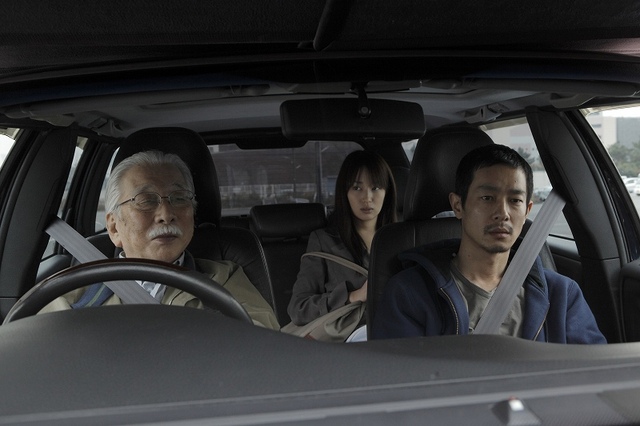
 Following the Tuscany-set Certified Copy, his first film made outside of his home country, master Iranian auteur Abbas Kiarostami headed to Japan for the beautifully told Like Someone in Love. Rin Takanashi stars as Akiko, a sociology student supporting herself as an escort working for bar owner and pimp Hiroshi (Denden). An older, classy businessman, Hiroshi insists that Akiko is the only person to handle a certain client, so, despite her loud objections, she is put in a cab and taken to meet Takashi (Tadashi Okuno), an elderly professor who seems to just want some company. But soon Akiko unwittingly puts the gentle old man in the middle of her complicated life, which includes her extremely jealous and potentially violent boyfriend, Noriaki (Ryō Kase), and a surprise visit from her grandmother (Kaneko Kubota). Taking its title from the song made famous by, among others, Ella Fitzgerald, Like Someone in Love is an intelligent character-driven narrative that investigates different forms of love and romance in unique and engaging ways. Kiarostami (Taste of Cherry, Close-Up) and cinematographer Katsumi Yanagijima, who has worked on numerous films by Takeshi Kitano, establish their visual style from the very beginning, as an unseen woman, later revealed to be Akiko, is on the phone lying to her abusive boyfriend about where she is, the camera not moving for extended periods of time as people bustle around her in a crowded bar.
As is often the case with Kiarostami, much of the film takes place in close quarters, including many in cars, both moving and parked, forcing characters to have to deal with one another and face certain realities they might otherwise avoid. Takanashi is excellent as Akiko, a young woman trapped in several bad situations of her own making, but octogenarian Okuno steals the show in the first lead role of a long career that has primarily consisted of being an extra. The soft look in his eyes, the tender way he shuffles through his apartment, and his very careful diction are simply captivating. Despite his outstanding performance, Okuno said at the time that he was committed to returning to the background in future films, shunning the limelight, but he did star in one more film, Yûichi Onuma’s Kuujin in 2016. A music-filled tale that at times evokes the more serious work of Woody Allen, another director most associated with a home base but who made movies in other cities for a lengthy period, Like Someone in Love is like a great jazz song, especially one in which the notes that are not played are more important than those that are. The film is screening August 6, 9, and 13 in IFC’s comprehensive series “Abbas Kiarostami: A Retrospective,” which continues through August 15 with such other films by Kiarostami, who died in 2016 at the age of seventy-six, as Homework, 10 on Ten, ABC Africa, Shirin, and numerous shorts.

 The annual Japan Cuts series continues July 28 with the New York premiere of Takeshi Kitano’s Outrage: Coda, the finale in his yakuza series that began in 2010 with Outrage, followed two years later by Beyond Outrage. It’s not exactly the meeting of the five families in The Godfather when clan leaders get together as former stock trader Nomura (Ren Osugi) considers stepping down from his role as boss and selecting a replacement. Jockeying for various positions are the old school Nishino (Toshiyuki Nishida), the big, not too bright Hanada (Pierre Taki), the deeply pensive Nakata (Sansei Shiomi), and the sharp, cool Chang (Tokio Kaneda), who seems to have stepped right out of an episode of the original Hawaii Five-O. Detective Shigeta (Yutaka Matsushige) is on the case, watching it all very carefully, especially when round-faced Otomo (Kitano, who goes by the name Beat Takeshi as an actor) returns after a stint on Jeju Island in Korea.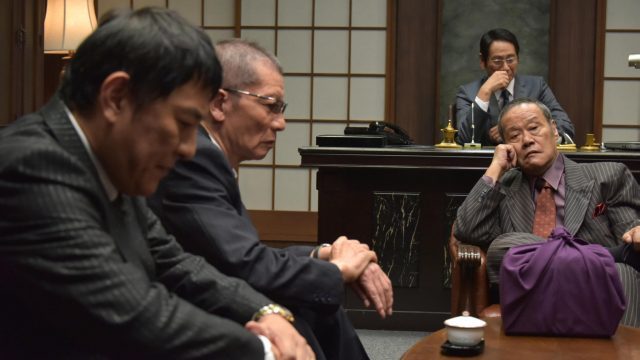
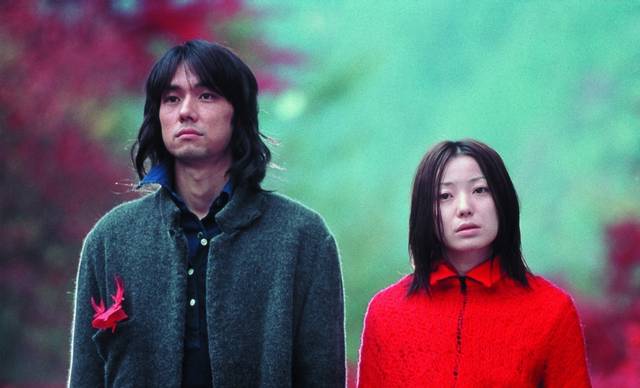
 Hardboiled action director and comic Takeshi Kitano, who is best known for such violent films as Violent Cop, Sonatine, and Boiling Point, has also made family dramas and romances as well (Kikujiro, A Scene at the Sea), and Dolls might be his most emotional, introspective picture. Dolls opens with a Bunraku puppet theater excerpt from Monzaemon Chikamatsu’s The Courier for Hell before delving into the dark story of Matsumoto (Hidetoshi Nishijima) and Sawako (Miho Kanno). Matsumoto dumps Sawako so he can marry the boss’s daughter, but when Sawako tries to kill herself and ends up in a mental hospital, Mastumoto decides to take care of the speechless, frightened shell of a woman she has become. He leads her through the seasons, tied to her by a red cord, a pair of bound beggars. Two subplots, which we’re not sure were absolutely necessary, also deal with love and loss, obsession and desire. Joe Hisaishi’s music is gorgeous, as is Katsumi Yanagijima’s cinematography. Kitano, who wrote, directed, and edited Dolls, mixes in sensational colors to balance out black-and-white tuxedos or long patches of snow: You’ll be mesmerized by the red rope, a purple-and-black butterfly, Sawako’s pink child’s toy, a glowing blue bridge, Matsumoto’s bright yellow car, a green public phone, a blue drink, twirling pinwheels, a shockingly blue umbrella, a park filled with cherry blossoms, and Yohji Yamamoto’s sparkling costumes. The film is bleak, slow-paced, and heart-tuggingly pure, a rewarding experience that will stay with you for a long time.