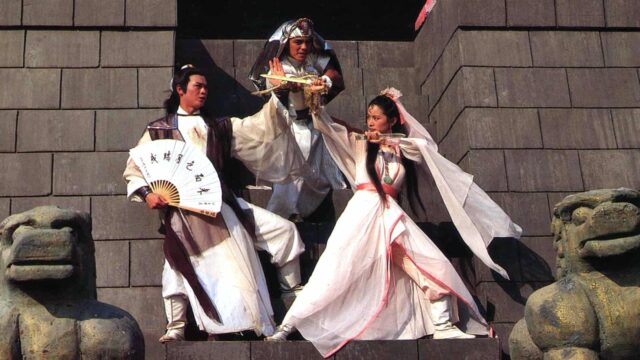
US premiere of 2K remaster of Chang Peng-yi’s The Night Orchid is part of Metrograph series
OLD SCHOOL KUNG FU FEST: SWORD FIGHTING HEROES EDITION
Metrograph
7 Ludlow St. between Canal & Hester Sts.
April 21-30
metrograph.com
When I was a kid, I spent many a rainy Saturday afternoon watching Kung Fu Theater, a weekly serving of wuxia films, poorly dubbed martial arts films from Hong Kong that were among the coolest movies I’d ever seen, filled with indecipherable plots and fantabulous weapons. It didn’t get much better than The Story of Drunken Master, Five Fingers of Death, and Bruce Lee squaring off against Chuck Norris and Kareem Abdul-Jabbar.
Last year the RZA and DJ Scratch joined forces for the tribute song “Saturday Afternoon Kung Fu Theatre,” in which the RZA declares, “Can we watch another movie next Saturday? / Be sure to tune in next week / for The Masked Avengers and Heroes of the East.”
You don’t have to wait for next week, as Metrograph is currently showing the tenth “Old School Kung Fu Fest: Sword Fighting Heroes Edition” through April 30. The tenth festival consists of fifteen flicks, little known and classic, including the US premiere of Lin Jing-jie’s three-and-a-half-hour documentary The King of Wuxia, about King Hu; Hu’s 1969-71 A Touch of Zen, 1973 The Fate of Lee Khan, and 1975 The Valiant Ones; Yang Shih-ching’s 1970 The Grand Passion, made by A Touch of Zen’s production manager during downtime of that film; a 2K remaster of Chang Peng-I’s 1983 The Night Orchid; Sung Tsun-shou’s 1969 Iron Mistress; and Chris Huang’s 2000 The Legend of the Sacred Stone.
Below are some of the other highlights of the series, which is presented by Metrograph and Subway Cinema in association with Taipei Cultural Center in New York.
THE GHOST HILL (Ting Shan-hsi, 1971)
Sunday, April 23, 3:00
metrograph.com
The Swordsman of All Swordsmen trilogy concludes with Ting Shan-hsi’s fantastically mad The Ghost Hill. You don’t need to have seen Joseph Kuo’s The Swordsman of All Swordsmen or Lung Chien’s The Bravest Revenge — although the former is screening at Metrograph April 22-23 and the latter is available virtually on Metrograph at Home — to get instantly sucked into the grand finale, in which Tsai Ing-chieh (Tien Peng) might at last avenge the murder of his father by Yun Chung-chun (Chen Bao-liang). The wuxia epic begins with a high-flying battle between Tsai and Feng Chun-ching (David Tang Wei), aka Black Dragon Hero, on a rocky beachfront, overseen by the Grand Master (Kao Ming), who will present to the winner the coveted Purple Light Sword, bestowing upon him the title of Master Swordsman.
Tsai takes home the trophy, but it is immediately stolen from him by thieves who also slay his master. Tsai and his goofy but loyal brother head out to regain the sword and kill Yun, but it turns out that someone has already beaten them to it, although Yun’s daughter, Fei Yen-tzu (Polly Shang-kuan), an accomplished assassin known as Flying Swallow, blames Tsai for the evil deed. But soon Tsai, his brother, Fei, and Feng are teaming up to defeat the evil King Chin (Hsieh Han) and the girl he raised, Chin Man-chiao (Han Hsiang-chin), aka Princess of the Underworld, who he is grooming to be his bride.
As the men fight over the women and the women fight over the men, the action moves into Chin’s fortress, where Tsai and his merry band of homeless beggars must make it through ten boobytrapped hells in order to face Chin and his dangerous left arm.
Writer-director Ting, cinematographer Lin Tsan-ting, art director Tsao Nien-lung, and set decorator Chen Shang-lin add fab touches to every scene, from character names — Green Demon Judge, Misty Light Master, Iron Bull, and the Murdering Wonder Child to the Black and White Wuchang, the Ox Head Demon, the Yanluo Wang, and the Soul-Hunting Yaksha — to colorful costumes, lavishly cheesy sets, a boiling oil bath, epic sound effects and music (with Theremin!), ultracool weapons, and plenty of fire and blood, along with watermelons and a special beheading.
There are also a number of awesome quotes. “We can never understand the grievances of the previous generation,” Yen-tzu posits. “The gates of heaven are open but you choose to knock on hell’s door,” King Chin warns Tsai.
The Ghost Hill evokes such later films as Steven Spielberg’s Raiders of the Lost Ark, Chang Cheh’s Five Venoms, Quentin Tarantino’s Kill Bill, and Ang Lee’s Crouching Tiger, Hidden Dragon, but it’s in a class all by itself. And it should be special watching it not alone on a rainy day but in a theater packed with wuxia fans likely to be hooting and hollering all the way.
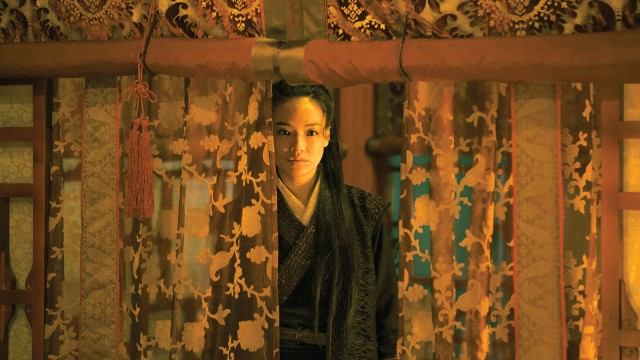
Shu Qi is an expertly trained killer with a conscience in Hou Hsiao-hsien’s gorgeous period drama
THE ASSASSIN (刺客聶隱娘) (NIE YINNIANG) (Hou Hsiao-hsien, 2015)
Saturday, April 29, 7:00, and Sunday, April 30, 9:15
metrograph.com
Taiwanese master Hou Hsiao-hsien’s first film in eight years is a visually sumptuous feast, perhaps the most beautifully poetic wuxia film ever made. Inspired by a chuanqi story by Pei Xing, The Assassin is set during the ninth-century Tang dynasty, on the brink of war between Weibo and the Royal Court. Exiled from her home since she was ten, Nie Yinniang (Hou muse Shu Qi) has returned thirteen years later, now an expert assassin, trained by the nun (Fang-Yi Sheu) who raised her to be a cold-blooded killer out for revenge. After being unable to execute a hit out of sympathy for her target’s child, Yinniang is ordered to kill Tian Ji’an (Chang Chen), her cousin and the man to whom she was betrothed as a young girl, as a lesson to teach her not to let personal passions rule her. But don’t worry about the plot, which is far from clear and at times impossible to follow. Instead, glory in Hou’s virtuosity as a filmmaker; he was named Best Director at Cannes for The Assassin, a meditative journey through a fantastical medieval world. Hou and cinematographer Mark Lee Ping-Bing craft each frame like it’s a classical Chinese painting, a work of art unto itself. The camera moves slowly, if at all, as the story plays out in long shots, in both time and space, with very few close-ups and no quick cuts, even during the martial arts fights in which Yinniang displays her awesome skills. Hou often lingers on her face, which shows no outward emotion, although her soul is in turmoil. Hou evokes Andrei Tarkovsky, Akira Kurosawa, Ang Lee, and Zhang Yimou as he takes the viewer from spectacular mountains and river valleys to lush interiors (the stunning sets and gorgeous costumes, bathed in red, black, and gold, are by Hwarng Wern-ying), with silk curtains, bamboo and birch trees, columns, and other elements often in the foreground, along with mist, fog, and smoke, occasionally obscuring the proceedings, lending a surreal quality to Hou’s innate realism.
There are long passages of silence or with only quiet, barely audible music by composer Lim Giong, with very little dialogue, as rituals are performed, baths are prepared, and a bit of black magic takes place. The opening scenes, set around a breathtaking mountain abbey in Inner Mongolia, are shot in black-and-white with no soundtrack, like a silent film, harkening to cinema’s past as well as Yinniang’s; when it switches over to color, fiery reds take over as the credits begin. Throughout the film, the nun wears white and the assassin wears black, in stark contrast to the others’ exquisitely colorful attire; however, the film is not about good and evil but something in between. Shu and Cheng, who played a trio of lovers in Hou’s Three Times, seem to be barely acting in The Assassin, immersing themselves in their characters; Hou (The Puppetmaster, Flowers of Shanghai) gives all of his cast, professional and nonprofessional alike, a tremendous amount of freedom, and it results here in scenes that feel real despite our knowing better. Sure, a touch more plot explication would have been nice, but that was not what Hou was after; he wanted to create a mood, an atmosphere, to transport the actors and the audience to another time and place, and he has done that marvelously. The Assassin is a treasure chest of memorable moments that rewards multiple viewings. I’ve seen it twice and can’t wait to see it again — but I’ve given up trying to figure out exactly what it’s about, instead reveling in its immense, contemplative beauty. Hou’s previous full-length film was 2007’s Flight of the Red Balloon; it’s now been eight years since The Assassin, so here’s hoping his next film is on its way.
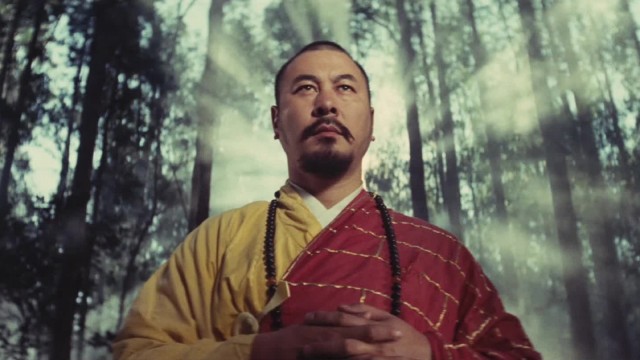
King Hu’s A Touch of Zen is a trippy journey toward enlightenment
A TOUCH OF ZEN (King Hu, 1969/1971)
Sunday, April 30, 1:00
metrograph.com
King Hu’s 1969 highly influential wuxia classic, A Touch of Zen, is a three-hour epic that features an impossible-to-figure-out plot, a goofy romance, wicked-cool weaponry, an awesome Buddhist monk, a bloody massacre, and action scenes that clearly involve the overuse of trampolines. Still, it’s great fun, even if it is way too long. (The film, which was initially shown in two parts, earned a special technical prize at the 1975 Cannes Film Festival.) Shih Jun stars as Ku Shen Chai, a local calligrapher and scholar who is extremely curious when the mysterious Ouyang Nin (Tin Peng) suddenly show up in town. It turns out that Ouyang is after Miss Yang (Hsu Feng) to exact “justice” for the corrupt Eunuch Wei, who is out to kill her entire family. Hu (Come Drink with Me, Dragon Gate Inn) fills the film with long, poetic establishing shots of fields and the fort, using herky-jerky camera movements (that might or might not have been done on purpose) and throwing in an ultra-trippy psychedelic mountain scene that is about as 1960s as it gets. Winner of the Technical Grand Prize at Cannes, A Touch of Zen is ostensibly about Ku’s journey toward enlightenment, but it’s also about so much more, although I’m not completely sure what that is.

 The popular — and free — Korean Movie Night returns to Tribeca Cinemas this month with the start of Subway Cinema’s new Tuesday-night series, “The Hidden Gems of Indie Cinema,” focusing on smaller, independent films from South Korea. First up is the North American premiere of writer-director Min Yong-geun’s wonderful Re-Encounter, winner of a number of international festival awards for Best Picture, Best Director, and Best Actress. Yoo Da-in stars as Hye-hwa, a charming young woman who works in a veterinary hospital, rescues stray dogs from the evil dogcatcher, and helps take care of her widowed boss’s (Park Hyeok-Kwon) son. But when her high school boyfriend, Han-soo (Yoo Yeon-seok), suddenly shows up after a stint in the military, her life is turned upside down, as he convinces her that their baby, the result of a teen pregnancy five years earlier, is living nearby, having been adopted by a local professor and his wife. Re-Encounter is a moving, intimate film about motherhood, family, and adoption, filled with plot twists that echo Hye-hwa’s complex emotional state; at one moment, she can be playing “mom” to a young boy, while the next she clips her fingernails and adds them to her growing collection. While she relates well to canines, her human relationships are far more difficult. Min never gives straight answers, instead keeping things just mysterious enough to keep the audience riveted without getting frustrated. Yoo is outstanding in the lead role; you won’t be able to take your eyes off her. The series continues May 24 with the North American premiere of Lee Seo’s Missing Person, June 7 with Lim Woo-seong’s Vegetarian, and June 21 with Jeong Seong-il’s Café Noir.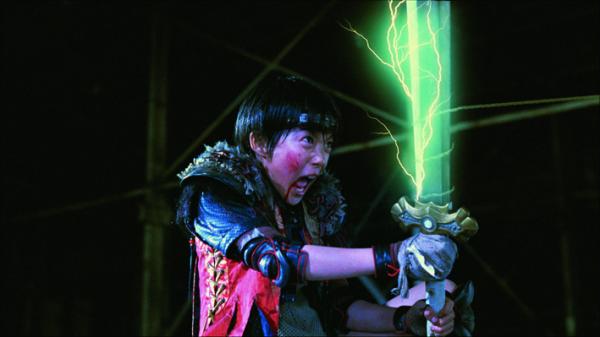
 Mixing in a liberal amount of Time Bandits with The Wizard of Oz, throwing in a little Hayao Miyazaki, and adding dashes of Raiders of the Lost Ark, The Lord of the Rings, Gremlins, Return of the Jedi, Labyrinth, and even Kill Bill, Takashi Miike has wound up with an entertaining fantasy film for both kids and adults. Known more for such ultraviolent, hard-to-watch frightfests as Audition and Ichi the Killer, Miike reveals his softer side in this genre film based on yokai manga by Shigeru Mizuki (who also plays the Demon King). Ryunosuke Kamiki is splendid as Tadashi, a young city boy taking care of his grandfather (Hiroyuki Miyasako) in a country village, where he is chosen at a local festival as the mythical Kirin Rider, the guardian of peace and friend of justice. Soon he finds himself in a real battle between good and evil, taking him from the heights of the Great Goblin’s mountain cave to the depths of a seedy underworld run by the very white Agi (Chiaki Kuriyama) and powerful mastermind Katou Yasunori (Etsushi Toyokawa). Joined by yokai spirits Kawahime (Mai Takahashi), Kawatarou (Sadao Abe), and the oh-so-cute Sunekosuri (we’d buy one of these in a second if they ever hit the market), Tadashi fights to save the human world, wielding his special sword against a phalanx of mechanical robots and other villainous creatures. At more than two hours, The Great Yokai War is at least twenty minutes too long and would have greatly benefited by the excision of one very silly subplot. But it is still a charming tale from the reigning master of horror. The Great Yokai War is screening for only $5 as part of the Film Society of Lincoln Center series “Shinjuku Outlaw: 13 from Takashi Miike,” being held March 16-20 in conjunction with Subway Cinema and also including such Miike films as Fudoh: The New Generation (1996), The Bird People in China (1998), Shangri-la (2002), and the awesome new 13 Assassins (2010). Miike was originally scheduled to appear at the Walter Reade Theater to introduce several screenings but has had to cancel because of the catastrophic events occurring in Japan.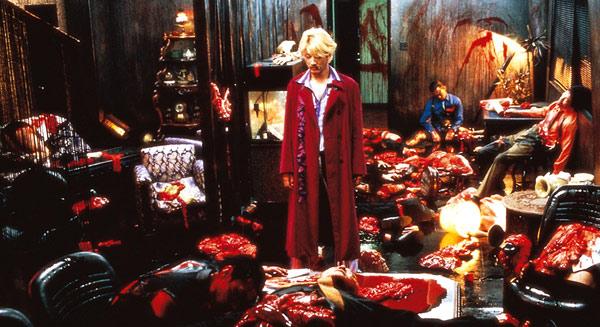
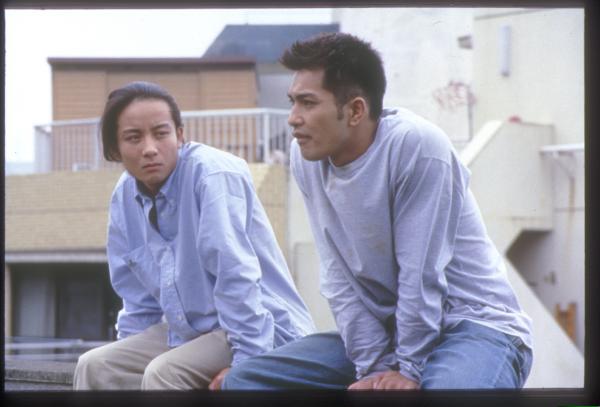
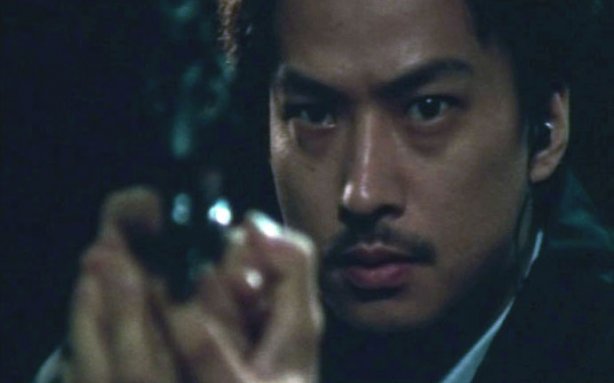
 “Shinjuku is not the best post,” detective Tatsuhito Kiriya says in Shinjuku Triad Society: Chinese Mafia War. Boy, is he not kidding. Takashi Miike’s first major theatrical release after a series of television and straight-to-video projects, 1995’s Shinjuku Triad Society serves as an excellent introduction to the controversial auteur, who is prone to a bit of the old ultra-violence in his films. The fifty-year-old Miike grew up in various parts of Japan but with direct ties to Korean and China, influencing the race battles that drive the Black Society Trilogy, which begins with Shinjuku Triad Society and continues with 1997’s Rainy Dog and 1999’s Ley Lines. In Shinjuku Triad Society, Kippei Shiina stars as Tatsuhito, a cop-on-the-edge desperate to bring down Taiwanese gang leader Wang’s (Tomorowo Taguchi) Dragon’s Claw crime syndicate, turning personal when Tatsuhito’s brother, Yoshihito (Kyosuke Izutsu), starts working for the brutal warlord. The dark, lurid film showcases Miike’s penchant for the extreme, including a ripped-out eyeball, organ selling, slashed bodies, rape, and beheadings. Miike also flips the genre on its head by featuring a lot of gay sex, as Wang has a decided preference for pretty boys. Shinjuku Triad Society, which also features Ren Osugi as Yakuza boss Uchida and Airie Yanagi as sly, dangerous prostitute Ritsuko, is screening March 27 at 4:30 as part of the Film Society of Lincoln Center series “Shinjuku Outlaw: 13 from Takashi Miike,” being held in conjunction with the fine folk over at Subway Cinema. [Ed. note: Miike was originally going to be at the Walter Reade Theater to introduce several screenings but has had to cancel because of the catastrophic events occurring in Japan.]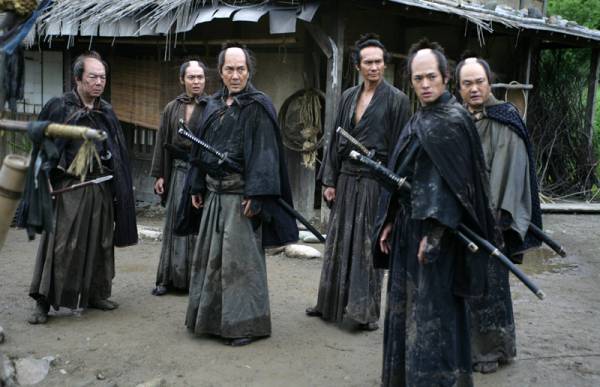
 Japanese director Takashi Miike’s first foray into the samurai epic is a nearly flawless film, perhaps his most accomplished work. Evoking such classics as Kurosawa’s Seven Samurai, Mizoguchi’s 47 Ronin, Aldrich’s The Dirty Dozen, and Eastwood’s High Plains Drifter, 13 Assassins is a thrilling tale of honor and revenge, inspired by a true story. In mid-nineteenth-century feudal Japan, during a time of peace just prior to the Meiji Restoration, Lord Naritsugu (Gorô Inagaki), the son of the former shogun and half-brother to the current one, is abusing his power, raping and killing at will, even using his servants and their families as target practice with a bow and arrow. Because of his connections, he is officially untouchable, but Sir Doi (Mikijiro Hira) secretly hires Shinzaemon Shimada (Kôji Yakusho) to gather a small team and put an end to Naritsugu’s brutal tyranny. But the lord’s protector, Hanbei (Masachika Ichimura), a former nemesis of Shinzaemon’s, has vowed to defend his master to the death, even though he despises Naritsugu’s actions. As the thirteen samurai make a plan to get to Naritsugu, they are eager to finally break out their long-unused swords and do what they were born to do. “He who values his life dies a dog’s death,” Shinzaemon proclaims, knowing that the task is virtually impossible but willing to die for a just cause. Although there are occasional flashes of extreme gore in the first part of the film, Miike keeps the audience waiting until he unleashes the gripping battle, an extended scene of blood and violence that highlights death before dishonor. Selected for the 2009 Cannes Film Festival and nominated for the Silver Lion at the 2010 Venice Film Festival, 13 Assassins is one of Miike’s best-crafted tales; nominated for ten Japanese Academy Prizes, including Best Picture, Best Director, Best Screenplay (Daisuke Tengan), Best Editing (Kenji Yamashita), Best Original Score (Koji Endo), and Best Actor (Yakusho), it won awards for cinematography (Nobuyasu Kita), lighting direction (Yoshiya Watanabe), art direction (Yuji Hayashida), and sound recording (Jun Nakamura). 13 Assassins is the centerpiece of the Film Society of Lincoln Center’s “Shinjuku Outlaw: 13 from Takashi Miike” series, running March 16–20 at the Walter Reade Theater and held in conjunction with Subway Cinema; Miike will be at the March 17 screening, which will be followed by a reception. [Ed. note: Miike was originally scheduled to appear at the Walter Reade Theater to introduce this and several other screenings but has had to cancel because of the catastrophic events occurring in Japan.]