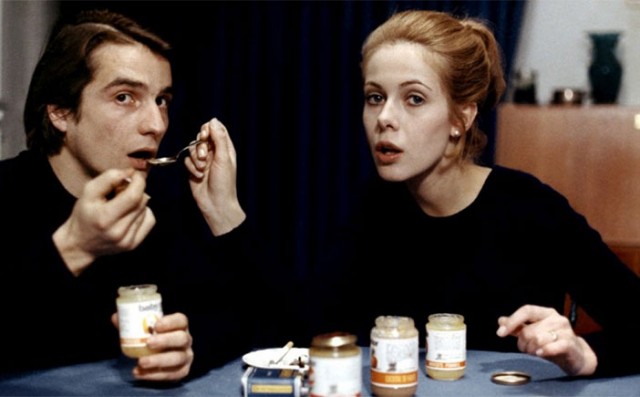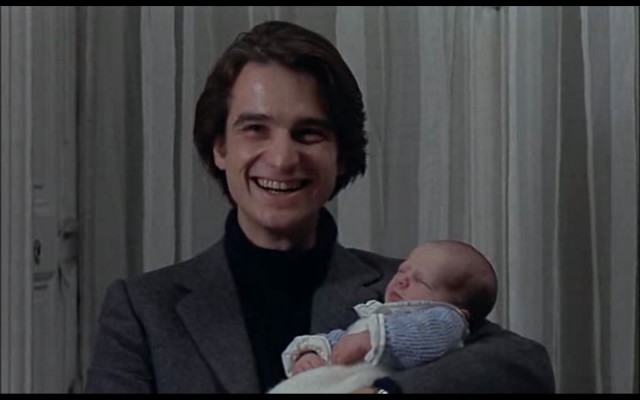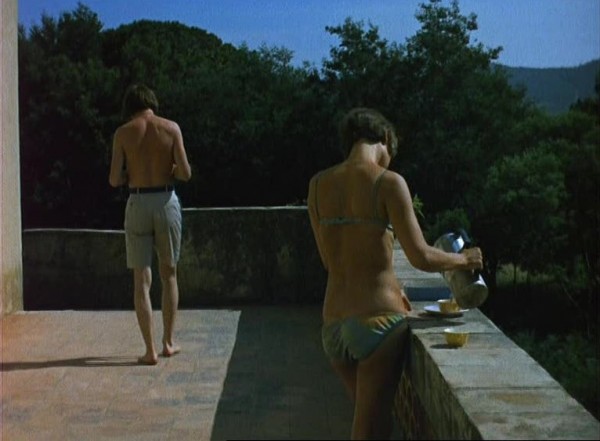
Néstor Almendros shot the beautiful LA COLLECTIONNEUSE, both his and director Eric Rohmer’s first feature film in color
SIX MORAL TALES: LA COLLECTIONNEUSE (Eric Rohmer, 1967)
Transmitter Park
2 Greenpoint Ave.
Friday, July 31, free, 8:30
frenchculture.org
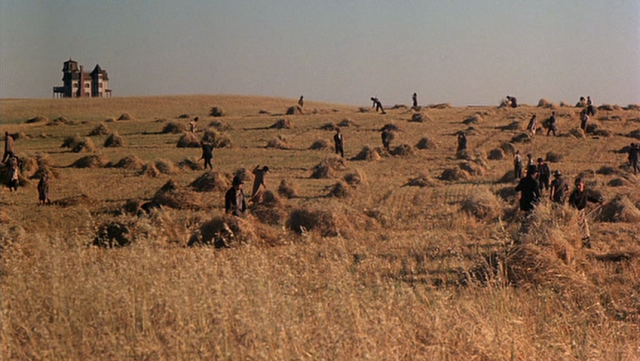
 “Razor blades are words,” art critic Alain Jouffroy tells painter Daniel Pommereulle (Daniel Pommereulle) in one of the prologues at the start of La Collectionneuse, the fourth film in French master Eric Rohmer’s Six Moral Tales (falling between My Night at Maud’s and Claire’s Knee). Words might have the ability to cut, but they don’t seem to have much impact on the three people at the center of the film, which offers a sort of alternate take on François Truffaut’s Jules et Jim. Needing a break from his supposedly strenuous life, gallerist Adrien (Patrick Bauchau, who also appeared in La Carrière de Suzanne, Rohmer’s second morality tale) decides to vacation at the isolated St. Tropez summer home of the never-seen Rodolphe. Daniel is also at the house, along with Haydée (Haydée Politoff), a beautiful young woman who spends much of the film in a bikini and being taken out by a different guy nearly every night. Adrien decides that she is a “collector” of men, and the three needle one another as they discuss life and love, sex and morality, beauty and ugliness. Adrien might claim to want to have nothing to do with Haydée, but he keeps spending more and more time with her, even though he never stops criticizing her lifestyle. He even uses her as a pawn when trying to get an art collector named Sam (played by former New York Times film critic Eugene Archer under the pseudonym Seymour Hertzberg) to invest in his gallery. While everybody else in the film pretty much knows what they want, Adrien, who purports to understand life better than all of them, is a sad, lost soul, unable to get past his high-and-mighty attitude. Rohmer crafted the roles of Daniel and Haydée specifically for Pommereulle and Politoff, who improvised much of their dialogue; Bauchau opted not to take that route, making for a fascinating relationship among the three very different people. La Collectionneuse is beautifully shot in 35mm by Néstor Almendros, the bright colors of the characters’ clothing mixing splendidly with the countryside and ocean while offering a striking visual counterpoint to the constant ennui dripping off the screen. His camera especially loves Politoff, regularly exploring her body inch by inch. The film is both Rohmer’s and Almendros’s first color feature; Almendros would go on to make more films with the director, as well as with Truffaut, even after coming to Hollywood and shooting such films as Days of Heaven, Kramer vs. Kramer, and Sophie’s Choice. Winner of a Silver Bear Extraordinary Jury Prize at the 1967 Berlinale, La Collectionneuse is screening July 31 in Transmitter Park as part of the annual Films on the Green series, which concludes September 10 with Joann Sfar and Antoine Delesvaux’s The Rabbi’s Cat at Columbia University’s Low Library.
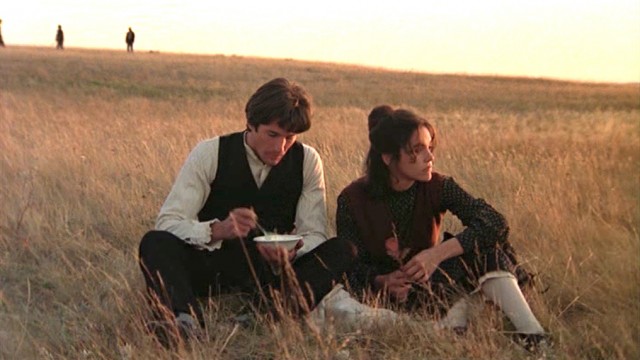
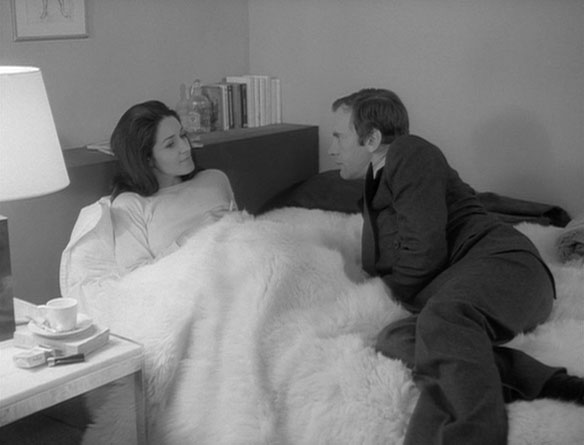
 Nominated for the Palme d’Or and a Best Foreign Language Film Oscar, My Night at Maud’s, Éric Rohmer’s fourth entry in his Six Moral Tales series (Claire’s Knee, Love in the Afternoon), continues the French director’s fascinating exploration of love, marriage, and tangled relationships. Three years removed from playing the romantic racecar driver Jean-Louis in Claude Lelouch’s A Man and a Woman, Jean-Louis Trintignant again stars as a man named Jean-Louis, this time a single thirty-four-year-old Michelin engineer living a relatively solitary life in the French suburb of Clermont. A devout Catholic, he is developing an obsession with a fellow churchgoer, the blonde, beautiful Françoise (Marie-Christine Barrault), about whom he knows practically nothing. After bumping into an old school friend, Vidal (Antoine Vitez), the two men delve into deep discussions of religion, Marxism, Pascal, mathematics, Jansenism, and women. Vidal then invites Jean-Louis to the home of his girlfriend, Maud (Françoise Fabian), a divorced single mother with open thoughts about sexuality, responsibility, and morality that intrigue Jean-Louis, for whom respectability and appearance are so important. The conversation turns to such topics as hypocrisy, grace, infidelity, and principles, but Maud eventually tires of such talk. “Dialectic does nothing for me,” she says shortly after explaining that she always sleeps in the nude. Later, when Jean-Louis and Maud are alone, she tells him, “You’re both a shamefaced Christian and a shamefaced Don Juan.” Soon a clearly conflicted Jean-Louis is involved in several love triangles that are far beyond his understanding, so he again seeks solace in church. My Night at Maud’s is a classic French tale, with characters spouting off philosophically while smoking cigarettes, drinking wine and other cocktails, and getting naked. Shot in black-and-white by Néstor Almendros, the film roams from midnight mass to a single woman’s bed and back to church, as Jean-Louis, played with expert concern by Trintignant, is forced to examine his own deep desires and how they relate to his spirituality. Fabian (Belle de Jour, The Letter) is outstanding as Maud, whose freedom titillates and confuses Jean-Louis. One of Rohmer’s best, most accomplished works despite its haughty intellectualism, My Night at Maud’s is screening May 14-16 at 1:30 as part of MoMA’s ongoing series “An Auteurist History of Film,” which continues May 21-23 with Robert Altman’s McCabe and Mrs. Miller and May 28-30 with Rainer Werner Fassbinder’s Merchant of the Four Seasons.