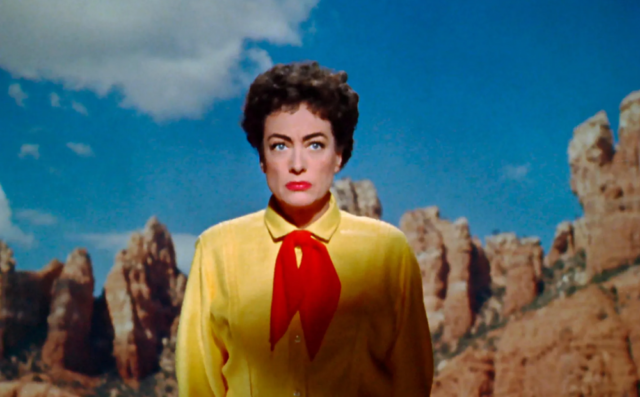
Joan Crawford stars in Nicholas Ray’s Johnny Guitar, part of sapphic Film Forum series
SAPPH-O-RAMA
Film Forum
209 West Houston St.
February 2-13
212-727-8110
filmforum.org
Film Forum is celebrating lesbian cinema with the twelve-day, thirty-flick series “Sapph-O-Rama,” consisting of famous and obscure works by, about, and/or featuring women in love and fighting for freedom. Programmed by Andrea Torres and Emily Greenberg, the entries range from Jamie Babbit’s But I’m a Cheerleader, David Butler’s Calamity Jane, and Donna Deitch’s Desert Hearts to Leontine Sagan’s Mädchen in Uniform, Pedro Almodóvar’s Dark Habits (Entre Tinieblas), and Chantal Akerman’s Je Tu Il Elle. Among the stars of the movies, which go back more than a hundred years, are Clara Bow, Fredric March, Agnes Moorehead, Alla Nazimova, Doris Day, Howard Keel, Natasha Lyonne, RuPaul Charles, Kathryn Bigelow, Eric Bogosian, Delphine Seyrig, Mink Stole, Sterling Hayden, and Joan Crawford.
In addition to select reviews below, here are the special events that Film Forum will be hosting:
Sunday, February 4, 1:10
She Must Be Seeing Things (Sheila McLaughlin, 1987), prerecorded introduction by filmmaker Sheila McLaughlin
Sunday, February 4, 4:50
Murder and Murder (Yvonne Rainer, 1996), Q&A with filmmaker Yvonne Rainer and Amy Taubin
Tuesday, February 6, 8:15
Codependent Lesbian Space Alien Seeks Same (Madeleine Olnek, 2011), introduced by Río Sofia of Queer | Art, followed by a Q&A with filmmaker Madeleine Olnek and stars Lisa Haas and Rae C. Wright, moderated by Jude Dry
Friday, February 9, 5:20
The Wild Party (Dorothy Arzner, 1929), introduced by David Stenn, author of Clara Bow: Running Wild
Saturday, February 10, 4:15
The Killing of Sister Georgie (Robert Aldrich, 1968), introduced by editor and critic Melissa Anderson
Saturday, February 10, 7:10
Daughters of Darkness (Harry Kümel, 1971), introduced by vampire expert Laura Westengard
Tuesday, February 13, 6:00
The Incredibly True Adventure of Two Girls in Love (Maria Maggenti, 1995), introduced by filmmaker Maria Maggenti
Tuesday, February 13, 8:05
She Must Be Seeing Things (Sheila McLaughlin, 1987), prerecorded introduction by filmmaker Sheila McLaughlin
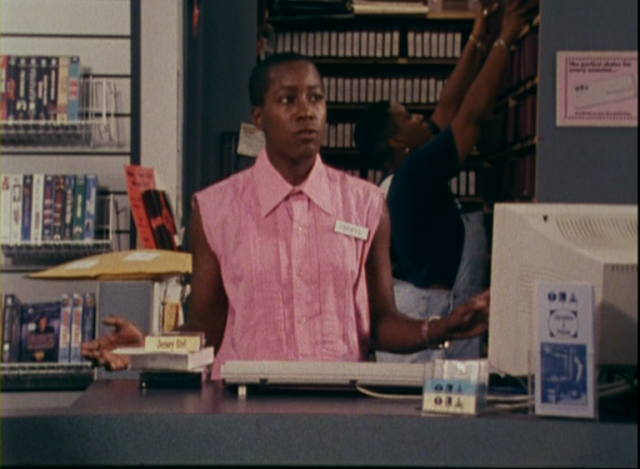
Cheryl Dunye wrote, directed, edited, and stars in The Watermelon Woman
THE WATERMELON WOMAN (Cheryl Dunye, 1996)
Friday, February 2, 4:00
Tuesday, February 6, 6:10
Monday, February 12, 9:20
filmforum.org
“The idea came from the real lack of information about the lesbian and film history of African American women. Since it wasn’t happening, I invented it,” Cheryl Dunye says about her 1996 debut, The Watermelon Woman. In the film, the first feature by a black lesbian, Dunye plays herself, a twenty-five-year-old black lesbian working at a video store with her goofy best friend, Tamara (Valerie Walker). Searching for a topic to make a movie on, Cheryl becomes obsessed with an actress who played a mammy in Plantation Memories and other 1930s films. The actress was listed in the credits as the Watermelon Woman; Cheryl decides to find out more about her, going on a journey in and around her hometown of Philadelphia, discovering more and more about the actress, also known as Fae Richards, and the battle black lesbians had to fight in the early-to-mid-twentieth century. In the meantime, Cheryl begins a relationship with Diana (Guinevere Turner), a privileged white woman who has just moved into the area, mimicking what Cheryl has found out about Richards, who had an affair with white director Martha Page.
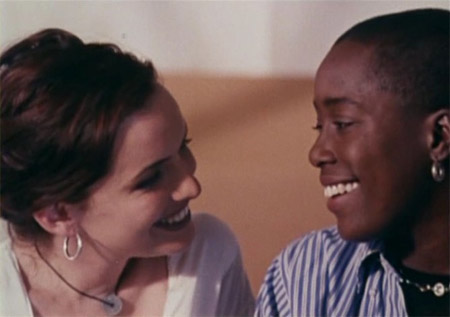
Diana (Guinevere Turner) and Cheryl Dunye (as herself) stars a relationship in The Watermelon Woman
The Watermelon Woman suffers from amateurish filmmaking techniques (Michelle Crenshaw was the cinematographer, while Dunye served as editor in addition to writer, director, and star), but its central issue is a compelling one, and Dunye is engaging as her onscreen alter ego. Richards (Lisa Marie Bronson) and Page (producer Alexandra Juhasz) are seen only in photographs and archival footage shot by white lesbian artist Zoe Leonard (her photography assistant was Kimberly Peirce, who went on to make Boys Don’t Cry), while Doug McKeown (The Deadly Spawn) directed the scenes from fake movies Plantation Memories and Soul of Deceit. (The photographs became an art project of its own, touring museums around the world.) The film features numerous cameos by writers, musicians, and activists, including Camille Paglia as herself, V. S. Brodie as a karaoke singer, Sarah Schulman as the CLIT archivist, David Rakoff as a librarian, and Toshi Reagon as a street singer.
The Watermelon Woman is a heartfelt tribute to black lesbians by a black lesbian who is restoring one woman’s true identity as a microcosm for all black women who have had theirs taken away. The film also became part of an attempt by certain congressmen to defund the National Endowment for the Arts, which supplied a $31,500 grant to Dunye; Michigan Republican Peter Hoekstra, head of the House Education and Workforce Committee’s Subcommittee on Oversight and Investigations, singled the film out as offensive. The Watermelon Woman is also a reminder of what research was like pre-Google, a mere twenty years ago. Dunye has gone on to make such films as Stranger Inside, Black Is Blue, Mommy Is Coming, and My Baby’s Daddy, continuing her exploration of multiracial, gay, and trans culture.
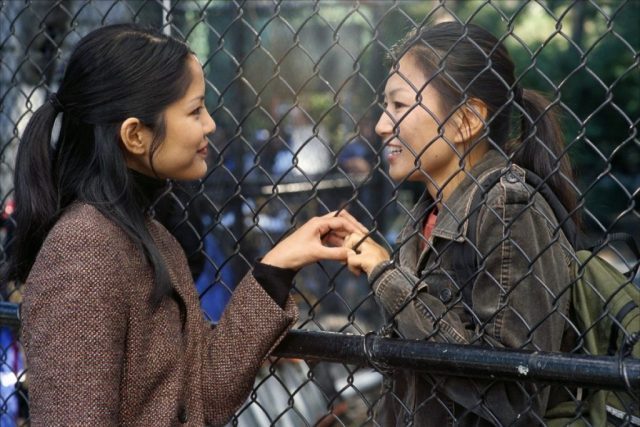
Alice Wu’s Saving Face breaks the chains of conventions in LGBTQ love story
SAVING FACE (Alice Wu, 2004)
Monday, February 5, 12:30
Wednesday, February 7, 4:10
Sunday, February 11, 1:00
filmforum.org
While much of writer-director Alice Wu’s independent first feature, Saving Face, is entertaining enough, the last scenes are so much fun, so heartbreaking, and so charming that the film leaps to the next level, so stay with it. The captivating Michelle Krusiec (One World, Knife Fight) stars as Wilhelmina, a twenty-eight-year-old doctor trying to balance her career with her family in Flushing. Every Friday night she goes to the community dance, where her mother (Joan Chen) and the other Chinese yentas try to fix her up with a guy. Little do they know that she’s gay and strongly attracted to the boss’s daughter, Vivian (Lynn Chen), a ballerina dabbling in modern dance. Things get a little wacky when it turns out that Wil’s mother is pregnant and won’t tell anyone who the father is, leading to her banishment from her parents’ home and her friends’ inner circle. Suddenly Wil finds herself struggling to take care of her mother while also exploring a blossoming relationship that she hides from nearly everyone except her best friend, Jay (Ato Essandoh). Tradition battles modern life, generation battles generation, sexual preference battles gossip and scandal, and conventional roles get turned upside down and inside out in this film-festival favorite that will leave you smiling.
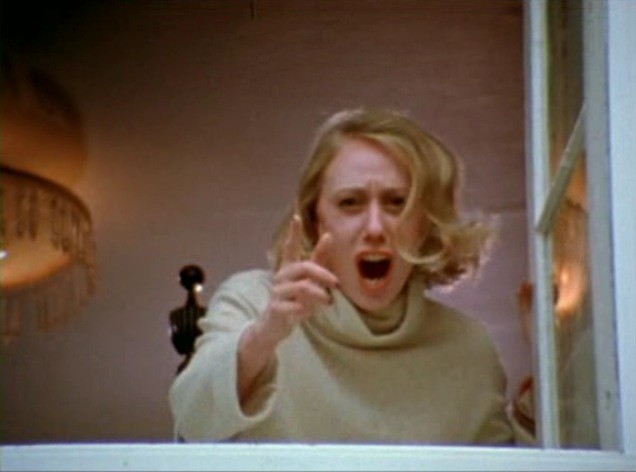
Peggy Gravel’s quaint suburban life is about to go to hell in John Waters’s Desperate Living
DESPERATE LIVING (John Waters, 1977)
Thursday, February 8, 8:30
filmforum.org
A turning point in his career, John Waters’s Desperate Living is an off-the-charts bizarre, fetishistic fairy tale, the ultimate suburban nightmare. Mink Stole stars as Peggy Gravel, a wealthy housewife suffering yet another of her mental breakdowns. In the heat of the moment, she and the family maid, four-hundred-pound Grizelda Brown (Jean Hill), kill Peggy’s mild-mannered husband, Bosley (George Stover), and the two women end up finding refuge in one of the weirdest towns ever put on celluloid, Mortville, where MGM’s The Wizard of Oz and Babes in Toyland meet Russ Meyer’s Faster, Pussycat! Kill! Kill! (with some Kenneth Anger, Jack Smith, and Douglas Sirk thrown into the mix as well). “I ain’t your maid anymore, bitch! I’m your sister in crime!” Grizelda declares. Peggy and Grizelda move into the “guest house” of manly Mole McHenry (Susan Lowe) and her blonde bombshell lover, Muffy St. Jacques (Liz Renay). Mortville is run as a kind of fascist state by the cruel and unusual despot Queen Carlotta (Edith Massey), an evil shrew who enjoys being serviced by her men-in-leather attendants, issues psychotic proclamations, and is determined that her daughter, Princess Coo-Coo (Mary Vivian Pearce), stop dating her garbage-man boyfriend, Herbert (George Figgs). (Wait, Mortville has a sanitation department?) Camp and trash combine like nuclear fission as things get only crazier from there, devolving into gorgeous low-budget madness and completely over-the-top ridiculousness, a mélange of sex, violence, and impossible-to-describe lunacy that Waters himself claimed was a movie “for fucked-up children.”
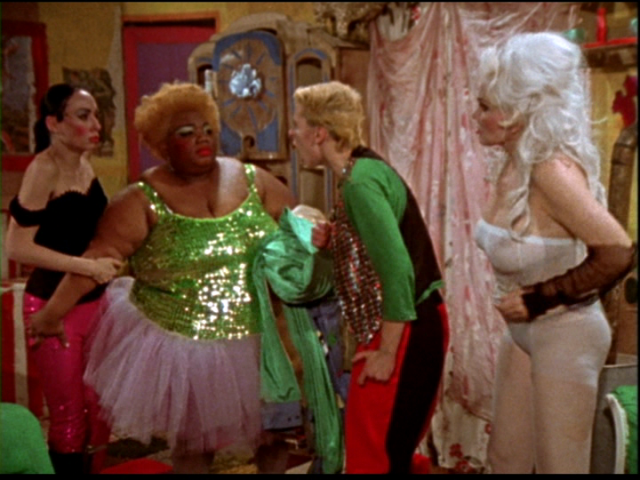
John Waters’s Desperate Living is a celebration of camp and trash, an extremely adult and bizarre fairy tale
The opening scenes of Peggy’s meltdown are utterly hysterical. When a neighbor hits a baseball through her bedroom window and offers to pay for it with his allowance, she screams, “How about my life? Do you get enough allowance to pay for that? I know you were trying to kill me! What’s the matter with the courts? Do they allow this lawlessness and malicious destruction of property to run rampant? I hate the Supreme Court! Oh, God. God. God. Go home to your mother! Doesn’t she ever watch you? Tell her this isn’t some communist day-care center! Tell your mother I hate her! Tell your mother I hate you!” The sets and costumes are deranged — and perhaps influenced Pee-wee’s Playhouse — the relatively spare score is fun, and the acting is, well, appropriate. The first half of the film is better than the second half, but it’s still a delight to watch Waters, who wrote, directed, and produced the film, which was shot in a kind of lurid Technicolor by Charles Ruggero, take on authority figures (beware of Sheriff Shitface), gender identity, class structure, hero worship, beauty, race, crime, nudity, and, of course, at its very heart, love and romance.
[Mark Rifkin is a Brooklyn-born, Manhattan-based writer and editor; you can follow him on Substack here.]
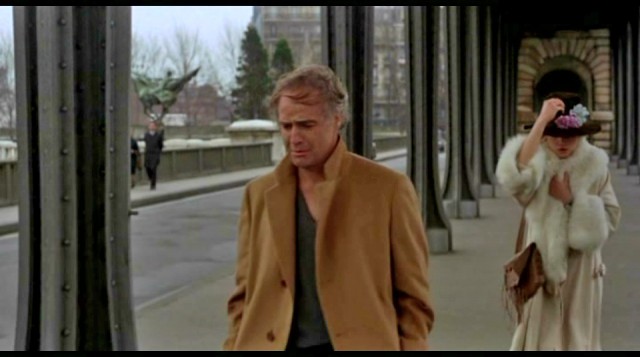
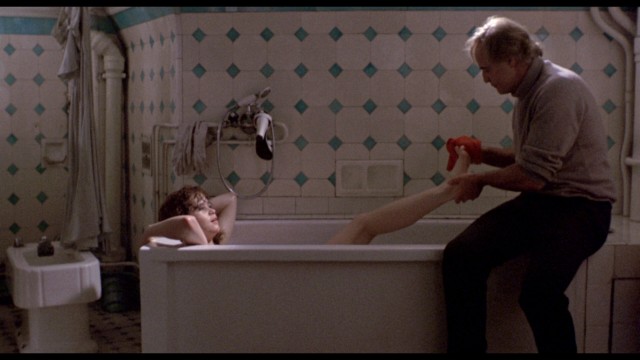
 One of the most artistic films ever made about seduction, Bernardo Bertolucci’s controversial X-rated Last Tango in Paris is part of the Quad’s “Paris Stripped Bare” and “Pictures from the Revolution: Bertolucci’s Italian Period” series in addition to “Rated X.” Written by Bertolucci (The Conformist, The Spider’s Stratagem), who passed away in Rome in November at the age of seventy-seven, with regular collaborator and editor Franco Arcalli and with French dialogue by Agnès Varda (Le Bonheur, Vagabond), the film opens with credits featuring jazzy romantic music by Argentine saxophonist Gato Barbieri and two colorful and dramatic paintings by Francis Bacon, “Double Portrait of Lucian Freud and Frank Auerbach” and “Study for a Portrait,” that set the stage for what is to follow. (Bacon was a major influence on the look and feel of the film, photographed by Vittorio Storaro.) Bertolucci then cuts to a haggard man (Marlon Brando) standing under the Pont de Bir-Hakeim in Paris, screaming out, “Fucking God!” His hair disheveled, he is wearing a long brown jacket and seems to be holding back tears. An adorable young woman (Maria Schneider) in a fashionable fluffy white coat and black hat with flowers passes by, stops and looks at him, then moves on. They meet again inside a large, sparsely furnished apartment at the end of Rue Jules Verne that they are each interested in renting. Both looking for something else in life, they quickly have sex and roll over on the floor, exhausted. For the next three days, they meet in the apartment for heated passion that the man, Paul, insists include nothing of the outside world — no references to names or places, no past, no present, no future; the young woman, Jeanne, agrees. Their sex goes from gentle and touching to brutal and animalistic; in fact, after one session, Bertolucci cuts to actual animals. The film is nothing if not subtle.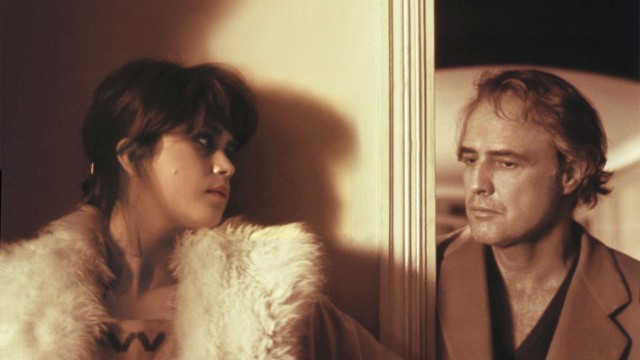
 A turning point in his career, John Waters’s Desperate Living is an off-the-charts bizarre, fetishistic fairy tale, the ultimate suburban nightmare. Mink Stole stars as Peggy Gravel, a wealthy housewife suffering yet another of her mental breakdowns. In the heat of the moment, she and the family maid, four-hundred-pound Grizelda Brown (Jean Hill), kill Peggy’s mild-mannered husband, Bosley (George Stover), and the two women end up finding refuge in one of the weirdest towns ever put on celluloid, Mortville, where MGM’s The Wizard of Oz and Babes in Toyland meet Russ Meyer’s Faster, Pussycat! Kill! Kill! (with some Kenneth Anger, Jack Smith, and Douglas Sirk thrown into the mix as well). “I ain’t your maid anymore, bitch! I’m your sister in crime!” Grizelda declares. Peggy and Grizelda move into the “guest house” of manly Mole McHenry (Susan Lowe) and her blonde bombshell lover, Muffy St. Jacques (Liz Renay). Mortville is run as a kind of fascist state by the cruel and unusual despot Queen Carlotta (Edith Massey), an evil shrew who enjoys being serviced by her men-in-leather attendants, issues psychotic proclamations, and is determined that her daughter, Princess Coo-Coo (Mary Vivian Pearce), stop dating her garbage-man boyfriend, Herbert (George Figgs). (Wait, Mortville has a sanitation department?) Camp and trash combine like nuclear fission as things get only crazier from there, devolving into gorgeous low-budget madness and completely over-the-top ridiculousness, a mélange of sex, violence, and impossible-to-describe lunacy that Waters himself claimed was a movie “for fucked-up children.”
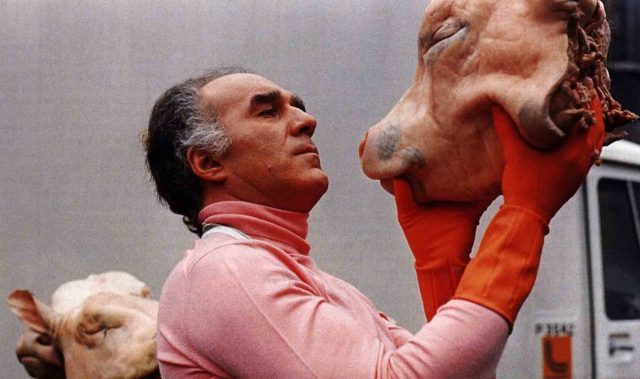
 Fed up with their lives, four old friends decide to literally eat themselves to death in one last grand blow-out. Cowritten and directed by Marco Ferreri (Chiedo asilo, La casa del sorriso), La Grande Bouffe features a cast that is an assured recipe for success, bringing together a quartet of legendary actors, all playing characters with their real first names: Marcello Mastroianni as sex-crazed airplane pilot Marcello, Philippe Noiret as mama’s boy and judge Philippe, Michel Piccoli as effete television host Michel, and Ugo Tognazzi as master gourmet chef Ugo. They move into Philippe’s hidden-away family villa, where they plan to eat and screw themselves to death, with the help of a group of prostitutes led by Andréa (Andréa Ferréol). Gluttons for punishment, the four men start out having a gas, but as the feeding frenzy continues, so does the flatulence level, and the men start dropping one by one. While the film, which won the FIPRESCI Prize at the 1973 Cannes Film Festival, might not be quite the grand feast it sets out to be, it still is one very tasty meal. Just be thankful that it’s not shown in Odoroma. Bon appetit!