GRANITO shows the power and importance of independent documentary filmmaking
DOCUMENTARY FORTNIGHT 2013: MOMA’S INTERNATIONAL FESTIVAL OF NONFICTION FILM AND MEDIA — GRANITO: HOW TO NAIL A DICTATOR (Pamela Yates, Peter Kinoy & Paco de Onís, 2011)
MoMA Film, Museum of Modern Art
11 West 53rd St. between Fifth & Sixth Aves.
Sunday, March 3, 5:30
Festival runs February 27 – March 4
Tickets: $12, in person only, may be applied to museum admission within thirty days, same-day screenings free with museum admission, available at Film and Media Desk beginning at 9:30 am
212-708-9400
www.moma.org
www.skylightpictures.com
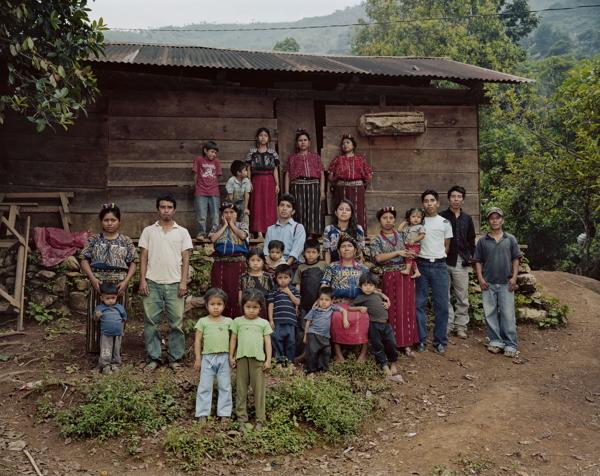
 The opening-night selection of the 2011 Human Rights Watch Film Festival, Granito: How to Nail a Dictator is an illuminating, if at times overly self-referential, examination of the power of documentary filmmaking. In 1982, Pamela Yates and Newton Thomas Sigel made When the Mountains Tremble, which told the inside story of civilian massacres of the indigenous Maya people as government forces and guerrilla revolutionaries fought in the jungles of Guatemala; one of the film’s subjects, Rigoberta Menchú, became an international figure and went on to win the Nobel Peace Prize. “When I made that film, I had no idea I was filming in the middle of a genocide,” Yates says at the beginning of Granito. A quarter-century after When the Mountains Tremble, Yates was contacted by lawyer Almudena Bernabeu, who asked Yates to comb through her reels and reels of footage to find evidence of the Guatemalan genocide and help bring charges again dictator Ríos Montt, whom Yates had met with back in 1982. In researching the case, Yates speaks with Menchú, forensic archivist Kate Doyle, journalist liaison Naomi Roht-Arriaza, forensic anthropologist Fredy Peccerelli, Spanish national court judge Santiago Pedraz, victims’ rights leader and genocide survivor Antonio Caba Caba, and Gustavo Meoño, a founding member of the Guerrilla Army of the Poor, each of whom sheds light on the proceedings from various different angles, from digging up bones in mass graves to discussing redacted documents that reveal U.S. involvement in Guatemala. Several of them are risking their lives by both continuing to fight the government and appearing on camera. Granito, which Yates directed with Peter Kinoy and Paco de Onís and was her sixth film to be shown at the Human Rights Watch festival, is a compelling look at how individuals can make a difference. The music is often overly melodramatic, and Yates does seem to like to show herself both in outtakes from her first film and in serious poses in the new film, but its ultimate point overrides those tendencies. Granito is screening at MoMA on March 3 at 5:30 as part of the “MoMA Selects: POV” section of “Documentary Fortnight 2013: MoMA’s International Festival of Nonfiction Film and Media” and will be followed by a Q&A with Yates, de Onís, and Kinoy; the POV portion, which runs February 27 to March 4, celebrates a quarter-century of the award-winning PBS program POV and also includes such films as Marion Lipschutz and Rose Rosenblatt’s The Education of Shelby Knox, Jane Wagner and Tina Di Feliciantonio’s Girls Like Us, Laura Poitras’s The Oath, David Redmon and A. Sabin’s Girl Model. “POV films and filmmakers have been at the center of a golden age of documentary filmmaking,” POV executive producer Simon Kilmurry explained in a statement. “The films in MoMA’s special program not only look back at the first twenty-five years of POV but also look forward. Collectively, they illustrate how vibrant and essential documentaries have become in exploring the human experience.”
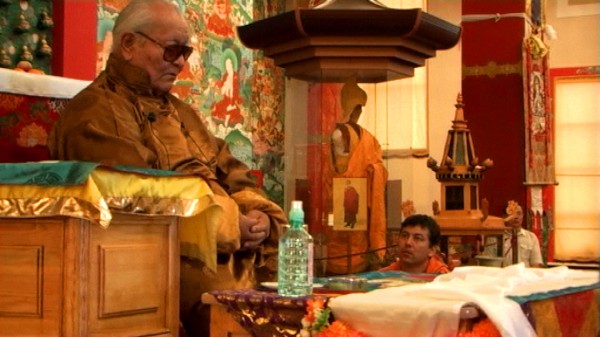
 More than twenty years in the making, Jennifer Fox’s My Reincarnation tells the fascinating story of a very unusual father-son relationship amid the modern world of tulkus, or reincarnated Tibetan lamas. World-renowned high Tibetan Buddhist Master Chögyal Namkhai Norbu travels around the world teaching meditation and Dzogchen practice. He meets with the Dalai Lama, advises students and fans, signs copies of his many books, and builds support for his beleaguered native land, Tibet. But his son, Yeshi Silvano Namkhai, who was born in 1970 in Italy (where Rinpoche Namkhai Norbu taught at university from 1964 to 1992), had no desire to follow in his father’s footsteps and instead went into the computer business, starting a family and rejecting nearly everything his father believes in — including that Yeshi might just be the reincarnation of his great-uncle, Khyentse Rinpoche Chökyi Wangchug, and so is destined for a life of service and tradition. “Everybody knows about me and nobody knows me at all,” Yeshi says about trying to establish his own identity. Father and son and the rest of the family allowed Fox remarkable access, holding nothing back as they talk about their lives and each other; Yeshi is particularly vocal about his father’s treatment of him over the years. But soon Yeshi has a change of heart, and the documentary takes an unexpected turn. Fox, who has previously made such films as Beirut: The Last Home Movie, Flying: Confessions of a Free Woman, and An American Love Story, shot more than one thousand hours of footage, which she edited down to a tight seventy-five-minutes, including archival and newsreel footage as well. As much as it is about a father and a son, My Reincarnation is also about the old vs. the new, tradition vs. modernization, private love vs. public responsibility, the spiritual vs. the technological, and, above all, familial legacy. My Reincarnation is screening at MoMA on March 2 at 5:00 as part of the “MoMA Selects: POV” section of “Documentary Fortnight 2013: MoMA’s International Festival of Nonfiction Film and Media” and will be followed by a Q&A with the director; the POV portion, which runs February 27 to March 4, celebrates a quarter-century of the award-winning PBS program POV and also includes such films as Marlon Riggs’s Tongues Untied, Freida Lee Mock’s Maya Lin: A Strong Clear Vision, Robert Kenner’s Food, Inc., and Alan Berliner’s Nobody’s Business. “As we celebrate our twenty-fifth anniversary on PBS, MoMA’s retrospective program allows us to review our history, share insights about documentary craft and culture with the public, and celebrate with the indie filmmaking community,” POV co-executive producer Cynthia López said in a statement. “The ways in which documentaries have contributed to our culture will be a focus of conversations at the screenings. We hope the public will find that these documentaries inform, entertain, and challenge conventional wisdom.”