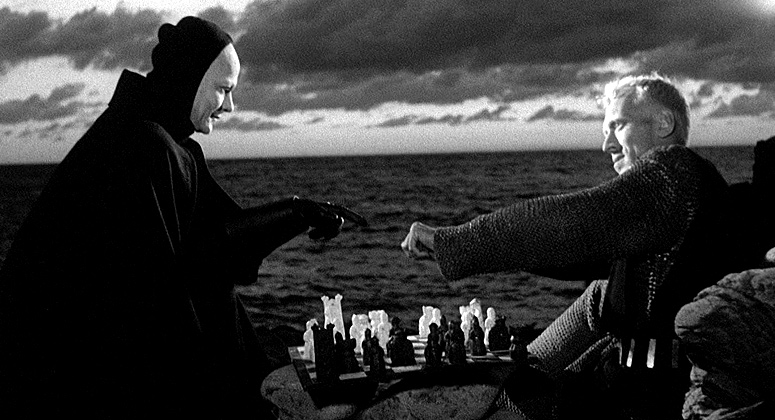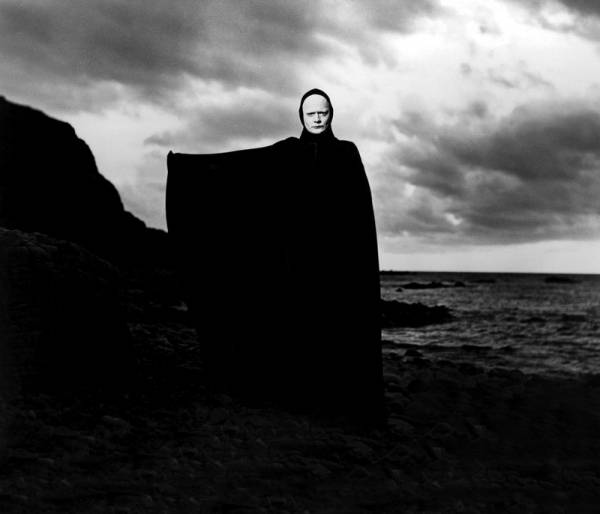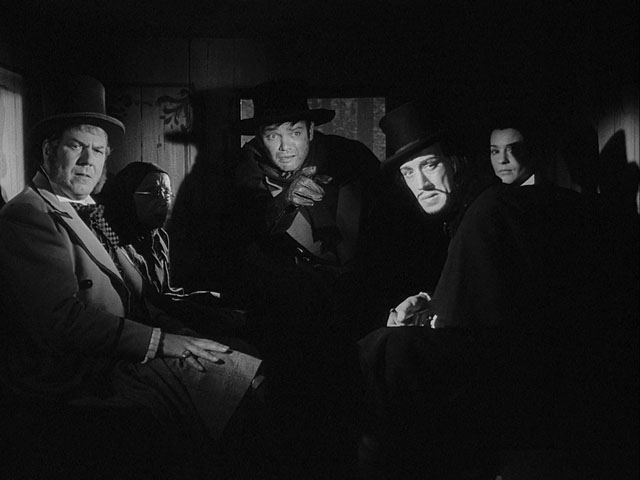
A traveling troupe of illusionists is forced to defend itself in Ingmar Bergman’s THE MAGICIAN
CABARET CINEMA: THE MAGICIAN (ANSIKTET) (Ingmar Bergman, 1958)
Rubin Museum of Art
150 West 17th St. at Seventh Ave.
Friday, August 2, free with $7 bar minimum, 9:30
212-620-5000
www.rmanyc.org
 Ingmar Bergman’s darkly comic 1958 film The Magician is one of the Swedish auteur’s lesser-known, underrated masterpieces, an intense yet funny, and fun, work about art, science, faith, death, and the power of the movies themselves. When Vogler’s Magnetic Health Theater comes to town, the local triumvirate of Dr. Vergérus (Gunnar Björnstrand), police commissioner Starbeck (Toivo Pawlo), and Consul Egerman (Erland Josephson) brings the traveling troupe in for questioning, forcing them to spend the night as guests in Egerman’s home. The three men seek to prove that mesmerist Albert Emanuel Vogler (Max von Sydow), his assistant, Mr. Aman (Ingrid Thulin), a witchy grandmother (Naima Wifstrand), and their promoter, Tubal (Åke Fridell), are a bunch of frauds. The interrogations delve into such Bergmanesque topics as science vs. reason, good vs. evil, life and death, and the existence of God. As various potions are dispensed to and tricks played on a staff that includes maid Sara (Bibi Andersson), cook Sofia Garp (Sif Ruud), and stableman Antonsson (Oscar Ljung) in addition to Starbeck’s wife (Ulla Sjöblom) and Egerman’s spouse (Gertrud Fridh), a series of romantic rendezvous take place, along with some genuine horror, leading to a thrillingly ambiguous ending.
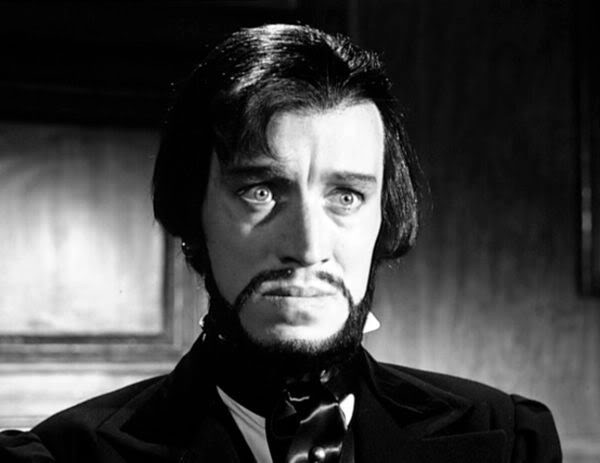
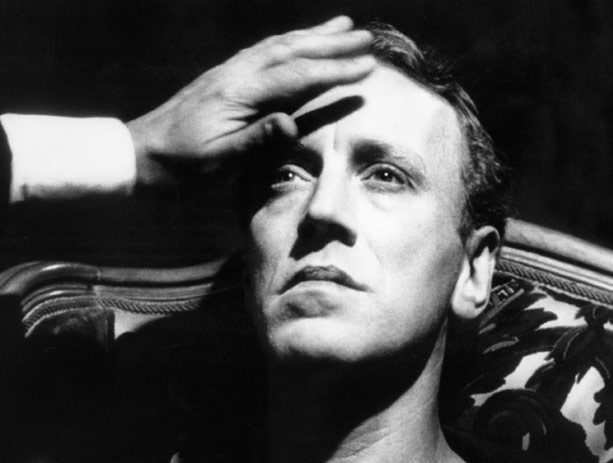
Max von Sydow is mesmerizing as mesmerist and Ingmar Bergman alter ego Albert Emanuel Vogler in THE MAGICIAN
Von Sydow is mesmerizing as the mesmerist, a silent, brooding man in a sharp beard and mustache, his penetrating eyes a character all their own. (The original title of the film is Ansiktet, which means “Face.”) His showdowns with Dr. Vergerus serve as Bergman’s defense of the art of film itself, an illusion of light and shadow and suspension of belief. Meanwhile, Tubal and wandering drunk Johan Spegel (Bengt Ekerot) offer comic relief and a needed level of absurdity to the serious proceedings. The film is superbly shot in black-and-white by cinematographer Gunnar Fischer, maintaining an appropriately creepy and mysterious look throughout. It also introduces character names into Bergman’s canon, appellations such as Vogler, Vergérus, and Egerman, that will show up again in such future works as Persona (with Liv Ullmann as actress Elisabet Vogler, who has stopped speaking, and Björnstrand as Mr. Vogler), Hour of the Wolf (with Thulin as Veronica Vogler, a former lover haunting von Sydow’s painter Johan Borg), Fanny and Alexander (with Jan Malmsjö as Bishop Edvard Vergérus), and After the Rehearsal (with Josephson as theater director Henrik Vogler and Lena Olin as actress Anna Egerman). Winner of the Special Jury Prize at the 1959 Venice Film Festival, The Magician is screening August 2 at the Rubin Museum, introduced by sociologist and Union Theological Seminary assistant professor Samuel Cruz, PhD, concluding the Cabaret Cinema series “Say a Little Prayer,” held in conjunction with the exhibition “Count Your Blessings,” which opens August 2 and explores the use of prayer beads in various Buddhist traditions.
 One of Ingmar Bergman’s most critically polarizing films — the director himself wrote, “No, I made it the wrong way” three years after its release — Hour of the Wolf is a gripping examination of an artist’s psychological deterioration. Bergman frames the story as if it’s a true tale being told by Alma Borg (Liv Ullmann) based on her husband Johan’s (Max von Sydow) diary, which she has given to the director. In fact, as this information is being shown in words onscreen right after the opening credits, the sound of a film shoot being set up can be heard behind the blackness; thus, from the very start, Bergman is letting viewers know that everything they are about to see might or might not be happening, blurring the lines between fact and fiction in the film itself as well as the story being told within. And what a story it is, a gothic horror tale about an artist facing both a personal and professional crisis, echoing the life of Bergman himself. Johan and Alma, who is pregnant (Ullmann was carrying Bergman’s child at the time), have gone to a remote island where he can pursue his painting in peace and isolation. But soon Johan is fighting with a boy on the rocks, Alma is getting a dire warning from an old woman telling her to read Johan’s diary, and the husband and wife spend some bizarre time at a party in a castle, where a man walks on the ceiling, a dead woman arises, and other odd goings-on occur involving people who might be ghosts. Bergman keeps the protagonists and the audience guessing as to what’s actually happening throughout: The events could be taking place in one of the character’s imaginations or dreams (or nightmares), they could be flashbacks, or they could be part of the diary come to life. Whatever it is, it is very dark, shot in an eerie black-and-white by Sven Nykvist, part of a trilogy of grim 1968-69 films by Bergman featuring von Sydow and Ullmann that also includes Shame and The Passion of Anna. Today, Hour of the Wolf feels like a combination of Roman Polanski’s Rosemary’s Baby and Stanley Kubrick’s The Shining with elements of Mozart’s The Magic Flute — which Bergman would actually adapt for the screen in 1975 and features in a key, extremely strange scene in Hour of the Wolf. But in Bergman’s case, all work and no play does not make him a dull boy at all. Hour of the Wolf is screening November 30 at BAM as part of the BAMcinématek series “Max von Sydow,” consisting of twenty-two wide-ranging films celebrating the outstanding career of the now-eighty-three-year-old Swedish actor; the festival continues with such other works as William Friedkin’s The Exorcist, Bille August’s Pelle the Conqueror,, Woody Allen’s Hannah and Her Sisters, John Milius’s Conan the Barbarian, and, yes, Mike Gordon’s Flash Gordon, with von Sydow playing Ming the Merciless.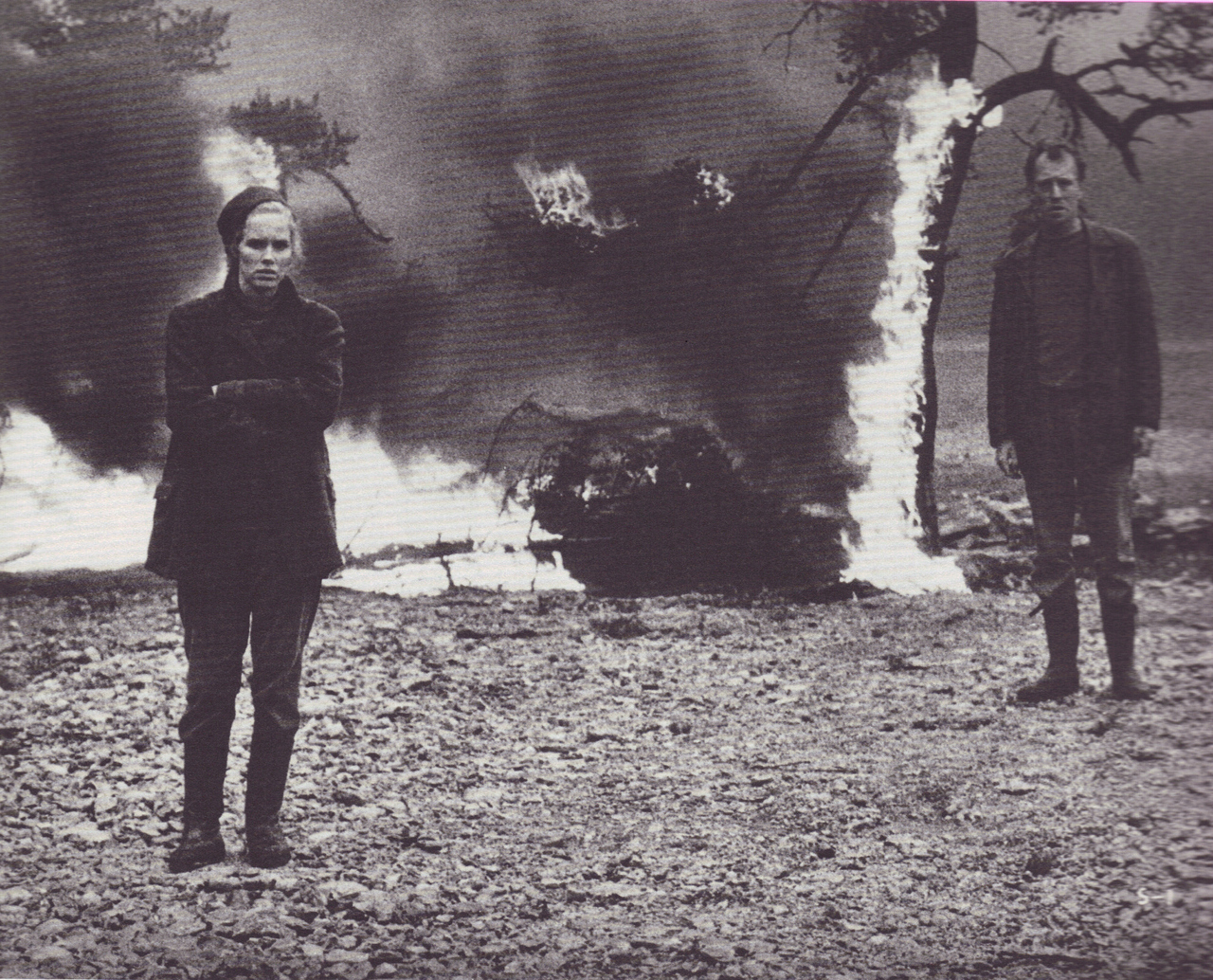
 Ingmar Bergman’s Shame is a brilliant examination of the physical and psychological impact of war, as seen through the eyes of a happily married couple who innocently get caught in the middle of the brutality. Jan (Max von Sydow) and Eva Rosenberg (Liv Ullmann) have isolated themselves from society, living without a television and with a broken radio, maintaining a modest farm on a relatively desolate island a ferry ride from the mainland. As the film opens, they are shown to be a somewhat ordinary husband and wife, brushing their teeth, making coffee, and discussing having a child. But soon they are thrust into a horrific battle between two unnamed sides, fighting for reasons that are never given. As Jan and Eva struggle to survive, they are forced to make decisions that threaten to destroy everything they have built together. Shot in stark black-and-white by master cinematographer Sven Nykvist, Shame is a powerful, emotional antiwar statement that makes its point through intense visual scenes rather than narrative rhetoric. Jan and Eva huddle in corners or nearly get lost in crowds, then are seen traversing a smoky, postapocalyptic landscape riddled with dead bodies. Made during the Vietnam War, Shame is Bergman’s most violent, action-filled film; bullets can be heard over the opening credits, announcing from the very beginning that this is going to be something different from a director best known for searing personal dramas. However, at its core, Shame is just that, a gripping, intense tale of a man and a woman who try to preserve their love in impossible times. Ullmann and von Sydow both give superb, complex performances, creating believable characters who will break your heart. Shame is screening November 30 at BAM as part of the BAMcinématek series “Max von Sydow,” consisting of twenty-two wide-ranging films celebrating the outstanding career of the now-eighty-three-year-old Swedish actor; the festival continues with such other works as William Friedkin’s The Exorcist, Bille August’s Pelle the Conqueror,, Woody Allen’s Hannah and Her Sisters, John Milius’s Conan the Barbarian, and, yes, Mike Gordon’s Flash Gordon, with von Sydow playing Ming the Merciless.