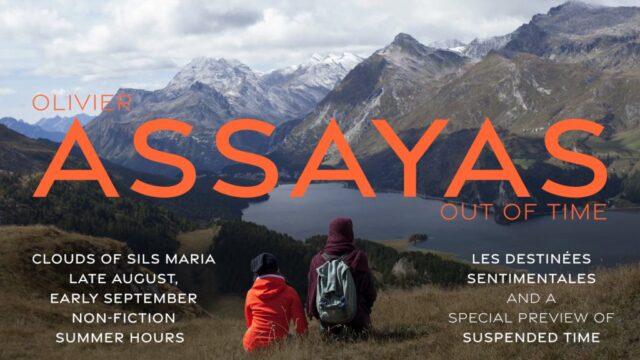
OLIVIER ASSAYAS: OUT OF TIME
Metrograph
7 Ludlow St. between Canal & Hester Sts.
Series begins August 8
metrograph.com
In conjunction with the theatrical release of his latest film, the semiautobiographical Suspended Time, Metrograph will be screening a half-dozen of French writer-director Olivier Assayas’s works, which range from ultracool flicks to boring dramas, but they’re almost always visually stunning, filled with cinematic references and hip music — as well as such stars as Juliette Binoche, Kristen Stewart, Mathieu Amalric, Maggie Cheung, and future director Mia Hansen-Løve, who was Assayas’s partner for fifteen years. The series kicks off August 8 with a sneak preview of the new film in addition to 2018’s Non-Fiction and continues with such other tales as 1998’s Late August, Early September and 2000’s Les Destinées sentimentales.

Metrograph is celebrating the work of Olivier Assayas in retrospective including Summer Hours
SUMMER HOURS (L’HEURE D’ÉTÉ) (Olivier Assayas, 2008)
Friday, August 15, 6:15
Sunday, August 17, 5:35
metrograph.com
www.summerhours.com.au
At their annual family gathering, Frédéric (Charles Berling), Adrienne (Juliette Binoche), and Jérémie (Jérémie Renier) are celebrating their mother’s seventy-fifth birthday. But Hélène (Edith Scob) does not care about the present; instead, she is more concerned with preserving the past and preparing for the future. She pulls aside her oldest, Frédéric (Assayas’s on-screen alter ego), to tell him what to do with her belongings after she’s gone, but he is not ready to think about that. Her house is more like a museum, filled with valuable works of art and furniture that were collected by her uncle, a famous painter who died thirty years before. Frédéric would prefer to keep the house intact, donating a few items to the Musee d’Orsay and saving the rest for the next generation, but Adrienne and Jérémie don’t necessarily feel the same way, and Frédéric’s and Jérémie’s kids fail to see any value in the pieces, including two oil paintings by Camille Corot, begrudgingly noting that they’re from a different era. While Frédéric, a professor who has written a controversial book about the state of the economy, attaches personal memories to each object, Adrienne, a successful designer in New York, is more interested in the functionality of things, and Jérémie, who manages a company that profits from cheap labor in China, sees only monetary value. As the three siblings discuss what to do with their mother’s estate, relationships come into focus, and a long-held secret emerges.
Written and directed by Olivier Assayas (Clean, Demonlover), Summer Hours, which was selected for the 2008 New York Film Festival, is a thoughtful, intelligent slice-of-life story that avoids overbearing cliches and melodramatic moments; there are no blow-ups or overemotional scenes. Instead, the family deals with its situation directly and matter-of-factly, a sort of French Cherry Orchard for the twenty-first century. However, Assayas does include far too many red herrings, little flourishes of cinematic language that seem to set something up that never comes full circle. The project was initiated by the Musee d’Orsay, which had commissioned a group of international directors to make short films related to the institution’s holdings. Assayas’s friend and colleague Hou Hsiao Hsien ended up making the full-length Flight of the Red Balloon, which also starred Binoche. Although the project later fell apart, Assayas combined the idea with the worsening condition of his mother, resulting in a bittersweet and very personal work.

Juliette Binoche and Kristen Stewart mix fact and fiction in Olivier Assayas’s Clouds of Sils Maria
CLOUDS OF SILS MARIA (Olivier Assayas, 2014)
Friday, August 15, 8:15
Saturday, August 16, 5:25
metrograph.com
The related concepts of time and reality wind through Olivier Assayas’s beautifully poetic, melancholy Clouds of Sils Maria much like actual snakelike clouds slither through the twisting Maloja Pass in the Swiss Alps, as life imitates art and vice versa. Juliette Binoche stars as Maria Enders, a famous French actress who is on her way to Zurich to accept an award for her mentor, playwright Wilhelm Melchior, who eschews such mundane ceremonies. But while en route, Maria and her personal assistant, the extremely attentive and capable Valentine (Kristen Stewart), learn that Wilhelm has suddenly and unexpectedly passed away, and Maria considers turning back, especially when she later finds out that Henryk Wald (Hanns Zischler), an old nemesis, will be there to pay homage to Wilhelm as well, but she decides to go ahead after all. At a cocktail party, Maria meets with hot director Klaus Diesterweg (Lars Eidinger), who is preparing a new stage production of Wilhelm and Maria’s first big hit, The Maloja Snake, but this time Maria would play Helena, an older woman obsessed with ambitious eighteen-year-old Sigrid, the role she originally performed twenty years earlier, to great acclaim. Klaus is planning to cast Lindsay Lohan-like troublemaking star and walking tabloid headline Jo-Ann Ellis (Chloë Grace Moretz) as Sigrid, which does not thrill Maria as her past and present meld together in an almost dreamlike narrative punctuated by the music of Handel and cinematographer Yorick Le Saux’s gorgeous shots of vast mountain landscapes.

Valentine (Kristen Stewart) and Maria (Juliette Binoche) go in search of the Maloja Snake in the Swiss Alps
Clouds of Sils Maria resonates on many levels, both inside and outside of the main plot and the film itself. Assayas (Boarding Gate, Something in the Air) cowrote André Téchiné’s 1983 film, Rendez-Vous, which was Binoche’s breakthrough; Assayas and Binoche wouldn’t work together again until his 2008 film Summer Hours, similar to the relationship between Wilhelm and Maria. Meanwhile, the story of the play-within-the-film is echoed by the relationship between Maria and Valentine, who are having trouble separating the personal from the professional. It is often difficult to know when the two women are practicing lines and when they are talking about their “real” lives. Binoche (Blue, Caché) is simply extraordinary as Maria, a distressed and anxious woman who is suddenly facing getting older somewhat sooner than expected, while Stewart (The Twilight Saga, On the Road) became the first American woman to win a French César, for Best Supporting Actress, for her sensitive portrayal of Valentine, a strong-willed young woman who might or might not be holding something back. The scenes between the two are riveting as they venture in and out of the reality of the film, their onscreen chemistry building and building till it’s at last ready to ignite. Art, life, cinema, theater, fiction, and reality all come together in Clouds of Sils Maria, as Maria, Assayas, and Binoche take stock of where they’ve been, where they are, and where they’re going.
[Mark Rifkin is a Brooklyn-born, Manhattan-based writer and editor; you can follow him on Substack here.]
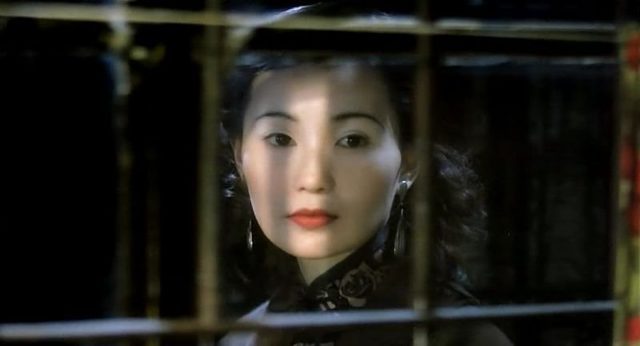
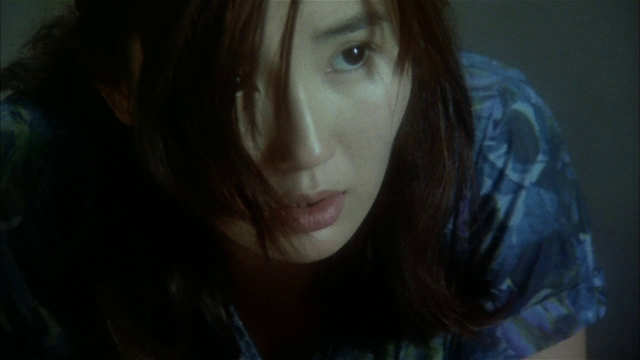
 Wong Kar-wai’s second film, Days of Being Wild — following the surprising success of his debut feature, As Tears Go By — was a popular failure, as Hong Kong audiences were not yet ready for his introspective, character-driven, nonlinear style. (However, it did win five Hong Kong Film Awards, including Best Picture and Best Actor.) Days is Wong’s first film with master cinematographer Christopher Doyle, who shot all of Wong’s work through 2004, including Chungking Express, Fallen Angels, Happy Together, and In the Mood for Love. The late Leslie Cheung, who jumped out a hotel window in 2003, stars as Yuddy, a disaffected, beautiful youth who lures in women and then, after they fall in love with him, verbally mistreats them and cheats on them. Among his conquests are the gorgeous Su-Lizhen (Maggie Cheung), often shot in magnificent close-up, and the trampy Mimi (Carina Lau), who is jealous of Su, who takes comfort in telling her tale of woe to local police officer Tide (Andy Lau). Meanwhile, Yuddy, who was raised by a former prostitute, is obsessed with finding his birth mother. Set in 1960, the film’s leitmotif involves time and memory, with clocks ticking loudly and lots of long, lingering looks. The story goes a bit haywire in the latter sections, although the ending is a gem. (Look for Tony Leung there.)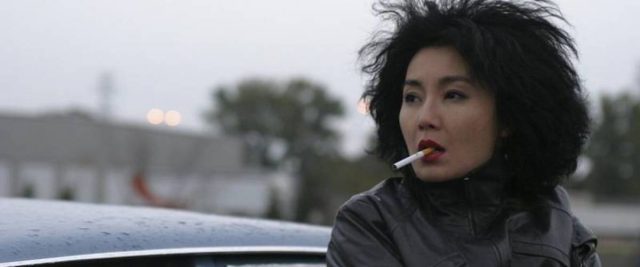
 With their divorce pending, writer-director Olivier Assayas and Hong Kong superstar Maggie Cheung wish each other a fond farewell in the moving drama Clean. Named Best Actress at the 2004 Cannes Film Festival for her extraordinary performance, Cheung stars as Emily Wang, a junkie trying to resuscitate the fading music career of her heroin-addicted lover, Lee (British musician James Johnston). Their life together is so screwed up that they rarely see their son, Jay (James Dennis), who lives in Vancouver with Lee’s parents (Nick Nolte and Martha Henry). On the road, Emily scores some drugs, fights with Lee, goes out for a ride, then returns to find him dead from an overdose and the cops waiting to arrest her. After six months in prison, she gets out to find that her life has changed more than she could ever have imagined. Cheung is effervescent every step of the way, lighting up the screen despite playing a very hard-to-like character; her tender scenes with the soft-spoken, grizzled Nolte are particularly gentle and touching. Unfortunately the subplot set in the music world is clichéd, annoying, and mostly unnecessary, everything that the rest of the film is not. The stunt casting is particularly irritating: Tricky, the band Metric, and Mazzy Star’s David Roback all play themselves. The otherwise fine cast also includes Béatrice Dalle, Jeanne Balibar, Don McKellar, and Laetitia Spigarelli, with a soundtrack dominated by ethereal songs by Brian Eno.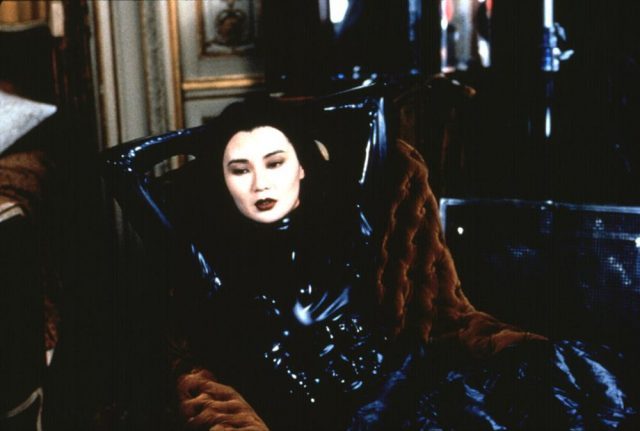
 Olivier Assayas pays homage to François Truffaut’s Day for Night in this piece of pseudoartistic fluff about a film crew’s attempts at remaking Louis Feuillade’s 1915 classic Les Vampires. The great Maggie Cheung, who later married and divorced Assayas, is wasted as the star of the remake, and Truffaut regular Jean-Pierre Léaud, playing the director, is frustratingly unintelligible when he speaks in English, which unfortunately is a lot in this high-falutin’ mess.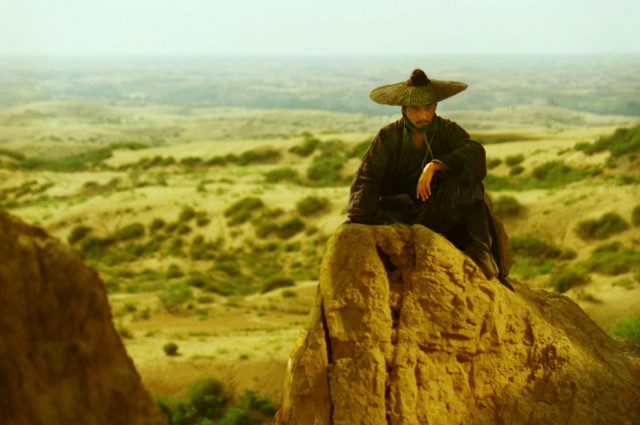
 Back in 1993, writer-director Wong Kar-wai’s Ashes of Time was released, a thinking man’s martial arts epic inspired by Jin Yong’s The Eagle-Shooting Heroes novels. With numerous versions in circulation and the original negatives in disrepair, Wong (Chungking Express, In the Mood for Love) decided to painstakingly reedit and restore the film fifteen years later, renaming it Ashes of Time Redux. The plot – which is still as confusing as ever — revolves around Ouyang Feng (Leslie Cheung), a loner who lives in the desert, where people come to him when they need someone taken care of. Every year he is visited by Huang Yaoshi (Tony Leung Ka-fai), who keeps him informed of the world outside jianghu — especially about his lost love (Maggie Cheung). Meanwhile, Murong Yang (Brigitte Lin) has demanded that Ouyang kill Huang for having jilted his sister, Murong Yin (also played by Lin), who in turn hires Ouyang to kill Yang. There’s also a blind swordsman (Tony Leung Chiu Wai), a peasant girl with a basket of eggs (Charlie Young), a poor, rogue swordsman (Jacky Cheung), and a bottle of magic wine that can erase memories. Or something like that. But what’s most impressive about Ashes of Time Redux is Christopher Doyle’s thrilling, swirling cinematography, which sweeps the audience into the film, and Wu Tong’s rearranged score, based on the original music by Frankie Chan and Roel A. Garcia and featuring soaring cello solos by Yo-Yo Ma.