Tag Archives: Kenny Leon

A SOLDIER’S PLAY

(photo by Joan Marcus)

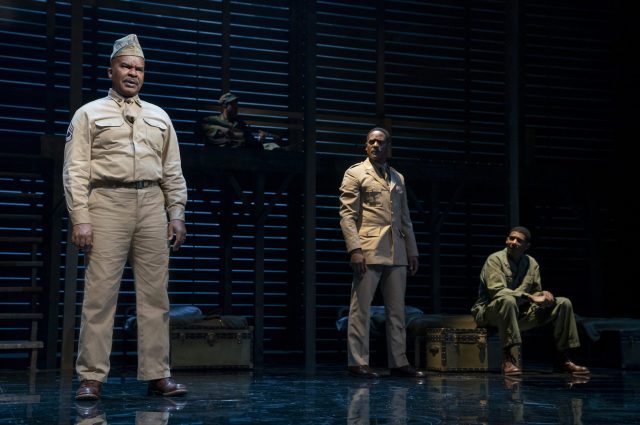
Capt. Richard Davenport (Blair Underwood) and Pvt. James Wilkie (Billy Eugene Jones) watch Sgt. Vernon C. Waters (David Alan Grier) in flashback in A Soldier’s Play (photo by Joan Marcus)

American Airlines Theatre
227 West 42nd St. between Broadway & Eighth Ave.
Tuesday – Sunday through March 15, $59-$299
212-719-1300
www.roundabouttheatre.org

Perhaps no one knows Charles Fuller’s A Soldier’s Play better than David Alan Grier, even more so than Fuller himself. In the show’s original 1981-83 Negro Ensemble run, which earned Fuller the Pulitzer Prize and featured Adolph Caesar, Denzel Washington, and Samuel L. Jackson, Grier replaced Larry Riley as Pvt. C. J. Memphis. In Norman Jewison’s 1984 film, starring Caesar, Washington, Riley, Howard E. Rollins Jr., Wings Hauser, Robert Townsend, and Patti LaBelle, Grier played Cpl. Bernard Cobb. And now Grier is taking on the role of controversial sergeant Vernon C. Waters in the show’s Broadway debut, a Roundabout production that moves with expert military precision at the American Airlines Theatre.

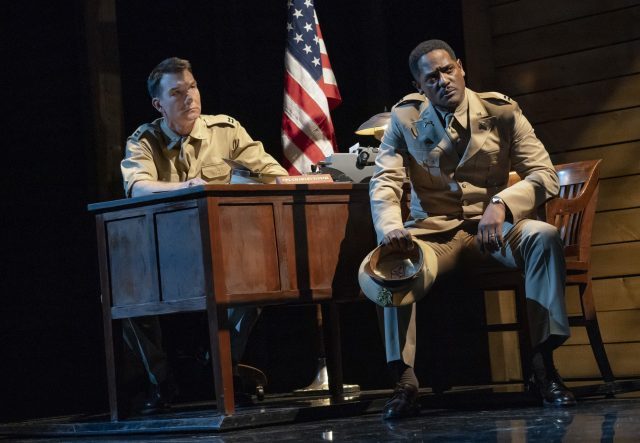
It’s 1944, and Waters is in charge of an all-black unit of the 221st Chemical Smoke Generating Company at Fort Neal, Louisiana, under the command of Capt. Charles Taylor (Jerry O’Connell). In the opening moment, a drunk Waters is on his knees on a platform, calling out, “They’ll still hate you!” A shot rings out, and Waters falls dead, murdered in cold blood by an unseen perpetrator. Capt. Richard Davenport (Blair Underwood), a black lawyer attached to the 343rd Military Police Corps Unit, arrives to solve the crime, but the white Taylor has a problem with that.

“I didn’t know that Major Hines was assigning a Negro, Davenport,” Taylor says. “My preparations were made in the belief that you’d be a white man. I think it only fair to tell you that had I known what Hines intended I would have requested the immediate suspension of the investigation. . . . I don’t want to offend you, but I just cannot get used to it — the bars, the uniform — being in charge just doesn’t look right on Negroes!” Taylor attempts to talk Davenport out of accepting the case, in part because of the danger he thinks he will face from the local KKK, but Davenport is not about to be scared into leaving. “I got it. And I am in charge! All your orders instruct you to do is cooperate!” he firmly declares.
(photo by Joan Marcus)

Capt. Charles Taylor (Jerry O’Connell) is not thrilled that Capt. Richard Davenport (Blair Underwood) has come to investigate a murder in Roundabout Broadway production (photo by Joan Marcus)

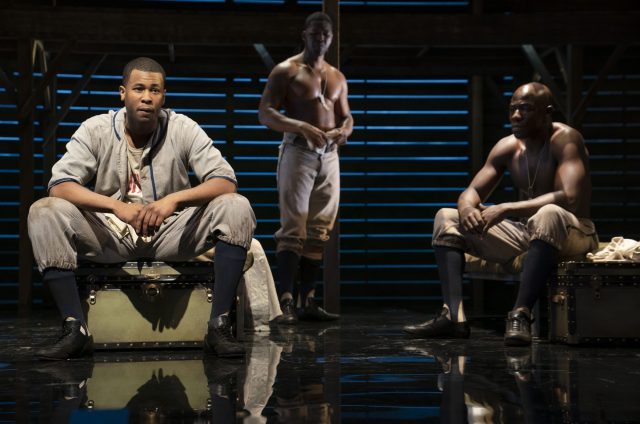
Assisted by Taylor’s right-hand man, Cpl. Ellis (Warner Miller), Davenport begins interrogating the members of the unit, which includes Pfc Melvin Peterson (Nnamdi Asomugha), Pvt. Louis Henson (McKinley Belcher III), Cpl. Cobb (Rob Demery), Pvt. Tony Smalls (Jared Grimes), Pvt. James Wilkie (Billy Eugene Jones), and Pvt. Memphis (J. Alphonse Nicholson), each of whom had a unique relationship with Waters, via their responsibilities to the army as well as through their place on the company’s extremely successful baseball team, as most of them played in the Negro League. Their stories unfold in flashback as Davenport and the witness sit stage right as the captain watches the action take place in the center and at left. Derek McLane’s two-level wooden set switches from the men’s barracks to Davenport’s and Taylor’s offices as chairs and desks are brought on and offstage and beds are pushed from the back to the front, accompanied by sharp lighting by Allen Lee Hughes.

Davenport also speaks with key white suspects Lt. Byrd (Nate Mann) and Capt. Wilcox (Lee Aaron Rosen); the former in particular is an avowed racist with no respect for Davenport. “Where I come from, colored don’t talk the way he spoke to us — not to white people they don’t!” Byrd says about Waters, talking about the night of the killing. Davenport discovers that Waters apparently had many more enemies than friends, resulting in plenty of suspects.
(photo by Joan Marcus)

Broadway debut of Charles Fuller’s A Soldier’s Play is set in an all-black army barracks during WWII (photo by Joan Marcus)

Directed with adroit sureness by Tony winner Kenny Leon (A Raisin in the Sun, American Son) and loosely inspired by Herman Melville’s 1924 novella Billy Budd, A Soldier’s Play is a scorching look at racism, in the military in 1944 as well as today. Waters strongly believes that black men need to rethink their place in society and how they will succeed. “The First War, it didn’t change much for us, boy — but this one — it’s gonna change a lot of things,” he tells Memphis. “The black race can’t afford you no more. There use ta be a time when we’d see somebody like you, singin’, clownin’ — yas-sah-bossin’ — and we wouldn’t do anything. . . . Not no more. The day of the geechy is gone, boy — the only thing that can move the race is power. It’s all the white respects — and people like you just make us seem like fools.” It’s not a position that everyone agrees with, but Grier (Porgy and Bess, In Living Color) handles the role with a grace and intelligence that makes Waters neither hero nor villain, instead a strong-willed individual with a different experience than his fellow soldiers, and a different way of approaching the future.

Underwood (A Streetcar Named Desire, The Trip to Bountiful), whose father is a retired army colonel, is bold and steadfast as Davenport, a fearless man who is going to stand by his convictions and fight for what he’s earned. O’Connell (Stand by Me, Seminar) is resolute as Taylor, who is somewhat caught in the middle, a stand-in for much of America of the 1940s (and today), wrestling with the racism he grew up with while seemingly trying to accept that things are changing. Leon and Fuller (Zooman and the Sign, A Gathering of Old Men) do an excellent job developing the characters, each actor — there are no women in this testosterone-filled tale — getting the chance to speak his mind, wearing Dede Ayite’s effective costumes and eliciting some whoops when taking them off. Now almost forty years old, A Soldier’s Play doesn’t feel dated in the least. In fact, it feels all too of-the-moment, and all too necessary.
THE UNDERLYING CHRIS

(photo by Joan Marcus)

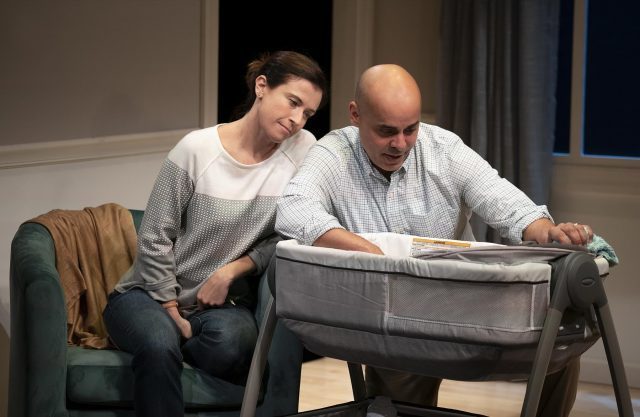
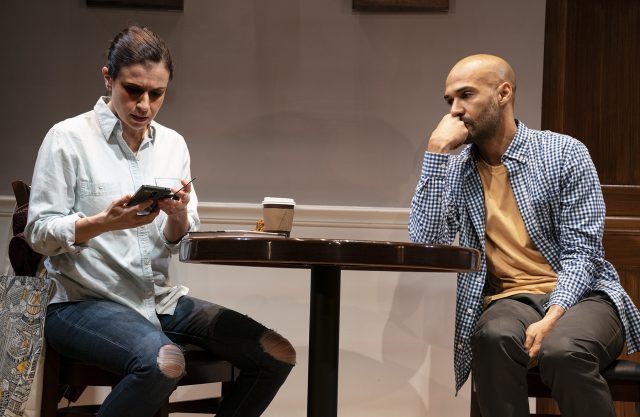
New parents (Hannah Cabell and Howard Overshown) marvel at their bundle of joy in The Underlying Chris (photo by Joan Marcus)

2econd Stage Theater
Tony Kiser Theater
305 West 43rd St. between Eighth & Ninth Aves.
Tuesday – Sunday through December 15, $30-$89
2st.com

In the summer of 2018, Second Stage presented the New York premiere of Tracy Letts’s magnificent Mary Page Marlowe, a ninety-minute intermissionless play in which six actresses portrayed the title character, with a few slight name changes, through eleven nonchronological scenes from her rather ordinary existence. Second Stage is currently running Will Eno’s The Underlying Chris, an extremely clever but not wholly successful eighty-minute intermissionless play in which six actors portray the title character, each time with a slightly different name, through twelve chronological scenes from Chris’s rather ordinary existence. I don’t bring this up to claim that The Underlying Chris is derivative of Mary Page Marlowe, but the similar structure and focus are uncanny as two of the theater’s best writers tackle a similar subject and format.

The Underlying Chris opens with a young girl (Isabella Russo) delivering exit information and introducing the show; she states: “As for the play, the subject is life on Earth. . . . A little more specifically, our story is — it’s a story about, let’s see . . . Identity? Change, maybe. Continuality, if that’s a word. Newness and renewal. Those are words. It’s a story about the moments that shape a life, and the people who shape a moment. And the things we don’t have names for. The essence, I guess, the spirit. And also, mystery. And, meaning.” Having set himself up for big-time responsibility, Eno then proceeds to follow the life of one person from infancy to burial, with a different actor in the title role in each scene, switching genders and color along with names as the protagonist matures from Chris, Christopher, Christine, Kris, and Kristin to Topher, Krista, Kit, Christiana, and Khris, dealing with tragedy, career choices, major and minor milestones, medical conditions, and other key moments that help determine who the character is, was, and will be.

(photo by Joan Marcus)

Louise (Hannah Cabell) and Christopher (Luis Vega) discuss their futures in Will Eno play (photo by Joan Marcus)

It’s not always immediately apparent in each successive scene who the “Chris” character is, but there are several threads that continue through the narrative to maintain continuity; in addition to the protagonist’s name, some kind of take on “Chris,” they experience twinges of back pain while also referencing elements from past scenes, which involve such other figures as Dr. Rivington (Howard Overshown), nurse Gabriella (Lenne Klingaman), young Philip (Nicholas Hutchinson), veterinarian Louise (Hannah Cabell), a radio host (Michael Countryman), amateur actor Roderick (Countryman), the elderly Reggie (Charles Turner), and daughter Joan (Russo and Nidra Sous La Terre). Arnulfo Maldonado’s sets change from a living room and a café to a hospital and a park bench, sliding to one side of the stage or the other as a horizontal black curtain opens and closes (not always all the way), as if the audience blinks and time and space magically shift. “I sometimes feel surprised, being here — like I walked through a door into someone else’s life,” Krista (Lizbeth Mackay) says. And Kristin (Sous La Terre) points out, “Bodies come and go, but the spirit, that’s what I was always interested in. Or, the soul, whatever it is, people’s ideas and feelings, the part of people that moves through the world and changes but also lasts,” which gets to the heart of Eno’s central concern: not so much humanity’s physical presence but our essence, our spirit. “I can see your spirit in these pictures. I see your spirit in you,” Jenny (Cabell) tells Christiana (Denise Burse) while looking at family photographs.

(photo by Joan Marcus)

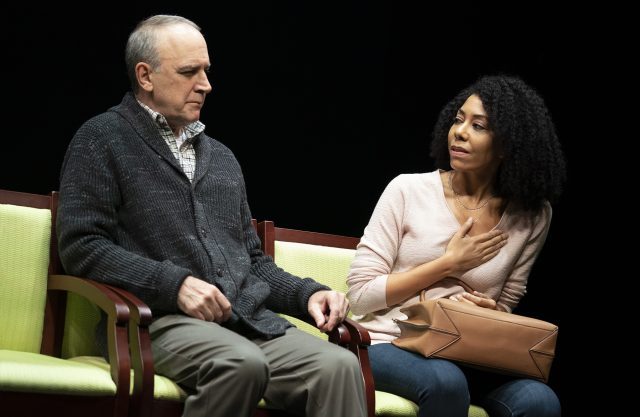
Kit (Michael Countryman) and Joan (Nidra Sous La Terre) have trouble at the DMV in The Underlying Chris (photo by Joan Marcus)

Directed by Tony winner Kenny Leon (A Raisin in the Sun, the complete August Wilson Century Cycle) The Underlying Chris drags too much, repeating itself and never connecting with the audience the way it so desperately wants to, seeming longer than its eighty minutes. The large cast is fine but no one makes that necessary impact, and the pace is choppy. Eno is a brilliant writer, as shown in such previous works as Thom Pain (based on nothing), The Open House, Wakey, Wakey, and his Broadway debut, The Realistic Joneses, displaying a sharp wit and a skillful cunning in storytelling and character development, but there’s a dissociation between the plot and characters in Chris that is never resolved, keeping us at too much of a distance. We never get a firm grasp on Christopher’s identity, and neither does he, which is part of the point but also leaves a dramatic gap. It’s also a bit confusing in that the story takes place in a timeless present; over the course of eighty years, there are no visible social, political, cultural, economic, or, perhaps most evident, technical advances. “Like with evolution, and most other good ideas, we will go forward looking backward, not knowing our destination until the day we get there, or years later or never,” the girl says in her introduction. Despite some engaging moments, The Underlying Chris doesn’t quite reach its desired destination.

MUCH ADO ABOUT NOTHING: SHAKESPEARE IN THE PARK

(photo by Joan Marcus)

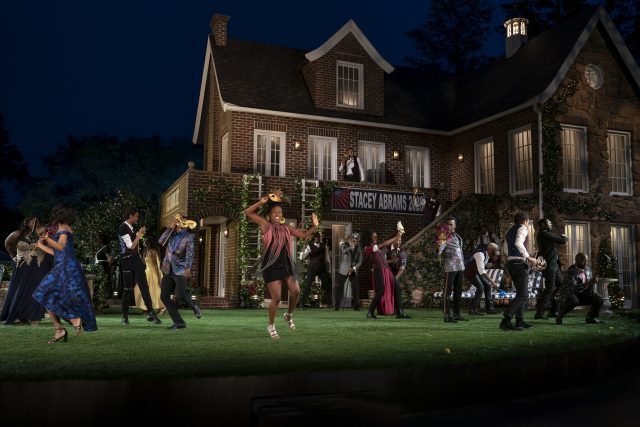
Kenny Leon moves Much Ado About Nothing to modern-day Atlanta in Shakespeare in the Park adaptation (photo by Joan Marcus)

Central Park
Delacorte Theater
Tuesday – Sunday through June 22, free, 8:00
shakespeareinthepark.org

Danielle Brooks gives a powerhouse comedic performance as Beatrice in Kenny Leon’s jaunty, rollicking adaptation of William Shakespeare’s ever-charming romantic comedy Much Ado About Nothing, which opened Tuesday night at the Public’s open-air Delacorte Theater in Central Park, where it continues through June 22. Leon has moved the proceedings to modern-day Atlanta, complete with cell phones, contemporary music, and an impressive car that pulls up at the back of Beowulf Boritt’s welcoming set — the large, grassy courtyard and four-story estate belonging to Gov. Leonato (Chuck Cooper), boasting a pair of red, white, and blue political banners declaring, “Abrams 2020,” referring to former Georgia gubernatorial candidate Stacey Abrams (who recently was in the audience). The show opens with Beatrice singing Marvin Gaye’s “What’s Going On,” soon joined by Leonato’s daughter, Hero (Margaret Odette), and her ladies-in-waiting, Ursula (Tiffany Denise Hobbs) and Margaret (Olivia Washington), singing “America the Beautiful,” a stark contrast highlighting the polarized state of our nation as the songs overlap. Following a brief protest march with signs condemning hate, the dapper Don Pedro (Billy Eugene Jones) arrives with his contingent after a military victory, including his close friend Count Claudio (Jeremie Harris), his guitar-strumming attendant, Balthasar (Daniel Croix Henderson), and the don’s brother, the bastard Don John (Hubert Point-Du Jour).

(photo by Joan Marcus)

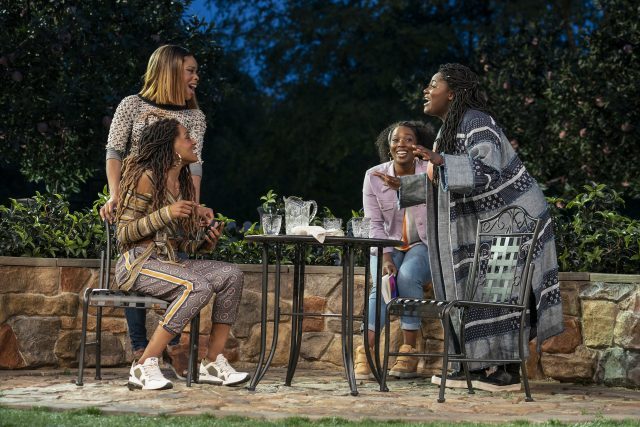
Beatrice (Danielle Brooks) gossips with her besties in Much Ado About Nothing in Central Park (photo by Joan Marcus)

Claudio immediately falls for Hero while Beatrice, Leonato’s niece, and Benedick (Grantham Coleman), a lord who fought alongside Don Pedro, throw sharp barbs at each other, neither in the market for a spouse. (The first time Beatrice says his name, she emphasizes the last syllable.) But Don John, who is no Don Juan, has decided that since he is miserable, no one else is to be happy, so he calls upon his henchmen, Borachio (Jaime Lincoln Smith) and Conrade (Khiry Walker), to stir up trouble and cast would-be lovers against one another. “I had rather be a canker in a hedge than a rose in his grace,” Don Pedro says. “Though I cannot be said to be a flattering honest man, it must not be denied but I am a plain-dealing villain. I am trusted with a muzzle and enfranchised with a clog; therefore I have decreed not to sing in my cage. If I had my mouth, I would bite; if I had my liberty, I would do my liking. In the meantime, let me be that I am, and seek not to alter me.” Mistaken identity, misunderstandings, a masquerade ball, spying, lying, and private letters all come into play in one of the Bard’s most beloved comedies.

Tony nominee Brooks (The Color Purple, Orange Is the New Black) is phenomenal as Beatrice, taking full advantage of her size, her vocal talents, and her expert timing. She moves and grooves across the stage, reciting her lines with an easygoing, conversational flow and rhythm, an innate sense of humor, and a magical command of the language that breathes new life into the Bard’s words. “I pray you, how many hath he killed and eaten in these wars? But how many hath he killed? For indeed I promised to eat all of his killing,” she proclaims early on. It’s all Coleman (Buzzer) can do to not get swept up in the hurricane that is Brooks; on the rainy night I went, he even took a hard spill on the wet ground, wiping out on his back but getting up quickly, able to joke about the nasty fall. (It reminded me of a special moment I saw in the previous Shakespeare in the Park production of the play five years ago, when John Glover, as Leonato, pulled off an unforgettable, far less dangerous maneuver after a storm.)

(photo by Joan Marcus)

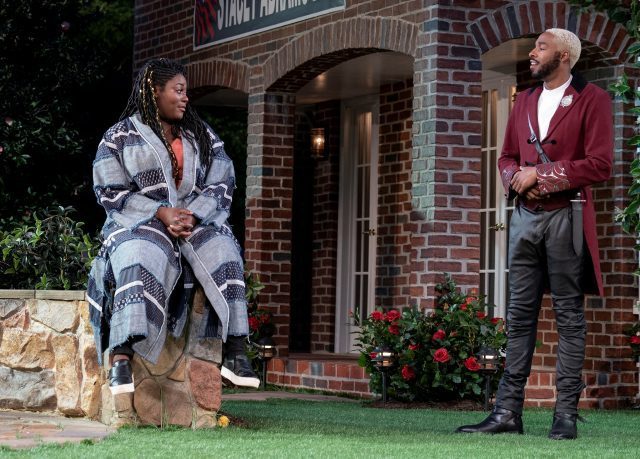
Beatrice (Danielle Brooks) and Benedick (Grantham Coleman) explore a love-hate relationship in Bard romantic comedy (photo by Joan Marcus)

Tony winner and longtime Atlanta resident Leon (American Son, A Raisin in the Sun) has the women take charge in this version, the men relegated to the back seat in the all-person-of-color cast. He even has a woman, Lateefah Holder, portray Constable Dogberry, although her shtick becomes too repetitive (but is very funny at first). Among the males, the always dependable Cooper (Choir Boy, The Piano Lesson) stands out, steady and forthright, while Odette (The Convent, Sign Me) is a sweetly innocent Hero. The fresh choreography is by Camille A. Brown, with snappy costumes by Emilio Sosa and original music by Jason Michael Webb. But at the center of it all is Brooks, who is in full command as a Beatrice for the ages.

(In addition to waiting on line at the Delacorte and the Public to get free tickets, you can also enter the daily virtual ticketing lottery online here. The play is almost never canceled because of bad weather, so going on a rainy day is a great idea, as a lot of seats become available due to no-shows.)

AMERICAN SON

(photo by Peter Cunningham)

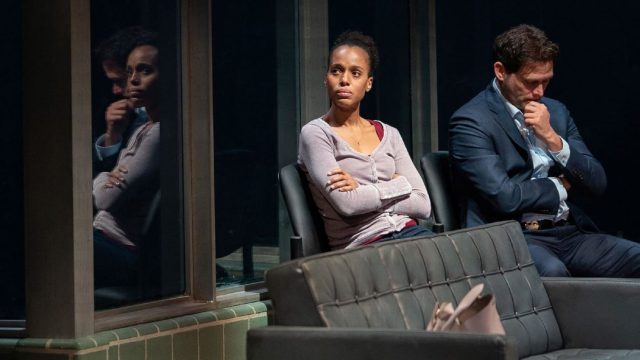
Kendra (Kerry Washington) and Scott (Steven Pasquale) reflect as they await important news in American Son (photo by Peter Cunningham)

Booth Theatre
222 West 45th St. between Broadway & Eighth Ave.
Tuesday – Sunday through January 27, $59 – $169
americansonplay.com

Christopher Demos-Brown’s American Son is a blistering, explosive play, a searing deep dive into systemic and institutionalized racism in contemporary America. The story takes place in real time in a Miami police station as a storm rages, torrents of water pouring down outside tall glass windows, mixing with ever-threatening thunder and lightning reminiscent of a horror movie. (The set is by Tony-winning design master Derek McLane, with sound by Peter Fitzgerald and lighting by Peter Kaczorowski.) It’s 4:12 in the morning, and Kendra Ellis-Connor is desperate to locate her eighteen-year-old son, Jamal, a solid kid who has not come home and is not answering his phone. She is frustrated with police officer Paul Larkin, who insists that Kendra wait until the public affairs liaison officer arrives for his shift at 8:00 to find out anything. Kendra’s estranged husband, Scott Connor, shows up and tries to force further information out of Larkin regarding Jamal’s whereabouts, but he is only mildly successful. Ultimately, the liaison officer, Lt. John Stokes, comes in early, but things don’t get any easier for Kendra and Scott, who are getting angrier by the minute, but not just at the cops.

(photo by Peter Cunningham)

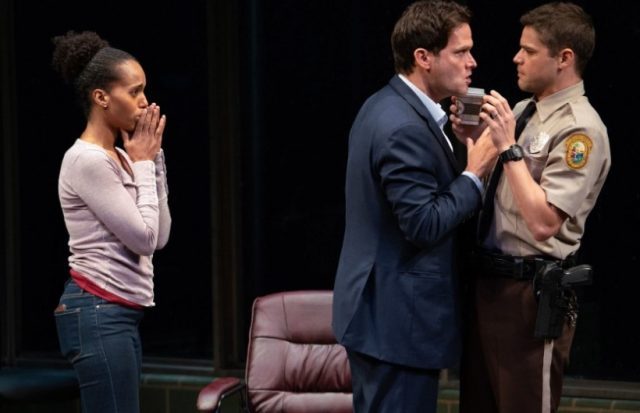
FBI agent Scott Connor (Steven Pasquale) has some choice thoughts for Officer Paul Larkin (Jeremy Jordan) as Kendra (Kerry Washington) looks on in scintillating play at the Booth (photo by Peter Cunningham)

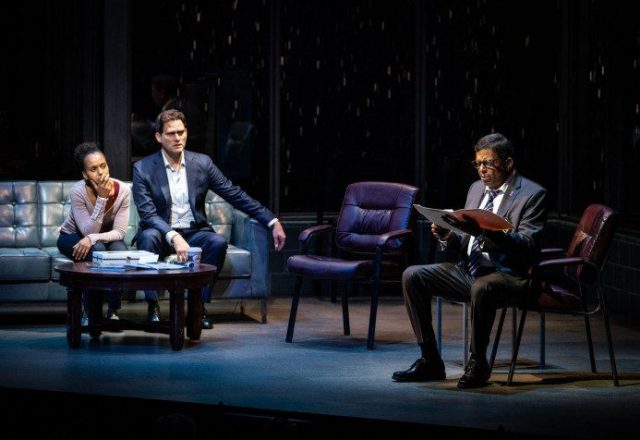
Color-blind casting might (deservedly) be all the rage on Broadway, but the color of each character’s skin is critical to the narrative in American Son as Demos-Brown and director Kenny Leon investigate ripped-from-the-headlines issues of identity, societal perceptions, stereotyping, racial profiling, ingrained prejudice, and cultural biases. Kendra (Kerry Washington) is a black psychology professor who says, “I don’t know I’ve had a sleep-filled night since that boy was born,” constantly fearful that something bad will happen to Jamal because of his race. Scott (Steven Pasquale) is a white FBI agent who wants his son to follow him into law enforcement, putting him on a path to attend West Point, but, not being black, Scott doesn’t share the same worries as Kendra, hoping, “This is just some frivolous nonsense. He probably just had his music cranked up too loud.” Officer Larkin (Jeremy Jordan) is white and has not been properly trained to handle this kind of incendiary situation, assuming that a black teenager out for the night must be part of a posse looking for trouble. “I completely understand your concern,” Larkin tells Kendra, who responds, “Respectfully, Officer — I don’t think you do.” Larkin adds, “Ma’am — I have kids too, OK?” “Any of ’em black?” Kendra says. And Stokes (Eugene Lee) is black, a seasoned officer who is not so quick to see things from Kendra’s or Scott’s points of view; “Settle down now. Settle down,” Stokes declares, but instead of calming the situation, he, well, continues to stoke the fire.

(photo by Peter Cunningham)

Kendra (Kerry Washington) and Scott (Steven Pasquale) listen intently to Lt. Stokes (Eugene Lee) in American Son (photo by Peter Cunningham)

A white civil trial attorney from South Florida whose previous plays (Fear Up Harsh, Wrongful Death and Other Circus Acts) have dealt with sociopolitical subjects involving different kinds of justice, Demos-Brown was inspired to write American Son — his Broadway debut — by real-life events and Ta-Nehisi Coates’s National Book Award winner, Between the World and Me, a letter the author pens for his adolescent son about what it’s like to grow up black in the United States. In fact, the script includes an epigraph from the book: “Race is the child of racism, not the father.” Black Tony-winning director Leon (A Raisin in the Sun, Stick Fly), a protégé of August Wilson’s, maintains a sizzling-hot pace, but he and Demos-Brown don’t take sides; all four characters are both guilty and innocent, and yet none of them are as well. The problem is bigger than just four people, each of whom gets to share their perspective. The audience, more racially diverse than at most Broadway shows, is also implicated, each person bringing his or her own personal history and biases with them; be prepared to hear laughs or gasps at certain times when you’re not reacting the same way as those sitting around you, the differences very much representative of the race of the audience member.

All four actors give dynamic, honest performances, led by Washington (Race, Scandal), a mother of two small children, a boy and a girl; at a postshow discussion the night I went, Washington talked about the fears black mothers have for their sons, something that brought even more intensity to her performance. (The play, which continues at the Booth through January 27 and boasts such producers as Nnamdi Asomugha, Jada Pinkett Smith, Shonda Rimes, Dwyane Wade, and Gabrielle Union-Wade, comes with a discussion guide from the Opportunity Agenda that addresses the concept of equal justice under the law, police-community relations, and racially motivated violence.) Pasquale (Junk, Rescue Me) finds just the right balance as Scott, who doesn’t get a pass just because he’s a white man who married a black woman and has a biracial teen. American Son wisely avoids clichés and melodrama, although there is some emotional manipulation, but it’s easy to look past that and immerse yourself in the onstage dilemma — and wonder what you would do if you were any of the four characters, or the most important missing fifth one, Jamal himself.

CHILDREN OF A LESSER GOD

(photo by Matthew Murphy)

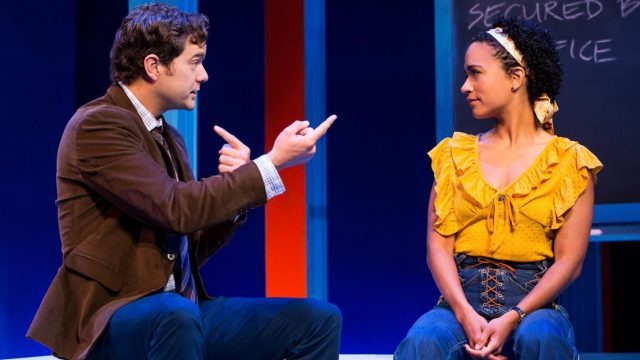
James Leeds (Joshua Jackson) and Sarah Norman (Lauren Ridloff) experience communications problems in Broadway revival of Children of a Lesser God (photo by Matthew Murphy)

Studio 54
254 West 54th St. between Seventh & Eighth Aves.
Tuesday – Sunday through May 27, $29-$159
www.childrenofalessergodbroadway.com

Every so often a previously successful play returns to Broadway in a revival that makes you wonder not only why it’s back but what the heck made it so special in the first place. Such is the case with Mark Medoff’s Children of a Lesser God, which just announced an early closing date of May 27 at Studio 54. Medoff wrote the play specifically for deaf actress Phyllis Frelich, loosely based on her real-life relationship with her husband, Robert Steinberg. The original 1980 production ran at the Longacre Theatre for more than two years and was nominated for four Tonys, winning Best Play, Best Actress (Frelich), and Best Actor (John Rubinstein). The British edition won the Olivier for Best New Play as well as Best Actress (Elizabeth Quinn) and Best Actor (Trevor Eve). And the 1986 film version was nominated for five Oscars, including Best Picture, and winning for Best Actress (Marlee Matlin). So went wrong this time around? Where should I begin?

(photo by Matthew Murphy)

There’s a whole lot of sitting around in ill-fated revival at Studio 54 (photo by Matthew Murphy)

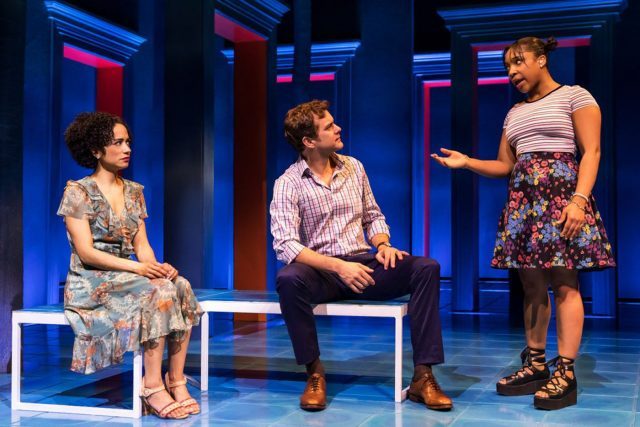
Kenny Leon’s revival is stultifyingly dull — dare I say tone-deaf — as it explores the relationship between James Leeds (Drama League–nominated Joshua Jackson), a speech teacher at a school for the deaf, and Sarah Norman (Tony-nominated Lauren Ridloff), a twenty-six-year-old maid at the school who refuses to verbalize and fiercely rejects any attempt to help her do so. Sarah sees learning to speak as a betrayal of the nonhearing world she is proudly a part of, while James can’t understand why she wouldn’t want to speak or even use the latest technology that might allow her to at least pick up vibrations of sound. Very quickly, James falls for Sarah — well, it’s more like he stalks her — which upsets Sarah’s best friend, Orin (John McGinty), as well as the jealous Lydia (Treshelle Edmond), both students at the school. It also alarms the principal, Mr. Franklin (Anthony Edwards). In their Broadway debuts, Jackson (The Affair, Fringe) speaks too loudly and enunciates too clearly, never varying his speech pattern regardless of what he’s saying to whom, and Emmy winner Edwards speaks too softly, making it hard to hear much of what he has to say. All signed words are spoken out loud by the hearing actor being signed to, while all spoken words are shown in supertitles that are not always in sync with what is being said, often slightly ahead of the action. Whether all this is deliberate or not — Is the hearing world out of sync with the nonhearing? Does the experience of the hearing audience in such straits echo the experience of the nonhearing, faced with bad closed captions? — it just doesn’t work here. The sappy songs by Stevie Wonder and Wings don’t help, nor does Branford Marsalis’s tepid incidental music. It all feels more like a Hallmark Hall of Fame movie of the week than a Broadway production with lofty ticket prices. Tony, Obie, Drama Desk, and Emmy winner Derek McLane’s set consists of multiple open doorways that lead nowhere, least of all the exit. The title of the play comes from the “Passing of Arthur” section of Alfred, Lord Tennyson’s Idylls of the King, which now doubles as the passing of this well-meaning but hackneyed revival, after a mere 23 previews and, coincidentally enough, 54 regular performances at Studio 54.

AUGUST WILSON MONOLOGUE COMPETITION

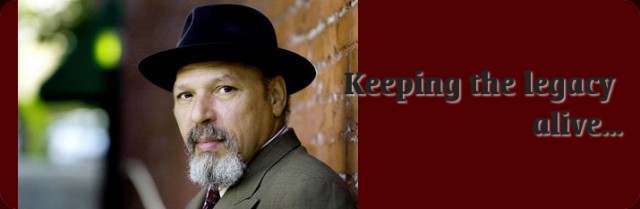
monologue competition helps keep August Wilsons legacy alive

Annual monologue competition helps keep August Wilson’s tremendous legacy alive

Who: High school students from Atlanta, Boston, Chicago, Los Angeles, New York, Pittsburgh, Portland, and Seattle
What: Seventh annual August Wilson Monologue Competition
Where: August Wilson Theatre, 245 West 52nd St. between Broadway & Eighth Ave.
When: Monday, May 4, free, 7:00
Why: The finals for the 2015 August Wilson Monologue Competition will take the stage May 4 at the August Wilson Theatre on Broadway, honoring the late, legendary playwright by performing two-to-three-minute excerpts from his works, the ten-part Pittsburgh Cycle that includes such modern classics as The Piano Lesson, Fences, Two Trains Running, Joe Turner’s Come and Gone, and Gem of the Ocean. The finalists, two from each city, will work with longtime Wilson collaborators Kenny Leon and Todd Kreidler on their monologue and also get the opportunity to take in Something Rotten! The judges for the annual event, which began in 2007, are Crystal Dickinson, Brandon J. Dirden, David Gallo, Stephen McKinley Henderson, and Pauletta Washington. The winner receives $1,500, with $1,000 for the runner-up and $500 for honorable mention. The evening will also include a live performance by musician Guy Davis.

HOLLER IF YA HEAR ME: AN ORIGINAL MUSICAL

(photo by Joan Marcus)

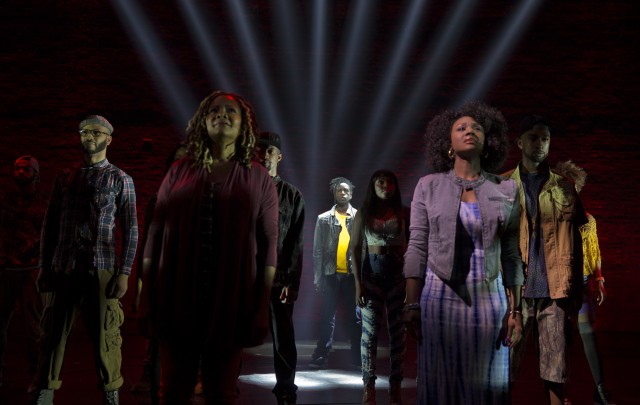
New musical uses Tupac Shakur’s lyrics to tell contemporary tale of hard life (photo by Joan Marcus)

Palace Theatre
1654 Broadway at West 47th St.
Thursday – Tuesday through January 4, $67.75 – $184.25
www.hollerifyahearme.com

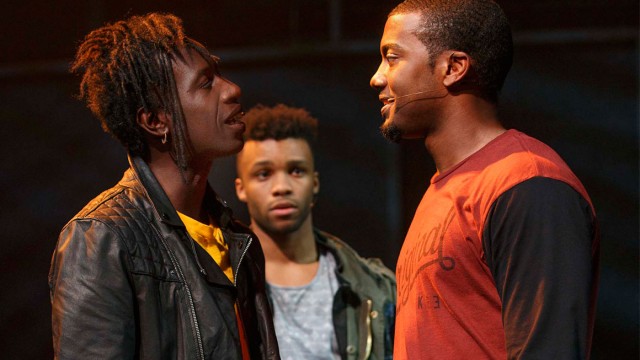
The new musical Holler If Ya Hear Me might be based on the songs of Tupac Shakur, but it does not tell the life story of the controversial West Coast rapper who was shot and killed in a Las Vegas drive-by in 1996 at the age of twenty-five. Instead, book writer Todd Kreidler — introduced to Shakur’s music by friend and mentor August Wilson — uses Shakur’s lyrics to share a contemporary tale about life in a ghetto in an unnamed Midwestern industrial city. As the play opens, John (Slam star Saul Williams) descends from the heavens in a jail cell, evoking Shakur’s several stints in prison, while delivering the East Harlem native’s “My Block,” soon joined by the company, setting the mood with the posthumously released song about guns, crack, black-on-black crime, unemployment, economic hardship, and racism. After his innocent brother, Benny (Donald Webber Jr.), is shot and killed, Vertus (Christopher Jackson) is determined to get even with the members of the 4-5 gang who took out Benny, angering his mother (Tonya Weston), alienating his girlfriend, Corinne (Saycon Sengbloh), and energizing young Anthony (Dyllon Burnside), who wants revenge as well. Meanwhile, the moody, humorless John is looking to go straight, getting a job working in Griffy’s (Ben Thompson) car-salvage business, where Benny used to work, planning with the white Griffy to get out of the neighborhood together. Through it all, a decrepit old man (John Earl Jelks) calls for peace by writing on walls and preaching through a megaphone.

John (Saul Williams) and Darius (Joshua Boone) get down to serious business as Anthony (Dyllon Burnside) looks on in HOLLER IF YA HEAR ME (photo by Joan Marcus)

John (Saul Williams) and Darius (Joshua Boone) get down to serious business as Anthony (Dyllon Burnside) looks on in HOLLER IF YA HEAR ME (photo by Joan Marcus)

The first act of Holler If Ya Hear Me is a mess, with a confusing narrative and point of view, a kind of mishmash of West Side Story and In the Heights, but director Kenny Leon (A Raisin in the Sun, Stick Fly) brings things together in act two, focusing more on the individual stories of John, Griffy, and especially Vertus, with stand-out performances by Williams, Thompson, and Jackson. Daryl Waters’s orchestrations too often emphasize Shakur’s background use of R&B elements, Broadway-fying such songs as “I Ain’t Mad at Cha,” “Me Against the World,” “Dear Mama,” and “Unconditional Love”; Wayne Cilento’s (Wicked, Jersey Girls) choreography is almost nonexistent; and Edward Pierce’s set design is essentially a bare stage with stoops and a fenced-in salvage show occasionally, sometimes randomly, wheeled in, but Leon and the company still manage to pull it all off in the end while setting a new high for the use of the N-bomb on the Great White Way. The Palace Theatre itself has been transformed for the show, with stadium seating in the front of the tiny orchestra, while the rear has been turned into an interactive exhibition curated by the National Museum of Hip-Hop.