Tag Archives: joyce theater

JIN XING DANCE THEATRE SHANGHAI: SHANGHAI TANGO

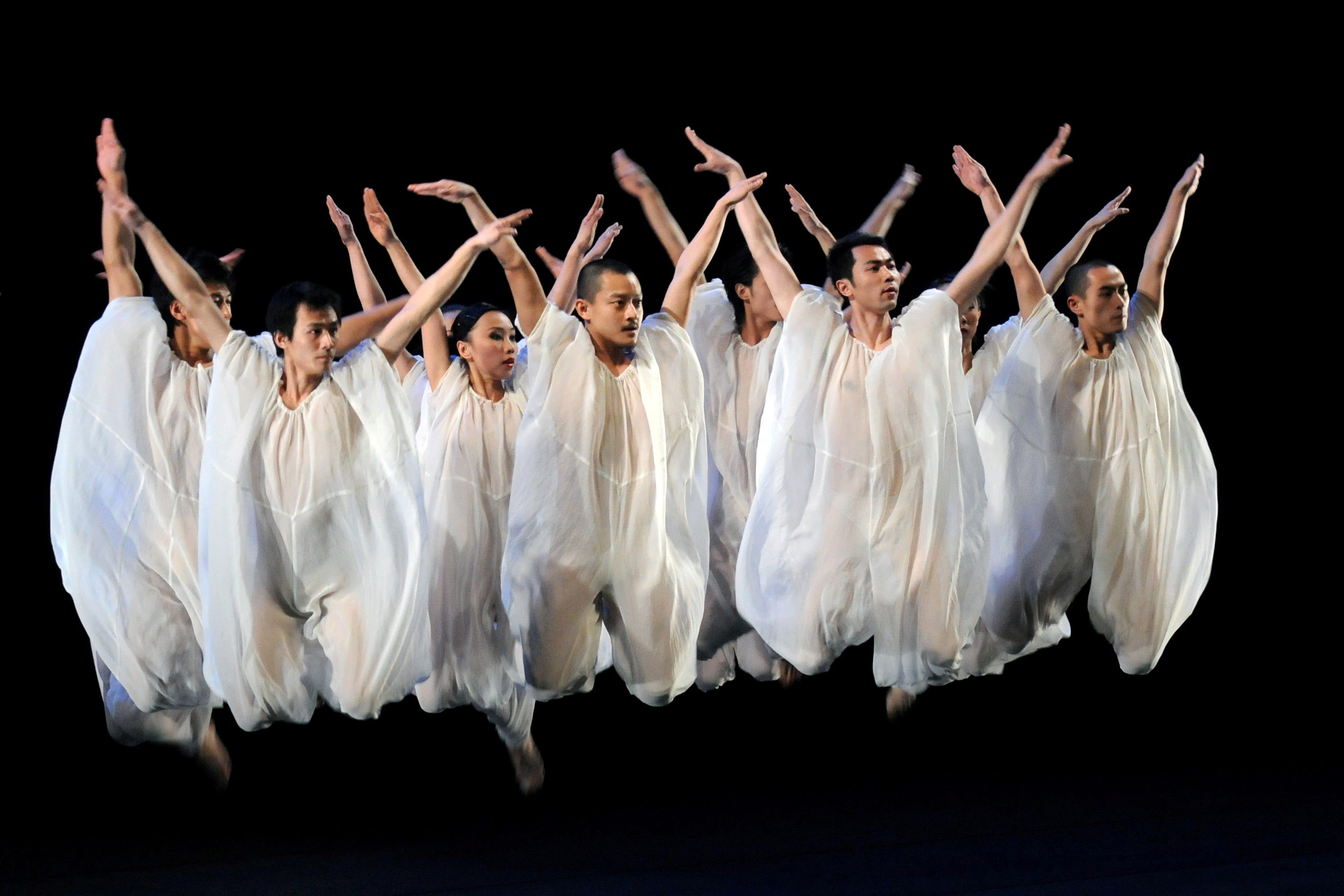
Jin Xing Dance Theatre Shanghai makes a very welcome return to the Joyce with SHANGHAI TANGO (photo by Angelo Palombini)

Joyce Theater
175 Eighth Ave. at 19th St.
January 31 – February 5, $10-$39
212-645-2904
www.joyce.org

Performing in New York City for the first time since undergoing gender reassignment surgery fifteen years ago, ballerina, choreographer, and People’s Liberation Army colonel Jin Xing leads her company, Jin Xing Dance Theatre Shanghai, in a lyrical, beautiful, stirring show at the Joyce. Jin Xing — who was born to Korean parents in Shanghai in 1967, is married to a German man, and has three adopted children — fills Shanghai Tango with ten exquisite works from throughout her career. The show opens with Liu Minzi spinning around and around on her toes, a light shining on her from above, casting a holy glow as twelve dancers pick up flowing white robes that surround her, the spirit of dance gathering her disciples as Dead Can Dance’s “The Host of Seraphim” plays. It’s a captivating narrative that prepares the audience for an evening of gorgeous set pieces featuring colorful, elegant costumes designed by Jin Xing, an eclectic score with music by Johann Strauss, John Williams, Astor Piazzola, and Rene Aubry, a lovely, unique movement vocabulary that mixes modern dance with ballet, numerous references to the Chinese Cultural Revolution, and a surprising sense of humor. In “Dance 02,” Dai Shaoting and Han Bin deliver a stunning pas de deux, spending much of the time with their backs on the floor, at one point Dai delicately balancing on Han with one leg on his chest and the other on his raised knee. In “Red Wine,” the male members of the company move around Jin Xing, who is seated in a chair, and ultimately give her the world’s biggest lap dance. In “Four Happiness,” Deng Mengna, Li Meilin, Liu Minzi, and Pang Kun dance on their knees all in a row, with Wang Peng’s lighting casting large shadows of the women on the back wall. In “Shanghai Tango,” Sun Zhuzhen, Han Bin, Wang Tao, and Liu Xianyi pose for an old-time family photo, but Sun is more interested in the man over her right shoulder than in her husband, who is sitting beside her. And all of that happens before intermission. The second act includes five more works that feature yet more dazzling costumes, breathtaking lifts, holds, and carries, sexy poses, a dazzling duet between Lu Ge and Liu Xianyi, such props as red fans, bicycles, and lilting sheets, and other inventive creations by Jin Xing and her remarkably talented company. Shanghai Tango, which continues at the Joyce through February 5 (with a postshow Dance Chat on February 1 and a preshow Dance Talk on February 2), marks the very welcome return of Jin Xing to New York; she’s been away far too long.

DAVID DORFMAN DANCE: PROPHETS OF FUNK

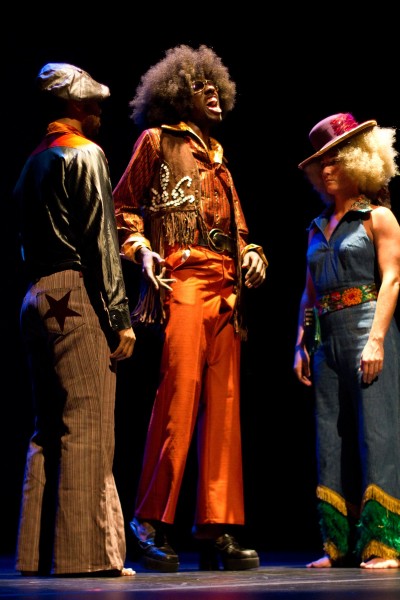
David Dorfman Dance gets funky at the Joyce (photo courtesy of Adam Campos)

David Dorfman Dance
Joyce Theater
175 Eighth Ave. at 19th St.
January 24-29, $10-$39
212-645-2904
www.joyce.org
www.daviddorfmandance.org

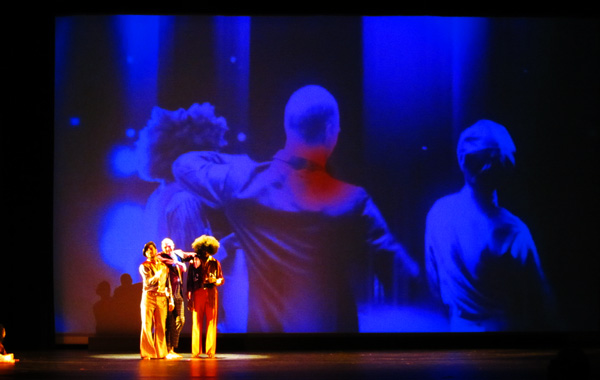
David Dorfman brings da funk — and so can you — in the New York-based choreographer’s latest evening-length work, Prophets of Funk, continuing at the Joyce through January 29. The conclusion to an unofficial trilogy that began with underworld and Disavowal, the new fifty-five-minute piece is an uplifting and energizing celebration of music, dance, and imagery set to the songs of late 1960s, early 1970s icons Sly & the Family Stone. Amanda Bujak’s hippie costumes make it look like performers Kyle Abraham, Meghan Bowden, Luke Gutgsell, Renuka Hines, Raja Kelly, Kendra Portier, Jenna Riegel, Karl Rogers, and Whitney Lynn Tucker stepped right out of the road company of Hair, featuring lots of frills as the dancers move and groove to such fab tunes as “Underdog,” “Stand,” “Love City,” “If You Want Me to Stay,” and, of course, “Dance to the Music” and “Everyday People.” Each dancer plays a different character, led by Kelly as Sly, sporting a big Afro, cool shades, and silver elevator shoes, and Abraham as the text-spouting comic relief. Dorfman himself occasionally cuts a diagonal path across the stage as the elder statesman of the group. With images of the real Sly Stone, wafting marijuana smoke, and psychedelia projected onto a large screen behind them, the company breaks off into several trios, duets, and solos, with particularly beautiful moments supplied by Tucker, Gutgsell, and Portier. Dorfman is actually listed as artistic director, with the entire company credited with the choreography, the dancers given the freedom to not only create their movement but to improvise every night, leading to performances that feel fresh and invigorating. The show does touch upon some of the more political aspects of Stone’s oeuvre, including dealing with racism in “Don’t Call Me Nigger, Whitey,” but for the most part Prophets of Funk follows Sly’s advice of “Ooh sha sha / We gotta live together.” At the end of the performance, the dancers and audience can indeed live together, as everyone is invited onstage to show off their “Scooby dooby dooby.” (Be sure to arrive early to take some dance lessons downstairs at the Joyce.)

DAVID DORFMAN DANCE: PROPHETS OF FUNK

David Dorfman Dance will dance to the music in PROPHETS OF FUNK at the Joyce

Joyce Theater
175 Eighth Ave. at 19th St.
January 24-29, $10-$39
212-645-2904
www.joyce.org
www.daviddorfmandance.org

For more than twenty-five years, David Dorfman Dance has been staging narrative and abstract works that deal with such subjects as political activism, violence, abolitionism, athleticism, and life and death. Among its many projects are underground, Lightbulb Theory, Subverse, and Approaching No Calm Counting Laughter. This week the company returns to the Joyce to present its latest work, Prophets of Funk — Dance to the Music, which harkens back to the late 1960s and early 1970s, set to songs by Sly and the Family Stone, featuring dancers Kyle Abraham, Meghan Bowden, Luke Gutgsell, Renuka Hines, Raja Kelly, Kendra Portier, Jenna Riegel, Karl Rogers, Whitney Lynn Tucker, and Dorfman. Performances run January 24-29, with a Dance Chat following the January 25 show.

PARSONS DANCE

The Parsons season at the Joyce includes the world premiere of ROUND MY WORLD (photo by Krista Bonura)

Joyce Theater
175 Eighth Ave. at 19th St.
Through January 22, $10-$59
212-645-2904
www.joyce.org
www.parsonsdance.org

David Parsons and Parsons Dance enter their second week at the Joyce, performing two programs through January 22. Program A consists of the world premiere of the Joyce commission A Stray’s Lullaby by guest choreographer Kate Skarpetowska (with music by Kenji Bunch), a duet from Step into My Dream, the world premiere of Parsons’s Round My World, featuring a digital score by Zoe Keating, and the repertory pieces Caught and Swing Shift, while program B includes Envelope, Hand Dance, the excerpt from Step into My Dream, Slow Dance, and the stroboscopic Caught and Swing Shift. Continuing its mission to “deliver positive, affirming and life-enriching experiences to audiences worldwide” that it began in 1985, Parsons Dance will also be holding a Summer Intensive Workshop from May 29 to June 16 and the David Parsons Master Choreography Workshop from June 18 to 22 at the Manhattan Movement & Arts Center.

MOMIX: BOTANICA

MOMIX’s BOTANICA is back at the Joyce for the holiday season

Joyce Theater
175 Eighth Ave. at 19th St.
Through December 31, $10-$59
212-645-2904
www.joyce.org
www.mosespendleton.com

For the third consecutive year, MOMIX is back at the Joyce with Botanica, an eco-friendly multimedia exploration of the four seasons, with the company’s talented cast taking on the roles of flora and fauna, ocean waves, trees, rocks, birds, hornets, a storm, and just about everything else under the sun — well, actually, including the sun. The inventive group, headed by artistic director and founder Moses Pendleton, creates pieces that range from the awe-inspiring to the gimmicky, constantly surprising audiences with amazing uses of light, sound, costumes, props, and the human body. Botanica proceeds through a cycle that that is divided into “Opus Cactus,” “Baseball,” “Passion,” “Lunar Sea,” “reMix,” and “Botanica” and features music by Peter Gabriel, Antonio Vivaldi, and birds.

CHUNKY MOVE: CONNECTED

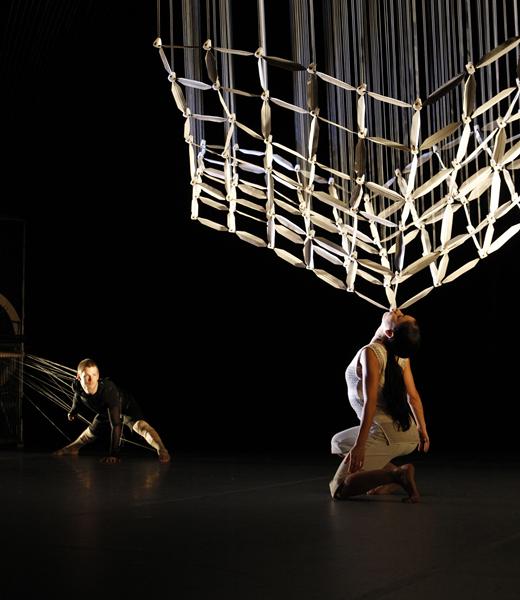
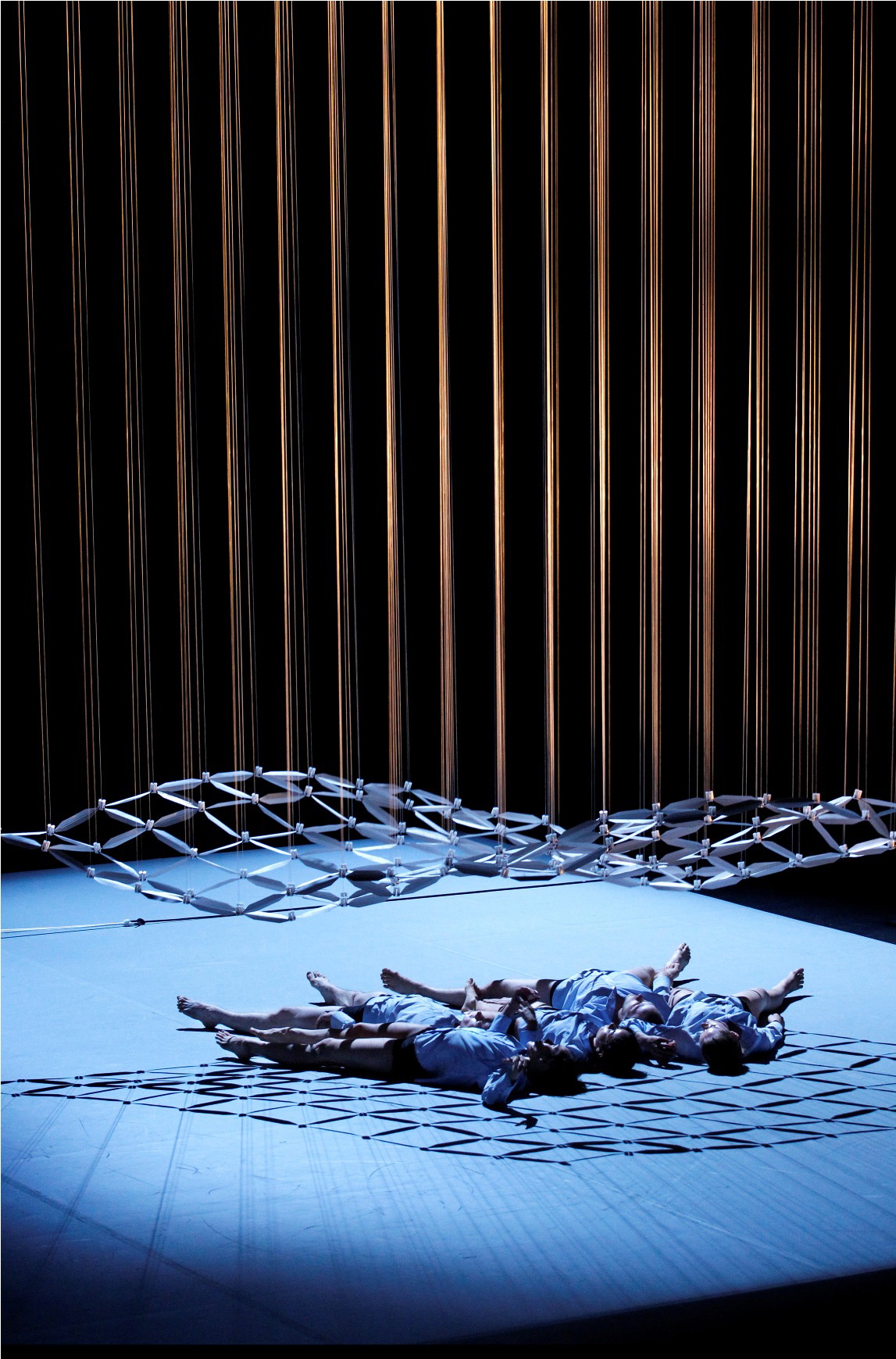
Chunky Move collaborates with sculptor Reuben Margolin in CONNECTED (photo by Jeff Busby)

The Joyce Theater
175 Eighth Ave. at 19th St.
November 2-6, $10-$49
212-691-9740
www.joyce.org
www.chunkymove.com

One of the most inventive and innovative contemporary dance companies in the world, Australia’s Chunky Move will be staging the New York premiere of the hour-long Connected November 2-6 at the Joyce. A collaboration between company artistic director Gideon Obarzanek and California sculptor Reuben Margolin, Connected eschews Chunky Move’s usual fascination with digital technology, kinetic motion tracking, and brilliant light displays in favor of a more hands-on approach to building a work of art with dancers and physical, graspable objects. We can’t get enough of this company, having seen the decidedly low-tech I Like This in April at Joyce SoHo, Mortal Engine at BAM in 2009, and Glow at the Kitchen in 2008. Connected is performed by five dancers — Sara Black, Ross McCormack, Marnie Palomares, Joseph Simons, and Harriet Ritchie — with music by Oren Ambarchi and Robin Fox, lighting by Benjamin Cisterne, and costumes by Anna Cordingley. “I was fortunate to meet Reuben Margolin in October, 2009 in Maine USA, where we were both invited to speak at PopTech, a conference focusing on social change through current innovations in science, art and economics,” explains choreographer Obarzanek in a program note. “There, I witnessed Reuben’s various sculpture machines made of wood, recycled plastic and steel transcend their concrete forms once they were set into motion and appear as waveforms in nature — a weightless kinetic flow. This was not dissimilar to the changeability of a dancer from a person to a moving figure when performing on stage. We were immediately drawn to each other’s work and began discussing possibilities for future collaboration.” Connected is the initial result of that partnership.

Dancers move in, under, and around Reuben Margolin’s sculpture in CONNECTED (photo by Jeff Busby)

Update: Chunky Move founder and artistic director Gideon Obarzanek and his Australian company regularly employ gadgetry in their works. Glow consisted of a single dancer performing on a motion-sensor floor that emitted a dazzling LED display, Mortal Engine let loose with a spectacular flurry of smoke and lasers and other special effects, and I Like This was built around a group of individuals toying with old-fashioned handheld lights. For his latest work to come to New York, Connected, Obarzanek has collaborated with California sculptor Reuben Margolin, who has designed a large-scale loomlike object, complete with spinning wheel, that lies at the heart of the evening-length piece. Four dancers dressed in black (Ross McCormack, Harriet Ritchie, Joseph Simons, and Sara Black) and one in white (Marnie Palomares) move about the dominant kinetic installation, with McCormack, soon joined by Palomares, adding white pieces of recycled plastic to the bottom of a cubelike structure composed of hundreds of wires hanging from above while the other dancers whirl their arms and writhe on the floor to Oren Ambarchi and Robin Fox’s electronic score, which at times seems to include homemade DIY percussion sounds. When several of the dancers are attached to the wires coming out of the wheel so that every surge backward or forward, every arm lift and twist, alters the shape of the cube, Palomares moves beneath it, as if she is creating the resulting waves and forms herself. It’s an unusual and exciting sight, but the narrative shifts about halfway through as the dancers change outfits and become museum security guards protecting a work of art, talking about their jobs and saying things like, “Oh, I could do that” and “I’m never bored because I’ll always find something to do.” Unfortunately, this second half of Connected is far less interesting than the first section, as if Obarzanek wasn’t quite sure what else to do with Margolin’s sculpture, deciding to call attention to its artiness instead of creating more dances around and within it. Still, there’s much to admire about Connected, which also requires the audience to remain connected; there is no intermission during the sixty-minute piece, and the audience is told beforehand that if they leave the theater at any time during the performance, they will not be allowed back in.

TWI-NY TALK: PASCAL RIOULT

The always elegant Pascal Rioult will present two new works and repertory favorites at the Joyce this week

The Joyce Theater
175 Eighth Ave. at 19th St.
June 14-19, $10-$49
212-691-9740
www.joyce.org
www.rioult.org

New York City–based French choreographer Pascal Rioult, who established himself as a performer dancing with May O’Donnell, Paul Sanasardo, and, most famously, Martha Graham in the late 1980s and early 1990s, formed his own company in 1994 and has been challenging the precepts of contemporary dance ever since. Favoring sensual movement set to classical music, Rioult has put together such thematic evenings as “The Ravel Project,” “The Stravinsky Program,” and “Bare Bach” that combine new works with reimagined and reinterpreted classics. For his upcoming season at the Joyce, running June 14-19, he will be presenting two programs: one consisting of the all-Bach Views of the Fleeting World (“The Art of Fugue”), City (“Sonata for Violin and Harpsichord #6 in G major”), and the world premiere of Celestial Tides (the Brandenburg Concerti), the second, performed to live music, featuring Black Diamond (Stravinsky), Bolero (Ravel), and the new On Distant Shores, a beautiful dance about Helen of Troy (a sparkling Charis Haines) with a commissioned score by Pulitzer Prize–winning composer Aaron J Kernis. After watching a sweaty rehearsal of On Distant Shores and Celestial Tides on an impossibly hot day, twi-ny met with the former track and field athlete, who graciously agreed to participate in a twi-ny talk as he prepared for his latest New York season.

twi-ny: You’ve devoted previous evenings to Ravel, Stravinsky, and Mozart, and you will be presenting a night of Bach at the Joyce. What are some of the specific challenges, as well as joys, in interpreting Bach onstage?

Pascal Rioult: I have always loved Bach’s music, instinctively and without understanding where the magic came from. It is specifically because of my intense work with the music of two great composition masters, Ravel and Stravinsky, in the past eight years that I felt it was time to “go to the source” of contrapuntal music and try to understand the great mystery of “Harmony.” (“Mysterium Harmonicum” was at the time of Bach an art and philosophy theory believing that there was some sort of mysterious forces that kept the Universe in balance and created a “Music of the Spheres” — a Divine Harmony.)

I love this concept in Art as in Life (I called the closing piece of the Bach program Celestial Tides). Certainly Bach’s mastery of counterpoint must come very close to this Divine Harmony.

But I also want with my dances to show that Bach’s music, contrary to common belief, is unbelievably rich emotionally.

twi-ny: Which composer might you have your sights set on next?

PR: I am not sure yet about which composer will be next, although I love Russian music and have not used it yet.

twi-ny: You also have the new series “Dance to Contemporary Composers,” which includes a newly adapted composition by Aaron J Kernis that will be performed live at the Joyce. How did that collaboration come about?

PR: It is time for me to work with contemporary composers (living composers). On the other hand, I suffer from not being able to have live music for my performances, which makes such a difference. So I decided to try to get support for the project of commissioning new music and have it played live for the next three years.

I have known and admired Aaron J Kernis’s music for many years, and we had wanted to collaborate for a while but did not get the opportunity yet. His music fits my concerns about the classical form as well as being filled with emotional content. I discussed with him my idea about a piece based on the character of Helen of Troy that I described as a “redemption fantasy.” We had to portray in a few minutes the epic of the Trojan war for the male heroes, then slip into the dream world created by Helen’s imagination and finish with a way to redemption. I knew it would be very rewarding to work with Aaron, and it has been a great collaborative experience resulting in a brilliant piece of music.
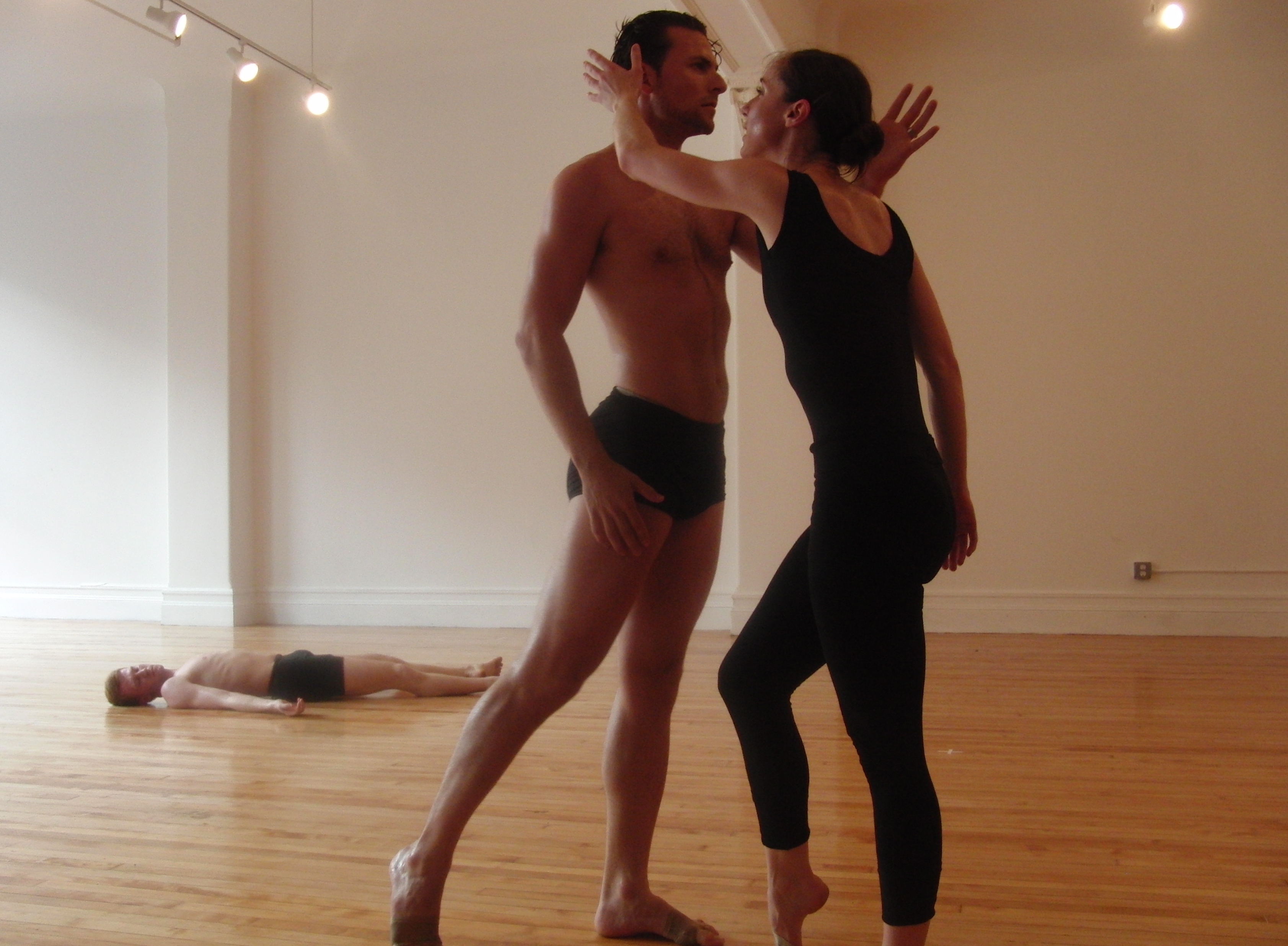
Michael Spencer Phillips and Charis Haines get hot and heavy rehearsing ON DISTANT SHORES in preparation for world premiere at the Joyce (photo by twi-ny/mdr)

twi-ny: What is it about Helen that drew you to her?

PR: I have always thought that Helen of Troy got a wrongful reputation. She would have been the cause of one of the most horrible wars that ever was, because she left her husband for another man. Was it not as usual the men’s unrelenting need of violence and conquest that drove them to Troy and made Helen a convenient pretext?

I found in the Euripides play Helen a similar version of the fact/myth. The mischievous gods had made a likeness of Helen from the clouds and that is the mirage that Paris took away to Troy, and it is for that “mirage” that so many lives were lost.

It was time for me to redeem Helen.

twi-ny: In addition to the obvious physical contact, your dancers make extraordinary, very emotional eye contact with one another while performing. Is that something you teach them? How important is that when you are choreographing a piece?

PR: As a matter of fact, I never give the dancers direction about expressions. On the contrary, I usually keep them from using facial expressions at all. Dancers do not need it because the expression comes forth through the body itself, from the inner core (you could say the inner self). Then the energy that creates the appropriate expression radiates towards the outside (including, at last, the face). You see, that is what we call “radiance,” “projection.” . . . You cannot help it if it comes from the right place. You don’t need to “put it on” and I don’t need to teach it.

I learned that from my mentor, Martha Graham.