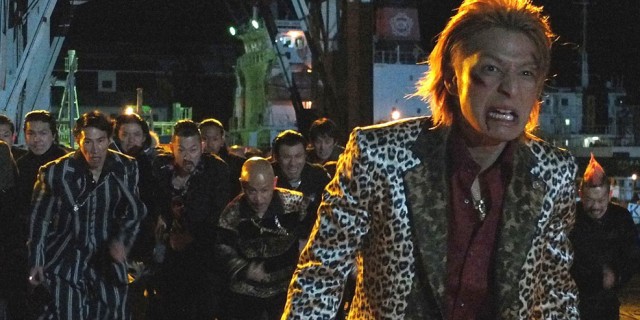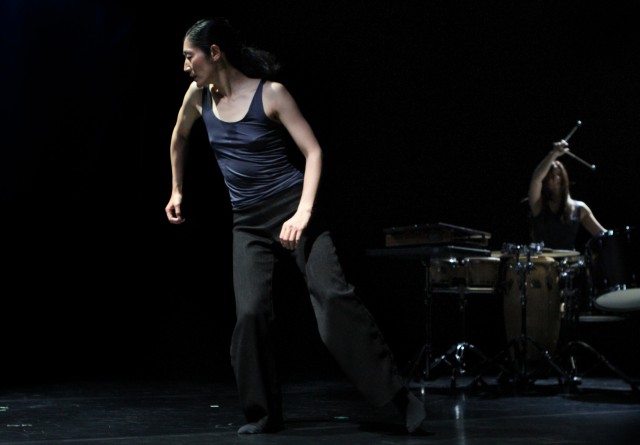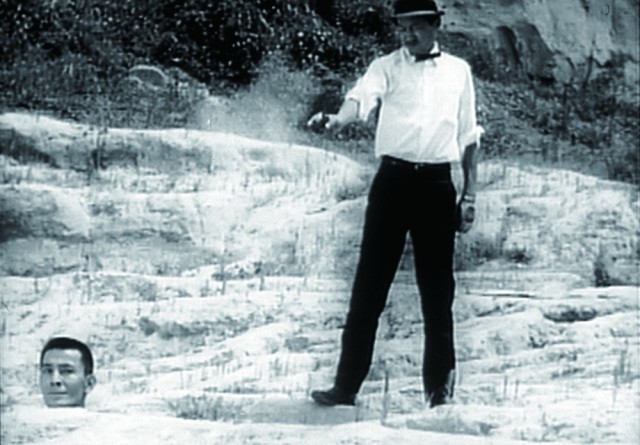
Atsushi Yamatoya’s cult pink film INFLATABLE SEX DOLL OF THE WASTELANDS features some mind-blowing visuals
INFLATABLE SEX DOLL OF THE WASTELANDS (KOYA NO DATCH WAIFU) (Atsushi Yamatoya, 1967)
Japan Society
333 East 47th St. at First Ave.
Saturday, October 18, 7:00
Festival runs monthly October 18 – February 20
212-715-1258
www.japansociety.org
 As if the title of Atsushi Yamatoya’s rarely shown 1967 cult flick wasn’t enough — it doesn’t get much better than Inflatable Sex Doll of the Wastelands — the fetishistic Japanese noir pink film has intriguing echoes of Welles’s Touch of Evil, Godard’s Alphaville, Marker’s La Jetée, Teshigahara’s Woman in the Dunes, and Dalí and Buñuel’s Un Chien Andalou. Yamatoya, who also directed Season of Betrayal, The Pistol That Sprouted Hair, and Trap of Lust and cowrote Branded to Kill (among many others), merges the crime genre with shaky, surreal flourishes courtesy of cameraman Hajime Kai, but the result is a violently misogynistic film that is often hard to watch, filled with rape, abuse, and impossible-to-decipher plot twists. In the middle of the desert, Naka (Masayoshi Nogami), a real estate agent, has hired Jō, a hitman (Yūichi Minato), to rescue his lover and employee, Sae (Noriko Tatsumi), and kill a gang of thugs who are sexually terrorizing her. Jō is soon facing his old enemy Kō (Shōhei Yamamoto) in a showdown that happens every day at three o’clock. There are enough phone calls and crawling ants to make Dalí proud, plenty of excess nudity, a great jazz score by Yōsuke Yamashita, and a hysterical moment that at first appears to be a still shot but turns out to be the characters trying to freeze, but it’s hard to get past the outright brutal treatment and victimization of every woman in the film. Inflatable Sex Doll of the Wastelands is screening October 18 at 7:00 at Japan Society, opening the series “The Dark Side of the Sun: John Zorn on Japanese Cinema,” and will be followed by a reception commemorating filmmaker Koji Wakamatsu, one of Yamatoya’s regular collaborators, who passed away in October 2012.
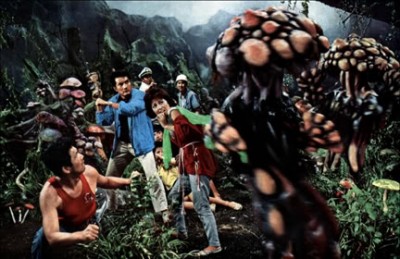
Japan Society series curated by John Zorn includes ATTACK OF THE MUSHROOM PEOPLE
The series, curated by electronic music pioneer John Zorn, continues once a month through February with Teinosuke Kinugasa’s Crossroads (with live shamisen accompaniment by Yumiko Tanaka), Yoshimitsu Morita’s Top Stripper, Ishiro Honda’s Attack of the Mushroom People, and the U.S. premiere of the made-for-television Nagisa Oshima’s It’s Me Here, Bellett, preceded by eight shorts by Osamu Tezuka. “I had been a huge fan of Japanese music, art, and film since the early 1960s, but late night Tokyo TV provided a peek into an entirely different world outside the classic art film masterpieces of Ozu, Mizoguchi, Kurosawa, and Inagaki,” Zorn explains in his curator statement. “It was a revelation to discover that Oshima’s Cruel Story of Youth and The Sun’s Burial were not so much an isolated vision but actually two examples of an entire cinematic genre, and that directors like Seijun Suzuki, Kinji Fukasaku, Toshio Masuda, Yasuzo Masumura, Teruo Ishii, and others had made incredible and uncompromising films that spoke as much about the Japanese psyche as origami, noh theater, or the tea ceremony ever had. . . . For me, the experimental, adventurous, and uncompromising side of any society is often the home of the deepest truths, and these films each hold their truths to an often uncomfortable extreme. I hope you enjoy the (occasionally blinding) intensity of ‘The Dark Side of the Sun.’”
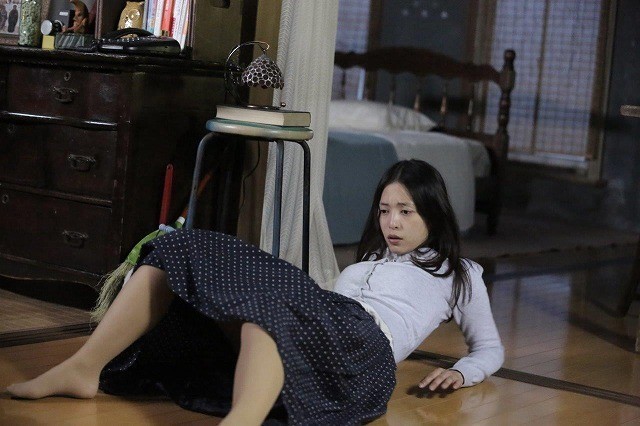
 Former nun Frances-ko (Mayuko Iwasa) has problems with God and her vagina in writer-director Ryoko Yoshida’s bizarre, warped comedy The Passion, which has its international premiere July 18 at Japan Society’s Japan Cuts: The New York Festival of Contemporary Japanese Cinema. After getting hit by a car, the would-be model is possessed by a male spirit (Kanji Furutachi) who lives inside her nether regions and brutally insults her for remaining a virgin, unable to get any man to sleep with her. Somewhat of a simpleton who develops a special power in her right hand, Frances-ko can’t take control of her life, even when she sees the man she likes, Cus (Yasushi Fuchikami), hooking up with her best friend, With-me (Kumiko Ito). Meanwhile, the dude in her genitals, whom she names Mr. Koga, keeps letting her have it. Relatively nonplussed by the ridiculousness of it all, Frances-ko asks such questions as, “What does it mean to feel?” and “What does being loved feel like?,” trying to elude her deep loneliness and sense of utter and complete unworthiness. The oddities are also evident in Otomo Yoshihide’s wildly inventive score, which references traditional Japanese music as well as Jewish klezmer. Based on Kaoruko Himeno’s 1997 novel, The Passion, Yoshida’s follow-up to 2004’s Love Twisted regularly makes no sense at all, and its mannered abstruseness often becomes extremely frustrating, but there’s just something about it, about Iwasa, that keeps you watching, wondering just what the hell is going to happen next. Japan Cuts continues through July 20 with such other films as Aya Hanabusa’s Tale of a Butcher Shop, Keisuke Yoshida’s My Little Sweet Pea, Azuma Morisaki’s Pecoross’ Mother and Her Days, and Katsuhito Ishii’s Hello! Junichi.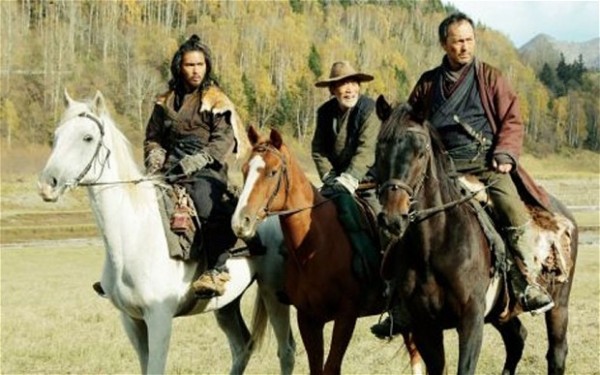
 For more than half a century, Hollywood has remade a plethora of Asian films, from The Magnificent Seven (Seven Samurai) to The Departed (Infernal Affairs), from Shall We Dance? (Sharu wi Dansu?) to The Grudge (Ju-On), among so many others. But there’s a relatively new trend in which Japan, Korea, and China are now remaking American films, including Ghost: Mouichido Dakishimetai (Ghost), Wo Zhi Nv Ren Xin (What Women Want), and Saidoweizu (Sideways). One of the latest, and best, is Japanese-born Korean director Lee Sang-il’s spectacularly honest and faithful remake of Clint Eastwood’s 1992 Oscar-winning revisionist Western, Unforgiven — in some ways returning the favor of Eastwood’s having starred in Sergio Leone’s 1964 spaghetti Western A Fistful of Dollars, a remake of Akira Kurosawa’s Yojimbo. In Unforgiven, Ken Watanabe, who was nominated for an Academy Award for his performance in The Last Samurai and starred in Eastwood’s Letters from Iwo Jima, plays Jubei Kamata, the Japanese version of Eastwood’s William Munny.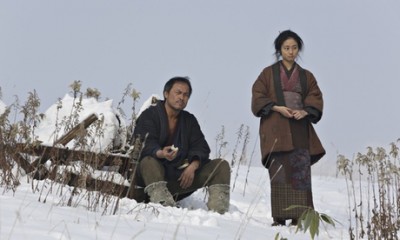
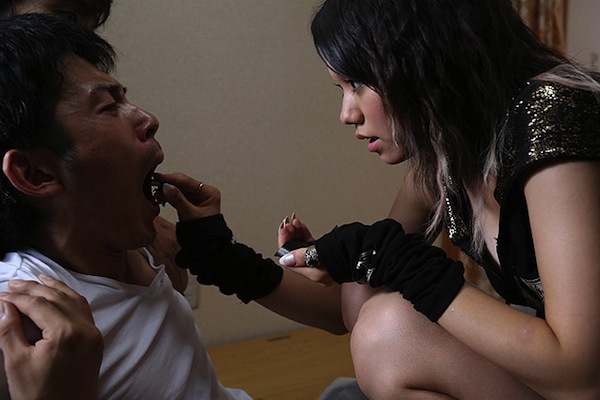
 It might take a while for the two seemingly disparate narratives to come together in Sion Sono’s totally awesome