UNDER THE RADAR: KANJINCHO
Japan Society
333 East 47th St. at First Ave.
January 8–11, $63 japansociety.org utrfest.org
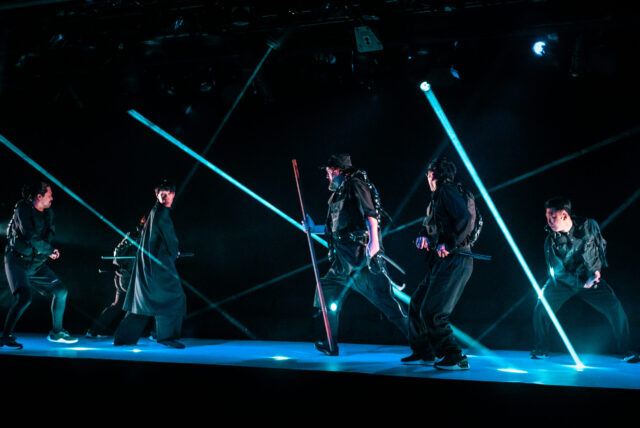
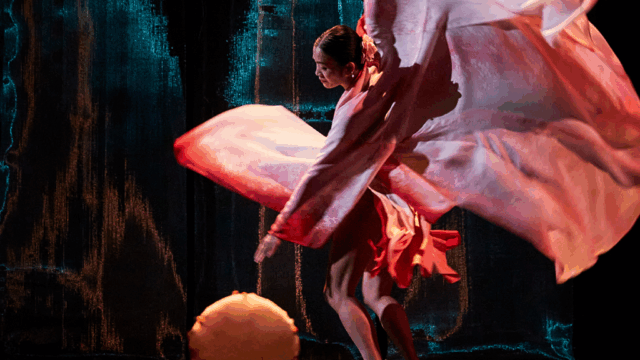
Kinoshita Kabuki makes its North American debut at Japan Society with a rousing adaptation of the 1840 Kabuki classic Kanjincho (“The Subscription List”), reimagining it as a contemporary hip-hop and pop-culture-infused theatrical experience.
Based on the Noh play Ataka, the original Kanjincho was written by Namiki Gohei III, with nagauta songs by Kineya Rokusaburo IV and choreography by Nishikawa Senzo IV. Company founder Yuichi Kinoshita has modernized the text, with a new score by Taichi Kaneko and movement by Wataru Kitao, resulting in a tense and thrilling eighty-minute drama about loyalty, revenge, and the borders that separate people not only geographically but by race, gender, class, and power in the past and present.
Inspired by actual twelfth-century events, Kanjincho tells the story of half brothers Lord Minamoto-no Yoritomo and General Minamoto Yoshitsune around the time of the Genpei War. Yoritomo has become the first shogun of the Kamakura shogunate, but he distrusts the motives of the military hero Yoshitsune (Noemi Takayama) and has demanded his capture. Yoshitsune, disguised as a porter, heads out on the seldom used Hokurokudō road with the brave and loyal Benkei (Lee V) and four shitenno (armed retainers), Kamei Rokuro (Kazunori Kameshima), Kataoka Hachiro (Hiroshi Shigeoka), Suruga Jiro (Yuya Ogaki), and Hitachi (Yasuhiro Okano), who are pretending to be mountain priests collecting donations on their way to repair Todaiji Temple in Nara. In fact, they are seeking safety in Michinoku with the Fujiwara clan.
When they reach the Ataka Barrier checkpoint, one of many set up throughout Japan to stop Yoshitsune, they are met by Mr. Togashi (Ryotaro Sakaguchi) and his four guards (Kameshima, Shigeoka, Ogaki, and Okano), who are determined to bring Yoshitsune back and behead him in front of Yoritomo. Togashi has been told that Yoshitsune is traveling with a group of fake mountain priests, so he is suspicious of them. “I’m gonna make every last damn mountain priest grovel at Mr. Togashi’s feet!” one of the guards declares.
Togashi decides to test Benkei with a series of questions about their mission and Buddhism that turns into a sensational verbal duel in which Benkei shows off his considerable mental acuity, impressing Togashi, who is leaning toward letting them pass even as one of his guards believes that the lowly porter is Yoshitsune. The cat-and-mouse game continues through a picnic with a transistor radio and contemporary snacks, the four shitenno breaking out into a J-pop boy band, and Benkei enjoying a whole lot of sake.
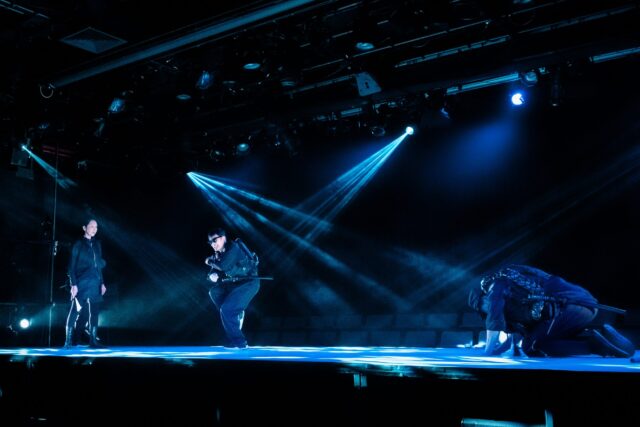
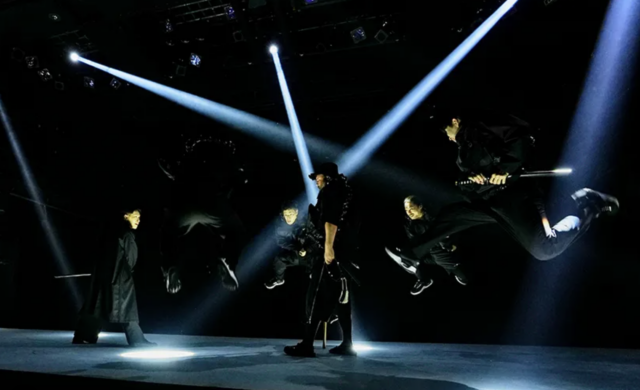
Beautifully directed and designed by Sugio Kunihara (Tokaido Yotsuya Kaidan,Shin Suikoden), Kanjincho — the English title, “The Subscription List,” refers to the scroll of supposed temple donors Togashi asks Benkei to reveal — takes place on a raised horizontal hanamachi (“flower path”) platform behind which two rows of the audience sit. The characters are dressed by Haruki Okamura in modern-day black militaristic gear except for Yoshitsune, who wears a wide-brimmed hat and carries a large walking stick, and Togashi, who is in more regal attire. The sound, by Daisuke Hoshino and Chiharu Tokida, includes moments of silence amid forest noises and Kaneko’s loud electronic and rap score.
Lighting designers Masayoshi Takada, Arisa Nagasaka, and Naruya Sugimoto nearly steal the show with spectacular effects, from pinpoint laserlike beams, slow, shadowy atmospheres, and an occasional subtle white bar on the floor that represents the numerous barriers separating the characters. “No matter how much I care about you / I can’t hold on to you / because of the borderline / You’re right next to me / but still so far away,” the pseudo–boy band sings in Japanese, except for the word borderline, which they say in English, connecting East and West. The East-West relationship is further developed by Kitao’s choreography, which incorporates traditional kabuki (primarily by Takayama) and hip hop, as well as by the casting of Benkei, portrayed by the outstanding Lee V, a caucasian poetry slam champion who was born in the United States; he evokes David Harbour as Sheriff Hopper in Stranger Things.
At its heart, Kinoshita’s adaptation attempts to break down barriers without preaching, even as the shitenno proclaim, “Equality for all!” and “Everyone’s the same! No more discrimination!” Having the same four men play the shitenno and the guards, running from one side of the stage to the other to indicate who they are without changing costumes — one actor apologizes for coughing first as a shitenno, then as a guard, equating the two despite their being enemies — packs a powerful message, especially in America today, as ICE agents patrol the streets of major cities rounding up citizens and legal and illegal immigrants alike.
Kunihara and Kinoshita may be delivering a warning, but they do so with a masterful sense of fun that transcends all our differences.
[Mark Rifkin is a Brooklyn-born, Manhattan-based writer and editor; you can follow him on Substack here.]
Elevator Repair Service’s Ulysses is a highlight of the January performance festival season (photo by Maria Baranova)
Every January, many of us begin the new year with resolutions to make positive changes in our lives; I find the best way to start that is by checking out the latest in cutting-edge and experimental theater, music, dance, opera, film, and other forms of entertainment. Performance festivals abound this month, at tiny venues you’ve never heard of, places you’ve always wanted to go to but haven’t yet, and well-known spaces you haven’t been to in years.
You now have the chance to fill those voids at such festivals as Under the Radar, Prototype, Exponential, Out-Front!, Live Artery, Winter Jazzfest, New Ear, the Fire This Time, and PhysFestNYC, none of them costing nearly as much as a Broadway show. As sound designer Mark Anthony Thompson says in the below video, “Get out of your house and be with people.”
Here are only some of the highlights of this exhilarating time to try something that might be outside your comfort zone — or right up your alley.
UNDER THE RADAR: IN HONOR OF JEAN-MICHEL BASQUIAT
New York Theatre Workshop
79 East Fourth St. between Second & Third Aves.
Tuesday – Sunday, January 7–18, $35 www.nytw.org utrfest.org
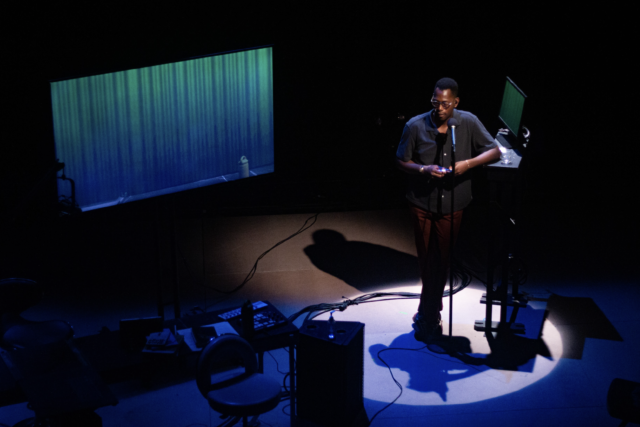
Obie-winning actor, playwright, rapper, and director Roger Guenveur Smith has staged such solo shows as A Huey P. Newton Story, about the founder of the Black Panthers, Frederick Douglass Now, in which he embodies the nineteenth-century abolitionist and orator, and Juan and John, which explored the real-life 1965 fight between Major League pitcher Juan Marichal and catcher John Roseboro. For the 2026 Under the Radar festival, he will perform In Honor of Jean-Michel Basquiat, about his friendship and collaboration with the highly influential Brooklyn-born artist and musician who died of a heroin overdose in 1988 at the age of twenty-seven. Smith and Basquiat met during their LA club years in the 1980s; Smith created the character of Smiley, inspired by Basquiat, for the 1989 Spike Lee film Do the Right Thing. The sixty-minute piece features live sound design by Mark Anthony Thompson; the January 8 and 15 performances will be followed by a Q&A.
UNDER THE RADAR: KANJINCHO
Japan Society
333 East 47th St. at First Ave.
January 8–11, $63 japansociety.org utrfest.org
Yuichi Kinoshita reimagines the 1840 Kabuki classic Kanjincho (“The Subscription List”) as a contemporary hip-hop and pop-culture-infused theatrical experience, making its North American premiere at Japan Society January 8–11 as part of Under the Radar. The eighty-minute show is set in the twelfth century, around the Genpei War, a civil clash between the Taira and Minamoto clans. The work is performed by the Kyoto-based Kinoshita Kabuki, all dressed in black, and directed by Sugio Kunihara on a runway-like hanamachi (“flower path”) platform that juts into the audience, with the first two rows on the stage itself. The story concerns war, betrayal, race, and class as refugees attempt to cross borders, giving it a modern-day relevance. The company’s previous works include Musume Dojoji,Shinju Ten no Amijima, and Sannin Kichisa. The 7:30 show on January 8 will be followed by a reception; the 7:30 performance on January 9 will conclude with an artist Q&A. Ticket holders are invited to visit the immersive exhibition “Chiharu Shiota: Two Home Countries” with complementary same-day admission.
UNDER THE RADAR: ALL THAT FALL
Mabou Mines@122CC
150 1st Ave. at Ninth St.
January 8–26 www.maboumines.org utrfest.org
“It is our desire to create, as Beckett says, ‘a text written to come out of the dark,’” director JoAnne Akalaitis says about Mabou Mines’s tenth production of a work by Samuel Beckett, the absurdist black comedy All That Fall, following such presentations as Cascando,Happy Days,Play, and Worstward Ho over the course of the company’s fifty-six-year history. The seventy-five-minute one-act radio play will be performed by Randy Danson, Jesse Lenat, Steven Rattazzi, Tony Torn, Tẹmídayọ Amay, Wendy vanden Heuvel, Lila Blue, and Sylvan Schneiderman as part of Under the Radar. “What have I done to deserve all this, what, what?” the frail Mrs Maddy Rooney moans to bill broker Mr Tyler, later adding, “Have you no respect for misery?” I saw Trevor Nunn’s splendid version in 2013 starring Michael Gambon and Eileen Atkins and can’t wait to see what Akalaitis (Beckett’s First Love,BAD NEWS! I was there . . .) has in store for us this time around, with a set by Thomas Dunn, lighting by Jennifer Tipton, sound by Bruce Odland, costumes by Andreea Mincic, and projections by Jeri Coppola. Expect the unexpected.
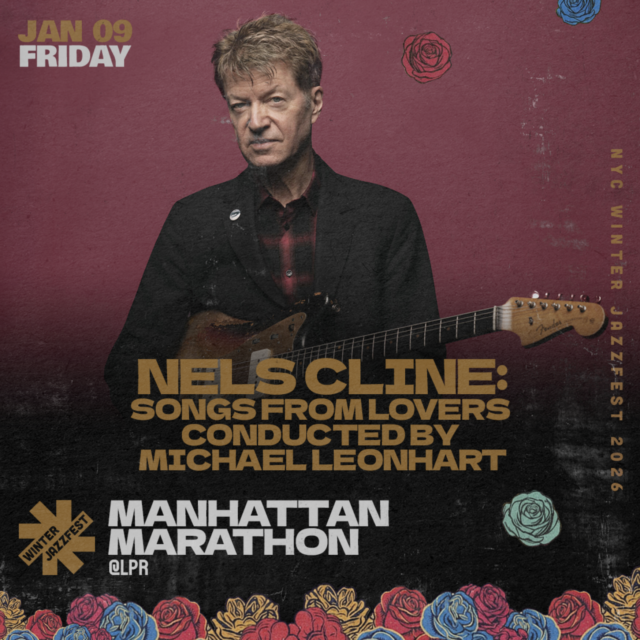
Founded in 2005, “Winter Jazzfest celebrates the music as a living entity, wherein history collides with the future in every note. Creative improvisation in the digital age continues to stimulate thought and emotion of its listeners, embracing innovation, defying instrumental boundaries and the old cliches of ‘What is Jazz?’” The festival runs January 8–13 and is highlighted by the Manhattan Marathon on January 9, boasting forty-five shows at Le Poisson Rouge, Nublu, DROM, City Winery, Close Up, Zinc, and the Bitter End, featuring Nels Cline’s “Songs from Lovers,” the Getdown, James Carter, David Murray, Lady Blackbird, and many more.
Drita Kabashi stars in Sara Farrington’s Euripides adaptation at the Tank (photo by Carol Ostrow)
APAP: A TROJAN WOMAN
Theater 98 at the Tank
312 West Thirty-Sixth St. between Eighth & Ninth Aves.
January 10-11, $23-$42 apap365.org/conference thetanknyc.org
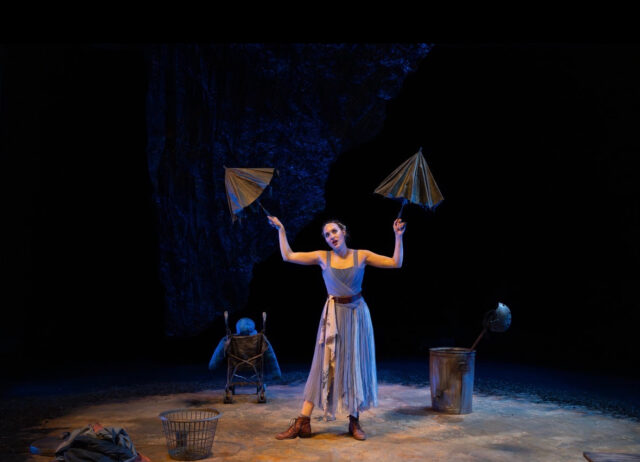
“A Trojan Woman exists inside an act of modern warfare, inspired by an early moment in the Russian war against Ukraine that affected me deeply,” playwright Sara Farrington explains in a note about her adaptation of Euripides’s 415 BCE Greek tragedy The Trojan Women. Originally performed at the outdoor Theatro Attikou Aldous/Katina Paxinou Attica Grove Theater in Athens, Greece, in July 2023, A Trojan Woman will be at the Tank January 10-11 as part of the APAP (Association of Performing Arts Professionals) festival, directed by Meghan Finn and starring Drita Kabashi as Irina; the costumes are by Suzanne Bocanegra, with video by Ana Veselic. Farrington has previously collaborated with her husband, Reid Farrington, on such productions as BrandoCapote,CasablancaBox, and Dora Maar, always providing a unique take on the world and theater itself; Sara is currently working on Dr. Uncanny Presents: Moreau ’96, a musical based on the 2014 documentary Lost Soul: The Doomed Journey of Richard Stanley’s Island of Dr. Moreau. She is also the author of the popular Theater Is Hard. on Substack.
Ian Andrew Askew and Johnnie Cruise Mercer will present world premieres at Out-FRONT! Fest (photos by Maria Baranova and Johnnie Cruise Mercer)
OUT-FRONT! FESTIVAL: IAN ANDREW AND JOHNNIE CRUISE MERCER
Judson Memorial Church
243 Thompson St. at 55 Washington Square South
Saturday, January 10, and Sunday, January 11, free with advance RSVP (suggested donation $28.52) pioneersgoeast.org www.judson.org
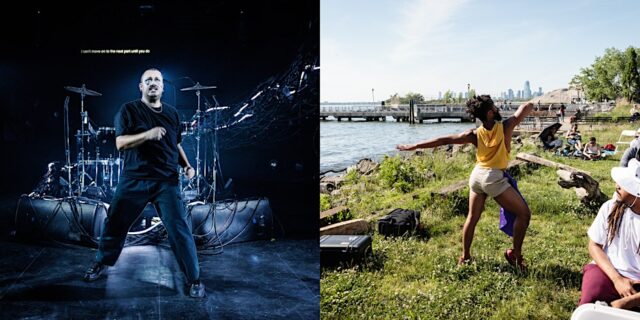
Pioneers Go East Collective’s multidisciplinary Out-FRONT! Fest “champions the voices of LGBTQ and Feminist artists for a lively exchange of art and culture.” Curated by Gian Marco Riccardo Lo Forte, Remi Harris, Philip Treviño, and Joyce Isabelle, the 2026 edition runs January 5–11, with works by such performers as Dominica Greene, Suzzanne Ponomarenko, Alexa Grae, Sugar Vendil, Jo Warren, Owen Prum, and Corentin JPM Leven at Judson Memorial Church. On January 10 and 11, Ian Andrew Askew will present the world premiere of SLAMDANCE punk lessons, which explores sociopolitical aspects of moshing and violence, followed by the world premiere of Johnnie Cruise Mercer’s Mercies of a Butterfly, “a movement allegory about resilience.” All tickets are free with suggested donation and are going fast.
Wally Cardona and Molly Lieber restage David Gordon’s 1975 duet in original SoHo loft (b&w photo by Babette Mangolte; color photo by Daqi Fang)
LIVE ARTERY: TIMES FOUR / DAVID GORDON: 1975/2025
New York Live Arts / Pick Up Performance Co. Studio
541 Broadway between Spring & Prince Sts.
January 11–13, $33.85 newyorklivearts.org
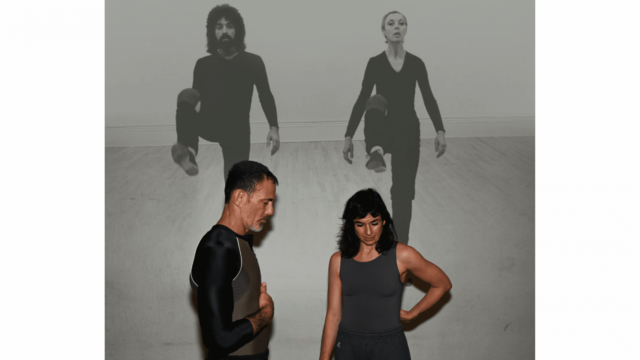
Two of my favorite dancer-choreographers, Wally Cardona and Molly Lieber, have teamed up for Times Four / David Gordon: 1975/2025, an adaptation of David Gordon’s 1975 duet with his wife and muse, Valda Setterfield, that will run January 11–13 as part of New York Live Arts’ Live Artery festival. The work will be presented in the same SoHo loft where Obie and Bessie winners Gordon and Setterfield debuted it fifty years ago; Times Four has not been seen in its entirety since then. In 2021, Gordon asked Cardona, who is married to playwright Ain Gordon, David and Valda’s son, if he wanted to perform something from his archives. Cardona was instantly interested in Times Four, an unusual, relatively unknown piece, but Gordon rejected that. However, after both Gordon and Setterfield died, the former in 2022 at the age of eighty-five, the latter in 2023 at eighty-eight, Cardona decided to resurrect Times Four in their honor. “I think that they, especially Valda, would be very happy that we are doing this piece and that we are performing something,” Cardona told choreographer, dancer, director, and NYLA head Bill T. Jones in an online interview. Cardona (Interventions,The Set Up) and Lieber (Rude World,Gloria) reconstructed the piece from a video rehearsal, Setterfield’s handwritten notes, photographs, and other ephemera, as no footage of the full original duet, which is done in silence, exists. The audience will sit in folding chairs on all four sides of the loft.
Eric Berryman shares African American toasts in Wooster Group’s Get Your Ass in the Water and Swim Like Me (photo by Marika Kent)
UNDER THE RADAR: GET YOUR ASS IN THE WATER AND SWIM LIKE ME
Joe’s Pub, the Public Theater
425 Lafayette St. at Astor Pl.
Monday, January 12, and Tuesday, January 13, $36 utrfest.org publictheater.org
In 2019, the Wooster Group production of The B-Side: “Negro Folklore from Texas State Prisons,” a Record Album Interpretation earned a Drama Desk nomination for Unique Theatrical Experience for Eric Berryman’s multimedia adaptation of a 1965 LP compiled by Bruce Jackson, consisting of performances by inmates of color on segregated agricultural prison farms. Writer and actor Berryman and director Kate Valk followed that up with Get Your Ass in the Water and Swim Like Me, which is having an encore presentation at Joe’s Pub as part of Under the Radar. This time Berryman dives deep into Jackson’s 1974 book and 1976 disc, Get Your Ass in the Water and Swim Like Me: Narrative Poetry from Black Oral Tradition, a collection of folktales known as toasts, made for heroes and antiheroes in the Black storytelling canon. The tales are filled with tawdry sex and extreme violence — bullets are flying everywhere — but as funny as they are, there’s also an underlying sense of discomfort, particularly with a primarily white audience, as the stories contain stereotypes reminiscent of minstrelsy. Berryman compares over-the-top characters to Greek myths, where such figures as Hercules and Jason “would do stupid shit because they knew it would help them uh, uh, more quickly achieve kleos, and get kleos . . . A community creates the heroes that they need.” Berryman (Primary Trust,Toni Stone) is not just sharing old fables but exploring Black identity then and now. At one point he digresses into a discussion of his own name, how disappointed he is to be anchored with the plain “Eric” when he has relatives called Qasim, Idris, Indira, Akeem, Alenka, and Adia. (He does note that there is a Gary but does not share that it’s his uncle, Grammy-winning jazz saxophonist Gary Bartz.) The show concludes with the all-time favorite “Stackolee,” a tale of murder and mayhem that has been recorded in different versions by Mississippi John Hurt, Doc Watson, Wilbert Harrison, Long Cleve Reed, Lloyd Price, and Nick Cave and the Bad Seeds, among others, its familiarity spotlighting the centrality rather than the marginalization of the Black experience in American popular culture.
PhysFestNYC: BILL BOWERS: IT GOES WITHOUT SAYING
Stella Adler Center for the Arts
65 Broadway
Tuesday, January 13, $20, 7:30 & 9:00 www.physfestnyc.org
PhysFestNYC was started in 2024 as “a community-focused festival that celebrates, enriches, and envisions our field of physical theater . . . [which] tends to be experimental, innovative, and genre-breaking.” The third annual event, taking place January 8–18 at the Stella Adler Center for the Arts, consists of workshops, panel discussions, masterclasses, and live performances. On January 13, Bill Bowers will present the one-man show It Goes without Saying, which delves into his life and career from his childhood in Montana to studying with Marcel Marceau and appearing in several Broadway productions.
Christopher-Rashee Stevenson, Vin Knight, and Scott Shepherd rehearse for NYC premiere of ERS’s Ulysses (photo by Joan Marcus)
UNDER THE RADAR: ULYSSES
Martinson Theater, the Public Theater
425 Lafayette St. at Astor Pl.
January 13 – February 15, $109 publictheater.org utrfest.org
Elevator Repair Service follows up its farewell performance of the eight-hour Gatz at the Public with its adaptation of James Joyce’s Ulysses, clocking in at a mere two hours and forty minutes. Directed by John Collins, who has previously tackled such literary biggies for ERS as The Sound and the Fury and The Sun Also Rises in addition to Gatz, the show stars Dee Beasnael, Kate Benson, Maggie Hoffman, Vin Knight, Christopher-Rashee Stevenson, Stephanie Weeks, and codirector and dramaturg Scott Shepherd, with sets by dots, costumes by Enver Chakartash, and projections by Matthew Deinhart. Joyce is having a bit of a renaissance onstage recently, with a rare revival of Joyce’s only play, Exiles, last winter and Colin Murphy’s The United States vs. Ulysses at the Irish Arts Center last spring; ERS’s Ulysses, part of Under the Radar, promises to be the best of the bunch.
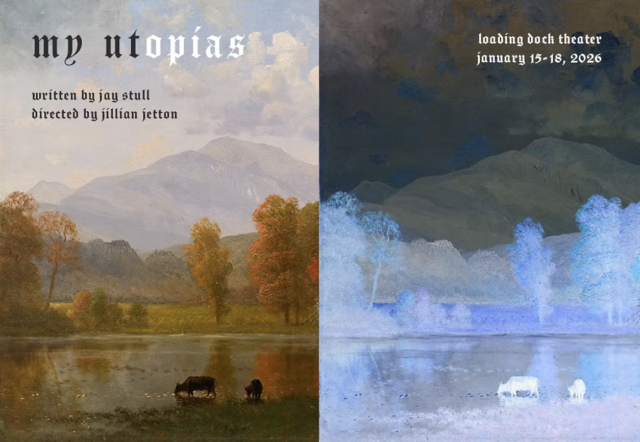
Writer Jay Stull (The Capables,Rantoul and Die) and director Jillian Jetton have put together a fantastic cast for my utopias, running at the Loading Dock Theatre as part of the Exponential Festival: Brittany Bradford, Ugo Chukwu, Fernando Gonzalez, Melissa Hurst, Jon Norman Schneider, Colleen Werthmann, and Julyana Soelistyo. The show is about a kind of postapocalyptic nightmare in New York City as a group of survivors wonder what the future holds.
Paul Lazar and Annie-B Parson stage first revival of Richard Foreman’s What to wear at BAM (photo by Scott Groller)
PROTOTYPE: WHAT TO WEAR
Brooklyn Academy of Music
BAM Strong Harvey Theater
651 Fulton St. at Ashland Pl.
January 15-18 www.bam.org www.prototypefestival.org
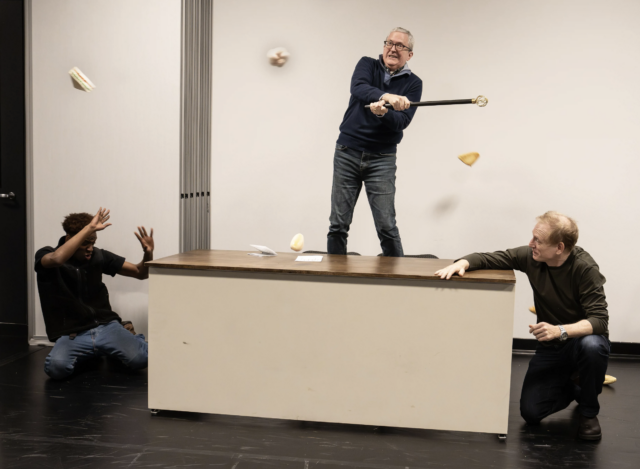
“Don’t finish what you start,” reads one of ninety-four notecards collected in experimental theater maestro Richard Foreman’s posthumously published book No Title. Fortunately, Foreman, the founder of the Ontological-Hysteric Theater who died last January at the age of eighty-seven, finished much of what he started, including more than eighty plays, operas, films, and books. The seven-time Obie winner and Guggenheim and MacArthur Fellow turned the theater and opera community inside out and upside down with such influential avant-garde works as Sophia = (Wisdom) Part 3: The Cliffs,Pandering to the Masses, and Elephant Steps. In the past year and a half, Object Collection presented the world premiere of Foreman’s Suppose Beautiful Madeline Harvey, the Wooster Collective staged 1987’s Symphony of Rats, and the Segal Center Film Festival on Theater and Performance held a retrospective of Foreman’s movies and videos. Big Dance Theater’s Paul Lazar and Annie-B Parson are now reviving, for the first time since its premiere, Foreman and Michael Gordon’s 2006 surreal post-rock opera What to wear, running January 15–18 at the Harvey as part of the Prototype and BAM’s Next Wave festivals. Foreman wrote the libretto and directed the original; Gordon composed the music, which will be performed by Bang on a Can All-Stars. The cast is highlighted by St. Vincent, sopranos Sarah Frei and Sophie Delphis, mezzo Hai-Ting Chinn, and tenor Morgan Mastrangelo, along with an ensemble of more than a dozen vocalists and dancers.
NEW EAR FESTIVAL: NIGHT 02
Fridman Gallery
169 Bowery between Delancey & Broome Sts.
Saturday, January 17, $22.46–$43.57, 8:00 withfriends.events
The Fridman Gallery’s annual New Ear multimedia festival showcasing “time-based art in all its forms” is highlighted by an impressive roster of performers on January 17, consisting of dancer and choreographer Jade Manns, artist and biohacker Dr. Heather Dewey-Hagborg, and the live debut of the trio of sound artist Stephen Vitellio, Fugazy drummer Brendan Canty, and multi-instrumentalist and producer-engineer Hahn Rowe, supporting their sophomore LP, Second. Talullah Calderwood, Sue Huang, and Konjur Collective open the three-day fest on January 16, while La Frae Sci, Ben Shirken x Dorothy Carlos, and Lucky Dragons close things out on January 18.
Fire This Time fest features ten-minute works by six playwrights
THE FIRE THIS TIME FESTIVAL: TEN-MINUTE PLAY PROGRAM
The Apollo Stages at the Victoria
233 West 125th St. between Frederick Douglass & Adam Clayton Powell Jr. Blvds.
January 23–31, $51.25 www.firethistimefestival.com
Founded in 2009 by Kelley Nicole Girod, the Fire This Time Festival, now in its seventeenth year, “provides a platform for early career playwrights of African and African American descent.” The 2026 iteration comprises six ten-minute shows at the Apollo Stages at the Victoria: Teniia Micazia Brown’s Everything But–, Preston Crowder’s Black to Save the Day, Mo Holmes’s Clumsy, Naomi Lorrain’s DNR, DeLane McDuffie’s Goose, and Donathan Walters’s White Diamond.
[Mark Rifkin is a Brooklyn-born, Manhattan-based writer and editor; you can follow him on Substack here.]
YUKIO MISHIMA CENTENNIAL SERIES: EMERGENCES
Japan Society
333 East 47th St. at First Ave.
September 11 – December 6 japansociety.org
“Only art makes human beauty endure,” Yukio Mishima wrote in his 1959 novel Kyoko’s House.
In his short life — Mishima died by suicide in 1970 at the age of forty-five — the Japanese author and political activist penned approximately three dozen novels, four dozen plays, five dozen story and essay collections, ten literary adaptations, and a libretto, a ballet, and a film.
Japan Society is celebrating the hundredth year of his birth — he was born Kimitake Hiraoka in Tokyo in January 1925 — with “Yukio Mishima Centennial Series: Emergences,” comprising six events through December 6. The festival begins September 11–20 with Kinkakuji, SITI company cofounder Leon Ingulsrud and Korean American actor Major Curda’s theatrical adaptation of Mishima’s intense 1956 psychological novel The Temple of the Golden Pavilion, based on the true story of extreme postwar actions taken by a young Buddhist monk. Creator and director Ingulsrud cowrote the script with Curda, who stars in the play. The stage design is by Japanese visual artist Chiharu Shiota, whose international installations, featuring red and black yarn structures, include “In the Light,” “My House Is Your House,” and “Memory of Lines.” Her latest, “Two Home Countries,” runs September 12 through January 11 in the Japan Society gallery, consisting of immersive, site-specific works created in commemoration of the eightieth anniversary of the end of WWII.
There will be eleven performances of Kinkakuji, with a gallery-opening reception following the September 11 show, a separate gallery talk on September 12, a lecture preceding the September 16 show, and an artist Q&A on September 17. Each ticket comes with free same-day admission to “Two Home Countries.”
On September 27, Japan Society, as part of the John and Miyoko Davey Classics series, will screen Kon Ichikawa’s 1958 film, Conflagration, based on The Temple of the Golden Pavilion and starring Raizo Ichikawa, Tatsuya Nakadai, and Ganjiro Nakamura.
In conjunction with L’Alliance New York’s Crossing the Line Festival, Japan Society will present Le Tambour de Soie (The Silk Drum) on October 24 and 25, Yoshi Oida and Kaori Ito’s adaptation of Mishima’s 1957 Noh play Aya no Tsuzumi, a dance-theater piece about love and aging featuring downtown legend Paul Lazar and choreographer Ito, with music by Makoto Yabuki. The second show will be followed by an artist Q&A. On November 6, Japanese novelist and cultural ambassador Keiichiro Hirano (Nisshoku,Dawn) and Tufts University Mishima scholar Dr. Susan J. Napier will sit down for a conversation discussing Mishima’s life and legacy.
On November 15 and 16, the Tokyo-based company CHAiroiPLIN brings The Seven Bridges (Hashi-zukushi) to Japan Society, a visually arresting adaptation for all ages of Mishima’s short story about four women seeking wishes during a full moon. The series concludes December 4–6 with the US debut of Hosho Noh School and Mishima’s Muse – Noh Theater, three unique programs of noh and kyogen theater comprising performances of works that inspired Mishima: Shishi (Lion Dance),Busu (Poison),Aoi no Ue (Lady Aoi),Kantan, and Yoroboshi. The December 4 performance will be followed by a ticketed soirée, and there will be an artist Q&A after the December 5 show with Kazufusa Hosho, the twentieth grand master of Hosho Noh School, which dates back to the early fifteenth century. In addition, members of Hosho Noh School lead a workshop on December 6.
“This series revitalizes Mishima’s contributions to the world of the arts through a slate of brand new commissions and premieres adapting his writings, as well as a historic US debut for a revered noh company,” Japan Society artistic director Yoko Shioya said in a statement. “This series recognizes not only Mishima’s critical legacy but the ongoing current influence of this essential postwar author on artists today.”
That legacy can be summed up in this line from his 1963 novel Gogo no Eikō (The Sailor Who Fell from Grace with the Sea): “Of course, living is merely the chaos of existence, but more than that it’s a crazy mixed-up business of dismantling existence instant by instant to the point where the original chaos is restored.”
A disengaged online reseller (Masaki Suda) gets more than he bargained for in Kiyoshi Kurosawa’s Cloud
JAPAN CUTS — FESTIVAL OF NEW JAPANESE FILM 2025: KIYOSHI KUROSAWA
Japan Society
333 East 47th St. at First Ave.
January 10-20 www.japansociety.org
The annual summer Japan Cuts festival is underway at Japan Society, eleven days of new and restored works that began July 10 with Yasuhiro Aoki’s debut feature, ChaO, and continued with Yuya Ishii’s The Real You, Kenichi Ugana’s The Gesuidouz, and Kichitaro Negishi’s Yasuko, Songs of Days Past, prime examples of the wide range of works at the fest, many of them North American premieres and followed by Q&As. Upcoming highlights include Daihachi Yoshida’s Teki Cometh, Takashi Miike’s Blazing Fists, Masashi Iijima’s Promised Land, and the closing night selection, Joseph Overbey’s documentary The Spirit of Japan, complete with a shochu reception.
The 2025 edition celebrates the career of Kiyoshi Kurosawa, who will participate in Q&As and introductions at several screenings. “The very base of cinematic expression is to film the reality in front of you using cameras. So, the similarity with the reality would be the feature of a movie,” Kurosawa told Dirty Movies in 2018. “This could be also its limitation, but anyway, I am particularly interested in the fact that a movie is almost the same as reality, but at the same time is slightly different than reality. This difference or unreality is always my starting point when I create my work.” That quote can be applied to the two Japan Cuts films that are reviewed below.
Kobe-born suspense master Kiyoshi Kurosawa returns to Japan Cuts with a pair of intense revenge thrillers that are not for the faint of heart. Both were made in 2024, both feature torture and violence, and both are tons of fun.
Up first for Kurosawa, who has made such horror faves as Cure,Pulse, and Creepy as well as such psychological dramas as Bright Future and Tokyo Sonata, is Cloud, the centerpiece selection. Masaki Suda stars as Yoshii, a quiet, disengaged young man who works at a cleaning factory, supplementing his income as an online reseller, purchasing goods at cut rates — unethically taking advantage of people — and selling them online at exorbitant prices, with no care whether the items are actually legitimate or fakes. He is upset when the owner, Takimoto (Yoshiyoshi Arakawa), offers him a promotion; Takimoto sees promise in Yoshii, but Yoshii has no interest in taking on more responsibility. When one of his deals makes him a lot of money, he quits his job and dedicates all his time to reselling whatever products he can get his hands on, from designer handbags to anime figures. Yoshii alienates his business partner, Muraoka (Masataka Kubota), and moves with his girlfriend, Akiko (Kotone Furukawa), to a house in a small, faraway town, where a young local man, Sano (Daiken Okudaira), insists on being his assistant. As his deals get more and more lucrative and dangerous, Yoshii builds a well-deserved bad reputation as a ruthless operator, and soon a group of men, armed to the hilt, come after him, determined to get even.
Cloud is a fierce, propulsive trip down the internet rabbit hole, where anonymity might feel safe but reality threatens to blow it all up. Yoshii ruins every relationship he has, with clients, customers, Sano, Akiko, Takimoto, et al., seemingly without any care or regard; he spends hours staring at his computer screen, waiting for his items to start selling, with more concern and passion than he has for any human being. And when the posse finds him, he has no understanding why they want him dead.
Suda (Kamen Rider,Cube) is terrific as Yoshii; we are initially offput by his herky-jerky movement and disengagement from society, but as everything closes in on him, we also feel compassion for his potential fate. The film is beautifully shot by Yasuyuki Sasaki and expertly directed by Kurosawa, who knows just how to make the audience squirm, especially at unexpected moments.
“Grudges, revenge, they’ll only drag you down,” one member of the posse tells another. “Think of this as a game.” It’s a wry comment on how too many people look at the real world these days.
Cloud is screening July 16 at 6:00 and will be followed by a Q&A with Kurosawa, who will also receive the Cut Above Award at a reception afterward.
Kiyoshi Kurosawa’s remake of his own Serpent’s Path is another suspense gem
THE SERPENT’S PATH (『蛇の道』) (HEBI NO MICHI) (Kiyoshi Kurosawa, 2024)
Thursday, July 17, 6:00 japansociety.org
When Kiyoshi Kurosawa was asked by a studio in France to remake one of his earlier films, he opted to revisit his 1998 straight-to-video thriller Serpent’s Path, which was written by Hiroshi Takahashi (Ringu,Sodom the Killer) and starred Show Aikawa and Teruyuki Kagawa. He cowrote the new script with French journalist Aurélien Ferenczi, who passed away in October 2024 at the age of sixty-one. The result is a brutal, gripping white-knuckle shocker that you won’t be able to turn away from, no matter how much you might want to.
Albert Bacheret (Damien Bonnard) is a disheveled, distraught man who is determined to find whoever murdered and dismembered his eight-year-old daughter, Marie (Hélène Caputo). He is helped by Sayoko Mijima (Ko Shibasaki), a calm, composed hospital psychiatrist who is treating Yoshimura (Hidetoshi Nishijima), a Japanese man having trouble adjusting to life in France. Sayoko has also moved from Japan to Paris, leaving behind her partner, Soichiro (Munetaka Aoki).
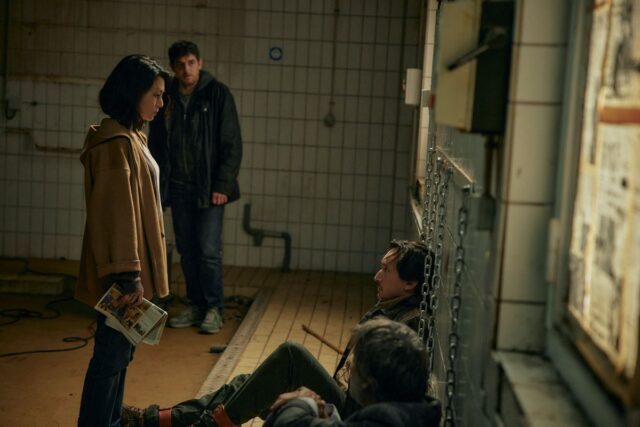
Albert and Sayoko are not criminal masterminds, but they expertly kidnap Laval (Mathieu Amalric) and chain him to a wall in an abandoned warehouse. Albert accuses Laval of having killed Marie, but Laval adamantly denies he had anything to do with it, claiming he is just an accountant at the Minard Foundation, an institution that we slowly learn more about, none of it good. Deprived of food, drink, and a bathroom, Laval eventually gives up his boss, Pierre Guérin (Grégoire Colin), who Albert and Sayoko decide to capture as well. Like Laval, Pierre is not forthcoming at first, but torture has a way of making people talk, whether it be truth or lies, and the plot thickens, offering more and more surprises along with more and more violence.
Throughout the film, Albert, who became estranged from his wife, Lola (Vimala Pons), after the tragic incident, shows a short video of Marie playing the piano and roller skating as he reads a newspaper report that details exactly what happened to her, making Laval, Pierre, and, later, Christian Samy (Slimane Dazi) watch it — but the audience as well, as if inuring us to the atrocity while also feeling Albert’s torment. Kurosawa and cinematographer Alex Kavyrchine have created a fascinating dichotomy between the kind of violence we see onscreen, whether a movie in a theater or a video on a smartphone or laptop, and the kind we are not shown but only have to imagine, especially when it involves children. We cringe every time Albert narrates the video but not at what Albert and Sayoko do; in fact, we are rooting for them. As the body count rises, so do humorous shots of the victims, eliciting uncomfortable yet necessary laughter.
Albert Bacheret (Damien Bonnard) and Sayoko Mijima (Ko Shibasaki) hunt for a killer in The Serpent’s Path
Bonnard (Staying Vertical,Les Misérables) is terrific in a similar way as Suda is in Cloud, portraying a laser-focused but perhaps misguided man who has disconnected from society, impulsive and restless, turning to screens to redefine his purpose. His unease is so palpable you just want to give him a giant hug — but maybe not when he’s armed. Actress and singer Shibasaki (One Missed Call,xxxHolic) adds just the right amount of mystery to Sayoko, who might be more than she seems. Meanwhile, the mighty Amalric (Kings and Queen,The Grand Budapest Hotel) once again proves why he’s one of the best actors on the planet.
At one point, when Yoshimura talks to Sayoko about facing the end, she replies, “The end? The end of what? Are you afraid of the end? Isn’t the hardest part when there is no end?”
Or, in other words, be careful what you wish for.
The Serpent’s Path is screening July 17 at 6:00 and will be followed by a Q&A with Kurosawa, who had a busy 2024, directing Cloud,The Serpent’s Path, and the forty-five-minute experimental Chime following a four-year pause at least in part because of the pandemic. In addition, you can catch the North American premiere of the 4K restoration of the 1998 original on July 19 at 9:00 as well as Kurosawa’s 1998 License to Live on July 17, a reconstruction of Sam Peckinpah’s 1970 western The Ballad of Cable Hogue.
[Mark Rifkin is a Brooklyn-born, Manhattan-based writer and editor; you can follow him on Substack here.]
DUKE BLUEBEARD’S CASTLE
Japan Society
333 East 47th St. at First Ave.
January 15-18, $36-$48 www.japansociety.org utrfest.org
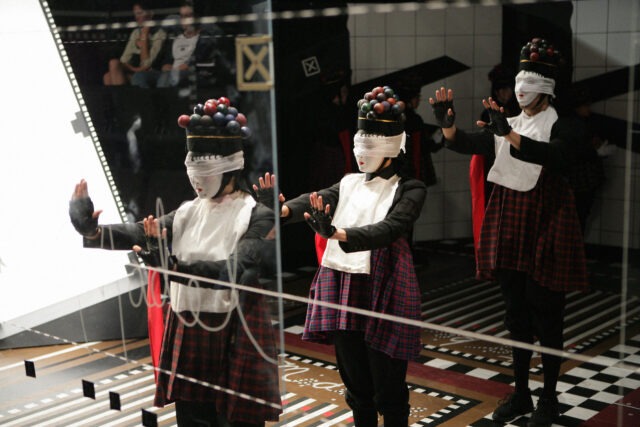
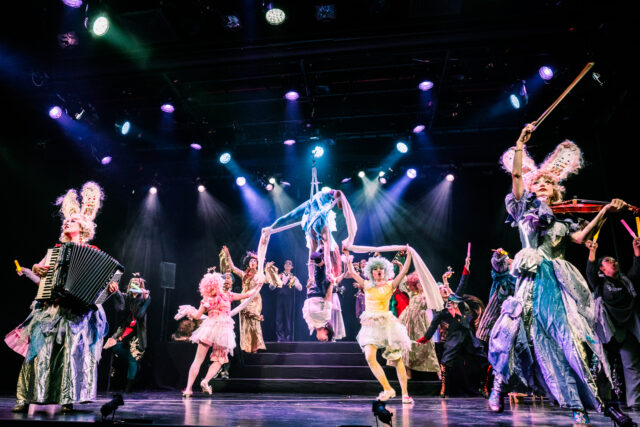
Korean-Japanese director Sujin Kim’s macabre Harajuku burlesque adaptation of Shūji Terayama’s Duke Bluebeard’s Castle is an exhilarating two hours of nonstop fun, a wildly imaginative celebration of all that angura, or Japanese underground, unconventional theater, has to offer. For the show, which runs January 15–18 at Japan Society as part of the Under the Radar festival, Kim has brought together an inspiring multidisciplinary cast of more than thirty, including the tantalizing cabaret duo Kokusyoku Sumire, consisting of soprano vocalist and accordionist Yuka and violinist Sachi, who wear adorable outfits with light-up rabbit ears; magician Syun Shibuya, who, in a sharp-fitting tux, does card tricks, pulls doves out of a hat, and dazzles with mind-boggling costume changes; the delightful aerialist Miho Wakabayashi, who has been detailing her New York City trip here; and the experimental Japanese company Project Nyx, which was founded in 2006 by Kim’s wife, Kanna Mizushima, and specializes in “entertainment Bijo-geki, all-female cross-dressing theater.”
We get a taste of what’s to come when, early on, the stage manager (Misa Homma) tells Judith (Rei Fujita), who is portraying Bluebeard’s prospective seventh wife and closely checking the script, “You know what? — Things don’t always follow the script, y’know? Let’s see your improv muscles!”
The narrative regularly pops in and out of the Bluebeard fairy tale, which was written in 1697 by French author Charles Perrault; the self-referential story of the staging of the show; and the acknowledgment that it is being held at Japan Society, maintaining an improvisatory feel throughout.
“Wait, you’re saying the stage manager is doubling as the costume designer’s assistant in this production?” Bluebeard’s first wife (Miki Yamazaki) says to the stage manager while Carrot the Prompter (Ran Moroji) rubs her feet. Carrot had just amateurishly spoken a stage direction out loud: “Whistles dramatically and pretends to be a bird flying away.”
The play unfolds at a furious pace, so fast that it’s sometimes difficult to read the English surtitles, which are projected on small, raised monitors at the left and right sides; it can get a little frustrating, as you don’t want to miss a second of what’s happening onstage.
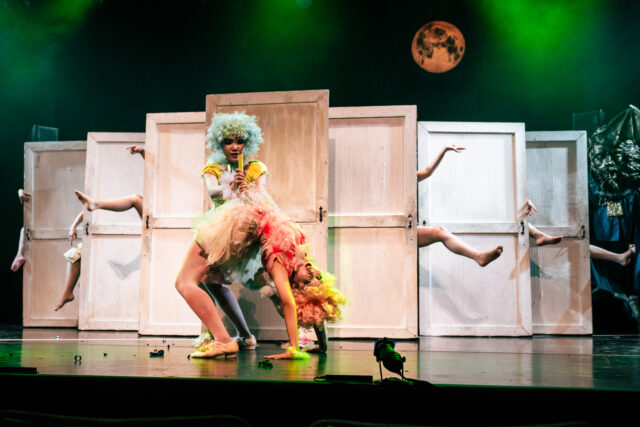
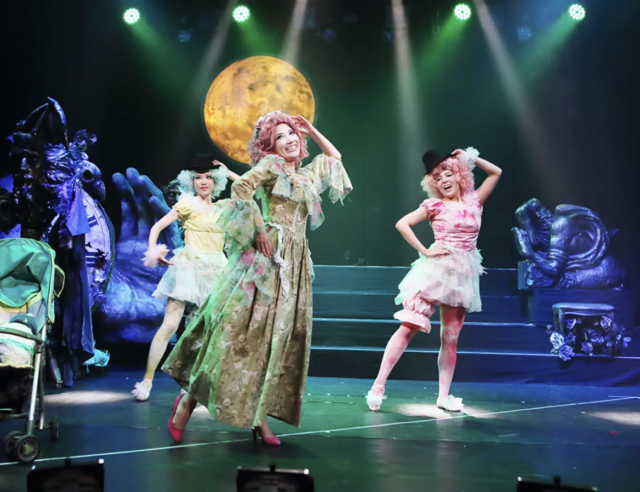
Asuka Sasaki’s kawai costumes and the far-out, colorful wigs are spectacular, like the best cosplay comic-con contest ever, with circuslike lighting by Tsuguo Izumi + RISE and enveloping sound by Takashi Onuki. Choreographer Taeko Okawa takes advantage of every piece of Satoshi Otsuka’s set, highlighted by seven white doors that flip to seven mirrors held by the seven wives in slinky black. As they dance with the mirrors, reflections shimmer throughout the space.
Kokusyoku Sumire’s songs are charming and engaging, including “[Doppelgänger],” in which they explain, “Even if I hide perfectly / There are times when misfortune finds me. / If I were to suppress this tormenting pain, / Would I be allowed to wish for your happiness?,” and poetic, as when they sing, “Walking in shadows, careful not to stumble, counting to nine, who are you? / The moonlight is full, playing the song of joy. If I close my eyes, I should be able to see everything.”
The scene titles in the script are not projected on the monitors but give a good idea of what audiences are in store for, including “The Bride in the Bathtub,” “A Goblin Peeks from Behind the Curtain,” “Don’t ruin my script with your life,” and “The Maestro of the Puppet Killers.” In “A Pig and a Rose,” which features some of the most hilarious dialogue in the play, Copula the Attendant (Chisato Someya) complains to the second wife (Yoshika Kotani) that the seventh wife has been miscast: “Her expressions are our hand-me-down, her heart is like a plastic trash can, and oh, her face — is the stuff that splashes out from an overflowing pit latrine. . . . She is Madam’s used tampon! Madam’s vomit — her face is fit for a manhole cover in a sewer!” The second wife is overjoyed, proclaiming, “So thrilling!!! Insults are divine, don’t you agree, Judith?”
Fujita and Homma stand out in the fantastic cast, which also features Ruri Nanzoin as Coppélius the puppeteer, You Yamagami as the costume designer, Haruka Yoshida as the debt collector, Nozomi Yamada as the actor, Yume Tsukioka as Aris, Hinako Tezuka as Teles, Kaho Asai as the magician’s assistant, Wakabayashi as the fourth wife, Mizushima as the fifth wife, Sayaka Ito as the third wife, and Mayu Kasai as wife number six. Don’t worry if you can’t keep it all straight; just let the extravaganza dazzle you time and time again.
Kim has a dream of presenting Terayama’s work in a tent along the New York City waterfront. Here’s hoping that’s next for this immensely talented creator.
[There will be a preshow lecture on Terayama by UCLA professor emerita Carol Fisher Sorgenfrei at 6:30 on January 17. Ticket holders on January 17 and 18 are invited to see the current exhibit, “Bunraku Backstage,” in the Japan Society Gallery; there is also a display of rare Terayama artifacts on view, including scripts, letters, photos, and more from the La MaMa Archive.]
[Mark Rifkin is a Brooklyn-born, Manhattan-based writer and editor; you can follow him on Substack here.]
Sujin Kim reimagines Shūji Terayama’s Duke Bluebeard’s Castle at Japan Society (photo by Yoji Ishizawa)
DUKE BLUEBEARD’S CASTLE
Japan Society
333 East 47th St. at First Ave.
January 15-18, $36-$48 www.japansociety.org utrfest.org
In his 1697 book Histoires ou contes du temps passé, French author Charles Perrault adapted such famous folktales as “Little Red Riding Hood,” “Cinderella,” “Puss in Boots,” and “Sleeping Beauty.” Though not quite as well known, particularly when it comes to children, Perrault’s “Bluebeard,” about a duke who has a penchant for moving on from wife to wife in not the most legal of ways, has been turned into plays, short stories, novels, ballets, operas, and movies.
Multidisciplinary Japanese artist Shūji Terayama, who died in 1983 at the age of forty-seven, was obsessed with the story of Bluebeard. “The Japanese countercultural icon Terayama Shūji produced three projects in the years 1961–1979 that rework the legend of Bluebeard, often intermixing the folkloric narrative with contemporary lived reality,” Steven C. Ridgely wrote in Marvels & Tales in 2013. “This was a countervailing tendency to the tide of texts emerging at the time that demythologize Bluebeard by means of historical figures such as Gilles de Rais. Terayama’s work on Bluebeard might best be understood as an effort to frustrate the mapping of folklore and legend to practices of the past and to insist on the liberational potential of taking possession of narratives in the folkloric mode.”
Adding a macabre Harajuku burlesque touch to the proceedings, which take place backstage at a Japanese theater, Korean-Japanese director Sujin Kim has reimagined Terayama’s version in Duke Bluebeard’s Castle, running January 15–18 at Japan Society as part of the Under the Radar festival. The North American premiere of this new production is performed by Project Nyx, an all-female avant-garde ensemble led by Kanna Mizushima; avant-garde cabaret duo Kokusyoku Sumire; and magician Syun Shibuya.
There will be a reception following the January 15 show, an artist Q&A after the January 16 performance, and a preshow lecture on Terayama by UCLA professor emerita Carol Fisher Sorgenfrei at 6:30 on January 17. Ticket holders on January 16, 17, and 18 are invited to see the current exhibit, “Bunraku Backstage,” in the Japan Society Gallery; there is also a display of rare Terayama artifacts on view, including scripts, letters, photos, and more from the La MaMa Archive.
[Mark Rifkin is a Brooklyn-born, Manhattan-based writer and editor; you can follow him on Substack here.]
Benshi star Ichiro Kataoka will narrate two silent masterpieces at Japan Society, with live shamisen music by Sumie Kaneko
THE BENSHI TRADITION AND THE SILVER SCREEN: A JAPANESE PUPPETRY SPIN-OFF
Japan Society
333 East 47th St. at First Ave.
Thursday, December 12, and Friday, December 13, $22-$31, 7:30
212-715-1258 www.japansociety.org
Japan Society’s “Ningyo! A Parade of Puppetry” began in September with Basil Twist’s mind-blowing Dogugaeshi and continued in October with National Bunraku Theater’s Date Musume Koi no Higanoko (Oshichi, the Greengrocer’s Daughter) and Sonezaki Shinju (The Love Suicides at Sonezaki) and in November with Sachiyo Takahashi/Nekaa Lab’s One Night in Winter and The Peony Lantern.
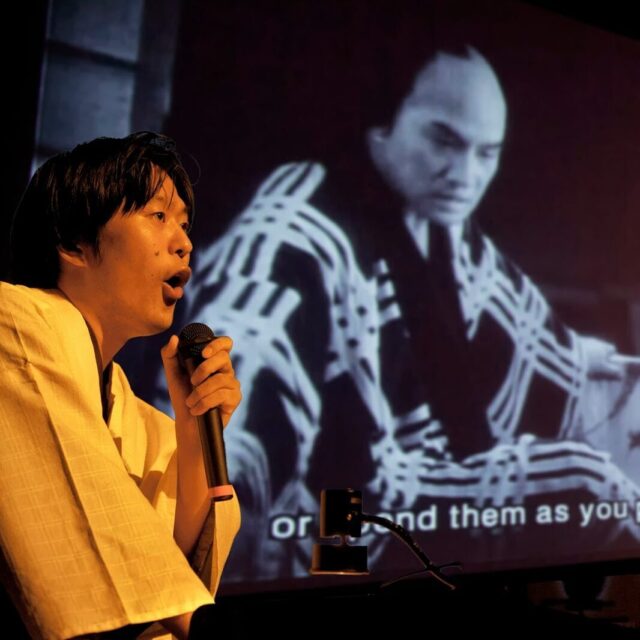
The fall series concludes with “The Benshi Tradition and the Silver Screen: A Japanese Puppetry Spin-Off,” two evenings of live music by Sumie Kaneko on the shamisen and benshi narration by contemporary “movie talker” Ichiro Kataoka, in Japanese with English subtitles, accompanying a pair of rarely screened silent masterpieces. On December 12, they will perform to Daisuke Ito’s 1927 jidaigeki A Diary of Chuji’s Travels, starring Denjirō Ōkōchi; originally a four-hour triptych, only 111 fragmented minutes now remain. That will be followed on December 13 by Shozo Makino’s 1910-17 ninety-minute work-in-progress Chushingura, an incomplete early cinematic adaptation of the story of the 47 ronin featuring Matsunosuke Onoe, who is said to have appeared in a thousand films by the time of his death in 1926 at the age of fifty, though only six survive, at least in part.
Both events will be preceded by a lecture at 6:30 by Princeton University professor Dr. Junko Yamazaki; there will be a postshow private gathering for artists and Japan Society members on December 12 and an artist Q&A on December 13. The previous productions in “Ningyo! A Parade of Puppetry,” being held in conjunction with the Japan Society exhibition “Bunraku Backstage,” sold out in advance, so act quickly if you want to catch what should be two rare, unique experiences.
[Mark Rifkin is a Brooklyn-born, Manhattan-based writer and editor; you can follow him on Substack here.]