
Ami Tomite stars in Sion Sono’s bizarre, beguiling, anarchistic Anti-Porno
FESTIVAL OF NEW JAPANESE FILM: ANTI-PORNO (ANCHI PORUNO) (アンチポルノ) (Sion Sono, 2016)
Japan Society
333 East 47th St. at First Ave.
Sunday, July 16, 8:45
Festival runs July 13-23
212-715-1258
www.japansociety.org
www.nikkatsu-romanporno.com
 “I’m a virgin. A virgin, but a whore,” successful novelist, painter, and fashion designer Kyoko (Ami Tomite) says at the beginning of Sion Sono’s bizarre, deliciously candy-colored and anarchic Anti-Porno, making its East Coast premiere July 22 at 10:30 in Japan Society’s Japan Cuts: Festival of New Japanese Cinema. You never know what to expect from Siono, whose previous films include the wild and wacky Love & Peace, the wild and crazy Why Don’t You Play in Hell? and the strangely beautiful and touching Himizu. Anti-Porno is part of Nikkatsu’s Roman Porno Reboot Project, a celebration of the forty-fifth anniversary of the studio’s Japanese softcore films, which began in 1971 with Shōgorō Nishimura’s Apartment Wife: Affair in the Afternoon and continued through 1988 with Daisuke Gotō’s Bed Partner. In true Sono style, he honors the format by confusing fiction with reality, star characters with minor newbies, and the past with the present in ways that are as exhilarating as they are confounding. The story takes place primarily in a spectacular apartment decked out in bright yellows, blues, and reds, with large-scale paintings and a lushly alluring open bathroom. Kyoko is a self-obsessed terror who abuses her dedicated assistant, Noriko (Mariko Tsutsui) — or is it the other way around? “I want to be a whore like you,” Noriko begs. There’s fetishism galore, plenty of nudity, a lizard trapped in a bottle, incest, an audience of girls in Sailor Moon outfits, sycophantic hangers-on, a mysterious sex film, and then a man yells, “Cut!” Soon you’re not sure who’s in charge, who’s the lead, and whether you’re watching a movie, a movie-within-a-movie, or a novel-within-a-movie-within-a-movie. “This isn’t my life!” Kyoko screams. Or is it? Sono, who also wrote the script, uses the porn format to question ideas of sexuality, misogyny, freedom, abuse, feminism, exploitation, dominance, art, power, and pornography itself, resulting in a rousing, er, climax. The gorgeous production design is by Takashi Matsuzuka, with striking cinematography by Maki Ito, raunchy costumes by Kazuhiro Sawataishi, and an inventive, wide-ranging score by Susumu Akizuki. Because of the film’s graphic nature, no one under eighteen will be admitted to the Japan Society screening, which will be preceded by Sawako Kabuki’s hysterical three-minute X-rated animated vomitfest Summer’s Puke Is Winter’s Delight.
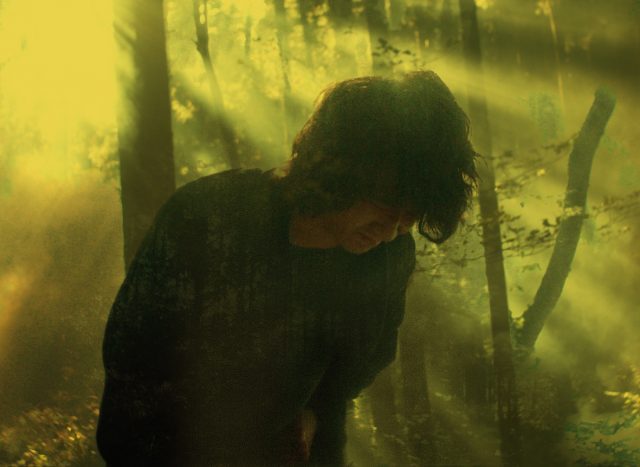
 Writer, director, editor, and composer Soro Hakimoto’s cinematic debut, Haruneko, opens with a swirling, unidentifiable image and gently haunting music featuring portentous voices that fade away as a misty forest emerges and an old white car appears, complete with a black cat. “Let’s sing,” the young driver (Keisuke Yamamoto) mumbles to himself as an old man (Yohta Kawase) looks steadily in front of him in the backseat. It’s an alluring beginning to a film that includes so many classic Japanese movie tropes: ghosts, ominous felines, yakuza, a mysterious forest, sudden bursts of singing, poorly translated subtitles, and a perplexing plot. Amid a lush green landscape is a lone cabin, where people come to die. It is operated by the Manager (Yamamoto) with the help of a young boy named Haru (Ryuto Iwata); also there are the boy’s piano-playing sister (Minako Akatsuka), their grandmother (Lily), and an old man (Min Tanaka) who sits in a rocking chair on the porch. In the middle of the forest is a dark area where the Manager, dressed in a striking white tuxedo, hosts a magic lantern show, spouting poetry and breaking out into uplifting J-pop as slides of a person’s life are projected onto a screen. “Petals are dancing in the wind to celebrate our meeting and departing,” the Manager says. “What is what you see to you? What is not what you don’t see to you?” Later the café is visited by a distraught and crazed yakuza on the run (Yo Takahashi) and a longhaired man (Llon Kawai) with a selfie stick who has committed a horrific atrocity, both seeking, in their own ways, to end their misery. Through it all, the residents of the café remain calm and understanding as their visitors face their destiny.