Tag Archives: Jane Fonda

MAN OF IRON: ANDRZEJ WAJDA CELEBRATED AT NYPFF20

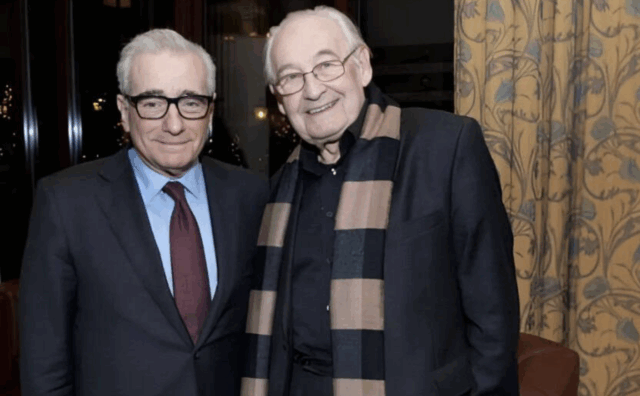
Martin Scorsese will introduce Andrzej Wajda’s Ashes and Diamonds at New York Polish Film Festival

NEW YORK POLISH FILM FESTIVAL
Scandinavia House
58 Park Ave. at 38th St.
Directors Guild Theater
110 West 57th St. between Fifth & Sixth Aves.
May 27-31, all access pass $150
nypff.com

“I accept this great honor not as a personal tribute but as a tribute to all of Polish cinema,” Polish auteur Andrzej Wajda said upon accepting his honorary lifetime achievement Oscar from Jane Fonda in 2000. “The subject of many of our films was the war, the atrocities of Nazism, and the tragedies brought by communism. This is why today I thank the American friends of Poland and my compatriots for helping my country rejoin the family of democratic nations, rejoin the Western civilizations, its institutions and security structures. My fervent hope is that the only flames people will encounter will be the great passions of the heart — love, gratitude, and solidarity.”

That passion will be on view at the twentieth edition of the New York Polish Film Festival, which celebrates the life and career of the Suwałki-born director and resistance fighter who died in 2016 at the age of ninety — not many honorary Academy Award winners go on to live another sixteen years and make eight more films. Running May 27–31 at the Directors Guild Theater and Scandinavia House — no need to check your map; Scandinavia still consists only of Denmark, Finland, Iceland, Norway, and Sweden — the festival will be screening eleven works, six by Wajda and five by contemporary filmmakers that reveal Wajda’s legacy.

NYPFF20 includes Wajda’s Ashes and Diamonds, Kanał, The Promised Land, Everything for Sale, and the Oscar-nominated Man of Iron and Katyń. The fest kicks off with 1957’s Kanał, which will be preceded by a reception and followed by a panel discussion. Polish cinema fan Martin Scorsese will introduce Ashes and Diamonds at the May 28 gala; “It announced the arrival of a master filmmaker,” has said of the war movie, which completed a trilogy begun with A Generation and Kanał. The extraordinary Katyń examines a brutal WWII massacre; the film stars Maja Ostaszewska, Artur Zmijewski, and Pawel Malaszynski, with a score by the great Krzysztof Penderecki.

Among the 2024 Polish selections are Xawery Żuławski’s Kulej: All That Glitters Isn’t Gold, about boxer Jerzy Kulej; Julie Rubio’s documentary The True Story of Tamara de Lempicka & the Art of Survival; and Magnus Von Horn’s crime drama The Girl with the Needle

Below is the full schedule.

Tuesday, May 27
Kanał (Canal) (Andrzej Wajda, 1957), preceded by a reception and followed by a panel discussion with professors Annette Insdorf and Rafal Syska, Scandinavia House, $30, 5:00

Under the Volcano (Pod wulkanem) (Damian Kocur, 2024), Scandinavia House, $25, 8:30

Wednesday, May 28
Opening night gala: Ashes and Diamonds (Popiół i diament) (Andrzej Wajda, 1958), introduced by Martin Scorsese, Directors Guild Theatre, $50, 7:15

Thursday, May 29
Everything for Sale (Wszystko na sprzedaż) (Andrzej Wajda, 1969), with special guest Małgorzata Potocka, Scandinavia House, $25, 5:30

The Promised Land (Ziemia obiecana) (Andrzej Wajda, 1975), introduced by Annette Insdorf, Scandinavia House, $25, 8:15

Friday, May 30
Forest (Las) (Lidia Duda, 2024), Scandinavia House, $25, 4:30

Katyń (Andrzej Wajda, 2007), Scandinavia House, $25, 6:15

The Girl with the Needle (Dziewczyna z igłą) (Magnus Von Horn, 2024), Scandinavia House, $25, 8:30

Saturday, May 31
Man of Iron (Człowiek z żelaza) (Andrzej Wajda, 1981), Scandinavia House, $25, 1:30

The True Story of Tamara de Lempicka & the Art of Survival (Julie Rubio, 2024), Scandinavia House, $25, 4:30

Kulej: All That Glitters Isn’t Gold (Kulej. Dwie strony medalu) (Xawery Żuławski, 2024), Scandinavia House, $25, 6:30

[Mark Rifkin is a Brooklyn-born, Manhattan-based writer and editor; you can follow him on Substack here.]

FEDERICO FELLINI: COMPLETE RETROSPECTIVE

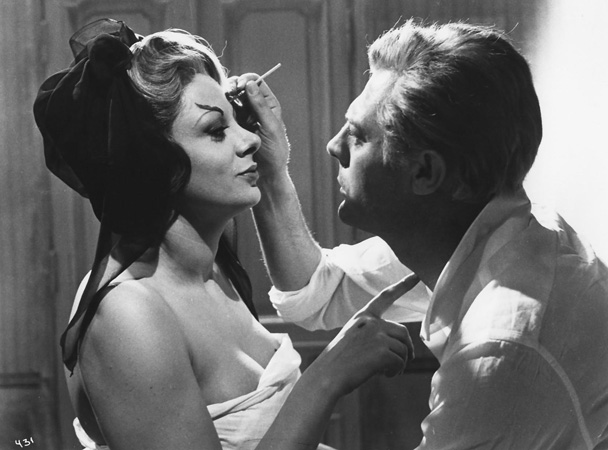
Federico Fellini directs two actors in Block-notes di un regista (Felllini: A Director’s Notebook)

FEDERICO FELLINI
MoMA Film, Museum of Modern Art
The Debra and Leon Black Family Film Center
11 West 53rd St. between Fifth & Sixth Aves.
Through January 12
212-708-9400
www.moma.org

Italian auteur Federico Fellini gave the world a view of society and the human condition like no other filmmaker. A former caricaturist, joke writer, and journalist, Fellini made twenty-four films before passing away in 1993 at the age of seventy-three. MoMA is celebrating his wide-ranging and incredibly influential legacy by screening every one of his works as a director (earning four Oscars in the process), from 1950’s Luci del varietà (Variety Lights) to 1990’s La voce della luna (The Voice of the Moon), in 4K restorations. In between are such classic, unique works as La Strada (The Road), Amarcord, La Dolce Vita, Le notti di Cabiria (Nights of Cabiria), Roma (Fellini’s Roma), Giulietta degli spiriti (Juliet of the Spirits), Otto e mezzo (8½), and La città delle donne (City of Women), among many others that helped redefine cinematic storytelling by breaking all the rules. Below are only a few favorites being shown in this complete retrospective.

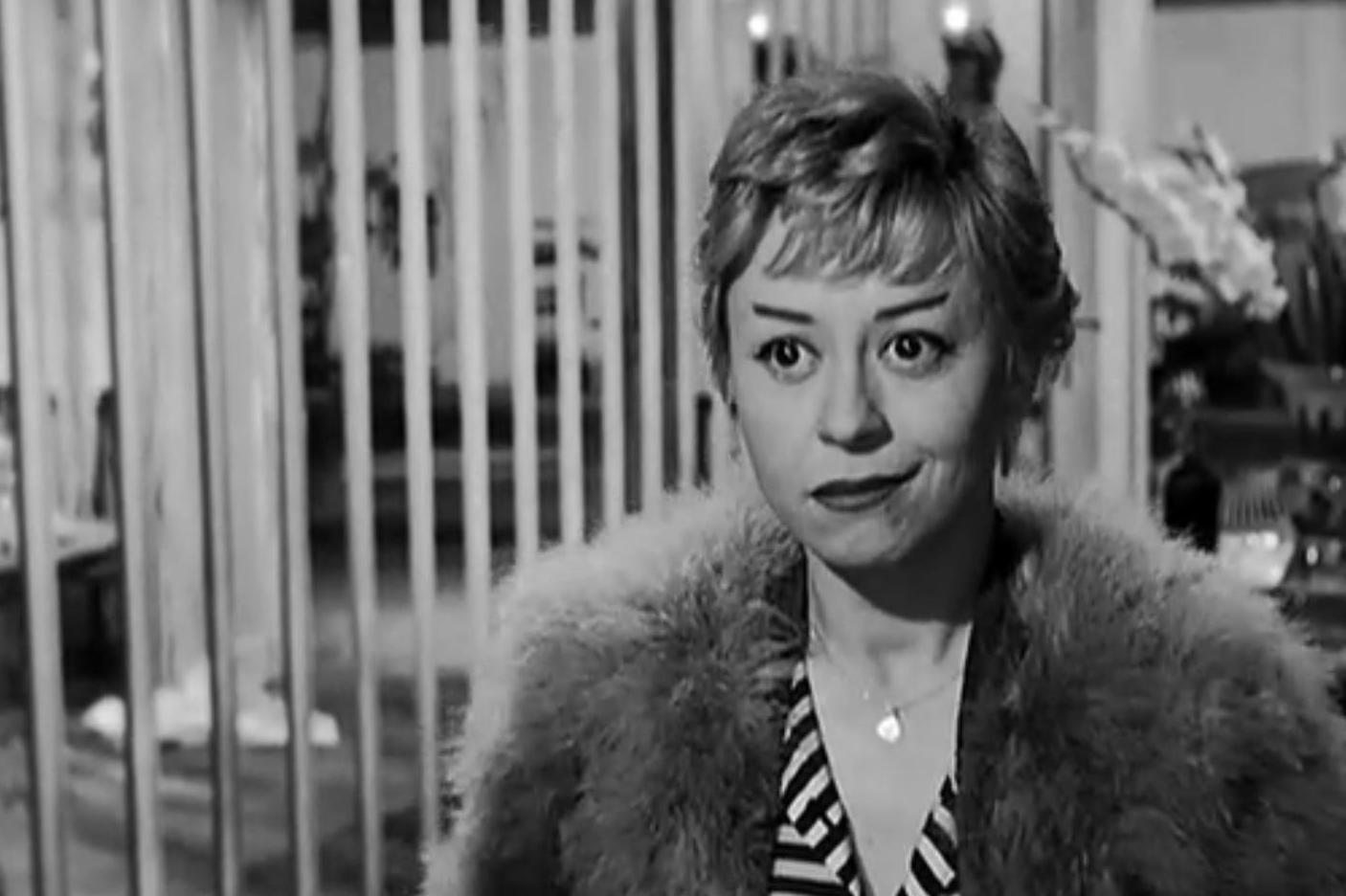
Giulietta Masina is unforgettable in Fellini masterpiece Nights of Cabiria

NIGHTS OF CABIRIA (LE NOTTI DI CABIRIA) (Federico Fellini, 1957)
MoMA Film
Monday, December 6, 7:00
www.moma.org

Giulietta Masina was named Best Actress at Cannes for her unforgettable portrayal of a far-too-trusting street prostitute in Nights of Cabiria. Directed by her husband, Federico Fellini, produced by Dino De Laurentiis, and written in collaboration with Pier Paolo Pasolini, the film, Fellini’s second to win the Oscar for Best Foreign Language Film (after La Strada), opens with Cabiria taking a romantic stroll by the river with her boyfriend, Giorgio (Franco Fabrizi), who suddenly snatches her purse and pushes her into the water, running off as she nearly drowns. Such is life for Cabiria, whose sweet, naive nature can turn foul tempered in an instant.

Over the course of the next few days, she gets picked up by movie star Alberto Lazzari (Amedeo Nazzari), goes on a religious pilgrimage with fellow prostitutes Wanda (Franca Marzi) and Rosy (Loretta Capitoli), gets hypnotized by a magician (Ennio Girolami), and falls in love with a tender stranger named Oscar (François Périer). But nothing ever goes quite as expected for Cabiria, who continues to search for the bright side even in the direst of circumstances. Masina is a delight in the film, whether yelling at a neighbor, dancing the mambo with Alberto, or looking to confess her sins, her facial expressions a work of art in themselves, ranging from sly smiles and innocent glances to nasty smirks and angry stares.

Guido Anselmi (Marcello Mastroianni) is in a bit of a personal and professional crisis in Fellini masterpiece

8½ (Federico Fellini, 1963)
MoMA Film
Friday, December 10, 7:00
www.moma.org

“Your eminence, I am not happy,” Guido (Marcello Mastroianni) tells the cardinal (Tito Masini) halfway through Federico Fellini’s self-reflexive masterpiece 8½. “Why should you be happy?” the cardinal responds. “That is not your task in life. Who said we were put on this earth to be happy?” Well, film makes people happy, and it’s because of works such as 8½. Fellini’s Oscar-winning eighth-and-a-half movie is a sensational self-examination of film and fame, a hysterically funny, surreal story of a famous Italian auteur who finds his life and career in need of a major overhaul. Mastroianni is magnificent as Guido Anselmi, a man in a personal and professional crisis who has gone to a healing spa for some much-needed relaxation, but he doesn’t get any as he is continually harassed by producers, screenwriters, would-be actresses, and various other oddball hangers-on. He also has to deal both with his mistress, Carla (Sandra Milo), who is quite a handful, as well as his wife, Luisa (Anouk Aimée), who is losing patience with his lies.

Trapped in a strange world of his own creation, Guido has dreams where he flies over claustrophobic traffic and makes out with his dead mother, and his next film involves a spaceship; it doesn’t take a psychiatrist to figure out the many inner demons that are haunting him. Marvelously shot by Gianni Di Venanzo in black-and-white, scored with a vast sense of humor by Nino Rota, and featuring some of the most amazing hats ever seen on film — costume designer Piero Gherardi won an Oscar for all the great dresses and chapeaux — is an endlessly fascinating and wildly entertaining exploration of the creative process and the bizarre world of filmmaking itself. And after seeing 8½, you’ll appreciate Woody Allen’s 1980 homage, Stardust Memories, a whole lot more.

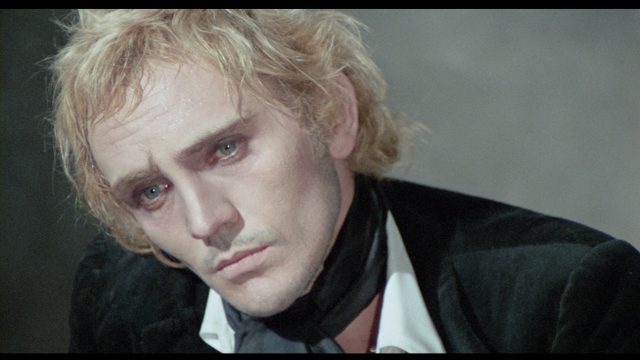
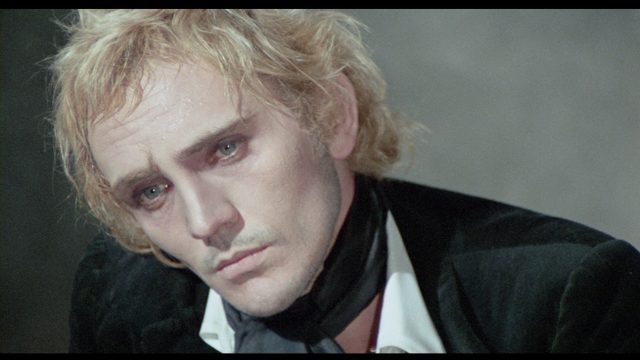
Terence Stamp is an alcoholic, fast-fading Shakespearean star in Federico Fellini’s Toby Dammit

SPIRITS OF THE DEAD: TOBY DAMMIT (Federico Fellini, 1968)
MoMA Film
Wednesday, December 8, 7:00, & Tuesday, December 21, 4:00
www.moma.org

MoMA is presenting all three of Federico Fellini’s shorter works: Agenzia matrimoniale (A Marriage Agency) was part of the 1953 omnibus L’amore in città (Love in the City), which also includes films by Carlo Lizzani, Michelangelo Antonioni, Dino Risi, Francesco Maselli and Cesare Zavattini, and Alberto Lattuada, while the 1969 documentary Block-notes di un regista (Felllini: A Director’s Notebook) was made for NBC television, about an uncompleted project. Toby Dammit concludes the Edgar Allan Poe anthology Spirits of the Dead, following Roger Vadim’s Metzengerstein, starring Jane Fonda and Peter Fonda, and Louis Malle’s William Wilson, with Alain Delon and his doppelgänger.

Adapted by Fellini and Bernardino Zapponi from Poe’s “Never Bet the Devil Your Head: A Tale with a Moral,” Toby Dammit is fiercely unpredictable, evoking La Dolce Vita and as British actor Toby Dammit (Terence Stamp) is lured to Rome to make a movie in exchange for a Ferrari. Amid bizarre interview segments, an absurdist awards ceremony, and meetings with his overbearing producers, Toby is haunted by a girl with a white ball (Marina Yaru). Toby Dammit is screening with 1962’s Le tentazioni del dottor Antonio (The Temptations of Doctor Antonio), featuring Anita Ekberg in a film dealing with sexual repression.

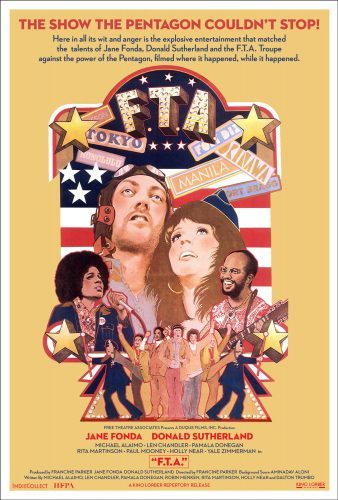
F.T.A.

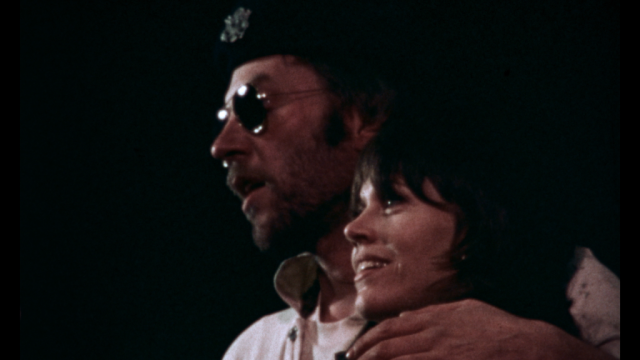
Donald Sutherland and Jane Fonda lead a vaudeville-like antiwar tour in 1971 in restored documentary F.T.A.

F.T.A. (Francine Parker, 1972)
New Plaza Virtual Cinema
Opens Friday, March 5
kinomarquee.com
newplazacinema.org

In 1972, actress Jane Fonda was excoriated for posing for a picture in North Vietnam sitting on an anti-aircraft gun with members of the Viet Cong, earning her the nickname “Hanoi Jane.” But the previous year, Fonda was being cheered wildly by US soldiers as she brought the antiwar F.T.A. tour to American military bases in Hawaii, Japan, Okinawa, and the Philippines. The tour, alternately known as “Fun, Travel, and Adventure,” “Free the Army,” “Free Theater Associates,” “Foxtrot Tango Alpha,” and “Fuck the Army,” featured comedy sketches and music with Fonda, fellow actors Donald Sutherland, Pamela Donegan, and Michael Alaimo, singer-songwriters Rita Martinson, Len Chandler, and Holly Near, and comedian Paul Mooney. Kino Marquee has just released a 4K restoration by IndieCollect of Francine Parker’s rarely screened, little-known 1972 film, F.T.A., documenting the Pacific section of the tour. The movie, about “the Show the Pentagon Couldn’t Stop!,” according to its ad campaign, ran for a week before being pulled from theaters by the distributor, who destroyed most copies.

“Histories of the Vietnam War all mention the widespread antiwar movement that was centered on college campuses. What most histories don’t tell you is that an equally widespread and powerful movement against the war existed inside the military itself,” Fonda says in a new video introduction, recorded in what has become a very familiar scene to viewers of Fire Drill Fridays, her weekly show about climate change and the Green New Deal, which the two-time Oscar and Emmy winner hosts in her home, sitting in front of a wall of photos.

The brainchild of court-martialed antiwar army doctor Howard Levy, F.T.A. was created specifically as “a counter show to the very pro-war, sexist” Bob Hope shows that were so popular, Fonda notes. She had just completed shooting Klute and so she invited her costar, Sutherland, who had previously appeared in such war films as The Dirty Dozen, M*A*S*H, Kelly’s Heroes, and Johnny Got His Gun, to join her. Working with material garnered from GI magazines in addition to skits written by the likes of Jules Feiffer and Herb Gardner, the revue ended up entertaining some 64,000 active-duty soldiers, sailors, marines, and air force men and women. But it wasn’t just fun and games; Fonda, Sutherland, and the rest of the team were there to make a point.

The film doesn’t open with comedy or music but with an unidentified GI saying, “I mean, how can you write your mother and tell her that her handsome young darling marine, her hero, is anti-military? But I sat down and I wrote her a letter and told her exactly how I felt, and my mother wrote back and she said she fully understood and she was happy I felt that way.” Parker follows that with several other servicemen and -women explaining that they were serving in the military either to avoid jail or because they didn’t have any other options, not because they wanted to fight Communism and defend democracy in Southeast Asia.

The narrative then shifts to the tour itself, an alternative modern vaudeville with political songs and short skits that skewer the government and military leaders, poking fun at the bureaucracy while focusing on the very real class, gender, and race differences that are inherent in war and society. “I went down to that base / They took one look at my face / And read out an order to bar me / I said, ‘Foxtrot Tango Alpha’ / ‘F-f-free the army,’” Fonda sings with Chandler and others.

Amid the laughs — and there are many of them, including one funny scene in which Sutherland and Alaimo play two sports announcers, both named Red, calling the war as if it were a football game — Parker, Fonda, and Sutherland speak with more antiwar soldiers, individually and at small gatherings, where they feel comfortable enough to express their views about chemical warfare and nuclear weapons. The crowd gets rocking singing along with such songs as Chandler’s “My Ass Is Mine” and “Set the Date!” and Robin Menken’s “Nothing Could Be Finer Than to Be in Indochina!” and “So Nice to Be a Member of the Military Class,” while Martinson’s “Soldier, We Love You,” about injustice and inequality, hits hard and Beverly Grant’s feminist rant, “I’m Tired of Bastards Fuckin’ Over Me,” brings down the house.

Produced by Parker, Fonda, and Sutherland, F.T.A. is a clarion call against the misuse of military power; it feels today much more than a mere time capsule celebrating opposition to one war fifty years ago but a shot across the bow for protestors everywhere fighting against the military-industrial complex, against corrupt government, in a country that’s more divided than ever and where identity politics have run rampant.

“You won’t see a change here [overseas] until you see a change back in the world [in the US],” one man says. “Gimme a cause that I can believe in and let me die for that,” another adds. After watching F.T.A., you’ll realize that 2021 is not as different from 1971 as you might have thought, or wanted it to be.

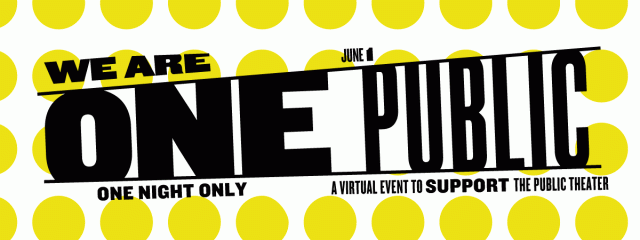
WE ARE ONE PUBLIC

we are one public

Who: Todd Almond, Troy Anthony, Antonio Banderas, Laura Benanti, Kim Blanck, Ally Bonino, Danielle Brooks, Michael Cerveris, Glenn Close, Jenn Colella, Elvis Costello, Daniel Craig, Claire Danes, Danaya Esperanza, Jesse Tyler Ferguson, Jane Fonda, Nanya-Akuki Goodrich, Holly Gould, Danai Gurira, Anne Hathaway, Stephanie Hsu, David Henry Hwang, Oscar Isaac, Brian d’Arcy James, Nikki M. James, Alicia Keys, John Leguizamo, John Lithgow, Audra McDonald, Grace McLean, Lin-Manuel Miranda, Brian Stokes Mitchell, Margaret Odette, Sandra Oh, Kelli O’Hara, Mia Pak, Suzan-Lori Parks, David Hyde Pierce, Jay O. Sanders, Liev Schreiber, Deandre Sevon, Martin Sheen, Philippa Soo, Meryl Streep, Trudie Styler, Sting, Will Swenson, Shaina Taub, Kuhoo Verma, Ada Westfall, Kate Wetherhead, more
What: Virtual gala celebrating the Public Theater and special honorees
Where: Public Theater website, Facebook, YouTube
When: Monday, June 1, free with RSVP (donations accepted), 8:00
Why: Among the cultural institutions I miss the most during the pandemic is the Public Theater. Founded by Joseph Papp in 1954 as the Shakespeare Workshop and located on Lafayette St. since 1967, the Public features six spaces for theatrical productions including Joe’s Pub, home to cabaret, comedy, and concerts as well. In addition, the Public has been offering us Shakespeare in the Park at the Delacorte for nearly sixty years; this summer’s scheduled shows were Richard II and As You Like It in addition to Cymbeline from the Mobile Unit.

The Public, which has been streaming previous performances from Joe’s Pub and presented the best new Zoom play about the pandemic, Richard Nelson’s What Do We Need to Talk About?, available on demand through June 28, will hold its annual fundraising gala online on June 1 at 8:00, a virtual ninety-minute, one-time-only cavalcade of stars honoring actor Sam Waterston and philanthropists Audrey Wilf and Zygi Wilf. Cochairs Kwame Anthony Appiah, Candia Fisher, Joanna Fisher, Laure Sudreau, and Lynne Wheat have amassed quite a lineup, with appearances by Glenn Close, Elvis Costello, Daniel Craig, Claire Danes, Jane Fonda, Anne Hathaway, Oscar Isaac, Alicia Keys, John Leguizamo, John Lithgow, Audra McDonald, Lin-Manuel Miranda, Brian Stokes Mitchell, Sandra Oh, Kelli O’Hara, David Hyde Pierce, Liev Schreiber, Martin Sheen, Meryl Streep, Sting, and many more. (The full lineup is above.) The evening will be directed by Kenny Leon and hosted by Jesse Tyler Ferguson, with music direction by Ted Sperling; the event is free, but donations are accepted to support the Public, one of New York City’s genuine treasures.

RATED X

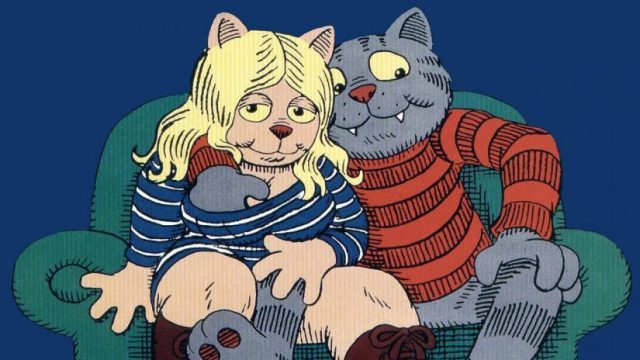
Ralph Bakshis animatedFritz the Cat is part of Quad tribute to X-rated cinema

Ralph Bakshi’s animated Fritz the Cat is part of Quad tribute to X-rated cinema

Quad Cinema
34 West 13th St. between Fifth & Sixth Aves.
Series runs December 14 – January 10
212-255-2243
quadcinema.com

In 1974, the promotional tag line for the porn sequel Emmanuelle II was “X was never like this.” While that film flaunted it, more mainstream movies treat the rating as a plague that could kill distribution and box office. The Quad is paying tribute to the controversial grade with “Rated X,” consisting of thirty-four films screening December 14 to January 10 that were either X-rated or had to make a few nips and tucks in order to avoid that tag. The films range from Stanley Kubrick’s A Clockwork Orange and John Schlesinger’s Midnight Cowboy to George A. Romero’s Dawn of the Dead and Tobe Hooper’s The Texas Chainsaw Massacre, from Marco Bellocchio’s Devil in the Flesh and Pedro Almodóvar’s Tie Me Up! Tie Me Down! to Vilgot Sjöman’s I Am Curious (Yellow) and Nagisa Oshima’s In the Realm of the Senses. Keep watching this space for additional reviews of this, um, titillating film fest.
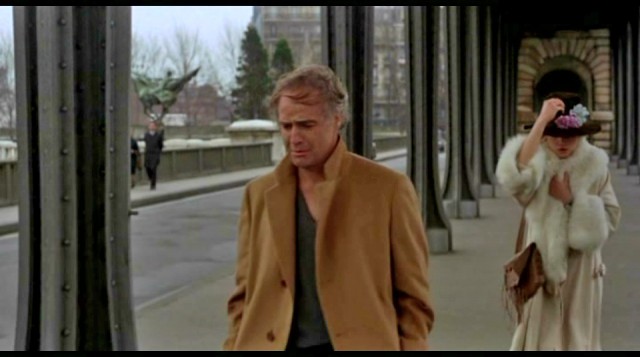
LAST TANGO IN PARIS

Marlon Brando and Maria Schneider star in Bernardo Bertolucci’s controversial Last Tango in Paris

LAST TANGO IN PARIS (ULTIMO TANGO A PARIGI) (Bernardo Bertolucci, 1972)
Saturday, December 15, 7.40
Sunday, December 16, 7:20
Friday, December 28, 8:35
Saturday, January 5, 8:55
www.fiaf.org

One of the most artistic films ever made about seduction, Bernardo Bertolucci’s controversial X-rated Last Tango in Paris is part of the Quad’s “Paris Stripped Bare” and “Pictures from the Revolution: Bertolucci’s Italian Period” series in addition to “Rated X.” Written by Bertolucci (The Conformist, The Spider’s Stratagem), who passed away in Rome in November at the age of seventy-seven, with regular collaborator and editor Franco Arcalli and with French dialogue by Agnès Varda (Le Bonheur, Vagabond), the film opens with credits featuring jazzy romantic music by Argentine saxophonist Gato Barbieri and two colorful and dramatic paintings by Francis Bacon, “Double Portrait of Lucian Freud and Frank Auerbach” and “Study for a Portrait,” that set the stage for what is to follow. (Bacon was a major influence on the look and feel of the film, photographed by Vittorio Storaro.) Bertolucci then cuts to a haggard man (Marlon Brando) standing under the Pont de Bir-Hakeim in Paris, screaming out, “Fucking God!” His hair disheveled, he is wearing a long brown jacket and seems to be holding back tears. An adorable young woman (Maria Schneider) in a fashionable fluffy white coat and black hat with flowers passes by, stops and looks at him, then moves on. They meet again inside a large, sparsely furnished apartment at the end of Rue Jules Verne that they are each interested in renting. Both looking for something else in life, they quickly have sex and roll over on the floor, exhausted. For the next three days, they meet in the apartment for heated passion that the man, Paul, insists include nothing of the outside world — no references to names or places, no past, no present, no future; the young woman, Jeanne, agrees. Their sex goes from gentle and touching to brutal and animalistic; in fact, after one session, Bertolucci cuts to actual animals. The film is nothing if not subtle.
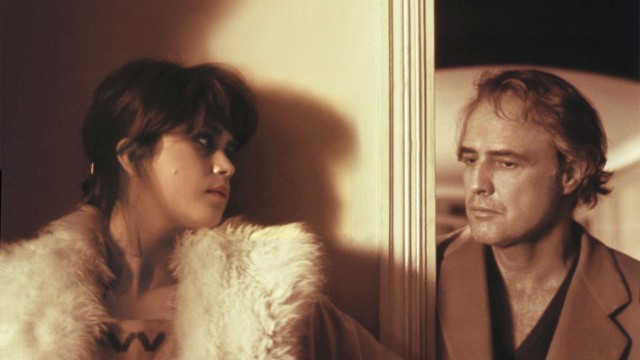
LAST TANGO IN PARIS

Jeanne (Maria Schneider) and Paul (Marlon Brando) share a private, sexual relationship in Last Tango in Paris

The lovers’ real lives are revealed in bits and pieces, as Paul tries to recover from his wife’s suicide and Jeanne deals with a fiancée, Thomas (Jean-Pierre Léaud), who has suddenly decided to make a film about them, without her permission, asking precisely the kind of questions that Paul never wants to talk about. When away from the apartment, Jeanne is shown primarily in the bright outdoors, flitting about fancifully and giving Thomas a hard time; in one of the only scenes in which she’s inside, Thomas makes a point of opening up several doors, preventing her from ever feeling trapped. Meanwhile, Paul is seen mostly in tight, dark spaces, especially right after having a fight with his dead wife’s mother. He walks into his hotel’s dark hallway, the only light coming from two of his neighbors as they open their doors just a bit to spy on him. Not saying anything, he pulls their doors shut as the screen goes from light to dark to light to dark again, and then Bertolucci cuts to Paul and Jeanne’s apartment door as she opens it, ushering in the brightness that always surrounds her. It’s a powerful moment that heightens the difference between the older, less hopeful man and the younger, eager woman. Inevitably, however, the safety of their private, primal relationship is threatened, and tragedy awaits.
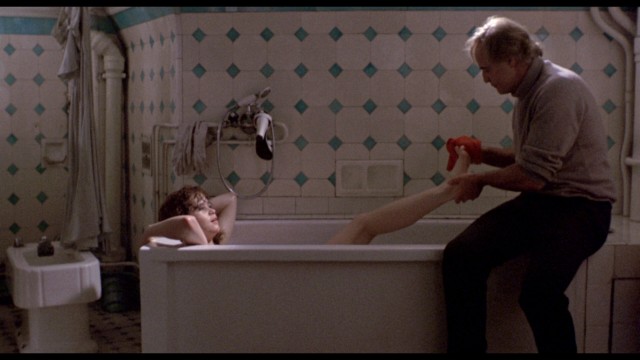
Jeanne and Paul develop a complicated sexual relationship in LAST TANGO

Jeanne and Paul develop a complicated sexual relationship in Last Tango

“I’ve tried to describe the impact of a film that has made the strongest impression on me in almost twenty years of reviewing. This is a movie people will be arguing about, I think, for as long as there are movies,” Pauline Kael wrote in the New Yorker on October 28, 1972, shortly before Last Tango closed the tenth New York Film Festival. “It is a movie you can’t get out of your system, and I think it will make some people very angry and disgust others. I don’t believe that there’s anyone whose feelings can be totally resolved about the sex scenes and the social attitudes in this film.” More than forty years later, the fetishistic Last Tango in Paris still has the ability to evoke those strong emotions. The sex scenes range from tender, as when Jeanne tells Paul they should try to climax without touching, to when Paul uses butter in an attack that was not scripted and about which Schneider told the Daily Mail in 2007, “I felt humiliated and to be honest, I felt a little raped, both by Marlon and by Bertolucci. After the scene, Marlon didn’t console me or apologise. Thankfully, there was just one take.” At the time of the shooting, Brando was forty-eight and Schneider nineteen; Last Tango was released between The Godfather and Missouri Breaks, in which Brando starred with Jack Nicholson, while Schneider would go on to make Michelangelo Antonioni’s The Passenger with Nicholson in 1975. Brando died in 2004 at the age of eighty, leaving behind a legacy of more than forty films. Schneider died in 2011 at the age of fifty-eight; she also appeared in more than forty films, but she was never able to escape the associations that followed her after her breakthrough performance in Last Tango, which featured extensive nudity, something she refused to do ever again. Even in 2018, Last Tango in Paris is both sexy and shocking, passionate and provocative, alluring and disturbing, all at the same time, a movie that, as Kael said, viewers won’t easily be able to get out of their system.
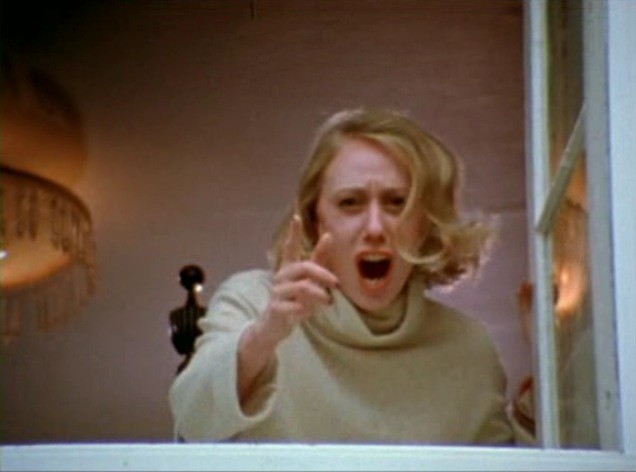
DESPERATE LIVING

Peggy Gravel’s quaint suburban life is about to go to hell in John Waters’s Desperate Living

DESPERATE LIVING (John Waters, 1977)
Friday, December 21, 8:35
Wednesday, December 26, 8:35
Wednesday, January 2, 8:35
quadcinema.com

A turning point in his career, John Waters’s Desperate Living is an off-the-charts bizarre, fetishistic fairy tale, the ultimate suburban nightmare. Mink Stole stars as Peggy Gravel, a wealthy housewife suffering yet another of her mental breakdowns. In the heat of the moment, she and the family maid, four-hundred-pound Grizelda Brown (Jean Hill), kill Peggy’s mild-mannered husband, Bosley (George Stover), and the two women end up finding refuge in one of the weirdest towns ever put on celluloid, Mortville, where MGM’s The Wizard of Oz and Babes in Toyland meet Russ Meyer’s Faster, Pussycat! Kill! Kill! (with some Kenneth Anger, Jack Smith, and Douglas Sirk thrown into the mix as well). “I ain’t your maid anymore, bitch! I’m your sister in crime!” Grizelda declares. Peggy and Grizelda move into the “guest house” of manly Mole McHenry (Susan Lowe) and her blonde bombshell lover, Muffy St. Jacques (Liz Renay). Mortville is run as a kind of fascist state by the cruel and unusual despot Queen Carlotta (Edith Massey), an evil shrew who enjoys being serviced by her men-in-leather attendants, issues psychotic proclamations, and is determined that her daughter, Princess Coo-Coo (Mary Vivian Pearce), stop dating her garbage-man boyfriend, Herbert (George Figgs). (Wait, Mortville has a sanitation department?) Camp and trash combine like nuclear fission as things get only crazier from there, devolving into gorgeous low-budget madness and completely over-the-top ridiculousness, a mélange of sex, violence, and impossible-to-describe lunacy that Waters himself claimed was a movie “for fucked-up children.”
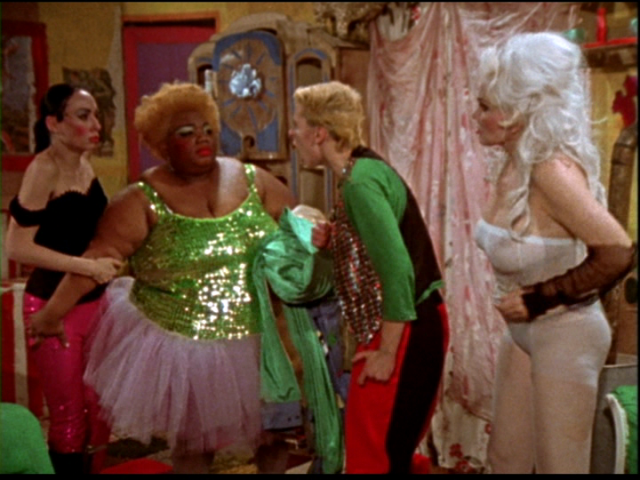
DESPERATE LIVING

John Waters’s Desperate Living is a celebration of camp and trash, an extremely adult and bizarre fairy tale

The opening scenes of Peggy’s meltdown are utterly hysterical. When a neighbor hits a baseball through her bedroom window and offers to pay for it with his allowance, she screams, “How about my life? Do you get enough allowance to pay for that? I know you were trying to kill me! What’s the matter with the courts? Do they allow this lawlessness and malicious destruction of property to run rampant? I hate the Supreme Court! Oh, God. God. God. Go home to your mother! Doesn’t she ever watch you? Tell her this isn’t some communist day-care center! Tell your mother I hate her! Tell your mother I hate you!” The sets and costumes are deranged — and perhaps influenced Pee-wee’s Playhouse — the relatively spare score is fun, and the acting is, well, appropriate. The first half of the film is better than the second half, but it’s still a delight to watch Waters, who wrote, directed, and produced the film, which was shot in a kind of lurid Technicolor by Charles Ruggero, take on authority figures (beware of Sheriff Shitface), gender identity, class structure, hero worship, beauty, race, crime, nudity, and, of course, at its very heart, love and romance.
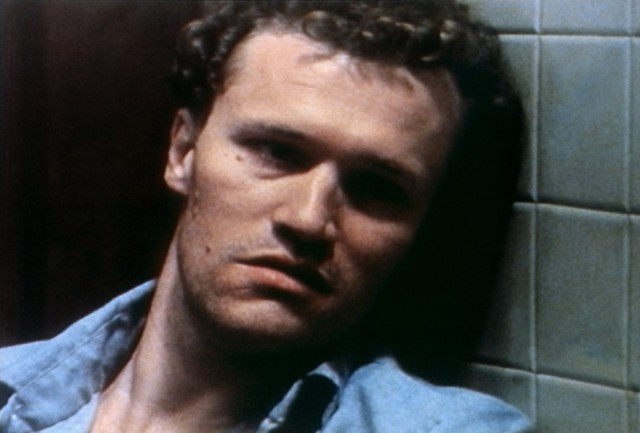
MIchael Rooker stars as a troubled murderer in HENRY: PORTRAIT OF A SERIAL KILLER

Michael Rooker stars as a troubled murderer in Henry: Portrait of a Serial Killer

HENRY: PORTRAIT OF A SERIAL KILLER (John McNaughton, 1986)
Thursday, December 27, 6:45
Saturday, January 5, 1.00
quadcinema.com

More than thirty years ago, when director John McNaughton (Mad Dog and Glory, Wild Things) was asked by executive producers Malik B. and Waleed B. Ali to make a low-budget horror film, he and cowriter Richard Fire decided to base their tale on the exploits of serial killer Henry Lee Lucas, whose story McNaughton had just seen on 20/20. The result was this creepy, dark, well-paced effort starring Michael Rooker as Henry, a brooding, casual serial killer who can’t quite remember how he murdered his mother. Henry lives in suburban Chicago with ex-con Otis (Tom Towles), whose sexy young sister, Becky (Tracy Arnold), comes to stay with them to get away from her abusive husband. As the relationship among the three of them grows more and more complicated, Henry continues to kill people — and get away with it. The opening tableau of some of Henry’s murder victims — the actual killings aren’t shown in the beginning — is beautifully done, although it also fetishizes violence against women, which is extremely disturbing. (Several of the victims are played by the same woman, Mary Demas, in different wigs.) Henry: Portrait of a Serial Killer, which was not released until 1989 because of its graphic content, was nominated for six Independent Spirit Awards in 1990, and Rooker was named Best Actor at the Seattle International Film Festival.
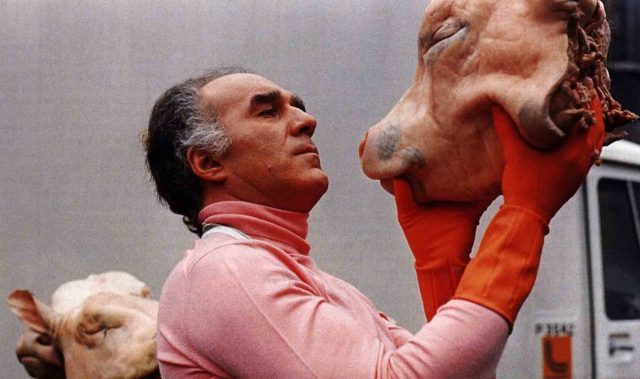
Michel Piccoli prepares to make a pig of himself in La Grande Bouffe

Michel Piccoli prepares to make a pig of himself in La Grande Bouffe

LA GRANDE BOUFFE (THE BIG FEAST) (BLOW-OUT) (Marco Ferreri, 1973)
Tuesday, January 1, 5:30
Friday, January 4, 9:15
quadcinema.com

Fed up with their lives, four old friends decide to literally eat themselves to death in one last grand blow-out. Cowritten and directed by Marco Ferreri (Chiedo asilo, La casa del sorriso), La Grande Bouffe features a cast that is an assured recipe for success, bringing together a quartet of legendary actors, all playing characters with their real first names: Marcello Mastroianni as sex-crazed airplane pilot Marcello, Philippe Noiret as mama’s boy and judge Philippe, Michel Piccoli as effete television host Michel, and Ugo Tognazzi as master gourmet chef Ugo. They move into Philippe’s hidden-away family villa, where they plan to eat and screw themselves to death, with the help of a group of prostitutes led by Andréa (Andréa Ferréol). Gluttons for punishment, the four men start out having a gas, but as the feeding frenzy continues, so does the flatulence level, and the men start dropping one by one. While the film, which won the FIPRESCI Prize at the 1973 Cannes Film Festival, might not be quite the grand feast it sets out to be, it still is one very tasty meal. Just be thankful that it’s not shown in Odoroma. Bon appetit!
SOME ARE BETTER THAN OTHERS — THE CURIOUS CASE OF THE ANTHOLOGY FILM: SPIRITS OF THE DEAD

Metzengerstein

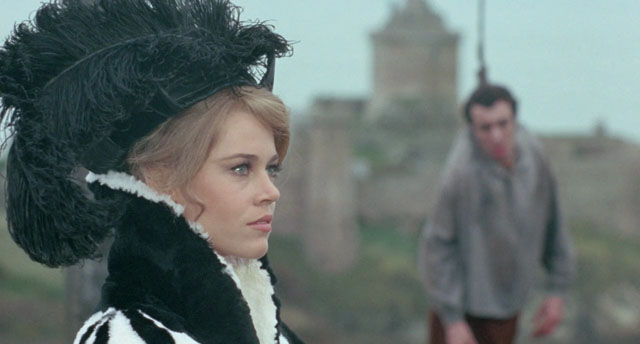
Jane Fonda plays a sexy countess in husband Roger Vadim’s Metzengerstein

SPIRITS OF THE DEAD (TRE PASSI NEL DELIRIO) (HISTOIRES EXTRAORDINAIRES) (Roger Vadim, Louis Malle, and Federico Fellini, 1968)
Quad Cinema
34 West 13th St. between Fifth & Sixth Aves.
Friday, September 14, 7:10; Friday, September 21, 7:00
Series runs September 14-27
212-255-2243
quadcinema.com

The Quad gets right to the heart of the matter in the title of its new series, “Some Are Better than Others: The Curious Case of the Anthology Film.” Also known as an omnibus, anthology films are compilations of shorter works, often by master directors, on a specific theme. The Quad festival, running September 14-27, includes Aria, in which ten directors, among them Robert Altman, Jean-Luc Godard, Derek Jarman, Nicolas Roeg, and Ken Russell, make films inspired by opera pieces; the four-part 1945 British horror anthology Dead of Night; Lumière and Company, in which forty-one international filmmakers create fifty-two-second films using original equipment from the Lumière brothers; and Twilight Zone — The Movie, with Joe Dante, John Landis, George Miller, and Steven Spielberg revisiting classic episodes from the Rod Serling TV program. It is rare that all of the short films are of equal quality — hence, “Some are better than others” — and such is the case with the 1968 trilogy of Edgar Allan Poe stories, Spirits of the Dead.

William Wilson

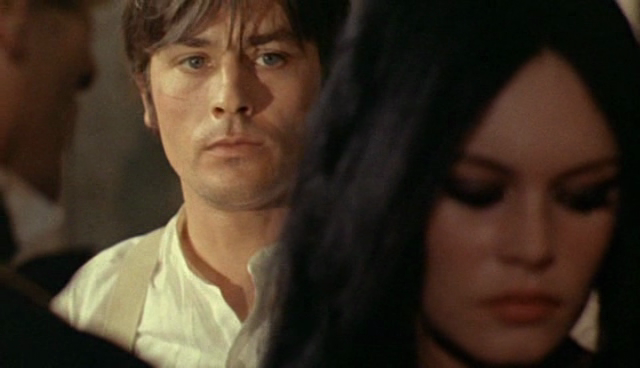
Alain Delon gets into a heated card game with Brigitte Bardot in Louis Malle’s William Wilson

The film begins with Roger Vadim’s Metzengerstein, in which a lush and lavishly shot Jane Fonda, in spectacular outfits and hairstyles, plays Countess Frederique de Metzengerstein, who has inherited a massive estate and rules it without any inhibitions — yet her devilish debauchery doesn’t quite satisfy her. After an accidental meeting with her calm, easygoing cousin, Baron Wilhelm Berlifitzing, portrayed by her brother, Peter Fonda, she tries to end a long-running feud with his family, resulting in some extremely peculiar moments of lust for him and, later, his horse. Vadim was married to Fonda at the time, adding to the incestuous titillation and bestiality that run through the tale, which was based on Poe’s first published short story.

Toby Dammit

Terence Stamp is an alcoholic, fast-fading Shakespearean star in Toby Dammit

In Louis Malle’s William Wilson, Alain Delon is the title character, an elegant cad who has been followed since childhood by his doppelgänger, who determinedly, and very publicly, rights his wrongs. The film, which is told in flashback as Wilson confesses to a priest that he has killed a man, features a chilling card game with a black-haired, ultra-serious Brigitte Bardot. Malle was not happy with the film, which he took on just for the money; thus, he acquiesced to certain elements because he was told to do so, from casting to certain plot points, going against his instincts. The three-pack concludes with Federico Fellini’s fiercely unpredictable Toby Dammit, adapted by Fellini and Bernardino Zapponi from Poe’s “Never Bet the Devil Your Head: A Tale with a Moral.” Fellini evokes La Dolce Vita and as British actor Toby Dammit (Terence Stamp) is lured to Rome to make a movie in exchange for a Ferrari. Amid bizarre interview segments, an absurdist awards ceremony, and meetings with his overbearing producers, Toby is haunted by a girl with a white ball (Marina Yaru).

Originally advertised as “Edgar Allan Poe’s Ultimate Orgy!,” Spirits of the Dead, narrated by Poe icon Vincent Price, is choppily edited and wildly uneven. The filmmakers deal with fear, fire, eroticism, passion, obsession, power, ennui, and death more directly than they do in their full-length works, but things are also often more unclear. Still, this is a rare chance to see these three shorts together on the big screen. And beware of what Poe wrote in his 1827 poem “Spirits of the Dead”: Thy soul shall find itself alone / ’Mid dark thoughts of the grey tomb-stone; / Not one, of all the crowd, to pry / Into thine hour of secrecy. / Be silent in that solitude, / Which is not loneliness — for then / The spirits of the dead, who stood / In life before thee, are again / In death around thee, and their will / Shall overshadow thee; be still. / The night, though clear, shall frown, / And the stars shall not look down / From their high thrones in the Heaven / With light like hope to mortals given, / But their red orbs, without beam, / To thy weariness shall seem / As a burning and a fever / Which would cling to thee for ever.” Spirits of the Dead is screening at the Quad on September 14 at 7:10 and September 21 at 7:00. The series continues with such other anthologies as Boccaccio ’70 (De Sica, Monicelli, Fellini, Visconti), Far from Vietnam (Klein, Ivens, Lelouch, Varda, Godard, Marker, Resnais), New York Stories (Scorsese, Coppola, Allen), and Seven Women, Seven Sins (Akerman, Cohen, Export, Gavron, Gordon, Ottinger, Sander).

TRIBECA FILM FESTIVAL: FIFTEEN FOR FIFTEEN

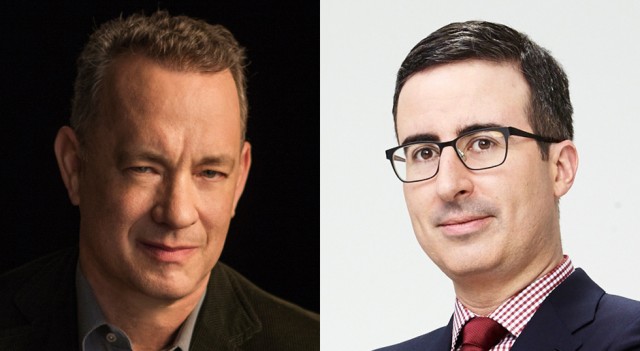
Tom Hanks and John Oliver will get together for a at Tribeca Film Festival

Tom Hanks and John Oliver will get together for a Storytellers talk at Tribeca Film Festival

Tribeca Film Festival
Multiple venues
April 14-24, $14-$43.50
tribecafilm.com

In 2002, Jane Rosenthal, Robert De Niro, and Craig Hatkoff founded the Tribeca Film Festival, helping to rebuild Lower Manhattan socially, culturally, and economically following 9/11. The festival is celebrating its fifteenth anniversary this year with another packed slate of film screenings, talks, master classes, and a major symposium, running from April 14 to 24 at the SVA Theatre, Bow Tie Cinemas Chelsea, Regal Cinemas Battery Park, the Borough of Manhattan Community College, and the festival hub at 50 Varick St. Ticket prices continue to climb, so it’s not exactly cheap to attend, but that hasn’t stopped many events from nearly selling out already despite costing $23.50 for most regular screenings and between $33.20 and $43.50 for conversations and films with postscreening talks. In honor of Tribeca’s fifteenth birthday, below are fifteen highlights from this year’s fest, with one extra thrown in for good luck.

Thursday, April 14
Tribeca Talks — Storytellers: Patti Smith with Ethan Hawke, SVA Theatre 1 Silas, rush ticketing only, 3:00

Tribeca Tune In: Grace and Frankie, screening of two episodes from season two, followed by discussion with Jane Fonda and Lily Tomlin, moderated by Gayle King, SVA Theatre 1 Silas, $33.50, 5:00

Contemporary Color (Bill & Turner Ross, 2016), followed by a conversation between David Byrne and the directors, with appearances by color guarders, JZT@BMCC, $23.50, 9:00

Saturday, April 16
TFI Interactive, all-day immersive symposium, divided into the MakerSpace, the Conference, and the Interactive Playground exhibit, festival hub at 50 Varick St., $40, 11:00 am

Monday, April 18
Tribeca Talks — Directors Series: Andrea Arnold in conversation with Ira Sachs, SVA Theatre 2 Beatrice, $43.50, 2:00

Tribeca Tune In: For the Love of Spock (Adam Nimoy, 2016), followed by a conversation with Adam Nimoy, Zachary Quinto, David Zappone, and Scott Manzt, moderated by Gordon Cox, SVA Theatre 2 Beatrice, $33.20, 5:00

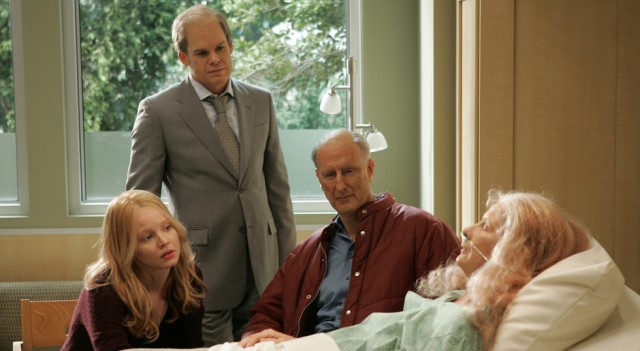
SIX FEET UNDER creator Alan Ball will offer live commentary during screening of final episode at Tribeca Film Festival

SIX FEET UNDER creator Alan Ball will offer live commentary during anniversary screening of final episode at Tribeca Film Festival

Tuesday, April 19
Tribeca Tune In: Fifteenth anniversary screening of Six Feet Under series finale, with live commentary by show creator Alan Ball, moderated by Matt Zoller Seitz, SVA Theatre 1 Silas, $33.50, 4:30

Tribeca Tune In: Full Frontal with Samantha Bee, conversation with Samantha Bee and head writer Jo Miller, moderated by Stacey Wilson Hunt, SVA Theatre 1 Silas, $33.50, 7:30

Wednesday, April 20
Tribeca Talks: Daring Women Summit, featuring keynote conversations, discussions, presentations, and more, with Samantha Bee, Allana Harkin, Rachel Sklar, Donna Karan, Rosie Perez, Kate Ward, Lea Goldman, Kathleen Grace, Sophia Rossi, Stephanie Laing, Amy Emmerich, LaLa Anthony, Julie Ann Crommett, Nahnatchka Khan, Liz Meriweather, Danielle Nussbaum, Mya Taylor, Catie Lazarus, Kristi Zea, Laura Walker, Anna Sale, Phoebe Robinson, Cindy Gallop, Kathryn Minshew, and others to be announced, festival hub at 50 Varick St., $150, 10:30 am

Tribeca Talks — Directors Series: Jodie Foster with Julie Taymor, festival hub at 50 Varick St., $43.50, 5:30

Tribeca Talks — Directors Series: Alfonso Cuarón with Emmanuel Lubezki, SVA Theatre 1 Silas, $43.50, 6:00

Thursday, April 21
Tribeca Talks After the Movie: Starring Austin Pendleton (David H. Holmes & Gene Gallerano, 2016), followed by discussion with Austin Pendleton, Olympia Dukakis, Peter Sarsgaard, Denis O’Hare, George Morfogen, and directors David H. Holmes and Gene Gallerano, moderated by Gordon Cox, SVA Theatre 2 Beatrice, $43.50, 2:30

Tribeca Talks After the Movie: I Voted? (Jason Grant Smith, 2016), followed by discussion with Jason Grant Smith, Katie Couric, Dan Abrams, and Dr. DeForest Soaries, SVA Theatre 2 Beatrice, $43.50, 5:30

Friday, April 22
Tribeca Talks — Storytellers: Tom Hanks with John Oliver, JZT@BMCC, rush ticketing only, 6:00

Saturday, April 23
Tribeca Talks: What We Talk About When We Talk About the Bomb, with Michael Douglas, Eric Schlosser, Emma Belcher, Joe Cirincione, Robert Kenner, and Smriti Keshari, SVA Theatre 2 Beatrice, $43.50, 5:00

Tribeca Talks — Directors Series: Baz Luhrmann with Nelson George, SVA Theatre 1 Silas, $43.50, 6:00