A Mexican family takes a hard look at its hard life in CIRCO
CIRCO (Aaron Schock, 2010)
IFC Center
323 Sixth Ave. at Third St.
Opens Friday, April 1
212-924-7771
www.ifccenter.com
www.firstrunfeatures.com/circo
 Setting out to make a film about Mexican corn farmers, Aaron Schock was captivated by a traveling circus and instead decided to tell the fascinating story of the Ponce family. For more than a hundred years, seven generations of Ponces have operated a small circus that makes its way through rural Mexico, delivering such old-fashioned spectacles as contortionism, tightrope walkers, clowns, tiger taming, aerial acts, and the Globe of Death, primarily performed by members of the Ponce clan, including five children. They do everything themselves, from hammering in stakes to put the big top up to driving through local villages announcing their arrival, handing out free tickets to youngsters in the hopes that their parents will buy tickets in order to take them to the show. But what Schock reveals is that the Ponces’ Gran Circo Mexico is not a feel-good, DIY tale of a happy family living and working together in harmony; instead, Tino and his wife, Ivonne, are clashing over their very future. Whereas Tino is dedicated to keeping the family tradition alive, Ivonne wants to have a more normal life, with the kids going to school and making friends. While Tino has passed down the tricks of the trade, most of the Ponces cannot read or write and have received no formal education. And when his brother considers leaving the circus to be with a settled woman, Tino feels the strain of his responsibility even further, forced to decide between the family legacy or starting a whole new life. In his debut feature-length documentary, Schock, serving as director, producer, camera operator, cowriter, and sound man, portrays the difficult lives the Ponces lead, with little money and dwindling audiences, allowing the various family members to tell their moving stories while they prepare for the next performance. Just as Schock doesn’t take sides, audiences will understand Tino’s and Ivonne’s conflicting positions and will feel for both of them in this compelling study of a family in flux. Named Best Documentary at the 2010 Hamptons International Film Festival, Circo opens tonight at the IFC Center; Schock will be on hand to talk about the film Friday and Saturday nights at the 7:50 and 9:40 screenings and Sunday at 4:10.
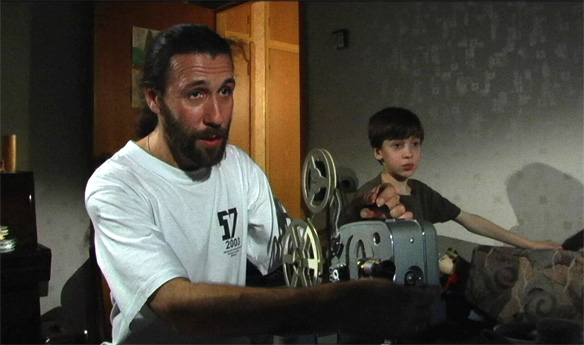
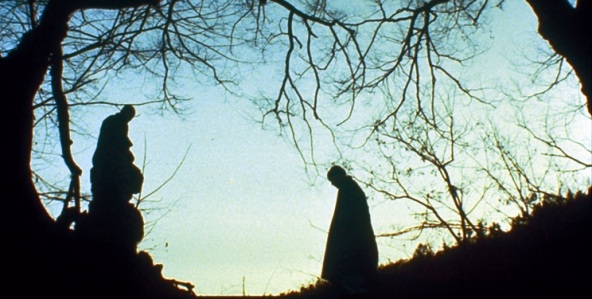
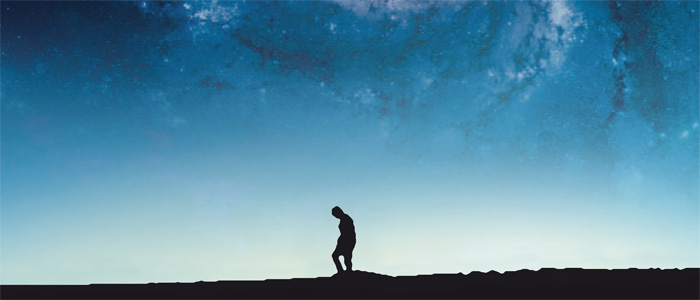
 Master documentarian Patricio Guzmán’s Nostalgia for the Light is a brilliant examination of memory and the past, one of the most intelligent and intellectual films you’re ever likely to see. But don’t let that scare you off — it is also a vastly entertaining, deeply emotional work that will blow you away with its stunning visuals and heartbreaking stories. Guzmán, who chronicled the assassination of Salvador Allende and the rise of Augusto Pinochet in the landmark three-part political documentary The Battle of Chile, this time visits the Atacama Desert in his native Chile, considered to be the driest place on Earth. Situated ten thousand feet above sea level, the desert is home to La Silla and Paranal Observatories, where astronomers come from all over the world to get unobstructed views of the stars and galaxies, unimpeded by pollution or electronic interference. However, it is also a place where women still desperately search for the remains of their loved ones murdered by Pinochet’s military regime and hidden away in mass graves. In addition, archaeologists have discovered mummies and other fossilized bones dating from pre-Columbian times there. Guzmán seamlessly weaves together these three journeys into the past — as astronomers such as Gaspar Galaz and Luis Hernandez note, by the time they see stars either with the naked eye or through the lens of their massive telescopes, the celestial bodies have been long dead — creating a fascinating narrative that is as thrilling as it is breathtaking. Constructing a riveting tale of memory, Guzmán speaks with architect Miguel Lawner, who draws detailed maps of the Chacabuca desert concentration camp where he and so many other political prisoners were held; Valentina, a young astronomer whose grandparents had to give up her parents in order to save her when she was a baby; archaeologist Lautaro Nunez, who digs up mummies while trying to help the women find “los desaparecidos”; and Victoria and Violeta, who regularly comb the barren landscape in search of their relatives. “I wish the telescopes didn’t just look into the sky but could also see through the earth so that we could find them,” Violeta says at one point. Spectacularly photographed by Katell Dijan, Nostalgia for the Light is a modern masterpiece, an unparalleled cinematic experience that has to be seen to be believed. (Guzmán will be at the IFC Center for the 8:10 screenings on Friday and Saturday night to talk about the film, and BAMcinématek will be presenting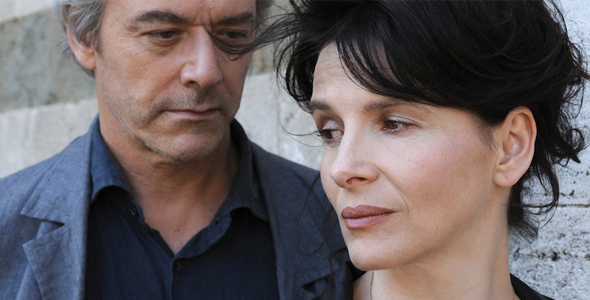
 Writer, director, poet, photographer, editor, graphic designer, and painter Abbas Kiarostami has been one of Iran’s leading filmmakers for nearly forty years, compiling a resume that includes such important international films as Under the Olive Trees (1994), Taste of Cherry (1997), and The Wind Will Carry Us (1999). His latest film, Certified Copy, is his first feature made outside of his home country, a dreadfully boring and annoying art-infused romantic comedy set in Italy. Juliette Binoche was named Best Actress at Cannes this year for her starring role as an unnamed single mother and antiques dealer who is obsessed with English author James Miller’s (British opera star William Shimell) book on the history and meaning of art replicas, Certified Copy. Inexplicably, the two strangers are soon on a bizarre sort-of date, driving through Tuscany and becoming involved in a series of vignettes about love and marriage, literature and art, and other topics. Both characters are seriously flawed and emotionally unstable in ways that make them unattractive to watch, especially in obvious set-ups that either go nowhere or exactly where you think they’re going. While Julie Delpy and Ethan Hawke made the somewhat similar Before Sunrise (1995) and Before Sunset (2004), in which two strangers from different countries spend a day together (but mostly by themselves), the sexual tension and excitement always building, Certified Copy is more reminiscent of Hans Canova’s ridiculous Conversations with Other Women (2005), in which Aaron Eckhart and Helena Bonham Carter star as wedding guests with a past whom viewers can’t wait to just shut up and get off the screen. Don’t let the supposed adult dialogue of Certified Copy fool you into thinking it’s an intelligent, mature look at believable relationships; instead, it feels like a staid copy of other, better films you think you’ve seen but can’t remember — and won’t care.