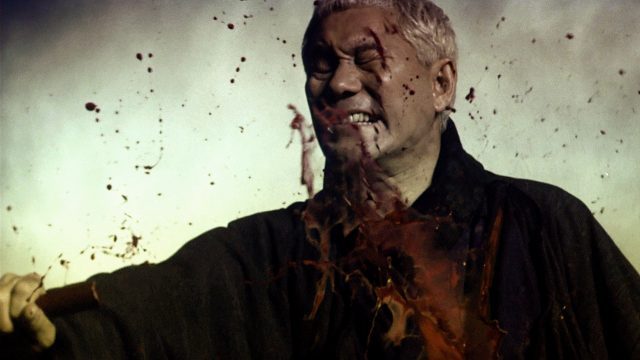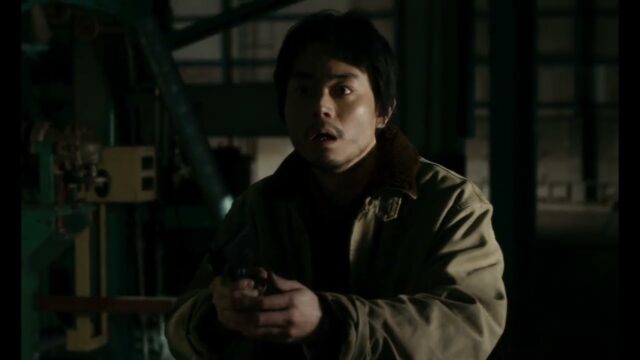
A disengaged online reseller (Masaki Suda) gets more than he bargained for in Kiyoshi Kurosawa’s Cloud
JAPAN CUTS — FESTIVAL OF NEW JAPANESE FILM 2025: KIYOSHI KUROSAWA
Japan Society
333 East 47th St. at First Ave.
January 10-20
www.japansociety.org
The annual summer Japan Cuts festival is underway at Japan Society, eleven days of new and restored works that began July 10 with Yasuhiro Aoki’s debut feature, ChaO, and continued with Yuya Ishii’s The Real You, Kenichi Ugana’s The Gesuidouz, and Kichitaro Negishi’s Yasuko, Songs of Days Past, prime examples of the wide range of works at the fest, many of them North American premieres and followed by Q&As. Upcoming highlights include Daihachi Yoshida’s Teki Cometh, Takashi Miike’s Blazing Fists, Masashi Iijima’s Promised Land, and the closing night selection, Joseph Overbey’s documentary The Spirit of Japan, complete with a shochu reception.
The 2025 edition celebrates the career of Kiyoshi Kurosawa, who will participate in Q&As and introductions at several screenings. “The very base of cinematic expression is to film the reality in front of you using cameras. So, the similarity with the reality would be the feature of a movie,” Kurosawa told Dirty Movies in 2018. “This could be also its limitation, but anyway, I am particularly interested in the fact that a movie is almost the same as reality, but at the same time is slightly different than reality. This difference or unreality is always my starting point when I create my work.” That quote can be applied to the two Japan Cuts films that are reviewed below.
CLOUD (『クラウド』) (KURAUDO) (Kiyoshi Kurosawa, 2024)
Wednesday, July 16, 6:00
japansociety.org
Kobe-born suspense master Kiyoshi Kurosawa returns to Japan Cuts with a pair of intense revenge thrillers that are not for the faint of heart. Both were made in 2024, both feature torture and violence, and both are tons of fun.
Up first for Kurosawa, who has made such horror faves as Cure, Pulse, and Creepy as well as such psychological dramas as Bright Future and Tokyo Sonata, is Cloud, the centerpiece selection. Masaki Suda stars as Yoshii, a quiet, disengaged young man who works at a cleaning factory, supplementing his income as an online reseller, purchasing goods at cut rates — unethically taking advantage of people — and selling them online at exorbitant prices, with no care whether the items are actually legitimate or fakes. He is upset when the owner, Takimoto (Yoshiyoshi Arakawa), offers him a promotion; Takimoto sees promise in Yoshii, but Yoshii has no interest in taking on more responsibility. When one of his deals makes him a lot of money, he quits his job and dedicates all his time to reselling whatever products he can get his hands on, from designer handbags to anime figures. Yoshii alienates his business partner, Muraoka (Masataka Kubota), and moves with his girlfriend, Akiko (Kotone Furukawa), to a house in a small, faraway town, where a young local man, Sano (Daiken Okudaira), insists on being his assistant. As his deals get more and more lucrative and dangerous, Yoshii builds a well-deserved bad reputation as a ruthless operator, and soon a group of men, armed to the hilt, come after him, determined to get even.
Cloud is a fierce, propulsive trip down the internet rabbit hole, where anonymity might feel safe but reality threatens to blow it all up. Yoshii ruins every relationship he has, with clients, customers, Sano, Akiko, Takimoto, et al., seemingly without any care or regard; he spends hours staring at his computer screen, waiting for his items to start selling, with more concern and passion than he has for any human being. And when the posse finds him, he has no understanding why they want him dead.
Suda (Kamen Rider, Cube) is terrific as Yoshii; we are initially offput by his herky-jerky movement and disengagement from society, but as everything closes in on him, we also feel compassion for his potential fate. The film is beautifully shot by Yasuyuki Sasaki and expertly directed by Kurosawa, who knows just how to make the audience squirm, especially at unexpected moments.
“Grudges, revenge, they’ll only drag you down,” one member of the posse tells another. “Think of this as a game.” It’s a wry comment on how too many people look at the real world these days.
Cloud is screening July 16 at 6:00 and will be followed by a Q&A with Kurosawa, who will also receive the Cut Above Award at a reception afterward.
Kiyoshi Kurosawa’s remake of his own Serpent’s Path is another suspense gem
THE SERPENT’S PATH (『蛇の道』) (HEBI NO MICHI) (Kiyoshi Kurosawa, 2024)
Thursday, July 17, 6:00
japansociety.org
When Kiyoshi Kurosawa was asked by a studio in France to remake one of his earlier films, he opted to revisit his 1998 straight-to-video thriller Serpent’s Path, which was written by Hiroshi Takahashi (Ringu, Sodom the Killer) and starred Show Aikawa and Teruyuki Kagawa. He cowrote the new script with French journalist Aurélien Ferenczi, who passed away in October 2024 at the age of sixty-one. The result is a brutal, gripping white-knuckle shocker that you won’t be able to turn away from, no matter how much you might want to.
Albert Bacheret (Damien Bonnard) is a disheveled, distraught man who is determined to find whoever murdered and dismembered his eight-year-old daughter, Marie (Hélène Caputo). He is helped by Sayoko Mijima (Ko Shibasaki), a calm, composed hospital psychiatrist who is treating Yoshimura (Hidetoshi Nishijima), a Japanese man having trouble adjusting to life in France. Sayoko has also moved from Japan to Paris, leaving behind her partner, Soichiro (Munetaka Aoki).
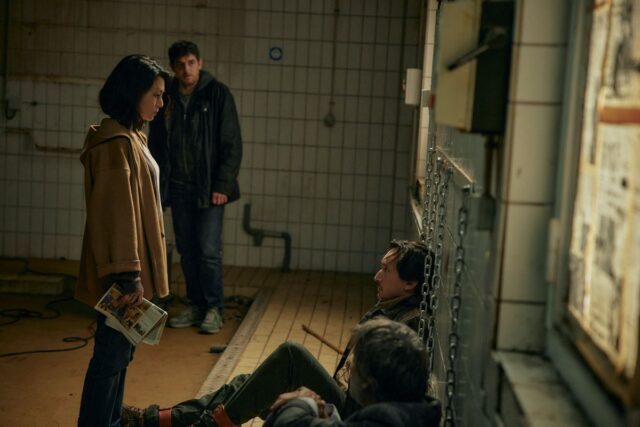
Albert and Sayoko are not criminal masterminds, but they expertly kidnap Laval (Mathieu Amalric) and chain him to a wall in an abandoned warehouse. Albert accuses Laval of having killed Marie, but Laval adamantly denies he had anything to do with it, claiming he is just an accountant at the Minard Foundation, an institution that we slowly learn more about, none of it good. Deprived of food, drink, and a bathroom, Laval eventually gives up his boss, Pierre Guérin (Grégoire Colin), who Albert and Sayoko decide to capture as well. Like Laval, Pierre is not forthcoming at first, but torture has a way of making people talk, whether it be truth or lies, and the plot thickens, offering more and more surprises along with more and more violence.
Throughout the film, Albert, who became estranged from his wife, Lola (Vimala Pons), after the tragic incident, shows a short video of Marie playing the piano and roller skating as he reads a newspaper report that details exactly what happened to her, making Laval, Pierre, and, later, Christian Samy (Slimane Dazi) watch it — but the audience as well, as if inuring us to the atrocity while also feeling Albert’s torment. Kurosawa and cinematographer Alex Kavyrchine have created a fascinating dichotomy between the kind of violence we see onscreen, whether a movie in a theater or a video on a smartphone or laptop, and the kind we are not shown but only have to imagine, especially when it involves children. We cringe every time Albert narrates the video but not at what Albert and Sayoko do; in fact, we are rooting for them. As the body count rises, so do humorous shots of the victims, eliciting uncomfortable yet necessary laughter.

Albert Bacheret (Damien Bonnard) and Sayoko Mijima (Ko Shibasaki) hunt for a killer in The Serpent’s Path
Bonnard (Staying Vertical, Les Misérables) is terrific in a similar way as Suda is in Cloud, portraying a laser-focused but perhaps misguided man who has disconnected from society, impulsive and restless, turning to screens to redefine his purpose. His unease is so palpable you just want to give him a giant hug — but maybe not when he’s armed. Actress and singer Shibasaki (One Missed Call, xxxHolic) adds just the right amount of mystery to Sayoko, who might be more than she seems. Meanwhile, the mighty Amalric (Kings and Queen, The Grand Budapest Hotel) once again proves why he’s one of the best actors on the planet.
At one point, when Yoshimura talks to Sayoko about facing the end, she replies, “The end? The end of what? Are you afraid of the end? Isn’t the hardest part when there is no end?”
Or, in other words, be careful what you wish for.
The Serpent’s Path is screening July 17 at 6:00 and will be followed by a Q&A with Kurosawa, who had a busy 2024, directing Cloud, The Serpent’s Path, and the forty-five-minute experimental Chime following a four-year pause at least in part because of the pandemic. In addition, you can catch the North American premiere of the 4K restoration of the 1998 original on July 19 at 9:00 as well as Kurosawa’s 1998 License to Live on July 17, a reconstruction of Sam Peckinpah’s 1970 western The Ballad of Cable Hogue.
[Mark Rifkin is a Brooklyn-born, Manhattan-based writer and editor; you can follow him on Substack here.]
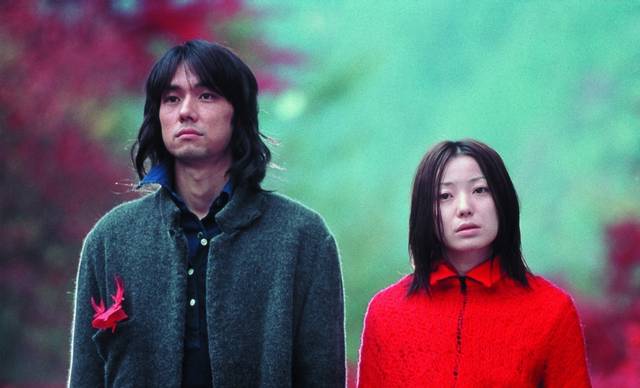
 Hardboiled action director and comic Takeshi Kitano, who is best known for such violent films as Violent Cop, Sonatine, and Boiling Point, has also made family dramas and romances as well (Kikujiro, A Scene at the Sea), and Dolls might be his most emotional, introspective picture. Dolls opens with a Bunraku puppet theater excerpt from Monzaemon Chikamatsu’s The Courier for Hell before delving into the dark story of Matsumoto (Hidetoshi Nishijima) and Sawako (Miho Kanno). Matsumoto dumps Sawako so he can marry the boss’s daughter, but when Sawako tries to kill herself and ends up in a mental hospital, Mastumoto decides to take care of the speechless, frightened shell of a woman she has become. He leads her through the seasons, tied to her by a red cord, a pair of bound beggars. Two subplots, which we’re not sure were absolutely necessary, also deal with love and loss, obsession and desire. Joe Hisaishi’s music is gorgeous, as is Katsumi Yanagijima’s cinematography. Kitano, who wrote, directed, and edited Dolls, mixes in sensational colors to balance out black-and-white tuxedos or long patches of snow: You’ll be mesmerized by the red rope, a purple-and-black butterfly, Sawako’s pink child’s toy, a glowing blue bridge, Matsumoto’s bright yellow car, a green public phone, a blue drink, twirling pinwheels, a shockingly blue umbrella, a park filled with cherry blossoms, and Yohji Yamamoto’s sparkling costumes. The film is bleak, slow-paced, and heart-tuggingly pure, a rewarding experience that will stay with you for a long time.