Go Takamine’s Paradise View kicks off Japan Society series about the Okinawan transition
VISIONS OF OKINAWA: CINEMATIC REFLECTIONS
Japan Society
333 East 47th St. at First Ave.
May 13 – June 3, $15 in-person screenings, $10 online rentals (three-film pass $24)
www.japansociety.org
“Did you have your fortune told?” a character asks in Go Takamine’s Paradise View. “Yes, things are looking good” is the answer.
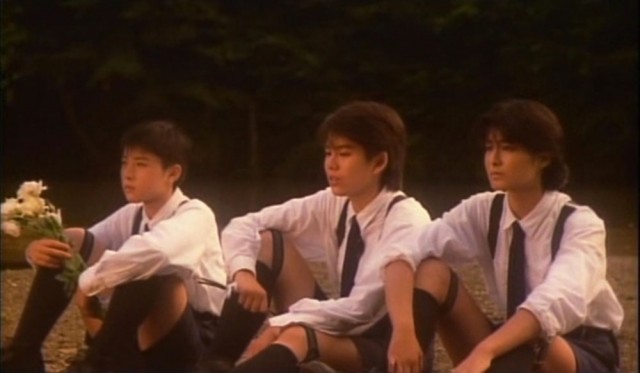
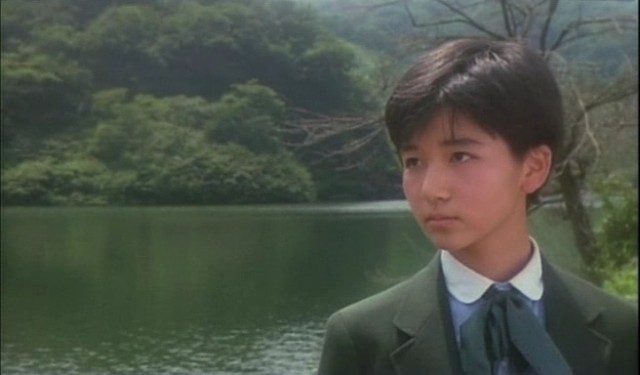
On June 17, 1971, the last of the Ryukyu Islands was returned to Japanese control. Japan Society began its celebration of that pivotal event in March with “Waves Across Time: Traditional Dance and Music of Okinawa.” The tribute continues May 13 to June 3 with “Visions of Okinawa: Cinematic Reflections,” consisting of five in-person screenings and three streaming films, all set around the transition of power. Part of the “Okinawa in Focus: Globus Film Series,” the festival begins May 13 at 7:00 with the North American premiere of the 2021 edit of Go Takamine’s Paradise View, followed by a reception; the 1985 work, which deals with a funeral, a wedding, dangerous snakes, and painful dentistry, will be available for streaming starting May 14.
Chris Marker’s 1996 Level Five, a French film involving a computer game restaging the Battle of Okinawa as part of an investigation into the Japanese tendency to bury the past, will be shown May 14 at 4:30, followed at 7:00 by a rare archival 35mm print of Nagisa Oshima’s 1972 Dear Summer Sister, in which Oshima, who appears in Level Five, takes viewers on an unusual tourist trip across Okinawa. Sadao Nakajima’s 1976 Terror of Yakuza, inspired by actual gang warfare on Okinawa and starring the great Sonny Chiba, screens May 20 at 7:00; an imported 35mm print of Go Takamine’s 1989 Untamagiru, an adaptation of the uchina shibai play and featuring John Sayles as a US military commander who really loves his dog, will be shown May 21 at 7:00.
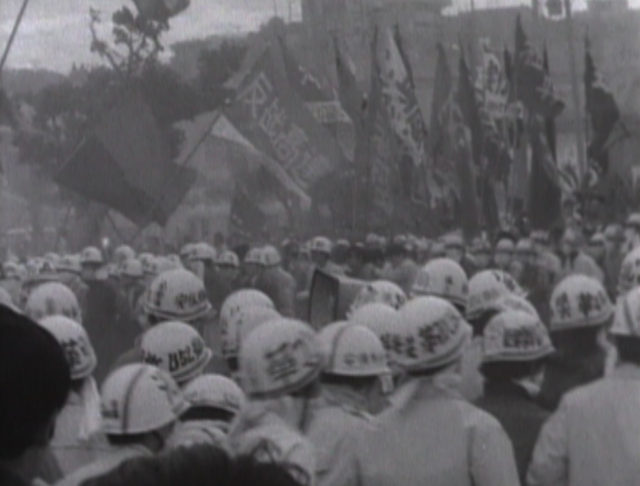
Motoshinkakarannu explores the complicated transition of power on Okinawa
The virtual screenings also include the special “Focus on the Nihon Documentarist Union (NDU),” a pair of black-and-white guerrilla-style nonfiction works by the NDU, which was founded in 1968 at Waseda University. The 1971 Motoshinkakarannu and 1973 Asia Is One are screening for the first time outside of Japan, with new English subtitles, taking on immigration, socioeconomic issues, labor protests, and other complex issues.

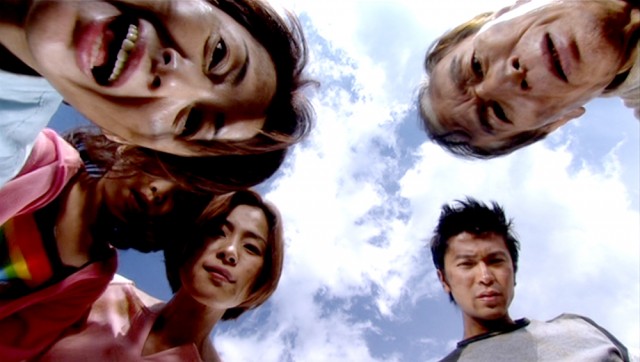
 “Let’s forget any accidents by singing and dancing!” is the cry of the Katakuris, a seemingly cursed family in one of the craziest dark musical comedies you’re ever likely to see. Japanese genre king Takashi Miike, who has made more than 120 films in his twenty-five-year career, outdid himself in 2001’s The Happiness of the Katakuris, an endlessly inventive tale of a disaster-ridden clan that moves to the middle of nowhere to run a country inn, lured by a rumor that a railroad will be built nearby. Masao Katakuri (Kenji Sawada) is a laid-off department-store shoe salesman who has big dreams, supported by his devoted wife and former work colleague, Terue (Keiko Matsuzaka). Their daughter, Shizue (Naomi Nishida), is a divorced single mother who falls for suspicious navy officer Richard Sagawa (Kiyoshiro Imawano), while their son, Masayuki (Shinji Takeda), is a disgraced financier. Masao’s elderly father, Jinpei (Tetsurō Tamba), likes killing birds and playing with the family dog, Pochi. The film is narrated by Terue’s young daughter, Yurie (Tamaki Miyazaki), who is sharing her memories of one very bizarre summer. Desperate for paying customers at the bed and breakfast they have dubbed White Lovers, the family is excited when a guest finally arrives, but alas, he is there only to commit suicide. Afraid that news of his death would ruin any chances of success, the Katakuris decide to cover it up by burying the man and not reporting anything to the police. And when subsequent guests end up dead as well — in bizarre, ridiculous ways — there is no turning back.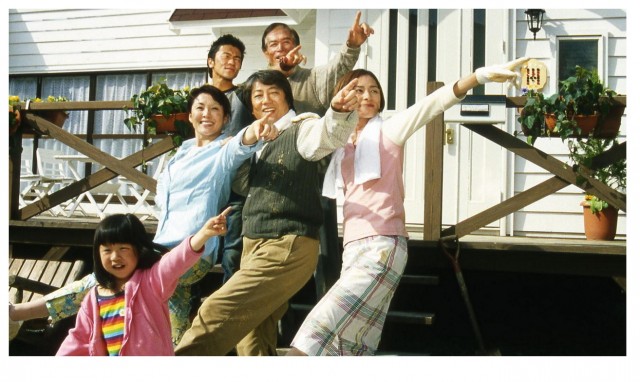
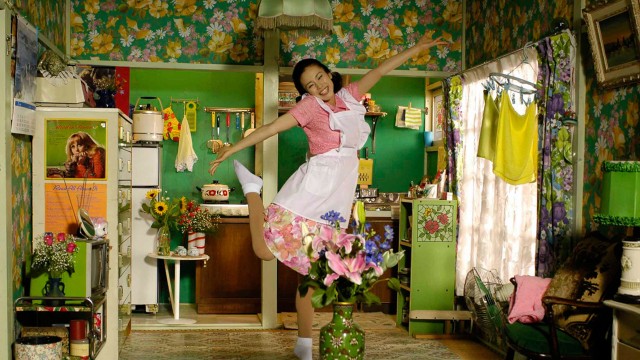
 We called Tetsuya Nakashima’s 2004 hit, Kamikaze Girls, the “otaku version of Jean-Pierre Jeunet’s Amelie,” referring to it as “fresh,” “frenetic,” “fast-paced,” and “very funny.” His feature-length follow-up, the stunningly gorgeous Memories of Matsuko, also recalls Amelie and all those other adjectives, albeit with much more sadness. Miki Nakatani (Ring, Silk) stars as Matsuko, a sweet woman who spent her life just looking to be loved but instead found nothing but heartbreak, deception, and physical and emotional abuse. But Memories of Matsuko, is not a depressing melodrama, even if Nakashima (Confessions, The World of Kanako) incorporates touches of Douglas Sirk every now and again. The film is drenched in glorious Technicolor, often breaking out into bright and cheerful musical numbers straight out of a 1950s fantasy world. As the movie begins, Matsuko has been found murdered, and her long-estranged brother (Akira Emoto) has sent his son, Sho (Eita), who never knew she existed, to clean out her apartment. As Sho goes through the mess she left behind, the film flashes back to critical moments in Matsuko’s life — and he also meets some crazy characters in the present. It’s difficult rooting for the endearing Matsuko knowing what becomes of her, but Nakashima’s remarkable visual style will grab you and never let go. And like Audrey Tatou in Amelie, Nakatani — who won a host of Japanese acting awards for her outstanding performance — is just a marvel to watch. Memories of Matsuko is a fine choice to conclude Japan Society’s rather eclectic 2016 Globus Film Series “Japan Sings! The Japanese Musical Film.” As curator Michael Raine notes, “The ubiquity of music and song in postwar Japanese cinema became an anti-naturalist resource for modernist filmmakers to characterize social groups (Twilight Saloon,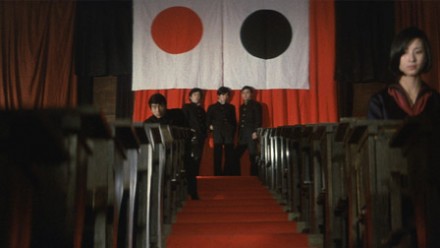
 Japan Society’s 2016 Globus Film Series “Japan Sings! The Japanese Musical Film” continues April 19 with a complex, hard-to-define work that is not in any way a traditional musical. But then again, it’s by Nagisa Oshima, who didn’t care much for conventions. In 1967, Oshima, who had previously made such controversial films as Pleasures of the Flesh and Violence at Noon, cowrote (with Takeshi Tamura, Mamoru Sasaki, and Toshio Tajima, although much of the film is improvised) and directed Sing a Song of Sex, the original Japanese title of which translates as A Treatise on Japanese Bawdy Songs. The film opens with red liquid dripping on a red background, as if the Japanese flag is being stained with old and new blood. Hikaru Hayashi’s soundtrack chimes in, combining 1960s mystery and sex comedy themes. On a high school campus, many students are protesting the Vietnam War, but four virgin boys, Nakamura (pop singer Ichiro Araki), Ueda (Kôji Iwabuchi), Hiroi (Kazumi Kushida), and Maruyama (Hiroshi Satô), instead are immersed in sexual fantasies involving raping a politically active student they know only as number 469 (Kazuko Tajima). They go out drinking one night in Tokyo with their professor, Otake (Ichizô Itami), as well as three female students, Kaneda (Hideko Yoshida), Ikeda (Hiroko Masuda), and Satomi (Nobuko Miyamoto), who worship the teacher. Professor Otake gets drunk and sings a low-class shanty that demeans women, a Japanese flag behind him. Later he declares, “Bawdy songs, raunchy songs, erotic songs, songs about sex — these are the suppressed voices of the people. An oppressed people’s labor, their lives . . . and their loves. Once people became conscious of these things, they naturally turned to song to express themselves. That’s why bawdy songs represent the history of the people.” He says that he feels sorry for the youth of Japan, who don’t even know they’re being oppressed. Then another drunk man in the bar explains, “So a doomed people sing the songs of a doomed nation? What’s it matter? Japan’s full of doomed people.” That night Professor Otake dies in his hotel room, leaving the three young women to mourn for him and the four young men to continue his bawdy adventures. Meanwhile, Otake’s lover, Takako Tanigawa (Akiko Koyama), becomes involved in the controversy surrounding his death.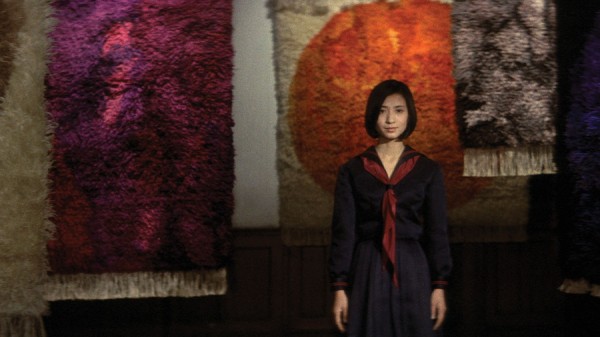
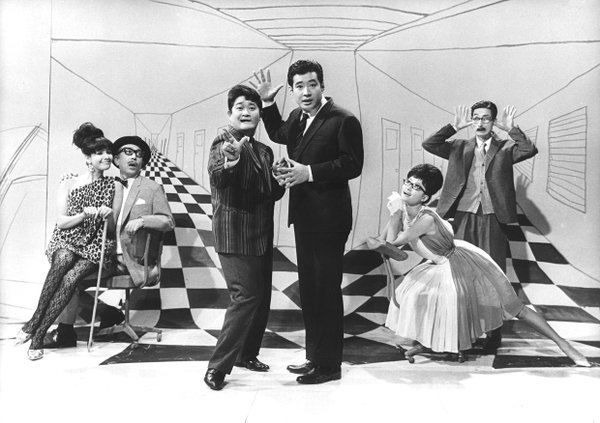
 Japan Society’s 2016 Globus Film Series, “Japan Sings! The Japanese Musical Film,” opens April 8 with Eizo Sugawa’s riotous, robust 1964 delight, You Can Succeed, Too. With the Tokyo Summer Olympics approaching, Towa Tourism is locked in a heated battle with Kyokuto Tourism for big travel clients. While Yamakawa (Frankie Sakai) has developed a can’t-miss plan to succeed at Towa — either marry the president’s daughter, become a union leader, or find the president’s weakness and exploit it — his friend Nakai (Tadao Takashima) does not enjoy the urban rat race and would rather settle down in the countryside. When the president, Nobuo Kataoka (Yoshitomi Masuda), returns from a trip to the United States with his daughter, Yoko (Izumi Yukimura), he puts her in charge of the foreign office as she extolls the virtues of efficient American business practices over the old-fashioned Japanese ways. Yamakawa sets his sights on Yoko despite restaurant owner Ryoko’s (Mie Nakao) obvious desire to marry him and move to the country for a more simple life, but Yoko is more attracted to the oblivious Nakai, who soon finds himself in the middle of the president’s untoward relationship with the much younger, hot-to-trot cocktail hostess Beniko (Mie Hama). It all comes to a head as a pair of American tourists (Ernest and Marjorie Richter) and a prominent U.S. executive seek the right Japanese tourism company to do business with.