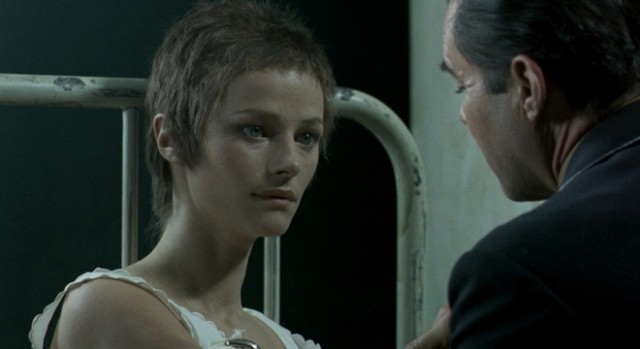
Lucia (Charlotte Rampling) and Max (Dirk Bogarde) relive their Holocaust experience in THE NIGHT PORTER
WEEKEND CLASSICS: THE NIGHT PORTER (Liliana Cavani, 1974)
IFC Center
323 Sixth Ave. at West Third St.
February 5-7, 11:00 am
Series runs through March 6
212-924-7771
www.ifccenter.com
 Disgraceful Nazi porn or searing allegory about the devastating after-effects of the Holocaust on victims as well as Europe as a whole? Lurid exploitation or sensitively drawn, poignant exploration of a severe case of Stockholm syndrome? You can decide for yourself when Liliana Cavani’s ever-so-kinky, extremely controversial 1974 drama, The Night Porter, screens at the very strange time of eleven o’clock in the morning February 5-7 as part of the IFC Center’s eight-film tribute to Charlotte Rampling, being held on the occasion of the release of her latest movie, 45 Years, which has earned the British actress, model, and singer her first Oscar nomination. Rampling is downright frightening as Lucia, a young woman who was tortured as a sex slave by SS officer Maximilian Theo Aldorfer (Dirk Bogarde) in a Nazi concentration camp. It’s now 1957, and Lucia has arrived in Vienna with her husband (Marino Masé), a prominent American conductor. Lucia and Max, who is the night porter at the fashionable Hotel zur Oper, instantly recognize each other, and the moment hangs in the air, neither sure what the other will do. They say nothing, and soon the two of them have seemingly journeyed back to the camp, involved in a dangerous descent into sex and violence behind closed doors. But a small group of Max’s Nazi friends, including Klaus (Philippe Leroy), Hans Folger (Gabriele Ferzetti), and Stumm (Giuseppe Addobbati), who have dedicated themselves to destroying documents — and witnesses — as former members of the SS are brought to trial, become suspicious of Max’s bizarre relationship with Lucia, who could make trouble for them all.
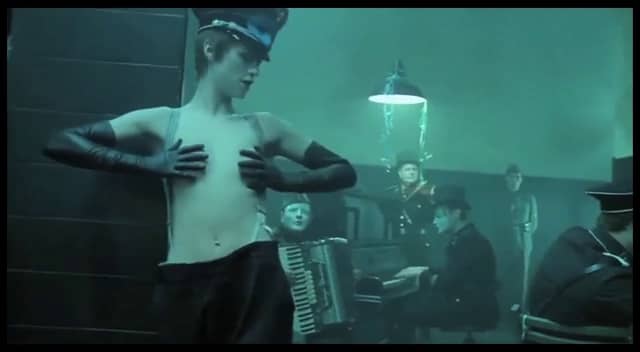
THE NIGHT PORTER is part of eight-film Charlotte Rampling tribute at IFC Center
Cavani (The Berlin Affair, Ripley’s Game), er, takes no prisoners in The Night Porter, holding nothing back as Max and Lucia grow closer and closer, eventually isolating themselves from the rest of the world. Rampling plays Lucia like a caged animal, her penetrating eyes bathed in mystery; we never know what she’s going to do next, and still we’re continually shocked by her actions. Bogarde plays Max with a grim elegance; he believes that he truly loves Lucia, and that she loves him. He uses his body, and especially his hands, with an eerie grace that is both complicated and scary. The film is very much about performance and voyeurism, about the relationship between creator, performer, and audience. When Max first sees Lucia in the concentration camp, he is instantly taken with her, and he begins filming her with his camera. In one of the movie’s most provocative and titillating scenes, Max and other Nazis watch the young Lucia, wearing an SS outfit but with only suspenders on top, sing “Wenn ich mir was wünschen dürfte” (“If I Could Wish for Something”), a German song made famous by Marlene Dietrich (and originally written by Friedrich Hollaender for the 1931 film The Man in Search of His Murderer). It’s a mesmerizing few minutes that takes the sadomasochism to a whole new psychological level. Max is also still taking care of Bert (Amedeo Amodio), another survivor who has been dancing for Max and other SS officers since the war. So it is not surprising that Lucia has married a conductor, a man with the power to control others. The film has holes you can drive a Panzer through, but it’s impossible to take your eyes off of Rampling (Georgy Girl, Stardust Memories, The Verdict), who will turn seventy on February 5, and Bogarde (The Servant, Darling, Death in Venice), two beautiful actors locked in a grotesque game of cat and mouse. The Rampling series continues at IFC through March 6 with Heading South, Under the Sand, The Cherry Orchard, and Farewell, My Lovely.
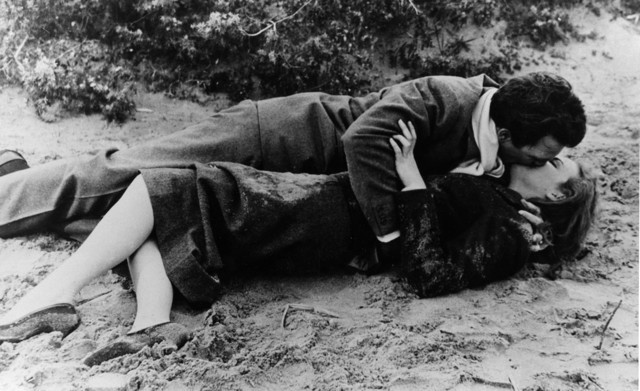
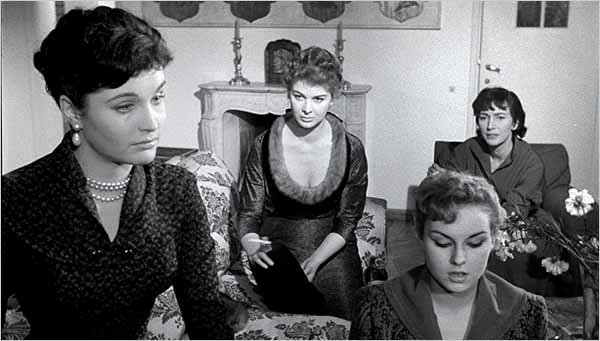
 Winner of the Silver Lion at the 1955 Venice Film Festival, Michelangelo Antonioni’s sublimely marvelous Le Amiche follows the life and loves of a group of oh-so-fabulous catty, chatty, and ultra-fashionable Italian women and the men they keep around for adornment. Returning to her native Turin after having lived in Rome for many years, Clelia (Eleonora Rossi Drago) discovers that the young woman in the hotel room next to hers, Rosetta (Madeleine Fischer), has attempted suicide, thrusting Clelia into the middle of a collection of self-centered girlfriends who make the shenanigans of George Cukor’s The Women look like child’s play. The leader of the vain, vapid vamps is Momina (Yvonne Furneaux), who carefully orchestrates situations to her liking, particularly when it comes to her husband and her various, ever-changing companions, primarily architect Cesare (Franco Fabrizi). As Rosetta falls for painter Lorenzo (Gabriele Ferzetti), who is married to ceramicist Nene (Valentina Cortese), Clelia considers a relationship with Cesare’s assistant, Carlo (Ettore Manni), and the flighty Mariella (Anna Maria Pancani) considers just about anyone. Based on the novella Tra Donne Sole (“Among Only Women”) by Cesare Pavese, Le Amiche is one of Antonioni’s best, and least well known, films, an intoxicating and thoroughly entertaining precursor to his early 1960s trilogy, L’Avventura, La Notte, and L’Eclisse. Skewering the not-very-discreet “charm” of the Italian bourgeoisie, Antonioni mixes razor-sharp dialogue with scenes of wonderful ennui, all shot in glorious black and white by Gianni Di Venanzo.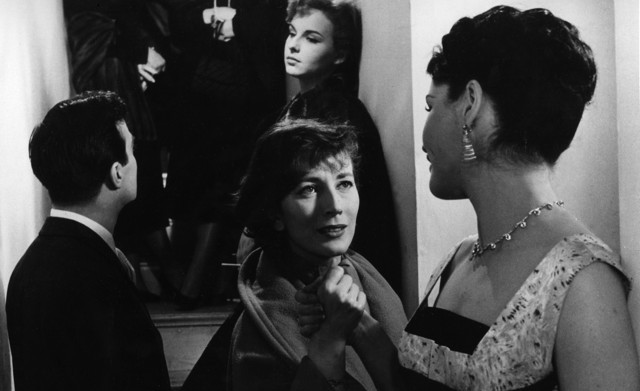
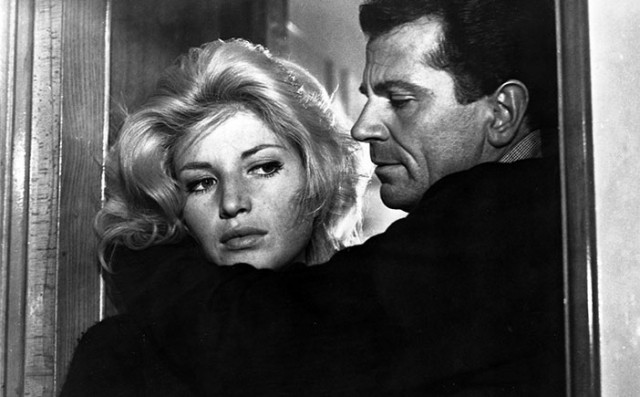
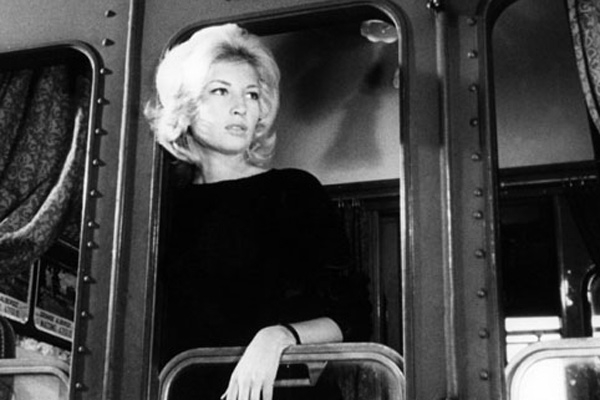
 Michelangelo Antonioni shows that being rich and fancy-free on the Italian Riviera ain’t all it’s cracked up to be in this fascinating study of a group of friends out on a yachting adventure. When Anna (Lea Massari) disappears, Claudia (Monica Vitti), Giulia (Dominique Blanchar), and Sandro (Gabriele Ferzetti) search for her but can’t find her. Slowly life goes on, with Sandro and Claudia falling for each other as the mystery of Anna fades away. Aldo Scavarda’s gorgeous cinematography adds beauty to this captivating, unusually told story of ultimately empty souls. Winner of a Special Jury Prize at Cannes, where it was also booed, the existential L’Avventura, the first of a trilogy by Antonioni that also includes La Notte (1961) and L’Eclisse (1962), is screening July 12-25 at Film Forum in a new 35mm restoration that should take the stunning black-and-white visuals to a whole new level.