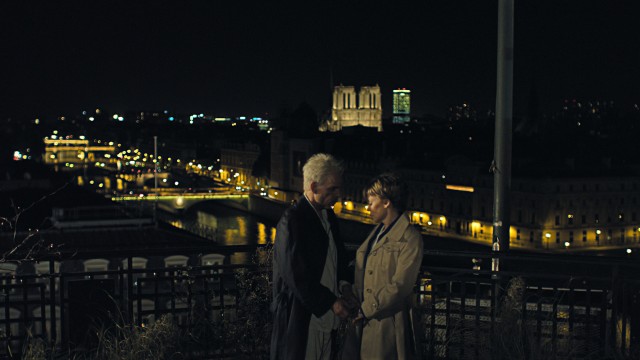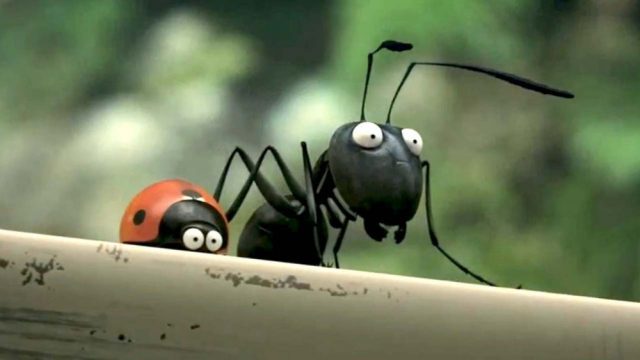
A ladybug and a black ant become friends in award-winning French animated film Minuscule
MINUSCULE: VALLEY OF THE LOST ANTS (Thomas Szabo & Hélène Giraud, 2013)
French Institute Alliance Française, Florence Gould Hall, Le Skyroom, FIAF Gallery
55 East 59th St. between Madison & Park Aves.
Friday, February 2, $15-$20 ($40 for double feature and launch party), 7:00
Festival runs February 2-4, festival passes $60-$120
212-355-6100
fiaf.org/animation/2018
Even though the opening night selection of FIAF’s “Animation First” festival is Thomas Szabo and Hélène Giraud’s Minuscule, there is nothing minuscule about the festival itself. The French Institute Alliance Française is packing a whole lotta stuff into one mere weekend, February 2-4, including dozens of short and feature-length movies, postscreening Q&As, panel discussions, workshops, a free Augmented Reality exhibit by Sutu, a free Virtual Reality Arcade, and a big party. The French festival, the first of its kind in the United States, kicks off with Szabo and Giraud’s charming 2013 Minuscule: Valley of the Lost Ants, being shown in 3D. Combining live-action backgrounds with digital animation, the eighty-eight-minute delight tracks a lost little ladybug who meets up with a colony of black ants scouring the remains of a picnic after a human couple is forced to skedaddle when the pregnant lady goes into labor. At first the ant is suspicious of the playful ladybug, but soon the ladybug, who slightly resembles Kenny from South Park, proves her worth and becomes part of the team. However, when the evil red ants come looking to steal the black ants’ latest treasure, blocks of brown sugar cubes, the future is suddenly doubtful for the black ants and the ladybug.
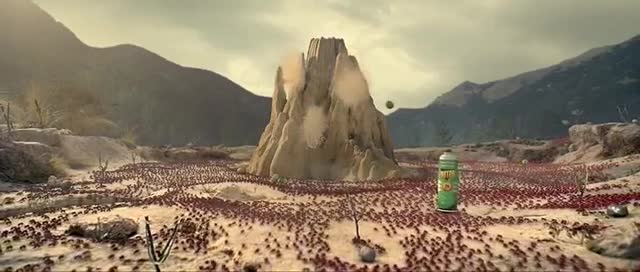
The war between the black and red ants reaches a fever pitch in Minuscule
The film is expanded from Szabo and Giraud’s French animated television series, which consisted of two seasons (2006 and 2012) totaling more than 175 mostly two-to-six-minute shorts focusing on numerous insects involved in various situations. In the feature film, the story gets repetitive at times and the sound effects can be a bit too silly (and also wildly funny), but the ladybug is so cute you’ll forgive such small problems. The film deals with loneliness, friendship, dedication, hate, teamwork, and war, all beautifully photographed and designed, with an ever-changing score by Hervé Lavandier built around multiple genres. And nary a word is spoken; there is no dialogue whatsoever, but you’ll know exactly what is happening because of Szabo and Giraud’s unique storytelling skill. Winner of the César for Best Animated Feature Film, Minuscule: Valley of the Lost Ants is screening February 2 at 7:30, followed by a launch party for kids and adults. However, only grown-ups will be able to stick around for “Erotic Animated Shorts,” a collection of nine naughty quickies not suitable for les enfants. Below are more highlights of this whirlwind festival.

“Prosthetic Reality: An Augmented Reality Exhibit by Sutu” is part of FIAF animation festival
Saturday, February 3
Loulou and Other Wolves, followed by a Q&A with director Serge Elissalde, Florence Gould Hall, $10-$14, 11:30 am
The Red Turtle (Michael Dudok de Wit, 2016), introduced by Dudok de Wit, Florence Gould Hall, $10-$14, 2:00
Conversation: The Making of The Red Turtle, a success story, with Michael Dudok de Wit, free, Le Skyroom, 4:00
Panel Discussion: The French Touch in Animation, with Michael Dudok de Wit, Christophe Jankovic, Chance Huskey, and Kristof Serrand, Le Skyroom, free, 6:00
Ciné-Concert: Pioneers of French Animation, Florence Gould Hall, $10-$14, 6:45
Sunday, February 4
Work in Progress: Terry Gilliam and Tim Ollive’s 1884: Yesterday’s Future, Le Skyroom, $10-$14, 12:15
Surrealist Poems of Robert Desnos, Animated: En Sortant de l’école, followed by a Q&A with Xavier Kawa-Topor, Le Skyroom, $10-$14, 4:00
Renaissance (Christian Volckman, 2006), Florence Gould Hall, $10-$14, 4:30
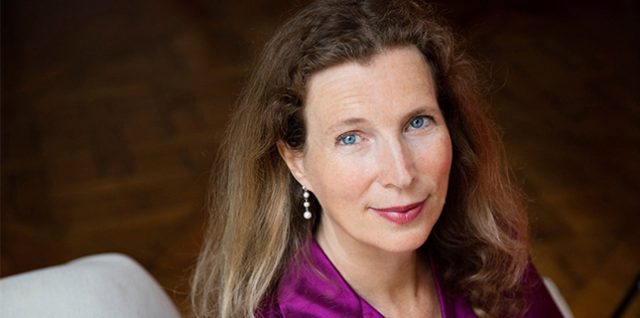
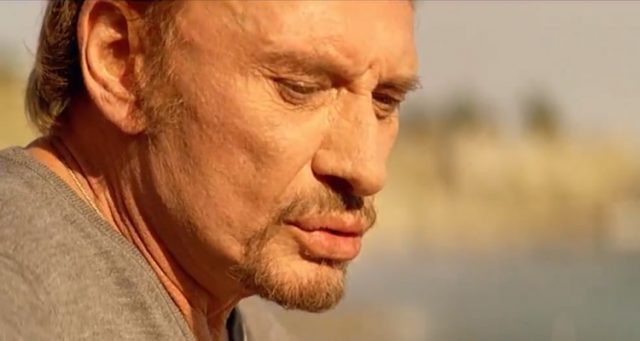
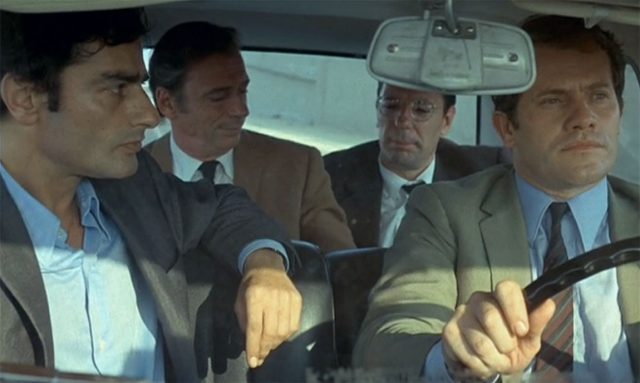
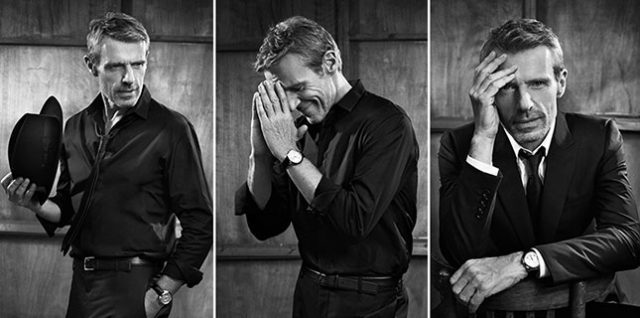
 In her new book Cinematic Overtures: How to Read Opening Scenes (Columbia University Press, $20, November 2017), Columbia professor and film historian Annette Insdorf writes that the beginning moments of Costa-Gavras’s masterful 1969 political thriller, Z, “places us metaphorically in the perspective of the investigator even before we meet him: we must be attentive to detail, skeptical, and then capable of seeing the larger picture. Given the film’s incorporation of flashbacks as well, Z builds a cumulative sense of inevitability that the truth will emerge.” Insdorf will be at FIAF on December 12 to sign copies of her book and introduce the 7:30 screening of Z, which is part of the CinéSalon series “Actor’s Choice: Lambert Wilson & Yves Montand,” curated by French actor and singer Wilson. (The film will also be shown at 4:00; both screenings will be followed by a wine reception.) The Algerian-French coproduction was adapted by Costa-Gavras and Jorge Semprún from Vassilis Vassilikos’s novel, a fictionalized account of the 1963 assassination of Greek left-wing antiwar activist Grigoris Lambrakis and the government cover-up that tried to make it look like an unavoidable accident. “Any similarity to real persons and events is not coincidental. It is intentional,” the credits explain. The film opens with rapid cuts of military and religious medals before zeroing in on a meeting in which the General (Pierre Dux) tells fellow law enforcement and governmental figures that they must eradicate the “ideological mildew,” referring to left-wing activists and, specifically, a deputy (Montand), based on Lambrakis, who is scheduled to speak at a large rally. After a violent incident, the Magistrate (Jean-Louis Trintignant) starts interviewing participants and witnesses and refuses to give up even when the General, the Colonel (Julien Guiomar), and other important figures threaten him as he seeks the truth, which doesn’t matter at all to those in power, who feel they understand the larger scheme of things. The Magistrate is helped by a photojournalist (producer Jacques Perrin) who is not afraid of asking penetrating questions and secretly snapping pictures. As the lies build, the truth slowly emerges, but that doesn’t mean the violence is over.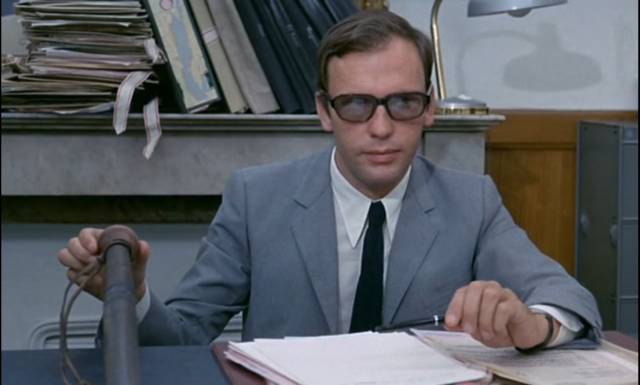
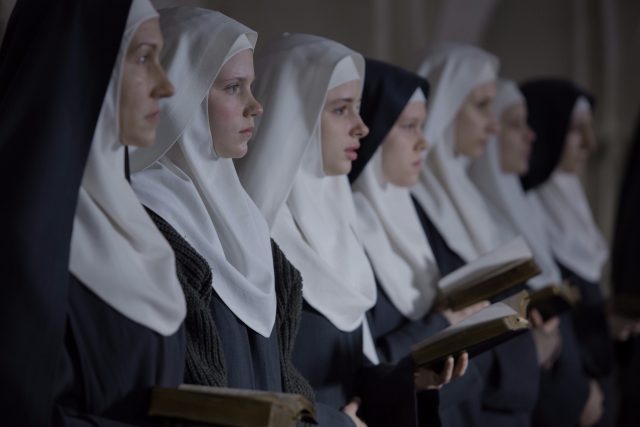
 FIAF’s CinéSalon series “Cinematographer Caroline Champetier: Shaping the Light” continues the celebration of the career of the César-winning French director of photography October 24 with two of her best films, Anne Fontaine’s Les Innocentes and Léos Carax’s Holy Motors, each of which will be followed by a Q&A and wine and beer reception with Champetier. Inspired by a true story, Les Innocentes is a haunting tale of a French WWII Red Cross doctor, Mathilde Beaulieu (Lou de Laâge), who is secretly summoned by Sister Maria (Agata Buzek) to help a nun give birth in a remote Polish convent. She soon discovers that several of the Benedictine nuns are pregnant, the result of brutal rapes by Soviet soldiers. The Mother Superior (Agata Kulesza) doesn’t want any outsiders to know what happened, out of both shame and fear, but the babies, and the nuns themselves, may not survive without obstetric care. Mathilde, a Communist, is stationed at a mobile surgical hospital in Warsaw, where she primarily assists Samuel (Vincent Macaigne), a Jewish doctor tending to wounded soldiers after the war, in December 1945; she gets into trouble with Samuel when she refuses to even hint at where she is disappearing to. As the due dates for the multiple births draw close, so does the danger surrounding Mathilde and the nuns.