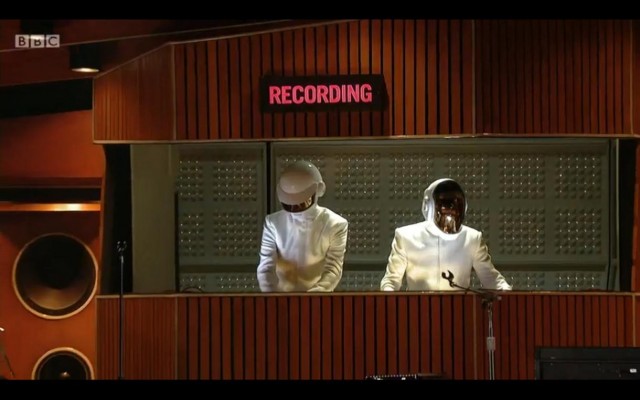
The fascinating history of French EDM pioneers Thomas Bangalter and Guy-Manuel de Homem-Christo is detailed in DAFT PUNK UNCHAINED
DAFT PUNK UNCHAINED (Hervé Martin Delpierre, 2015)
French Institute Alliance Française, Florence Gould Hall
55 East 59th St. between Madison & Park Aves.
Tuesday, March 1, $14, 4:00 & 7:30
Series continues Tuesdays through April 26
212-355-6100
www.fiaf.org
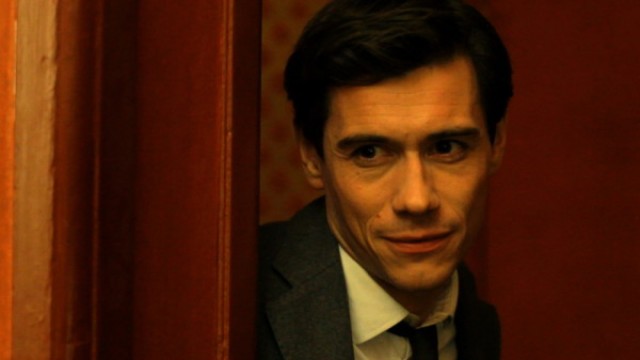
 You might think that the phrase “the French Touch,” which is part of the title of FIAF’s March-April edition of its CinéSalon series, refers to the unique style of such French auteurs as François Truffaut, Jean Renoir, Jean-Luc Godard, Louis Malle, Jean Cocteau, Éric Rohmer, and others whose films are often included in these Tuesday-night festivals. But the term actually describes a group of DJs and bands associated with electronic dance music, or EDM, in France. So it is rather appropriate for the series, “EDM Anthems: French Touch on Film,” to kick off with Daft Punk Unchained, a thumping documentary about the patron saints of that movement, the iconoclastic duo of Thomas Bangalter and Guy-Manuel de Homem-Christo, better known as Daft Punk. Director Hervé Martin Delpierre, who cowrote the film with Marina Rozenman, had his work cut out for him, as he had to make the film without the participation of Daft Punk itself, Bangalter and de Homem-Christo, who have not shown their faces in public this century and rarely give interviews of any kind. But Delpierre gets just about everyone else who has ever worked with them to open up, allowing others to interpret the band’s musical evolution and cultural impact as he traces DP’s career from 1992, when they were in the somewhat more traditional bass-guitar-drum combo Darlin’, to the worldwide sensation of their 2013 album, Random Access Memories, as they melded American disco, German techno, and Manchester industrial into something wholly new. A special focus is placed on their mind-blowing show at Coachella in 2006, which single-handedly changed the future of EDM.
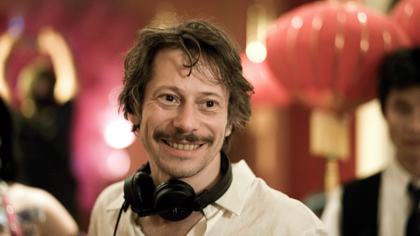
Amid rare photographs of Bangalter and de Homem-Christo without their trademark robot helmets or masks and audio clips of radio interviews, Delpierre speaks with such Daft Punk collaborators as Kanye West, Nile Rodgers, Giorgio Moroder, Pete Tong, Todd Edwards, Pharrell Williams, Skrillex, and Paul (Phantom of the Paradise) Williams, in addition to special effects master Tony Gardner, anime director Leiji Matsumoto, and filmmaker Michel Gondry, who first put DP in helmets. Also sharing insight into what makes the duo so significant are former manager Pedro (Busy P) Winter as well as various journalists, record label heads, and friends. “I just think they’re a unique set of individuals. I have a hard time calling them human, just because musically the robots are something else,” Pharrell, who scored a huge hit with Daft Punk on eventual Grammy favorite “Get Lucky,” says. “I just never experienced working with individuals like them. Everything is so concise. There’s a reason behind everything. Nothing is done by coincidence, by accident or mistake. It’s always with an intention to serve a purpose.” What also serves their purpose is avoiding promotion or publicity that would involve their making an appearance of any kind. Thus, we don’t learn about Bangalter and de Homem-Christo’s private lives, how they work with each other, or what they even look like today. But with everyone stressing how individualistic Daft Punk is, how they insist on doing things their own way no matter what, we wound up rooting for them to keep those helmets on and let the groove-heavy mystery linger on. Daft Punk Unchained is screening at FIAF on March 1 at 4:00 and 7:30; the later show will be followed by a Q&A with Delpierre and DJ Superpoze. In addition, Winter will lead a French Electronic Music Master Class on March 3 with Boston Bun, Superpoze, Jacques, and Julian Starke, and there will be a party celebrating the FIAF series on March 4 at Le Bain with Busy P, Boston Bun, Jacques, and Superpoze. The series continues through April 26 with such other films as Mia Hansen-Løve’s Eden, Nicolas Winding Refn’s Drive, and Céline Sciamma’s Girlhood, which are either set in the club scene or feature EDM-based soundtracks.
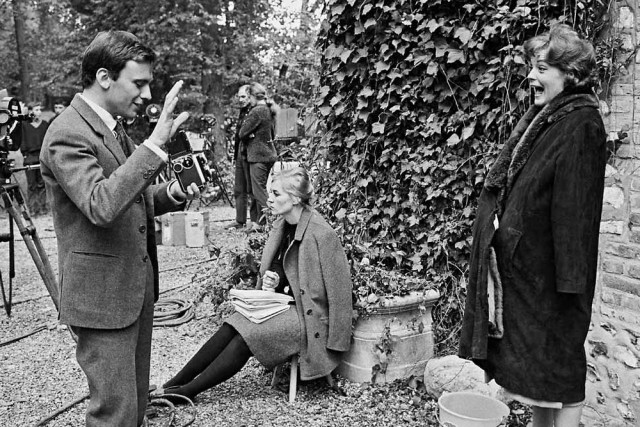
 FIAF’s wide-ranging “Lhomme Behind the Camera” CinéSalon series continues February 9 with a double rare treat: a visit by the man himself, master cinematographer Pierre Lhomme. The eighty-five-year-old Lhomme, who has shot more than sixty films for such directors as Jean-Pierre Melville, Robert Bresson, William Klein, Marguerite Duras, James Ivory, Ismail Merchant, Benoît Jacquot, Patrice Chéreau, and Volker Schlöndorff, will be at Florence Gould Hall on February 9 for a Q&A following the second of two screenings of Alain Cavalier’s ravishing debut, the rarely shown and underappreciated 1962 neonoir Le combat dans l’île. The gripping French New Wave film, which was rediscovered in 2009, combines a crime thriller with a love triangle, shot in shadowy, smokey black-and-white by Lhomme. Jean-Louis Trintignant (The Conformist, A Man and a Woman) is stoic as Clément Lesser, a member of a small, right-wing radical group determined to change things in France by any means necessary. Romy Schneider (Purple Noon Mädchen in Uniform) is warm and charming as Anne Lesser, Clément’s wife, a party girl who is growing tired of her husband’s cold, controlling nature and his secret rendezvous with the group, which is led by mastermind Serge (Pierre Asso). After an assassination attempt goes awry, Clément and Anne hide out at the isolated home of Clément’s childhood friend, Paul (Jules et Jim’s Henri Serre), a left-wing idealist who prints political material. When Clément has to set out on his own, Anne and Paul become close, setting up both a philosophical and romantic battle between the two old friends.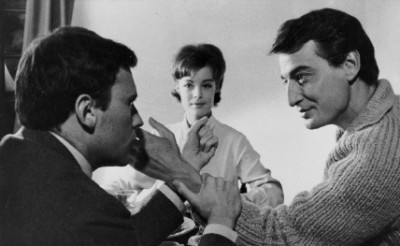
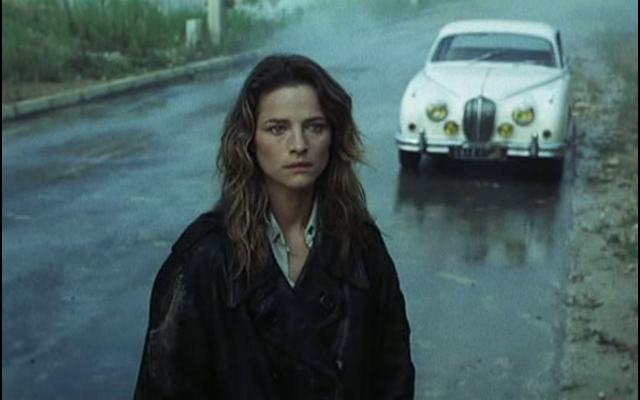
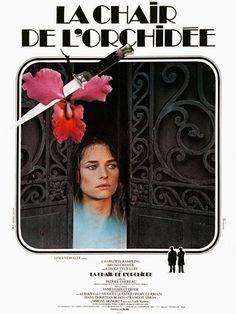
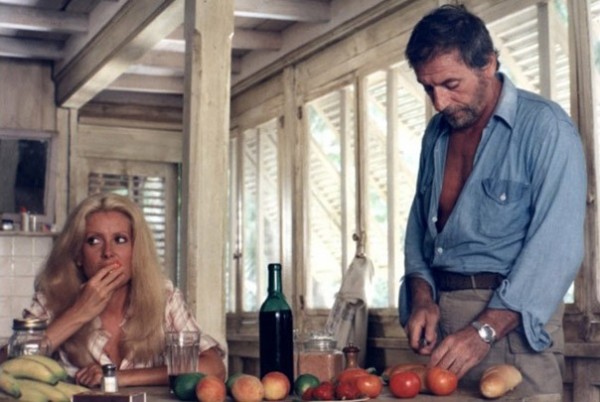
 French stage and opera director Patrice Chéreau made an offbeat choice for his debut film, deciding to adapt British thriller writer James Hadley Chase’s The Flesh of the Orchid, the 1948 sequel to his first novel, 1939’s No Orchids for Miss Blandish, which had been made into a 1948 film by St. John Legh Clowes considered to be one of the worst movies ever. So it’s little surprise that The Flesh of the Orchid is a dark and gloomy, not wholly successful, both tantalizing and frustrating tale of lust and greed. Following up her controversial role in Liliana Cavani’s The Night Porter, the exquisite Charlotte Rampling stars as Claire, a mentally unbalanced heiress who has a penchant for blinding men who attempt to have sex with her. But she takes an odd liking to Louis Delage (Bruno Cremer), a man with financial problems who is on the run after witnessing a murder committed by a pair of cold-blooded killers, brothers Gyula and Joszef Berekian (Hans Christian Blech and François Simon). Meanwhile, Claire’s aunt, the elegant, très chic Madame Wegener (Edwige Feuillère), and her ne’er-do-well son, Arnaud (Rémy Germain), are hot on her trail as well, determined to lock her away again so they can get their hands on the family money.