Bruce Weber focuses in on Peter Johnson and others in cinematic hodgepodge
CHOP SUEY (Bruce Weber, 2001)
Film Forum
209 West Houston St.
Wednesday, November 20, 7:00
Series continues through November 21
212-727-8110
www.filmforum.org
www.bruceweber.com
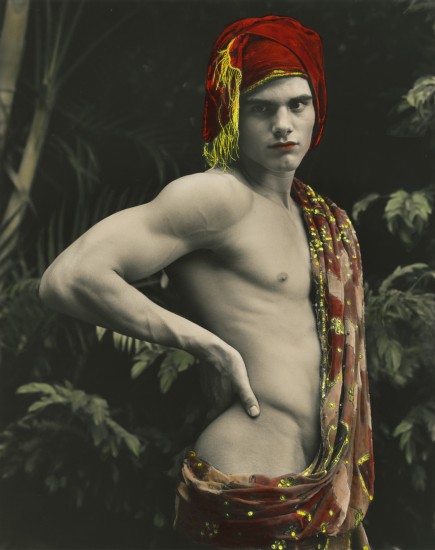
 Fashion photographer Bruce Weber, who directed the seminal Chet Baker doc Let’s Get Lost a quarter century ago, made this fun hodgepodge of still photos, old color and black-and-white footage, and new interviews and voice-over narration back in 2001. You might not know much about Frances Faye, but after seeing her perform in vintage Ed Sullivan clips and listening to her manager/longtime partner discuss their life together, you’ll be searching YouTube to check out a lot more. The film also examines how Weber selects and treats his male models, who are often shot in homoerotic poses for major designers (and later go on to get married and have children). As a special treat, Jan-Michael Vincent’s extensive full-frontal nude scene in Daniel Petrie and Sidney Sheldon’s 1974 Buster and Billie is on display here, as are vintage clips of Sammy Davis Jr., adventurer Sir Wilfred Thesiger, former Vogue editor Diana Vreeland, and Robert Mitchum singing in a recording studio with Dr. John. The film is about model Peter Johnson and Weber as much as it is about the cult of celebrity; Weber gets to chime in on Elizabeth Taylor, Montgomery Clift, Clark Gable, Frank Sinatra, Arthur Miller, and dozens of other famous names and faces. Though an awful lot of fun, the film is disjointed, lacking a central focus, and the onscreen titles, end credits, and promotional postcards are chock-full of typos — perhaps emulating a Chinese takeout menu, hence the film’s title? Chop Suey is screening November 20 at 7:00 as part of Film Forum’s “Bruce Weber” series and will be preceded by Weber’s twelve-minute 2008 short, The Boy Artist; the series continues through November 21 with a 35mm print of Let’s Get Lost, 1987’s Broken Noses, about former Olympian boxer Andy Minsker, 2004’s A Letter to True, a tribute to Weber’s dog, and a compilation of shorts, videos, commercials, and works in progress.
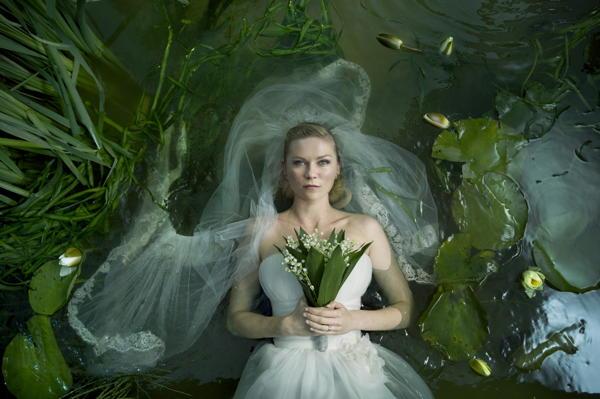
 Danish writer-director Lars von Trier has nothing less than the end of the world on his mind in his latest controversial drama, Melancholia. Von Trier’s latest love-it-or-hate-it cinematic foray opens with epic Kubrickian grandeur, introducing characters in marvelously composed slow-motion and still shots (courtesy of cinematographer Manuel Alberto Claro) as an apocalyptic collision threatens the earth and a Wagner overture dominates the soundtrack. Kirsten Dunst won the Best Actress award at Cannes for her portrayal of Justine, a seemingly carefree young woman celebrating her wedding day who soon turns out to be battling a debilitating mental illness. Her husband, Michael (Alexander Skarsgård), is madly in love with her and does not know quite what he has gotten himself into, especially as the partying continues and Justine’s motley crew of family and friends get caught up in various forms of intrigue, including Gaby, her marriage-hating mother (Charlotte Rampling), Dexter, her never serious father (John Hurt), Jack, her pompous boss (Stellan Skarsgård), Claire, her married sister (Charlotte Gainsbourg), and Claire’s filthy rich husband, John (Kiefer Sutherland), who is hosting the event at his massive waterfront estate. While most of the film focuses on the wildly unpredictable Justine, the latter section turns its attention on Claire, who is terrified that a newly discovered planet named Melancholia is on its way to destroy the world. But Melancholia is not just about sadness, depression, family dysfunction, and the end of the world. It’s about the search for real love and truth, things that are disappearing from the earth by the minute. Justine works as an advertising copywriter, attaching tag lines to photographs to help sell product; at the wedding, Jack is determined to get one more great line of copy from her, even siccing his young, inexperienced nephew, Tim (Brady Corbet), on her to make sure she delivers. But what she ends up delivering is not what either man expected. Perhaps the only character who really sees what is going on is a wedding planner played by the great Udo Kier, who continually, and comically, shields his eyes from Justine, unable to watch the impending disaster. Just as in the film, as some characters get out their telescopes to watch the approaching planet and others refuse to look, there are sure to be many in the moviegoing public who will shield their eyes from Melancholia, choosing not to view yet another controversial film from a director who likes to antagonize his audience. They don’t know what they’re missing.