Bruce Weber focuses in on Peter Johnson and others in cinematic hodgepodge
CHOP SUEY (Bruce Weber, 2001)
Film Forum
209 West Houston St.
Sunday, November 3, 8:15
Wednesday, November 6, 8:50
Series runs November 1-7
212-727-8110
www.filmforum.org
www.bruceweber.com
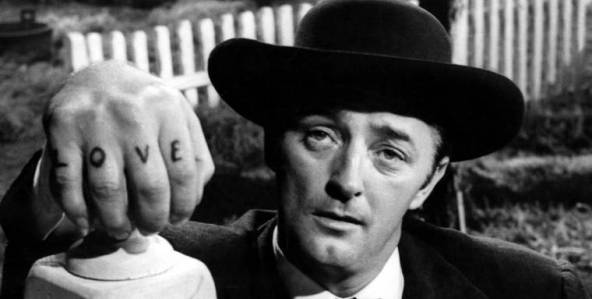
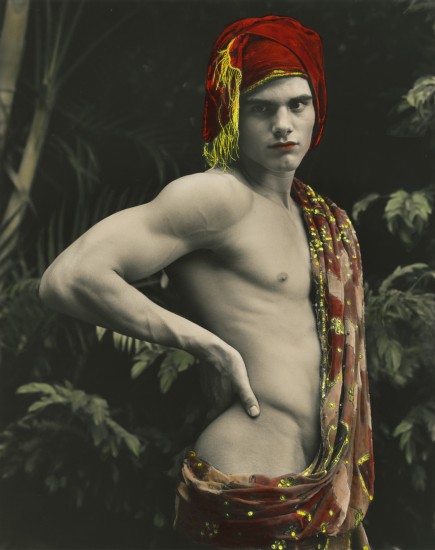
Fashion photographer Bruce Weber, who directed the seminal Chet Baker doc Let’s Get Lost a quarter century ago, made this entertaining hodgepodge of still photos, old color and black-and-white footage, and new interviews and voice-over narration back in 2001. You might not know much about Frances Faye, but after seeing her perform in vintage Ed Sullivan clips and listening to her manager/longtime partner discuss their life together, you’ll be searching YouTube to check out a lot more. The film also examines how Weber selects and treats his male models, who are often shot in homoerotic poses for major designers (and later go on to get married and have children). As a special treat, Jan-Michael Vincent’s extensive full-frontal nude scene in Daniel Petrie and Sidney Sheldon’s 1974 Buster and Billie is on display here, as are vintage clips of Sammy Davis Jr., adventurer Sir Wilfred Thesiger, former Vogue editor Diana Vreeland, and Robert Mitchum singing in a recording studio with Dr. John.
The film is about model Peter Johnson and Weber as much as it is about the cult of celebrity; Weber gets to chime in on Elizabeth Taylor, Montgomery Clift, Clark Gable, Frank Sinatra, Arthur Miller, and dozens of other famous names and faces. Though an awful lot of fun, the film is disjointed, lacking a central focus, and the onscreen titles, end credits, and promotional postcards are chock-full of typos — perhaps emulating a Chinese takeout menu, hence the film’s title? Chop Suey is screening November 3 at 8:15, followed by a Q&A with Peter Johnson, and November 7 at 8:50 as part of Film Forum’s “Bruce Weber” series, which runs November 1-7 and also includes a new 4K restoration of Let’s Get Lost, followed by a talk with cinematographer Jeff Preiss; 1987’s Broken Noses, about former Olympian boxer Andy Minsker; 2018’s Nice Girls Don’t Stay for Breakfast, followed by a conversation with Carrie Mitchum and editor Chad Sipkin; 2004’s A Letter to True, a tribute to Weber’s dog; a compilation of shorts, videos, commercials, and works in progress; and The Treasure of His Youth: The Photographs of Paolo di Paolo.
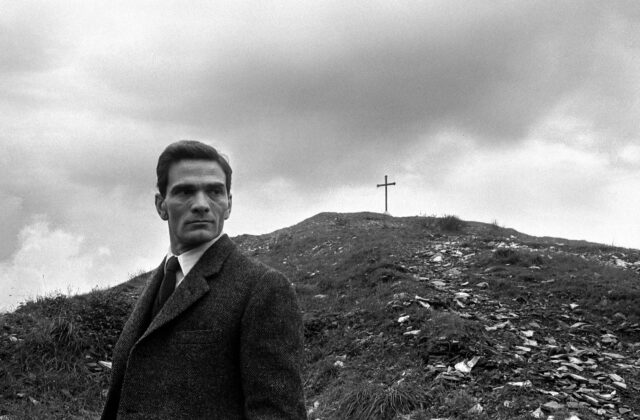
Paolo di Paolo’s photograph of Pier Paolo Pasolini at Monte dei Cocci in 1960 is one of many highlighted in Bruce Weber documentary
THE TREASURE OF HIS YOUTH: THE PHOTOGRAPHS OF PAOLO DI PAOLO (Bruce Weber, 2022)
Saturday, November 2, 1:00
www.filmforum.org
“The mystery of Paolo di Paolo to me is that he was able to give up photography, something he once had such passion for,” documentarian Bruce Weber says at the beginning of the fabulous The Treasure of His Youth: The Photographs of Paolo di Paolo, a warm and inviting film about one of the greatest photographers you’ve never heard of.
In 1954, Italian philosopher Paolo di Paolo saw a Leica III camera in a shop window and, at the spur of the moment, decided to buy it. That led to fourteen extraordinary years during which the self-taught artist took pictures for Il Mondo and Il Tempo, documenting, primarily in black-and-white, postwar Italy as well as the country’s burgeoning film industry. He was not about glitz and glamour; he captured such figures as Luchino Visconti, Anna Magnani, Ezra Pound, Simone Signoret, Marcello Mastroianni, Charlotte Rampling, Alberto Moravia, Sofia Loren, Giorgio Di Chirico, and others in private moments and glorying in bursts of freedom. He went on a road trip with Pier Paolo Pasolini for a magazine story in which the director would write the words and di Paolo would supply the images. His photos of the society debut of eighteen-year-old Princess Pallavincini are poignant and beautiful, nothing like standard publicity shots.

Paolo di Paolo’s relationship with the camera is revealed in lovely documentary (photo courtesy Little Bear Films)
Then, in 1968, just as suddenly as he picked up the camera, he put it away, frustrated by the growing paparazzi culture and television journalism. A few years ago, Weber and his wife went into a small gallery in Rome where Weber, who has had a “love affair” with Rome since he was ten, discovered magnificent photos of many of his favorite Italian film stars. The gallery owner, Giuseppe Casetti, told him that the pictures were by an aristocratic gentleman he had bumped into at flea markets and who one day came into the bookstore where he was working and gave him one for free, knowing he was a collector. Casetti wanted to know who had taken the photo; “I was once a photographer,” di Paolo told him unassumingly.
That set Weber off on a search to find out everything he could about di Paolo, who is now ninety-seven. Even his daughter, Silvia di Paolo, had no knowledge of her father’s past as a photographer until she found nearly a quarter of a million negatives in the basement of the family home and began organizing them about twenty years ago. Paolo had never spoken of this part of his life; he wrote books on philosophy, was the official historian of the Carabinieri, and restored antique sports cars, but his artistic career was an enigma even though it was when he met his wife, his former assistant.
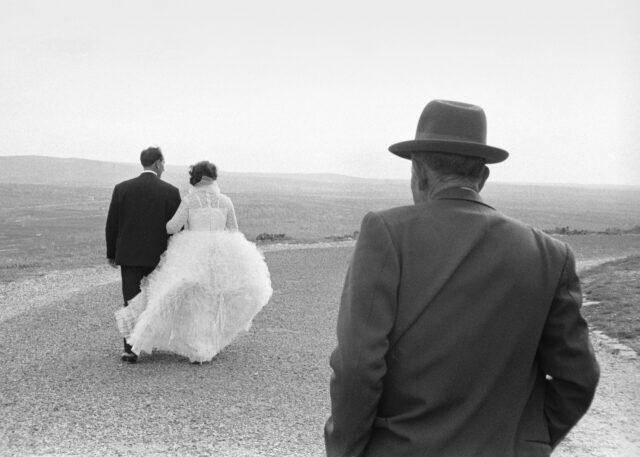
The father of the bride watches the young couple as they head down a country road (photo by Paolo di Paolo)
Weber follows di Paolo as he meets with photographer Tony Vaccaro, film producer Marina Cigona, and his longtime friend (but not related) Antonio do Paola, visits his childhood home in Larino, is interviewed by the young son of Vogue art director Luca Stoppini, and attends his first-ever retrospective exhibition (“Il Mondo Perduto” at the Maxxi Museum in Rome). And he picks up the camera again, taking photos at a Valentino fashion show.
Cinematographer Theodore Stanley evokes di Paolo’s unpretentious style as he photographs the aristocratic gentleman walking up a narrow cobblestoned street, his cane in his right hand, an umbrella in his left over his head, and driving one of his sports cars. Editor and cowriter Antonio Sánchez intercuts hundreds and hundreds of di Paolo’s photos, several of which are discussed in the film: a spectacular shot of Pasolini at Monte dei Cocci, the director in the foreground, the famous cross atop a hill in the background; Visconti in a chair, fanning himself; a scene in which a father, hands in his pocket, watches his daughter and new son-in-law walking away on an empty country road. There are also clips from such classic films as Rocco and His Brothers, Accatone, Rome Open City, Marriage Italian Style, and 8½. It’s all accompanied by John Leftwich’s epic score.
As Cigona tells di Paolo about having ended his flourishing photography career, “People said, ‘Why did you do that? You were quite famous.’” It was never about the fame for di Paolo, but now the secret is out.
“For me, every object is a miracle,” Pasolini says in an archival interview. In The Treasure of His Youth, Weber treats every moment with di Paolo and his photographs as a miracle. So will you.
[Mark Rifkin is a Brooklyn-born, Manhattan-based writer and editor; you can follow him on Substack here.]
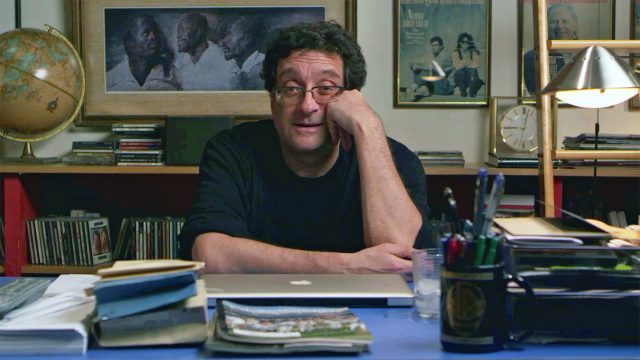
 Vanessa Gould’s surprising charmer, Obit., might primarily be about the documentation of individual death by the New York Times obituaries desk, but at its heart it’s a celebration of life. “It’s almost never depressing because we’re almost always writing about someone in his or her eighties or nineties who has died after a long, rich, creative, fulfilling life,” obituaries senior writer Margalit Fox explains. “In an obit of eight hundred words or so, maybe a sentence or two will be about the death and the other ninety percent is about the life. So it’s counterintuitive, ironic even, but obits have next to nothing to do with death and, in fact, absolutely everything to do with the life.” Inspired by an obituary the New York Times ran about a friend of hers at her urging, Gould spent about a week in the Times offices, capturing the obit writers and editors in action as they do extensive research (online and on the phone), work hard on the lede, carefully fact check, and get just the right photo for what they consider legitimate news stories, not simply memorials to the deceased. “It’s a once-only chance to make the dead live again,” obituaries writer (and former food critic) William Grimes notes. They are shown deciding whose life was newsworthy, keeping to a specific word count, and pitching for better placement of their story while attempting to capture the essence of the individual they are writing about. When researching the death of typewriter repairman Manson Whitlock, Fox hits the keys of an old Royal, attempting to incorporate the sound and feel of the instrument in her article. In addition to the obviously famous and influential, they also cover such people as Slinky creator Richard T. James, Bill Haley bass player Marshall Lytle, television remote inventor Gene Polley, Brown v. Board of Education of Topeka plaintiff Zelma Henderson, aviatrix Elinor Smith, advertising executive Richie Rich, Skylab saviour Jack A. Kinzler, and William P. Wilson, the JFK aide who helped orchestrate John F. Kennedy’s critical televised debate win over Vice President Richard M. Nixon. Gould’s film includes archival photographs and film footage of many of the obituary subjects and the times in which they lived, although some of the clips are not completely relevant. Still, they are cool to see and flesh out the documentary with visual splendor and fun details.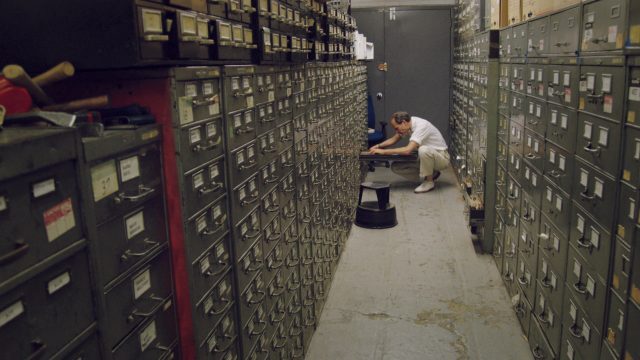
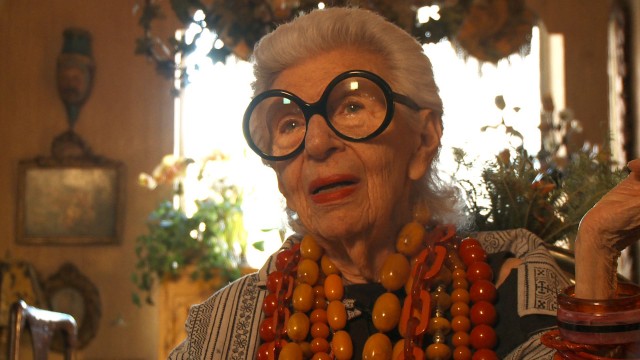
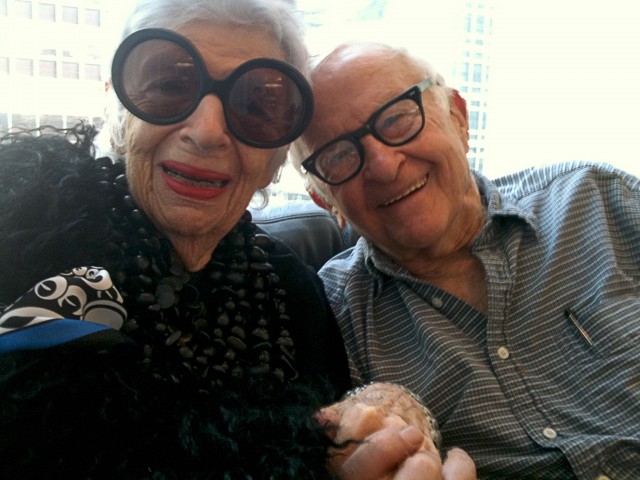
 “I like individuality,” self-described “geriatric starlet” and nonagenarian fashion doyenne Iris Apfel says at the beginning of octogenarian Albert Maysles’s penultimate film, Iris. “It’s so lost these days. There’s so much sameness. Everything is homogenized. I hate it. Whatever.” Iris celebrates that individuality, not only Apfel’s, who at ninety-three is still active in the fashion world, but Maysles’s, who passed away in March at the age of eighty-eight, leaving behind a legendary legacy that changed the face of documentary cinema, including such classics as Salesman, Grey Gardens, and Gimme Shelter. Throughout the film, Apfel speaks directly to Maysles, who ends up on camera several times, breaking that once-impenetrable fourth wall that he, his brother, David, and their partner, Charlotte Zwerin, helped tear down years ago. Maysles spent four years filming the Queens-born Apfel as she shared her lovely story, growing from an interior designer and textile-business owner to a world-renowned fashion collector, tastemaker, and rule breaker, accompanied all along the way by her husband of more than sixty-six years, Carl. Maysles shows Iris, in her trademark enormous circular-framed glasses and unique, colorful ensembles that mix designer clothing with a healthy dose of inexpensive accessories, as she bargains at a cheap local store, advises women at a special Loehmann’s event, prepares for her 2005 show at the Metropolitan Museum of Art’s Costume Institute, hawks her jewelry line on the Home Shopping Network, works on a window display at Bergdorf Goodman, and talks fashion with Martha Stewart, Tavi Gevinson, and others. Maysles interviews such designers as Alexis Bittar, Duro Olowu, Naeem Khan, and Dries van Noten, Met curator Harold Koda, Architectural Digest editor in chief Margaret Russell, and J. Crew head Jenna Lyons, who have only the most kind and generous things to say about the always positive Apfel, who has a genuine love of life. “It’s better to be happy than well dressed,” she tells friend and photographer Bruce Weber.