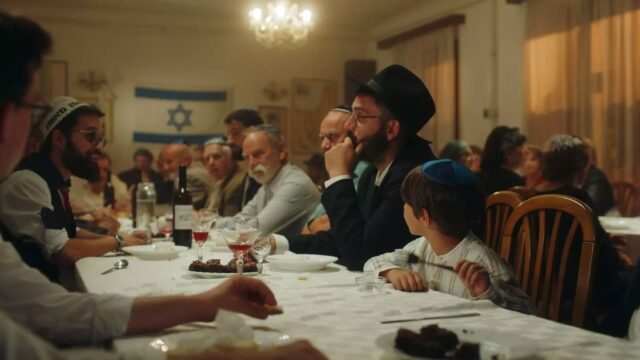
Adam Breier’s All About the Levkoviches is part of 2024 NYJFF
THIRTY-THIRD ANNUAL NEW YORK JEWISH FILM FESTIVAL
Walter Reade Theater, Film at Lincoln Center
165 West 65th St. between Broadway & Amsterdam Aves.
January 10-24, $14-$17
212-875-5050
www.filmlinc.org
thejewishmuseum.org
With the scourge that is antisemitism on the rise yet again, this time spurred by Hamas’s October 7 terrorist attack on Israel and the IDF’s military response, it feels like a political statement just to attend the thirty-third annual New York Jewish Film Festival, taking place January 10–24 at the Walter Reade Theater at Lincoln Center. The 2024 iteration consists of more than two dozen features, documentaries, and shorts from Hungary, Poland, Germany, the Czech Republic, France, Italy, Austria, the UK, Israel, Ukraine, and America, exploring such topics as antisemitism, family estrangement, Nazi-looted art, the 1976 trial of Pierre Goldman, Klezmer music, survival in the desert, excommunicated philosopher Baruch Spinoza, and the Shabbos goy.
The opening night selection is the New York premiere of James Hawes’s One Life, in which Sir Anthony Hopkins portrays Sir Nicholas Winton, an unassuming British stockbroker who was a quiet WWII hero; producer Joanna Laurie will participate in a postscreening discussion. The centerpiece film is the New York premiere of Michal Vinik’s Valeria Is Getting Married, about two Ukrainian sisters who come to Israel and get involved in contemporary arranged marriages. The festival closes with Ron Frank’s documentary Remembering Gene Wilder, a celebration of the beloved stage and screen star, with reminiscences from Mel Brooks, Alan Alda, Carol Kane, Harry Connick Jr., Rain Pryor, and others; the New York premiere will be introduced by executive producer Julie Nimoy and followed by a talk with Frank, writer Glenn Kirschbaum, and Peter Ostrum, who played Charlie Bucket in Willy Wonka and the Chocolate Factory, his only film role.
Below are five films to watch out for; most screenings throughout the festival will be followed by a discussion with directors, producers, subjects, cast members, or experts.
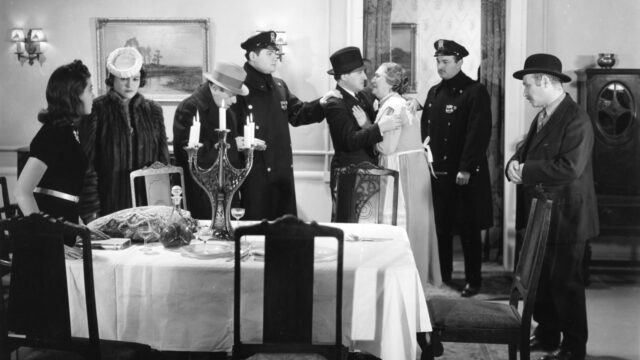
The 1939 Yiddish melodrama Mothers of Today will be shown at NYJFF in a 35mm restoration
MOTHERS OF TODAY (Henry Lynn, 1939)
Thursday, January 11, 2:30
Sunday, January 14, 12:00
www.filmlinc.org
Yiddish radio star Esther Field, the “Yiddishe Mama,” made her only film appearance in Henry Lynn’s 1939 shund film, Mothers of Today, being shown in a 35mm restoration at the festival, followed by a discussion with National Center for Jewish Film codirectors Lisa Rivo and Sharon Rivo. It’s a working-class immigration melodrama about a widow trying to hold on to Jewish tradition as her children begin straying from the religion in America. The film was shot in the Bronx and features Jewish songs and prayers, including the Kiddush, “Got Fun Avrohom,” and Kol Nidrei.

Gad Elmaleh’s autobiographical comedy Stay with Us deals with religious conversion
STAY WITH US (Gad Elmaleh, 2022)
Thursday, January 11, 5:30
Wednesday, January 24, 4:00
www.filmlinc.org
A minor controversy erupted when it was reported in 2022 that Moroccan-Canadian-French Jewish comedian and actor Gad Elmaleh had converted to Christianity. It wasn’t true, but Elmaleh had studied Christianity extensively, resulting in his autobiographical comedy Stay with Us, in which he plays a Jewish man named Gad who announces to his family, played by his actual mother, father, and sister, that he is converting to Catholicism. Just wait till you see his parents’ reaction when his mother finds a statue of the Virgin Mary in his suitcase. “Get your fingers off it!” his father declares.

The Books He Didn’t Burn goes inside Adolf Hitler’s private library
THE BOOKS HE DIDN’T BURN (Claus Bredenbrock & Jascha Hannover, 2023)
Monday, January 15, 1:00
www.filmlinc.org
Jeremy Irons narrates Claus Bredenbrock and Jascha Hannover’s The Books He Didn’t Burn, which asks the question “Can literature provide a handbook for mass murder?” as American historian Timothy Ryback examines Adolf Hitler’s book collection, which totaled sixteen thousand at the time of his suicide. “Our whole notion, going back to the ancient Greeks, that art, beauty, literature ennobles the human spirit . . . Hitler’s library turns this whole thing on its head,” Ryback says in the film. Hannover will participate in a discussion after the screening.
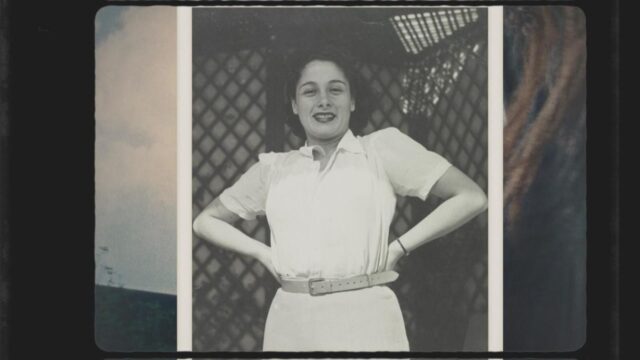
Isabelle Cottenceau immerses viewers into the life and career of designer Gaby Aghion in Looking for Chloé
LOOKING FOR CHLOÉ (Isabelle Cottenceau, 2023)
Saturday, January 20, 7:00
www.filmlinc.org
The Jewish Museum is currently hosting the wide-ranging exhibition “Mood of the Moment: Gaby Aghion and the House of Chloé,” about the Jewish Egyptian entrepreneur who founded the French fashion house Chloé. In Looking for Chloé, Isabelle Cottenceau follows the life and career of Gaby Aghion, who was born Gabrielle Hanoka in Egypt in 1921; launched Chloé in 1952; hired Karl Lagerfeld, Stella McCartney, and Phoebe Philo; and had such clients as Brigitte Bardot, Jackie Kennedy, and Maria Callas. Aghion was married to her husband, gallery owner and fellow political activist and intellectual Raymond Aghion, for nearly seventy years and was a leader in the development of prêt-à-porter. Producer Sophie Jeaneau and Museum at FIT director Dr. Valerie Steele will be on hand for a postscreening discussion.
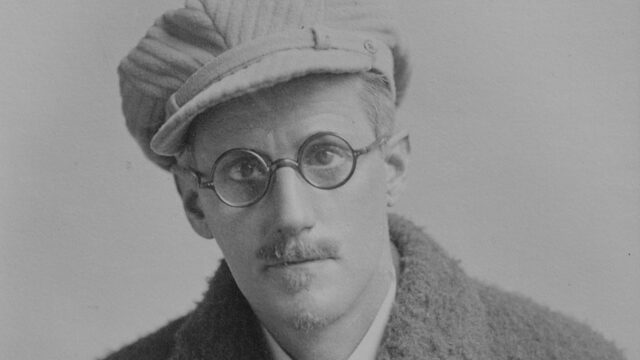
Adam Low digs deep into James Joyce’s 1922 novel, Ulysses, in 2022 doc
JAMES JOYCE’S ULYSSES (Adam Low, 2022)
Sunday, January 21, 1:00
www.filmlinc.org
In honor of the centennial of the publication of James Joyce’s Ulysses, documentarian Adam Low goes behind-the-scenes of the writing, publication, and legacy of the notoriously difficult 1922 novel, set during one June day in Dublin in 1904. In the film, British journalist and novelist Howard Jacobson declares that the book is “the greatest Jewish novel of the twentieth century — the first one with a Jew at its very center,” Leopold Bloom. Low also speaks with Salman Rushdie, Colm Tóibín, Anne Enright, Eimear McBride, Paul Muldoon, John McCourt, Nuala O’Connor, Vivienne Igoe, and others as he details the heroic efforts by such people as Margaret Anderson, Jane Heap, Sylvia Beach, Harriet Shaw Weaver, and Nora Barnacle, who played such important roles in its ultimate success. Low and producer Martin Rosenbaum will be on hand for a postscreening talk.
[Mark Rifkin is a Brooklyn-born, Manhattan-based writer and editor; you can follow him on Substack here.]
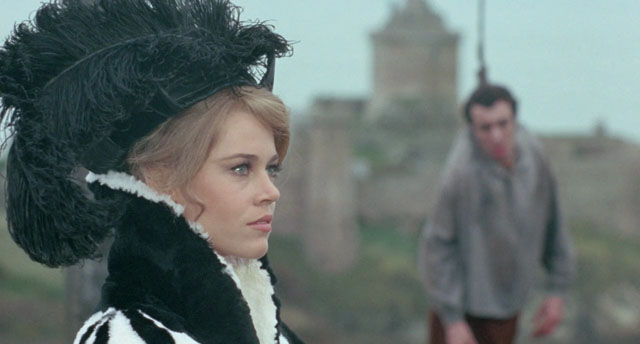
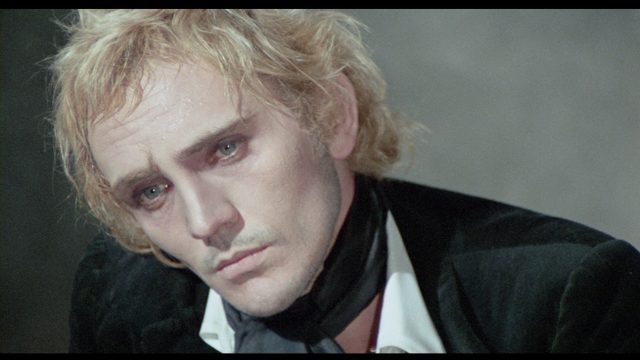
 The Quad gets right to the heart of the matter in the title of its new series, “Some Are Better than Others: The Curious Case of the Anthology Film.” Also known as an omnibus, anthology films are compilations of shorter works, often by master directors, on a specific theme. The Quad festival, running September 14-27, includes Aria, in which ten directors, among them Robert Altman, Jean-Luc Godard, Derek Jarman, Nicolas Roeg, and Ken Russell, make films inspired by opera pieces; the four-part 1945 British horror anthology Dead of Night; Lumière and Company, in which forty-one international filmmakers create fifty-two-second films using original equipment from the Lumière brothers; and Twilight Zone — The Movie, with Joe Dante, John Landis, George Miller, and Steven Spielberg revisiting classic episodes from the Rod Serling TV program. It is rare that all of the short films are of equal quality — hence, “Some are better than others” — and such is the case with the 1968 trilogy of Edgar Allan Poe stories, Spirits of the Dead.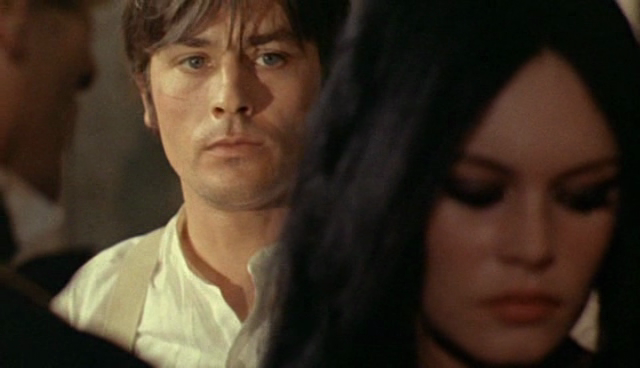
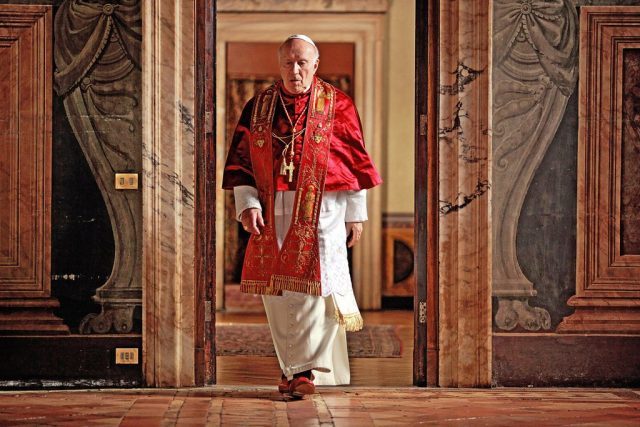
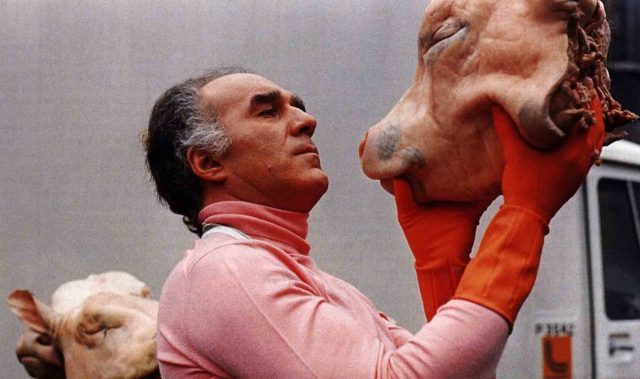
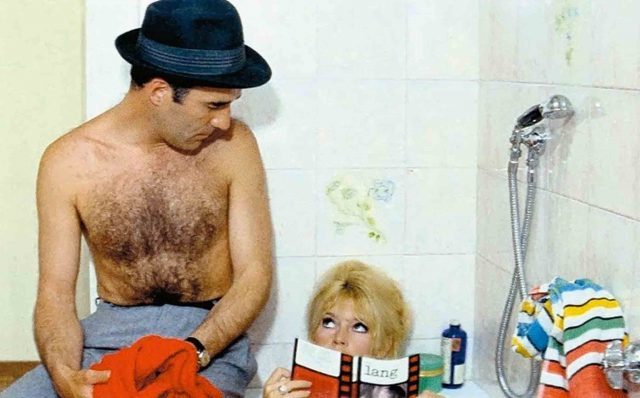
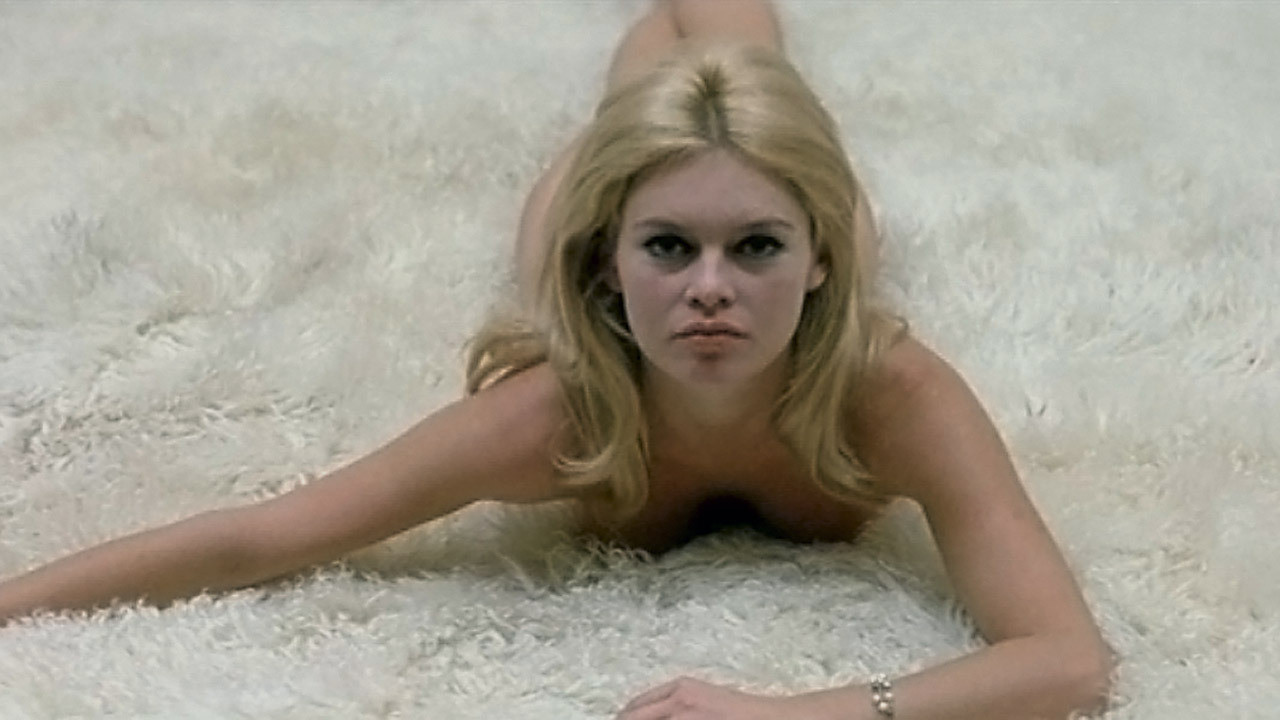
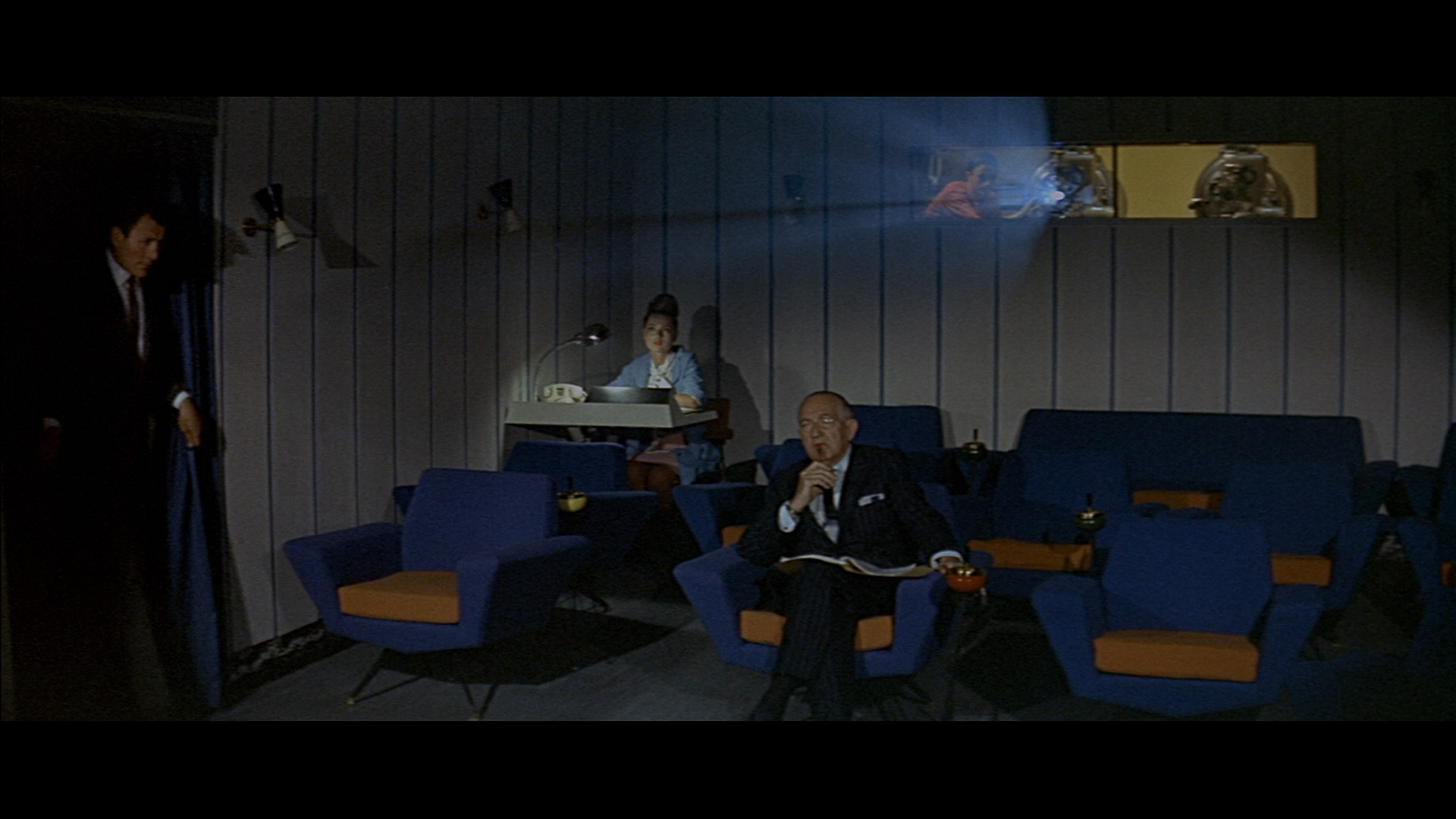
 French auteur Jean-Luc Godard doesn’t hold back any of his contempt for Hollywood cinema in his multilayered masterpiece Contempt. Loosely based on Alberto Moravia’s Il Disprezzo, Contempt stars Michel Piccoli as Paul Javal, a French screenwriter called to Rome’s famed Cinecittà studios by American producer Jeremy Prokosch (Jack Palance ) to perform rewrites on Austrian director Fritz Lang’s (played by Lang himself) adaptation of The Odyssey by ancient Greek writer Homer. Paul brings along his young wife, the beautiful Camille (Brigitte Bardot), whom Prokosch takes an immediate liking to. With so many languages being spoken, Prokosch’s assistant, Francesca Vanini (Giorgia Moll), serves as translator, but getting the various characters to communicate with one another and say precisely what is on their mind grows more and more difficult as the story continues and Camille and Paul’s love starts to crumble. Contempt is a spectacularly made film, bathed in deep red, white, and blue, as Godard and cinematographer Raoul Coutard poke fun at the American way of life. (Both Godard and Coutard appear in the film, the former as Lang’s assistant director, the latter as Lang’s cameraman — as well as the cameraman who aims the lens right at the viewer at the start of the film.)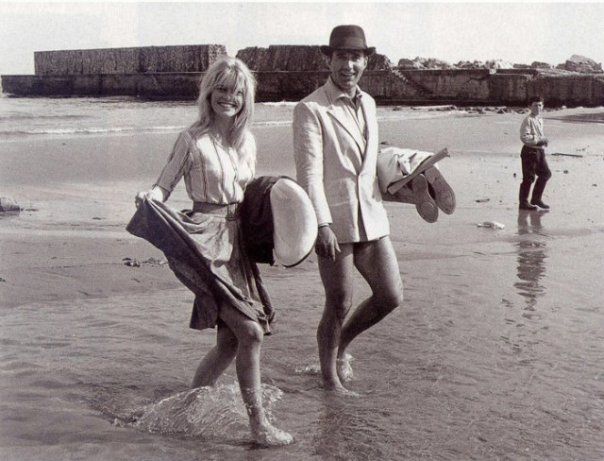
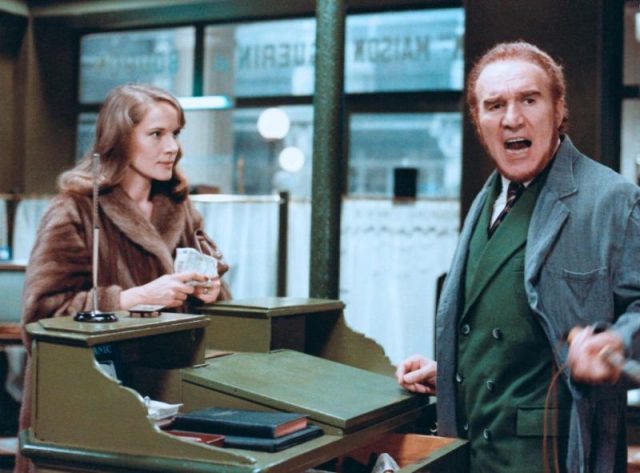
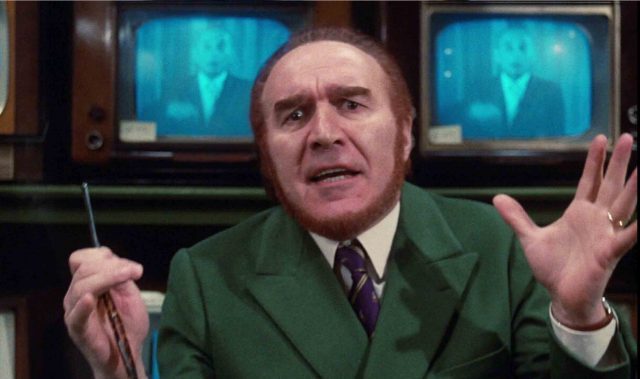
 From the very opening of Une Chambre en Ville (A Room in Town), French New Wave director Jacques Demy announces that the 1982 musical melodrama is going to be something a little different. As a rising sun changes color over a construction site across the Loire River, what appear to be closing credits run up the screen, set to Michel Colombier’s romantic score, as if the film is ending. But Demy and cinematographer Jean Penzer are only getting started, shifting from black-and-white to color to black-and-white again as they cut to the hard streets of 1955 Nantes, where a shipyard strike is under way. Riot police are in a stand-off with hundreds of male and female strikers, characters on both sides singing instead of talking and shouting — in a scene that eerily evokes Tom Hooper’s Les Misérables, which came thirty years later. Soon the intricate plot unfolds, as the striking, and broke, François Guilbaud (Richard Berry), who is renting a room from former baroness Margot Langlois (Danielle Darrieux) and dating doe-eyed Violette Pelletier (Fabienne Guyon), instantly falls for femme fatale Edith Leroyer (Dominique Sanda), Mme. Langlois’s recently married daughter, who is already fed up with her impotent cheapskate of a husband, television salesman Edmond Leroyer (Michel Piccoli). The over-the-top drama plays out in wonderfully garish rooms of deep, intoxicating colors, which are echoed by Rosalie Varda’s (daughter of Demy and Agnès Varda) costumes, which even go so far as to have Violette wearing violet and Edith going bare beneath her luxurious fur coat, with no one changing clothes over the course of the two days in which the story takes place. As the strike continues, the main characters connect with one another in good and bad ways, especially when straight razors and guns are involved.