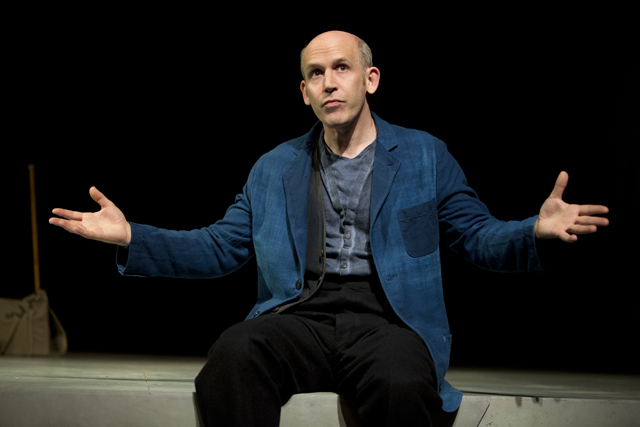
Ruben Santiago-Hudson was August Wilson’s personal choice to take over one-man show (photo by Joan Marcus)
The Pershing Square Signature Center
The Alice Griffin Jewel Box Theatre
480 West 42nd St. between Tenth & Eleventh Aves.
Extended through December 29, $55
212-244-7529
www.signaturetheatre.org
August Wilson’s one-man show, How I Learned What I Learned, has arrived in New York at last, and like any Wilson work, it’s a very welcome event. When the two-time Pulitzer Prize-winning playwright passed away from cancer at the age of sixty in 2005, plans were already under way for a season of his works as part of the fifteenth anniversary celebration of the Signature Theatre. For that 2005 season, Wilson was going to present the New York premiere of his own one-man show and personal memoir, How I Learned What I Learned, which he premiered in Seattle in 2002. Following his death, the season turned into a tribute to Wilson’s vast legacy, with productions of Seven Guitars, Two Trains Running, and King Hedley II. Seven years later, How I Learned What I Learned is finally making its New York debut, in an intimate, intoxicating version running at the Signature through December 29, directed by Todd Kreidler, who conceived the project with Wilson and directed the original. Ruben Santiago-Hudson, Wilson’s personal choice to take over the play, gets to step into Wilson’s shoes and put on his hat and coat — the costumes were chosen by Wilson’s widow, Constanza Romero — for eighty thrilling minutes, sharing fascinating tidbits from Wilson’s life growing up as Frederick August Kittel Jr. in Pittsburgh’s Hill District.
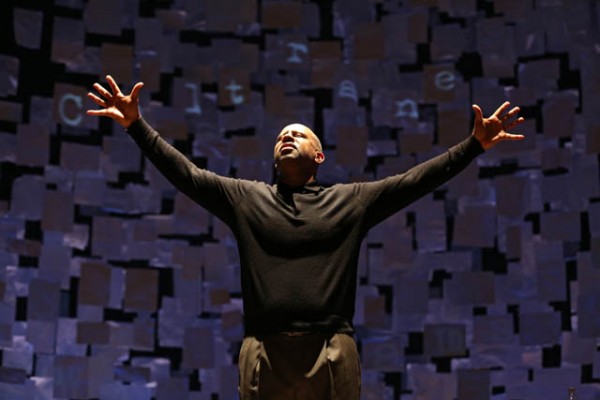
HOW I LEARNED WHAT I LEARNED celebrates the genius of August Wilson (photo by Joan Marcus)
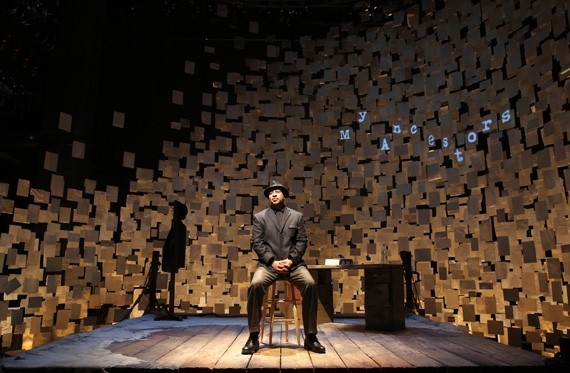
Longtime Wilson set designer David Gallo arranged the sparse stage, featuring just a desk, a chair, and a coat rack set against a backdrop of hundreds of pieces of paper dangling from the ceiling. Santiago-Hudson, who won a Tony as Canewell in Seven Guitars and directed last year’s stellar Signature revival of Wilson’s 1990 Pulitzer Prize winning The Piano Lesson, portrays Wilson with an easygoing, natural grace as he talks poignantly about episodes from his past, including quitting numerous jobs to preserve his dignity, meeting people who would help shape his future, and getting locked up in jail. He strolls amiably across the stage, sits on the desk, and watches as the title of each new section is projected onto the papers behind him, each letter accompanied by the sound of a typewriter stroke. As always, Wilson’s words shine; he doesn’t go out of his way to connect the dots, get heavy-handed about the racism and poverty he experienced, or lament what could have been. Instead, he lets the stories create a path for the viewer to follow to his majestic body of work, which he never brings up, as the play ends prior to his writing his first play. Everything about How I Learned What I Learned feels just right, a labor of love from his friends and colleagues that is a gift to the rest of us.
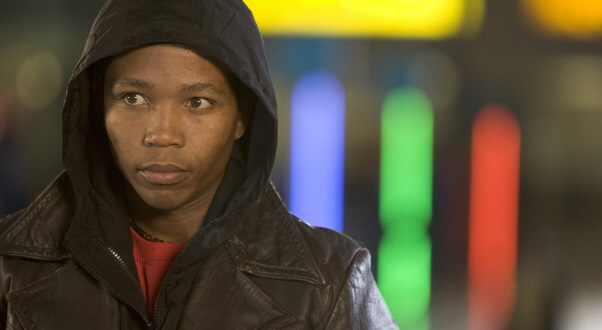
 Every once in a while, a surprise movie comes along that just blows you away; Tsotsi is that kind of film. Based on the only novel by South African playwright and activist Athol Fugard, Tsotsi is set in the dangerous ghetto world on the outskirts of Johannesburg, where poverty goes hand in hand with violence. Presley Chweneyagae is simply remarkable as Tsotsi (South African for “thug” or “gangster”), the leader of a small group of hoods who pull off petty crimes — until they fatally stab a man on the subway, sending them into a dark and deadly tailspin. When Tsotsi shoots a woman and steals her car, he finds that there’s a baby in the backseat; he considers returning it or leaving it by the side of the road, but he instead brings it home, where he decides to take care of it himself — with the help of beautiful single mother Miriam (Terry Pheto). The baby triggers Tsotsi’s memories of his own horrific childhood, which writer-director Gavin Hood shows in brief but powerful flashbacks. Tsotsi struggles to keep the baby a secret from his cohorts, much the same as he tries to keep his past secret from everyone. But things soon come to a head, and Tsotsi must decide whether to reach inside his conscience — or for his gun. Chweneyagae dominates the screen from the very first moment, his intense stare filled with anger and hate, one of the most frightening you’ll ever see. Fortunately, Hood avoids any moments of sappy sentimentality or overemotional clichés, so you never know what’s going to happen next. The pulsing soundtrack of South African kwaito music comes from “Zola” Bonginkosi Dlamini, who also plays Fela. Reminiscent of such harrowing films about troubled children as Hector Babenco’s Pixote and Fernando Meirelles & Kátia Lund’s City of God, Tsotsi, which won an Oscar for Best Foreign Language Film, is a devastating, unforgettable story that will drive itself deep into your heart and soul. Tsotsi is screening on September 24 as part of the new Signature Cinema series, being shown in conjunction with the Signature Theatre’s New York premiere of Fugard’s