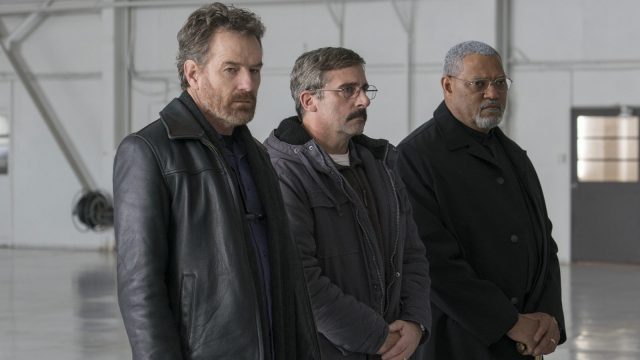
Richard Linklater’s Last Flag Flying opens the fifty-fifth New York Film Festival this week
Film Society of Lincoln Center, Walter Reade Theater, Elinor Bunin Munroe Film Center, Bruno Walter Auditorium, Alice Tully Hall
West 65th St. between Broadway & Amsterdam Ave.
September 28 – October 14
212-875-5601
www.filmlinc.org/nyff2017
The New York Film Festival turns fifty-five this year, with another powerful lineup of shorts, features, documentaries, animation, and more from around the world, with Richard Linklater’s road movie, Last Flag Flying, kicking it all off on September 28. The centerpiece selection is Todd Haynes’s Wonderstruck, based on a YA novel by Brian Selznick, with Woody Allen’s Coney Island-set Wonder Wheel closing things out on October 14. Divided into Main Slate, Convergence, Projections, Talks, Retrospectives, Revivals, Shorts, and Spotlight on Documentary, this year’s lineup also features works by Kiyoshi Kurosawa, Arnaud Desplechin, Agnès Varda and JR, Greta Gerwig, Claire Denis, Noah Baumbach, Aki Kaurismäki, Agnieszka Holland, Claude Lanzmann, Rebecca Miller, Griffin Dunne, Abel Ferrara, and Hong Sang-soo, most of whom will be on hand for Q&As following select screenings. There’s also a twenty-four-film salute to Robert Mitchum celebrating the centennial of his birth; revivals of works by Jean Vigo, Jean-Luc Godard, Hou Hsiao-hsien, James Whale, Philippe Garrel, Jean Renoir, Jean-Pierre Melville, and others; experimental films by Xu Bing, Luke Fowler, Kevin Jerome Everson, Barbara Hammer, and more; immersive and interactive experiences; and panel discussions and dialogues. Below is a list of at least one highlight per day for which tickets are still available or the event is free; keep checking twi-ny for reviews and further information.
Thursday, September 28
Last Flag Flying (Richard Linklater, 2017), introduced by Richard Linklater, Bryan Cranston, Laurence Fishburne, J. Quinton Johnson, and Darryl Ponicsan, Alice Tully Hall, $100, 6:00
Friday, September 29
Convergence, Elinor Bunin Munroe Film Center, free, 3:00 – 6:00 (also 9/30 and 10/1, 12 noon – 6:00)
Saturday, September 30
On Cinema: With Richard Linklater, moderated by Kent Jones, Walter Reade Theater, $25, 6:00
Spoor (Agnieszka Holland, in cooperation with Kasia Adamik, 2017), followed by a Q&A with Agnieszka Holland and Kasia Adamik, Alice Tully Hall, $25, 9:00
Sunday, October 1
HBO Directors Dialogues: Lucrecia Martel, Howard Gilman Theater, free, 3:00
Film Comment Live: The Cinema of Experience, amphitheater, free, 7:00
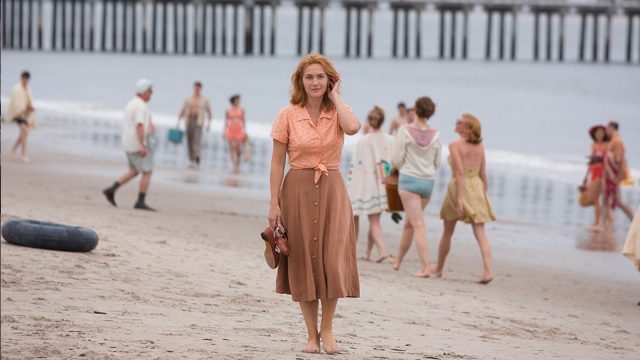
Woody Allen’s Wonder Wheel closes the fifty-fifth New York Film Festival
Monday, October 2
HBO Directors Dialogues: Agnès Varda & JR, Francesca Beale Theater, free, 6:00
Zama (Lucrecia Martel, 2017), followed by a Q&A with Lucrecia Martel, Alice Tully Hall, $25, 6:00
Tuesday, October 3
L’Atalante (Jean Vigo, 1934), Howard Gilman Theater, $15, 3:45
Wednesday, October 4
Film Comment Presents: A Gentle Creature (Sergei Loznitsa, 2017), Walter Reade Theater, $25, 6:00
Thursday, October 5
A Story from Chikamatsu (Kenji Mizoguchi, 1954), Francesca Beale Theater, $15, 3:30
Friday, October 6
Spielberg (Susan Lacy, 2017), introduced by Jessica Levin and Emma Pildes, Walter Reade Theater, $25, 8:45
Saturday, October 7
Claude Lanzmann’s Four Sisters: The Hippocratic Oath (Claude Lanzmann, 2017), introduced by Claude Lanzmann, Alice Tully Hall, $25, 1:00
Good Luck (Ben Russell, 2017), followed by a Q&A with Ben Russell, Francesca Beale Theater, $15, 6:15
Sunday, October 8
Projections Program 5: Urban Rhapsodies, followed by a Q&A with Ayo Akingbade, Fern Silva, Ephraim Asili, and Michael Robinson, Francesca Beale Theater, $15, 12 noon
Let the Sun Shine In (Claire Denis, 2017), followed by a Q&A with Claire Denis, Alice Tully Hall, $25, 3:30
Monday, October 9
HBO Directors Dialogues: Hong Sang-soo, amphitheater, free, 7:00
Tuesday, October 10
HBO Directors Dialogues: Philippe Garrel, amphitheater, free, 8:00
Wednesday, October 11
Master Class: Vittorio Storaro and Ed Lachman, moderated by Kent Jones, Walter Reade Theater, $25, 6:15
Thursday, October 12
Hallelujah the Hills (Adolfas Mekas, 1963), introduced by Jonas Mekas, Howard Gilman Theater, $15, 6:00
Lucía (Humberto Solás 1968), Howard Gilman Theater, $15, 8:00
Friday, October 13
Ismael’s Ghosts (Arnaud Desplechin, 2017), Director’s Cut, followed by a Q&A with Arnaud Desplechin, Alice Tully Hall, $25, 6:00
Saturday, October 14
Farewell, My Lovely (Dick Richards, 1975), introduced by Robert Mitchum’s daughter, Petrine Mitchum, Howard Gilman Theater, $15, 1:30

 On February 28, legendary auteur Agnès Varda was at FIAF for the special talk “Agnès Varda: Visual Artist.” The Belgium-born, France-based Varda, who is eighty-eight, will be back at FIAF on March 7 for the 7:30 screening of her 1975 documentary, Daguerréotypes, after which she will participate in a Q&A with former MoMA curator Laurence Kardish. (The film will also be shown at 4:00; both screenings will be followed by a wine and beer reception.) The eighty-minute work, which only received its official U.S. theatrical release in 2011 at the Maysles Cinema, is an absolutely charming look at Varda’s longtime Parisian community. In the film, Varda, who has made such New Wave classics as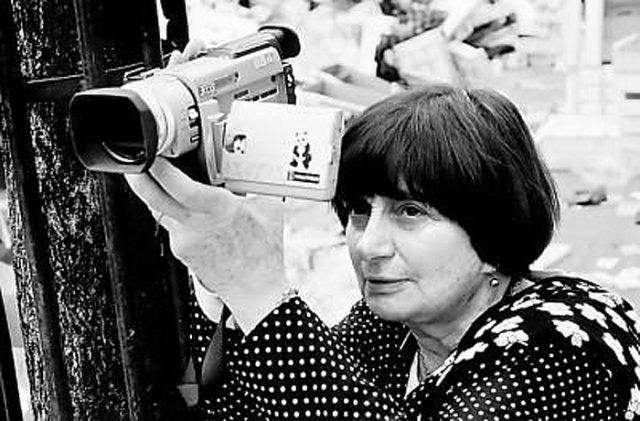
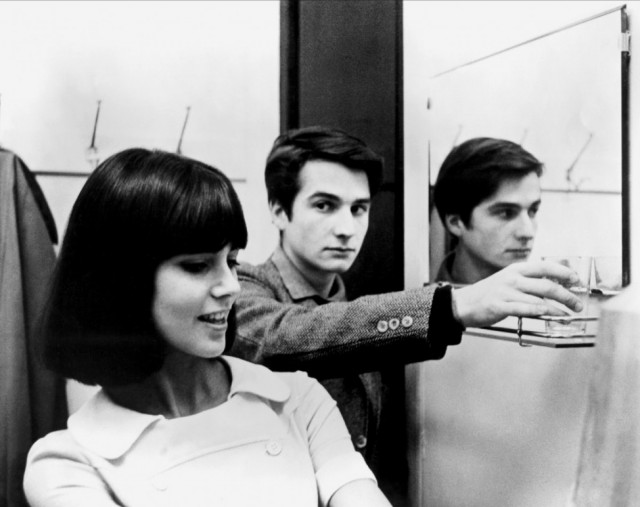
 In a 1966 interview with Pierre Daix about Masculin feminin, director Jean-Luc Godard said, “When I made this film, I didn’t have the least idea of what I wanted.” Initially to be based on the Guy de Maupassant short stories “The Signal” and “Paul’s Mistress,” the film ended up being a revolutionary examination of the emerging youth culture in France, which Godard identifies as “the children of Marx and Coca-Cola.” Godard threw away the script and worked on the fly to make the film, which stars Jean-Pierre Léaud as Paul, a peculiar young man who quickly becomes obsessed with budding pop star Madeleine, played by real-life Yé-yé singer Chantal Goya. (Godard discovered her on a television variety show.) Paul chases Madeleine, getting a job at the same company, going to the movies and nightclubs with her and her friends, and meeting her in cafés, where he wants to talk about the troubles of contemporary society and she just wants to have a good time. “Man’s conscience doesn’t determine his existence. His social being determines his conscience,” Paul proclaims. He continually argues that there is nothing going on even as strange events occur around him to which he is completely oblivious, including a lover’s spat in which a woman guns down a man in broad daylight. (Sounds of rapid-fire bullets can be heard over the intertitles for each of the film’s fifteen faits précis, evoking a sense of impending doom.) Paul has bizarre conversations with his best friend, Robert (Michel Debord), a radical who asks him to help put up anarchist posters. Posing as a journalist, Paul brutally interviews Miss 19 (Elsa Leroy), a young model with a very different view of society and politics. Godard has also included a playful battle of the sexes in the center of it all: Paul wants Madeleine, much to the consternation of Madeleine’s roommate, Elisabeth (Marlène Jobert), who also has designs on her; meanwhile, Robert goes out with another of Madeleine’s friends, the more grounded Catherine (Catherine-Isabelle Duport), who is interested in Paul. It all makes for great fun, taking place in a surreal black-and-white world dominated by rampant consumerism.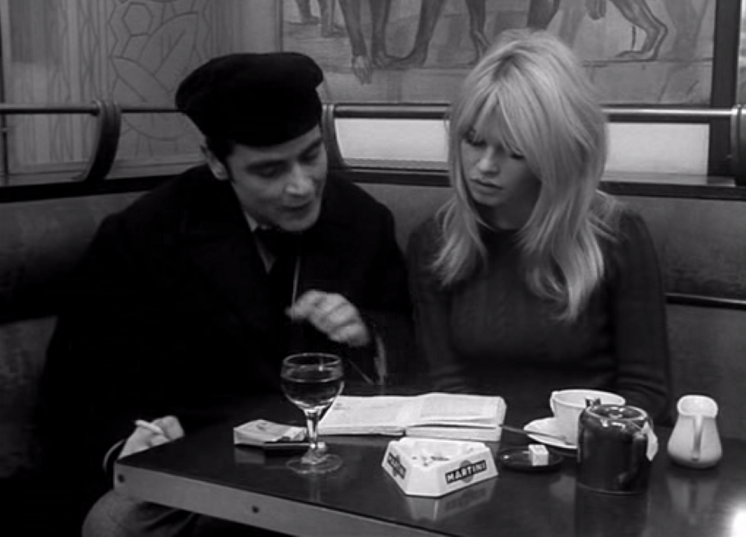
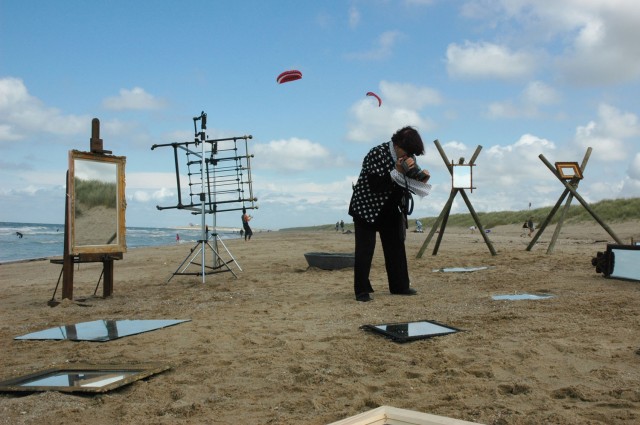
 “The whole idea of fragmentation appeals to me,” filmmaker, photographer, and installation artist Agnès Varda says in the middle of her unusual cinematic autobiography, the César-winning documentary The Beaches of Agnès. “It corresponds so naturally to questions of memory. Is it possible to reconstitute this personality, this person Jean Vilar, who was so exceptional?” She might have been referring to her friend, the French actor and theater director, but the exceptional Belgian-French Varda might as well have been referring to herself. Later she explains, “My memories swarm around me like confused flies. I hesitate to remember all that. I don’t want to.” Fortunately for viewers, Varda (Jacquot de Nantes, The Gleaners and I) does delve into her past in the film, sharing choice tidbits from throughout her life and career, in creative and offbeat ways that are charmingly self-effacing. Using cleverly arranged film clips, re-creations, photographs, and an array of frames and mirrors, the eighty-year-old Varda discusses such colleagues as Jean-Luc Godard, Chris Marker, and Alain Resnais; shares personal details of her long relationship with Jacques Demy; visits her childhood home; rebuilds an old film set; speaks with her daughter, Rosalie Varda, and son, Mathieu Demy; talks about several of her classic films, including La Pointe Courte,