this week in theater

TICKET ALERT: THE MUSIC CRITIC

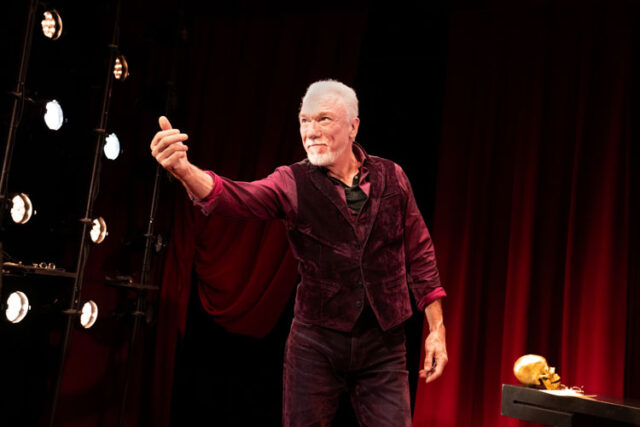
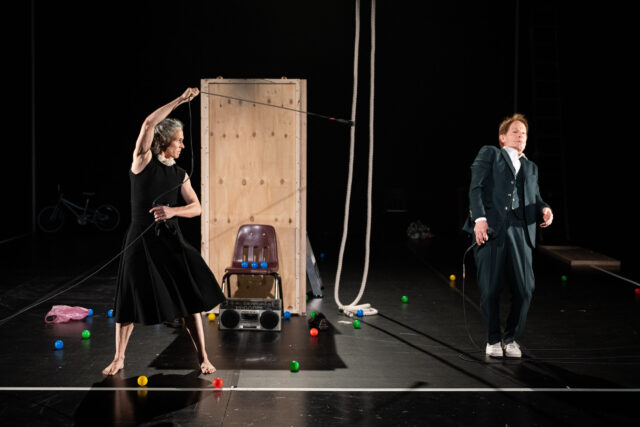
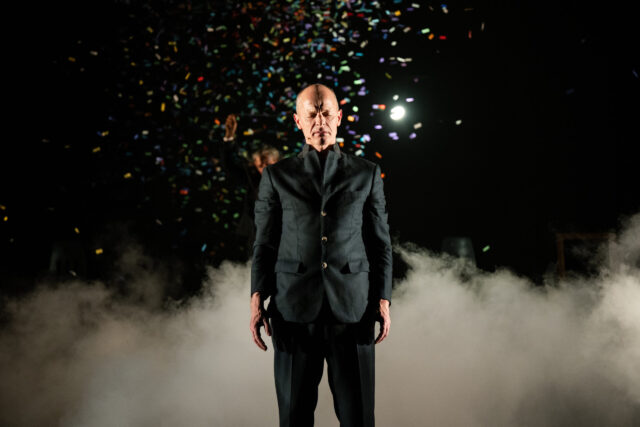
John Malkovich, Hyung-ki Joo, and Aleksey Igudesman star in The Music Critic, coming to the Beacon for one night only

Who: John Malkovich, Aleksey Igudesman, Hyung-ki Joo
What: The Music Critic, play with live classical music and opera
Where: Beacon Theatre, Broadway at 74th St.
When: Saturday, October 28, $66-$257, 7:30
Why: In such films as Being John Malkovich and cable series as The New Pope, two-time Oscar nominee and Emmy winner John Malkovich (Places in the Heart, In the Line of Fire) has shown that he has a wickedly clever sense of humor, especially when it comes to himself. Since appearing on Broadway four times from 1984 to 1987 (Death of a Salesman, Arms and the Man, The Caretaker, Burn This), his stage work in New York has been limited. In 2011, he starred as the title murderer in The Infernal Comedy: Confessions of a Serial Killer at BAM, and two years later he portrayed Giacomo Casanova at City Center in The Giacomo Variations; both traveling productions combined classical music, opera, and theater.

On October 28, Malkovich will return to the city for one night only with his latest traveling show, The Music Critic, in which he plays a cynical expositor who argues that Antonín Dvořák “indulges in ugly, unnatural music,” calls Johannes Brahms a “giftless bastard,” and claims that “the music of Debussy has the attractiveness of a pretty, tubercular maiden.” It was created and conceived by Russian violinist, poet, author, director, composer, and conductor Aleksey Igudesman, who performs in the international hit with his longtime comedy partner, Korean-British pianist, composer, and educator Hyung-ki Joo; both trained at the prestigious Yehudi Menuhin School. The irreverent comic duo of Igudesman & Joo has previously staged such productions as And Now Rachmaninoff, And Now Mozart, and BIG Nightmare Music.

“We are all happy to be back on the road, and for the first time also in the USA, participating in an evening which consists of some of the greatest compositions in the history of classical music, paired with the perhaps rather unexpected initial reactions those compositions elicited from some of the world’s renowned music critics, along with some other surprises,” Malkovich said in a statement. Igudesman added, “The Music Critic is a project very close to my heart, and bringing it to the USA is something I dreamed of from its inception. My dear friend John Malkovich in the role of the evil critic is despicable and lovable at the same time and evokes the critic in every one of us.”

The score of The Music Critic features Bach, Mozart, Beethoven, Chopin, Brahms, Schumann, Debussy, Prokofiev, Eugène Ysaÿe, Giya Kancheli, Astor Piazzolla, and Igudesman; Igudesman and Joo will be joined by cellist Antonio Lysy, violist Hsin-Yun Huang, and violinist Claire Wells. Be prepared for an unpredictable evening of fab music and comic high jinks.

[Mark Rifkin is a Brooklyn-born, Manhattan-based writer and editor; you can follow him on Substack here.]
HARLEM WEEK: A GREAT DAY IN HARLEM AND MORE

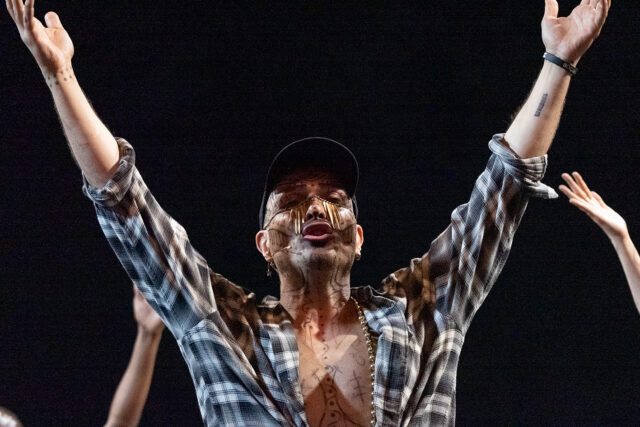
Who: Uptown Dance Academy, the Gospel Caravan, IMPACT Repertory Theatre, Mama Foundation’s Sing Harlem! Choir, Bishop Hezekiah Walker & Choir, Ray Chew & the Harlem Music Festival All-Star Band featuring Nona Hendryx, more
What: Annual Harlem Week celebration
Where: U.S. Grant National Memorial Park, West 122nd St. at Riverside Dr.
When: Sunday, August 13, free, noon – 7:00 pm (festival runs August 9-16)
Why: One of the centerpieces of Harlem Week is “A Great Day in Harlem,” which takes place Sunday, August 13, as part of this annual summer festival. There will be an international village with booths selling food, clothing, jewelry, and more, as well as live music and dance divided into “Artz, Rootz & Rhythm,” “The Gospel Caravan,” “The Fashion Flava Fashion Show,” and “The Concert Under the Stars.” Among the performers are the Uptown Dance Academy, the Gospel Caravan, IMPACT Repertory Theatre, the Sing Harlem! Choir, and Bishop Hezekiah Walker & Choir. In addition, Ray Chew & the Harlem Music Festival All-Star Band, featuring Nona Hendryx, will perform a tribute to the one and only Tina Turner, who died in May at the age of eighty-three; Harry Belafonte, Tony Bennett, Miriam Makeba, and Tito Puente will also be honored.

The theme of the forty-ninth annual Harlem Week is “Be the Change: Hope. Joy. Love.”; it runs August 9-16 with such other free events as the panel discussion “Climate & Environmental Justice in Harlem: Storms, Heat & Wildfires,” A Harlem SummerStage concert, Senior Citizens Day, the Uptown Night Market, the Percy Sutton Harlem 5K Run & Walk & Children’s Run, “Choose Healthy Life Service of Renewal and Healing,” Great Jazz on the Great Hill in Central Park with Wycliffe Gordon and Bobby Sanabria, Imagenation Outdoor Film Festival screenings of Beat Street with DJ Spivey and Max Roach: The Drum Also Waltzes, a Youth Conference & Hackathon, Economic Development Day, an Arts & Culture Broadway Summit, Harlem on My Mind Conversations, a Jobs & Career Fair, and more. “We continue to build a stronger, more united Harlem, radiating hope, joy, and love throughout our beloved city,” Harlem Week chairman Lloyd Williams said in a statement.

[Mark Rifkin is a Brooklyn-born, Manhattan-based writer and editor; you can follow him on Substack here.]
THE COTTAGE

Sylvia (Laura Bell Bundy) and Beau (Eric McCormack) discuss their future in The Cottage (photo by Joan Marcus)

THE COTTAGE
Hayes Theater
240 West Forty-Fourth St. between Broadway & Eighth Ave.
Tuesday – Sunday through October 29, $109-$169
thecottageonbroadway.com

“Why do I have a sense of impending disaster?” a character asks early in Tom Stoppard’s 1981 farce, On the Razzle. “One false move and we could have a farce on our hands.”

The best farces build comedy around impending disasters, usually involving class and romance, from Noël Coward’s Present Laughter and Oscar Wilde’s The Importance of Being Earnest to Michael Frayn’s Noises Off and Molière’s The Miser. But the less-successful farces are hampered by too many false moves.

Sandy Rustin’s 2014 drawing room comedy of manners, The Cottage, which opened July 24 at the Hayes Theater on Broadway, starts off well enough. As the audience enters the space, the stage is covered by a screen depicting the image of a colorful, idyllic cottage covered in plants and flowers — as well as several pairs of animals engaged in overt sexual behavior; a bra dangles from a tree branch, hinting at what is going on inside. The screen is then raised to reveal Paul Tate dePoo III’s wonderful set, which deservedly gets its own applause. The large room is filled with elegant furniture, sculptures, books, paintings, a bar, a globe, a gramophone, and seemingly endless knickknacks.

It’s June 1923, and Beau (Eric McCormack) is at his family’s cottage in the English countryside, in the midst of his annual tryst with Sylvia (Laura Bell Bundy), which has been going on for seven years. Sylvia is ready to take their relationship to the next level, but Beau is apprehensive.

An all-star cast cannot save the Broadway debut of The Cottage (photo by Joan Marcus)

“I wish you were my husband,” she says.

“If I were your husband you would despise me just as you despise Clarke and you would spend your evenings wishing to make love to him and not me,” Beau replies, referring to his brother, Clarke (Alex Moffat), who is married to Sylvia. “Romance, my dear, is for fairy tales. This is not a romance. This is sex,” Beau adds. “Un-wifely sex.”

Beau is none-too-thrilled when Sylvia announces that she has sent telegrams to both Clarke and Marjorie (Lilli Cooper), Beau’s wife, revealing the affair. Clarke and Marjorie soon arrive separately with secrets of their own, followed by Dierdre (Dana Steingold), a whirling dervish who is in love with Beau and is worried that her husband, Richard (Nehal Joshi), will find out where she is and kill him — but not before they all have some fun. “I didn’t expect a party. Will there be games?” Dierdre declares. The fun and games take a drastic downturn in the far-less-effective second act.

Subtitled “A Romantic and (Not Quite) Murderous Comedy of Manners,” The Cottage could be renamed The Farce That Goes Wrong. The all–North American cast (McCormack is Canadian) speaks in overly dramatic British accents. Many of the props offer surprise jokes that quickly become repetitive, while others are just plain head scratchers — antlers, I’m talking about you.

The play, gleefully helmed by the Tony-winning, Emmy-nominated Jason Alexander (Seinfeld, Jerome Robbins’ Broadway) in his directorial debut, does have its fair share of amusing exchanges, particularly in the first act, and there were two genuinely funny moments that appeared to be spontaneous, one involving a shoe, the other a bunch of grapes, resulting in the actors trying their best to hold back their own laughter and failing wonderfully. Unfortunately, there was not nearly enough of that.

Sydney Maresca’s costumes are appropriately genteel, from Clarke’s tweed suit to Sylvia’s white negligee to Beau’s smoking jacket. Justin Ellington’s sound design is overwhelmed by the actors speaking way too loud, which often impacts the believability of the plot; numerous times, characters have discussions they don’t want others to hear, but it’s hard to believe that a person knocking at the front door can’t hear what two people are saying as they shout right on the other side.

The cast is all in, but the lack of subtlety drags the show down; it might have worked better as a ninety-minute one-act instead of two hours with intermission. The actors, particularly Saturday Night Live veteran Moffat and Steingold (Beetlejuice, Avenue Q), display a talent for physical comedy, but a gaggle of gags feels tossed in purely for giggles, not organic to the story. A stage farce needs to be clever and witty first, without the pratfalls, in order to capture the audience; otherwise, as with The Cottage, you end up with an overlong episode of a mediocre sitcom or SNL skit.

[Mark Rifkin is a Brooklyn-born, Manhattan-based writer and editor; you can follow him on Substack here.]
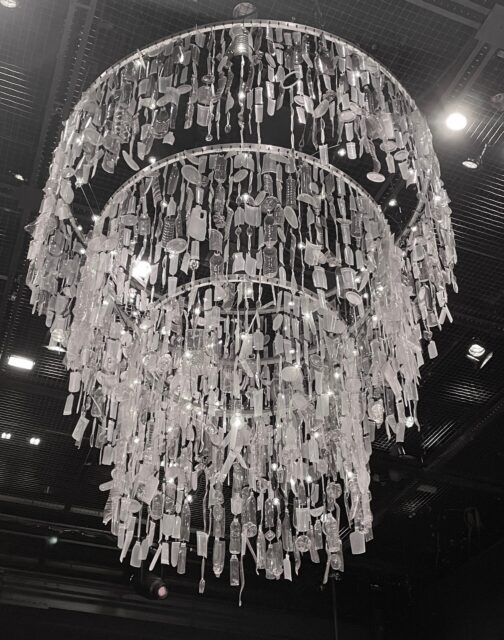
THE LITTLE SHAKESPEARE FESTIVAL

THE LITTLE SHAKESPEARE FESTIVAL
UNDER St. Marks
94 St. Marks Pl.
August 3-19, $20 streaming, $25 in person
www.frigid.nyc/festivals/shakesfest

One of the most important aspects of William Shakespeare’s canon is how open each play is to interpretation and adaptation. The Bard’s works are regularly retold with changes in time and location, race and gender, style and genre. It’s gotten so that it is rarer to see a traditional production than one involving significant alterations, including such elements as contemporary pop music, modern-day political issues, the rise of a minor character, and zombies.

Presented by FRIGID New York, the Little Shakespeare Festival offers Bard fans the opportunity to see seven shows that take unique looks at different aspects of Shakespeare’s genius. Running August 3-19 at UNDER St. Marks in the East Village, the third annual fest is curated by Conor D Mullen, who created As You Will with David Brummer and George Hider, an unscripted evening of improv in which the audience shouts out titles of plays that Shakespeare might have written had he not died in 1616 at the age of fifty-two, and then the cast acts them out; among the past titles are Eight Merry Spiders, That Doth Not Go There, and 1601: A Space Odyssey.

Kristina Del Mar stars in Djingo Productions’ Wheel of Fortune at Little Shakespeare Festival (photo by Miguel Garzón Martínez)

“Sitting in UNDER St. Marks, it’s not too hard for me to imagine William Shakespeare working here,” Mullen said in a statement. “He’d have used his words to turn this space into a Roman dungeon, a Scottish castle, or a moonlit Athenian forest. His actors would have loved having the audience so close they could speak with them directly. And, of course, he would have been very approving of a bar inside the theater, since in his own time audience members who wanted a drink had to leave the theater and visit a local bar. It’s a reminder for me that Shakespeare doesn’t just live on when performed in giant, open air amphitheaters or big, Broadway houses; he also lives in these most humble of places, where I think he would have felt quite at home. Here, with you and me, at the Little Shakespeare Festival.”

Five of the six presentations (one is a double bill) are also available as livestreams so you can watch them in your own home. Barefoot Shakespeare Company’s Lady Capulet, written by Melissa Bell and directed by Emily Gallagher, is a prequel to Romeo and Juliet that explores the role of women in today’s society; Jianzi Colón-Soto stars as Rose Capulet. Djingo Productions’ Wheel of Fortune, written and directed by Jing Ma, is a problem play dealing with isolation, connection, and mass shootings in the digital age. C.A.G.E. Theatre Company’s THE ROOM of Falsehood, written and directed by Michael Hagins, reimagines Tommy Wiseau’s late-night cult favorite, The Room, through a Shakespearean lens. First Flight Theatre Company’s Shakespeare’s Deaths and Shakespeare’s Ladies at Tea, both directed by Frank Farrell, are a forty-five-minute double header in which, first, five actors depict all major deaths in Shakespeare, and then, second, eight female Bard characters sit down for a chat in which they can only speak lines that Shakespeare wrote for them. And in Hamlet Isn’t Dead’s Shrew You! written by David Andrew Laws and directed by Sophia Carlin, four actresses repair The Taming of the Shrew.

Most of the shows run an hour or less (Lady Capulet is 110 minutes); in-person tickets are only $25, while livestream access is $20, in order to get an intimate little taste of Shakespeare in 2023.

[Mark Rifkin is a Brooklyn-born, Manhattan-based writer and editor; you can follow him on Substack here.]
ORPHEUS DESCENDING

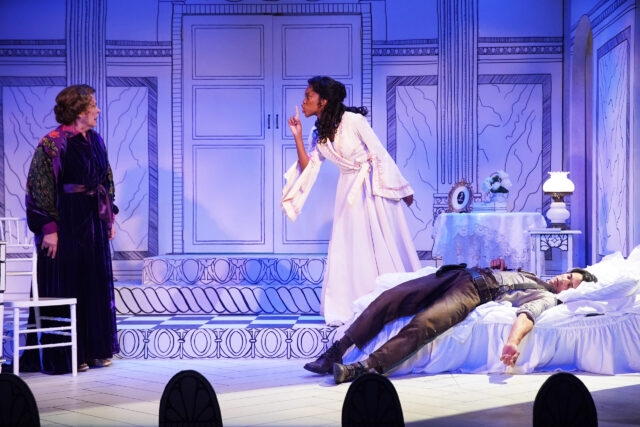
Valentine Xavier (Pico Alexander) and Lady Torrance (Maggie Siff) are lost in the dark in Orpheus Descending (photo by Gerry Goodstein)

ORPHEUS DESCENDING
Theatre for a New Audience, Polonsky Shakespeare Center
262 Ashland Pl. between Lafayette Ave. & Fulton St.
Tuesday – Sunday through August 6, $97
866-811-4111
www.tfana.org

Imagine an entire season of a nighttime soap opera, set in the south in the 1950s, mercilessly squeezed into two and a half uncomfortable hours and you have Theatre for a New Audience’s adaptation of Tennessee Williams’s Orpheus Descending, which opened Tuesday night at the Polonsky Shakespeare Center.

A rewrite of 1940’s Battle of Angels and loosely based on the Greek legend of Orpheus and Eurydice, Orpheus Descending debuted on Broadway in 1957, arriving during Williams’s most fertile period, the seventeen years that brought the world The Glass Menagerie, A Streetcar Named Desire, The Rose Tattoo, Cat on a Hot Tin Roof, Suddenly Last Summer, Sweet Bird of Youth, and The Night of the Iguana. It ran for only sixty-eight performances and was revived on Broadway by Peter Hall in 1989; otherwise, it has been unseen onstage in New York City, with good reason: It’s a hot mess, particularly in a second act that deteriorates by the minute, and there’s nothing that talented director Erica Schmidt can do to save it.

The play takes place in the Torrance Mercantile Store in a small southern town in the 1950s. The dry goods shop is run by Lady Torrance (Maggie Siff), daughter of an Italian immigrant, a woman thoroughly disappointed with life, married to Jabe Torrance (Michael Cullen), an obstinate, much older racist who seems to be at death’s door. The show opens as Jake is returning from a Memphis hospital with his unpleasant caretaker, Nurse Porter (Fiana Tóibín). Lady’s tragic back story unspools immediately: Her Italian immigrant father died when his wine garden was burned to the ground by the Klan for serving Black customers. In his memory, Lady is building a confectionery adjoined to the store, trying to bring at least some sweetness into her sour existence.

The town is all abuzz when a handsome stranger, Valentine Xavier (Pico Alexander), mysteriously arrives, wearing a snakeskin jacket and carrying an acoustic guitar. The local gossips, Eva Temple (Kate Skinner), Sister Temple (Prudence Wright Holmes), Dolly Hamma (Molly Kate Babos), and Beulah Binnings (Laura Heisler), are all atwitter about Val, serving as a kind of judgmental Greek chorus. Carol Cutrere (Julia McDermott), a sad, oversexed twenty-seven-year-old hellraiser with too much mascara who walks around barefoot in a trench coat and has been banned from town, takes an immediate interest in Val, who asks Carol why she makes such a spectacle of herself. “I’m an exhibitionist!” she declares. “I want to be noticed, seen, heard, felt! I want them to know I’m alive! Don’t you want them to know you’re alive?” Her version of being alive mainly consists of driving up and down the local highway drinking and dancing in every juke joint along the way.

David Cutrere (James Waterston) and Lady Torrance (Maggie Siff) rehash the past in rare Tennessee Williams revival (photo by Gerry Goodstein)

Lady, who once upon a time was in love with Carol’s brother, David (James Waterston), is desperate to be free, in some ways jealous of Carol. When Val tells her about a type of bird that has no legs and so instead must remain perpetually in the air, never touching the ground, Lady is intrigued, as if there is a heaven out there where she can escape her hell on earth. “I don’t think nothing living has ever been that free, not even nearly,” she says.

Vee Talbott (Ana Reeder), the wife of the sheriff (Brian Keane), knows Val is alive, cuddling up to him and showing him her paintings, abstract religious works based on her visions. “I paint a thing how I feel it instead of always the way it actually is. Appearances are misleading, nothing is what it looks like to the eyes. You got to have — vision — to see!” she explains. But nobody in this community can see beyond what they already know.

The more Jabe abuses Lady — upstairs in his room, he often pounds the floor with his cane three times, the sound echoing like a missive from the devil — the more she falls for Val, setting up a space in the store where he can secretly sleep over. Meanwhile, Jabe’s henchmen, Dog Hamma (Matt DeAngelis) and Pee Wee Binnings (Gene Gillette), are ready to do his bidding, eagerly anticipating being able to use their fists and guns. They get their chance in a wildly uneven and incredulous finale that is reimagined by Schmidt, straying from the original with reckless abandon. Oh, and before I forget, and I wish I could forget, there is also a clown (DeAngelis), who is clearly the work of a demon, and a conjurer known as Uncle Pleasant (Dathan B. Williams), who appears from, well, I have no idea.

“Curiosity is a human instinct,” Beulah says at one point, and that’s essentially what this production of Orpheus Descending is, a curiosity. Schmidt has previously directed the unique and unforgettable Shakespeare adaptation Mac Beth for Red Bull, an uneven musical version of Cyrano and the powerful coming-of-age drama All the Fine Boys for the New Group, and the underappreciated and underseen Lucy for Audible. In each of those shows, she displayed a daring feel for narrative, willing to challenge herself and the audience, but her efforts go astray with Orpheus Descending, which is not among Williams’s finest.

Julia McDermott steals the show as Carol Cutrerein TFANA (photo by Gerry Goodstein)

As opposed to the legless bird flying free, the play never gets off the ground. Amy Rubin’s claustrophobic two-floor set features a ceiling and walls that can barely contain the cast; the large, empty spaces to the right and left apparently alternate between the confectionery and Val’s sleeping quarters and places for some actors to sit while waiting to reenter the scene. In addition, the entrances to these areas are inconsistent, with characters sometimes walking through a door and other times around it in what seems like an impossible geography.

The play might not have a great history, but it has attracted marvelous casts. Cliff Robertson was Val, Maureen Stapleton was Lady, and Lois Smith was Carol in its 1957 Broadway bow; Marlon Brando was Val, Anna Magnani Lady, and Joanne Woodward Carol in Sidney Lumet’s 1960 film version, The Fugitive Kind; and Kevin Anderson was Val, Vanessa Redgrave Lady, and Anne Twomey Carol in the 1989 Broadway revival.

At TFANA, only McDermott (Heroes of the Fourth Turning, Epiphany) and Reeder (In the Blood, Sight Unseen) distinguish themselves, the former portraying Carol with a dark sadness, the latter adding an innate, innocent charm to Vee. Alexander (The Portuguese Kid, Punk Rock) is too understated as Val, who barely plays his guitar, while Siff (Billions, Curse of the Starving Class) ably runs the gamut of emotions Lady goes through, but even as the text repeatedly makes her Italian heritage clear, the actress produces an Eastern European accent that befuddles the audience with its incongruity.

Throughout the play, Williams refers to one of his favorite topics, corruption. “I lived in corruption but I’m not corrupted,” Val says. Everyone in Orpheus Descending lives in corruption but most of them are not corrupted as they try to survive in a bardo between heaven and hell. Unfortunately, this version of the story is stuck in the bardo as well; for an irresistible show about Orpheus and Eurydice, you’re much better off heading over to Hadestown at the Walter Kerr on Broadway.

THE SAVIOUR

Máire Sullivan (Marie Mullen) glows in the bask of postcoital sex in The Saviour (photo by Carol Rosegg)

THE SAVIOUR
Irish Repertory Theatre, Francis J. Greenburger Mainstage
132 West 22nd St. between Sixth & Seventh Aves.
Tuesday – Sunday through August 13, $50-$90
212-727-2737
irishrep.org

The first half of the world stage premiere of Deirdre Kinahan’s The Saviour at the Irish Rep is gorgeous. On the morning of her sixty-seventh birthday, Máire (Marie Mullen) is basking in the glow of having had sex with a much younger man the night before. Lying in bed with a cigarette, the widowed mother and grandmother, during a long monologue to Jesus, says, “Get a grip on yourself, Máire Sullivan! I can hear you say that, Jesus. And you’re right. Do you know you’re right . . . I’m acting ridiculous. At my age! I hope you’re not getting all jealous now or anything? Are you, Jesus?”

But when a man (Jamie O’Neill) arrives, the play takes a decidedly different tack, one that raises several important issues but also turns its back on what had come before.

A devout Irish Catholic, Máire is in her glory after “heaving and shunting” with Martin. She is explaining herself to Jesus, hoping her lord and savior understands her new feelings. “Sex has always been a means to an end. Foisted on me when I didn’t want it or offered for a bit of peace,” she says. Barefoot and in a long white nightgown (the costumes are by Joan O’Clery), Máire gets up and walks over to her night table, putting on makeup and fixing her hair; there is actually no glass in the mirrors she is using, so we can see her in a frame as she gussies herself up. “I mean, I didn’t even know that sex was possible at my age,” she tells Jesus.

Waiting for Martin to come upstairs with breakfast and coffee, she shares scenes from her hardscrabble life. Her mother died when she was young, so her father, who found work in England, sent her off to the Magdalene Laundries, Irish sweatshops operated by nuns that were primarily a place to hide and punish pregnant teenagers.

“In the convent in Stanhope Street you gave your name away at the door,” she sadly recalls. “And I don’t think Daddy knew that when he put me in there. . . . Stanhope Street wasn’t really a school. A reformatory for whores and hussies! But I wasn’t one of them. Was I? No. I was good,” she says unsurely, as if having to convince herself.

She is haunted by the experience, remembering, “You didn’t ask any questions of the silence. Because we worked in silence. Lived in silence. Silence was our penance . . . for being orphaned girls. Forgotten girls. Bad girls. Or just . . . girls.”

But mostly, she is anticipating Martin coming upstairs and showering her with yet more attention — and sex. But that’s not quite what she has in store for her birthday.

Máire (Marie Mullen) and an unexpected figure (Jamie O’Neill) face some hard truths in The Saviour (photo by Carol Rosegg)

Ciarán Bagnall’s set is a slightly elevated turntable that revolves between the creaky bedroom, highlighted by a cross high on one wall, and the kitchen, with an open space stage right. Bagnall’s lighting and Aoife Kavanagh’s sound turn eerie whenever Máire drifts back into her memories of Stanhope Street, when the show briefly becomes a ghost story.

I cannot begin to tell you how uplifting it was to watch an actress of a certain age portray a woman who is euphoric about having had sex. Tony winner Mullen (The Beauty Queen of Leenane, The Gifts You Gave to the Dark) radiates as Máire details some of the events of the previous night, and the audience celebrates along with her as she carefully brushes her hair and shuffles around the bedroom, animated by this new lease on life, suddenly filled with hope and promise.

But Kinahan (Embargo, Halcyon Days) and director Louise Lowe (The Book of Names, The Party to End All Parties) then pull the rug out from under everyone’s feet when the visitor, ably played by O’Neill (Staging the Treaty, Luck Just Kissed You Hello), starts sharing some difficult truths about Máire, going all the way back to when she was raising her children. The Saviour abruptly becomes an issue play bringing up controversial topics instead of being about an older woman experiencing a positive life change. In addition, it grows repetitive, covering the same angles multiple times.

I felt like it was a kind of theatrical bait-and-switch; it might be my own fault for wanting the play to go in another direction, but, a week later, I still feel let down and betrayed. Perhaps I was so invested in Máire’s exhilaration that I didn’t want anything to get in the way of my enjoyment of that reaction. I can’t help but wonder whether it would have been so bad to have an older, decidedly unglamorous character simply enjoy sex in a show for a full seventy minutes.

But if anything, The Saviour, originally produced online during the pandemic in June 2021, is a distinctly Irish tale, one that delves into family, religion, and societal ills in which happy endings are far from guaranteed.

UNCLE VANYA

Jack Serio’s adaptation of Anton Chekhov’s Uncle Vanya is set in a private Flatiron loft (photo by Emilio Madrid)

UNCLE VANYA
Private Flatiron loft
Wednesday – Monday through July 16, $58.54-$247.54
Extension: August 8 – September 3, $58.37-$275.29 ($39 lottery)
vanyanyc.com

Jack Serio’s superb production of Anton Chekhov’s Uncle Vanya is the theatrical event of the summer, and the one likely to be seen by the fewest people. It’s billed as being “hyper-intimate,” and it lives up to that description in just about every way.

Tickets were released without much fanfare on May 17 and sold out almost immediately; a mere forty seats were available for each of sixteen performances at an undisclosed private loft in the Flatiron District. The day before my show, I got an email advising me of the exact address and letting me know that “seating is general admission on a mix of chairs and comfortable high-back stools.” Because there is only one bathroom inside, we were told, “Please plan accordingly and use the restroom prior to your arrival if possible.” We were also warned not to come earlier than the designated time. “Please do not arrive prior to this time, as we will not be able to admit you into the building. We also cannot allow guests to congregate outside the building prior to or after the performance. Remember, this is a residential building and we’d like to be respectful to our neighbors.”

It made it all seem wonderfully secretive, as if we were part of some kind of clandestine club. There is no signage at the building; I was fully expecting there to be a hush-hush knock before I was led to a tiny elevator that can fit only a few people at a time. We got off at the second floor — stairs are not an option, up or down — where we were met with a large sign with information about the cast and creative team, so I knew I was in the right place. (Note that although the run is sold out, rush lottery tickets are available for each performance.)

The main space is a narrow, rectangular room with two farm tables pushed together at the center. The audience sits on either side, in the first row of chairs or the second row of taller high-back stools. The night I went, more than half the seats already had names on them, so there was a bit of confusion for those whose names were not taped to a seat; several groups of two or three ended up sitting apart from one another because of the scarcity of available, unmarked chairs. (The pricing structure ranges from general admission to reserved, so if you purchased the former, be sure to get there early.) Meanwhile, songs by Bob Dylan and Neil Young played in the background.

Ványa (David Cromer) can’t hide his love for Yeléna (Julia Chan) in hyper-intimate Chekhov production (photo by Emilio Madrid)

Walt Spangler’s cozy set features a working kitchen at one end and a couch beneath a window looking out at the courtyard at the other, with double metal doors leading to the fire escape, which is used as an entrance and exit throughout the show. Stacey Derosier’s lighting consists of two rows of track lights and a handful of carefully placed small stage lights, with flashlights and candles that cast mysterious glows. Carrie Mossman’s props include mirrors and old family photos on exposed brick walls and on the piano in one corner. Christopher Darbassie opts for a naturalistic sound design, which, the night I went, was enhanced by real rain and thunder. Ricky Reynoso’s costumes are contemporary but not fancy, save for Yeléna’s chic dresses, and several characters walk around in socks, slippers, or bare feet.

Serio uses Paul Schmidt’s 1999 translation, which felt fresh and vibrant to me, perhaps because all the recent productions of the play I’ve seen have been radical reimaginings or mashups (Vanya and Sonia and Masha and Spike, New Saloon’s Minor Character: Six Translations of Uncle Vanya at the Same Time, Aaron Posner’s Life Sucks.) in addition to Richard Nelson’s 2018 adaptation for the Hunter Theater Project.

At an undefined time and location — although there are no cell phones — a group of friends and relatives have gathered at a country farm run by Ványa (David Cromer) and his niece, Sónya (Marin Ireland). Sónya’s father, the elderly, ailing professor Alexánder Serebriakóv (Bill Irwin), has arrived from the city with his second wife, the much younger and elegant Yeléna (Julia Chan), with plans on what to do with the estate they are tiring of. Both Ványa and Ástrov (Will Brill), a local doctor, are in love with Yeléna and not afraid to show it. Sónya, whose mother, Ványa’s sister, died many years before, is obsessed with Ástrov but too embarrassed to tell him, as she is afraid that she is too plain for him. Mrs. Voinítsky (Ann McDonough), Sónya’s grandmother, spends most of her time reading, drinking tea, and pontificating on such subjects as principles and change. Telégin (Will Dagger), known as Waffles, lives on the farm and helps out, still faithful to his wife, who left him for another man the day after they were married. And the longtime family nurse, Marína (Virginia Wing), knits and ruminates on the past.

Over the course of a few days, relationships entangle, secret loves are revealed, and one of the most famous gunshots in theater history echoes through the room.

Ástrov (Will Brill) can’t hide his love for Yeléna (Julia Chan) in Uncle Vanya (photo by Emilio Madrid)

Serio (This Beautiful Future, On Set with Theda Bara) maintains a fine line between intimate and immersive or interactive in the two-and-a-half-hour show (with intermission). Although the actors are almost always only a few feet away from the audience, they don’t make eye contact; it’s almost like a fly-on-the-wall documentary of a family falling apart, with no idea how to save itself. Cromer (The Waverly Gallery, A Raisin in the Sun) portrays Ványa as a broken man who seems to have already given up on life, essentially sleepwalking through the days, resigned to never be content. “Oh, God, my mind’s a mess,” he wails.

Brill (A Case for the Existence of God, Oklahoma!) imbues Ástrov with an innate selfishness that is the yin to Ványa’s yang. In this space, Ástrov’s environmentalism is even more prophetic than usual. “We were born with the ability to reason and the power to create and be fruitful, but until now all we’ve done is destroy whatever we see,” he says, talking about more than just trees, an ever-present pencil tucked behind one ear. “The forests are disappearing one by one, the rivers are polluted, wildlife is becoming extinct, the climate is changing for the worse, every day the planet gets poorer and uglier. It’s a disaster!”

You can feel the professor’s pain as Irwin (Old Hats, On Beckett) shuffles across the space, failing to recognize how his decisions impact everyone else, especially Ványa, who says of him, “A retired professor, a has-been, a moldy mackerel with a college degree. He has gout, rheumatism, migraines, his liver’s swollen with jealousy and envy.” Chan (2:22 A Ghost Story, The Great Canadian Baking Show) is alluring as Yeléna, who is well aware of her power over men. Dagger (The Antelope Party, Corsicana) offers welcome interludes as Telégin plays his acoustic guitar.

Sónya (Marin Ireland) can’t hide her love for Ástrov (Will Brill) in Jack Serio’s Uncle Vanya (photo by Emilio Madrid)

But Ireland (On the Exhale, Marie Antoinette), a New York City treasure, steals the show as Sónya, an ingénue who thinks she is ugly and undeserving of happiness. Telling Yeléna of her feelings for Ástrov, she opines, “It hurts so much! And it’s all so hopeless. It’s completely hopeless!” Ireland makes full use of the set; she sits on top of the couch and looks out the window longingly. She jumps on the kitchen island and speaks to Ástrov by tender candlelight. Wearing a baseball cap backward, she contorts her face and body in mesmerizing ways that capture the heartache in her soul. Sónya just wants to love, and be loved; she is the most human character in the play, the one most of us can identify with the closest.

The intimacy — or hyper-intimacy, if you will — allows us to understand the people who populate this farm in a deeply profound way. They exist in a world that is passing them by, stirring our compassion and inspiring us to wish to avoid the same fate.

[Ed. note: The play is being brought back August 8 – September 3 for an encore run, with a few cast changes: Thomas Jay Ryan (Dance Nation, Eureka Day) is taking over as Serebriakóv, with Dario Ladani Sanchez (Juliet & Romeo, a wake for david’s fucked-up face) as Yefim.]

[Mark Rifkin is a Brooklyn-born, Manhattan-based writer and editor; you can follow him on Substack here.]