this week in theater

THE MOBILE SHAKESPEARE UNIT: RICHARD III

Multiple locations July 17 – August 3, free
The Public Theater’s LuEsther Theater
425 Lafayette Ave.
August 6-25, $15 general admission
212-967-7555
www.publictheater.org

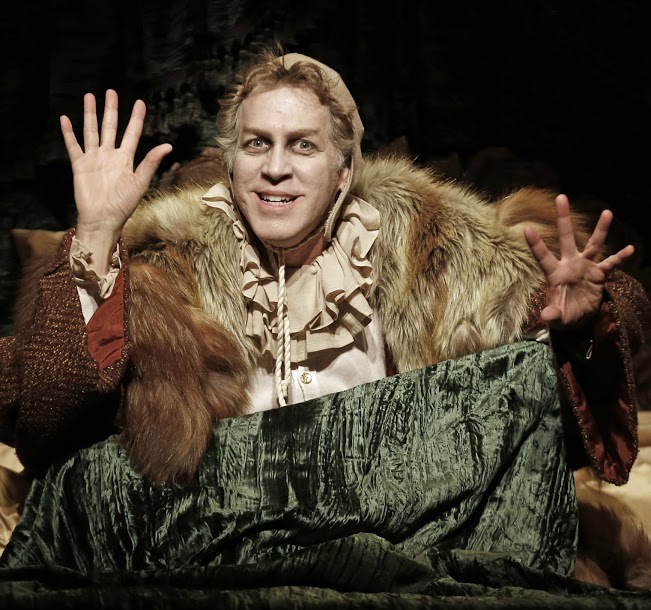
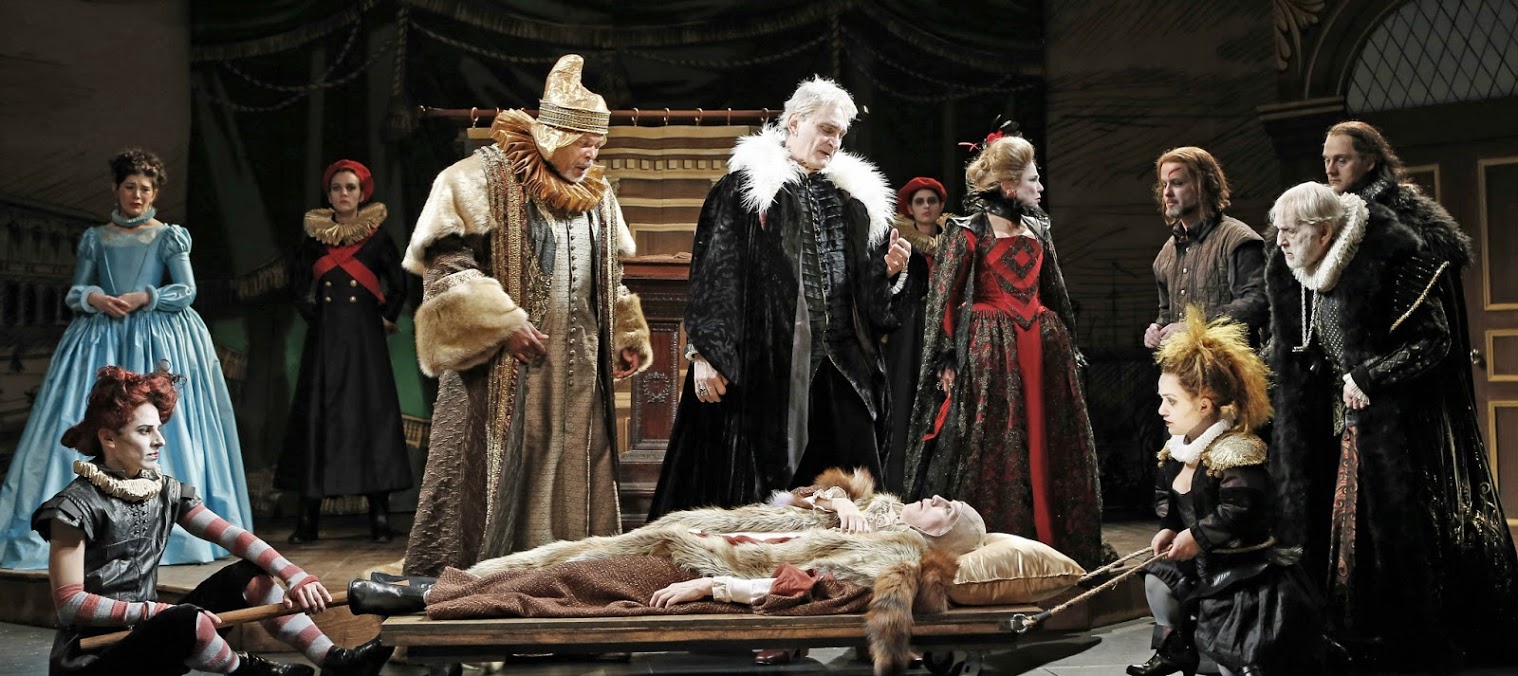
In the summer of 1957, Joseph Papirofsky literally brought Shakespeare to the masses, trucking through all five boroughs to present a free outdoor production of Romeo and Juliet. The theater guru would soon shorten his last name to Papp and create the world famous New York Shakespeare Festival, which has been presenting high-quality free shows in Central Park’s Delacorte Theater for fifty years now. But the traveling Bard road show is back, as the Public Theater’s Mobile Shakespeare Unit is up and running, spending the next three weeks performing Richard III at locations where people have limited access to the arts (after having presented Measure for Measure last November). The unit will pay visits to such venues as the Jamaica Service Program for Older Adults on July 17, Charlotte’s Place on July 18, the Eric M. Taylor Center on Rikers Island on July 19, the Al Oerter Recreation Center on July 20, the Brownsville Recreation Center on July 24, the Fortune Society on July 26, the Goddard Riverside Community Center’s the Other Place on July 27, the Fort Hamilton Army Base on August 3, and several correctional facilities; some stops will also include educational workshops. Directed by Amanda Dehnert, who also composed the original score, the play stars Ron Cephas Jones as the villainous title character, with Kevin Kelly as Edward, Miriam Hyman as Clarence, Michael Crane as Buckingham, Keith Eric Chappelle as Hastings, Michelle Beck as Anne, Suzanne Bertish as Margaret, Alex Hernandez as Catesby, and Lynn Hawley as Elizabeth. Linda Roethke designed the set and costumes. The production will then move indoors August 6-25 at the Public, with all tickets $15 except for twenty per performance that will be donated to community organizations that were not part of the tour.

CALYPSO: A LITERARY PERFORMANCE BY PAUL ROME AND ROARKE MENZIES

Bushwick Starr
207 Starr St., Brooklyn
July 13-14, $10-$15, 8:00
646-361-8512
thebushwickstarr.org

In the spring of 2011, Brooklynites Paul Rome and Roarke Menzies presented the one-act Calypso at the Storefront Gallery in Bushwick. Then, this past May, they presented a sold-out, extended evening-length version of the production at the Bushwick Starr, where it is back again July 13-14 by popular demand. Calypso sets a modern-day romance against elements from Homer’s Odyssey and Virgil’s Aeneid. As a young man and woman bond over Haruki Murakami and old calypso records in the West Village, Penelope waits for her husband, and Aeneas considers his future atop Mount Olympus. The show is written by Rome, inspired by such monologists as Joe Frank and Spalding Gray, with experimental electronic music supplied by Menzies. Rome and Menzies, who will read alternating narratives, have previously collaborated on And Once Again . . ., about a jazz record collector about to make a big score, and The You Trilogy.

CLYBOURNE PARK

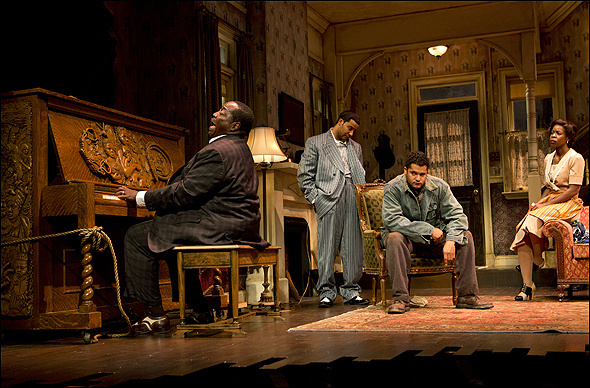
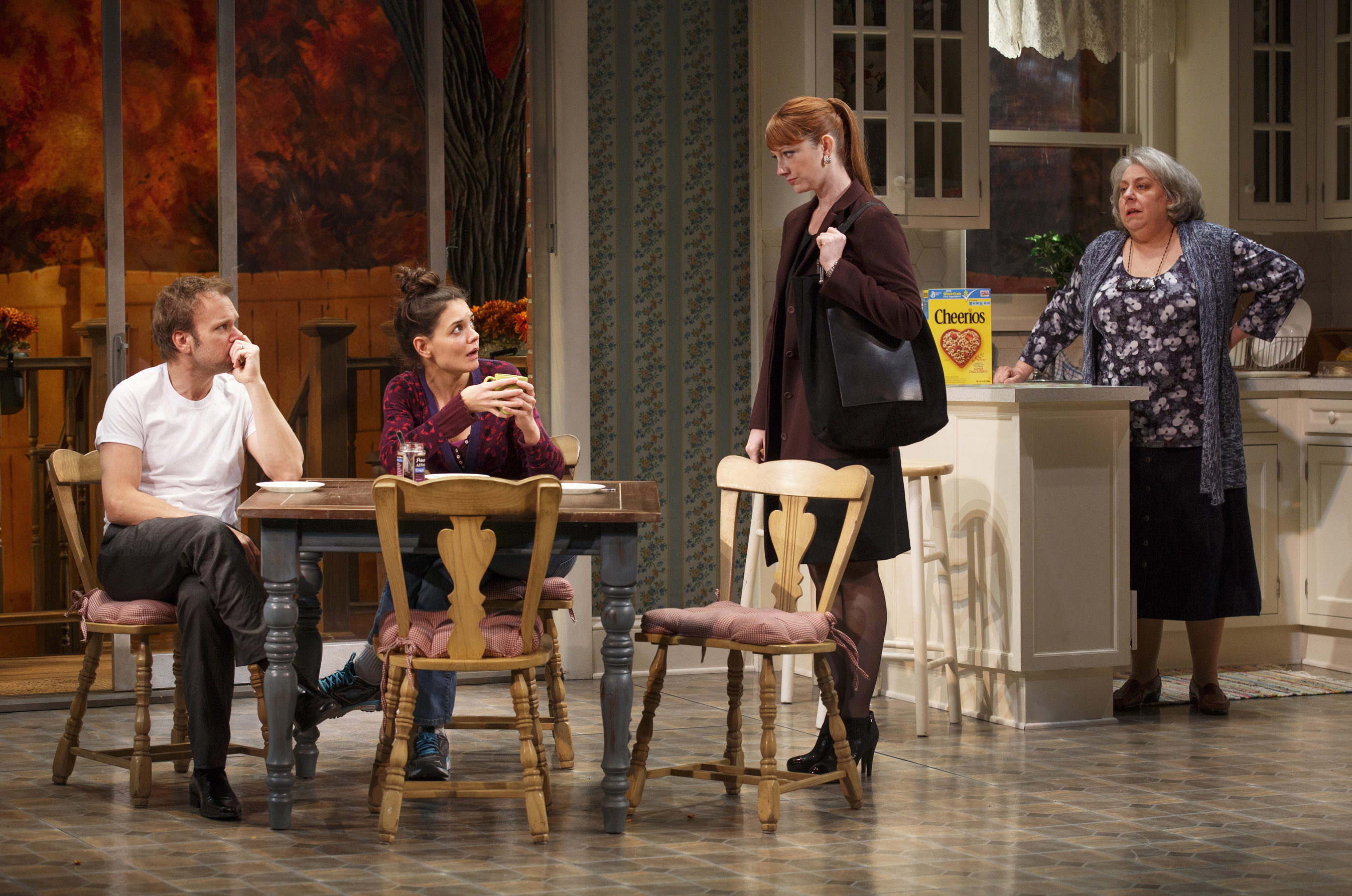
In 1959, a community is at odds when a black couple is about to move in (photo by Nathan Johnson)

Walter Kerr Theatre
219 West 48th St.
Extended through September 2, $30 – $220
clybournepark.com

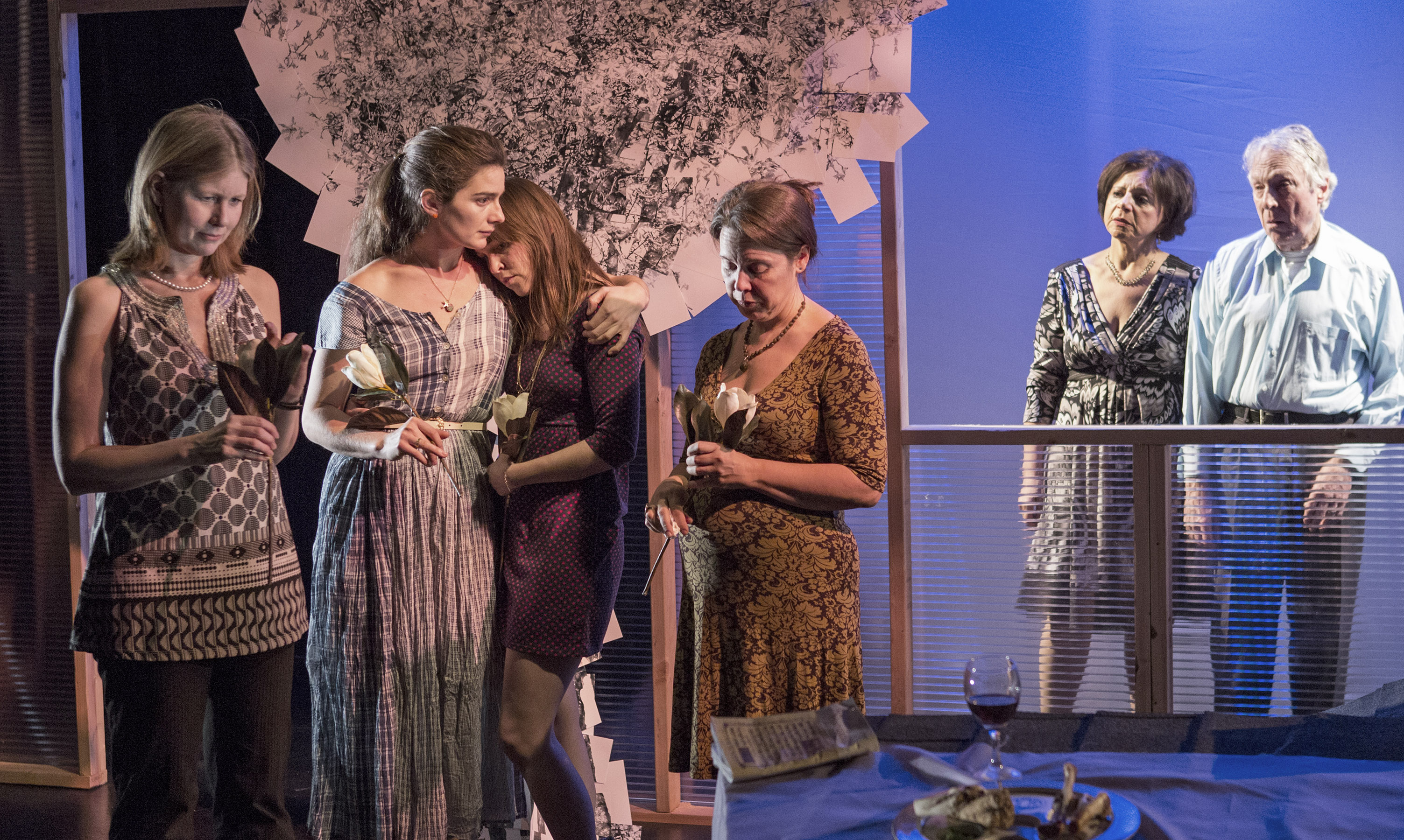
The best plays stay with you long after you leave the theater, making you think and encouraging an ongoing dialogue. Bruce Norris’s Clybourne Park is one such play. As we exited the theater, my guest and I got into a heated discussion about several of the issues the complex story raises, for nothing about Clybourne Park is black and white, yet everything about Clybourne Park is black and white. Winner of the Tony and the Olivier for Best Play as well as the Pulitzer Prize, Clybourne Park is divided into two distinct halves that are cleverly linked in both obvious and subtle ways by writer Norris (The Infidel, Purple Heart) and director Pam MacKinnon (Completeness, The Four of Us). Inspired by A Raisin in the Sun by Lorraine Hansberry, the first black playwright to have her work produced on Broadway, Clybourne Park opens in 1959, as Russ (Frank Wood) and Bev Stoller (Christina Kirk) are preparing to leave their lily-white neighborhood shortly after a family tragedy. When Karl Lindner (Jeremy Shamos) finds out that their house is being sold to a black couple, he tries to convince Russ not to go through with the deal, worried about what will happen to property values and afraid of potential white flight. Meanwhile, Albert (Damon Gupton) comes to the house to pick up his wife, Francine (Crystal A. Dickinson), who works as the Stollers’ maid, and he is not afraid to throw in his own two cents. As things threaten to explode, Karl’s wife, Betsy (Annie Parisse), a deaf woman who is pregnant, can’t quite understand why everyone is getting so mad at one another, and Rev. Jim (Brendan Griffin) finds that church doctrine is not going to help solve this problem either.

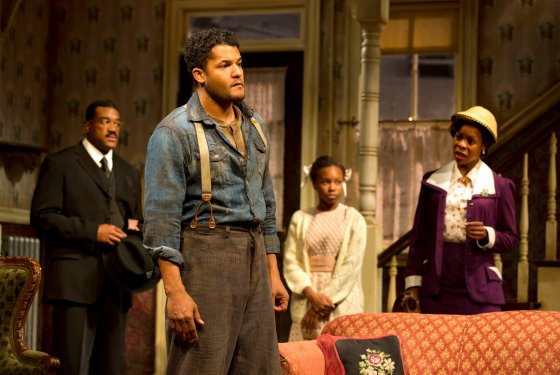
In 2009, a community is at odds when a white couple is about to move in (photo by Nathan Johnson)

The second act takes place fifty years later, in 2009, as a white couple, Steve (Shamos) and his pregnant wife, Lindsey (Parisse), have bought the very same house, now dilapidated, from a black couple, Lena (Dickinson) and Kevin (Gupton). As ditzy real estate agent Kathy (Kirk) shares some interesting tidbits about the changing nature of her business, the two couples are soon involved in a nasty battle that centers on the one word nobody wants to say: race. Clybourne Park is an extremely cleverly written play, tackling long-standing racial issues with intelligence, sensitivity, and humor. Having the actors play dual roles furthers direct comparison between the past and the present. Early in the second act, Steve is asked whether Lindsey is pregnant with a boy or a girl; while Steve knows the answer, Lindsey still wants to be surprised, so she puts her fingers in her ears and makes silly noises so as not to hear, echoing the deaf Betsy portrayed by Parisse in the first act. In the 1959 section, Russ is not ready to bring down a sentimental object from the attic; in 2009, hired hand Dan (Wood) is digging up the backyard, getting ready to potentially raze the house, much to the consternation of Lena, Kevin, and local resident Tom (Griffin), who is trying to address community rules. There are other fascinating, well-plotted similarities between the characters that the actors play in the first act with those they portray in the second act, giving the production a continuity that also shows how difficult it is for people to accept and adapt to change, no matter their race or religion. Clybourne Park is a smartly told story that clearly points out how far we truly are from a so-called post-racial society, a play that will stay with you for a very long time. (As an added bonus, the Lincoln Center Theater Review has dedicated its entire spring issue to the play, with pieces written by Paul Clemens, Beryl Satter, Bill Savage, and Patricia and Fredrick McKissack, an interview between Norris and John Guare, an interview with an anonymous real estate broker, and more; you can pick up a copy at the Walter Kerr Theatre for a dollar or download it for free here.)

HARLEM ARTS FESTIVAL 2012

Queen Esther will close the 2012 Harlem Arts Festival with dancer-choreographer Francesca Harper tonight

Richard Rodgers Amphitheater
Marcus Garvey Park
Madison Ave. between 120th & 124th Sts.
Saturday, June 30, free, 1:00 – 8:00
www.harlemartsfestival.com

The second day of the free Harlem Art Festival, held in Marcus Garvey Park, features another fine lineup of live music, dance, and theater, emceed by DJ Stormin’ Norman. The party gets started at 1:00 with Gary Samuels & the Prayz’N Hymn Ensemble on the main stage and Isaac Katalay on the second stage at 1:30. Other performers include the Mighty Third Rail, Gwen Laster, Illstyle & Peace Productions, James Browning Kepple, Benjamin Barson, Guerilla Dance Collective, Shelah Marie, and Vernard J. Gilmore / La Verdad, with Queen Esther & the Francesca Harper Project closing the show at 7:00. There is also a kids’ corner with children’s activities in addition to local food vendors, a market, special programs in the Harlem Library, and a gallery walk with work by such artists as Leon Barber, Laura Gadson, Judy Levy, Bryce R. Zackery, and Maxine DeSeta.

HARVEY

Jim Parsons might just have you asking, “Jimmy who?” in Roundabout revival of HARVEY (photo by Joan Marcus)

Studio 54
254 West 54th St.
Through August 5, $47-$140
212-719-1300
www.roundabouttheatre.org

Although the role of Elwood P. Dowd, a rather eccentric, happy fellow whose best friend is a six-foot, three-and-a-half-inch-tall invisible pooka, is most closely associated with Jimmy Stewart, who was nominated for an Oscar for Henry Koster’s 1950 film adaptation and played the part in a 1970 Broadway revival with Helen Hayes, not many others have attempted to take on Dowd, the central figure in Mary Chase’s 1944 Pulitzer Prize-winning drama, Harvey. The role was created by vaudevillian Frank Fay, and it has been played on the small screen by Art Carney and Harry Anderson. Now comes Emmy-winning actor Jim Parsons, the thirty-nine-year-old star of television’s The Big Bang Theory. Well, it might sound like blasphemy, but Parsons pulls off Dowd in a very big way, bringing a charm and gallantry that outshines even that of Stewart. The play as a whole, which famously topped Tennessee Williams’s The Glass Menagerie for the Pulitzer, does not hold up particularly well in Scott Ellis’s current Roundabout revival at Studio 54; it’s an old-fashioned piece of Americana fluff, its WWII-era sensibilities seriously out-of-date with the times (as opposed to Mike Nichols’s recent restaging of Arthur Miller’s Death of a Salesman, which was powerfully relevant). But Parsons is absolutely mesmerizing as Dowd, a well-mannered gentleman who is always accompanied by a large white rabbit that only he sees — but by the end of the play, you might think you’ve seen Harvey as well.

Elwood P. Dowd (Jim Parsons) has a special message for Betty Chumley (Carol Kane) in HARVEY (photo by Joan Marcus)

Elwood is an embarrassment to his sister, the society-obsessed Veta (Jessica Hecht, displaying a fine comic physicality), and her daughter, the socialite-in-training Myrtle Mae (Tracee Chimo). The ditzy Veta conspires to lock her brother away in a sanitarium run by Dr. William R. Chumley (Charles Kimbrough), but a misunderstanding between Veta, Dr. Lyman Sanderson (Morgan Spector), and nurse Ruth Kelly (Holley Fain) leads to some major foul-ups, some funnier than others. The relationship between Sanderson and Kelly falls particularly flat, as does a passionless attraction between Myrtle Mae and sanitarium worker Duane Wilson (Rich Sommer). Kimbrough is appropriately blustery as the exasperated Chumley, Carol Kane delivers a scene-stealing turn as his wife, Betty, and Larry Bryggman is stalwart as Judge Omar Gaffney. But the play takes off whenever Parsons is onstage, as Elwood makes friends with everyone he meets, including telephone solicitors, hands out his card to strangers, and is always quick to at least try to introduce his best friend, which doesn’t always work out quite as he plans. He has a penchant for reaching out and touching people in an engaging way, both physically and verbally, a supremely gentle man who also likes his drink. But whereas Stewart played Elwood as a wide-eyed, melodramatic dreamer, Parson’s Elwood is a more down-to-earth character, although still lost in his own alternate reality. Yet it’s a welcoming alternate reality that is a pleasure to be a part of in these often maddening, fast-paced times.

RIVER TO RIVER FESTIVAL: ACT WITHOUT WORDS II

Dublin’s Company SJ is presenting free Beckett in a downtown alley as part of River to River Festival

Theatre Alley between Nassau and Centre Sts., enter at Ann St.
Nightly through June 29, free but advance reservations encouraged, 9:00
rivertorivernyc.com

Dublin-based theater troupe Company SJ, headed by artistic director Sarah Jane Scaife, specializes in presenting works by such Irish playwrights as J. M. Synge, Samuel Beckett, and contemporary writer Marina Carr. The company is in New York City this week at the River to River Festival, performing their unique thirty-minute version of Beckett’s Act Without Words II, a mime initially written in French in 1959 before Beckett translated it into English. A hit at the 2009 Dublin Fringe Festival and the 2012 Dublin Theatre Festival, the surreal, existential production features Raymond Keane and Bryan Burroughs as a pair of chaps who crawl out of sacks to face a mysterious world beset by drugs, homelessness, and other dramatic problems. Taking place in an outdoor alley between Nassau and Centre Sts. on a set designed by Aedín Cosgrove, Act Without Words II is being presented nightly through June 29 at 9:00. Admission is free, but advance reservations are strongly recommended.

THE BAD AND THE BETTER

Detective Lang (William Apps) and Miss Hollis (Sarah Lemp) get caught up in a dangerous conspiracy in THE BAD AND THE BETTER (photo by Monica Simoes)

The Peter Jay Sharp Theater
416 West 42nd St.
Through July 21, $49.95
www.thebadandthebetter.com

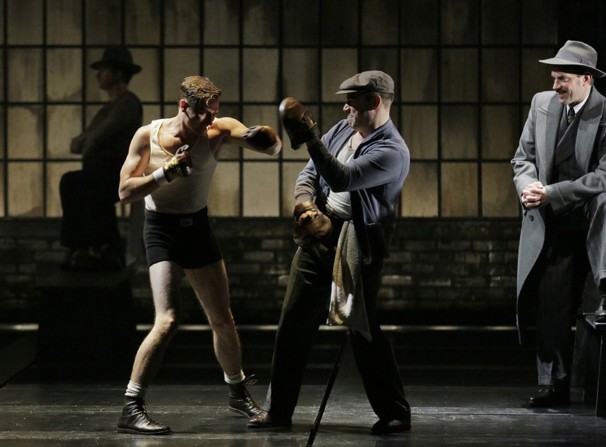
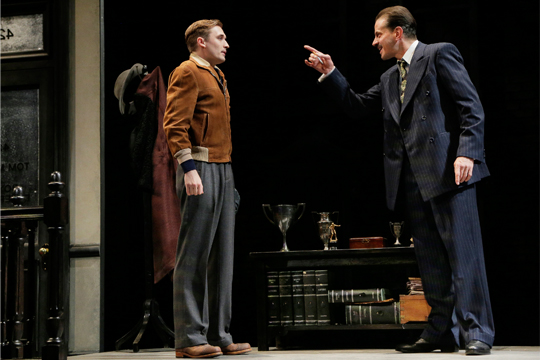
Last summer the Amoralists squeezed twenty audience members into a small, makeshift bedroom in the Gershwin Hotel for a double feature of original plays by Adam Rapp (Animals and Plants) and company associate artistic director and cofounder Derek Ahonen (Pink Knees on Pale Skin). This year the innovative theater group is squeezing no fewer than 26 actors playing 33 characters onto the stage in the intimate 128-seat Peter Jay Sharp Theater for Ahonen’s delightfully gripping detective noir The Bad and the Better. David Nash stars as Venus, an earnest undercover cop posing as a playwright who embeds himself with a radical New York City anarchist group to supposedly study them for the sequel to his previous work, The Sad Singers on Stanton Street — a sly reference to Ahonen’s own downtown hit, The Pied Pipers of the Lower East Side. Led by twins Justice (James Kautz) and Charity (Selene Beretta), the anarchists are causing some minor mayhem, but bigger plans await. Meanwhile, Venus’s brother, hero cop Ricky Lang (William Apps), has been exiled to a far-off part of Long Island with a secretary (Sarah Lemp) who has the hots for him, but he soon becomes suspicious when people in his usually calm district start killing themselves. And somewhere in the middle of all this, slimy developer Richard Zorn (Clyde Baldo) is manipulating candidate Eugene Moretti (David Lanson) into highlighting the war on terror in an important upcoming election. The multiple story lines weave in and out of one another before coming together for an explosive climax, all expertly directed by Obie winner Daniel Aukin, who keeps the continuous stream of characters moving around Alfred Schatz’s set in clever ways, as if imaginary borders exist as one scene morphs into the next. The pulpy play takes on such themes as loyalty, honesty, violence, corruption, courage, betrayal, and, most of all, family, with a liberal dose of humor and even a few tugs at the heartstrings. “It’ll really just be a story about love but it’ll be somewhat disguised as a cautionary tale about the hypocrisies of extreme principals,” Venus says to the radical anarchists at one point in a self-referential explanation that doubles for Ahonen talking about The Bad and the Better itself, an engaging production that once again shows off the many talents of the somewhat radical and anarchic Amoralists.