this week in theater

THE TWO-CHARACTER PLAY

(photo by Carol Rosegg)

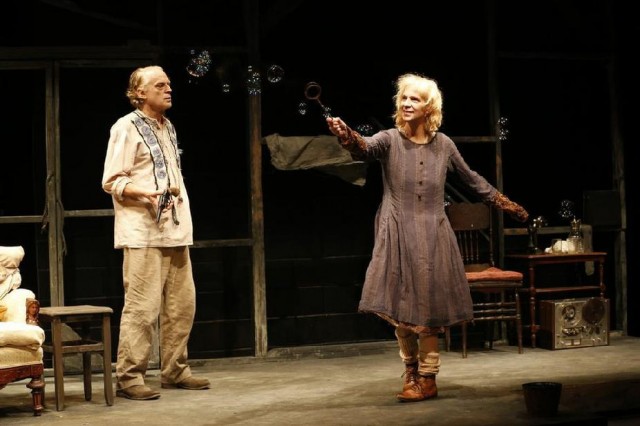
Felice (Brad Dourif) and Clare (Amanda Plummer) intermingle fantasy and reality in Tennessee Williams’s THE TWO-CHARACTER PLAY (photo by Carol Rosegg)

New World Stages
340 West 50th St. between Eighth & Ninth Aves.
Wednesday – Monday through September 29, $72.50-$92.50
www.thetwocharacterplay.com
www.newworldstages.com

Former home to a low-priced, second-run movie theater, New World Stages primarily presents spectacle productions and award-winning musicals that have left Broadway; its current roster includes Peter and the Starcatcher, Avenue Q, Gazillion Bubble Show, and iLuminate: Artist of Light. But occupying its fifth stage is something very different, a thrilling version of one of Tennessee Williams’s lesser-known later works, The Two-Character Play. Williams might be considered one of the greatest playwrights of the twentieth century, both a critical and popular favorite, but his name is not usually associated with such cutting-edge experimental dramatists as Pirandello, Pinter, Brecht, and Beckett. Yet The Two-Character Play (produced in various versions over the years, sometimes titled Out Cry) is just that, a surreal, highly intellectual, and wonderfully unpredictable self-referential story about theater itself and, more abstractly, Williams’s life and career. Brother and sister Felice (Brad Dourif) and Clare (Amanda Plummer) are in a dilapidated theater, having been abandoned by the rest of their acting troupe. The pair is getting ready to perform The Two-Character Play, but there are problems with the unfinished set, props, and costumes, as they have run out of money. They can’t even afford a place to stay, so the theater, appropriately enough, has become their home. Over the course of two hours, Felice and Clare seamlessly glide between the play and the play-within-a-play, blurring the line between fantasy and reality, fact and fiction, as the events of the play directly relate to the events in their personal lives, becoming one and the same. The major exception is that in the play-within-the play, Clare can suddenly cut scenes and move the story ahead by hitting a key on a piano, infuriating Felice, who does not want to see his work edited so brazenly. Things are further complicated in that both Felice and Clare just might be certifiably insane, which only adds to the bittersweet confusion while also relating to Williams’s beloved sister and muse, Rose, who spent most of her life in an institution. Meanwhile, Felice may or may not be breaking the fourth wall, as he peers through imaginary curtains at the actual, seated audience while talking about them as if they are still filtering in.
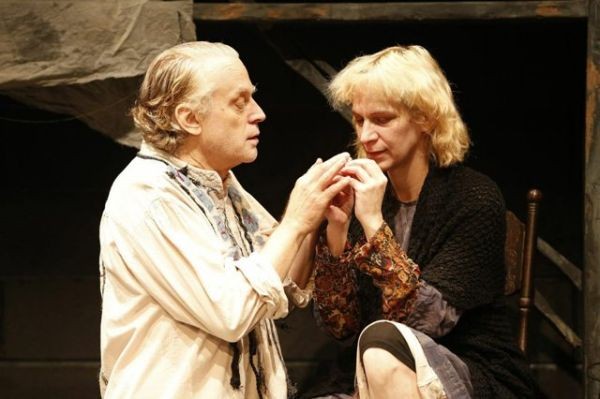
Brother and sister battle sanity and the theater itself in dazzling revival of late Williams experimental drama (photo by Carol Rosegg)

Brother and sister battle sanity and the theater itself in dazzling revival of late Williams experimental drama (photo by Carol Rosegg)

Evoking Pirandello’s absurdist classic Six Characters in Search of an Author, Williams makes the production of the play-within-the-play the central focus, as Felice and Clare appear to be otherwise trapped in the theater (referencing Williams’s three-month confinement in a hospital in 1969), unable to leave to take care of personal business involving the owner of Grossman’s Market and a potential settlement from the Acme Insurance Company. As darkness continues to envelop both them and the characters they are playing, the only brightness comes from an enormous sunflower hovering over them in the background, but it is not necessarily a sign that positive things await. Dourif (One Flew over the Cuckoo’s Nest, Deadwood) and Plummer (Agnes of God, Pulp Fiction) are marvelous together, delivering intimate, intricate performances in which every breath, sound, and movement is filled with meaning. Director Gene David Kirk (Boy Meets Boy, Real Babies Don’t Cry) does an excellent job of integrating the dual stories while incorporating the third part of the play, involving the actual audience watching the production. After all, the crowd has come to see Tennessee Williams’s multilayered The Two-Character Play, which is about two characters putting on a show called The Two-Character Play. In the play’s original program notes, Williams wrote, “To be effective in the theater now existing, the two performers, who must be very gifted whether they are ‘stars’ or not, must relieve the dark content of the plays, interior and total, with a carefully measured lightness — the jokes of the condemned? — and of course by that virtuousity of performance that very gifted performers always bring to a difficult work. This is a play that has to seek out its kind with great care, since it is as vulnerable as Clare and Felice, and as deviant.” This production, which continues through September 29 at New World Stages, is all that and more, a compelling and intriguing melding of care, virtuosity, vulnerability, and deviance, performed by two immensely gifted actors.
MATT CHARMAN AND JOSIE ROURKE: THE MACHINE

(photo by Helen Maybanks)

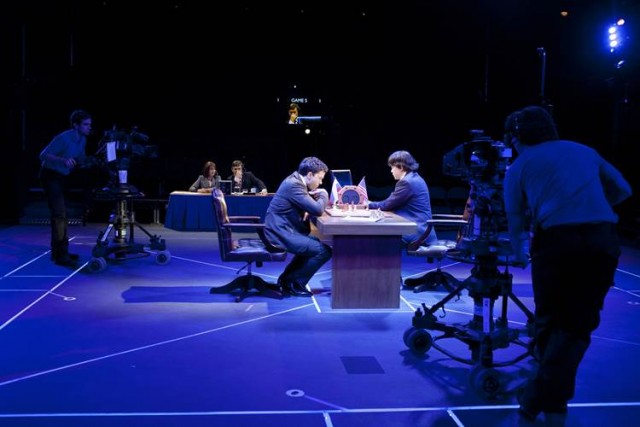
Garry Kasparov takes on Deep Blue in epic chess battle being re-created at the Park Avenue Armory (photo by Helen Maybanks)

Park Avenue Armory, Wade Thompson Drill Hall
643 Park Ave. at 67th St.
September 4-18, $45-$90
212-933-5812
www.armoryonpark.org
www.donmarwarehouse.com

A seminal moment in the history of man vs. machine took place in 1996-97, when Russian grandmaster Garry Kasparov played the IBM supercomputer Deep Blue in a series of highly publicized chess matches that would serve as a critical turning point in the ascendance of artificial intelligence. That epic battle has now been dramatized by England’s Donmar Warehouse, which will be staging the U.S. premiere of The Machine at the Park Avenue Armory September 4-18. Written by Matt Charman (A Night at the Dogs, The Five Wives of Maurice Pinder) and directed by Donmar artistic director Josie Rourke (The Physicists, The Cryptogram), the two-and-a-half-hour multimedia show features Hadley Fraser as Kasparov, Francesca Annis as Clara Gasparyan, Phil Nichol as television commentator Mandy Dinkleman, and Kenneth Lee as Feng-Hsiung Hsu (or Tsu), the computer scientist, known as Crazy Bird, who built Deep Blue. The production, which should look spectacular in the armory’s expansive 55,000-square foot Wade Thompson Drill Hall, is designed by Lucy Osborne, with lighting by Mark Henderson, sound by Ian Dickinson, choreography by Jonathan Watkins, and video projection by Andrzej Goulding. On September 7 there will be an artist talk with Rourke and Charman in the Veterans Room, moderated by armory artistic director Alex Poots ($15, 5:00).

20at20

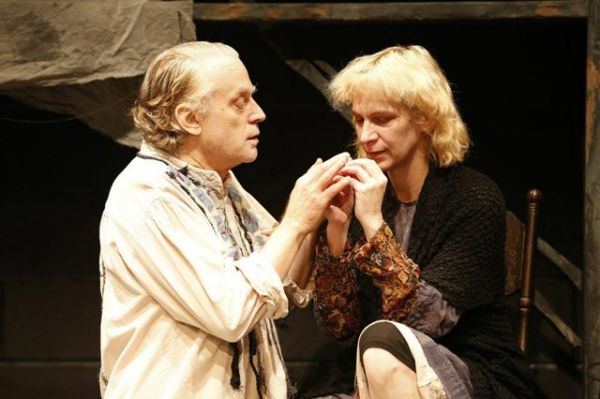
Brad Dourif and Amanda Plummer give sublimely powerful performances in THE TWO CHARACTER PLAY, one of nearly forty shows offering $20 tickets September 3-22 (photo by Carol Rosegg)

Brad Dourif and Amanda Plummer give sublimely powerful performances in THE TWO CHARACTER PLAY, one of nearly forty off-Broadway shows offering $20 tickets September 3-22 (photo by Carol Rosegg)

Multiple venues
September 3-22, $20
www.20at20.com

In addition to Broadway Week (September 2-15), during which two-for-one tickets are available in advance for such Great White Way shows as Once, Wicked, The Trip to Bountiful, Romeo and Juliet, and The Glass Menagerie, 20at20 is about to get under way, with twenty-dollar seats on sale twenty minutes before curtain for thirty-nine (what, they couldn’t have made it an even forty?) off-Broadway productions. For twenty days, from September 3 to 22, a Jackson will get you into such shows as The Accidental Pervert, Peter and the Starcatcher, Breakfast with Mugabe, The Two Character Play, Final Analysis, Unbroken Circle, Fuerza Bruta, Avenue Q, It’s Just Sex, and Philip Goes Forth. Just walk up to the box office twenty minutes before showtime (or earlier, since there is sure to be a line) and say “20 at 20” to get your ticket to that night’s show; it’s one per customer (make sure you have cash in case they’re not accepting credit cards), and the number of $20 tickets is limited and not guaranteed for every performance, but with empty seats abounding these days, this is a tough deal to pass up.

THE CHEATERS CLUB

(photo by Russ Rowland)

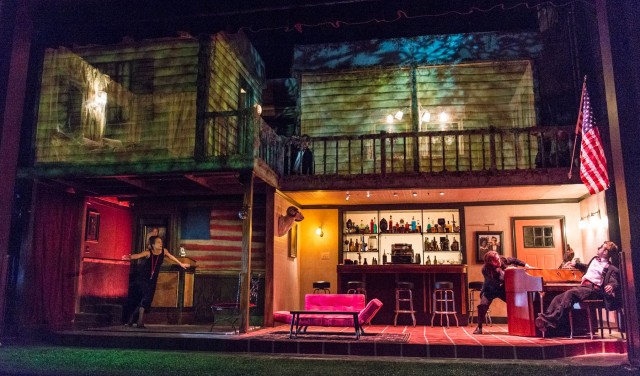
The Amoralists explore infidelity and haunted spirits in world premiere at Abrons Arts Center (photo by Russ Rowland)

A SAVANNAH GHOST STORY
Abrons Arts Center Playhouse
466 Grand St. at Pitt St.
Friday – Tuesday through September 21, $50
212-598-0400
www.abronsartscenter.org
www.amoralists.com

The “Summer of the Amoralists,” which began with the ever-inventive New York-based theater company’s outstanding Rantoul and Die, comes to a disappointing close with the rather mundane southern Gothic ghost story The Cheaters Club. It’s all the more frustrating because it’s written and directed by resident playwright and company cofounder Derek Ahonen, who gave a virtuoso performance in Rantoul and Die and has previously scripted the gripping detective noir The Bad and the Better and wrote and directed the wickedly funny sex comedy Pink Knees on Pale Skin for the Amoralists. Bookended by tipsy Dickensian tour guide Vladimir Anton (Zen Mansley), The Cheaters Club is set in Savannah, Georgia, America’s Most Haunted City. Geist Ubernachtung is approaching for the first time in 333 years, a night when the spirits of the dead will cross over from the other side and take corporeal form. Siblings Tommy (Matthew Pilieci), Jimmy (Byron Anthony), and Cathy Mayola (Cassandra Paras) have arrived at the Chaney Inn for their annual family vacation, during which they take off their wedding rings and immerse themselves in a celebration of infidelity; this year they have brought along a friend, Vonn (Jordan Tisdale), who is looking to get even with his wife, Linda (Anna Stromberg), who recently betrayed him. The inn is run by the creepy Mama Chaney (Sarah Lemp), with her creepy teenage son, Lee (James Rees), working as the bellhop, older son Lawrence (David Nash) selectively serving drinks behind the bar, and sexy daughter Lana (Kelley Swindall) performing songs with an oddball piano player (Ben Reno) in the lounge. Soon strange, unexplainable things are happening, leading to a second act in which the four protagonists’ spouses — Charlie (James Kautz), Susan (Vanessa Vaché), Pat (Wade Dunham), and Linda — show up, looking for their loved ones. The Cheaters Club feels like an unfinished genre exercise thrown together quickly to primarily entertain the Amoralists themselves and their deservedly loyal followers. The night we attended, there were random belly laughs and echoing guffaws emanating from individual audience members at unusual moments, as if there were inside jokes and references the rest of us weren’t quite privy to. Even the acting, generally a strong point for the Amoralists, is surprisingly flat, getting no help from a bumpy narrative that never achieves any kind of flow. The cast appears to be having a lot of fun onstage, but this production by one of the city’s best troupes will leave you feeling cheated.

BROADWAY WEEK 2013

New production of ROMEO AND JULIET, starring Orlando Bloom and Condola Rashad, is one of nineteen Broadway shows offering two-for-one tickets September 2-15

New production of ROMEO AND JULIET, starring Orlando Bloom and Condola Rashad, is one of nineteen Broadway shows offering two-for-one tickets September 2-15

Multiple venues
September 2-15, buy one, get one free
www.nycgo.com/broadwayweek

After the long, hot summer, the Great White Way looks to keep fans filling seats during the annual Broadway Week discount, when tickets for nineteen shows are available for half price for performances September 2-15. You can buy one ticket and get one free for such newer productions, some still in previews, as Big Fish, First Date, Forever Tango, The Glass Menagerie (with Cherry Jones and Zachary Quinto), Romeo and Juliet (with Orlando Bloom and Condola Rashad), and Soul Doctor as well as such mainstays as Chicago, Jersey Boys, The Lion King, Rock of Ages, Wicked, The Phantom of the Opera, and Mamma Mia! Also available are seats to Once, The Trip to Bountiful, Rodgers & Hammerstein’s Cinderella, Newsies, Annie, and Spider-Man: Turn Off the Dark. Quantities are limited, so you have to act fast.

AWAKE AND SING!

AWAKE AND SING!

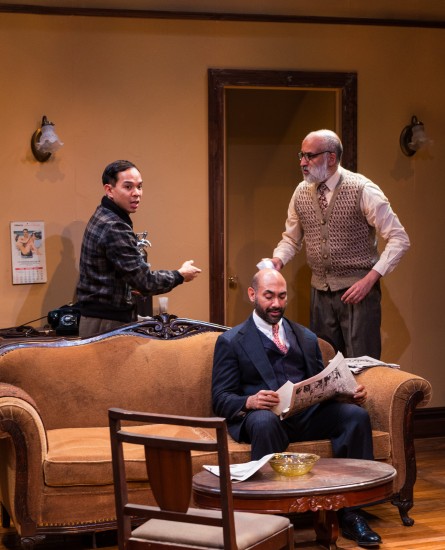
Ralph (Jon Norman Schneider), Uncle Morty (Andrew Ramcharan Guilarte), and Grandpa Jacob (Alok Tewari) face a series of crises in all-Asian revival of Clifford Odets’s AWAKE AND SING! (photo by William P. Steele)

Walkerspace
46 Walker St.
Tuesday – Sunday, through September 8, $25
866-811-4111
www.naatco.org

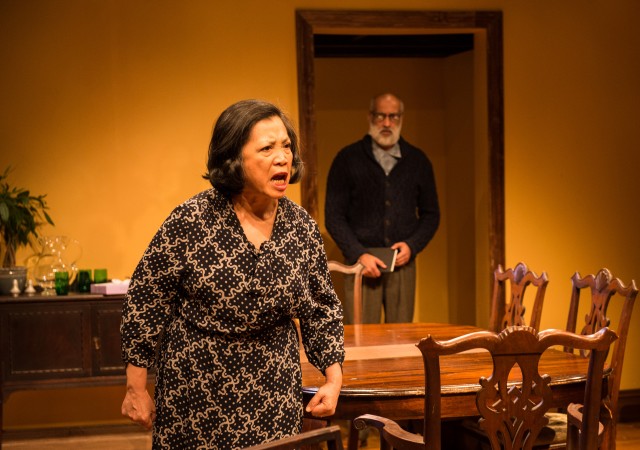
It’s been fifty years since writer and director Clifford Odets died of stomach cancer at the age of fifty-seven, and it is thrilling to see his work currently undergoing a kind of renaissance. Late last year, a seventy-fifth anniversary production of Golden Boy opened on Broadway and was nominated for a Tony, and this past spring brought the first Broadway revival of the 1949 Hollywood drama The Big Knife. But the National Asian American Theatre Co. (NAATCO) takes a somewhat different approach in its wonderfully small-scale, deeply intimate version of Odets’s first, and one of his best, plays, Awake and Sing! Written for Odets’s Group Theatre in 1935, the play follows the exploits of the Berger family, who live together in a cramped Bronx apartment. It’s 1933, and the Great Depression is continuing to take its toll. The household is run by domineering mother Bessie (NAATCO cofounder and artistic producing director Mia Katigbak), who is married to the meek and often clueless Myron (Henry Yuk). Son Ralph (Jon Norman Schneider) has no career direction and a girlfriend his mother disapproves of, while daughter Hennie (Teresa Avia Lim) has just gotten knocked up, with the man who did it out of the picture. While Bessie tries to orchestrate and control everyone’s lives, her father, Jacob (Alok Tewari), spouts Marxist doctrine and her well-dressed brother, Morty (Andrew Ramcharan Guilarte), waxes poetic about success in business. Also hanging around is Moe Axelrod (Sanjit De Silva), a street-smart character who offers his own take on the future.

Bessie Berger (Mia Katigback) will do whatever it takes to protect the honor of her family in NAATCO revival of Clifford Odets’s first play (photo by William P. Steele)

Bessie Berger (Mia Katigback) will do whatever it takes to protect the honor of her family in NAATCO revival of Clifford Odets’s first play (photo by William P. Steele)

As opposed to its two big-time Broadway productions — Awake and Sing! premiered on the Great White Way in 1935, directed by Harold Clurman and starring Luther Adler, Stella Adler, Morris Carnovsky, John Garfield, and Sanford Meisner, while the Tony-winning 2006 revival was directed by Bartlett Sher and featured Ben Gazzara, Zoe Wanamaker, Mark Ruffalo, Lauren Ambrose, and Pablo Schreiber — NAATCO’s three-act production takes place in the reconfigured Walkerspace theater in SoHo, where Anshuman Bhatia’s set design consists of a dining-room table, a couch, and some chairs in a narrow rectangular center area, with the fifty-member audience seated in two rows on the longer sides, making them feel like part of the family. The all-Asian cast gives splendid performances as the Jewish clan, a conceit that lends additional insight into the general themes of poverty, class, and pride, resulting in a more universal scope. Katigbak is particularly effective as the manipulative mother, while De Silva stands out as Axelrod, a voice of reason amid the escalating chaos. Directed by Shakespearean Stephen Fried, the play benefits strongly from the intense eye contact the characters make with one another, something that gets lost on larger stages but is powerful and dramatic here. The Bergers might not find that the streets of America are paved with gold, but this production of Awake and Sing! is very rich indeed.

HARBOR

(photo by Carol Rosegg)

Erin Cummings, Randy Harrison, Paul Anthony Stewart, and Alexis Molnar contemplate family in HARBOR (photo by Carol Rosegg)

Primary Stages at 59E59 Theaters
59 East 59th St. between Park & Madison Aves.
Tuesday – Sunday through September 8, $70
212-279-4200
www.59e59.org

After having written and/or cowritten the book and/or lyrics to the movie-based Broadway musicals Elf and The Wedding Singer, Chad Beguelin gets a lot more serious and literary-minded in the workmanlike dysfunctional family drama Harbor. Referencing Edith Wharton, Marcel Proust, Virginia Woolf, and, both directly and indirectly and most influentially, Tennessee Williams, Beguelin creates a plodding narrative in this contemporary tale about parents and children. Erin Cummings, in her New York stage debut, stars as Donna Adams, a low-rent singer living out of a van with her smart but weird teenage daughter, Lottie (Alexis Molnar). The two pay a surprise visit to Donna’s younger brother, Kevin (Queer as Folk’s Randy Harrison), who lives in a well-decorated home in Sag Harbor with his husband, architect Ted (Paul Anthony Stewart). At first, wannabe writer Kevin can’t wait to get rid of his manipulative, conniving sister, but as an overnight turns into a longer stay, the four characters are forced to look deep inside themselves to figure out just what it is that they want and need out of their less-than-perfect lives. Like the travel pamphlet Kevin is writing about Sag Harbor, Beguelin (Judas & Me) merely skims the surface of this drawn-out story of the sins of the father (and mother). Although the cast is fine, the individual relationships never quite come together, and the protagonist, Donna, is too unlikable from the very start. Beguelin and director Mark Lamos (A. R. Gurney’s Black Tie, Indian Blood, Buffalo Gal) never find a smooth rhythm, with plot points jumping around too much. And although the Playbill says that “the play takes place over several weeks,” it actually goes on for several months, which gets confusing (but that misstatement is obviously not the fault of the writer, director, or cast). This Harbor ends up having too much sag and not enough lift.