this week in lectures, signings, panel discussions, workshops, and Q&As

THE LAST FIVE YEARS

THE LAST FIVE YEARS
Extended through May 9
Tickets: $32.50 for time-specific single stream, $47.50 for forty-eight-hour on-demand viewing with behind-the-scenes featurette
www.ootbtheatrics.com/l5y

“I think you’re really gonna like this show / I’m pretty sure it doesn’t suck / See, you’re laughing, and I’m smiling,” Cathy Hiatt (Nasia Thomas) sings early in Jason Michael Webb’s exhilarating, intimate, and emotional adaptation of Jason Robert Brown’s 2001 two-character sung-through musical, The Last Five Years. Produced by Out of the Box Theatrics, Holmdel Theatre Company, and Blair Russell, this online version, streaming through May 9, was rehearsed remotely and filmed in a cramped New York City apartment, with director of photography and videographer Brian Bon using a handheld camera, lending an immediacy and urgency to the proceedings, as well as an overwhelming feeling of claustrophobia as Jewish writer Jamie Wellerstein (Nicholas Edwards) and actress Cathy journey across the beginning, middle, and end of a relationship, told backward by Cathy but chronologically by Jamie. When career success seems imminent for one but not the other, jealousy and envy threaten their love, made all the more intense by the close quarters necessitated by Covid-19 restrictions.

As Cathy and Jamie make their way through the apartment, they encounter keyboardist and associate music director Cynthia Meng, cellist Sterling Elliott, violist Orlando Wells, guitarist Jonathan Linden, bassist Chelton Grey, and drummer Brandon Brooks sitting in corners, relaxing on the bed, or suddenly appearing in the living room or kitchen, performing poignant orchestrations of such songs as “Still Hurting,” “The Schmuel Song,” “The Next Ten Minutes,” and “A Miracle Would Happen / When You Come Home to Me.” Casting two people of color and not changing the script — the original production in Skokie starred Lauren Kennedy (replaced by Sherie Rene Scott) and Norbert Leo Butz — lead to scenes both moving and, at times, humorous, as when Jamie considers his potential romantic partners in “Shiksa Goddess,” explaining, “I’ve been waiting through Danica Schwartz and Erica Weiss / And the Handelman twins / I’ve been waiting through Heather Greenblatt, Annie Mincus, Karen Pincus, and Lisa Katz / And Stacy Rosen, Ellen Kaplan, Julie Silber, and Janie Stein / I’ve had Shabbos dinners on Friday nights / With every Shapiro in Washington Heights” as photos of the women are projected on the wall behind him. But at the heart of the story is a universality that transcends race, religion, or ethnicity as two people try to build a life together.

Cathy (Nasia Thomas) and Jamie (Nicholas Edwards) tell their story in opposite directions in The Last Five Years (photo © Gerald Malaval)

Thomas (Ain’t Too Proud: The Life and Times of the Temptations, Beautiful: The Carole King Musical) and Edwards (Godspell, Frozen) are utterly engaging as Cathy and Jamie; you are instantly drawn into their orbit, rooting for them even when you know what’s going to happen from the very first song. Thomas is particularly captivating as Cathy digs deep into who she is and what she desires. Tony winner Webb (The Color Purple, Choir Boy) shoots some of the scenes without cuts as the camera winds through multiple rooms, making the most of the surroundings, which feature a fun production design by Adam Honoré that includes lots of books, theatrical posters, and Playbills; the costumes are by Siene Zoë Allen, with sound by Nicole Maupin and Carin M. Ford. Brown (13, The Bridges of Madison County) won Drama Desk Awards for Best Music and Best Lyrics back in 2002; two decades later, The Last Five Years is as fresh and alive as ever. It definitely doesn’t suck.

SIXTH ANNUAL NEW YORK OPERA FEST

New Camerata Opera’s The Brooklyn Job is one of numerous cutting-edge productions in New York Opera Fest

The New York Opera Alliance
May 1 – June 30, free – $60
newyorkoperafest.org

I have a confession to make: Everything I know about opera I learned from Warner Bros. cartoons: The Rabbit of Seville, Long-Haired Hare, What’s Opera Doc? In my nearly twenty years of covering New York City events, I’ve been to only a handful of performances at the Metropolitan Opera, and mostly because of my interest in multidisciplinary artist William Kentridge.

But during the pandemic, I discovered that there’s a vibrant, experimental side to the four-hundred-year-old classical art form. Since April 2020, I have watched several dozen operas made for Zoom, filmed onstage and in the nooks and crannies of theaters, outdoors, in virtual cities, and in a trailer by a forest. Opera Philadelphia’s Soldier Songs followed a military man with PTSD. White Snake Projects’ Alice in the Pandemic employed cutting-edge technology to send Alice into a dark, virtual wonderland. On Site Opera’s audio-only To My Distant Love presented a Beethoven song cycle over the telephone. Boston Lyric Opera’s The Fall of the House of Usher reimagined Philip Glass’s work using puppets and stop-motion animation. City Lyric Opera’s adaptation of Brecht and Weill’s The Threepenny Opera featured audience participation. And HERE Arts Center’s all decisions will be made by consensus was the first Zoom opera, with performers in boxes.

So there is much to look forward to in the New York Opera Alliance’s sixth annual New York Opera Fest, which takes place online and in person through June 30, consisting of more than two dozen events that stretch the bounds of what opera can be. “This year’s festival transformed its lineup entirely due to performative restrictions,” NYOF chairwoman Megan Gillis said in a statement. “Having to reinvent itself as a virtual festival, the range of work being presented is astounding. We are pleasantly surprised to learn of so many innovative productions on tap this year, as well as the essential courage, energy, and hard work required from their respective staff members and artists. We are honored to provide this unique platform at a time when both artists and audiences are starving for live performance.”

Among the highlights of the 2021 festival, which honors bass-baritone Antoine Hodge, who died from Covid-19 on February 22 at the age of thirty-eight, are encores of Prototype’s self-guided Modulation and Times3 (Times x Times x Times), the latter a collaboration by Pamela Z and Geoff Sobelle best experienced in Times Square; On Site Opera’s The Road We Came, an immersive musical walking tour through local Black history; Heartbeat Opera’s workshop production of the Brooklyn-set futuristic dark comedy The Extinctionist; New Camerata Opera’s The Brooklyn Job, an interactive virtual museum heist in which the audience can order at-home cocktail kits and party favors; the return of HERE’s fun live serial space opera Only You Will Recognize the Signal; and Divaria Productions’ Rival Queens, about Mary Queen of Scots and Queen Elizabeth I.

Below is the full schedule in chronological order; all presentations are available through June 30 unless otherwise noted:

dell’Arte Opera Ensemble, “Songs from Hibernation,” winter and spring recital series on YouTube led by artistic director Chris Fecteau, through August 31, free

Divaria Productions, Rival Queens, biopic about Mary Queen of Scots and Queen Elizabeth I, directed by Antón Armendariz, cinematography by Fabián Jiménez Asis, and music direction by pianist Sergio Martínez Zangróniz from Donizetti’s Maria Stuarda, with Ashley Bell as Mary, Anna Tonna as Elizabeth, and Michal Gizinski as the narrator, $20

Experiments in Opera, Aqua Net & Funyuns, podcast operas with music by Tariq Al-Sabir, Jason Cady, Kamala Sankaram, Aaron Siegel, and Michi Wiancko and librettos by Cady, Cara Ehlenfeldt, Annie-Sage Whitehurst, and Daniel Shepard, free

HERE Arts Center, Only You Will Recognize the Signal, serial space opera composed by Kamala Sankaram, directed by Kristin Marting, with libretto by Rob Handel, and performed by Paul An, Christopher Burchett, Hai-Ting Chinn, Adrienne Danrich, Joy Jan Jones, Joan La Barbara, and Jorell Williams, $5-$50

Hunter Opera Theater, the Richard Burke Pocket Opera at Hunter College, featuring The Taxi Driver (libretto and music by Joe Young), The Blue Bird Opera: The Pursuit of Happiness (libretto and music by Alyssa Regent), Panic Room (libretto and music by Deshawn Withers), and Prince Danila Govorila (music by Matthew Sandahl, libretto by Alkiviades Meimaris), free

Lighthouse Opera, Mozart’s Die Zauberfloete (“A Distant Flute”), conducted by Stephen Francis Vasta and directed by John Tedeschi, and excerpts from Verdi’s La Traviata, free

No Dominion Theater Company, Hindsight: Behind the Lens, exploration of true crime opera based on the Leopold and Loeb case, libretto by Bea Goodwin, music by Felix Jarrar, with singers Gabriel Hernandez and Joseph Beutel, free

On Site Opera, The Road We Came, three self-guided tours of the Black history of New York City featuring works by Black composers, multimedia collaboration between On Site Opera, Ryan & Tonya McKinny’s Keep the Music Going Productions, and Harlem historian Eric K. Washington, through July 31, $60 – $165

Prototype, Modulation, multimedia self-guided exploration of isolation, identity, fear, and connection, available for download, free

Prototype, Times3 (Times x Times x Times), site-specific sonic journey through Times Square by composer Pamela Z and theatre artist Geoff Sobelle, $5 and up

Regina Opera Company, “2021 Spring Concert,” with soprano Lisa Bryce, mezzo-soprano Galina Ivannikova, tenors Lindell Carter and Hyunho Cho, and pianist Dmitry Glivinskiy, filmed in the company’s Sunset Park theater, free

New Camerata Opera, The Brooklyn Job, written and directed by Sarah Morgan Ashey, with music direction by Dan Franklin Smith, and featuring sopranos Samina Aslam and Barbara Porto, mezzo-sopranos Eva Parr, Julia Tang, and Anna Tonna, tenors Erik Bagger and Victor Khodadad, baritones Stan Lacy and Scott Lindroth, and bass Kofi Hayford, May 6 & 8, 8:00, $40-$160

Fab Fulton/ART360° and the American Opera Project, Brooklyn Cultural Tours Kick-off, self-guided audiovisual tour led by Ron Janoff, with songs by contralto Nicole Mitchell, May 8, 11:00 am, Betty Carter Park, free

Bronx Opera, Mozart’s Impresario, Zoom broadcast on YouTube, directed by Benjamin Spierman, conducted by Michael Spierman, with pianist Eric Kramer and singers Blake Friedman, Halley Gilbert, Ben Spierman, Hannah Spierman, and Jack Anderson White, May 8-9, free

The American Opera Project and the Center for Fiction, “Note/Books: The Night Falls,” libretto reading with musical excerpts, book and lyrics by Karen Russell, music and lyrics by Ellis Ludwig-Leone, choreographed and directed by Troy Schumacher, and moderated by Joseph V. Melillo, May 13, 7:30, free

Brooklyn College Conservatory, Bizet’s Carmen, directed by Isabel Milenski, with music preparation by Dmitry Glivinskiy, performed by the Brooklyn College Opera Theatre on Facebook, May 14, 7:00, and May 18, 12:30, free

Bronx Opera and Bronxnet Community Cable, “Sunday Night at the Opera,” Sundays at 7:00 beginning May 16, free
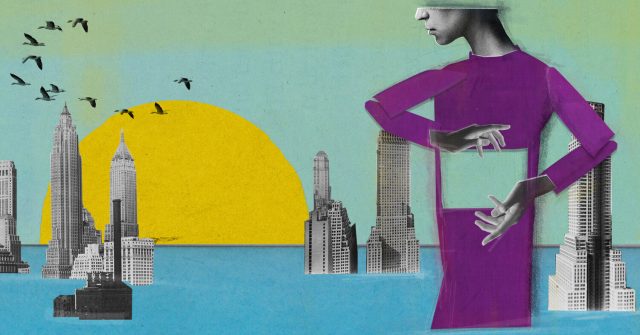
Heartbeat Opera’s The Extinctionist takes place in person and online

Victor Herbert Renaissance Project, Heart O’Mine, including the Irish drinking song “Cruiskeen Lawn,” with music by Victor Herbert and his grandfather Samuel Lover, May 16-23, $20

Beth Morrison Projects, Next Generation concert featuring rising composers, singers, and artists, streamed digitally from National Sawdust in Brooklyn, May 27, 7:00, free

AS/COA, Ebbó, opera-oratorio by composer Louis Aguirre and librettist Rafael Almanza, online production commissioned by Americas Society from Dominican artist Yelaine Rodríguez, with solo soprano Estelí Gómez, Ahmed Gómez as the narrator, Jeremy Antonio Caro as Bird and Orula, Rayser Rafelina Campusano Rosario as Queen Apetebí, Michelle Wong on oboe, David Byrd-Marrow on horns, Pala Garcia on violin, Stephanie Griffin on viola, Jacob Greenberg on piano, and Haruka Fujii and Booby Sanabria on percussion, May 28, 7:00, free

Heartbeat Opera, The Extinctionist, music by Daniel Schlosberg, libretto by Amanda Quaid, directed, conceived, and developed by Louisa Proske, semistaged sneak peek at show about a potential Brooklyn apocalypse, with four singers and four multi-instrumentalists, performed live with a socially distanced audience and streamed online from PS21 in Chatham, New York, May 29, 7:30, and May 30, 3:00, $5

Little Opera Theater of NY, “Monteverdi & Other Treasures from the Seicento,” featuring Il combattimento di Tancredi e Clorinda, composed by Claudio Monteverdi, and music of the era by Barbara Strozzi and Dario Costello, with tenor Raúl Melo as the Narrator, music director Elliot Figg on harpsichord, violinists Manami Mizumoto and Rebecca Nelson, violist Majka Demcak, theorbist and guitarist Paul Morton, and viol de gamba and bassist Doug Balliett, livestreamed from St. John’s in the Village, June 4, 7:30, $5-$50

SAS Performing Arts Company and Studios, “A Night at the Opera,” music by Mozart, Rossini, Bellini, Donizetti, Verdi, Puccini, and Strauss, performed by members of SAS Performing Arts Concert Opera, June 5-12, 7:30, $15

Professional Women Singers Association, songs dealing with the current crisis, June 6-30, free

The American Opera Project, “Sing Together, Children!,” created and hosted by soprano Adrienne Danrich, with the Music as the Message (MaM) choir and Q&A, June 13, 4:00, free
SITTING AND TALKING

Laguna Playhouse online
Streaming through May 2, $20
lagunaplayhouse.com

Earlier this week I was in California, and as we passed by the Laguna Playhouse, I couldn’t help but notice the “Closed” sign. When I returned home to New York City, I discovered, coincidentally enough, that there were still a few days left to catch the hundred-year-old company’s streaming of Lia Romeo’s Sitting and Talking. The fifty-five-minute online production, available on demand through May 2, was written specifically for and takes place over Zoom. Romeo penned the script last May, it was filmed in August, and it premiered in September as part of the Hoboken-based Mile Square Theatre’s “Given Circumstance: New Plays in the Virtual World” series (and coproduced by Project Y).

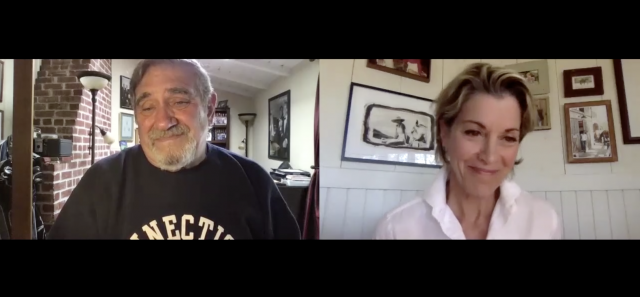
It’s April 2020, and two unnamed septuagenarians meet through an online matchmaking site. He (Dan Lauria) is a gruff divorcé, while she (Wendie Malick) is an elegant widow, not sure if she’s ready to date yet after her husband’s death two years before. Their first Zoom call is pretty much a disaster, as they have little in common and no electricity. But they keep speaking with each other, finding a certain solace in their sudden, if not magnetic, connection. She tells him, “They’re saying loneliness is an epidemic, especially among older . . . I mean, a lot of us were pretty isolated before, if we didn’t have regular things we did. And now I think we can’t even see our kids, our grandkids.” He admits, “I was stupid to think I could fix it. I can’t fix anything.” While he is open to developing their relationship, she is cautious and fearful, echoing how so many people have felt during the pandemic lockdown, when we spent most of our time in our houses and apartments, unable to see friends, relatives, or potential significant others.

Dan Lauria and Wendie Malick try Zoom dating during the pandemic in Sitting and Talking

Directed by James Glossman (Flint, Shostakovich and the Black Monk: A Russian Fantasy) and recorded in the actors’ homes (they supply their own wardrobe, set design, and camerawork), Sitting and Talking is a warmly told tale with an innate charm and sense of humor. Lauria (The Wonder Years, A Christmas Story: The Musical) and Malick (Hot in Cleveland, Just Shoot Me!) have an infectious camaraderie that immediately welcomes you into the story of their characters; the actors might just be sitting around talking, but you’re likely to be left with a bit of longing when it ends, perhaps unwilling to say goodbye to them just yet.

Regional theater champions Lauria and Malick know each other well, and that comes across onscreen; they previously teamed up for a reading of Lee Blessing’s A Body of Water at the 2018 Durango PlayFest, which they helped cofound, and were scheduled to appear in the world premiere of Blessing’s Tea with the Boss last July at New Jersey Repertory before the coronavirus crisis shuttered all live performance. They portray their characters with a tender vulnerability that we can all identify with, regardless of our age or family situation. Every one of us has experienced feelings of loss and isolation over the last fourteen months, moments of dread that we tend to keep inside and that Romeo (Connected, Green Whales) thoughtfully explores.

There have been only a handful of exceptional works written during the pandemic in which the narrative organically unfolds over Zoom. These include Jake Shore’s Adjust the Procedure, Jordan E. Cooper’s Mama’s Got a Cough, and Richard Nelson’s What Do We Need to Talk About? You can add the exquisitely rendered Sitting and Talking to that exclusive club.

(For more on the show and its potential longevity, you can watch a Zoom talkback with Lauria, Malick, Glossman, and Romeo, moderated by Laguna Playhouse artistic director Ann E. Wareham, here.)

ReelAbilities FILM FESTIVAL: NEW YORK

ReelAbilities Film Festival: New York
Marlene Meyerson JCC Manhattan online
Through May 5, $12 per virtual film, $45 for in-person comedy night
reelabilities.org/newyork

“Everybody has crutches,” multidisciplinary artist and performer Bill Shannon says in Crutch, screening at the thirteenth annual ReelAbilities Film Festival. “Some of them you can see; some of them are invisible.” Founded in 2007 by the Marlene Meyerson JCC Manhattan, the festival is “dedicated to promoting awareness and appreciation of the lives, stories, and artistic expressions of people with disabilities.” Running through May 5, it opened April 29 with Michael Parks Randa and Lauren Smitelli’s Best Summer Ever at the Queens Drive-In at the New York Hall of Science, with appearances by Itzhak Perlman and Lachi, and will be virtual the rest of the way (with one notable exception), consisting of eighteen programs, from panel discussions and Q&As to shorts and full-length films as well as a comedy night. The eight feature documentaries can be streamed throughout the festival; each will also have a live Q&A with the filmmakers and/or subjects. Among the topics explored in the works are disabling injury (Ahead of the Curve), Down syndrome (The Special), blindness (Maricarmen), amputation (Augmented), mental health (The World Is Bright), autism (In a Different Key), and ALS (closing-night selection Not Going Quietly, with Temple Grandin participating in the Q&A).

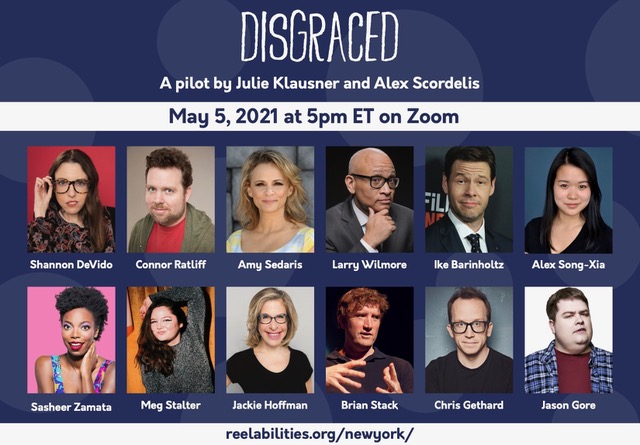
There will also be a Gamechanger talk about authentic storytelling with Lauren Ridloff and Katherine Croft, “Black Future Month: Legacy, Present & Afro-Futurism” with Keith Jones, CJ Jones, Tameka Citchen-Spruce, Safiya Eshe Gyasi, Diana Elizabeth Jordan, and Trelanda R. Lowe, “Fashion, Beauty, and Disability” with KR Liu, Natalie Trevonne, Dana Zumbo, and Aubrie Lee, an author talk with Jodi Samuels about parenting children with disabilities and her book Chutzpah, Wisdom and Wine: The Journey of an Unstoppable Woman, as well as four collections of shorts. In addition, there will be a live reading of the pilot script for the unproduced television series Disgraced with writers Julie Klausner and Alex Scordelis and star Shannon DeVido along with Amy Sedaris, Larry Wilmore, Jackie Hoffman, Chris Gethard, Sasheer Zamata, and others, and a live, hybrid comedy show with Maysoon Zayid, Tina Friml, Martin Phillips, Jenny Cavallero, and Ryan Haddad, hosted by Pamela Schuller, taking place in person on the JCC Manhattan rooftop ($45) and online ($15).

ON THE ROOF: A LOOK INSIDE FIDDLER ON THE ROOF IN YIDDISH BOOK PARTY

Joel Grey, Samantha Hahn, Stephanie Lynne Mason, Zalmen Mlotek, Rosie Jo Neddy, Bebe Neuwirth, Raquel Nobile, Jana Robbins, and Rachel Zatcoff will take part in Yiddish Fiddler book celebration

Who: Joel Grey, Samantha Hahn, Stephanie Lynne Mason, Zalmen Mlotek, Rosie Jo Neddy, Bebe Neuwirth, Raquel Nobile, Jana Robbins, Rachel Zatcoff
What: Virtual book launch party
Where: National Yiddish Theatre Folksbiene
When: Sunday, May 2, free, 2:15
Why: In the summer of 2018, the National Yiddish Theatre Folksbiene unleashed a phenomenon on the New York City theater world, a mind-blowing production of Fiddler on the Roof in Yiddish. At the time, I wrote, “I’ve seen numerous Fiddlers over the years, but this Yiddish version, which could have felt dated and old-fashioned, instead is very much of the moment in the wake of the immigrant and refugee crisis currently going on in America and around the world. It’s chilling watching the final scenes in light of what is shown on the news night after night.” Samantha Hahn, who played Beylke, the youngest of Tevye and Golde’s five daughters, documented the making of the show, regularly talking to cast and crew, and now takes us behind the scenes — through auditions, rehearsals, mishaps, and more — in On The Roof: A Look Inside Fiddler on the Roof in Yiddish. She writes in the book, “I went home that night and took a shower, put on my pajamas, turned out the lights, and crawled into bed. A minute later I got out of bed, turned on the lights, took the pillow case off of my pillow to wrap around my head like a shmata, and practiced the ‘Tradition’ choreography. Even in my little bedroom, wearing my ‘Yertle the Turtle’ hand-me-down pajama shirt and my blue pillow case around my head — it felt like I was doing something special.”

On May 2 at 2:15, Hahn, an actress, singer, voiceover artist, and author, will do something special at a virtual book party, reuniting with her four stage sisters, Stephanie Lynn Mason (Hodl), Rosie Jo Neddy (Khave), Raquel Nobile (Shprintze), and Rachel Zatcoff (Tsaytl), as well as director Joel Grey, producer Jana Robbins, NYTF artistic director Zalmen Mlotek, and Fiddler fan Bebe Neuwirth, who was at the Museum of Jewish Heritage – A Living Memorial to the Holocaust for opening night. (The musical later moved uptown to Stage 42.) The party will include backstage video footage, a panel discussion, a live chat, and a Q&A. To get in the mood, you can check out Fiddler’s Stars in the House reunion here.

ALMOST HOME: A SPRING REUNION SEASON — THE END OF WHITE SUPREMACY: AN AMERICAN ROMANCE

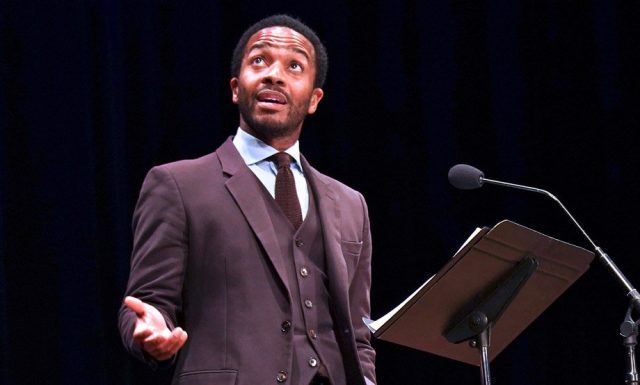
André Holland’s dramatic reading of Saidiya Hartman’s “The End of White Supremacy: An American Romance” will take place at 92Y and online

Who: André Holland, Saidiya Hartman
What: Virtual and in-person dramatic monologue and conversation
Where: 92Y’s Unterberg Poetry Center, Kaufmann Concert Hall, 1395 Lexington Ave., and online
When: Thursday, April 29, $20, 7:00
Why: The 92nd St. Y is transitioning from virtual events to in-person presentations with its “Almost Home” series, in which up to 150 people can buy tickets to see the event in the Kaufmann Concert Hall while an unlimited amount can pay the same $20 price and watch on their screens at home. The spring miniseason kicks off April 29 at 7:00 with André Holland (Moonlight, The Knick) reading Saidiya Hartman’s “The End of White Supremacy: An American Romance,” a June 2020 article the American writer and academic penned for Bomb magazine. The piece is a retelling of W. E. B. Du Bois’s 1920 postapocalyptic short story, “The Comet,” along with a new interpretation of it. The tale begins:

“He watches the human swirl as it moves determinedly along Broadway. Perched at the top of the stairs, the customers and employees of the bank brush by as he hesitates near the entrance. A nod, a look of recognition, a meager hello, a begrudging acknowledgment that he exists are not forthcoming. The street is teeming with people. No one glancing casually at him would use a phrase like ‘towering figure”’ or waste a moment wondering about his position at the bank; words like idle or lingering or un-mastered or servile brush at the murky edges of consciousness, latent and without the full awareness or deliberateness of thought, because most of the men rushing through the streets of the financial center rarely perceive him. Few noticed him. Few ever noticed him except in a way that stung. He was outside the world — ‘nothing!’”

Following the reading, Holland and National Book Critics Circle Award winner Hartman (Scenes of Subjection: Terror, Slavery, and Self-making in Nineteenth Century America; Lose Your Mother: A Journey Along the Atlantic Slave Route; Wayward Lives, Beautiful Experiments) will discuss the work, in which Hartman writes, “Du Bois believed that telling such stories mattered. In hindsight, he would explain this earnestness (the belief that intelligent argument and reasoned judgment might defeat racism) as a consequence of not having read psychoanalysis. He ‘was not sufficiently Freudian to understand how little human action is based on reason’ or to apprehend the deep psychic investment in racism, what others have since described as the libidinal economy of an antiblack world. He had assumed that ‘the majority of Americans would rush to the defense of democracy,’ if they realized that racism threatened it, not only for blacks, but for whites, ‘not only in America, but in the world.’”

“Almost Home” continues May 3 with “Alyson Cambridge and Friends in Concert” and May 5, 11, and 26 with a trio of shows that are part of the Marshall Weinberg Spring 2021 Classical Music Season. For all in-person events, a negative COVID-19 test or proof of vaccination is required.

ALL THE DEVILS ARE HERE: HOW SHAKESPEARE INVENTED THE VILLAIN

Patrick Page explores the history of villainy in Shakespeare’s plays in captivating one-man show for STC

Shakespeare Theatre Company
Available on demand, $25
www.shakespearetheatre.org

I can’t think of a better way to celebrate William Shakespeare’s 457th birthday — and honor the 405th anniversary of his death — by watching Patrick Page’s extraordinary one-man show, All the Devils Are Here: How Shakespeare Invented the Villain, in which the award-winning actor makes the case that no one has ever created bad guys quite like the Bard.

Shakespeare Theatre Company’s streaming presentation begins with an introduction by Page from his home, explaining why he wrote a play about scoundrels and malefactors. “My aim in doing so is to show how Shakespeare’s two-decade exploration of evil actually made him a more humane and sophisticated writer. In creating an entirely new kind of villain, Shakespeare rejected the prejudices of his age and became a writer for all of us.”

In the eighty-minute show, filmed at STC’s Sidney Harman Hall without an audience, Page traces the history of villains in the Bard’s plays chronologically, from 1590 to 1611, adding in a nod to a theatrical experience from young Will’s childhood. “Do you believe in evil spirits? Do you believe in evil? Did Shakespeare?” Page asks. “It’s an important question because Shakespeare, for all intents and purposes, invented the characters we now call the villain. You’ve likely seen Shakespeare’s influence everywhere and not even recognized it.”

Page, who is one of theater’s greatest Shakespearean actors and teachers, portrays Richard III, Sir John Falstaff from Henry IV, Part 2 (referring to him as “a walking compendium of the Seven Deadly Sins”), Malvolio from Twelfth Night, Claudius from Hamlet, Prospero from The Tempest, Lady Macbeth from Macbeth, and Iago from Othello, who he identifies as a sociopath. Talking about playing Iago in an STC production (opposite Avery Brooks), Page explains, “And so began a year of research and study that changed my view of my fellow human beings and opened my eyes to the reality of the evil hidden in plain sight all around us.” (Page has also played Macbeth, Claudius, Prospero, and Coriolanus at STC.)

Page compares the title character of Christopher Marlowe’s The Jew of Malta to Aaron the Moor from Titus Andronicus and does a deep dive into Shylock from The Merchant of Venice. “Shylock is the villain of the play,” he states. “But for the first time in history, he’s a villain whose motivation is so clear, whose psychology is so complex, and whose language is so rich and idiosyncratic that he changes the way we experience villainy itself.”

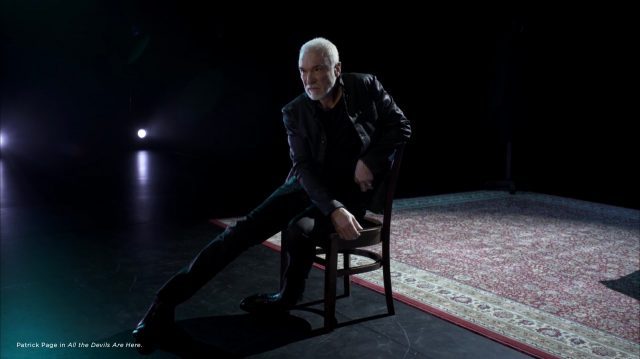
Directed by Alan Paul and shot by Ryan Risley, the play opens with Page walking onstage, looking out at an empty audience, an immediate reminder of the world’s current villain, the coronavirus, which has kept theaters closed for more than a year. Elizabeth A. Coco’s lighting is sharp and intense as Risley’s camera films Page from numerous angles, with appropriately ominous close-ups. Various props add further tension as well as comic relief; just wait until you see how Page portrays Falstaff. Gordon Nimmo-Smith’s sound design captures Page’s distinctive baritone as it resonates throughout the empty theater.

Patrick Page looks at the concept of evil in Shakespeare’s characters, including Richard III, in streaming presentation

Page knows what of he speaks; in addition to having portrayed his fair share of Shakespeare baddies, he has played Scar in The Lion King, Scrooge in A Christmas Carol, the Green Goblin in Spider-Man: Turn Off the Dark, Hades in Hadestown, and the Grinch in Dr. Seuss’s How the Grinch Stole Christmas, villains all in one form or another. His command of Shakespeare and the concept of evil is bold and impressive, but he is down-to-earth enough to throw in plenty of surprising modern-day pop-culture references to keep it fresh and relevant to those who might not know much about the Bard or Elizabethan theater. It’s a bravura performance that provides a much-needed level of comfort as theaters remain closed, albeit with legitimate hopes that they will be reopening in the very near future. In the meantime, we have Page and All the Devils Are Here to keep us company and scare the wits out of us, as he does with the following frightening excerpt from Macbeth:

“Make thick my blood. / Stop up the access and passage to remorse, / Let no compunctious visitings of nature / Shake my fell purpose, nor keep a peace between / The effect and it! Come, thick night, / and pall thee in the dunnest smoke of hell, / That my keen knife see not the wound it makes, / Nor heaven peep through the blanket of the dark / To cry ‘Hold, hold!’”