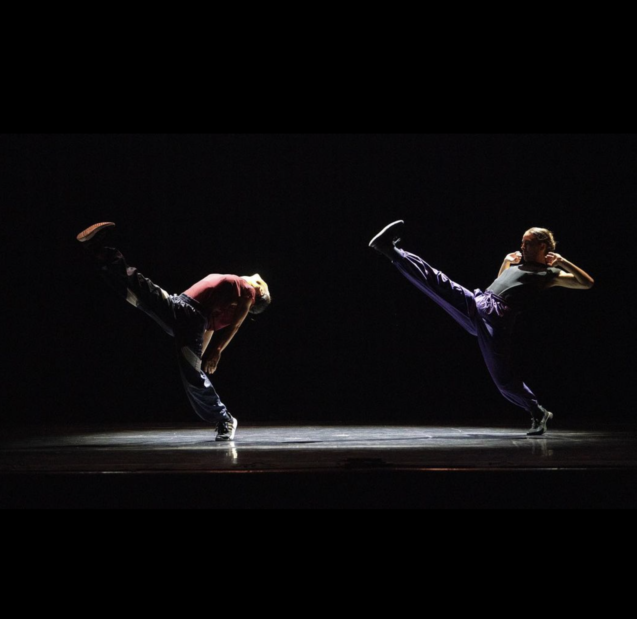
Yin Yue Dance Company presents gorgeous new work at 92nd St. Y and online (photo by Richard Termine)
Who:Yin Yue Dance Company What: Streaming performance and discussion Where:92Y online When: November 19-21, $15 Why: Yin Yue Dance Company’s Ripple is one of the most gorgeous works I’ve seen during the pandemic — from the comfort of my apartment, where I’ve watched hundreds over the last twenty months. The thirty-six-minute piece was filmed live in front of an audience on November 18 at Kaufmann Concert Hall as part of the 92nd St. Y’s Mainstage Series. The world premiere, featuring Kristalyn Gill, Jordan Lang, Grace Whitworth, Nat Wilson, and Yin Yue performing on a dark stage, was essentially developed over the previous five days, and the company didn’t even meet in person in full until the dress rehearsal on the day of the show, when Yin was still finalizing the choreography.
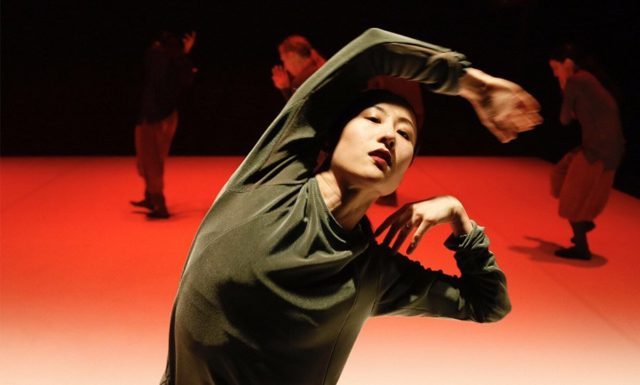
Yin Yue leads her company in streaming performance (photo by Paul B. Goode)
You wouldn’t know it from how beautifully the work flows from one section to the next, highlighted by a dramatic solo by Yin, confined to an oval spotlight, her arms alternately reaching out and cradling herself. The music ranges from romantically cinematic to a pulsating electronic score, along with some spoken text, as the dancers form duets and trios, coming together for several emotional passages, bathed occasionally in blue, then red. If you’ve been reluctant to watch dance onscreen, Ripple is a great place to start. The performance is followed by a discussion with the dancers moderated by Harkness director Taryn Kaschock Russell.
On December 6, Yin (A Trace of Inevitability,A Glimpse Inside a Shared Story) will be at the Guggenheim to receive the Harkness Promise Award along with Alethea Pace at the sixty-fourth annual 2021 Dance Magazine Awards, which will be livestreamed. The Mainstage Series continues December 16–19 with Michelle Dorrance and Dormeshia with special guests, February 24–27 with Baye & Asa and Passion Fruit Dance Company, and March 3–6 with Caleb Teicher and Conrad Tao.
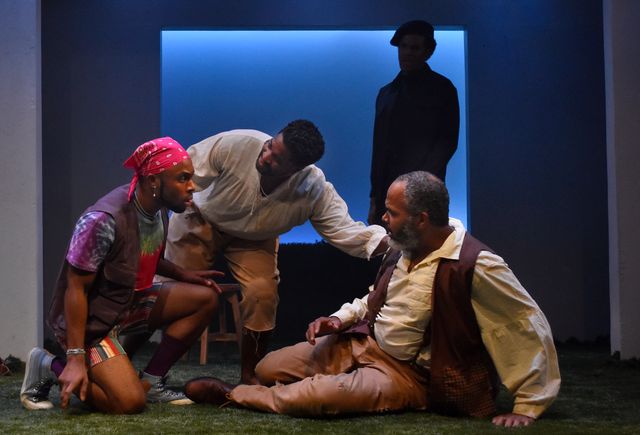
Four Black men from different times meet in unusual circumstances in Mansa Ra’s In the Southern Breeze
IN THE SOUTHERN BREEZE
Rattlestick Playwrights Theater
224 Waverly Pl.
Wednesday – Monday through December 12, $40 in person or livestreamed www.rattlestick.org
The central section of Mansa Ra’s In the Southern Breeze, which opened last night at Rattlestick, is a compelling fever dream in which four Black men from different time periods meet in a kind of bardo, trying to make sense of their existential situation. Unfortunately, that narrative is framed by a moralizing, didactic story involving a contemporary Black man (Allan K. Washington) literally at the end of his rope, as he considers hanging himself, suffering from severe depression because of pandemic isolation and systemic racism in America.
“It’s so stressful being black. And I don’t mean in some hypothetical way,” he says. The confinement of lockdown is also getting to him. “I honestly have no idea what’s gonna happen anymore. It’s been a while since I’ve interacted with people. Like a super long time. I was already depressed before the ’rona. Everybody was freaking out about quarantine cooped up with nowhere to go. But I was glad. I finally had a real excuse for not leaving my apartment. I know a lot about isolation. It feels like the walls are closing in around you. All day. And all night.”
While he contemplates his fate (offstage), a barefoot man in tatters enters. Madison (Charles Browning) is a runaway slave, just trying to stay alive while looking for his wife. He is soon joined by Lazarus (Victor Williams), a sharecropper who wants to know where his family is. Next, a Black Panther named Hue (Biko Eisen-Martin) arrives, calling out desperately for his wife. And finally, gay activist Tony (Travis Raeburn) shows up fresh from a protest march. As a group they represent such societal ills as racism, homophobia, injustice, inequality, and disenfranchisement, in search of their identity, separated from their wives and children as so many Black men have been throughout the history of the United States. “Unnatural fo’ a man to be taken ’way from his family. Just unnatural,” Madison says. It is critical to note that there are no women in the play; they exist on the periphery, longed-for sources of strength and ancestral continuity. Emmie Finckel’s set is a series of ever-smaller white-framed doorways on lush green grass, the promise of freedom closing fast.
In the Southern Breeze looks at loneliness, depression, racism, and isolation
Earnestly directed by Christopher D. Betts, In the Southern Breeze’s frame story ends up feeling like a cliched diatribe of platitudes lacking dramatic nuance; what the man is experiencing is horrific, something that no one should have to endure, but it comes off as more of an intense therapy session. A rant about holes, from the noose to anal sex to the planet Saturn, feels forced and unnecessary. The body of the play is powerful; Mansa Ra (fka Jiréh Breon Holder) should have more faith in his audience. For example, there is a moment near the end that could have made a memorable conclusion, but instead the narrative extends with a coda that plots out too easy a path for what is a complicated future. One of the smartest choices is to never show an actual noose, serving as a potent metaphor for what has lurked dangerously for centuries.
In her essay “Moral Inhabitants,” which influenced Mansa Ra, Nobel Prize winner Toni Morrison writes, “Our past is bleak. Our future dim. But I am not reasonable. A reasonable man adjusts to his environment. And unreasonable man does not. All progress, therefore, depends on the unreasonable man. I prefer not to adjust to my environment. I refuse the prison of ‘I’ and choose the open spaces of ‘we.’” In the Southern Breeze works best when it deals with the “we” as opposed to the “I.”
In conjunction with the seventy-five-minute play, which runs through December 12 (both at the theater and streaming live) and is presented in partnership with Black Boys Do Theater, the Boys’ Club of New York, the Eastern Group Psychotherapy Society, and the National Alliance on Mental Illness, Rattlestick is hosting a series of community talks, on November 22 at 5:00 (on Zoom, before the livestream, about safe and private spaces), November 28 at 4:00 (an in-person postshow discussion exploring the intersection of mental health and the political and social climate), and December 6 at 5:00 (on Zoom, before the livestream).
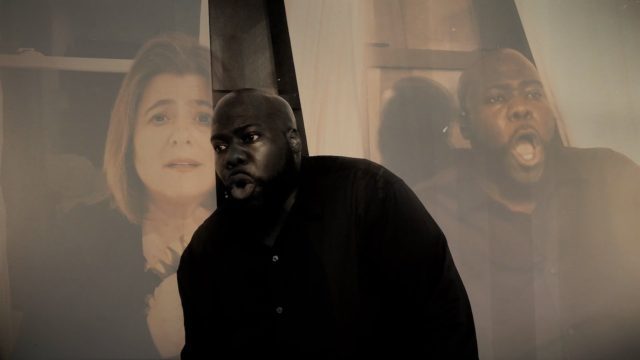
Allison Charney and Errin Brooks star in virtual adaptation of Verdi’s Otello
Who:The Town Hall,PREformances Chamber Music Collaborative What: Virtual performance of Giuseppe Verdi’s Otello Where:The Town Hall online When: November 18-25, $20-$35 Why: The Town Hall’s new Opera at Home series, consisting of abridged versions of classic works shot in quarantine during the pandemic lockdown, kicks off with Giuseppe Verdi’s 1887 Otello, an adaptation of one of Shakespeare’s most beloved tragedies that is streaming November 18-25. The Town Hall is teaming up with the PREformances Chamber Music Collaborative for the sixty-minute presentation, which features tenor Errin Brooks as Otello, soprano and PREformances artistic director Allison Charney as Desdemona, actor Jordan Charney (Allison’s father) as the Narrator, and Craig Ketter on piano. There will also be a live Zoom talkback with the artists and creative team on November 22 at 8:00.
“The Town Hall, once the home of the classical music debut, is very excited to bring accessible opera to the masses,” artistic director Melay Araya said in a statement. “The history of classical vocalists at the hall is one of great pride, and diversity in classical music has been a thread throughout the hall’s one-hundred-year history. With a legacy that includes the debuts of Marian Anderson and Leontyne Price, the Town Hall is excited to bring diverse voices and high-quality, accessible classical programming to a wider audience.” Brooks, the Charneys, and Ketter performed scenes from Otello as part of PREformances’ Like the Wind concert at Merkin Concert Hall in March 2020; in addition, during the pandemic, PREformances and the Town Hall collaborated on the seven-part online free series The Season of Hope.
Who: Zhang Yang, Peter Loehr, Richard Peña What: Film conversation Where:China Institute online When: Wednesday, November 17, $10, 8:30 Why: China Institute’s ten-part “Seeing China Through Film” continues November 17 with a discussion about Zhang Yang’s 1999 Shower, a touching tale of a family-run bathhouse in Beijing, starring Zhu Xu as the father and Pu Cunxin and Jiang Wu as his sons. Zhang (Sunflower,Paths of the Soul) will be talking online about changes in China since the late 1990s and the battle between tradition and modernity with series curator and Columbia film professor Richard Peña, the former head of the New York Film Festival, and Peter Loehr, whose Imar Film Co. has produced several of Zhang’s works, including Shower,Quitting, and Spicy Love Soup. The series previously featured Jia Zhangke discussing his debut film, The Pickpocket, film historian Christopher Rea on Yuan Muzhi’s Street Angels, Chen Kaige on his debut, Yellow Earth, and associate professor Weihong Bao on Zheng Junli’s Crows and Sparrows. Note that the films are not screened with the conversation but should be watched in advance; free links are usually provided.
Craig Foster, Ross Frylinck, and Sy Montgomery will discuss new book at virtual 92Y talk
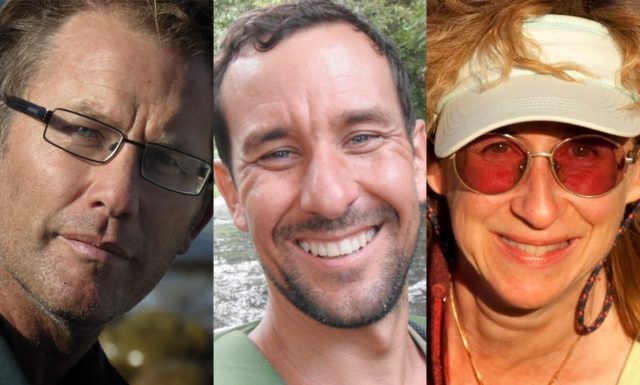
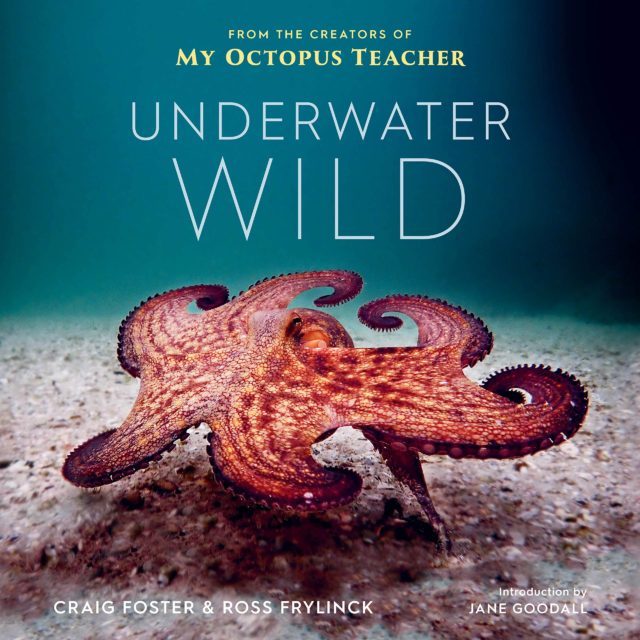
Who: Craig Foster, Ross Frylinck, Sy Montgomery What: Virtual discussion as part of 92Y Recanati-Kaplan Talks Where:92Y online When: Tuesday, November 16, $20, 7:00 Why: One of the most popular and poignant films of the pandemic era has been Pippa Ehrlich and James Reed’s Oscar-winning documentary My Octopus Teacher. The film details the incredible friendship between South African filmmaker Craig Foster and an extraordinary octopus in a kelp forest at the bottom of the ocean and how that affects his relationship with his son, Tom; while we were all locked in our homes, it offered a beautiful respite from our loneliness. Foster (The Great Dance: A Hunter’s Story,Touching the Dragon) and his diving partner Ross Frylinck have now written the book Underwater Wild, which shares stories of their undersea adventures with sea hares, cuttlefish, limpets, and many other marine creatures that can teach humans a thing or two.
In her introduction, Jane Goodall writes, “A friend of mine, knowing of my fascination with octopuses, sent me a link to the film My Octopus Teacher. I knew I was in for a treat, but there was no way I could have imagined what a transformative and entrancing experience was in store for me.” On November 16 at 7:00, Foster and Frylinck, cofounders of the Sea Change Project, which “tells stories that connect people to the wild, motivating them to become part of the regeneration of our planet,” will discuss the book in a 92nd St. Y virtual talk with Sy Montgomery, author of such books as The Soul of an Octopus,Tamed and Untamed: Close Encounters of the Animal Kind, and The Good Good Pig: The Extraordinary Life of Christopher Hogwood.
The life and times of Aulcie Perry on and off the court are detailed in Dan Menkin’s latest sports documentary
AULCIE (Dan Menkin, 2019)
Marlene Meyerson JCC Manhattan
334 Amsterdam Ave. at West Seventy-Sixth St.
Tuesday, November 16, $15, 7:00 cinematters.eventive.org
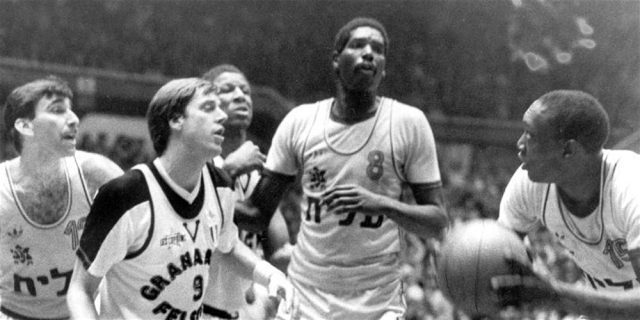
The closing night selection of the 2020 Israel Film Center Festival at the Marlene Meyerson JCC Manhattan, Dani Menkin’s Aulcie is returning November 16 at 7:00 for a special screening, followed by an in-person Q&A with Menkin. Israeli director Menkin followed up his 2016 documentary, On the Map, about Maccabi Elite Tel Aviv’s unlikely victory in the 1976-77 European Champions Cup, with this inside look into the life of one of its stars, Aulcie Perry. After being the last man cut from the New York Knicks in 1976, Newark native Perry was recruited to play for Maccabi in Israel, where the 6’10” black man — an unusual sight in the Land of Milk and Honey — quickly became a superstar, helping the team to championships, falling in love with top model Tami Ben Ami, and hanging out in hot clubs, living the high life. But it all came tumbling down in a haze of drugs, and Menkin traces Perry’s attempt to put it all back together, primarily by finding the daughter he has not seen since she was a baby.
The film is set up as Perry’s confession to that daughter, Cierra Musungay. “I always knew one thing: that I wanted to tell you my story, the way it is, with the good and the bad,” he says at the beginning of the documentary. “So where do I start? People say you start at the beginning. But I wanted to start at the end, or when I thought the end was coming.” He was inspired to track her down after facing a serious health scare. “I think, that only when I almost died, I started to really live. And that’s when I wanted to find you and, maybe in some ways, find myself,” he adds.
Writer, producer, and director Menkin goes back and forth between archival footage, animation by Assaf Zellner, and interviews with Aulcie’s sister Bernadine Lewis, his friends Wayne Tyre and Roy Young, his ex-girlfriend Juanita Jackson, his son Aulcie Perry Jr., and many men from his Maccabi family, including former teammates Earl Williams and Tal Brody, team president Shimon Mizrahi, co-owner Oudi Recanati, coach Zvi Sherf, and manager Shamluk Maharovsky, who was like a father to him. “In Israel, there wasn’t that much prejudice against Black players, and he felt at home here,” NBA commentator Simmy Reguer says. “Aulcie came in like a blessing from the gods,” fellow Jersey native and team captain Brody recalls. And Sports Illustrated writer Alexander Wolff explains, “At Maccabi Tel Aviv, Aulcie Perry was Michael Jordan, Kareem Abdul-Jabbar rolled into one.”
Now seventy-one, Perry is honest and forthright throughout, admitting his failings and wanting to make up for lost time. He offers no excuses for his precipitous fall, and he’s not seeking sympathy. He’s a man who made mistakes and wants a chance to set things right. Aulcie is a cautionary tale of redemption with heart and soul, focusing on the need to be part of a family, no matter how different and unexpected it may be.
Matthew Heineman’s The First Wave closes the 2021 DOC NYC festival
DOC NYC 2021
In-person: November 10-19, $19 per screening
Online: November 11-28, $12 per screening
IFC Center, 323 Sixth Ave. at West Third St.
Cinépolis Chelsea, 260 West Twenty-Third St. between Seventh & Eighth Aves.
SVA Theatre, 333 West Twenty-Third St. between Seventh & Eighth Aves. www.docnyc.net
The twelfth annual DOC NYC festival emerges from the pandemic with a hybrid collection of more than two hundred films and events that offer an alternative to the continuing rash of fake news and truthiness found on cable and social media. Of course, documentarians have their own agendas as well, but they lean strongly in favor of highlighting important issues through facts and celebrating legitimate feats accomplished through individual determination, both public and private.
This year’s sections include “Coming of Age,” “Fight the Power,” “Luminaries,” “Personal Journeys,” “Sonic Cinema,” and “Focus: Journalists,” covering more than seventy themes, from Food & Wine, History, and Music to Activism, Outsiders, and War & Conflict. The 2021 Lifetime Achievement Award winners are cameraperson, cinematographer, and director Joan Churchill (Gimme Shelter,Aileen: Life and Death of a Serial Killer,Shut Up & Sing) and Raoul Peck (Fatal Assistance,Moloch Tropical,I Am Not Your Negro).
Sam Pollard and Rex Miller’s Citizen Ashe is the centerpiece selection of this year’s DOC NYC fest
Among the many portraits are explorations of such figures as entertainer and Rat Packer Dean Martin, singer-songwriter Alanis Morissette, chef Julia Child, actress and filmmaker Adrienne Shelly, singer Dionne Warwick, cartoonist Spain Rodriguez, undersea explorer Jacques Cousteau, restaurateur and TV host Anthony Bourdain, rapper DMX, actress Selma Blair, basketball star Kevin Garnett, and author Kurt Vonnegut, with works by such luminaries as Stanley Nelson, Liz Garbus, Eva Orner, Alison Klayman, Jon Alpert, Andrea Arnold, and Todd Haynes.
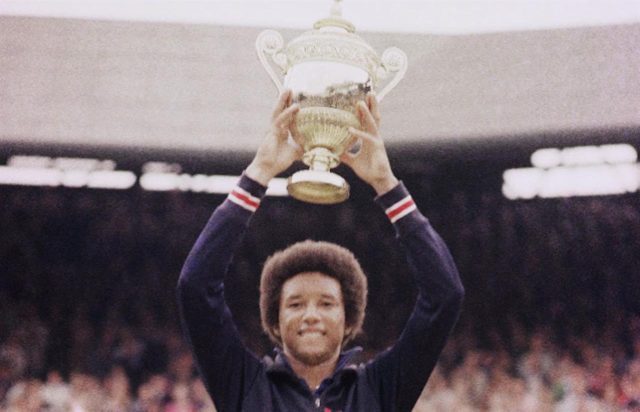
The festival opens with Penny Lane’s Listening to Kenny G, with director and subject participating in a postscreening discussion; the centerpiece is the New York City premiere of Sam Pollard and Rex Miller’s Citizen Ashe, a look at tennis great and activist Arthur Ashe, with Matthew Heineman’s The First Wave, about the beginning of the pandemic in New York City’s hospitals, the closing-night selection. Keep watching this space for more recommendations and capsule reviews as the festival continues, both in person at the IFC Center, Cinépolis Chelsea, and the SVA Theatre and online.
Todd Haynes will discuss his latest film at DOC NYC
THE VELVET UNDERGROUND (Todd Haynes, 2021)
IFC Center
Wednesday, November 10, 9:30 www.docnyc.net
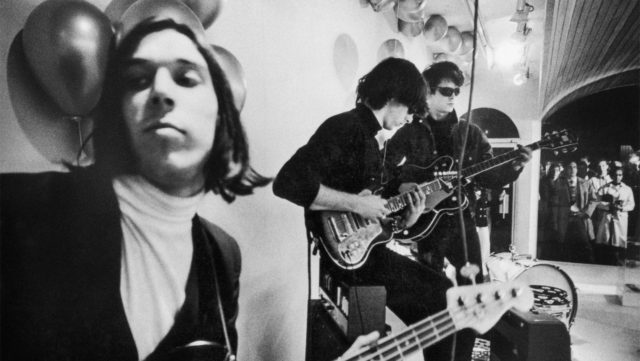
The Velvet Underground was more than just a music group; they electrified a generation, and continue to do so today, half a century later. Todd Haynes, whose 1998 Velvet Goldmine was set in the world of glam rock and whose 2007 I’m Not There explored the career of Bob Dylan through six characters and a nonlinear narrative, now turns his attention to the true story behind the Velvets. Haynes details the history of the band by delving into leaders John Cale and Lou Reed’s initial meeting, the formation of the Primitives with conceptual artists Tony Conrad and Walter DeMaria, and the transformation into the seminal VU lineup at the Factory under Pop icon Andy Warhol’s guidance: singer-songwriter-guitarist Reed, Welsh experimental composer and multi-instrumentalist Cale, guitarist Sterling Morrison, drummer Maureen Tucker, and German vocalist Nico. Much of Haynes’s documentary focuses on Warhol’s position in helping develop and promote the Velvets. “Andy was extraordinary, and I honestly don’t think these things could have occurred without Andy,” Reed, who died in 2013, says. Haynes will be at the IFC Center to introduce the November 10 screening.
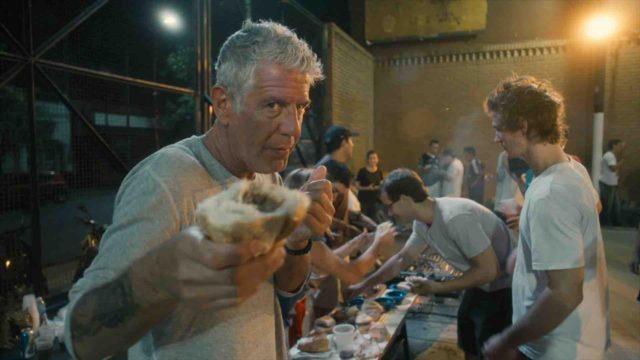
The life and career of Anthony Bourdain is explored in Roadrunner
ROADRUNNER: A FILM ABOUT ANTHONY BOURDAIN (Morgan Neville, 2021)
IFC Center
Thursday, November 11, 9:45 www.docnyc.net
Director Morgan Neville goes behind the scenes to share the story of beloved restaurateur and TV show host Anthony Bourdain in Roadrunner. Neville, whose previous films include The Cool School,20 Feet from Stardom, and Won’t You Be Neighbor?, will be at IFC to introduce the November 11 screening.
Two Minnesota high school teams battle it out in Tommy Haines’s Hockeyland
There’s the Stanley Cup playoffs for the NHL pros and the Frozen Four for the NCAA Men’s Ice Hockey Championship, but Tommy Haines focuses on a pair of rival Minnesota high school teams, the underdog Eveleth-Gilbert Golden Bears and the far more successful Hermantown Hawks, as they prepare to perhaps meet in the playoffs. Haines follows the very different approach of the two coaches, delves into the lives of the teams’ best players, talks to the parents, and goes inside the locker rooms as the teenagers balance education with the game and their future. The film contains lots of good hockey action, along with intimate moments as injuries occur and pro scouts come to watch. The November 13 screening will be followed by a Q&A with Haines, producers JT Haines and Andrew Sherburne, cinematographer Benjamin Handler, and film subjects Elliot Van Orsdel, Indio Dowd, and members of their families.
Fatima Shaik searches for a critical piece of family history in The Bengali
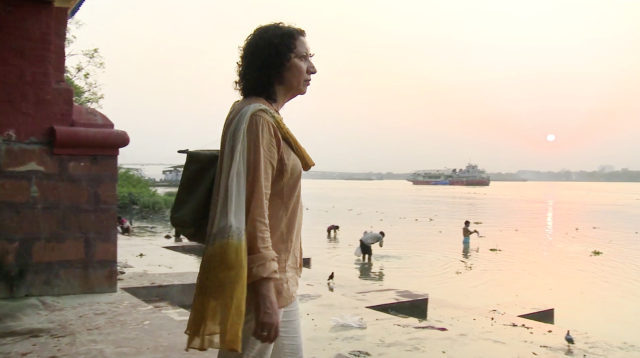
“Why would anybody come from the other side of the world to find somebody who doesn’t even exist anymore?” author Fatima Shaik says at the beginning of The Bengali. “Why not?” asks director Kavery Kaul. Armed with a partial ship’s registry and a photograph of her grandfather, Shaik Mohamed Musa, who left his small village in India in 1893 to make a new life in the United States, in New Orleans, where he married a Black woman, Fatima travels to her ancestral country, wanting to know more about where she came from and to see a patch of land that he owned. Joined by Kaul, who is Bengali, and cinematographer John Russell Foster, who is white, they have very little information and face roadblock after roadblock until success is in reach, but everywhere she goes, Fatima is met with resistance, as Indians view her with suspicion, thinking that she, a Christian in a Muslim community, might be there to reclaim her grandfather’s land. The Bengali is an emotional, deeply personal search for identity, almost to the point of obsession, of seeking out one’s family history in a land where you don’t speak the language and are not immediately welcome. The November 13 New York City premiere at IFC will be followed by a Q&A with Kaul and producer Lucas Groth.
UNITED STATES vs. REALITY WINNER (Sonia Kennebeck, 2021)
Saturday, November 13, IFC Center, 9:50
Monday, November 15, Cinépolis Chelsea, 4:15 www.docnyc.net www.codebreakerfilms.com
The Broadway play Is This a Room is a verbatim re-creation of the FBI’s interrogation of Reality Winner, an Air Force veteran who was suspected of leaking classified documents. Award-winning documentarian Sonia Kennebeck, whose previous films include Enemies of the State, about a family under siege when their hacker son gets into serious trouble with the government, and National Bird, which revealed the devastating story of the military personnel pushing the buttons in America’s drone war, now goes behind the scenes to tell what really happened with Winner, the Intercept, and other parties involved in the complex situation. The November 13 and 15 screenings will be followed by a Q&A with Kennebeck, the latter moderated by Jo Livingstone of the New Republic.
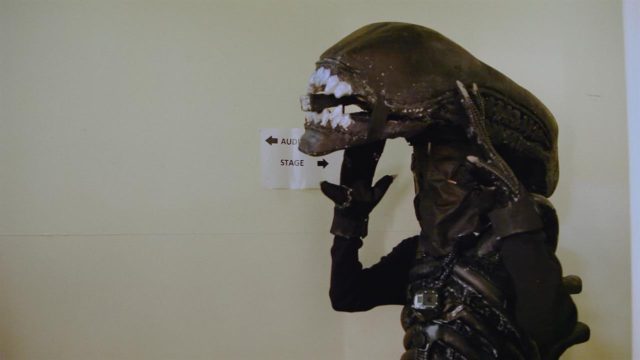
An amateur British theater group consisting of bus drivers, engineers, and dispatchers adapt a Ridley Scott classic in Alien on Stage
In 2015, a group of bus drivers, engineers, and dispatchers in Dorset, England, banded together to put on an amateur theatrical adaptation of Ridley Scott’s Alien a benefit for the Allendale Community Centre and the Guillain-Barré Syndrome Charity. Calling themselves Paranoid Dramatics, the men and women took a DIY approach, creating the costumes and special effects from scratch and learning their lines to the best of their abilities. After seeing the show, Danielle Kummer and Lucy Harvey became obsessed with it and decided to document the play’s surprising move to London’s West End. The result is an extremely fun film about human ingenuity against all odds; just as Ripley had to face the monster, will this group survive as opening night approaches? And will Scott be there to cheer them on? The November 14 and 15 screenings will be followed by a Q&A with Kummer.
An eleven-year-old blind boy seeks to become a board game champ in Go through the Dark
GO THROUGH THE DARK (Yunhong Pu, 2021)
Cinépolis Chelsea
Saturday, November 13, 7:10
Tuesday, November 16, 9:30 www.docnyc.net www.instagram.com
First-time filmmaker Yunhong Pu serves as director, producer (with Jean Tsien), cinematographer, editor, and publicist for the subtly captivating Go through the Dark. Yunhong travels with eleven-year-old Guanglin Xu, a blind Chinese boy who has a remarkable affinity for Go, which might be the world’s oldest board game, as he participates in competitions and seeks special coaching far away. He is being raised by a single father who adores him but might not always understand what is best for his son. As father and child meet more people, new options arise for Guanglin, who does not know how to ask for what he truly wants and needs. The game Go involves turning over small, circular black and white stones, but there’s nothing black-and-white about this unique and moving story. Yunhong will participate in Q&As at the November 13 and 16 screenings.
Gary Oldman has a lot to say about Eadweard Muybridge’s photos and personal life in stirring documentary
EXPOSING MUYBRIDGE (Marc Shaffer, 2021)
Saturday, November 13, IFC Center, 7:05
Monday, November 15, Cinépolis Chelsea, 2:00 www.docnyc.net www.muybridgethemovie.com
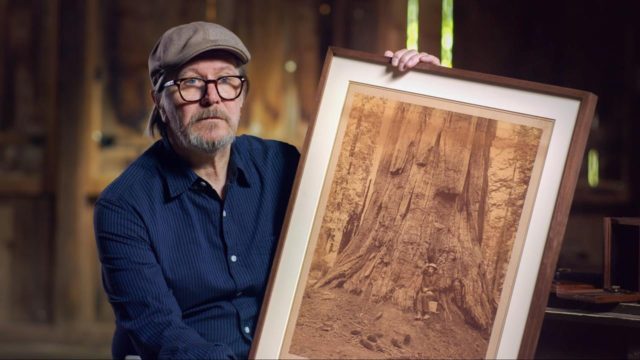
English photographer Eadweard Muybridge is most well known for taking some of the earliest, most influential pictures in the history of the art form (and sometimes animating them), including The Horse in Motion, his shots of redwoods in Yosemite, and his plates of nude men and women walking, running, and stepping over plates. But writer, director, and producer Marc Shaffer focuses on Muybridge’s bizarre life as well as his photography in the documentary Exposing Muybridge, highlighting an existence filled with murder, betrayal, naked ambition, legal and political wheeling and dealing, alchemy, and immense talent and ingenuity. Among those sharing their thoughts about Muybridge are actor and collector Gary Oldman, who must play the photographer in the eventual film, and author Rebecca Gowers, who is related to the man Muybridge killed. The sordid doings grow more and more intriguing as Shaffer cuts between the speakers, archival photographs and letters, and dozens of Muybridge’s pictures. My only quibble with the film is that I was hoping to learn the proper way to pronounce the photographer’s chosen surname (he was born Edward James Muggeridge), but not everyone in the film says “Muybridge” the same way. The November 13 and 15 screenings will be followed by a Q&A with Shaffer.
ASCENSION (Jessica Kingdon, 2021)
Cinépolis Chelsea
260 West Twenty-Third St. between Seventh & Eighth Aves.
Tuesday, November 16, 4:15
Thursday, November 18, 4:45 www.docnyc.net/film/ascension ascensiondocumentary.com
Jessica Kingdon’s Ascension is one of the most beautifully photographed documentaries you’re ever likely to see. Evoking the mesmerizing visual style of such photographers as Andreas Gursky, Edward Burtynsky, and Jeff Wall, director, editor, and producer Kingdon and producer and cinematographer Nathan Truesdell, who rarely moves his camera, explore Xi Jinping’s promise of the Chinese Dream, what the leader calls “the great rejuvenation of the Chinese people,” in a three-part film about capitalism and consumption, poverty and wealth in China. The biracial Chinese American Kingdon first explores the job market, as men and women in outdoor booths shout out hourly wages, responsibilities, and housing opportunities to those in need of work, who are then shown toiling in factories, sewing, plucking fowl, and building sex dolls.
In the second section, workers are indoctrinated into the company lifestyle, learning how to climb the ladder through very specific and often demeaning business etiquette; the film concludes by showing the luxuries success and wealth can bring. One of the most memorable shots in a film filled with them is of a glamorous young woman being photographed at a seaside resort as a worker, unnoticed by the model and photographer, tends to a lush green lawn; the differences between her posh bag and chapeau and his garbage bag and straw hat, his face hidden as hers pouts for the camera, speak volumes. Featuring a pulsating score by Dan Deacon, Ascension might be specifically about China, but it also relates to what is happening in America today, particularly with the current supply chain issues as so many workers decided not to return to work as the pandemic lockdown lifted while income inequality continues to grow at obscene levels. The November 16 screening will be followed by a Q&A with Kingdon.