Special FIAF program looks at new book and exhibition about Christian Dior
Who: Marie-France Pochna, Matthew Yokobosky What: Discussion about new book and art exhibition on Christian Dior Where:FIAF Skyroom and online, 22 East 60th St. between Park & Madison Aves. When: Thursday, January 13, online or in person, $25, 7:00 Why: “Women have instinctively understood that I dream of making them not only more beautiful but also happier,” fashion revolutionary Christian Dior once said. If you didn’t get tickets for the special scent tour the Brooklyn Museum is hosting on January 19 in conjunction with its exhibition “Christian Dior: Designer of Dreams,” you can still get a behind-the-scenes taste of the popular show with the January 13 FIAF Talk between Marie-France Pochna and Matthew Yokobosky, “Dreaming of Dior,” taking place in person at the French Institute Alliance Française’s Skyroom and online. Pochna is the author of the new book Christian Dior: Destiny: The Authorized Biography (Rizzoli, October 2021, $35), which includes the above quote, while Yokobosky, the senior curator of Fashion and Material Culture at the museum, collaborated with Denver Art Museum curator Florence Müller on the exhibit, which continues in Brooklyn through February 20. Depending on the nature of the omicron variant, the discussion will be followed by a Q&A and book signing.
Berlin-based composer and sound artist Dorit Chrysler ingeniously activates MoMA’s “Alexander Calder: Modern from the Start” exhibition with “Calder Plays Theremin,” a gorgeous eight-minute suite, “Written for Theremin Orchestra in Four Movements.” Invented by Russian-Soviet Leon Theremin around 1920, the theremin is an electronic instrument that creates music without touch, from being in close proximity to a moving object, usually a human hand. Chrysler, cofounder of the NY Theremin Society, set up four theremins (Moog, Hobbs, Moog Etherwave, and Claravox Centennial) to interact with two of Calder’s kinetic mobiles, the gentle 1948 Snow Flurry, I, which hangs from the ceiling in the corner of the third floor surrounded by three large-scale black sheet steel works, including 1959’s Black Widow, and the significantly heavier 1945 Man-Eater with Pennants, which sits in the Abby Aldrich Rockefeller Sculpture Garden, across the street from Theremin’s 1930s studio. Chrysler also incorporates a Moog Model 15 analog synthesizer to pay tribute to the first concert to use that instrument, performed in 1969 by Robert Moog in the sculpture garden.
Working with effects producer Rachael Guma, sonic consultant Joe McGinty, filming director Michael Tyburski, cinematographer Eric Teti, and sound recordist Daniel Neumann, Chrysler collected audio from the movement of the sculptures, whether from the blowing of the wind outdoors or a hair dryer inside. The final composition consists of four sections, “Embrace,” “Fractals,” “Brute,” and “Mesmerism,” that form a narrative as the sculptures and the theremins meet each other, engage in a dialogue, and face conflict, leading to a finale in which the other Calder sculptures become spectators.
“Alexander Calder himself really spawned the idea,” Chrysler tells associate curator Cara Manes in a MoMA interview. “When I was first invited by the Calder Foundation to visit their New York offices, I found myself surrounded by many of the artist’s large-scale works. Calder’s mobiles have strong character and personality and I envisioned them instantly as active performers. The technology of theremins allows for sound production through moving objects, so it made sense to me having a moving mobile play a theremin. The potential of the intricate movements of some of Calder’s sculptures translated into microtonal sounds seemed very exciting. Placing a theremin instrument within its calibrated range close enough to moving elements of Calder’s sculpture should make this possible. What would happen? What would it sound like? It felt like this exploration of a musical dialogue between two modernist masters of sculpture and music, through their creations, demanded to be heard.”
“Alexander Calder: Modern from the Start” continues through January 15, featuring approximately seventy works from throughout the career of MoMA’s unofficial “house artist,” from wire sculptures and drawings to painted sculptural reliefs and jewelry, supplemented with photographs and other archival material.
Who: Works by and/or featuring Moko Fukuyama, Joshua William Gelb, Gabrielle Hamilton, Jace, Elmore James, Jamal Josef, Katie Rose McLaughlin, Sara Mearns, Zaire Michel, Zalman Mlotek, Alicia Hall Moran, Patrick Page, Barbara Pollack, Seth David Radwell, Jamar Roberts, Tracy Sallows, Xavier F. Salomon, Janae Snyder-Stewart, Mfoniso Udofia, Anne Verhallen What:This Week in New York twentieth anniversary celebration Where:This Week in New York YouTube When: Original air date: Saturday, May 22, free with RSVP, 7:00 (now available on demand) Why: In April 2001, I found myself suddenly jobless when a relatively new Silicon Alley company that had made big promises took an unexpected hit. I took my meager two weeks’ severance pay and spent fourteen days wandering through New York City, going to museums, film festivals, parks, and tourist attractions. I compiled my experiences into an email I sent to about fifty friends, rating each of the things I had done. My sister’s husband enthusiastically demanded that I keep doing this, and This Week in New York was born.
Affectionately known as twi-ny (twhy-nee), it became a website in 2005 and soon was being read by tens of thousands of people around the globe. I covered a vast array of events – some fifteen thousand over the years – that required people to leave their homes and apartments and take advantage of everything the greatest city in the world had to offer. From the very start, I ventured into nooks and crannies to find the real New York, not just frequenting well-known venues but seeking out the weird and wild, the unusual and the strange.
For my tenth anniversary, we packed Fontana’s, a now-defunct club on the Lower East Side, and had live music, book readings, and a comics presentation. I had been considering something bigger for twenty when the pandemic lockdown hit and lasted longer than we all thought possible.
At first, I didn’t know what twi-ny’s future would be, with nowhere for anyone to go. But the arts community reacted quickly, as incredible dance, music, art, theater, opera, film, and hybrid offerings began appearing on numerous platforms; the innovation and ingenuity blew me away. The winners of twi-ny’s Pandemic Awards give you a good idea of the wide range of things I covered; you can check out part one here and part two here. (Part III is now up as well.)
I devoured everything I could, from experimental dance-theater in a closet and interactive shows over the phone and through the mail to all-star Zoom reunion readings and an immersive, multisensory play that arrived at my door in a box. Many of them dealt with the fear, isolation, and loneliness that have been so pervasive during the Covid-19 crisis while also celebrating hope, beauty, and resilience. I’ve watched, reviewed, and previewed more than a thousand events created since March 2020, viewing them from the same computer where I work at my full-time job in children’s publishing.
Just as companies are deciding the future hybrid nature of employment, the arts community is wrestling with in-person and online presentations. As the lockdown ends and performance venues open their doors, some online productions will go away, but others are likely to continue, benefiting from a reach that now goes beyond their local area and stretches across the continents.
On May 22 at 7:00, “twi-ny at twenty,” produced and edited by Michael D. Drucker of Delusions International and coproduced by Ellen Scordato, twi-ny’s business manager and muse, honors some of the best events of the past fourteen months, including dance, theater, opera, art, music, and literature, all of which can be enjoyed for free from the friendly confines of your couch. There is no registration fee, and the party will be available online for several weeks. You can find more information here.
Please let me know what you think in the live chat, which I will be hosting throughout the premiere, and be sure to say hello to other twi-ny fans and share your own favorite virtual shows.
Thanks for coming along on this unpredictable twenty-year adventure; I can’t wait to see you all online and, soon, in real life. Here’s to the next twenty!
Who: Def Leppard, Noel Gallagher, Simon Le Bon and John Taylor, Living Colour, Evan Rachel Wood, Rob Thomas, Gary Oldman, Walk the Moon, Jake Wesley Rogers, Ricky Gervais, Gail Ann Dorsey, Bernard Fowler, Judith Hill, Earl Slick, Charlie Sexton, Joe Sumner, more What: Annual birthday party for David Bowie Where:RollingLiveStudios.com When: Saturday, January 8, $25, 9:00 (available through January 16) Why: January 8, 2022, would have been David Bowie’s seventy-fifth birthday. Rolling Live Studios will again host an online celebration featuring performances and special appearances from a wide range of artists to honor the Thin White Duke, who passed away on January 10, 2016, at the age of sixty-nine. Among the participants are Def Leppard, Noel Gallagher, Simon Le Bon and John Taylor from Duran Duran, Living Colour, Evan Rachel Wood, Brian Henson, Rob Thomas, Gary Oldman, Ricky Gervais, Gail Ann Dorsey, and Bernard Fowler — who tore up the joint at last year’s party — covering tunes from throughout Bowie’s extraordinary career. There will also be a tribute to the thirty-fifth anniversary of Labyrinth, Jim Henson’s sci-fi puppet flick in which Bowie played Jareth, the king of the goblins; Bowie wrote five songs for the film: “Underground,” “Magic Dance,” “Chilly Down,” “As the World Falls Down,” and “Within You.”
The house band will include Earl Slick, Charlie Sexton, Alan Childs, Steve Elson, Mark Guiliana, Omar Hakim, Stan Harrison, Tim Lefebvre, Gerry Leonard, and Carmine Rojas. “It’s an honor to be able to continue to share David Bowie’s music with the world,” event organizer and longtime Bowie pianist Mike Garson said in a statement. “I’m excited for everyone to be able to experience this very special show we’ve got in store in celebration of what would have been David’s seventy-fifth birthday, with the bandmates he recorded and performed with, plus a great group of guest artists who he was such an influence to.” The show is dedicated to photographer Mick Rock, “the Man Who Shot the ’70s,” who died this past November in Staten Island at the age of seventy-two. Tickets are $25, with various bundles including merch and a virtual Q&A ranging from $30 to $5,000; $$2 from each purchase will benefit Save the Children, which Bowie raised money for at this fiftieth-birthday concert at Madison Square Garden on January 9, 1997.
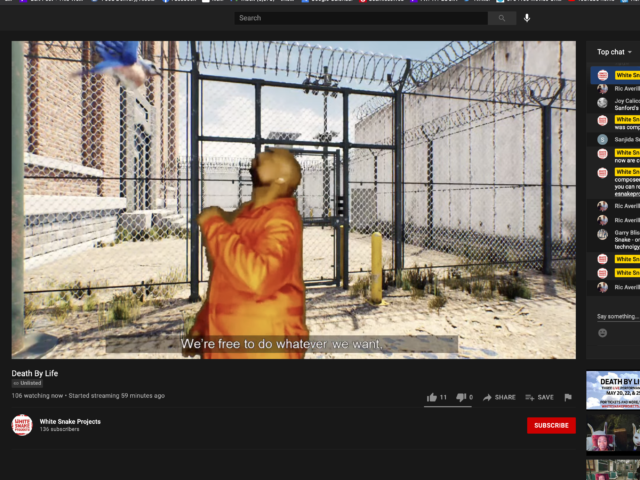
White Snake Projects’ Death by Life: A Digital Opera in One Act redefined what live online opera could be
On July 4, 2020, I published Part I of the twi-ny Pandemic Awards, hoping that it would be the first of hopefully only two such postings celebrating the amazing innovation and creativity in dance, film, theater, food, opera, art, literature, music, and other forms of entertainment made online since March 2020.
As the pandemic lockdown proceeded, I followed that up with Part II on January 1, 2021. And now, a year later, comes the third — and final — edition of twi-ny’s Pandemic Awards, honoring the best, and most unusual, online presentations of 2021. To see some of the video highlights from March 2020 through last May, check out the “twi-ny at twenty” anniversary gala here.
Even as the omicron variant tears through New York City and the world, entertainment venues are back open, and more people are visiting museums, theaters, sports venues, and other forms of indoor and outdoor entertainment. Meanwhile, there is still much happening exclusively online. This Week in New York will continue to track virtual and hybrid productions of all kinds from across the globe, in addition to live performances happening in the five boroughs, so keep following this space for the best, and the worst, in live and recorded in-person and virtual events.
Happy 2022 to all — may you and your friends, family, and loved ones stay safe and healthy!
BEST FUTURISTIC PLAY
Edward Einhorn’s Alma Baya, Untitled Theater Company No. 61, A.R.T./New York. Edward Einhorn delves into isolation and living in pods in this in-person/online show about what might happen next.
BEST IMMERSIVE HISTORICAL DRAMA
Arlekin Players Theatre, Witness. Igor Golyak uses Arlekin’s Zero Gravity Lab to place viewers aboard the MS St. Louis in this interactive exploration of antisemitism.
BEST SHORT PLAY SERIES BY ONE PLAYWRIGHT
Steppenwolf Now, “Three Short Plays by Tracy Letts”:Night Safari, The Old Country, The Stretch. Steppenwolf did exemplary online work during the pandemic lockdown, including this triple crown of short one-acts by Tracy Letts, featuring Rainn Wilson, Letts, and William Petersen and Mike Nussbaum voicing puppets in a diner.
BEST GIFT ACCOMPANYING AN ONLINE PLAY
Third Rail Projects, Return the Moon. Immersive site-specific theater experts Third Rail Projects sent viewers a package including an exquisite little cut-paper diorama in conjunction with its interactive virtual show.
BEST FILMED OUTDOOR PLAY
Amy Berryman’s Walden, TheaterWorks Hartford. Twin sisters and an Earth Advocate argue over the future of the planet in Amy Berryman’s superb play about loss, loneliness, and reconnection, filmed in front of a socially distanced live audience in the woods by the Connecticut River.
BEST ZOOM PLAY TAKING PLACE ON ZOOM
Jake Shore’s Adjust the Procedure, Spin Cycle and JCS Theater Company. Zoom fatigue had not quite settled in yet when Jake Shore’s play about a university facing a crisis over the course of several Zoom meetings was released.
BEST USE OF LIVE CHAT IN A PLAY
Arlekin Players Theatre, chekhovOS /an experimental game/. The audience gets to vote on which Chekhov play Arlekin will perform, then argue in the chat about anything they want, including the quality of the production itself, with administrators encouraging all responses.
BEST ACTOR
Jason Alexander, Rob Ulin’s Judgment Day, Barrington Stage Company; Wendy Wasserstein’s The Sisters Rosensweig, Spotlight on Plays. Jason Alexander was a riot in two virtual readings, as a greedy lawyer whose life is changed by a near-death experience in Judgment Day, which had an encore streaming in July, and as Mervyn Kant in Sisters, playing to his home camera with effusive glee.
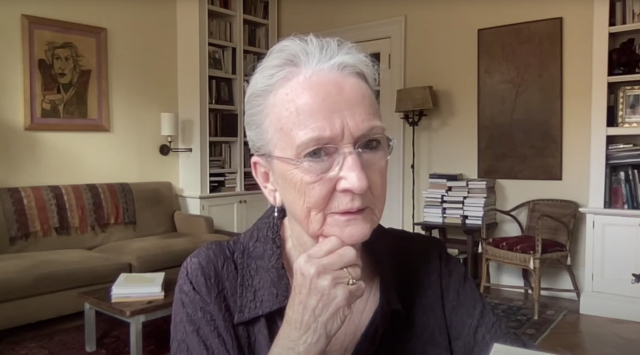
Kathleen Chalfant elegantly performs Joan Didion’s The Year of Magical Thinking for Keen Company benefit
BEST ACTRESS
Kathleen Chalfant, Joan Didion’s The Year of Magical Thinking, Keen Company; Karen Malpede’s Blue Valiant, Theatre Three Collaborative. Theater treasure Kathleen Chalfant read directly from the published book of Joan Didion’s poignant memoir with an exquisite elegance, performed from her home, lending it a mesmerizing intimacy. She went outside for Blue Valiant, a play about a horse and a mother’s relationship with her daughter that was written by Karen Malpede specifically for Chalfant, who was lovely acting alongside George Bartenieff as pianist Arthur Rosen gave life to the horse in an unusual way.
BEST ACTRESS IN A FILMED PLAY ON A STAGE
Charlayne Woodard, The Garden, Baltimore Center Stage. Charlayne Woodard, who presented a stellar online version of her one-woman show Neat for MTC, returned to the stage for her two-character play The Garden, in which she and Caroline Stefanie Clay starred as a daughter and a mother trying to reconnect after a series of tragic events.
BEST SUPPORTING ACTRESS IN A VIRTUAL PLAY
Elizabeth Heflin, Michael Gotch’s Tiny House, Westport Country Playhouse. Elizabeth Heflin was wonderful as a cynical mother visiting her daughter and her environmental-nut husband in the mountains on the Fourth of July, as fireworks fly.
BEST PLAYWRIGHT FINALLY GETTING HER DUE
Adrienne Kennedy, “The Work of Adrienne Kennedy: Inspiration & Influence,” Round House Theatre / McCarter Theatre Center. If you didn’t know much about hugely influential playwright Adrienne Kennedy, Round House Theatre and McCarter Theatre Center changed that with excellent virtual productions of He Brought Her Heart Back in a Box, Sleep Deprivation Chamber, Ohio State Murders, and Etta and Ella on the Upper West Side, along with a series of online discussions celebrating the now-ninety-year-old experimental legend.
BEST NONTHEATRICAL INDOOR LOCATION FOR A PLAY
Sharon Karmazin’s home, George Street Playhouse. George Street board member Sharon Karmazin generously turned over her house to the New Jersey company for excellent virtual filmed productions of Theresa Rebeck’s Bad Dates and Becky Mode’s Fully Committed, allowing each one-person show to shine.
BEST OLD-FASHIONED RADIO PLAY
Lucille Fletcher’s 1943 Sorry, Wrong Number, Keen Company. Keen Company made it feel like you were listening to the radio in 1943 with its audio production of while Lucille Fletcher’s Sorry, Wrong Number, in which Marsha Mason thinks she has overheard a murder plot and desperately wants to stop the potential killing.
BEST ILLUSTRATED SHORT PLAY
Rajiv Joseph’s Red Folder, Steppenwolf Now. Carrie Coon narrates Rajiv Joseph’s devilishly clever and insightful short Red Folder, a kind of graphic novel come to life about being different.
BEST PLAY FILMED WITH AN AUDIENCE
Ryan J. Haddad’s Hi, Are You Single?, Woolly Mammoth Theatre Company. Ryan J. Haddad’s autobiographical one-man show was recorded in front of a small, socially distanced audience of crew members at Woolly Mammoth; the moment when he is joined onstage by a man wearing a mask was as alarming as it was invigorating.
BEST PLAY ABOUT PARANOIA X the Experience. Aaron Salazar and Jason Veasey’s interactive online show casts the viewer as a trainee for the mysterious conglomerate known as WE, which appears to disdain individuality in favor of a faceless collective, touching a nerve as vaccines started promising an eventual return to normalcy.
BEST SCIENTIFIC PLAY
Jake Broder’s UnRavelled. This virtual collaboration between the Global Brain Health Institute and Trinity College Dublin told the true story of a doctor who started channeling composer Maurice Ravel through extraordinary paintings that had her husband worried about her mental stability; the play was accompanied by a discussion featuring the doctor who treated her.
BEST USE OF SOCIAL MEDIA IN A PLAY
The Javaad Alipoor Company’s Rich Kids: A History of Shopping Malls in Tehran. Javaad Alipoor and Peyvand Sadeghian used Instagram Live to relate the true story of a 2015 fatal car accident in Tehran, going backward in time to explore government corruption, unchecked capitalism, climate change, and the impact social media has on the younger generation.
BEST SOCIAL DISTANCING IN A PLAY
Mike Bartlett’s Cock, Studio Theatre; Kelli Goff’s The Glorious World of Crowns, Kinks and Curls, Baltimore Center Stage. As companies started filming theatrical productions back on their stages, without an audience, they still kept the actors apart from one another, which was done intuitively in Mike Bartlett’s Cock and Kelli Goff’s The Glorious World of Crowns, Kinks and Curls, both of which are structured to involve touch and physical closeness.
STRANGEST ONLINE PLAY Sloppy Bonnie: A Roadkill Musical (for the Modern Chick!), No Puppet Co., OZ Arts. Leah Lowe, Krista Knight, and Barry Brinegar add goofy cartoonish animation to the online version of this full-tilt campy musical about a road trip that leaves dead bodies in its wake, filmed live in front of a Nashville audience that can’t know what fun we are having watching it at home.
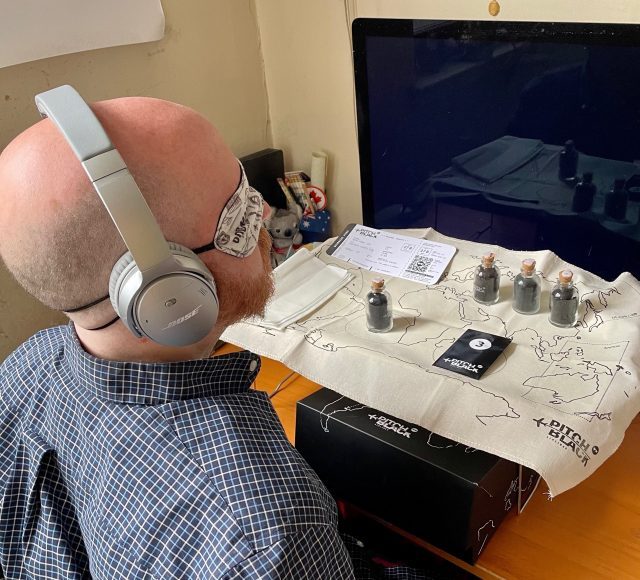
Odd Man Out offers a theatrical journey in a box to be experienced at home (photo by twi-ny/ees)
BEST AT-HOME INTERACTIVE EXPERIENCE
Martín Bondone’s Odd Man Out, Teatro Ciego and theatreC. Writer Martín Bondone and codirectors Carlos Armesto and Facundo Bogarín’s immersive memory play arrives at your home in a box containing elements for four of the senses as you listen on headphones while blindfolded, following the story of a blind musician returning to Argentina.
BEST COMEDY FILMED ON A STAGE
Terrence McNally’s It’s Only a Play, George Street Playhouse. After presenting two excellent online solo shows, Bad Dates and Fully Committed, filmed in a board member’s home, George Street Playhouse returned to its New Jersey stage for a stellar rendition of Terrence McNally’s hysterical comedy about theater that had me laughing out lout time and time again.
BEST SURPRISE ENDING OF A VIRTUAL PLAY
Christopher Chen’s Communion, American Conservatory Theater (A.C.T.). It would be unfair to reveal what Stacy Ross tells us at the conclusion of Christopher Chen’s online, interactive Zoom show, which comes complete with breakout rooms and is skillfully directed by Tony winner Pam MacKinnon.
BEST REVIVAL SERIES
MTC’s Curtain Call, The Niceties,Three Days of Rain,The Past Is the Past,Neat. Manhattan Theatre Club looked back in presenting virtual versions of past productions, in most cases reuniting the original casts, including the late Lisa Banes and Jordan Boatman in Eleanor Burgess’s The Niceties, about an allegation of racism at a prestigious university, as well as Patricia Clarkson, John Slattery, and Bradley Whitford in Richard Greenberg’s family mystery Three Days of Rain and Charlayne Woodard re-creating her one-woman autobiographical show Neat.
BEST MUSICAL FILMED ON A STAGE
Heather Christian’s Animal Wisdom, Woolly Mammoth and San Francisco’s American Conservatory Theater. Heather Christian reimagined her 2017 show, Animal Wisdom, for online viewing, recording it with her band onstage at DC’s Woolly Mammoth, incorporating aspects of the pandemic while Christian faces ghosts from her past.
BEST SITE-SPECIFIC INDOOR FILMED MUSICAL
Jason Robert Brown’s The Last Five Years, Out of the Box Theatrics, Holmdel Theatre Company, and Blair Russell. Jason Michael Webb’s adaptation of Jason Robert Brown’s 2001 two-character sung-through musical about the end and beginning and end of a relationship follows Nasia Thomas and Nicholas Edwards through a cramped New York City apartment as concepts of time and space are obliterated.
BEST REIMAGINING OF A ONE-WOMAN PLAY
Studio Theatre, Dael Orlandersmith’s Until the Flood. Studio Theatre associate artistic director Reginald L. Douglas reimagines Dael Orlandersmith’s gripping one-woman show about the police killing of Michael Brown as a piece for three Black women actors of different ages, who portray multiple characters as they move about the empty DC theater.
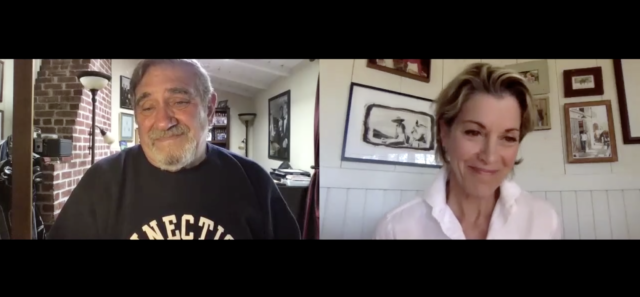
Dan Lauria and Wendie Malick are warm and welcoming in Sitting and Talking
BEST TWO-CHARACTER ZOOM PLAY ABOUT CONNECTING
Lia Romeo’s Sitting and Talking, Miles Square Theatre. Dan Lauria and Wendie Malick are delightful as two older single people attempting to connect through online dating, trying to dig themselves out of the loneliness they are both experiencing, and not just because of the pandemic.
BEST SOLO SHAKESPEARE PLAY
Patrick Page, All the Devils Are Here: How Shakespeare Invented the Villain, Shakespeare Theatre Company. Patrick Page gives a master class in Shakespeare, focusing on his many villains in this triumphant one-person show filmed onstage at STC.
BEST PODCAST PLAYS
Wallace Shawn’s Grasses of a Thousand Colors and The Designated Mourner, Gideon Media. The original casts of these two prescient plays by Wallace Shawn reunited for outstanding audio versions, with Julie Hagerty, Jennifer Tilly, Emily Cass McDonnell, Deborah Eisenberg, and Larry Pine joining Shawn.
BEST ONLINE FILM FESTIVAL DOC NYC 2021. The twelfth annual DOC NYC festival went hybrid, presenting more than two hundred films online and in theaters that look at where we are as a society today, in the midst of a pandemic that has killed more than five million people around the world, including several important films about Covid-19 and how we have responded to it.
BEST INTERACTIVE FILM Republique, the Interactive Movie. Created by director Simon Bouisson and writer Olivier Demangel, Republique puts the viewer in control of the action, choosing which of several unfolding scenes to watch during a terrorist attack in the Paris Metro.
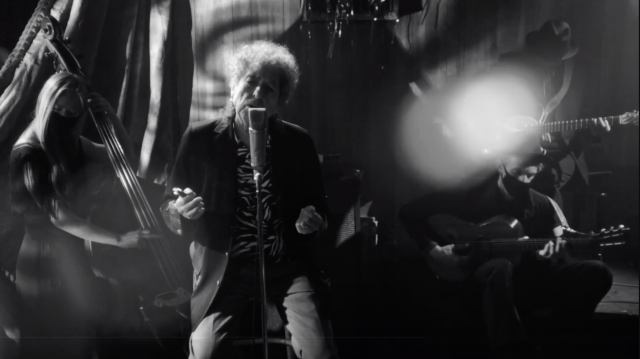
Bob Dylan’s bizarre Shadow Kingdom delighted and confounded fans
BEST INCOMPREHENSIBLE MUSIC PRESENTATION Shadow Kingdom: The Early Songs of Bob Dylan. Leave it to the enigma that is Bob Dylan to present a virtual production that had fans wondering whether any of it was recorded live, as microphones hid Dylan’s mouth throughout and the unidentified masked musicians might or might not have been actually playing their instruments; the lively chat ranged from angry fans wanting their money back to devotees proclaiming it was the best twenty-five bucks they had spent during the pandemic.
BEST DUET
Dorit Chrysler and Alexander Calder, “Calder Plays Theremin,” Museum of Modern Art. Berlin-based composer and sound artist Dorit Chrysler activated two works in MoMA’s “Alexander Calder: Modern from the Start” exhibition by using four theremins and a Moog Model 15 analog synthesizer to create a gorgeous eight-minute suite in four movements.
BEST BIRTHDAY TRIBUTE TO A LATE ROCK STAR “A Bowie Celebration: Just for One Day!,” Rolling Live Studios. Pianist Mike Garson transformed the annual David Bowie birthday tribute into a superstar online event, with Bowie songs performed by such Bowie acolytes as Yungblud, Michael C. Hall, Ian Hunter, Anna Calvi, Boy George, Trent Reznor, Perry Farrell, Macy Gray, Adam Lambert, Andra Day, Duran Duran, Peter Frampton, David Sanborn, Rick Wakeman, Ian Astbury, William Corgan, Gary Oldman, Gavin Rossdale, Joe Elliott, Bernard Fowler, Corey Glover, and Catherine Russell, among others.
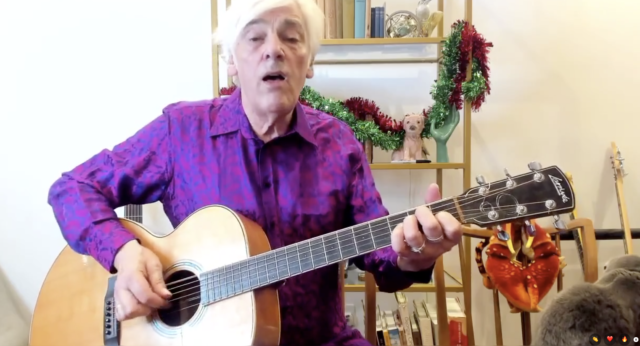
Robyn Hitchcock played a series of home gigs in Nashville and London, joined by his partner and pets (including Perry the lobster)
BEST INFORMAL AT-HOME MUSIC SERIES
Robyn Hitchcock, Live from Tubby’s House. Taking a page out of British raconteur Richard Thompson’s book, who performed living-room concerts from his Jersey home with his partner, singer-songwriter Zara Phillips, fellow British raconteur Robyn Hitchcock performed a series of home concerts from Nashville and London over Mandolin and StageIt, accompanied by his wife, singer-songwriter Emma Swift, her pup Daphne, and their beloved cats, Ringo Baez and Tubby Grossman, a follow-up to their 2020 Live from Sweet Home Quarantine shows.
BEST INDOOR DANCE FILMED ON A STAGE
Yin Yue Dance Company, Ripple, 92nd St. Y. Harkness Promise Award recipient Yin Yue’s Ripple, filmed live in front of an audience at 92Y’s Kaufmann Concert Hall, was a gorgeously flowing multipart work that was followed by a fascinating talk with the company.
BEST OUTDOOR DANCE FILMED ON A STAGE STREB Extreme Action, Jacob’s Pillow. Elizabeth Streb and her Extreme Action team returned to Jacob’s Pillow for the first time in twenty years, presenting twelve repertory works filmed live on the outdoor stage in front of an audience, with Streb offering commentary between pieces, an excellent aperitif to the company’s stirring live show at Manhattan West.
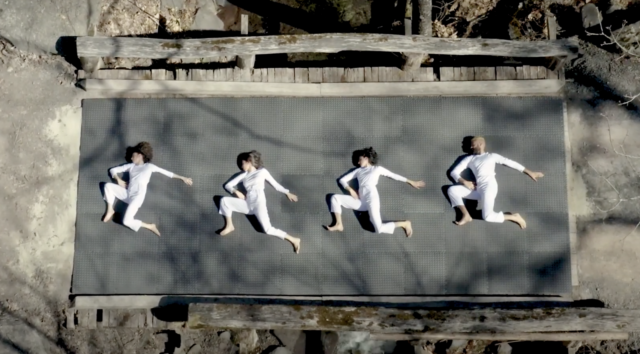
Stephen Petronio Co. remimagines Trisha Brown’s Group Primary Accumulation for its digital Joyce season
BEST OUTDOOR DANCE NOT ON A STAGE
Stephen Petronio Company, Accumulation, Joyce Digital Season. As part of its digital season at the Joyce, Stephen Petronio continued his Bloodlines program, in which he interprets seminal works by important choreographers, with a mesmerizing outdoor mixed-gender performance of Trisha Brown’s Group Primary Accumulation, filmed from high above, as if the four dancers are just another part of the natural world.
BEST DANCE ABOUT EMERGING FROM LOCKDOWN
Stefanie Batten Bland, Kolonial, Baryshnikov Arts Center. For her BAC digital commission, Stefanie Batten Bland contributed the filmed piece Kolonial, in which she and six other dancers try to burst out of a trapped isolation.
BEST ONLINE DANCE FESTIVAL “WOMEN / CREATE! A Virtual Festival of Dance,” New York Live Arts. The ninth annual “WOMEN / CREATE!” festival went digital with impressive works by Karole Armitage, Meagan King, Sidra Bell, Jennifer Muller, Tatiana Desardouin, and Jacqulyn Buglisi, followed by a rousing discussion.
BEST BALLET FILMED ONSTAGE
George Balanchine’s Emeralds, San Francisco Ballet. I let out a gasp as the curtain rose on San Francisco Ballet’s glorious version of George Balanchine’s Emeralds, the most dancers I had seen onstage together since the pandemic lockdown had started, and then gasped over and over again at the beautiful production, with stunning costumes and spectacular movement.
BEST ONLINE ART PROGRAM
David Zwirner, Program; Hauser & Wirth, .Philip Guston: On Edge. David Zwirner’s all-day online symposium featured discussions with artists, critics, curators, filmmakers, designers, and others, including Barry Jenkins, Hilton Als, Emily Bode, and Peter Schjeldahl, along with visits to Zwirner galleries around the world. Meanwhile, in conjunction with its superb exhibition “Philip Guston 1969-1979,” Hauser & Wirth hosted “Philip Guston: On Edge,” a symposium at the SVA Theatre that included William Kentridge responding to Guston’s The Studio as well as other strong presentations by Trenton Doyle Hancock and Rachel Rossin and conversations with Charles Gaines, Art Spiegelman, Max Hollein, Massimiliano Gioni, George Condo, Katy Siegel, Randy Kennedy, and Jasmine Wahi.
BEST ART MEDITATION
Pace Gallery, Monday Meditation at the Rothko Chapel. Pace offered a lovely opportunity to reflect on life from wherever you were while watching a peaceful shot inside Houston’s nondenominational Rothko Chapel as part of its fiftieth anniversary.
BEST ONLINE ARTS DISCUSSION SERIES
The New Museum, “Grief and Grievance: Art and Mourning in America.” Even if you weren’t ready yet to venture into arts institutions, the New Museum supplemented its outstanding “Grief and Grievance” exhibition with a series of talks with more than a dozen of the participating artists, all of which are still available online for free.
BEST LIVESTREAMED OPERA
White Snake Projects, Death by Life: A Digital Opera in One Act and A Survivor’s Odyssey: The Journey of Penelope and Circe. Cerise Lim Jacobs’s activist opera company, White Snake Projects, continued its inspiring, barrier-breaking livestreamed digital presentations with Death by Life, which dealt with systemic racism and mass incarceration, and A Survivor’s Odyssey: The Journey of Penelope and Circe, an inventive take on Odysseus which places the power in the hands of the women characters.
BEST DIGITAL OPERA FILMS Opera Philadelphia,Soldier Songs, The Island We Made, We Need to Talk, Blessed, Save the Boys. Opera Philadelphia redefined what opera could be in an online world during the pandemic lockdown, presenting a series of spectacular filmed operas about loneliness, legacy, and personal identity in these hard times; The Island We Made contained some of the most stunning visuals of the year.
Audience members take photos of themselves using props sent to their home in The Wandering
BEST PARTICIPATORY OPERA The Wandering, Actor and curator Calista Small, baritone and actor Jeremy Weiss, designer Charlotte McCurdy, theater artist Christine Shaw, filmmaker Lara Panah-Izadi, and animator Zach Bell took a unique look at the life of Austrian composer Franz Schubert in a multipart, multidisciplinary immersive production that included props sent to the at-home audience.
BEST OPERA MINISERIES
Boston Lyric Opera, Desert In. Boston Lyric Opera’s Desert In is a tantalizing and titillating eight-part soap opera that combines loss and loneliness with the supernatural, with Justin Vivian Bond as the lounge singer, Jon Orsini as the son, Jesus Garcia as Rufus, Edward Nelson as his new husband, Ion, Alan Pingarrón as Federico, Isabel Leonard as Cass, and Talise Trevigne as Sunny, all delighting in the delicious dastardly doings.
MOST ADVENTUROUS OPERA ADAPTATION
Boston Lyric Opera / Operabox.tv, The Fall of the House of Usher. Director James Darrah’s inventive virtual adaptation of Philip Glass and Arthur Yorinks’s 1988 opera, The Fall of the House of Usher, combined puppets, stop-motion animation, the refugee crisis, and a mysterious host in retelling Edgar Allan Poe’s classic tale of the demise of a once-prominent family.
Uncle Floyd is back with Tuesday night watch parties of clips from old episodes
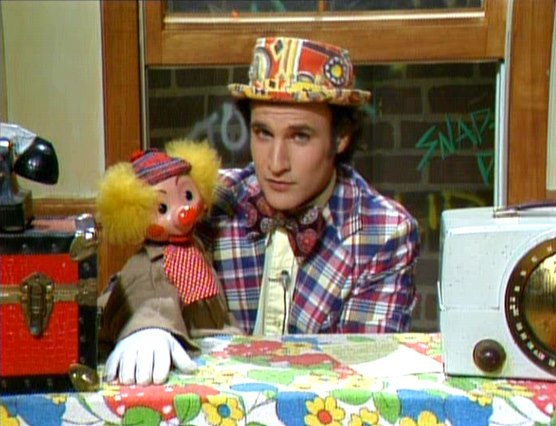
BEST VIRTUAL TV WATCH PARTY This Was the Uncle Floyd Show. David Bowie, John Lennon, Iggy Pop, Paul Simon, and the Ramones were among the fans of The Uncle Floyd Show, a faux-kiddie program that ran on various outlets, from local cable access channels to NBC, from 1974 to 1998, a supremely low-budget panoply of improvised sketches, music parodies, beloved puppets, and appearances by internationally renowned rock stars; the shows were never rerun and will never be available on DVD, so Floyd and his right-hand man, Scott Gordon, are hosting fifty-minute livestreamed clip compilations over StageIt hosted by tech Luddite Uncle Floyd Vivino himself, with a rousing, worshipful chat featuring longtime fans and some of the original cast and crew members. Snap it, pal!!
Kang (Lee Kang-sheng) is tired of being isolated in Tsai Ming-liang’s Days
CURATORS’ CHOICE 2021
Museum of the Moving Image
35th Ave. at 36th St., Astoria
Through January 16, $15
718-777-6800 movingimage.us
After canceling its 2020 iteration because of the pandemic lockdown, the Museum of the Moving Image’s annual Curators’ Choice series is back with eighteen of the best films of 2021, plus one streaming series, screening in the Redstone Theater through January 16. The works run the gamut from musicals, animation, Westerns, and thrillers to existential dramas, romances, and tragedies, from well-known hits to less-familiar international fare. While some of the films are available online, most can be seen only in theaters, so this is a great chance to catch such films as The Power of the Dog,The Mitchells vs. the Machines, and Summer of Soul with an audience on the big screen, the way they were meant to be seen. And if you don’t have Amazon Prime, get ready to be blown away by Barry Jenkins’s ten-part The Underground Railroad, a harrowing adaptation of the award-winning book by Colson Whitehead. Keep watching this space for more reviews of many of the below films.
Monday, December 27
WHAT DO WE SEE WHEN WE LOOK AT THE SKY (Alexandre Koberidze, 2021), 4:00
Tuesday, December 28
THE MITCHELLS VS. THE MACHINES (Mike Rianda & Jeff Rowe, 2021), 1:00
PREPARATIONS TO BE TOGETHER FOR AN UNKNOWN PERIOD OF TIME (FELKÉSZÜLÉS MEGHATÁROZATLAN IDEIG TARTÓ EGYÜTTLÉTRE) (Lili Horvát, 2020)
Tuesday, December 28, 4:00 greenwichentertainment.com
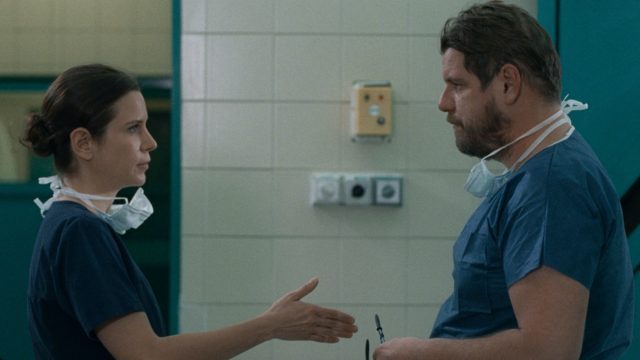
Hungary’s official submission for the 2020 Academy Awards, Lili Horvát’s sophomore film, Preparations to Be Together for an Unknown Period of Time, is a kind of neo-noir psychological thriller in which a neurosurgeon sacrifices just about everything in order to pursue a romance that might not even be real. Dr. Márta Vizy (Natasa Stork) has arranged a rendezvous with Dr. János Drexler (Viktor Bodó), who she met at a medical conference in New Jersey a month before, but when he doesn’t show up, she tracks him down and he acts like he doesn’t know her.
Sure that he is her true love, Márta, a single woman about to turn forty who has made a successful life for herself in New Jersey, decides to leave her job and move back to Budapest, accepting a position that is well beneath her, at a hospital where she has to supply herself with her own toilet paper, in order to be close to János and convince him that they should be together. As János continues to claim they’ve never met, Márta starts doubting her sanity. When her therapist asks her, “What do you think about this?” she answers, “That I’ve lost my mind. That I wanted this so badly that I made the whole thing up. And that I’ve filled in every detail so even I believed it happened.” Meanwhile, Alex (Benett Vilmányi), a medical student whose father Márta is treating, is pursuing her, sure that she is the one for him.
Dr. Márta Vizy (Natasa Stork) is obsessed with Dr. János Drexler (Viktor Bodó) in Hungarian neo-noir thriller
Preparations is a gripping tale of obsession and love as Horvát (The Wednesday Child) delves into what humans tell themselves when they want to believe something, how far they will go to persuade themselves what they need. Márta is a brilliant neurosurgeon with a magic touch, able to go into patients’ brains to restore sight, hearing, speech, and balance, but she is unable to diagnose her own situation. (Or is she?)
Stork is exceptional as Márta; Horvát regularly zooms in on her face and eyes as she searches within herself for the truth. Márta is unsteady the way many of us can be unsteady; she doubts herself the way we can doubt ourselves even when refusing to believe that we might be wrong. Preparations is a tense, slow-paced mystery that also features one of the most charming scenes of the year, involving a surprising and unique walk on the way to an unexpected ending.
Wednesday, December 29
BERGMAN ISLAND (Mia Hansen-Løve, 2021), 4:00
An average family take off on an unexpectedly adventurous road trip in The Mitchells vs the Machines
THE MITCHELLS VS THE MACHINES (Mike Rianda & Jeff Rowe, 2021)
Wednesday, December 29, and Thursday, December 30, 1:00 www.netflix.com
“It’s almost like stealing people’s data and giving it to a hyperintelligent AI as part of an unregulated tech monopoly was a bad thing,” computer genius Mark Bowman (voiced by Eric André) says incredulously in Mike Rianda and Jeff Rowe’s animated film, The Mitchells vs the Machines, about how one average family tries to save the world from a robot apocalypse. Originally titled Connected prior to the pandemic, the movie is set in modern times, as burgeoning filmmaker Katie Mitchell (Abbi Jacobson) gets ready for her freshman year at college. To make up for a fight they had, her father, technology luddite Rick (Danny McBride), decides to drive Katie cross-country to school as a bonding trip, joined by her mother, Linda (Maya Rudolph), her younger brother, the dinosaur-obsessed Aaron (Rianda), and their hapless dog, Monchi (Doug the Pug).
While they’re out on the road, Dr. Bowman, the ruthless dude behind PAL Labs, has released its latest product, robots that will replace its virtual AI assistant, PAL (Olivia Colman), a takeoff on Alexa/Siri. But PAL is not happy about being tossed in the trash, so she has reprogrammed the robots to capture every human being and launch them into space forever. With the help of two damaged robots, Deborahbot 5000 (Fred Armisen) and his buddy, Eric (Beck Bennett), the Mitchells must find a way to trigger the robots’ kill code before it’s too late.
Exciting and fun, The Mitchells vs the Machines is kind of an alternate take on the 2004 Pixar hit The Incredibles, although the Mitchells are not exactly superheroes; they’re just your basic family, with plenty of their own problems. In fact, they’re jealous of their neighbors, the Poseys (Chrissy Teigen, John Legend, and Charlyne Yi), who appear to be everything they’re not. Traveling in their filthy burnt orange 1993 Sensible station wagon, the Mitchells spend more time arguing than coming together, until they have no choice if they want to survive as they face not only PAL and the evil robots but also their own fears and worries — as well as an army of Furbies. “Most action heroes have a lot of strengths,” Katie narrates. “My family only has weaknesses.” But even weaknesses can be turned into strengths in the right situations.
Thursday, December 30
BENEDETTA (Paul Verhoeven, 2021), 4:00
Friday, December 31
THE UNDERGROUND RAILROAD: THE COMPLETE SERIES (Chapters 1–5) (Barry Jenkins, 2021), 12:30
Saturday, January 1
THE UNDERGROUND RAILROAD: THE COMPLETE SERIES (Chapters 6–10) (Barry Jenkins, 2021), 12:30
THE SOUVENIR PART II (Joanna Hogg, 2021), 6:30
Paula Beer stars as the mysterious title character in Christian Petzold’s award-winning Undine (photo by Christian Schulz)
Master German writer-director Christian Petzold (Phoenix, Barbara) gives a unique contemporary twist to a classic European fairy tale in Undine. The less you know about the original myth the better, but let’s just say it involves a water nymph, romance, betrayal, and death.
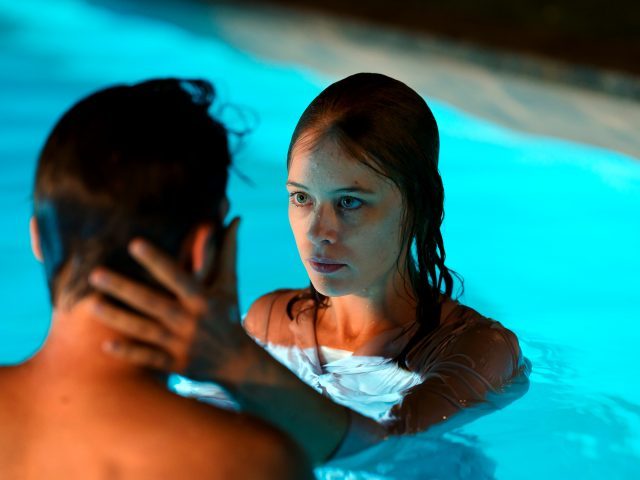
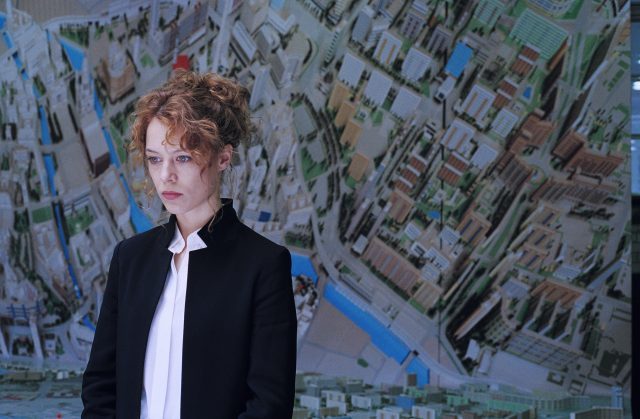
Paula Beer was named Best Actress at the Berlin International Film Festival and at the European Film Awards for her powerful performance as Undine Wibeau, a historian who gives architectural tours of expansive, heavily detailed models of the past, present, and future of Berlin for the Senate Administration for Urban Development. Early on, when her boyfriend, Johannes (Jacob Matschenz), tells her that he is in love with another woman, Nora (Julia Franz Richter), Undine sternly says, “If you leave me, I’ll have to kill you.” There is no reason to doubt her.
Distressed by the situation, she is standing uneasily in a café, looking at an aquarium filled with colorful fish and a small statue of a diver when Christoph (Franz Rogowski), who just attended one of her talks, hesitantly approaches her and offers praise for the lecture. An accident shatters the glass of the aquarium and Undine and Christoph are knocked to the ground, drenched in water. As the fish squirm for life on the floor, Undine and Christoph instantly fall in love. “I’m usually under water,” Christoph, an industrial diver, says to her. German romanticism and French Impressionism mix with magical realism and a revenge thriller as Christoph and Undine run around together, reveling in their love until another accident results in serious trouble.
Undine (Paula Beer) is an architectural historian who is drawn to water in myth-based drama
Among the distinguished writers and composers who have told their own versions of the story of Undine are Friedrich de la Motte Fouqué, Oscar Wilde, E. T. A. Hoffman, Edgar Allan Poe, Sergei Prokofiev, Hans Christian Andersen, Seamus Heaney, Claude Debussy, and DC Comics. Audrey Hepburn won a Tony for her performance as the title character in Jean Giraudoux’s Ondine on Broadway in 1954. In 2010, Neil Jordan’s Ondine, coincidentally also released on June 4, starred Colin Farrell as a fisherman who catches a woman known as Ondine (Alicja Bachleda) who has a special connection with water.
Water is central to Petzold’s film, from the aquarium to Christoph’s job to Johannes’s pool. Berlin itself was built on a swamp, adding relevance to Undine’s architectural lectures, in which she explains that the name of the city means “dry place in the marsh.” When she is searching for Johannes, she goes into the men’s bathroom and one of the faucets is dripping, the noise echoing down an empty hallway. When Johannes wants to go away with Undine, he tries to lure her by mentioning he’s booked the room they like “overlooking the pond.” Much of the film takes place underwater, with the actors in and out of their scuba gear, beautifully filmed by cameraman Sascha Mieke. (Unfortunately, the giant catfish is animated.) Hans Fromm is the aboveground cinematographer, lushly capturing the streets of Berlin as well as the forest surrounding the lake where Christoph works with Monika (Maryam Zaree) and Jochen (Rafael Stachowiak).
Beer and Rogowski have an intense chemistry that drives the film; they starred together in Petzold’s previous film, Transit, which deals with political refugees, stolen identity, and forbidden love, and are both magnetic here again, whether aboveground or below. The soundtrack’s theme features pianist Vikingur Ólafsson’s gorgeous, haunting rendition of Bach’s Concerto in D Minor, BWV 974 – 2. Adagio. “Everything is there in Johann Sebastian’s music: architectural perfection and profound emotion,” Ólafsson has said, which relates directly to Petzold’s film itself.
Sunday, January 2
BENEDETTA (Paul Verhoeven, 2021), 3:00
DAYS (Tsai Ming-liang, 2020), 6:00
Friday, January 7
THE FRENCH DISPATCH (Wes Anderson, 2021), 4:00 & 7:00
Saturday, January 8
ANNETTE (Leos Carax, 2021), 4:00
THE POWER OF THE DOG (Jane Campion, 2021), 7:00
Sunday, January 9
WHEEL OF FORTUNE AND FANTASY (Ryūsuke Hamaguchi, 2021), 1:00
Jessica Kingdon’s Ascension is one of the most beautifully photographed documentaries you’re ever likely to see. Evoking the mesmerizing visual style of such photographers as Andreas Gursky, Edward Burtynsky, and Jeff Wall, director, editor, and producer Kingdon and producer and cinematographer Nathan Truesdell, who rarely moves his camera, explore Xi Jinping’s promise of the Chinese Dream, what the leader calls “the great rejuvenation of the Chinese people,” in a three-part film about capitalism and consumption, poverty and wealth in China. The biracial Chinese American Kingdon first explores the job market, as men and women in outdoor booths shout out hourly wages, responsibilities, and housing opportunities to those in need of work, who are then shown toiling in factories, sewing, plucking fowl, and building sex dolls.
In the second section, workers are indoctrinated into the company lifestyle, learning how to climb the ladder through very specific and often demeaning business etiquette; the film concludes by showing the luxuries success and wealth can bring. One of the most memorable shots in a film filled with them is of a glamorous young woman being photographed at a seaside resort as a worker, unnoticed by the model and photographer, tends to a lush green lawn; the differences between her posh bag and chapeau and his garbage bag and straw hat, his face hidden as hers pouts for the camera, speak volumes. Featuring a pulsating score by Dan Deacon, Ascension might be specifically about China, but it also relates to what is happening in America today, particularly with the current supply chain issues as so many workers decided not to return to work as the pandemic lockdown lifted while income inequality continues to grow at obscene levels. The screening will be followed by a Q&A with Kingdon.
Tuesday, January 15
SUMMER OF SOUL (. . . OR, WHEN THE REVOLUTION COULD NOT BE TELEVISED) (Ahmir “Questlove” Thompson, 2021), 7:00
Sunday, January 16
RED ROCKET (Sean Baker, 2021), 3:30
Carrie Mae Weems’s “The Shape of Things” continues at the armory through December 31 (photo by Stephanie Berger Photography/Park Avenue Armory)
THE SHAPE OF THINGS
Park Ave. Armory
643 Park Ave. at Sixty-Seventh St.
Tuesday – Sunday through December 31, $18 www.armoryonpark.org carriemaeweems.net
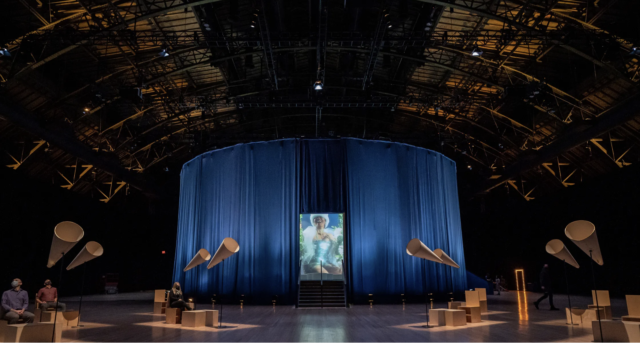
“How do we measure a life?” Carrie Mae Weems asks in her multichannel installation Cyclorama — Conditions, a Video in 7 Parts, the centerpiece of her Park Ave. Armory presentation “The Shape of Things.” Over footage of several women and one man, she asks, “Do we measure it by the forgotten / or by the remembered / by all the near misses and the exhaustion / or by the ability to endure / how / do we measure it by race / by class / by gender / by beauty / and by your lover’s love or your hater’s hate / or by pushing against the wind / against the tide / against family / against tradition / how / or do we measure it by the suffering of our friends and our enemies alike / or by the beginning / or by the end / by the way we confront life / or by the way we confront death?”
“The Shape of Things” is a masterful multidisciplinary examination of where we are today as a nation as we face systemic racism, health and income inequality, police brutality, and the perpetuation of the Big Lie. Through the seven sections of Cyclorama, organized in a large circle of screens, Weems mixes archival footage with new material shot in Syracuse, the Flea Theater, and the Watermill Center of such performers as Nona Hendryx, okwui okpokwasili, Vinson Fraley, Francesca Harper, Carl Hancock Rux, Basil Twist, and dozens of others, depicting modern times as a dangerous circus where Black and brown bodies are in constant threat. The final text is adapted from a commencement address Weems, a MacArthur Fellow, gave to the graduating class of SVA in May 2016 at Radio City Music Hall.
In front of Cyclorama is Seat or Stand and Speak, where attendees can sit in a chair or stand on a box and shout into megaphones. All Blue — A Contemplative Site is a dark space with a few steps leading to a door that opens to the moon and stars, a place of reflection, meditation, and hope. Across the way is Lincoln, Lonnie and Me, a 2012-14 work about presence and absence that is like a “Pepper’s Ghost” carnival sideshow with minstrel elements. Visitors enter an enclosed area bathed in red and stand behind a velvet rope, watching holographic-like projections of ghostly characters as we hear Blind Willie Johnson’s “Dark Was the Night, Cold Was the Ground”; Weems reads a revised version of the Gettysburg Address; visual artist and activist Lonnie Graham speaks on social change; excerpts from Weems’s 2008 video Constructing History: A Requiem to Mark the Moment play, including a reenactment of the assassination of President John F. Kennedy; and Weems dresses up as a Playboy bunny to Urge Overkill’s cover of Neil Diamond’s “Girl, You’ll Be a Woman Soon.”
The long side gallery features a row of several dioramas paying tribute to victims of racism, from It’s Over — A Diorama, consisting of a swan, candles, balloons, a globe, a fallen column, and photographs, to framed portraits from Weems’s “Missing Links” series from The Louisiana Project, in which she dresses up as various animals in suits, with such titles as “Happiness” and “Despair,” to The Weight, a diorama with three pink helium globes rising out of sculptures of African women’s heads, balancing the tenuous world. Also be on the lookout for a painting of Minerva, shown as a Black goddess, hanging in the hall among the portraits of white military heroes.
From December 9 to 11, dozens of performers activated the space, with live music and dance, film screenings, and panel discussions. But you don’t need others to help you activate the space for yourself as Weems places us firmly in the past, present, and future of an America that is getting more and more difficult to measure every day.