this week in lectures, signings, panel discussions, workshops, and Q&As

SPEER GOES TO HOLLYWOOD

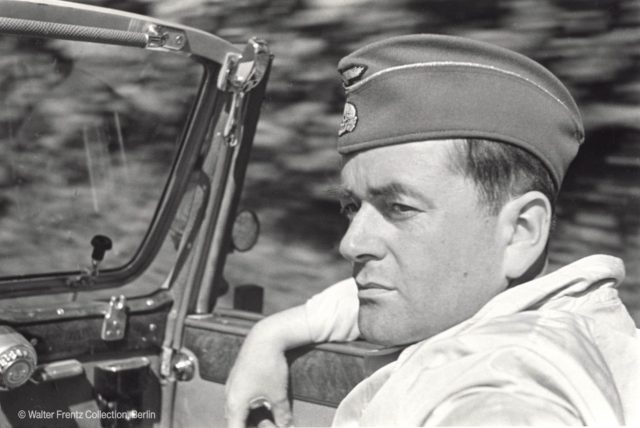
Nazi leader Albert Speer tries to whitewash history in Speer Goes to Hollywood

SPEER GOES TO HOLLYWOOD (Vanessa Lapa, 2021)
Film Forum
209 West Houston St.
Opens Friday, October 29
212-727-8110
filmforum.org
speergoestohollywood.com

In 2014, Belgium-born, Israel-based documentarian Vanessa Lapa made her feature-length debut with The Decent One, in which she painted a frightening portrait of Heinrich Himmler, using the private diary of the Reichsführer of the Schutzstaffel (Himmler’s official title). She has now followed that film with Speer Goes to Hollywood, which incorporates archival footage from the Nuremberg trials and clips from propaganda films accompanying forty hours of recordings made in 1971 by up-and-coming British screenwriter Andrew Birkin as he worked with convicted Nazi leader Albert Speer, known as Hitler’s Architect, collaborating on a screenplay for Paramount Pictures based on the former Reichsminister of Munitions’ bestselling memoir, Inside the Third Reich.

Birkin, the brother of model and actress Jane Birkin and whose mentors include Stanley Kubrick and Carol Reed, met with Speer in the latter’s country home in Heidelberg in the winter of 1971. Birkin kept the tape rolling as he and Speer carefully reviewed every scene in the screenplay, as Speer tries to whitewash many of the more outrageous and gruesome details regarding his culpability in the Nazis’ reign of terror while Birkin tries to not let him off the hook.

“I would be careful,” Reed (The Third Man, Oliver!) warns Birkin over the phone after reviewing the first draft of the script. “You can’t build without him knowing. The man holds his mind blank to that. This is not a sweet man.”

Tall and elegant, Speer seizes control of the narrative again and again, claiming to be a dreamer and making sure he is seen with his dog, as if he’s just a normal guy. “I want a private life too,” he opines. He considers war “an adventure” and the Nazi regime “just good fun” to downplay the piles of murdered bodies the Third Reich left in its wake. He refers to the tortured prisoners of war in factories and the concentration camps as workmen and laborers, making excuses that argue that the negative aspects of what the Nazis did have been exaggerated. “I did not know what crimes I’m committing,” he claims. He explains that the “camps were necessary” and blames his Labor Department head, Fritz Sauckel, for the mistreatment of the Jews and other captives under his watch. “I was not responsible for those things. It was him,” he points out.

All the while, Birkin attempts to convince himself that he is doing the right thing by sharing Speer’s story on film. “I’ve been saying all along that I find it easy to identify myself with you,” he tells Speer. “The only point where I think I would have opted out would have been if I had been present or if I witnessed a scene that involved children being carted off. Can you ever remember a situation where you either read about, or more probably heard about, children being separated up or families being torn apart? Anything. Can you ever remember anything that happened? Even if, at the time, you were able to rationalize it?” Speer says no, “But . . . Yes, well, but you know, small things are now seen as the center of a thing. But I’m sorry. It would be wrong to say now I had a sentimental reaction or so. Your idea of the film and of my person that I had any reaction is wrong.”

Speer talks about Himmler, Hermann Göring, and Joseph Goebbels and admits to being one of Hitler’s best friends — and still claims he did not know what was going on despite his heavy involvement with the Mathausen camp and his visit to Auschwitz. “Indirectly, I knew from Hitler that he was planning to annihilate the Jewish people. He said it quite often. But I had no direct knowledge until ’44.” Seeking to garner some sympathy, he says, “If ever I can get rid of the guilt, and quite often I was thinking that I never shall get rid of it, that this burden will ever last with me.”
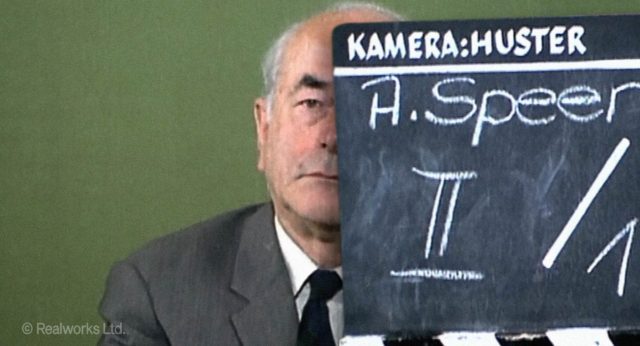
Albert Speer is profiled in new documentary built around revelatory footage

Birkin might want to give Speer the benefit of the doubt to some degree, but it’s hard for viewers to see anything but a twisted man who lacks empathy and compassion for his fellow human being, lording his sense of superiority over all others, trying to skirt his responsibilities during the war and rewrite history — a project that cannot help but make one reflect on the way America is these days when it comes to slavery, remembering the Holocaust, removing public statues of the founding fathers, tearing apart immigrant families at the border, and changing textbooks to present partisan views of the nation’s past.

Explaining one of Kubrick’s arguments, Birkin (The Name of the Rose, The Cement Garden) says the director told him, “I would find it very difficult to do the film if your character, the Speer in the film, you still made out that he didn’t know what was going on.” Speer just wanted a normal life, reveling in his being called “the good Nazi,” but as Lapa’s film shows, there is not a whole lot of good in him.

Winner of the Israeli Oscar for Best Documentary, Speer Goes to Hollywood is a chilling work that gets into the mind of one of the twentieth century’s most terrifying figures. Lapa and producer Tomer Eliav will be at Film Forum for the 7:00 shows on October 29 and 30 for Q&As that will dig even deeper into this extraordinary story.
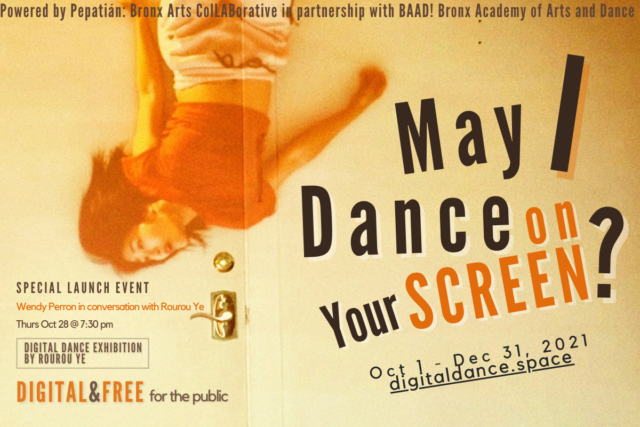
DANCING FUTURES: MAY I DANCE ON YOUR SCREEN? LIVE Q&A

Who: Rourou Ye, Wendy Perron
What: Virtual Q&A about online exhibition
Where: digitaldance.space
When: Thursday, October 28, free with RSVP, 7:30
Why: “When I returned to the dance studio again in April 2021, I felt weird,” multidisciplinary artist Rourou Ye said about working during the pandemic. “The studio was empty. Not only because there was no one else there but because it also lacked the characteristics and stories inherent to one’s surroundings. What can I do with this space? There was nothing I could play with, and it made me the center of attention. I was motionless. So I went back home to create dances through video.” On October 28 at 7:30, the Chinese-born, US-based artist, who incorporates dance, shadow puppetry, everyday objects, and multimedia technology into works that defy reality, will discuss her process with teacher, writer, dancer, choreographer, and Dance magazine editor at large Wendy Perron over Zoom.

They will be delving into Ye’s online exhibition, “May I Dance on Your Screen?,” which continues through December 31 with such dance films as Daydreaming (“How can I duplicate myself so I can have a dance companion?”), Dis/Placed, (“How can I appear in my collaborator’s space even though I’m physically in another location?”), and I Followed the Moon to the River, My Far-Flung Home (“It’s been so long since I’ve been home . . .”). The program is part of the seventh annual Dancing Futures: Artist and Mentor Collaborative Residency, which “offers emerging Bronx-based and/or dance artists of color with resources, performance opportunities, mentorship, and documentation to strengthen and shine a spotlight on the Bronx as a creative incubator of new dance and performance work.”

GODLIS MIAMI BOOK LAUNCH WITH DAVID GODLIS AND LUCY SANTE

Who: David Godlis, Lucy Sante
What: Book launch with live discussion
Where: Rizzoli Bookstore, 1133 Broadway between 25th & 26th Sts.
When: Thursday, October 28, free with advance RSVP, 6:00
Why: When last we saw photographer David Godlis, he was taking part in a November 2020 Rizzoli Zoom discussion with writer Luc Sante, Blondie cofounder and guitarist Chris Stein, and Reel Art Press music editor Dave Brolan, talking about Godlis Streets (Reel Art Press, $39.95), which features Godlis’s New York City and Boston street photography from the 1970s and ’80s. Some of us have also caught him in Lewie and Noah Kloster’s brand-new seven-minute documentary Shots in the Dark with David Godlis, in which the longtime official photographer of the New York Film Festival goes back to his CBGB days.

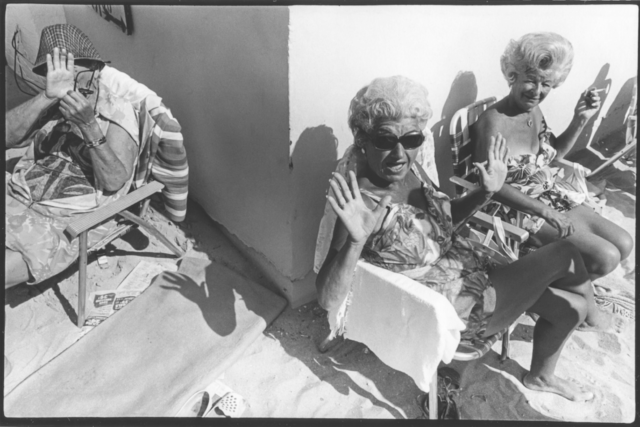
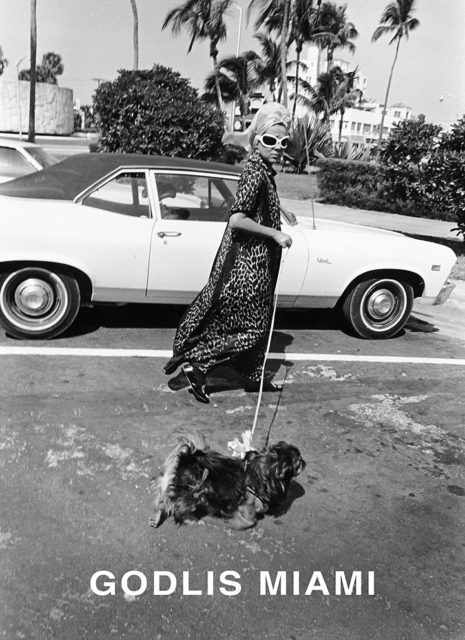
On October 28, Godlis will be at Rizzoli in person, joined by the recently transitioned Lucy Sante (Low Life, Kill All Your Darlings), for the launch of his newest book, Godlis Miami (Real Art Press, $39.95), comprising photos Godlis shot down south, capturing a part of South Beach that no longer exists.

David Godlis, Ladies in the Sun, Lummus Park (© GODLIS)

“I first went to Miami Beach when I was a kid in the 1950s,” he writes. “There are black and white snapshots of me sitting on the beach, wearing my Davy Crockett T-shirt, squinting under palm trees. My grandparents had retired there. For Jewish Eastern European immigrants, who had lived out their working life on the streets of New York City, retiring to sunshine, warm weather, beaches, and palm trees was a slice of heaven. For a kid visiting in the 1950s and early 1960s, it was like going to Jewish Disneyland. Goodbye, snow. Hello, coconuts. And so, when I returned to Miami Beach in 1974, with a camera, all these memories of Florida came flowing back to me. As I tripped the shutter over and over, taking pictures on those beaches I had walked upon as a little kid, everything clicked. Pun intended.”

Admission to the event is free with advance RSVP.

THE ROOF GARDEN COMMISSION: AS LONG AS THE SUN LASTS by ALEX DA CORTE

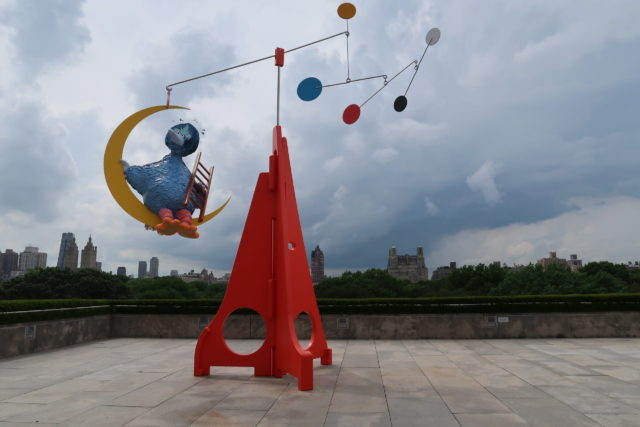
Big Bird rides on a crescent moon on Met roof (photo by twi-ny/mdr)

Who: Alex Da Corte, Shanay Jhaveri
What: In-person discussion of Alex Da Corte’s Roof Garden Commission
Where: The Grace Rainey Rogers Auditorium, the Met Fifth Avenue
When: Friday, October 29, free with museum admission and advance RSVP, 5:30 (installation on view through October 31)
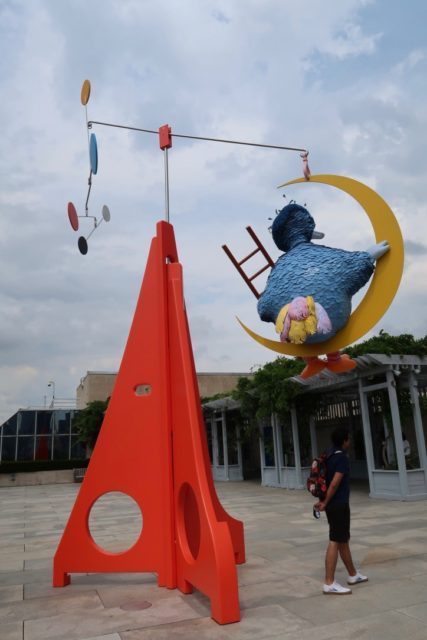
Why: In previous works, Camden-born, Philadelphia-based artist Alex Da Corte has embodied such famous real and fictional figures as Eminem, Mr. Rogers, and the Wicked Witch of the West. For his commission on the Met’s Iris and B. Gerald Cantor Roof Garden, As Long as the Sun Lasts, Da Corte took on the persona of Jim Henson in creating a work that melds childhood memories with visions of the endless sky, inspired by Alexander Calder’s mobiles and sculpture, Little Tikes plastic outdoor activity gyms, Donna Summer’s Four Seasons of Love album cover, the blue Garibaldo character from the Brazilian version of Sesame Street that he watched as a kid in Venezuela, the song from the 1985 movie Follow That Bird in which Big Bird gets painted blue, and the Italo Calvino titular short story.

Alex Da Corte’s As Long as the Sun Lasts continues through Halloween (photo by twi-ny/mdr)

The result is a playful and colorful kinetic sculpture that moves with the wind as Big Bird, covered in more than seven thousand handmade feathers, rides around on a crescent moon, holding on to a ladder of hope. Referring to his transformation into Henson, Da Corte says in a Met interview with curator Shanay Jhaveri, “It stems from thinking about characters I loved or didn’t understand and wanted to understand more. And I see Jim as quite a thoughtful maker.” For those who want to understand more about the installation, which is on view through October 31, Da Corte — likely in costume as Henson — and Jhaveri will sit down for another talk, in the Grace Rainey Rogers Auditorium at the Met on October 29 at 5:30.

GHOSTFOLK

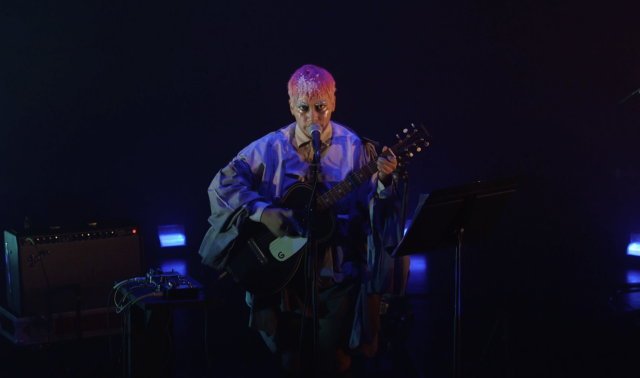
River L. Ramirez will discuss their latest project, GhostFolk, in a live BAC Zoom talk

Who: River L. Ramirez, Lou Tides, Sarah Galdes, Morgan Bassichis
What: Streaming performance and live virtual discussion
Where: Baryshnikov Arts Center online
When: Live Zoom discussion October 26, free with RSVP, 7:00; performance available on demand through November 1 at 5:00, free
Why: “This is a piece about life and living and celebrating the innate ability that we all have here on Earth to love, even if there’s nothing to love sometimes, even if it’s just for you, even if it’s, you know, a feeling that’s kind of cavernous and feels so lonely,” River L. Ramirez says in their introduction to the virtual piece GhostFolk, streaming for free from the Baryshnikov Arts Center through November 1. In the forty-minute work, the Queens-based musician and comedian plays guitar and tells stories in a contemporary song cycle that explores everyday life, joined by Teeny Lieberson/Lou Tides on bass and background vocals and Sarah Galdes on drums, looking like a hip Halloween trio, with costumes by Peter Smith, makeup by Angelo Balassone, and spooky lighting by Devin Cameron. “A new day begins,” Ramirez declares in the first tune.

Over the course of forty minutes, they explore quarantine, read personal poems, find the face of Jesus in a plantain, call for babies to help us out of the mess we’re in, search for what’s next, explain that trolls are real, scream and screech, and listen to an animated frog as, occasionally, a figure in a sheet with holes dances in solitude. GhostFolk was filmed and edited by Tatyana Tenenbaum at BAC’s Jerome Robbins Theater; Tenenbaum, a star of the pandemic lockdown, has also shot such BAC works as Landrover and Holland Andrews’s Museum of Calm. On October 26 at 7:00, Ramirez, whose social media name is Pile of Tears and who used to do standup as Lorelei Ramirez, will discuss GhostFolk and more with comedian Morgan Bassichis in a live Zoom Q&A.

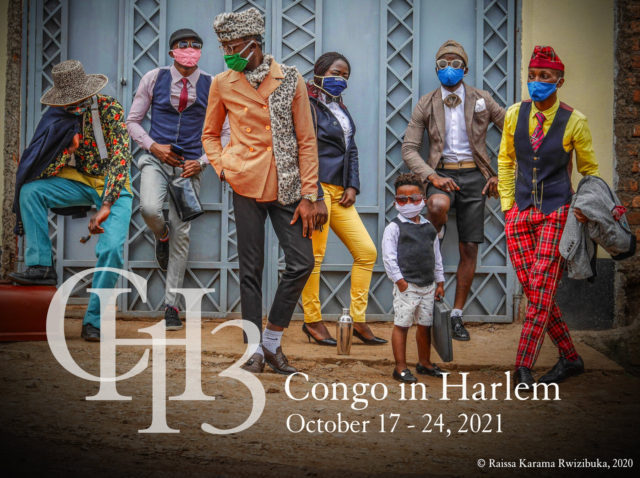
CONGO WEEK: CONGO IN HARLEM 13

Who: Lebert Sandy Bethune, Herb Boyd, Milton Allimadi, Lubangi Muniania, more
What: Thirteenth annual Congo in Harlem festival
Where: Maysles Documentary Center, 343 Lenox Ave. / Malcolm X Blvd. between 127th and 128th Sts.
When: Saturday, October 23, and Sunday, October 24, $12 (virtual screenings free)
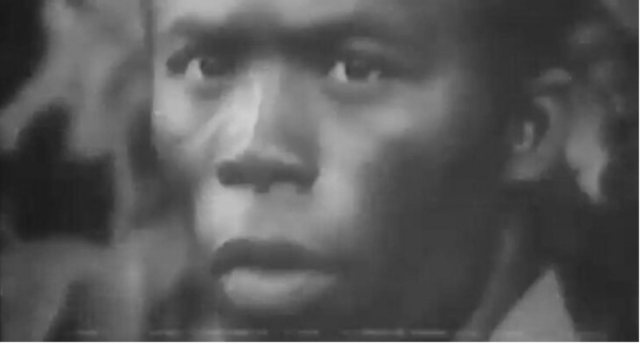
Why: The Maysles Documentary Center’s thirteenth annual Congo in Harlem festival, part of Congo Week, concludes its hybrid presentation this weekend with a trio of in-person screenings, two of which are followed by live discussions. On October 23 at 7:30, Maysles will show Bill Stephens’s raw, recently rediscovered, untranslated, and unfinished 1971 film, Congo Oyé, made in collaboration with Chris Marker, Paul and Carole Roussopoulas, and Eldridge and Kathleen Cleaver, consisting of forty-five minutes of remarkable footage of Black Panther Eldridge Cleaver’s visit to Brazzaville, the capital of the Republic of the Congo. At the same time, the Harlem-based theater will screen Lebert Bethune and John Taylor’s 1966 doc, Malcolm X: Struggle for Freedom, with Bethune, scholar and activist Herb Boyd, and journalist Milton Allimadi on hand to talk about the film, which was shot in Paris shortly before the controversial leader’s assassination.

Bill Stephens’s recently rediscovered Congo Oyé, is part of Maysles Documentary Center’s Congo in Harlem festival

On October 24 at 4:00, Congolese art educator Lubangi Muniania will moderate a discussion after a screening of Mark Kidel’s 1989 film, New York: Secret African City, in which scholar Robert Farris Thompson, who has been writing and teaching about African art and culture since 1958, shares his iconographic studies of the diaspora in New York, beginning with a trip across the Brooklyn Bridge in which Thompson explains, “We’re undergoing a ritual moment because we’re leaving Wall Street, we’re leaving Madison Avenue, we’re leaving white New York, and we’re entering one of the blackest of the cultural segments of New York.” Tickets to the events are $12 each. In addition, free virtual screenings continue through October 24 of Jihan El-Tahri’s L’Afrique en Morceaux (Africa in Pieces), Douglas Ntimasiemi and Raffi Aghekian’s Kinshasa Mboka Té (Kinshasa Wicked Land), Mathieu Roy’s Les Creuseurs (The Diggers), Kidel’s Pygmies in Paris, Sammy Baloji and David Bernatchez’s Rumba Rules: New Genealogies, Moimi Wezam’s Zero, and the above-mentioned works as well as more than a dozen shorts.

SONGS FOR ’DRELLA

SONGS FOR ’DRELLA (Ed Lachman, 1990)
Film Forum
209 West Houston St.
October 22-27
212-727-8110
filmforum.org

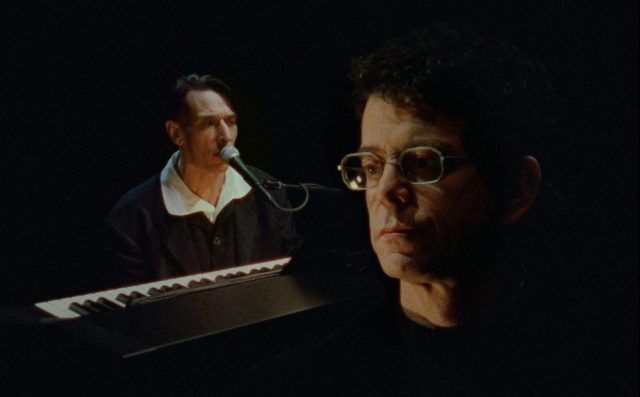
In December 1989, Velvet Underground cofounders John Cale and Lou Reed took the stage at BAM’s Howard Gilman Opera House and performed a song cycle in honor of Andy Warhol, who had played a pivotal role in the group’s success. The Pittsburgh-born Pop artist had died in February 1987 at the age of fifty-eight; although Cale and Reed had had a long falling-out, they reunited at Warhol’s funeral at the suggestion of artist Julian Schnabel. Commissioned by BAM and St. Ann’s, Songs for ’Drella — named after one of Warhol’s nicknames, a combination of Dracula and Cinderella — was released as a concert film and recorded for an album. The work is filled with factual details and anecdotes of Warhol’s life and career, from his relationship with his mother to his years at the Factory, from his 1967 shooting at the hands of Valerie Solanis to his dedication to his craft.

Directed, photographed, and produced by Ed Lachman, the two-time Oscar-nominated cinematographer of such films as Desperately Seeking Susan, Mississippi Masala, Far from Heaven, and Carol, the concert movie has just undergone a 4K restoration supervised by Lachman that premiered at the New York Film Festival a few weeks ago and is now running October 22-27 at Film Forum, with Lachman participating in Q&As following the 5:45 screenings on October 22, 23, and 24. (Producer Carolyn Hepburn will introduce the 5:45 show on October 27.) Songs for ’Drella is an intimate portrait not only of Warhol but of Cale and Reed, who sit across from each other onstage, Cale on the left, playing keyboards and violin, Reed on the right on guitars. There is no between-song patter or introductions; they just play the music as Robert Wierzel’s lighting shifts from black-and-white to splashes of blue and red. Photos of Warhol and some of his works (Electric Chair, Mona Lisa, Gun) are occasionally projected onto a screen on the back wall.

“When you’re growing up in a small town / Bad skin, bad eyes — gay and fatty / People look at you funny / When you’re in a small town / My father worked in construction / It’s not something for which I’m suited / Oh — what is something for which you are suited? / Getting out of here,” Reed sings on the opener, “Smalltown.” Cale and Reed share an infectious smile before “Style It Takes,” in which Cale sings, “I’ve got a Brillo box and I say it’s art / It’s the same one you can buy at any supermarket / ’Cause I’ve got the style it takes / And you’ve got the people it takes / This is a rock group called the Velvet Underground / I show movies of them / Do you like their sound / ’Cause they have a style that grates and I have art to make.”

John Cale and Lou Reed reunited to honor Andy Warhol in Songs for ’Drella

Cale and Reed reflect more on their association with Warhol in “A Dream.” Cale sings as Warhol, “And seeing John made me think of the Velvets / And I had been thinking about them / when I was on St. Marks Place / going to that new gallery those sweet new kids have opened / But they thought I was old / And then I saw the old DOM / the old club where we did our first shows / It was so great / And I don’t understand about that Velvets first album / I mean, I did the cover / and I was the producer / and I always see it repackaged / and I’ve never gotten a penny from it / How could that be / I should call Henry / But it was good seeing John / I did a cover for him / but I did it in black and white and he changed it to color / It would have been worth more if he’d left it my way / But you can never tell anybody anything / I’ve learned that.”

The song later turns the focus on Reed, recalling, “And then I saw Lou / I’m so mad at him / Lou Reed got married and didn’t invite me / I mean, is it because he thought I’d bring too many people? / I don’t get it / He could have at least called / I mean, he’s doing so great / Why doesn’t he call me? / I saw him at the MTV show / and he was one row away and he didn’t even say hello / I don’t get it / You know I hate Lou / I really do / He won’t even hire us for his videos / And I was so proud of him.”

Reed does say hello — and goodbye — on the closer, “Hello It’s Me.” With Cale on violin, Reed stands up with his guitar and fondly sings, “Oh well, now, Andy — I guess we’ve got to go / I wish some way somehow you like this little show / I know it’s late in coming / But it’s the only way I know / Hello, it’s me / Goodnight, Andy / Goodbye, Andy.”

It’s a tender way to end a beautiful performance, but Lachman has added a special treat after the credits, with one final anecdote and the original trailer he made for Reed’s 1974 song cycle, Berlin. In addition, Songs for ’Drella is an excellent companion piece for the new Todd Haynes documentary, The Velvet Underground, which is also screening at Film Forum.