this week in lectures, signings, panel discussions, workshops, and Q&As

ISRAEL FILM CENTER: AULCIE

Aulcie

The life and times of Aulcie Perry on and off the court are detailed in Dan Menkin’s latest sports documentary

AULCIE (Dan Menkin, 2019)
Marlene Meyerson JCC Manhattan
334 Amsterdam Ave. at West Seventy-Sixth St.
Tuesday, November 16, $15, 7:00
cinematters.eventive.org

The closing night selection of the 2020 Israel Film Center Festival at the Marlene Meyerson JCC Manhattan, Dani Menkin’s Aulcie is returning November 16 at 7:00 for a special screening, followed by an in-person Q&A with Menkin. Israeli director Menkin followed up his 2016 documentary, On the Map, about Maccabi Elite Tel Aviv’s unlikely victory in the 1976-77 European Champions Cup, with this inside look into the life of one of its stars, Aulcie Perry. After being the last man cut from the New York Knicks in 1976, Newark native Perry was recruited to play for Maccabi in Israel, where the 6’10” black man — an unusual sight in the Land of Milk and Honey — quickly became a superstar, helping the team to championships, falling in love with top model Tami Ben Ami, and hanging out in hot clubs, living the high life. But it all came tumbling down in a haze of drugs, and Menkin traces Perry’s attempt to put it all back together, primarily by finding the daughter he has not seen since she was a baby.

The film is set up as Perry’s confession to that daughter, Cierra Musungay. “I always knew one thing: that I wanted to tell you my story, the way it is, with the good and the bad,” he says at the beginning of the documentary. “So where do I start? People say you start at the beginning. But I wanted to start at the end, or when I thought the end was coming.” He was inspired to track her down after facing a serious health scare. “I think, that only when I almost died, I started to really live. And that’s when I wanted to find you and, maybe in some ways, find myself,” he adds.

Writer, producer, and director Menkin goes back and forth between archival footage, animation by Assaf Zellner, and interviews with Aulcie’s sister Bernadine Lewis, his friends Wayne Tyre and Roy Young, his ex-girlfriend Juanita Jackson, his son Aulcie Perry Jr., and many men from his Maccabi family, including former teammates Earl Williams and Tal Brody, team president Shimon Mizrahi, co-owner Oudi Recanati, coach Zvi Sherf, and manager Shamluk Maharovsky, who was like a father to him. “In Israel, there wasn’t that much prejudice against Black players, and he felt at home here,” NBA commentator Simmy Reguer says. “Aulcie came in like a blessing from the gods,” fellow Jersey native and team captain Brody recalls. And Sports Illustrated writer Alexander Wolff explains, “At Maccabi Tel Aviv, Aulcie Perry was Michael Jordan, Kareem Abdul-Jabbar rolled into one.”

Now seventy-one, Perry is honest and forthright throughout, admitting his failings and wanting to make up for lost time. He offers no excuses for his precipitous fall, and he’s not seeking sympathy. He’s a man who made mistakes and wants a chance to set things right. Aulcie is a cautionary tale of redemption with heart and soul, focusing on the need to be part of a family, no matter how different and unexpected it may be.

DOC NYC 2021

Matthew Heineman’s The First Wave closes the 2021 DOC NYC festival

DOC NYC 2021
In-person: November 10-19, $19 per screening
Online: November 11-28, $12 per screening
IFC Center, 323 Sixth Ave. at West Third St.
Cinépolis Chelsea, 260 West Twenty-Third St. between Seventh & Eighth Aves.
SVA Theatre, 333 West Twenty-Third St. between Seventh & Eighth Aves.
www.docnyc.net

The twelfth annual DOC NYC festival emerges from the pandemic with a hybrid collection of more than two hundred films and events that offer an alternative to the continuing rash of fake news and truthiness found on cable and social media. Of course, documentarians have their own agendas as well, but they lean strongly in favor of highlighting important issues through facts and celebrating legitimate feats accomplished through individual determination, both public and private.

This year’s sections include “Coming of Age,” “Fight the Power,” “Luminaries,” “Personal Journeys,” “Sonic Cinema,” and “Focus: Journalists,” covering more than seventy themes, from Food & Wine, History, and Music to Activism, Outsiders, and War & Conflict. The 2021 Lifetime Achievement Award winners are cameraperson, cinematographer, and director Joan Churchill (Gimme Shelter, Aileen: Life and Death of a Serial Killer, Shut Up & Sing) and Raoul Peck (Fatal Assistance, Moloch Tropical, I Am Not Your Negro).

Sam Pollard and Rex Miller’s Citizen Ashe is the centerpiece selection of this year’s DOC NYC fest

Among the many portraits are explorations of such figures as entertainer and Rat Packer Dean Martin, singer-songwriter Alanis Morissette, chef Julia Child, actress and filmmaker Adrienne Shelly, singer Dionne Warwick, cartoonist Spain Rodriguez, undersea explorer Jacques Cousteau, restaurateur and TV host Anthony Bourdain, rapper DMX, actress Selma Blair, basketball star Kevin Garnett, and author Kurt Vonnegut, with works by such luminaries as Stanley Nelson, Liz Garbus, Eva Orner, Alison Klayman, Jon Alpert, Andrea Arnold, and Todd Haynes.

The festival opens with Penny Lane’s Listening to Kenny G, with director and subject participating in a postscreening discussion; the centerpiece is the New York City premiere of Sam Pollard and Rex Miller’s Citizen Ashe, a look at tennis great and activist Arthur Ashe, with Matthew Heineman’s The First Wave, about the beginning of the pandemic in New York City’s hospitals, the closing-night selection. Keep watching this space for more recommendations and capsule reviews as the festival continues, both in person at the IFC Center, Cinépolis Chelsea, and the SVA Theatre and online.

Todd Haynes will discuss his latest film at DOC NYC

THE VELVET UNDERGROUND (Todd Haynes, 2021)
IFC Center
Wednesday, November 10, 9:30
www.docnyc.net

The Velvet Underground was more than just a music group; they electrified a generation, and continue to do so today, half a century later. Todd Haynes, whose 1998 Velvet Goldmine was set in the world of glam rock and whose 2007 I’m Not There explored the career of Bob Dylan through six characters and a nonlinear narrative, now turns his attention to the true story behind the Velvets. Haynes details the history of the band by delving into leaders John Cale and Lou Reed’s initial meeting, the formation of the Primitives with conceptual artists Tony Conrad and Walter DeMaria, and the transformation into the seminal VU lineup at the Factory under Pop icon Andy Warhol’s guidance: singer-songwriter-guitarist Reed, Welsh experimental composer and multi-instrumentalist Cale, guitarist Sterling Morrison, drummer Maureen Tucker, and German vocalist Nico. Much of Haynes’s documentary focuses on Warhol’s position in helping develop and promote the Velvets. “Andy was extraordinary, and I honestly don’t think these things could have occurred without Andy,” Reed, who died in 2013, says. Haynes will be at the IFC Center to introduce the November 10 screening.

The life and career of Anthony Bourdain is explored in Roadrunner

ROADRUNNER: A FILM ABOUT ANTHONY BOURDAIN (Morgan Neville, 2021)
IFC Center
Thursday, November 11, 9:45
www.docnyc.net

Director Morgan Neville goes behind the scenes to share the story of beloved restaurateur and TV show host Anthony Bourdain in Roadrunner. Neville, whose previous films include The Cool School, 20 Feet from Stardom, and Won’t You Be Neighbor?, will be at IFC to introduce the November 11 screening.

Two Minnesota high school teams battle it out in Tommy Haines’s Hockeyland

HOCKEYLAND (Tommy Haines, 2021)
Cinépolis Chelsea
Saturday, November 13, 2021 1:35 PM
www.docnyc.net/film/hockeyland
www.hockeylandmovie.com

There’s the Stanley Cup playoffs for the NHL pros and the Frozen Four for the NCAA Men’s Ice Hockey Championship, but Tommy Haines focuses on a pair of rival Minnesota high school teams, the underdog Eveleth-Gilbert Golden Bears and the far more successful Hermantown Hawks, as they prepare to perhaps meet in the playoffs. Haines follows the very different approach of the two coaches, delves into the lives of the teams’ best players, talks to the parents, and goes inside the locker rooms as the teenagers balance education with the game and their future. The film contains lots of good hockey action, along with intimate moments as injuries occur and pro scouts come to watch. The November 13 screening will be followed by a Q&A with Haines, producers JT Haines and Andrew Sherburne, cinematographer Benjamin Handler, and film subjects Elliot Van Orsdel, Indio Dowd, and members of their families.

Fatima Shaik searches for a critical piece of family history in The Bengali

THE BENGALI (Kavery Kaul, 2021)
IFC Center
Saturday, November 13, 4:45
www.docnyc.net/film/the-bengali
www.thebengalifilm.com

“Why would anybody come from the other side of the world to find somebody who doesn’t even exist anymore?” author Fatima Shaik says at the beginning of The Bengali. “Why not?” asks director Kavery Kaul. Armed with a partial ship’s registry and a photograph of her grandfather, Shaik Mohamed Musa, who left his small village in India in 1893 to make a new life in the United States, in New Orleans, where he married a Black woman, Fatima travels to her ancestral country, wanting to know more about where she came from and to see a patch of land that he owned. Joined by Kaul, who is Bengali, and cinematographer John Russell Foster, who is white, they have very little information and face roadblock after roadblock until success is in reach, but everywhere she goes, Fatima is met with resistance, as Indians view her with suspicion, thinking that she, a Christian in a Muslim community, might be there to reclaim her grandfather’s land. The Bengali is an emotional, deeply personal search for identity, almost to the point of obsession, of seeking out one’s family history in a land where you don’t speak the language and are not immediately welcome. The November 13 New York City premiere at IFC will be followed by a Q&A with Kaul and producer Lucas Groth.

UNITED STATES vs. REALITY WINNER (Sonia Kennebeck, 2021)
Saturday, November 13, IFC Center, 9:50
Monday, November 15, Cinépolis Chelsea, 4:15
www.docnyc.net
www.codebreakerfilms.com

The Broadway play Is This a Room is a verbatim re-creation of the FBI’s interrogation of Reality Winner, an Air Force veteran who was suspected of leaking classified documents. Award-winning documentarian Sonia Kennebeck, whose previous films include Enemies of the State, about a family under siege when their hacker son gets into serious trouble with the government, and National Bird, which revealed the devastating story of the military personnel pushing the buttons in America’s drone war, now goes behind the scenes to tell what really happened with Winner, the Intercept, and other parties involved in the complex situation. The November 13 and 15 screenings will be followed by a Q&A with Kennebeck, the latter moderated by Jo Livingstone of the New Republic.

An amateur British theater group consisting of bus drivers, engineers, and dispatchers adapt a Ridley Scott classic in Alien on Stage

ALIEN ON STAGE (Danielle Kummer & Lucy Harvey)
IFC Center
Sunday, November 14, 7:00
Monday, November 15, 2:15
www.docnyc.net/film/alien-on-stage
www.alienonstagedoc.com

In 2015, a group of bus drivers, engineers, and dispatchers in Dorset, England, banded together to put on an amateur theatrical adaptation of Ridley Scott’s Alien a benefit for the Allendale Community Centre and the Guillain-Barré Syndrome Charity. Calling themselves Paranoid Dramatics, the men and women took a DIY approach, creating the costumes and special effects from scratch and learning their lines to the best of their abilities. After seeing the show, Danielle Kummer and Lucy Harvey became obsessed with it and decided to document the play’s surprising move to London’s West End. The result is an extremely fun film about human ingenuity against all odds; just as Ripley had to face the monster, will this group survive as opening night approaches? And will Scott be there to cheer them on? The November 14 and 15 screenings will be followed by a Q&A with Kummer.

An eleven-year-old blind boy seeks to become a board game champ in Go through the Dark

GO THROUGH THE DARK (Yunhong Pu, 2021)
Cinépolis Chelsea
Saturday, November 13, 7:10
Tuesday, November 16, 9:30
www.docnyc.net
www.instagram.com

First-time filmmaker Yunhong Pu serves as director, producer (with Jean Tsien), cinematographer, editor, and publicist for the subtly captivating Go through the Dark. Yunhong travels with eleven-year-old Guanglin Xu, a blind Chinese boy who has a remarkable affinity for Go, which might be the world’s oldest board game, as he participates in competitions and seeks special coaching far away. He is being raised by a single father who adores him but might not always understand what is best for his son. As father and child meet more people, new options arise for Guanglin, who does not know how to ask for what he truly wants and needs. The game Go involves turning over small, circular black and white stones, but there’s nothing black-and-white about this unique and moving story. Yunhong will participate in Q&As at the November 13 and 16 screenings.

Gary Oldman has a lot to say about Eadweard Muybridge’s photos and personal life in stirring documentary

EXPOSING MUYBRIDGE (Marc Shaffer, 2021)
Saturday, November 13, IFC Center, 7:05
Monday, November 15, Cinépolis Chelsea, 2:00
www.docnyc.net
www.muybridgethemovie.com

English photographer Eadweard Muybridge is most well known for taking some of the earliest, most influential pictures in the history of the art form (and sometimes animating them), including The Horse in Motion, his shots of redwoods in Yosemite, and his plates of nude men and women walking, running, and stepping over plates. But writer, director, and producer Marc Shaffer focuses on Muybridge’s bizarre life as well as his photography in the documentary Exposing Muybridge, highlighting an existence filled with murder, betrayal, naked ambition, legal and political wheeling and dealing, alchemy, and immense talent and ingenuity. Among those sharing their thoughts about Muybridge are actor and collector Gary Oldman, who must play the photographer in the eventual film, and author Rebecca Gowers, who is related to the man Muybridge killed. The sordid doings grow more and more intriguing as Shaffer cuts between the speakers, archival photographs and letters, and dozens of Muybridge’s pictures. My only quibble with the film is that I was hoping to learn the proper way to pronounce the photographer’s chosen surname (he was born Edward James Muggeridge), but not everyone in the film says “Muybridge” the same way. The November 13 and 15 screenings will be followed by a Q&A with Shaffer.

ASCENSION (Jessica Kingdon, 2021)
Cinépolis Chelsea
260 West Twenty-Third St. between Seventh & Eighth Aves.
Tuesday, November 16, 4:15
Thursday, November 18, 4:45
www.docnyc.net/film/ascension
ascensiondocumentary.com

Jessica Kingdon’s Ascension is one of the most beautifully photographed documentaries you’re ever likely to see. Evoking the mesmerizing visual style of such photographers as Andreas Gursky, Edward Burtynsky, and Jeff Wall, director, editor, and producer Kingdon and producer and cinematographer Nathan Truesdell, who rarely moves his camera, explore Xi Jinping’s promise of the Chinese Dream, what the leader calls “the great rejuvenation of the Chinese people,” in a three-part film about capitalism and consumption, poverty and wealth in China. The biracial Chinese American Kingdon first explores the job market, as men and women in outdoor booths shout out hourly wages, responsibilities, and housing opportunities to those in need of work, who are then shown toiling in factories, sewing, plucking fowl, and building sex dolls.

In the second section, workers are indoctrinated into the company lifestyle, learning how to climb the ladder through very specific and often demeaning business etiquette; the film concludes by showing the luxuries success and wealth can bring. One of the most memorable shots in a film filled with them is of a glamorous young woman being photographed at a seaside resort as a worker, unnoticed by the model and photographer, tends to a lush green lawn; the differences between her posh bag and chapeau and his garbage bag and straw hat, his face hidden as hers pouts for the camera, speak volumes. Featuring a pulsating score by Dan Deacon, Ascension might be specifically about China, but it also relates to what is happening in America today, particularly with the current supply chain issues as so many workers decided not to return to work as the pandemic lockdown lifted while income inequality continues to grow at obscene levels. The November 16 screening will be followed by a Q&A with Kingdon.

SHEEP #1

Sachiyo Takahashi’s Sheep #1 is at Japan Society November 4-7 (photo © Skye Morse-Hodgson)

SHEEP #1
Japan Society
333 East 47th St. at First Ave.
November 4-7, $23
212-715-1258
www.japansociety.org

Shortly after crash landing in the Sahara Desert, the isolated pilot narrator of Antoine de Saint-Exupéry’s Le Petit Prince recalls, “You can imagine my surprise when I was awakened at daybreak by a funny little voice saying, ‘Please . . . Draw me a sheep . . .’” After several failures, the pilot draws a picture of a crate, explaining that the sheep is inside. The boy, aka the little prince, is very happy, noting, “Where I live, everything is very small.”

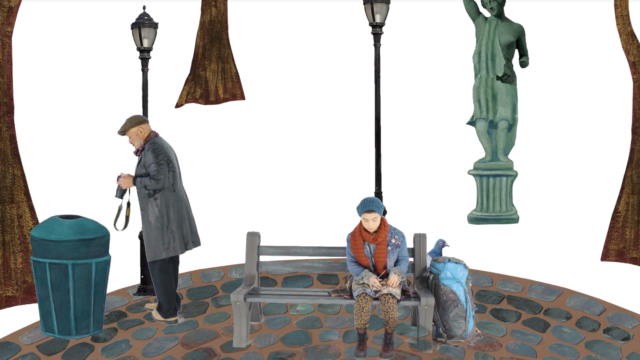
Japan-born, Brooklyn-based visual artist Sachiyo Takahashi uses that section of Saint-Exupéry’s classic book, which also explores differences between grown-ups and children, in Sheep #1, which runs November 4–7 at Japan Society. Sachiyo tells the story using small puppets from Nekaa Lab, which she founded in 2006, projected onto a screen to make them look life-size (or bigger). The cast includes Sheep, who claims not to act but to play, and Rabbit, who says Nekaa Lab is “an eternal playground for the curious mind.” Among the other lab members (stuffed toys and figurines) are Cat and Polar Bear.

Sheep #1 is an example of Sachiyo’s Microscopic Live Cinema-Theatre, which tells stories using objects, live music, and camera projections and is able to, in Cat’s words, “even magnify the hidden emotions.” The wordless show, which made its US debut at the Tank in 2018, will be performed and projected live by Sachiyo, with pianist Emile Blondel playing original music with excerpts from Franz Schubert on Friday and Saturday and bassist Kato Hideki playing an original score on Thursday and Sunday, accompanying Sachiyo’s electroacoustic soundtrack.

The opening-night show will be followed by a reception with the artists. Sachiyo, who has been awarded several grants from the Jim Henson Foundation, has previously staged such works as Everything Starts from a Dot and Not Outside, which also starred Sheep, in addition to performing as Miya Okamoto in such Shinnai-bushi sung-storytelling presentations as Shinnai Meets Puppetry: One Night in Winter and the upcoming The Emotions.

BULLETPROOF

Bulletproof reveals the capitalization and marketing of school shootings (photo © Emily Topper)

BULLETPROOF (Todd Chandler, 2020)
Metrograph
7 Ludlow St. between Canal & Hester Sts.
Opens Friday, October 29
212-660-0312
nyc.metrograph.com

There’s a powerful moment near the end of Todd Chandler’s Bulletproof that I won’t soon forget. It takes place at a shooting range, where an employee is sweeping up hundreds of spent shells from guns fired by teachers and parents learning how to defend themselves in the event of a school shooting. The casings evoke the many horrific deaths of children around the country who’ve been killed just because they went to class that day, their stories swept away as the next massacre awaits.

Bulletproof sounds like a thriller, and in many ways it is. When I was a kid, we were taught to duck and cover, hiding under our desks or in the halls to survive a nuclear threat that, fortunately, never came to fruition. But today’s children face a far greater danger from school shootings, although one person in the film does note that they are more likely to die in an airplane crash than by a bullet in school. Chandler (Flood Tide, A Debtors’ Prison) and cinematographer Emily Topper (After Tiller, The Departure) travel to schools in Missouri, Texas, Chicago, Pittsburgh, California, Colorado, and New York, filming shooter drills, local hearings, and presentations from safety officers that use scare tactics and fear to convince districts they need to hire armed security guards and give the teachers guns. “The threat always comes from inside,” a Texas principal says. Another man explains, “Some people will say, ‘That’s just some kid playing,’ but the problem is, we can’t take that risk anymore.” Chandler intercuts scenes of kids just being kids, learning math, going to homecoming, and kicking a ball around.

The Texas principal boasts of having spent forty thousand dollars on twenty-two AR-15s for nineteen security officers. A Pittsburgh policeman is met with resistance when he blames school shootings on prescription SSRIs. Teachers play a life-size video game placing them in the middle of a mass shooting in a gym. A man shows off an all-pervasive surveillance system. A young Bay Area tech worker postpones getting her Master’s and instead starts making bulletproof Kevlar Wonder Hoodies. A school safety convention in Las Vegas reveals capitalism at its best as companies push bulletproof whiteboards and desks, safety lockers displayed in a colorful toylike diorama, and an electronic flashbang that can be used as a distraction device. They are all marketing to panic and monetizing trauma, but you can still take a selfie with a pair of scantily clad women in blue sequins.

Chandler doesn’t speak with any talking-head experts or pundits; instead, Bulletproof is more of a fly-on-the-wall Maysles-like documentary in which the audience gets more than a peek at how the plague of school shootings is being dealt with in these local communities. There are no statistics, no news reports, no debates over guns and the NRA; none of the participants in the film are identified, primarily because they are us, and we are them. America is in crisis, and, as Chandler shows, much of America has gone into crisis mode, to the extreme, when it comes to addressing school shootings, of which, according to CNN, there have been 180 since 2009, with 365 victims.

Are any of these security measures going to work? Chandler might not answer that question directly, but the image of a broom sweeping shell casings like so many dead bodies makes a strong point.

Bulletproof opens October 29 at Metrograph, with Chandler on hand for Q&As at the 8:30 screening on Friday night and the 7:00 show on November 1, when he will be joined by fellow documentarian Kirsten Johnson (Cameraperson, Dick Johnson Is Dead).

SPEER GOES TO HOLLYWOOD

Nazi leader Albert Speer tries to whitewash history in Speer Goes to Hollywood

SPEER GOES TO HOLLYWOOD (Vanessa Lapa, 2021)
Film Forum
209 West Houston St.
Opens Friday, October 29
212-727-8110
filmforum.org
speergoestohollywood.com

In 2014, Belgium-born, Israel-based documentarian Vanessa Lapa made her feature-length debut with The Decent One, in which she painted a frightening portrait of Heinrich Himmler, using the private diary of the Reichsführer of the Schutzstaffel (Himmler’s official title). She has now followed that film with Speer Goes to Hollywood, which incorporates archival footage from the Nuremberg trials and clips from propaganda films accompanying forty hours of recordings made in 1971 by up-and-coming British screenwriter Andrew Birkin as he worked with convicted Nazi leader Albert Speer, known as Hitler’s Architect, collaborating on a screenplay for Paramount Pictures based on the former Reichsminister of Munitions’ bestselling memoir, Inside the Third Reich.

Birkin, the brother of model and actress Jane Birkin and whose mentors include Stanley Kubrick and Carol Reed, met with Speer in the latter’s country home in Heidelberg in the winter of 1971. Birkin kept the tape rolling as he and Speer carefully reviewed every scene in the screenplay, as Speer tries to whitewash many of the more outrageous and gruesome details regarding his culpability in the Nazis’ reign of terror while Birkin tries to not let him off the hook.

“I would be careful,” Reed (The Third Man, Oliver!) warns Birkin over the phone after reviewing the first draft of the script. “You can’t build without him knowing. The man holds his mind blank to that. This is not a sweet man.”

Tall and elegant, Speer seizes control of the narrative again and again, claiming to be a dreamer and making sure he is seen with his dog, as if he’s just a normal guy. “I want a private life too,” he opines. He considers war “an adventure” and the Nazi regime “just good fun” to downplay the piles of murdered bodies the Third Reich left in its wake. He refers to the tortured prisoners of war in factories and the concentration camps as workmen and laborers, making excuses that argue that the negative aspects of what the Nazis did have been exaggerated. “I did not know what crimes I’m committing,” he claims. He explains that the “camps were necessary” and blames his Labor Department head, Fritz Sauckel, for the mistreatment of the Jews and other captives under his watch. “I was not responsible for those things. It was him,” he points out.

All the while, Birkin attempts to convince himself that he is doing the right thing by sharing Speer’s story on film. “I’ve been saying all along that I find it easy to identify myself with you,” he tells Speer. “The only point where I think I would have opted out would have been if I had been present or if I witnessed a scene that involved children being carted off. Can you ever remember a situation where you either read about, or more probably heard about, children being separated up or families being torn apart? Anything. Can you ever remember anything that happened? Even if, at the time, you were able to rationalize it?” Speer says no, “But . . . Yes, well, but you know, small things are now seen as the center of a thing. But I’m sorry. It would be wrong to say now I had a sentimental reaction or so. Your idea of the film and of my person that I had any reaction is wrong.”

Speer talks about Himmler, Hermann Göring, and Joseph Goebbels and admits to being one of Hitler’s best friends — and still claims he did not know what was going on despite his heavy involvement with the Mathausen camp and his visit to Auschwitz. “Indirectly, I knew from Hitler that he was planning to annihilate the Jewish people. He said it quite often. But I had no direct knowledge until ’44.” Seeking to garner some sympathy, he says, “If ever I can get rid of the guilt, and quite often I was thinking that I never shall get rid of it, that this burden will ever last with me.”

Albert Speer is profiled in new documentary built around revelatory footage

Birkin might want to give Speer the benefit of the doubt to some degree, but it’s hard for viewers to see anything but a twisted man who lacks empathy and compassion for his fellow human being, lording his sense of superiority over all others, trying to skirt his responsibilities during the war and rewrite history — a project that cannot help but make one reflect on the way America is these days when it comes to slavery, remembering the Holocaust, removing public statues of the founding fathers, tearing apart immigrant families at the border, and changing textbooks to present partisan views of the nation’s past.

Explaining one of Kubrick’s arguments, Birkin (The Name of the Rose, The Cement Garden) says the director told him, “I would find it very difficult to do the film if your character, the Speer in the film, you still made out that he didn’t know what was going on.” Speer just wanted a normal life, reveling in his being called “the good Nazi,” but as Lapa’s film shows, there is not a whole lot of good in him.

Winner of the Israeli Oscar for Best Documentary, Speer Goes to Hollywood is a chilling work that gets into the mind of one of the twentieth century’s most terrifying figures. Lapa and producer Tomer Eliav will be at Film Forum for the 7:00 shows on October 29 and 30 for Q&As that will dig even deeper into this extraordinary story.

DANCING FUTURES: MAY I DANCE ON YOUR SCREEN? LIVE Q&A

Who: Rourou Ye, Wendy Perron
What: Virtual Q&A about online exhibition
Where: digitaldance.space
When: Thursday, October 28, free with RSVP, 7:30
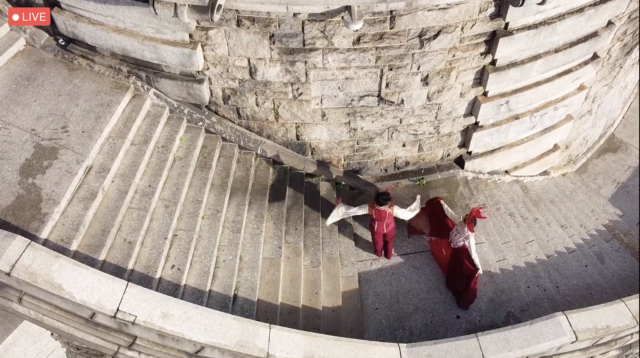
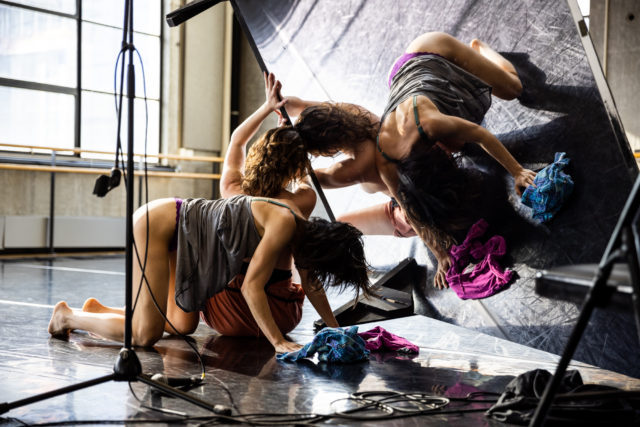
Why: “When I returned to the dance studio again in April 2021, I felt weird,” multidisciplinary artist Rourou Ye said about working during the pandemic. “The studio was empty. Not only because there was no one else there but because it also lacked the characteristics and stories inherent to one’s surroundings. What can I do with this space? There was nothing I could play with, and it made me the center of attention. I was motionless. So I went back home to create dances through video.” On October 28 at 7:30, the Chinese-born, US-based artist, who incorporates dance, shadow puppetry, everyday objects, and multimedia technology into works that defy reality, will discuss her process with teacher, writer, dancer, choreographer, and Dance magazine editor at large Wendy Perron over Zoom.

They will be delving into Ye’s online exhibition, “May I Dance on Your Screen?,” which continues through December 31 with such dance films as Daydreaming (“How can I duplicate myself so I can have a dance companion?”), Dis/Placed, (“How can I appear in my collaborator’s space even though I’m physically in another location?”), and I Followed the Moon to the River, My Far-Flung Home (“It’s been so long since I’ve been home . . .”). The program is part of the seventh annual Dancing Futures: Artist and Mentor Collaborative Residency, which “offers emerging Bronx-based and/or dance artists of color with resources, performance opportunities, mentorship, and documentation to strengthen and shine a spotlight on the Bronx as a creative incubator of new dance and performance work.”

GODLIS MIAMI BOOK LAUNCH WITH DAVID GODLIS AND LUCY SANTE

Who: David Godlis, Lucy Sante
What: Book launch with live discussion
Where: Rizzoli Bookstore, 1133 Broadway between 25th & 26th Sts.
When: Thursday, October 28, free with advance RSVP, 6:00
Why: When last we saw photographer David Godlis, he was taking part in a November 2020 Rizzoli Zoom discussion with writer Luc Sante, Blondie cofounder and guitarist Chris Stein, and Reel Art Press music editor Dave Brolan, talking about Godlis Streets (Reel Art Press, $39.95), which features Godlis’s New York City and Boston street photography from the 1970s and ’80s. Some of us have also caught him in Lewie and Noah Kloster’s brand-new seven-minute documentary Shots in the Dark with David Godlis, in which the longtime official photographer of the New York Film Festival goes back to his CBGB days.

On October 28, Godlis will be at Rizzoli in person, joined by the recently transitioned Lucy Sante (Low Life, Kill All Your Darlings), for the launch of his newest book, Godlis Miami (Real Art Press, $39.95), comprising photos Godlis shot down south, capturing a part of South Beach that no longer exists.

David Godlis, Ladies in the Sun, Lummus Park (© GODLIS)

“I first went to Miami Beach when I was a kid in the 1950s,” he writes. “There are black and white snapshots of me sitting on the beach, wearing my Davy Crockett T-shirt, squinting under palm trees. My grandparents had retired there. For Jewish Eastern European immigrants, who had lived out their working life on the streets of New York City, retiring to sunshine, warm weather, beaches, and palm trees was a slice of heaven. For a kid visiting in the 1950s and early 1960s, it was like going to Jewish Disneyland. Goodbye, snow. Hello, coconuts. And so, when I returned to Miami Beach in 1974, with a camera, all these memories of Florida came flowing back to me. As I tripped the shutter over and over, taking pictures on those beaches I had walked upon as a little kid, everything clicked. Pun intended.”

Admission to the event is free with advance RSVP.